Artwork
The Anarchist
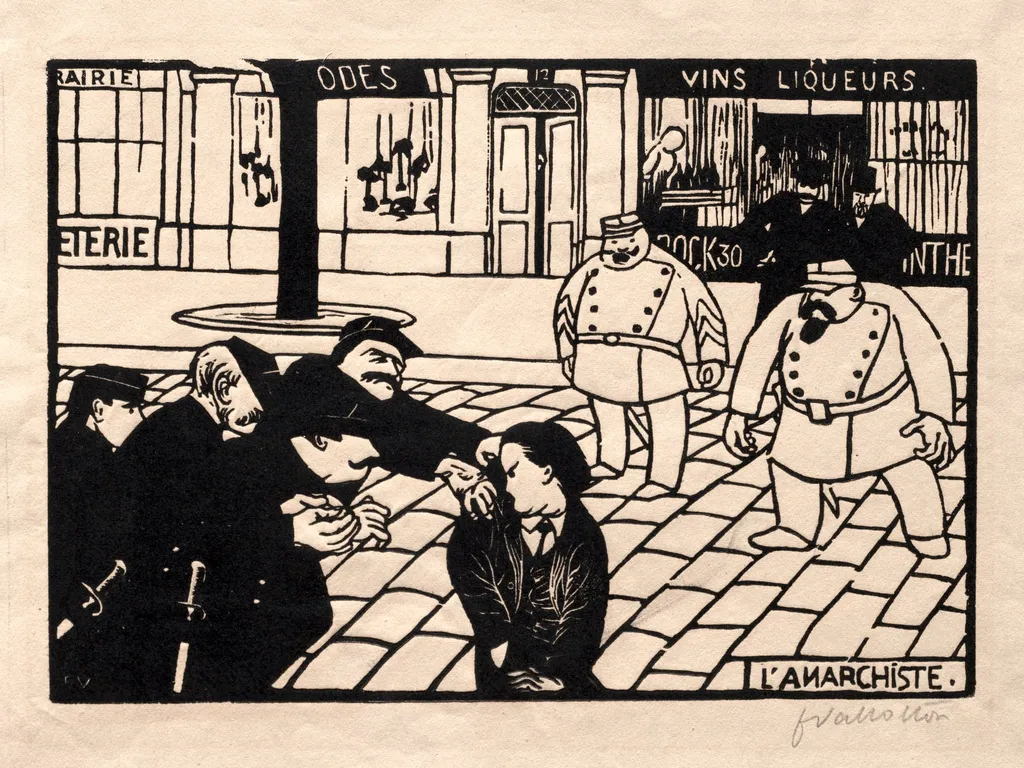
The Anarchist is a print by the Impressionist artist Félix Vallotton. It dates from 1892 and is held in the collection of the Cleveland Museum of Art.
- Accession no.
- 1946.185
- Credit line
- Gift of Mr. and Mrs. Edward P. Robinson in memory of Rose and Charles Knieling
About this work
Overview
The work depicts a dramatic street scene in Paris where a man in a dark suit kneels on the pavement, holding a revolver to his own head.
Created in 1892, The Anarchist is a woodcut by the Swiss-French artist Félix Vallotton, produced during his pivotal period of graphic innovation within the Nabis movement. The work depicts a dramatic street scene in Paris where a man in a dark suit kneels on the pavement, holding a revolver to his own head. He is surrounded by a crowd of onlookers and two uniformed police officers who observe the scene with detached composure.
The composition is defined by Vallotton's signature style: high-contrast black ink against a white background, utilizing sharp, simplified lines and flat areas of tone to create a stark, almost theatrical atmosphere. Storefronts in the background, bearing signs such as 'Vins Liqueurs' and 'Boucherie,' ground the event in a specific urban reality. This piece is part of Vallotton's series of woodcuts that addressed contemporary social and political issues, reflecting the anxiety surrounding anarchist violence in late 19th-century France.
The print exemplifies the artist's ability to merge the decorative qualities of Japanese woodblock prints with a modern, psychological narrative, establishing his reputation as a master of the medium before he turned fully to painting.
Subject & Meaning
The composition suggests a moment of political violence, likely an attempted suicide or execution linked to anarchist activity, a theme that resonated in late‑19th‑century Europe. By isolating the central figure and surrounding him with indifferent onlookers, Vallotton emphasizes the social alienation and public spectacle surrounding radical acts, inviting reflection on the relationship between individual desperation and collective response.
Technique & Style
Vallotton employs a graphic approach reminiscent of woodcut prints, using bold, unmodulated outlines and large expanses of black and white. The simplified forms and flattened perspective reduce the scene to essential shapes, heightening the dramatic tension. This stark visual language, characteristic of his work, serves to underscore the narrative’s urgency without reliance on detailed modeling.
History & Provenance
Created in 1892, the print entered the collection of the Cleveland Museum of Art, where it remains on view. Vallotton, a Swiss‑French painter and printmaker associated with the Nabis group, produced a series of socially charged images during this period, and The Anarchist exemplifies his engagement with contemporary political concerns.
Own this work as a print
Artist & collection

Artist
Félix Édouard Vallotton (French: ; December 28, 1865 – December 29, 1925) was a Swiss and French painter and printmaker associated with the group of artists known as Les Nabis.

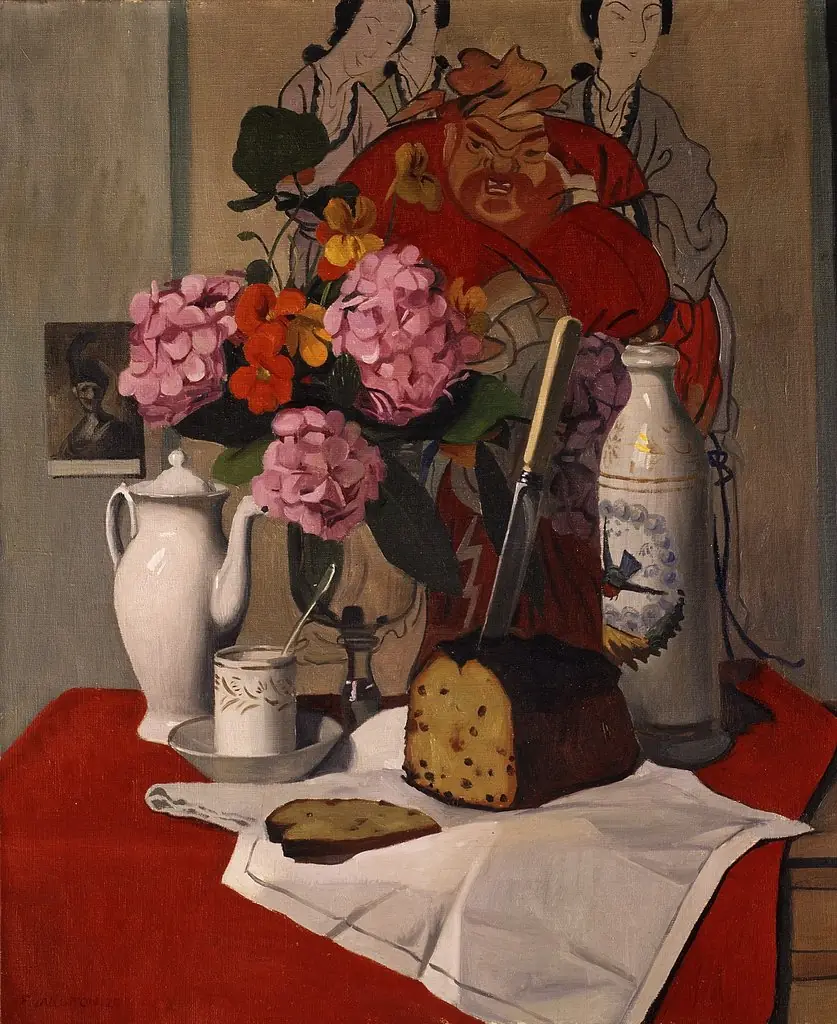
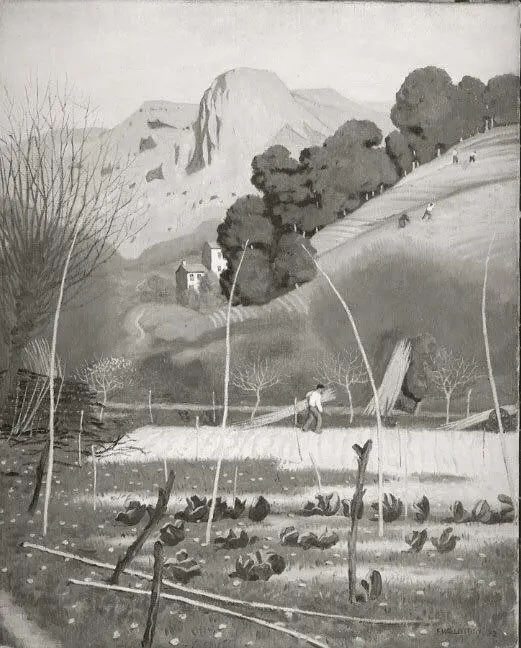
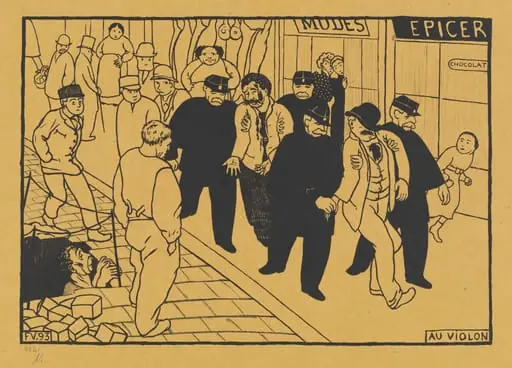
- Au Violon (Off to the Jug)
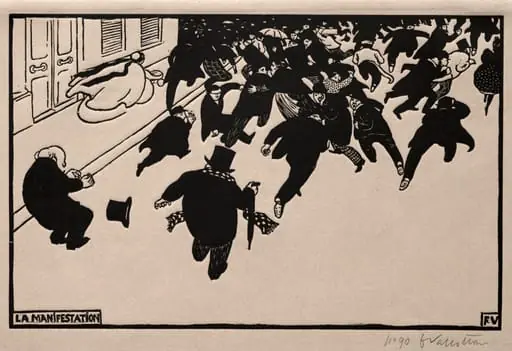 The Protest
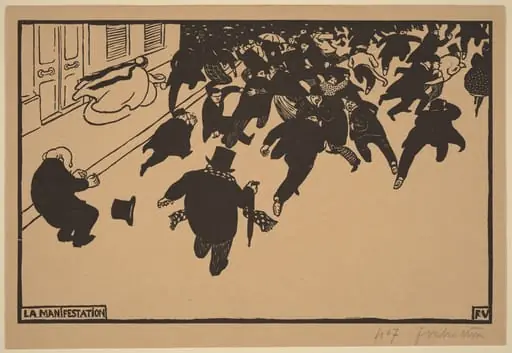 La Manifestation (The Demonstration)
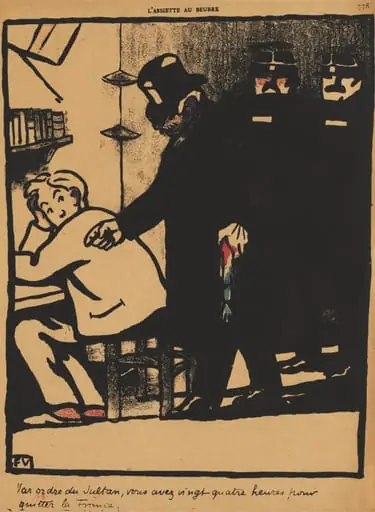 By order of the Sultan...
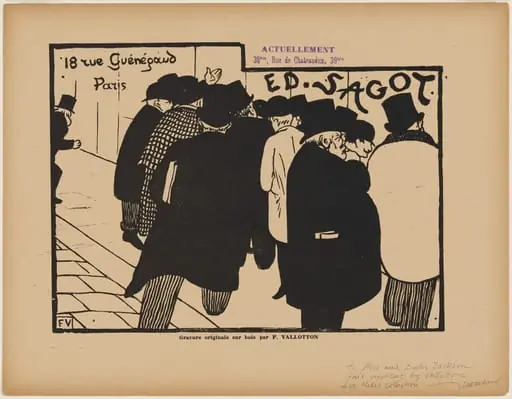 Sagot
Sagot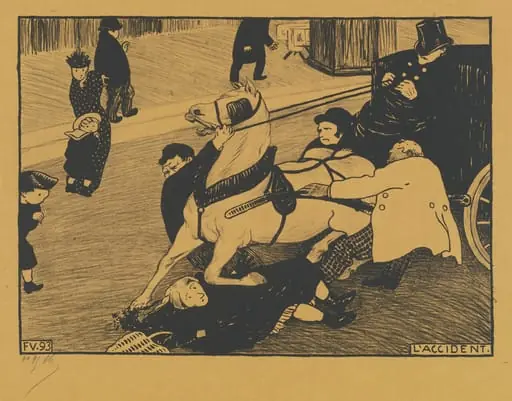 L'Accident (The Accident)
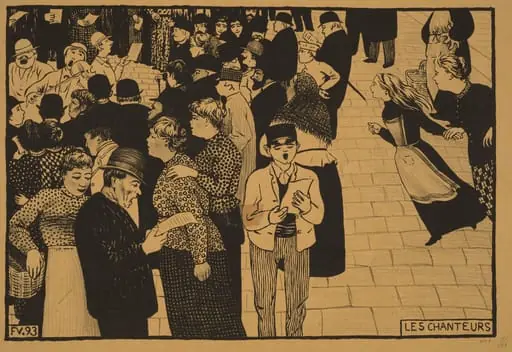 Les Chanteurs (The Singers)
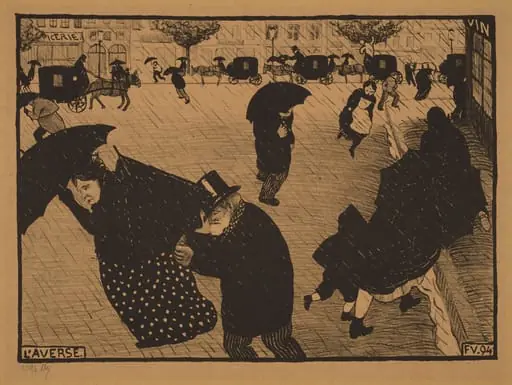 L'Averse (The Shower)
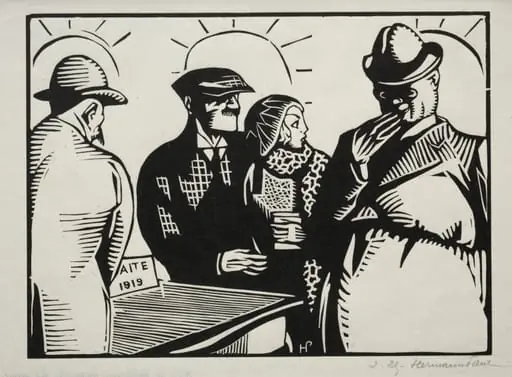 It is the Table on Which the Treaty of Versailles was Signed
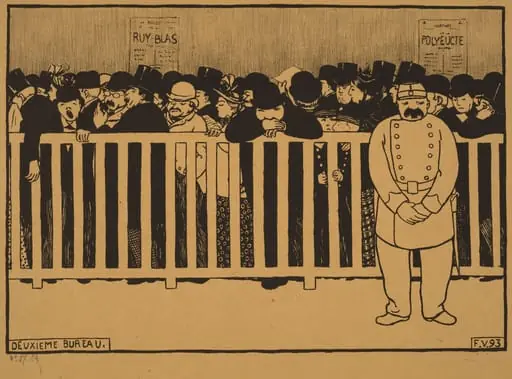 Deuxieme Bureau (Box Office)
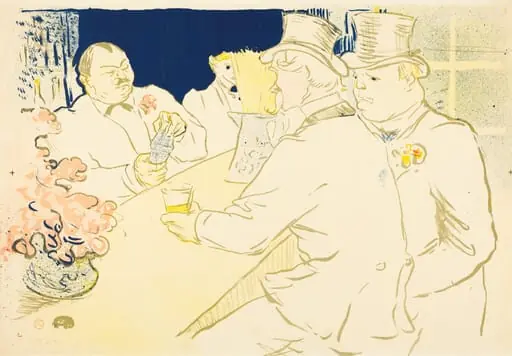 Irish and American Bar, rue Royale
 La Tige (Moulin-Rouge)