Artwork
Robert Bayfield
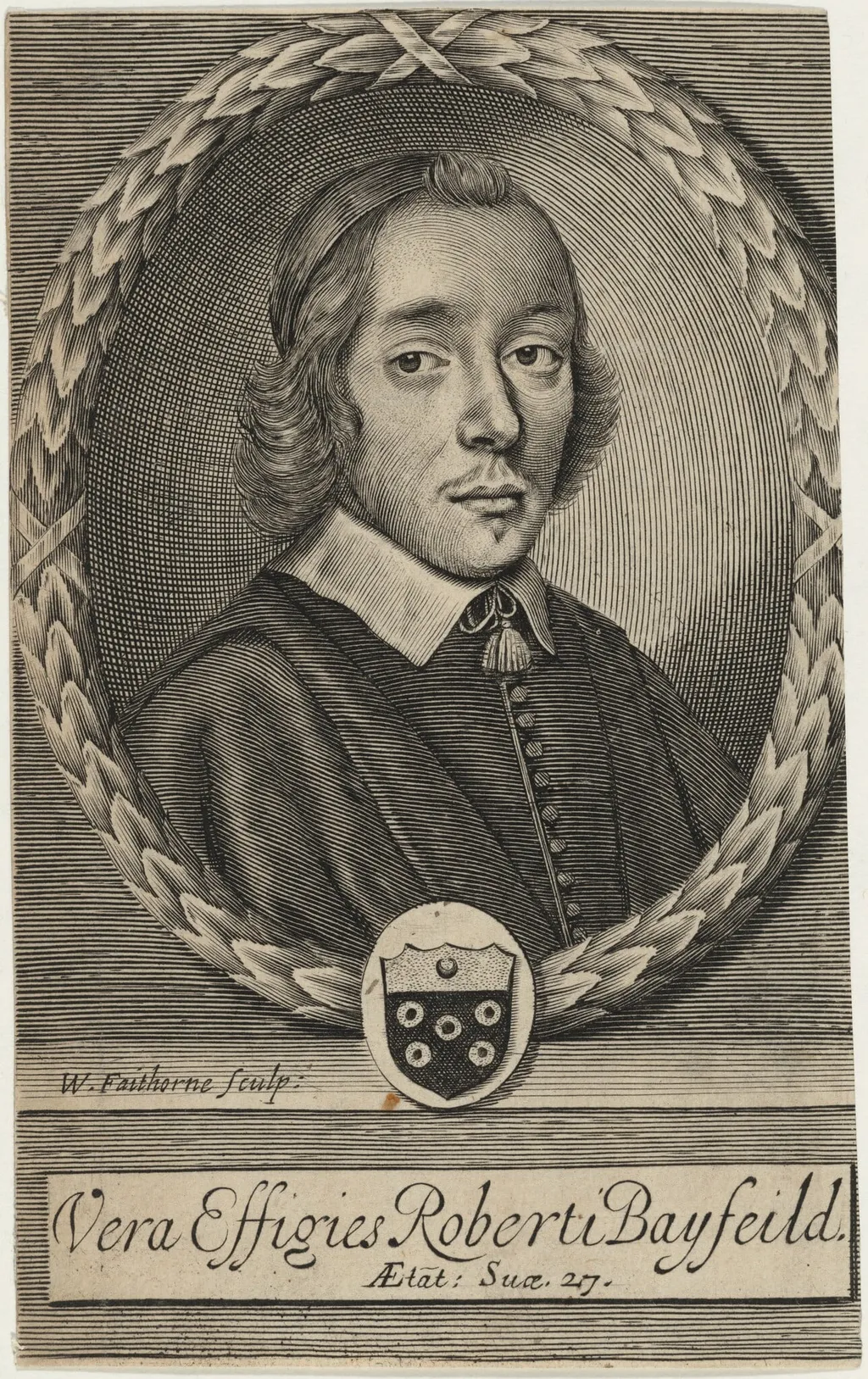
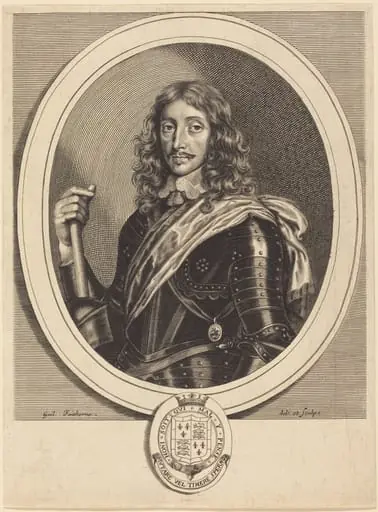
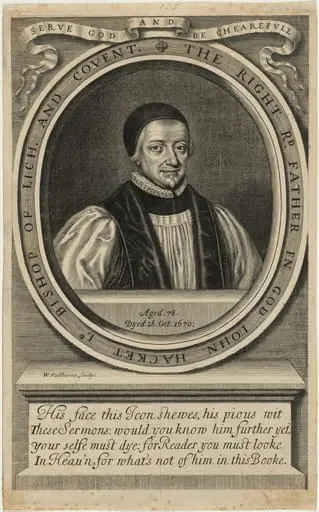
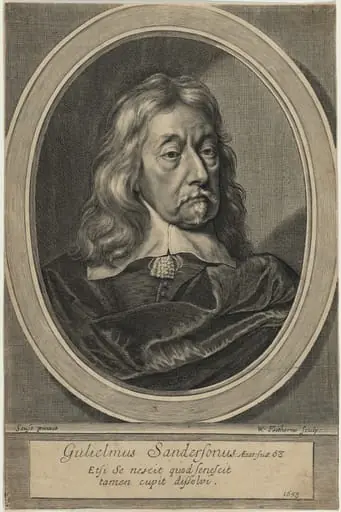
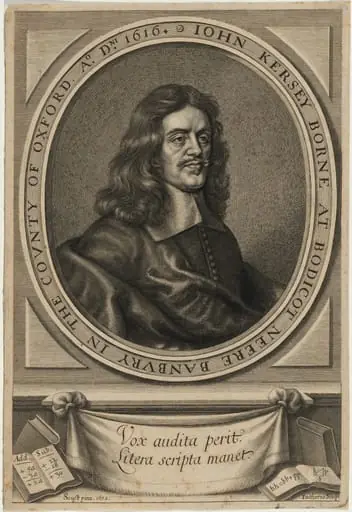
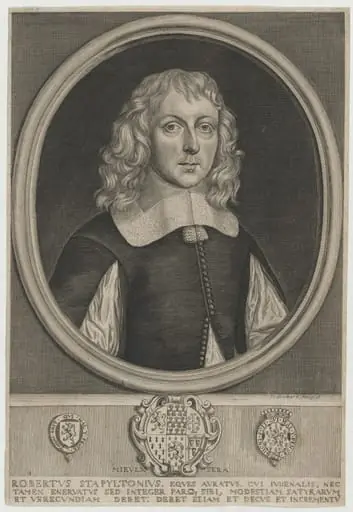
Robert Bayfield is an ink print by the Baroque artist William Faithorne. It dates from 1654 and is held in the collection of the National Gallery of Art.
About this work
Overview
The inscription below affirms the work as a true representation of Bayfield, while Faithorne’s signature appears in the lower corner.
This 1654 engraving presents a likeness of Robert Bayfield, executed by the English printmaker William Faithorne. Rendered in monochrome, the image captures the sitter’s serious demeanor, short curly hair, and a dark, lace‑trimmed collar. A wreath of leaves frames his head, and a small circular pendant with three apertures hangs at his throat.
The inscription below affirms the work as a true representation of Bayfield, while Faithorne’s signature appears in the lower corner.
Subject & Meaning
The portrait serves as a formal representation of Robert Bayfield, likely intended for personal or familial commemoration. The solemn expression and modest attire suggest a focus on character and status rather than opulent display. The leaf wreath may allude to classical ideals of virtue, while the pendant could denote a personal emblem or affiliation, reinforcing the sitter’s identity within his contemporary social milieu.
Technique & Style
Faithorne employed the intaglio engraving process, incising lines into a copper plate to achieve fine tonal variation. The work demonstrates his skill in rendering textures, from the softness of hair to the intricate lace of the collar. Cross‑hatching creates depth and shadow, while the crisp outline of the wreath and pendant highlights the precision characteristic of mid‑17th‑century English portrait engravings.
History & Provenance
Created in 1654, the print reflects Faithorne’s active period after his apprenticeship with the renowned engraver John Payne. Though specific ownership records are scarce, the work likely circulated among Bayfield’s acquaintances or patrons interested in portraiture. The inscription and signature confirm its authenticity and provide a clear link to its original creator and subject.
Context
The engraving emerges from a post‑Civil War England where portrait prints functioned as affordable means of preserving personal likenesses. Faithorne, known for reproducing both original designs and painted portraits, contributed to this visual culture by providing detailed, reproducible images for a growing market of literate consumers seeking to display status and lineage.
Legacy
While not widely reproduced in modern exhibitions, the Bayfield engraving exemplifies Faithorne’s contribution to English printmaking and the broader tradition of portraiture in the 17th century. It offers scholars insight into contemporary techniques, fashion, and the social importance of personal representation during a period of political and cultural transition.
Own this work as a print
Artist & collection
Artist
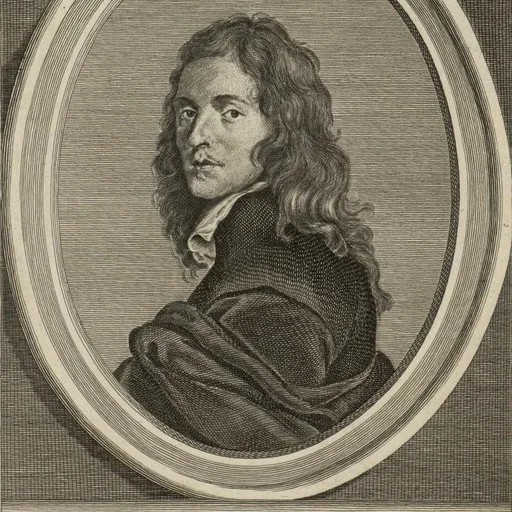
William Faithorne (1616–1691) was a British artist, born in Greater London.