Artwork
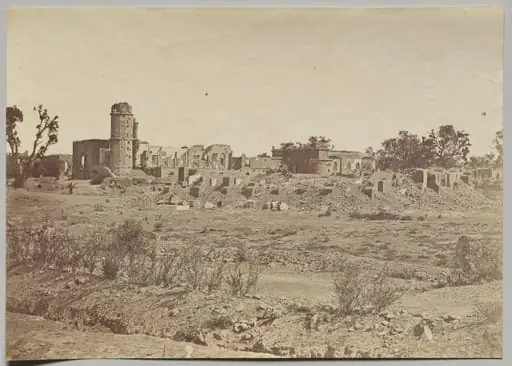
The Mucha Bawn, or the Old Citadel of Lucknow
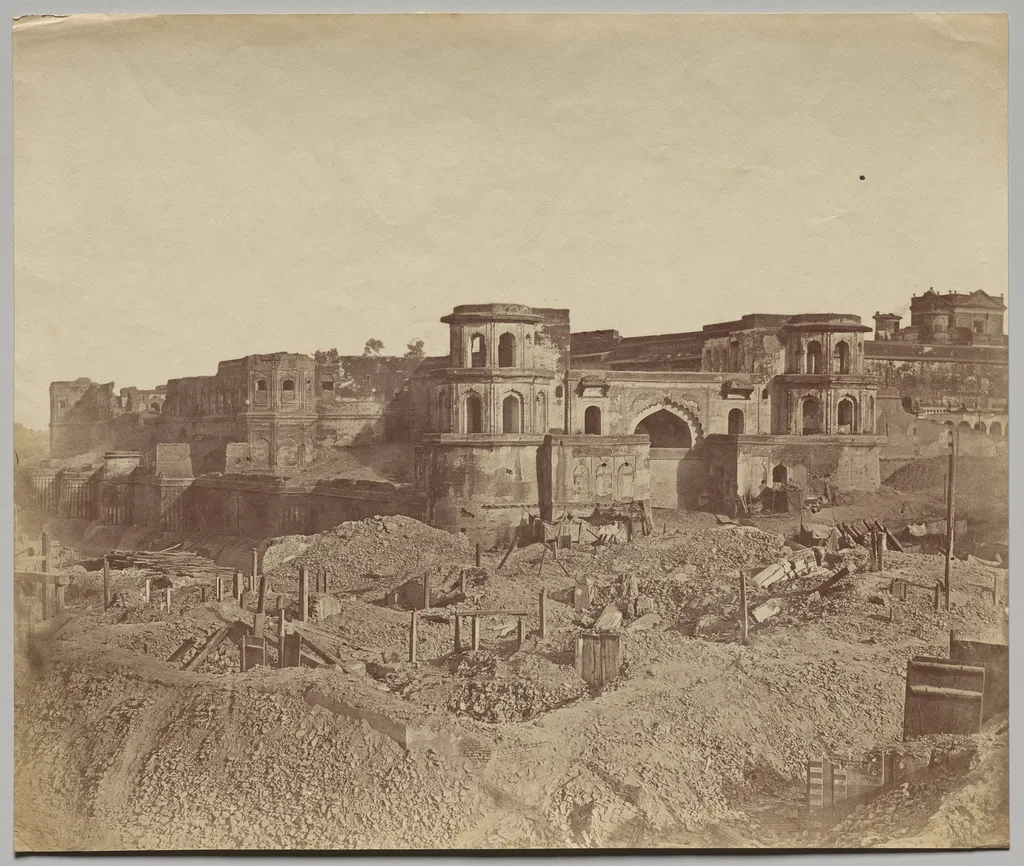
The Mucha Bawn, or the Old Citadel of Lucknow is a photography by the Impressionist artist Felice A. Beato. It dates from 1858 and is held in the collection of the Cleveland Museum of Art.
- Accession no.
- 2019.170.24
- Credit line
- Severance and Greta Millikin Purchase Fund
About this work
Overview
The composition centers on the ruined walls and shattered arches of the Mucha Bawn, a section of the complex heavily damaged during the conflict.
The Mucha Bawn, or the Old Citadel of Lucknow is an albumen print by Felice A. Beato, created in 1858. The image documents the interior courtyard of the Residency in Lucknow, India, following the suppression of the Indian Rebellion of 1857. Beato captures the aftermath of the siege, presenting a scene of extensive structural devastation.
The composition centers on the ruined walls and shattered arches of the Mucha Bawn, a section of the complex heavily damaged during the conflict. Rubble and debris litter the ground, while the remaining masonry displays the scars of artillery fire and fire. The photograph serves as a stark record of the destruction wrought during the rebellion, marking one of the earliest instances of war photography to depict the consequences of battle rather than the action itself.
Beato's work is significant in the history of photography for its unflinching documentation of the physical reality of war and its role in shaping Western perceptions of the Indian Rebellion. This specific view highlights the transition from romanticized depictions of India to a more documentary approach, emphasizing the ruins as a testament to the violence of the period.
Subject & Meaning
The picture captures the aftermath of violent upheaval, showing the citadel’s structural decay and the disorder left by conflict. The ruined masonry, fallen stonework and isolated wooden posts convey a sense of abandonment, while the composition invites reflection on the transience of fortified architecture and the human cost of war.
Technique & Style
Beato employed the wet‑plate collodion process, a mid‑nineteenth‑century photographic method that rendered fine tonal gradations. His handling of light and shadow accentuates the texture of crumbling stone, producing a realistic, documentary quality that emphasizes the physicality of the ruin without romanticizing the scene.
History & Provenance
Created shortly after the 1857 Indian Rebellion, the photograph served as visual evidence of the siege’s impact on Lucknow’s fortifications. It entered the Cleveland Museum of Art’s holdings through a mid‑20th‑century acquisition of Beato’s works, where it remains catalogued as an example of early war photography.
Context
The image belongs to a broader body of Beato’s work documenting colonial conflicts across Asia. In the 1850s, photographers began to travel to war zones, using the new medium to record events for audiences in Europe and America. This photograph thus reflects both the technological advances of the period and the imperial interest in visual reportage.
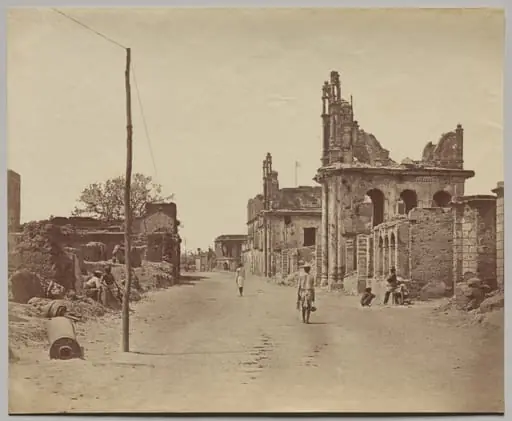
Artist & collection
Artist
Felice A. Beato and Felice Antonio Beato are collective signatures used by the brothers Felice Beato and Antonio Beato, who were both pioneering photographers in the 19th century. They were noted for their depictions of…

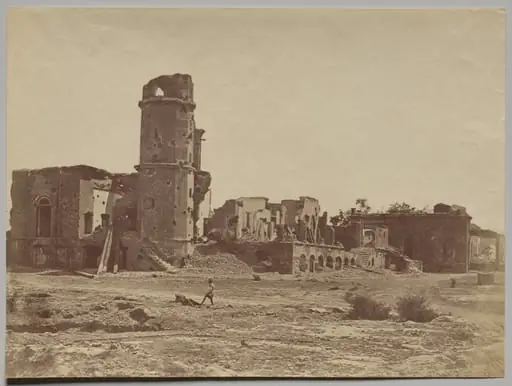 The Residency, Taken from the Redan Battery
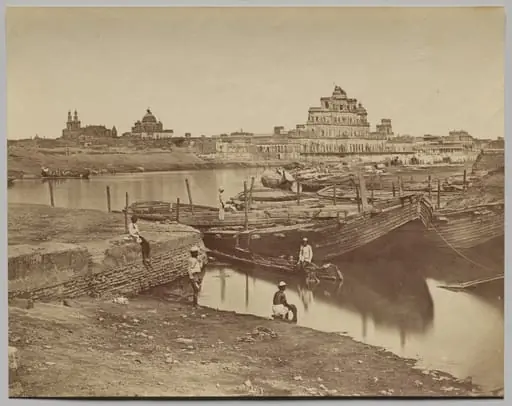 Bridge of Boats over the Gumti River near the Chattar Manzil and Fusseed Bakah or Old Palace
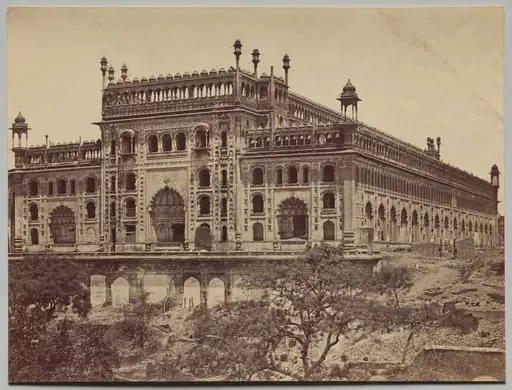 Exterior of Asaf-ud-Daula's Imambara, or Tomb
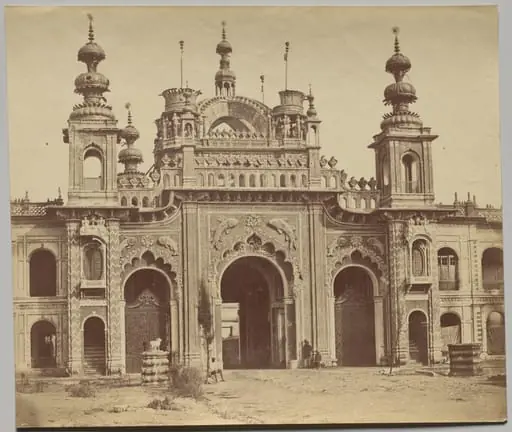 The Great Gateway of the Kasierbagh
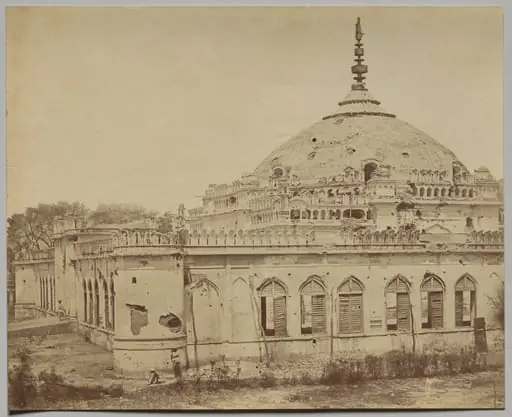 Shah Najaf
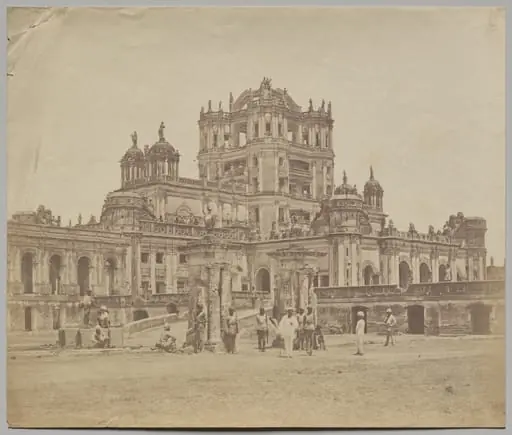 The Martinière College
 The Kudmsee Russol
 The Muchee Bhawan Fort and the Gomti River Taken from the Stone Bridge
 Delhi. The Kashmire Gate. The Scene of Some Very Hard Fighting in 1857
 Bailee Guard Gate, Taken from the Inside, Showing the Clock Tower
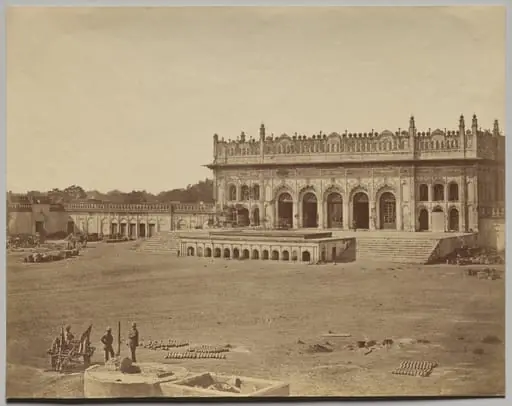 The Small Imambara
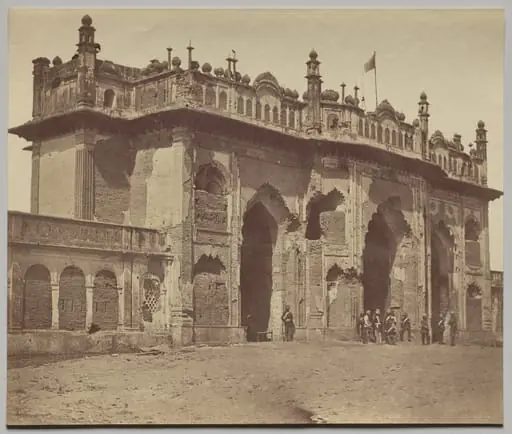 Gateway of the Small Emambara
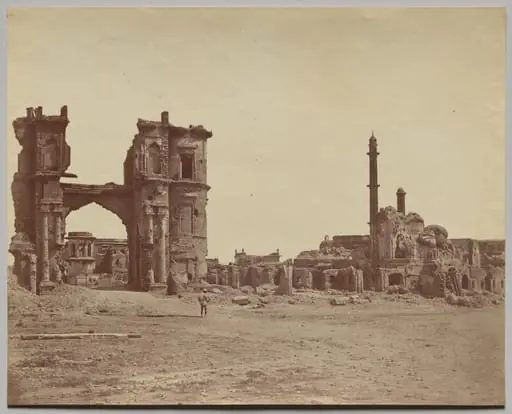 The Clock Tower in Front of the Bailee Guard Gate
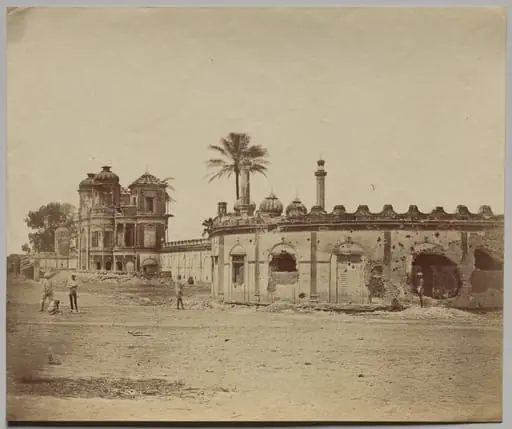 The Secundra Bagh, Showing the Breach and Gateway
 The Churchyard and Residency in the Distance