Artwork
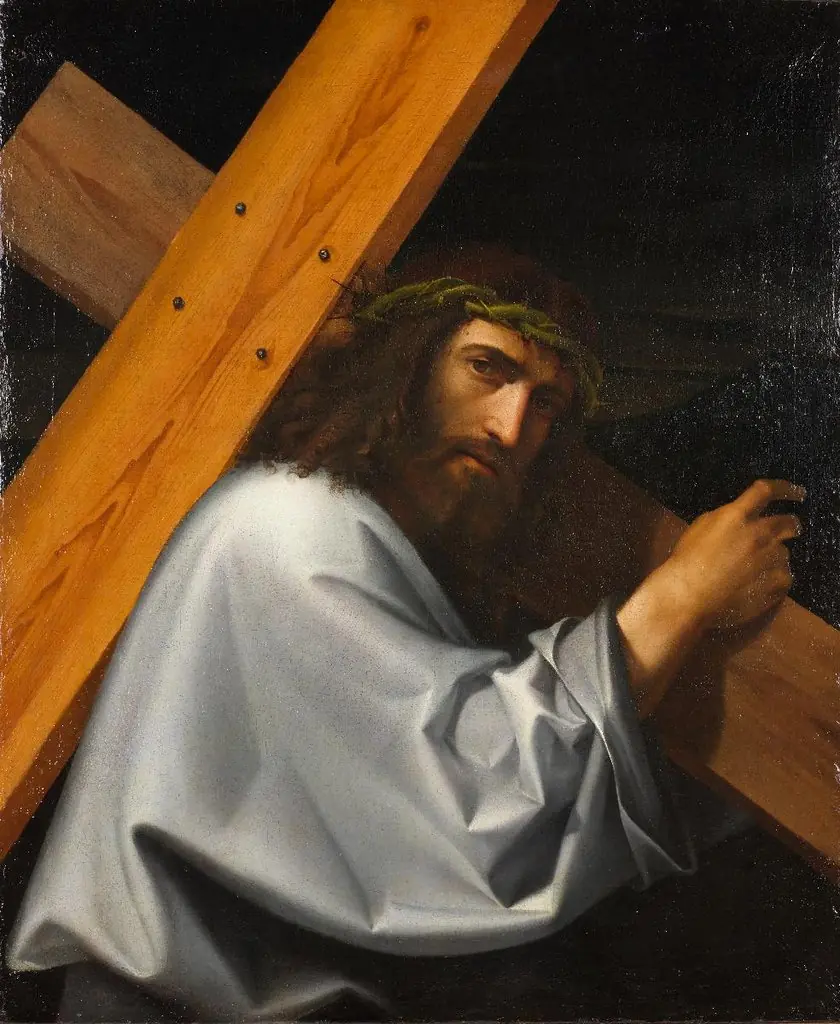
Christ carrying the Cross contemplated by Mary and the Christian Soul
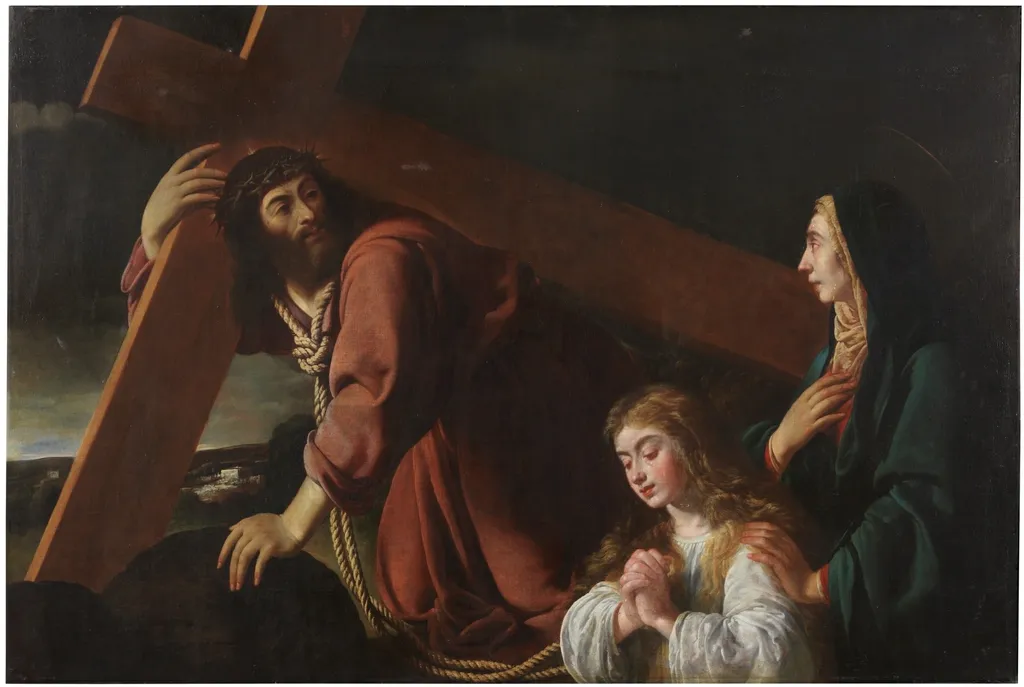
Christ carrying the Cross contemplated by Mary and the Christian Soul is an oil painting by the Early Baroque Italian artist Felipe Diricksen. It dates from 1630 and is held in the collection of the Museo del Prado.
About this work
Subject & Meaning
The work depicts Christ carrying the cross contemplated by Mary and the Christian Soul, an iconographic scene that combines the biblical narrative of the Via Crucis with contemplative devotion to the Virgin Mary and the faithful soul. The painting shows Christ in one of his falls on the way to Calvary, crowned with thorns, accompanied by Mary and a young figure representing the Christian soul, which has been identified as the artist’s daughter and also used as a model for Mary Magdalene in another work. The subject is rendered with delicate modeling of the youthful figure, soft transitions, and full luminosity, emphasizing the devotional focus on Christ’s Passion and the intercessory role of Mary.
The composition draws on Tiziano’s Christ bearing the Cross from El Escorial, reflecting Diriksen’s stylistic influences from Eugenio Cajés, Juan van der Hamen, and other Spanish Baroque painters, while the devotional intent is underscored by the work’s modest size, format, and the way the young figure directs the viewer’s attention toward the suffering and sacrifice of Christ.
Technique & Style
Stylistically, the facial features of Christ, particularly the slightly slanted eyes and thick eyelids, reflect the influence of Eugenio Cajés.
Executed in oil on canvas, this painting measures 124 cm by 185 cm. The work remains unsigned and displays a style rooted in the naturalism of the early seventeenth century, characterized by vigorous drawing and a tight brushstroke that creates strong modeling. This technique is enhanced by contrasting illumination, which fully lights the foreground figure of the Christian Soul while emphasizing the suffering of Christ. The young woman is rendered with minute strokes and a painterly touch, featuring soft transitions and full luminosity.
Stylistically, the facial features of Christ, particularly the slightly slanted eyes and thick eyelids, reflect the influence of Eugenio Cajés. The composition draws directly from Titian's Christ Carrying the Cross, focusing on the moment of a fall along the Way of the Calvary.
History & Provenance
The painting, dated to around 1630, is unsigned and was first attributed to Felipe Diricksen in 2008 by José María Palencia, director of the Museo de Bellas Artes de Córdoba, while the work belonged to the Colección Granados. The attribution was confirmed in 2014, when Professor Ismael Gutiérrez Pastor linked the canvas to one described in the artist's 1668 will, in which Diricksen expressed his wish that the painting be sent to his daughter, Sor Josefa de los Ángeles, a nun in Medellín (Badajoz). The young woman depicted in the foreground as the Christian Soul has been identified as Diricksen's daughter, who also reportedly served as the model for the Magdalene in another of his works, the Virgin Mary with Mary Magdalene and Saint John the Evangelist preserved at the Real Monasterio de la Encarnación in Madrid.
In 2016 the painting was acquired by the Museo del Prado in Madrid, where it has remained in the collection since.
The painting is held in the collection of the Museo del Prado in Madrid, having been acquired by the institution in 2016. Prior to this acquisition, the work belonged to the Colección Granados. Although currently attributed to Felipe Diricksen, the piece is unsigned and was first linked to the artist in 2008 by José María Palencia.
This attribution was substantiated in 2014 when Ismael Gutiérrez Pastor connected the canvas to a work described in the painter's 1668 testament, which designated the piece for his daughter, a nun in Medellín.
The provided sources do not list specific public exhibitions or loan history for the artwork following its entry into the museum collection.
Context
Considered one of the most exquisite surviving works by Felipe Diricksen, this painting exemplifies the naturalist style prevalent in early seventeenth-century Spain. The composition directly derives from Titian's Christ Carrying the Cross, a work housed at El Escorial near the artist's birthplace, while specific facial features reflect the influence of Eugenio Cajés. Diricksen's approach combines vigorous drawing with tight brushwork and dramatic lighting to model figures, showing broader affinities with contemporaries like Juan van der Hamen and Vicente Carducho.
Scholarly understanding of the piece evolved significantly after 2008, when José María Palencia first attributed the unsigned canvas to Diricksen. This attribution was solidified in 2014 by Ismael Gutiérrez Pastor, who linked the image to a 1668 testament wherein the artist designated the work for his daughter, identified here as the praying soul in the foreground. The painting entered the Museo del Prado's collection in 2016.
Overview
Created in 1630 by Felipe Diricksen, a Spanish painter of Flemish descent, this oil on canvas presents a moment from the Passion in which Christ bears the cross while the Virgin Mary observes. The composition is part of the early Baroque tradition that drew on Italian models, and the work is presently housed in the Museo del Prado.
Own this work as a print
Artist & collection
Artist
Felipe Diricksen, also Diriksen or Deriksen, (1590-1679), was a Spanish Baroque painter primarily of portraits and religious paintings, and a member of a family of Flemish painters.

- Christ Carrying the Cross
 Christ carrying the cross
 Christ Carrying the Cross
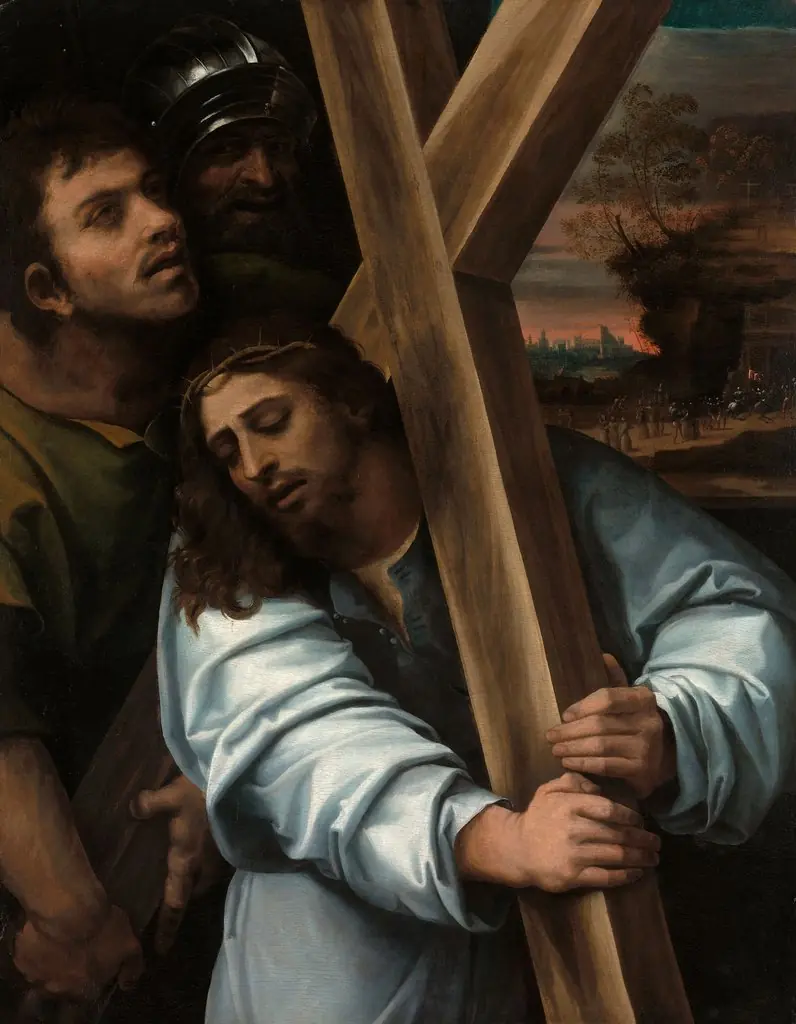 Christ Carrying the Cross
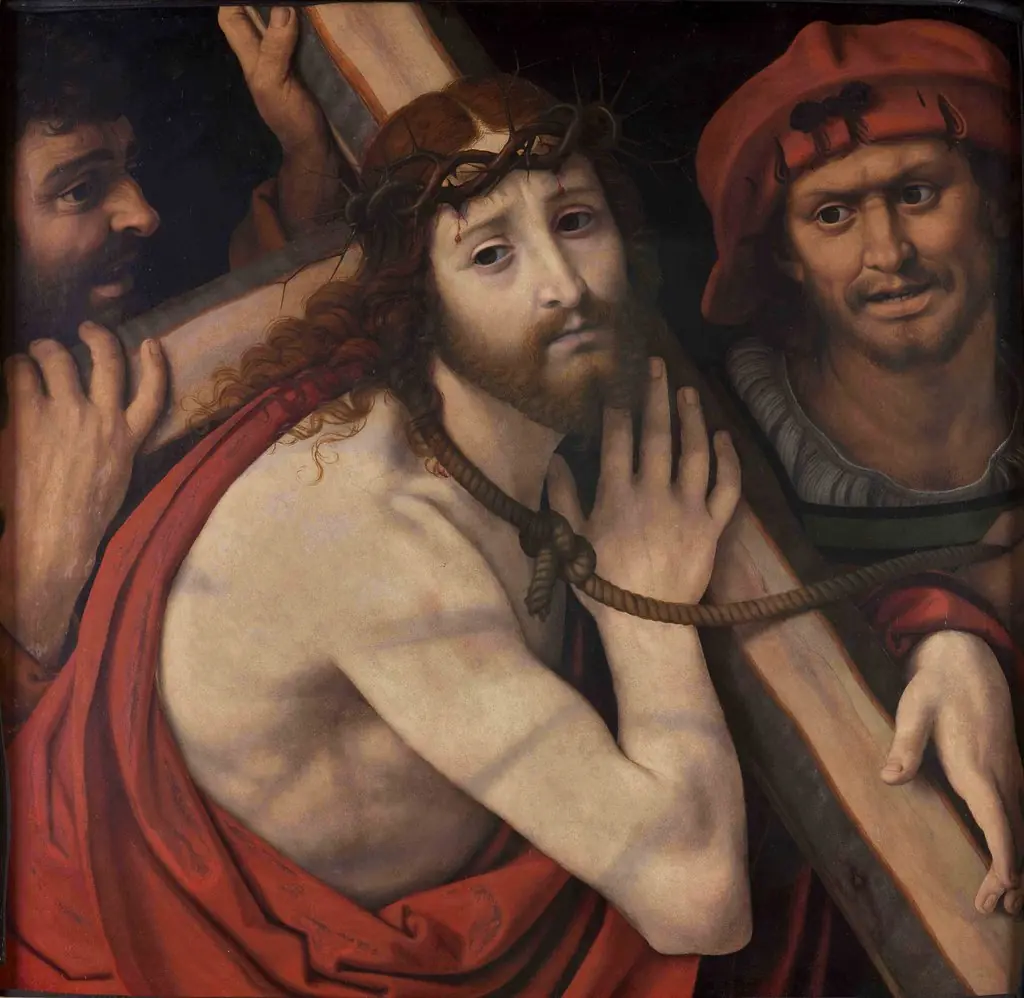 Christ carrying the Cross
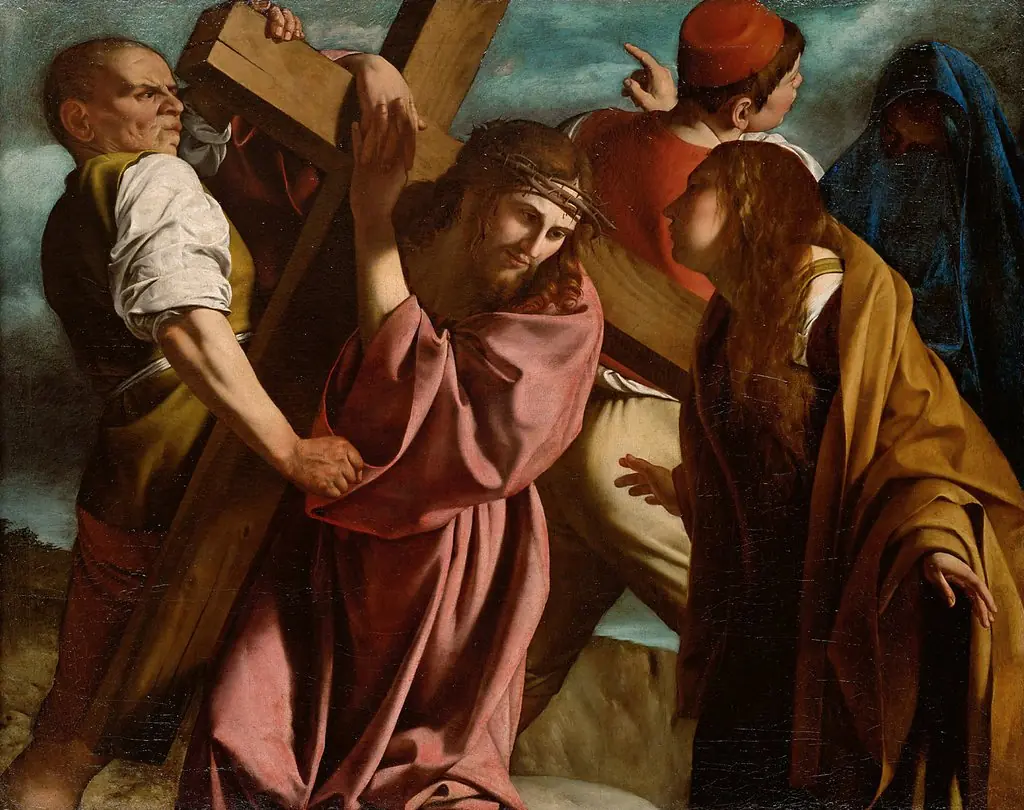 Carrying the Cross
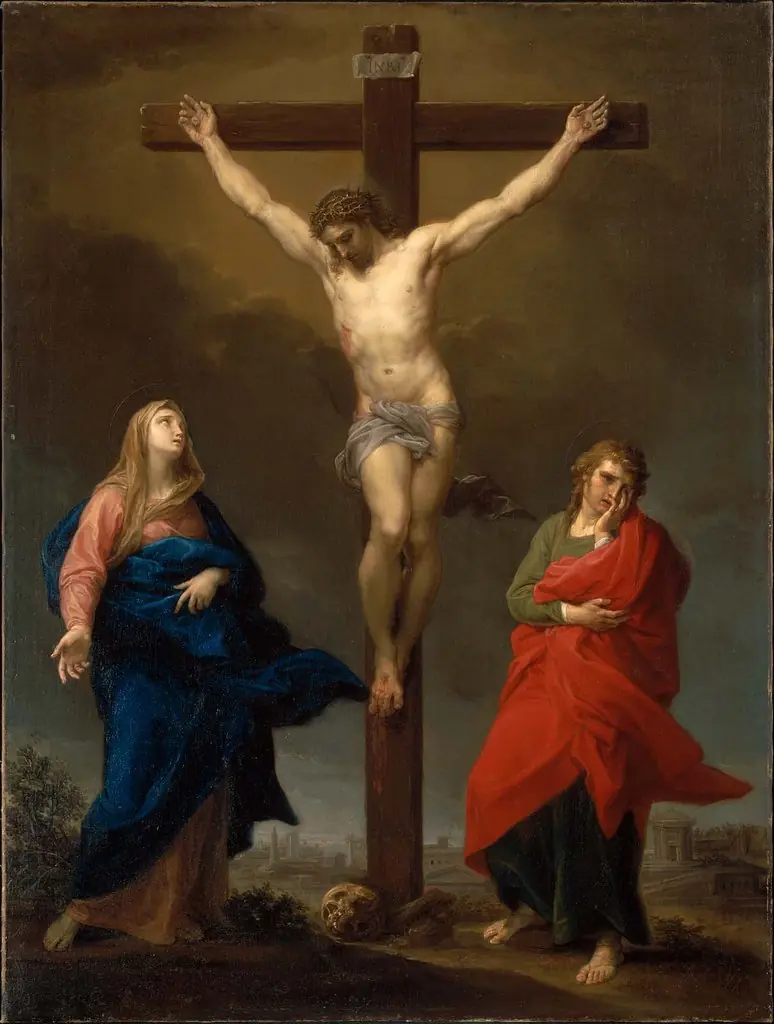 The Crucifixion
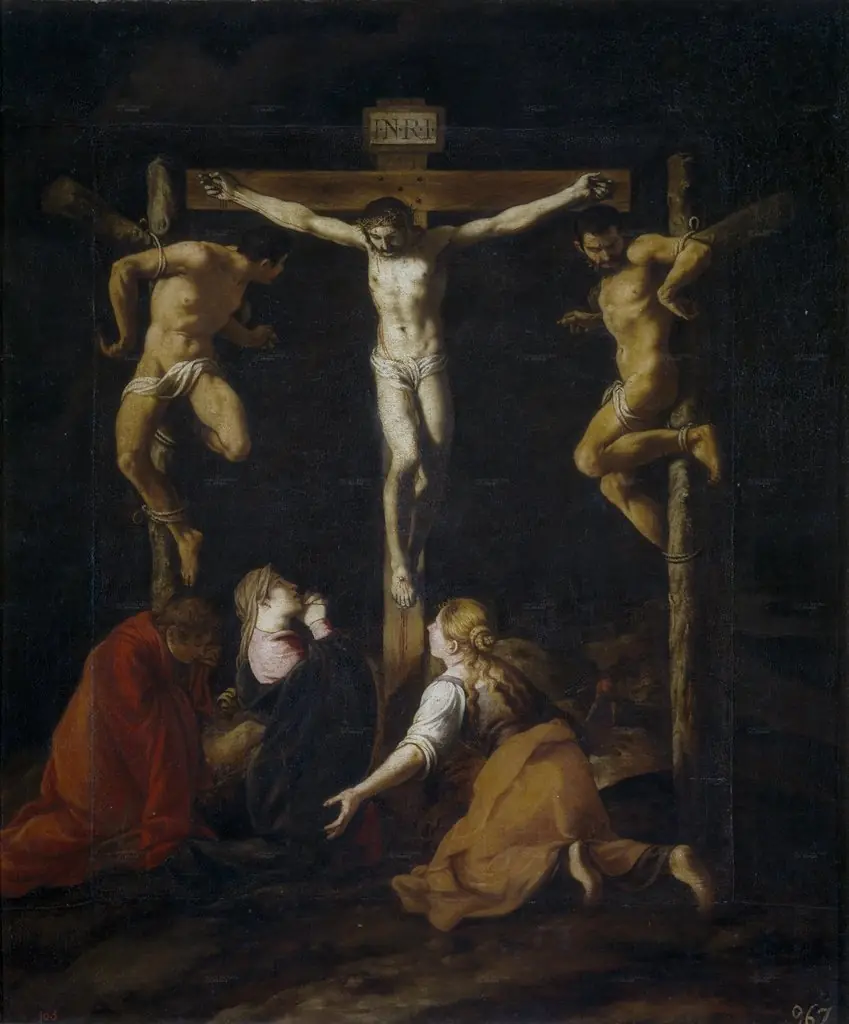 The Crucifixion
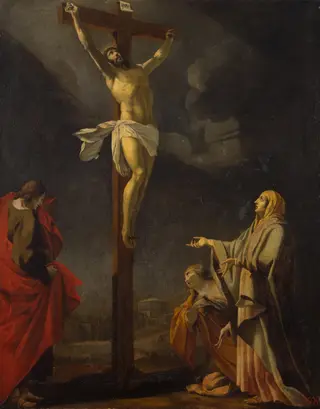 The Crucifixion
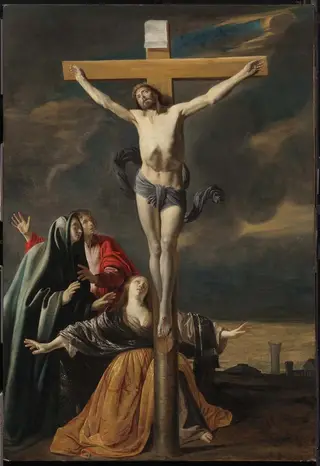 The Crucifixion with the Virgin, Saints John, and Mary Magdalen
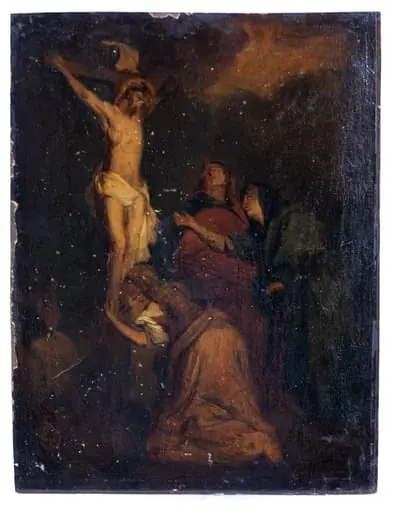 Răstignirea - schiță după van Dyck
 Cristo portacroce