Artwork
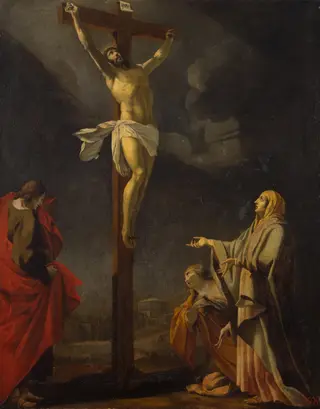
The Crucifixion with the Virgin, Saints John, and Mary Magdalen
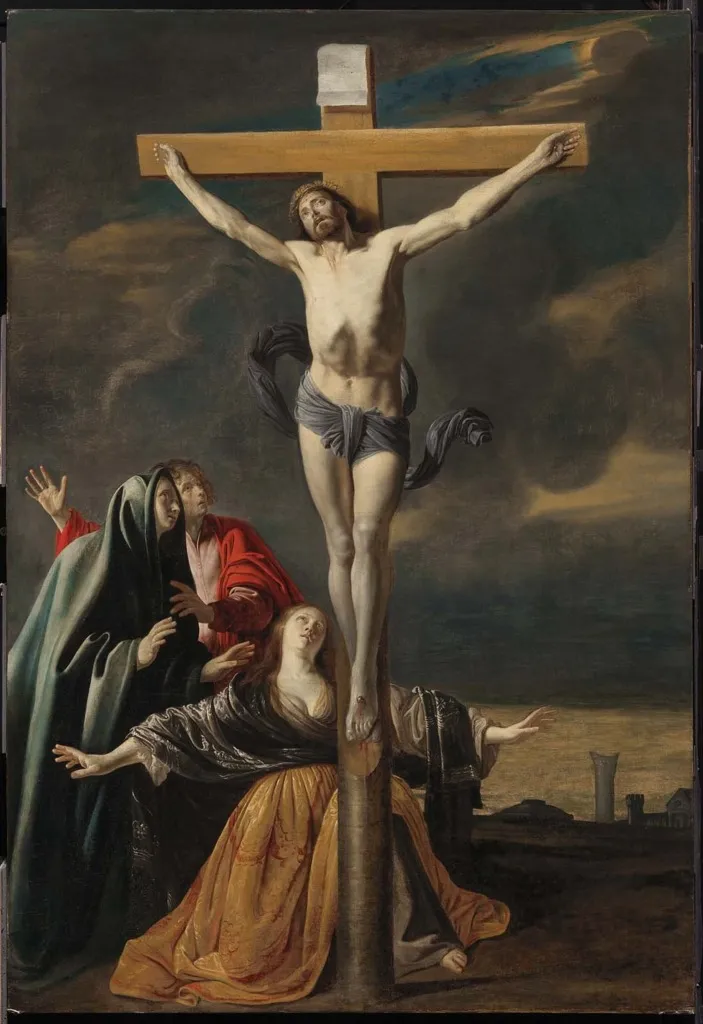
The Crucifixion with the Virgin, Saints John, and Mary Magdalen is an oil painting by the Early Baroque Italian artist Le Nain. It dates from 1650 and is held in the collection of the Museum of Fine Arts Boston.
About this work
Subject & Meaning
Mary Magdalene is identified by her association with the disciple whom Jesus loved, a detail emphasized in the iconography of the composition.
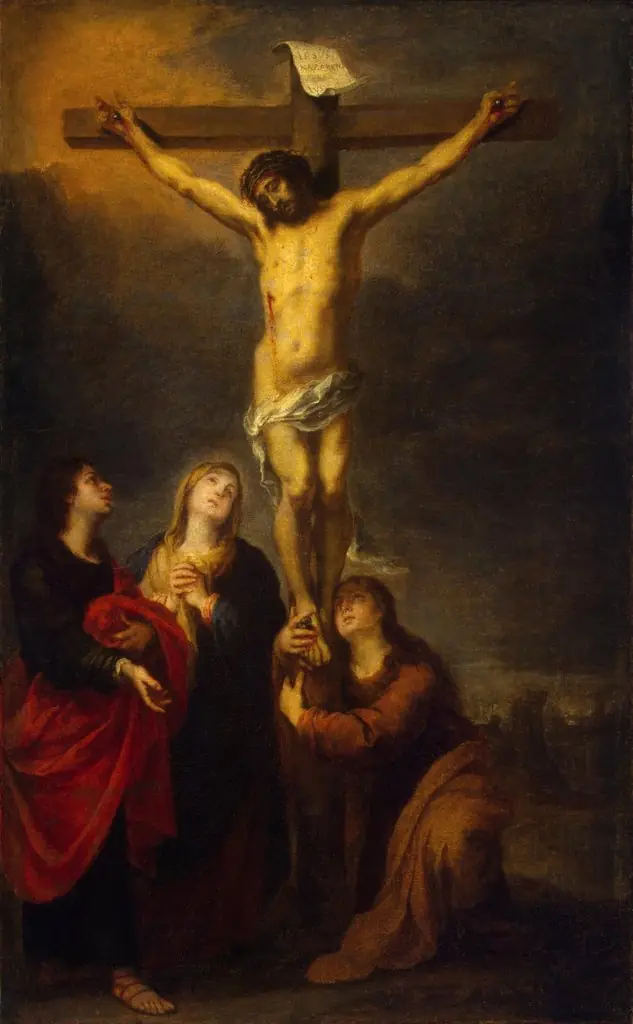
The painting presents a traditional Crucifixion scene within a religious framework, showing Jesus on the cross alongside the Virgin Mary, Saint John, and Mary Magdalene. Mary Magdalene is identified by her association with the disciple whom Jesus loved, a detail emphasized in the iconography of the composition. The work functions as a devotional image, embodying themes of sacrifice and redemption central to Christian religious art.
Technique & Style
The Crucifixion with the Virgin, Saints John, and Mary Magdalen is executed in oil paint on canvas, a standard support for mid-seventeenth-century French religious painting. The work measures 153 cm in height by 106 cm in width, adopting a vertical format suited to its devotional subject.
Classified as a painting within the religious genre, the canvas is held in the collection of the Museum of Fine Arts Boston, where its condition and presentation can be assessed directly.
History & Provenance
The Crucifixion with the Virgin, Saints John, and Mary Magdalen was painted by Mathieu Le Nain in 1650. It entered the collection of the Museum of Fine Arts Boston, where it remains on display. The work was created as an independent religious painting, reflecting the devotional practices of mid‑17th‑century France.
Context
The Crucifixion with the Virgin, Saints John, and Mary Magdalen (1650) is a religious painting by French artist Mathieu Le Nain, created in oil on canvas (153 cm × 106 cm). It depicts the crucifixion of Jesus alongside the Virgin Mary, Saint John, and Mary Magdalene. The work is housed in the Museum of Fine Arts, Boston, and was featured in the exhibition "Le mystère Le Nain."
Scholarly attention focuses on its devotional function within 17th-century French religious art and its stylistic connections to the Le Nain brothers' oeuvre.
The painting's iconography draws from contemporary Counter-Reformation imagery, emphasizing the Virgin's mourning and Magdalene's penitent presence. Its composition reflects the naturalistic realism characteristic of the Le Nain workshop, distinguishing it from more dramatic Baroque treatments of the same subject. The work remains a key example for understanding regional French religious painting in the mid-1600s.
Overview
Mathieu Le Nain’s mid‑17th‑century oil on canvas, titled The Crucifixion with the Virgin, Saints John, and Mary Magdalen, presents a somber depiction of the Passion. Executed around 1650, the work is part of the Museum of Fine Arts, Boston’s collection and illustrates a traditional biblical tableau with Christ on the cross surrounded by three mournful figures.
Artist & collection


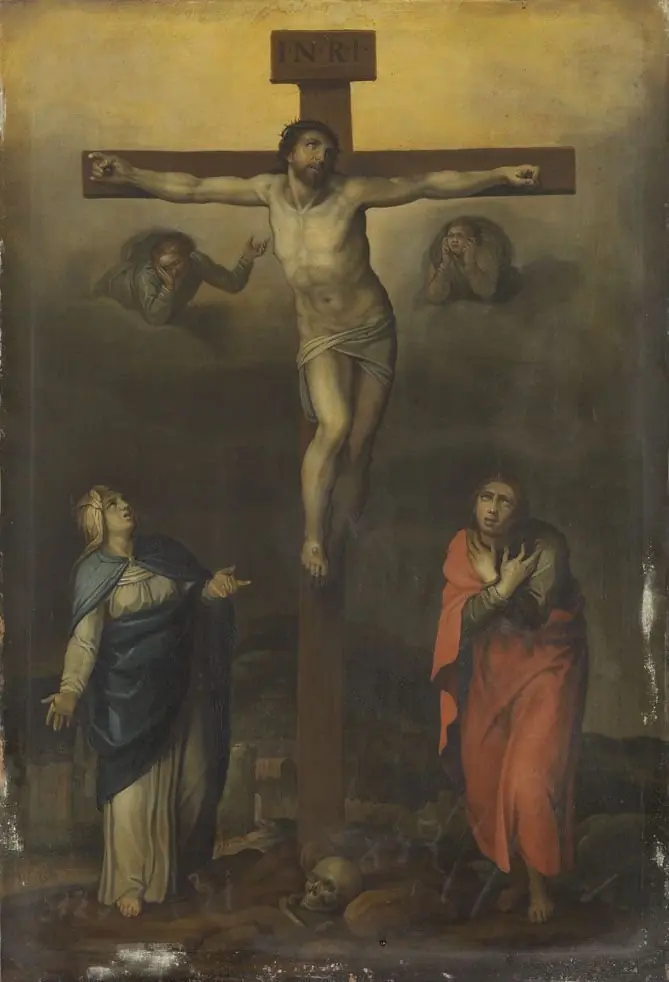
![The Crucifixion with the Virgin, Saint John, Saint Jerome, and Saint Mary Magdalene [middle panel], by Pietro Perugino](https://artifactworldgallery.com/img/pietro-perugino--the-crucifixion-with-the-virgin-saint-john-saint-jerome-and--a9b4c312771e3f71-w320.webp)