Artwork
The Virgin
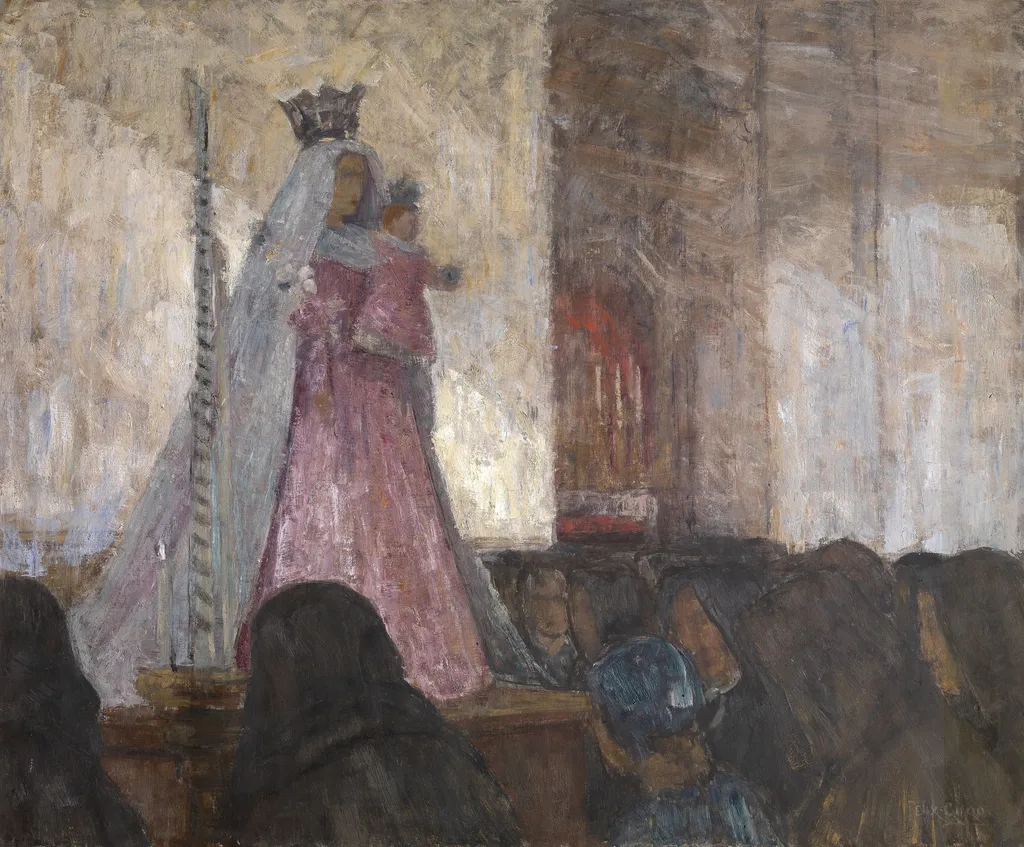
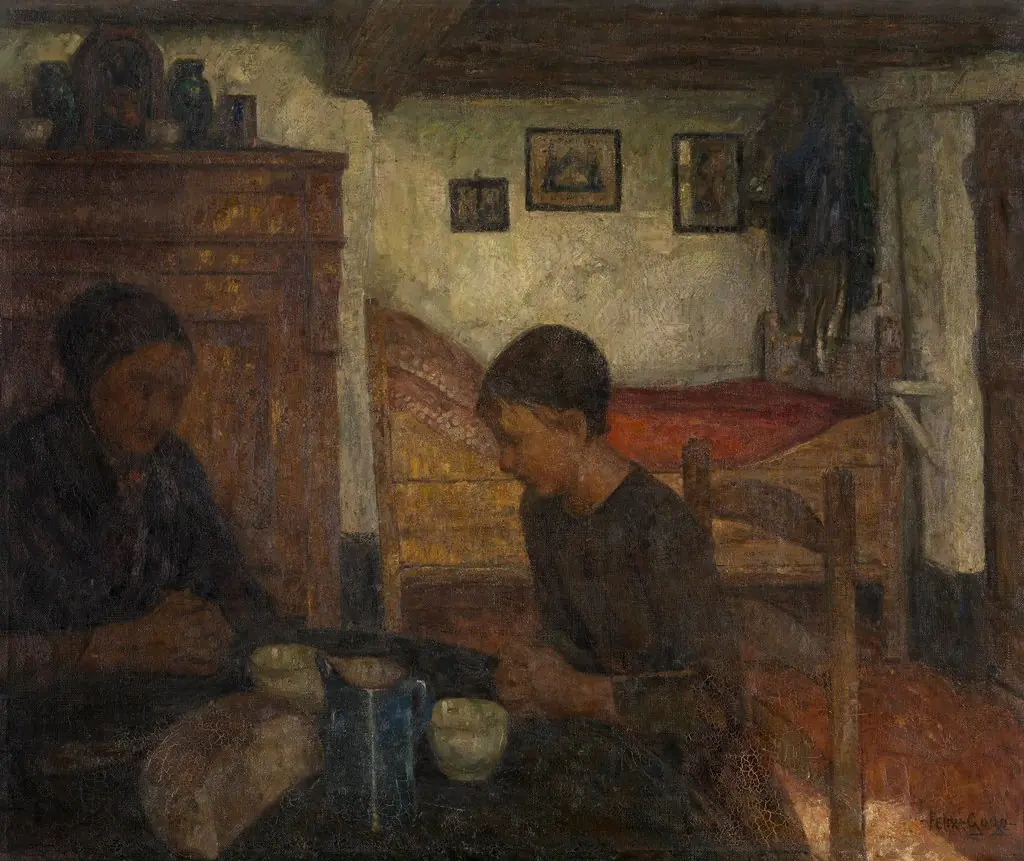
The Virgin is an oil painting by the Art Brut artist Felix Gogo. It dates from 1922 and is held in the collection of the Royal Museum of Fine Arts Antwerp.
About this work
Subject & Meaning
The subject reflects the artist's engagement with sacred themes, situating the work within the broader devotional tradition of Marian representation.
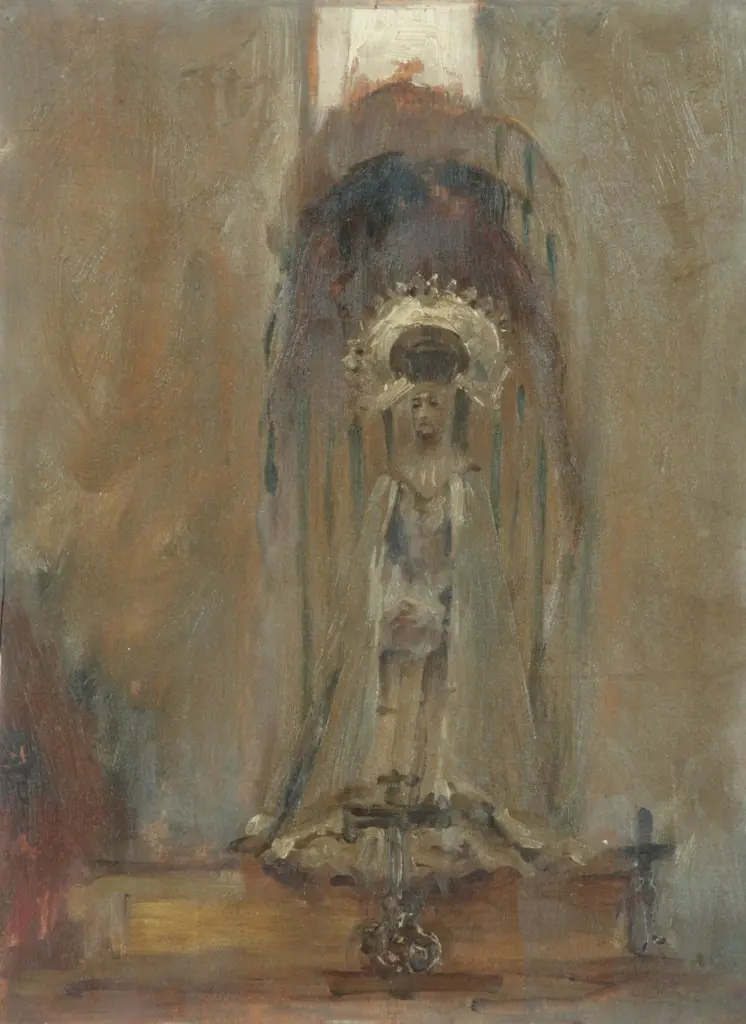
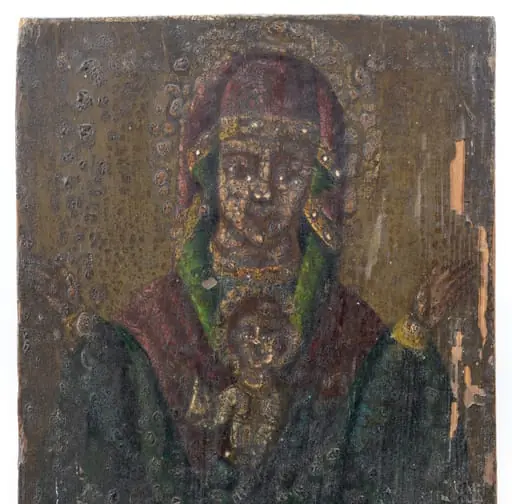
The painting depicts the Madonna and Child, a traditional Christian devotional subject showing the Virgin Mary with the Christ Child. Classified within the genre of religious art, the work continues the long iconographic tradition of Marian imagery, in which Mary is venerated as the mother of Jesus and a symbol of maternal devotion, purity, and divine grace. The pairing of mother and child conveys theological ideas of Incarnation and the sacred bond between humanity and the divine.
Rendered in oil paint, the composition adheres to the conventional Madonna and Child format that has been central to Western religious painting for centuries, presenting Mary as a figure of spiritual contemplation and tender care. The subject reflects the artist's engagement with sacred themes, situating the work within the broader devotional tradition of Marian representation.
Technique & Style
The Virgin is executed in oil paint on canvas, a standard support for early twentieth-century easel painting. The canvas measures 85.5 cm in height by 103.5 cm in width, giving the work a horizontal orientation that accommodates the Madonna and Child composition. The medium and support are consistent with Felix Gogo's broader practice of religious painting in the 1920s.
As a religious work depicting Mary and the Christ Child, the painting falls within the genre of devotional imagery, rendered in oil to allow for the layered handling and tonal modulation typical of the period.
History & Provenance
The painting was completed in 1922 by Felix Gogo. It is recorded as a religious work in oil on canvas with dimensions of 85.5 cm in height and 103.5 cm in width. The work was acquired by the Royal Museum of Fine Arts Antwerp, where it is currently held in the permanent collection.
Context
Felix Gogo's 1922 oil painting The Virgin, portraying the Madonna and Child, is housed in the Royal Museum of Fine Arts Antwerp. The work was created as a religious composition, reflecting early 20th-century devotional art practices. Its depiction of Mary with the Christ Child aligns with traditional iconography while demonstrating Gogo's distinctive stylistic approach within the religious painting genre.
The painting's provenance and physical dimensions (85.5 cm x 103.5 cm) are documented in its museum record and wikidata entry.
Scholarly attention to Gogo's religious works remains limited, though The Virgin is recognized as part of his broader oeuvre focused on devotional subjects. The painting's placement in a major European museum collection underscores its significance within the artist's body of work and the continued relevance of religious themes in modern art.
Art historical analysis positions The Virgin within the context of 20th-century religious art, where artists like Gogo reinterpreted traditional subjects through contemporary techniques. Its classification as a religious painting and its presence in a permanent collection highlight its role in preserving devotional art traditions in modern museum contexts.
Overview
The Virgin is an oil painting created by Felix Gogo in 1922, depicting the Virgin Mary and Christ Child. It is part of the collection at the Royal Museum of Fine Arts Antwerp.
Own this work as a print
Artist & collection