Artwork
Rinaldo und Armida
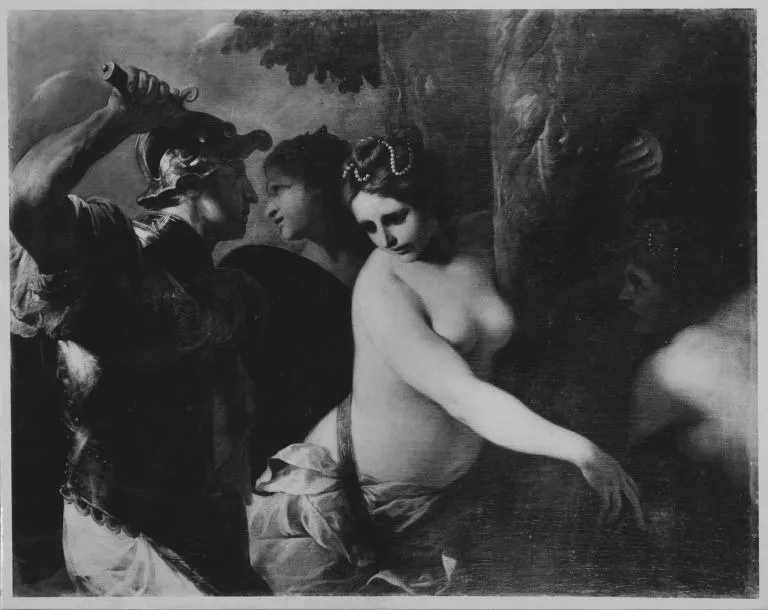
Rinaldo und Armida is an unspecified painting by the Early Baroque Italian artist Filippo Zaniberti. It dates from 1610 and is held in the collection of the Bavarian State Painting Collections.
About this work
Subject & Meaning
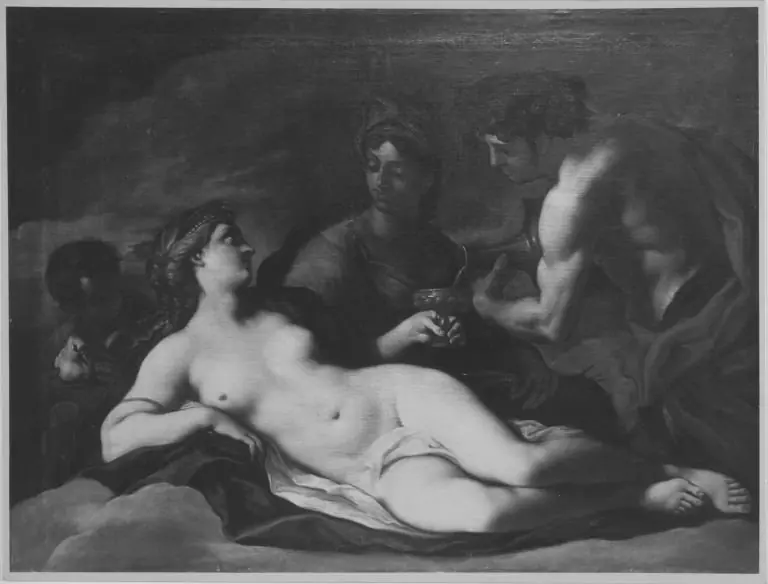
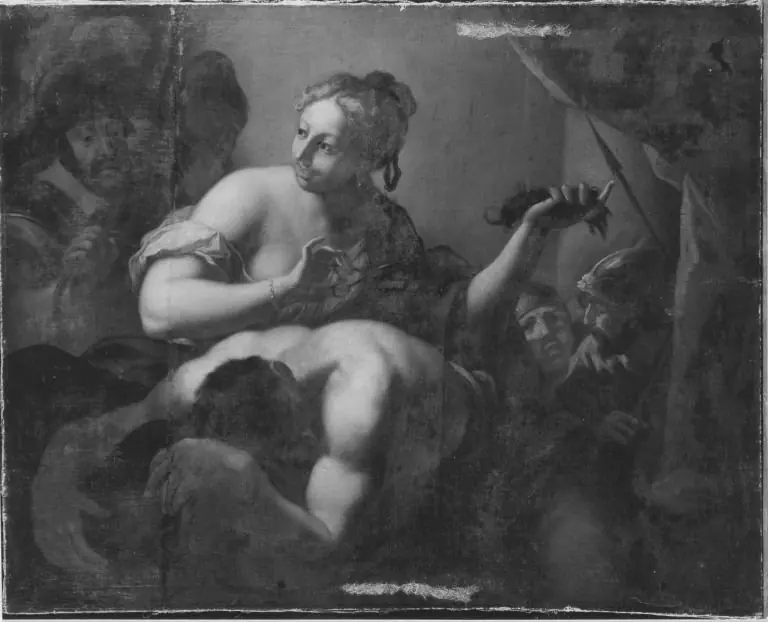
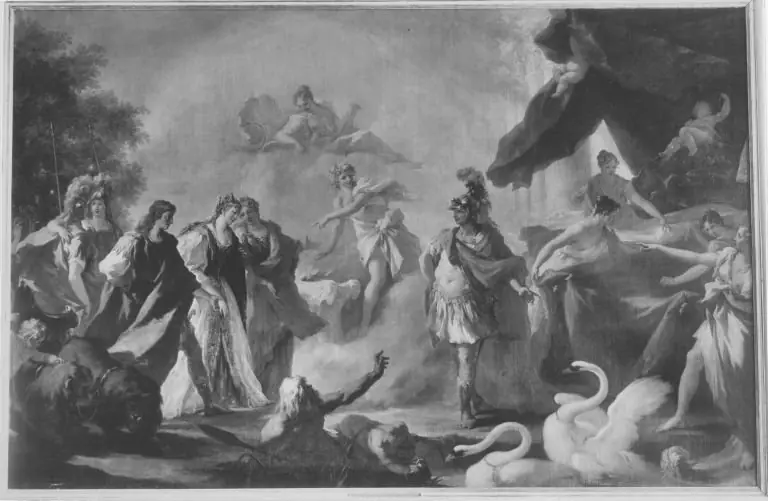
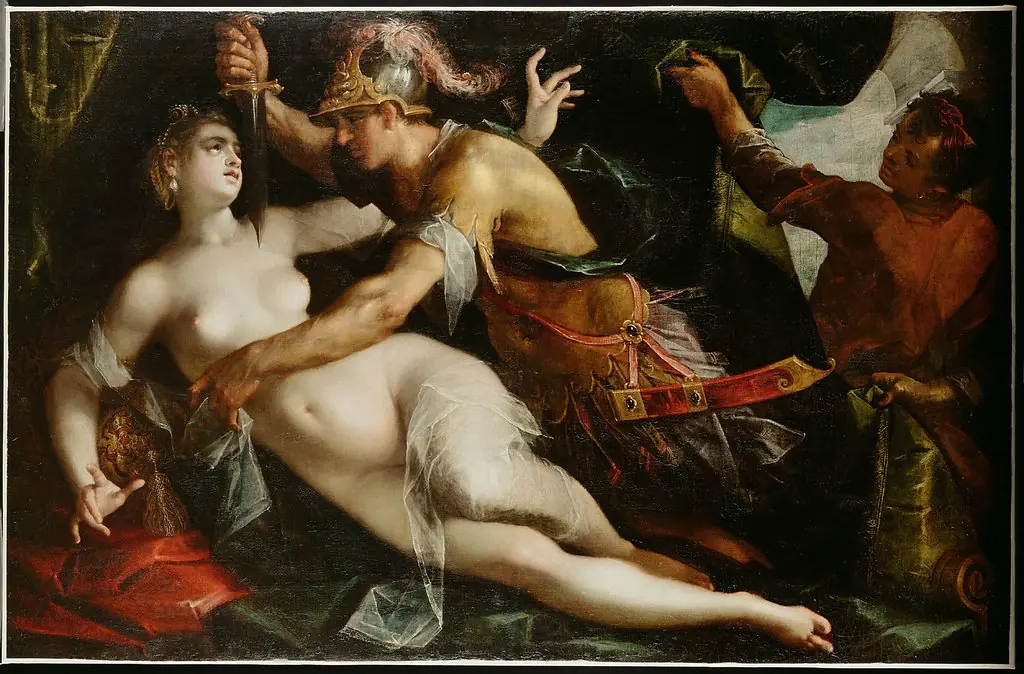
Armida's gesture and attire emphasize her role as a powerful Eastern temptress, while Rinaldo's faltering stance conveys his loss of martial resolve.
The painting shows the legendary moment when the Crusader knight Rinaldo is enchanted by the sorceress Armida, illustrating the medieval theme of Christian heroism overcome by exotic enchantment. Armida's gesture and attire emphasize her role as a powerful Eastern temptress, while Rinaldo's faltering stance conveys his loss of martial resolve. The composition draws on Baroque fascination with dramatic narrative and emotional contrast, using rich drapery and chiaroscuro to heighten the sensual tension between the figures.
This scene reflects Counter‑Baroque interest in moral allegory, presenting Armida as both seductive and dangerous, thereby embodying the conflict between faith and worldly desire.
Technique & Style
Rinaldo und Armida is classified as a painting by Filippo Zaniberti, dated 1610. According to the recorded cataloguing data, the work measures 113 cm in height by 144 cm in width, indicating a horizontal landscape-format panel or canvas of moderate scale. It is held in the Bavarian State Painting Collections at the Alte Pinakothek.
The subject matter depicts the literary figures Rinaldo and Armida, drawn from the tradition of Tasso's Gerusalemme liberata, a popular narrative source for early Baroque painters working in Italy at the turn of the seventeenth century.
Beyond the basic classification and dimensions, the available sources do not specify the medium (whether oil on canvas, oil on panel, or another support), the technique, handling, or the present condition of the work.
History & Provenance
The painting Rinaldo und Armida was created in 1610 by the Italian artist Filippo Zaniberti. According to the work’s inscription and internal dating, it dates to that year. Since its completion, the canvas has been part of the Bavarian State Painting Collections and is today displayed at the Alte Pinakothek in Munich. No earlier ownership or commission details are recorded in the available sources.
The work is held in the collection of the Bavarian State Painting Collections at the Alte Pinakothek in Munich, where it is inventoried under accession number 1610.
It was included in the exhibition “Barocke Formenwelt: Italienische Malerei aus den Sammlungen der Bayerischen Staatsgemäldesammlungen” held at the Alte Pinakothek in 1997.
Overview
Filippo Zaniberti’s 1610 oil painting, titled Rinaldo und Armida, is part of the collection at Munich’s Alte Pinakothek. The work presents a moment drawn from the epic romance of Armida and the knight Rinaldo, rendered with a dramatic interplay of light and shadow that emphasizes the tension between the figures.
Context
Zaniberti worked in the early Baroque period, a time when artists frequently dramatized literary subjects with heightened emotional intensity. The choice of the Armida‑Rinaldo episode reflects contemporary taste for heroic romance, while the use of chiaroscuro aligns the work with the broader influence of Caravaggio’s lighting techniques across Europe.
Artist & collection