Artwork
Cupids in Conspiracy
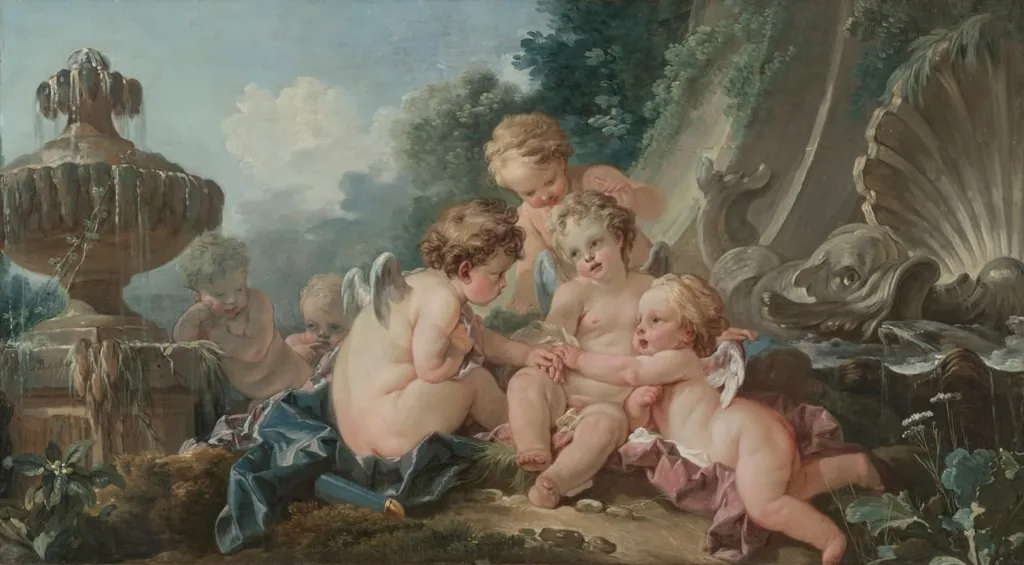
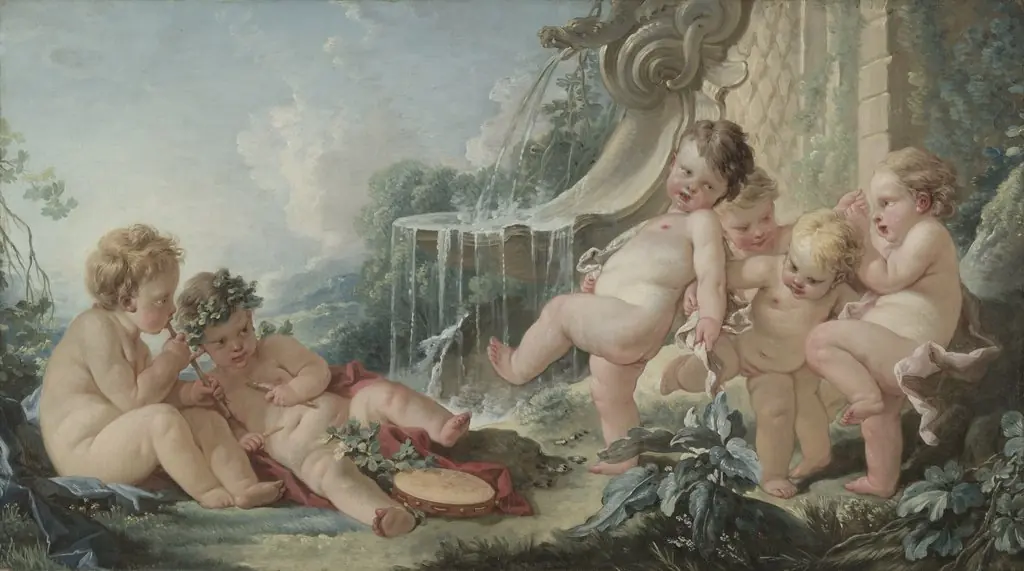
Cupids in Conspiracy is an unspecified painting by the Baroque artist François Boucher. It dates from 1744 and is held in the collection of the Cleveland Museum of Art.
- Accession no.
- 1948.181.2
- Credit line
- Gift of the Louis Dudley Beaumont Foundation
About this work
Overview
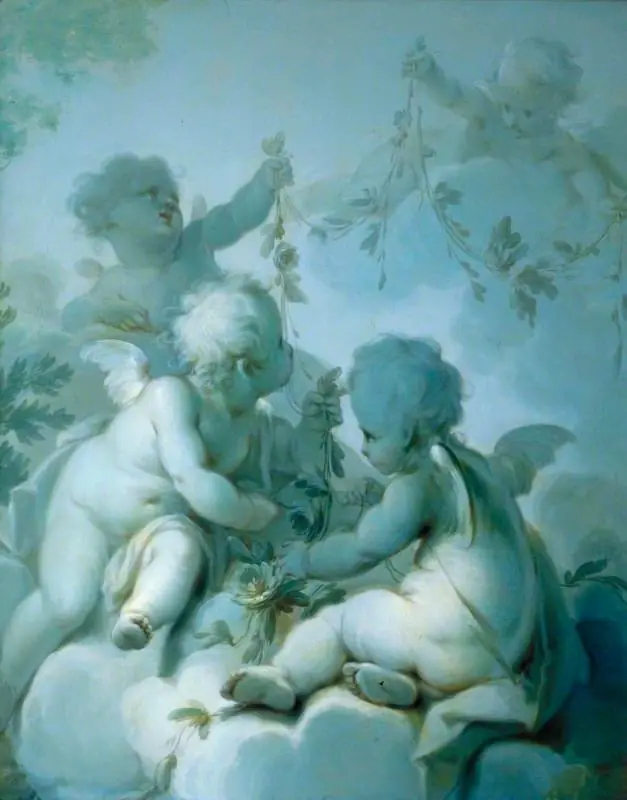
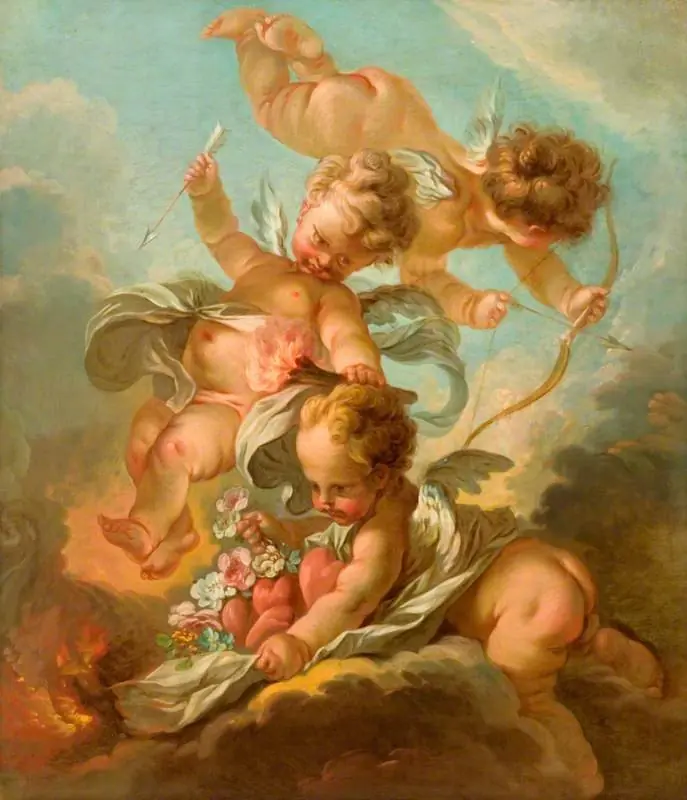
Cupids in Conspiracy is a painting by François Boucher, created in the 1740s as part of a pair of over-door panels. The work features six cherubs in a cloud, engaged in a secretive conversation.
Subject & Meaning
The painting depicts plump, rosy-cheeked cherubs huddled together, whispering behind cupped hands. The scene is characterized by a sense of playful intimacy and humor, with the cherubs' silky hair and rounded forms catching the light.
Technique & Style
The work exemplifies the light, charming, and pastoral style popular in 18th-century French art, blending classical elements with fantasy. Boucher's use of soft, luminous colors and delicate forms creates a sense of airy elegance.
History & Provenance
The original installation and commissioner of the painting remain unknown. The over-door panels were likely placed high on walls, often obscured by furniture, and were intended to add a decorative touch to an elite interior.

Artist & collection

Artist
François Boucher was a French painter, draughtsman and etcher, who worked in the Rococo style.