Artwork
Three Archangels with Tobias
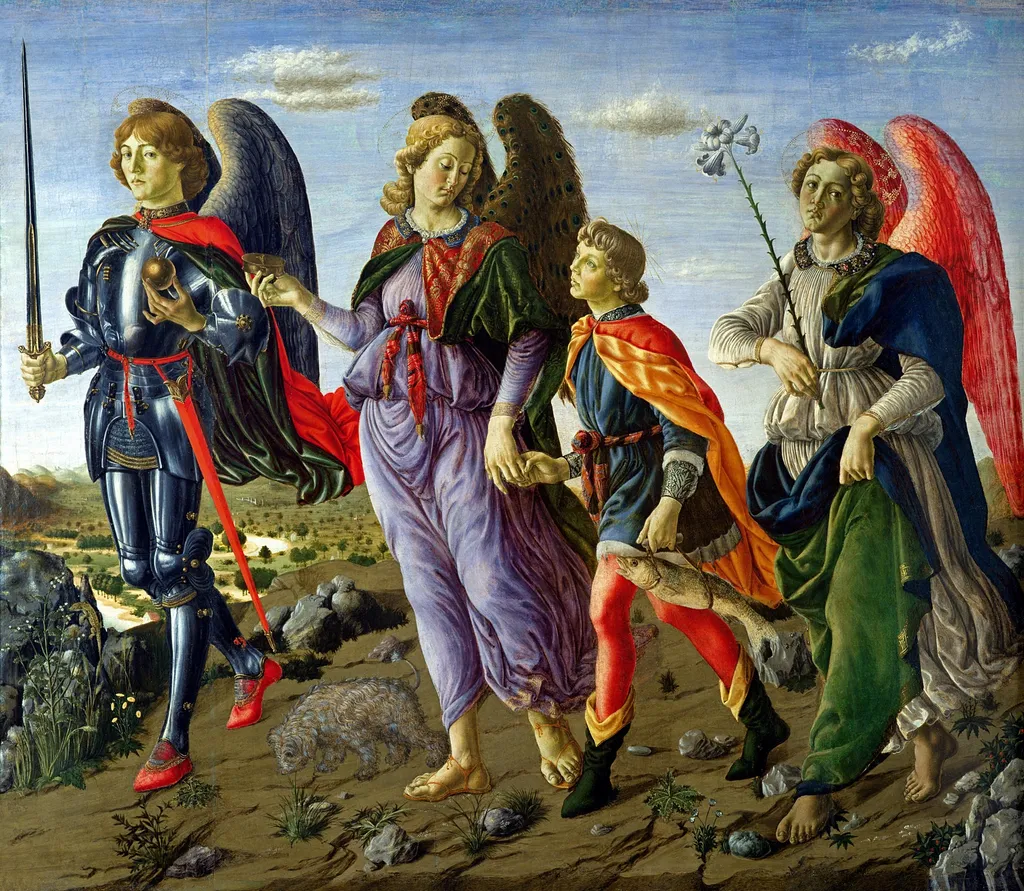
Three Archangels with Tobias is a tempera painting by the Early Renaissance artist Francesco Botticini. It dates from 1470 and is held in the collection of the Uffizi Gallery.
About this work
Overview
Measuring 135 by 154 centimeters, the work depicts the young Tobias journeying alongside the three archangels, Michael, Raphael, and Gabriel.
Three Archangels with Tobias is a religious tempera on panel painting created by the Italian Renaissance artist Francesco Botticini in 1470. Measuring 135 by 154 centimeters, the work depicts the young Tobias journeying alongside the three archangels, Michael, Raphael, and Gabriel. Originally executed for an altar in the basilica of Santo Spirito in Florence, the painting was later transferred to the Uffizi Gallery, where it has been housed since 1919. The picture is considered a significant example of early Renaissance devotional art, merging narrative clarity with refined elegance, and is often regarded as the masterpiece of Botticini's youthful period.
Subject & Meaning
The painting illustrates the biblical journey of Tobias, drawn from the Book of Tobit, in which the youth travels to Ecbatane to retrieve a cure for his father's blindness, specifically the heart, liver, and gall of a fish. While the biblical text only mentions the archangel Raphael as Tobias's companion, Botticini expands the scene to include Michael and Gabriel, a convention seen in other contemporary depictions. Each archangel bears specific attributes: Michael wears polished armor and holds a sword and a crucigerous orb, symbolizing divine justice and readiness to fight the devil. Raphael holds Tobias by the hand and extends a small cup, referencing his role as a healer and guide. Gabriel carries a white lily, the symbol of the Annunciation to Mary. Tobias holds the fish, the instrument of his father's cure, while a small dog walks at the group's feet. The archangels feature magnificent wings, an iconographic element adapted from the Winged Victory of the classical world. This iconography resonated deeply with Florentine merchant families, who viewed it as an auspicious omen for their children's future, and it became the definitive representation of the popular devotion dedicated to the Guardian Angel.
Technique & Style
Botticini executed the work in tempera on a wooden panel, employing a rich and luminous palette dominated by ultramarine, crimson, green, and gold. The figures are arranged in a processional horizontal progression across a rocky landscape dotted with sparse vegetation, while a distant river, hills, and a valley with scattered houses occupy the middle ground beneath a pale blue, gradually fading sky. The artist's meticulous attention to detail is evident in the rendering of textures, such as Michael's armor and the distinct, brightly colored wings that differentiate the angels. The surface shows fine craquelure but retains smooth, detailed brushwork with crisp contours. Soft, even daylight illuminates the scene, gently modeling the faces and the elegant, idealized drapery of the figures. The calm, composed expressions of the archangels and the rhythmic, ceremonial movement of the group convey spiritual purpose and divine harmony rather than emotional drama. The composition reflects the close influence of Verrocchio, prevalent in Botticini's youthful period, with hardly a trace of the more flowery style he would later adopt under the influence of Botticelli.
History & Provenance
The painting was commissioned in 1470 for the altar of the Compagnia dell'Arcangelo Raffaello, a confraternity of which Botticini himself was a member. This confraternity had held a chapel in Santo Spirito, Florence, since 1455, and the painting was specifically executed for this location, identified as the Cappani altar. The artwork remained in the basilica of Santo Spirito for centuries before eventually being transferred to the Uffizi Gallery in Florence, where it was formally accessioned into the collection in 1919. In the past, the painting was occasionally attributed to Verrocchio before being firmly recognized as a work by Botticini.
Context
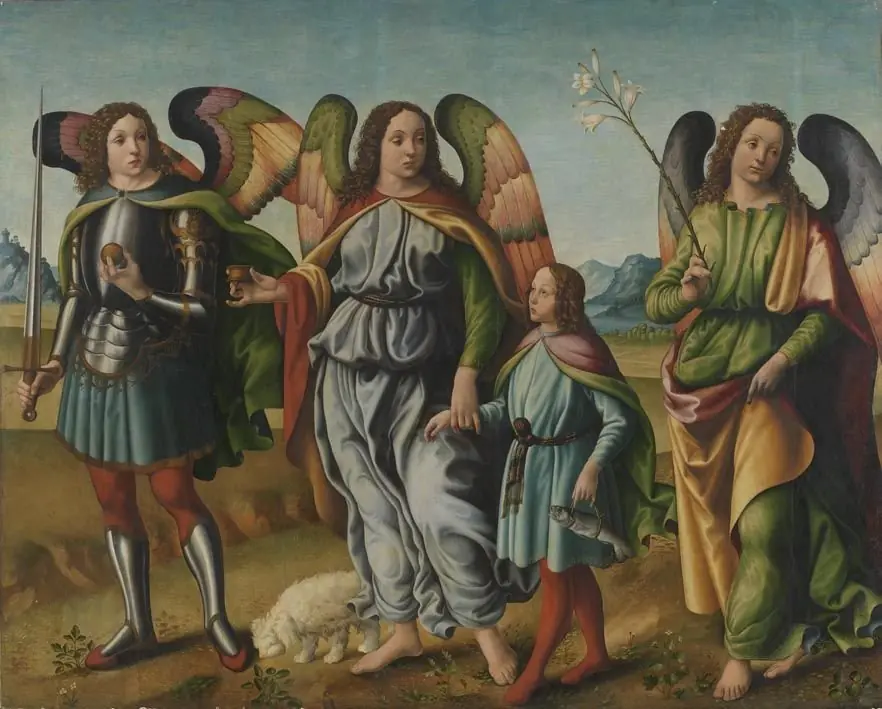
Francesco Botticini is often characterized as a fresh and pleasing minor master of the Florentine Renaissance. His early work, including this painting, shows the close influence of Verrocchio, characterized by linear precision and graceful contours. The painting holds a specific place in the history of Renaissance devotional art due to its origin for the Confraternity of the Archangel Raphael, reflecting the spread of the Guardian Angel cult in fifteenth-century Florence. The composition of the work proved influential, serving as a direct model for a later painting of the same subject by Filippino Lippi, a disciple of Botticelli. Lippi's version shares similar details and figure placement but distinguishes itself through lighter, more flowing drapery, marking the stylistic shift toward the later Renaissance aesthetic.
Legacy
The painting's most direct legacy lies in its compositional influence on Filippino Lippi's later work of the same title, which adapted Botticini's processional arrangement and figure placement. Beyond its artistic influence, the work remains a key visual document of fifteenth-century Florentine lay spirituality, encapsulating the mercantile class's investment in protective religious iconography. Today, it is recognized as Botticini's most frequently mentioned work alongside his Assumption of the Virgin, securing his reputation within the Uffizi's collection of Renaissance masterpieces despite his status as a secondary master compared to his more famous contemporaries.
Own this work as a print
Artist & collection
Artist
Francesco Botticini (real name Francesco di Giovanni, 1446 – 16 January 1498) was an Italian painter of the Early Renaissance.

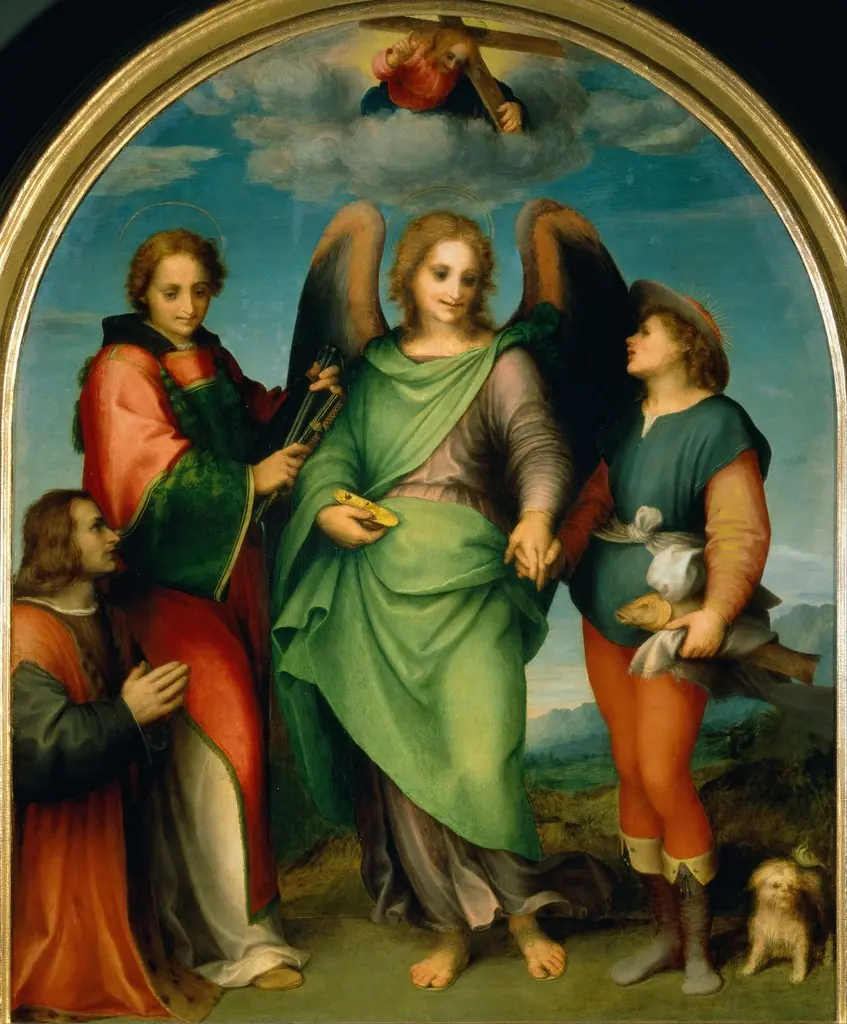 Archangel Raphael with Tobias, St. Laurentius and the donor Leonardo di Lorenzo Morelli
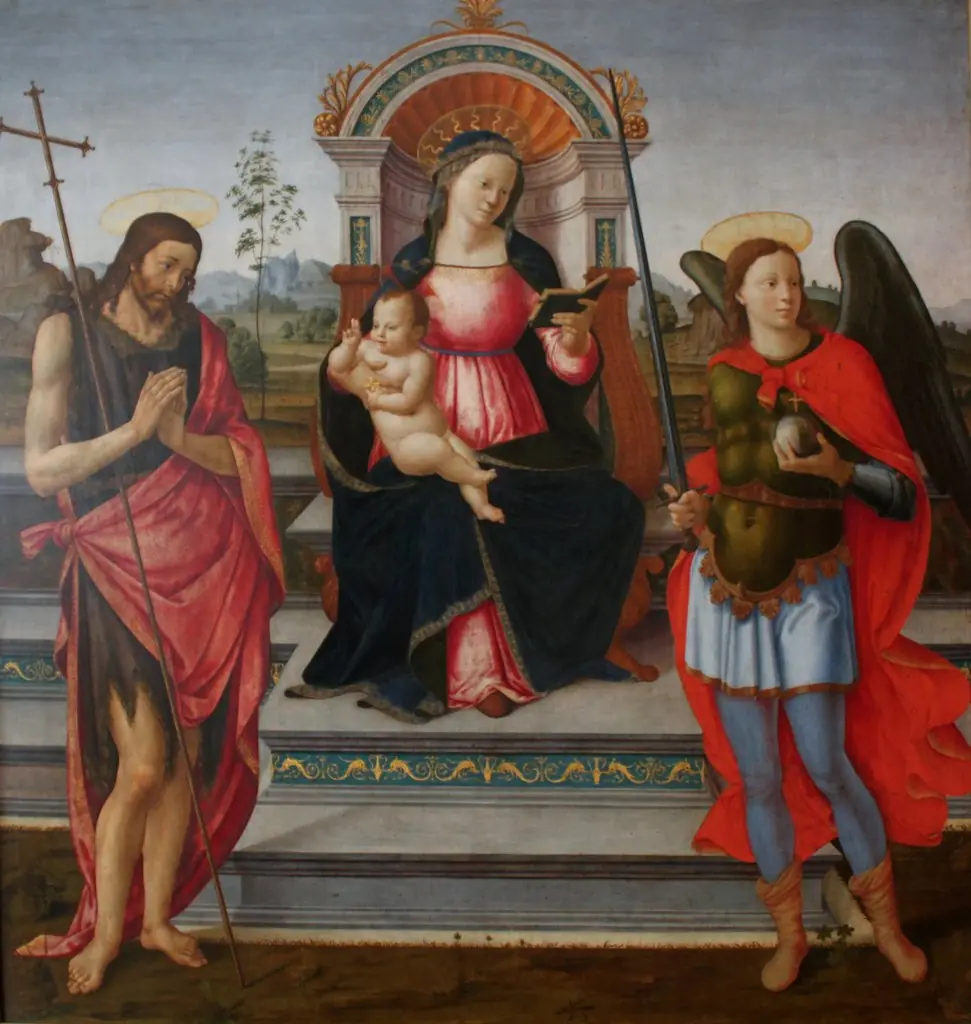 Madonna Enthroned with the blessing child, John the Baptist and St. Michael the Archangel
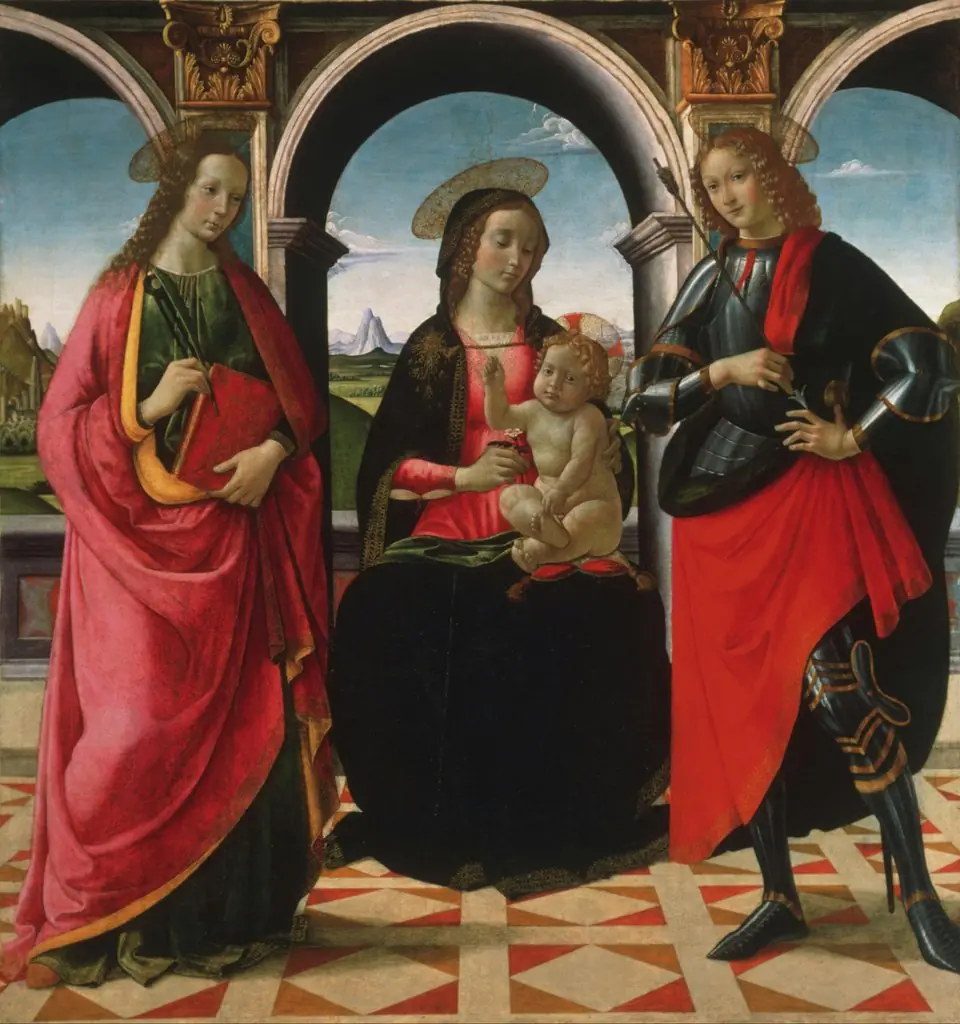 Virgin and Child, with Saints Apollonia and Sebastian
 Landscape with biblical scenes and scenes from the legends of saints
 The Archangel Gabriel
 Annunciation