Artwork
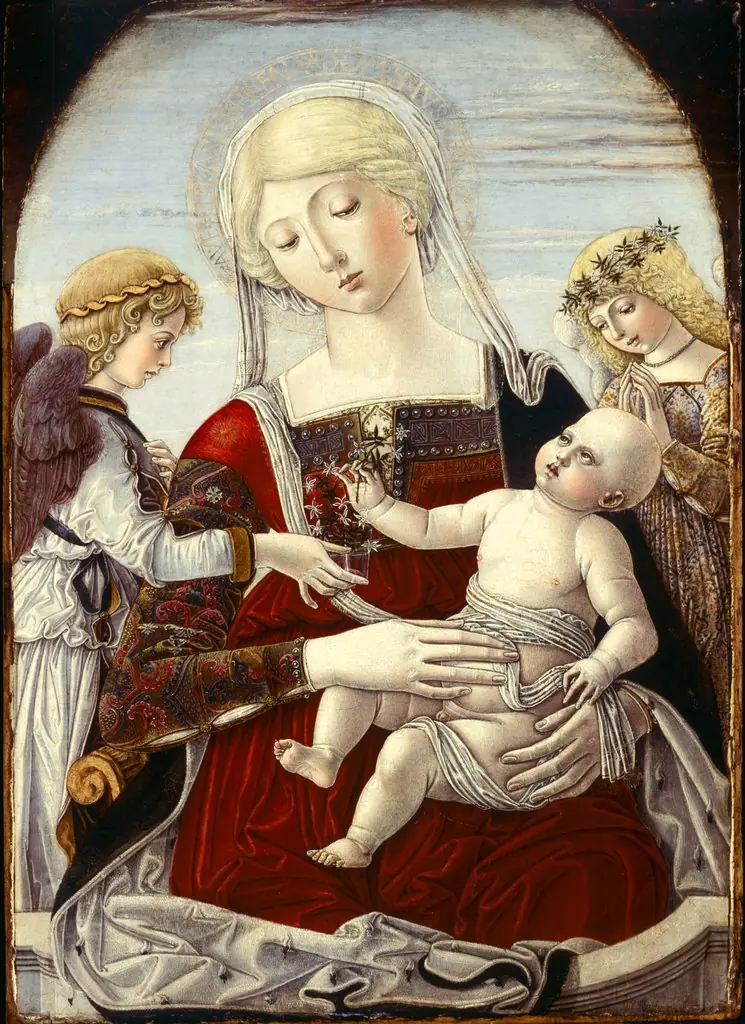
Mary with the Child, the Boy John Adoring the Child, and Two Saints
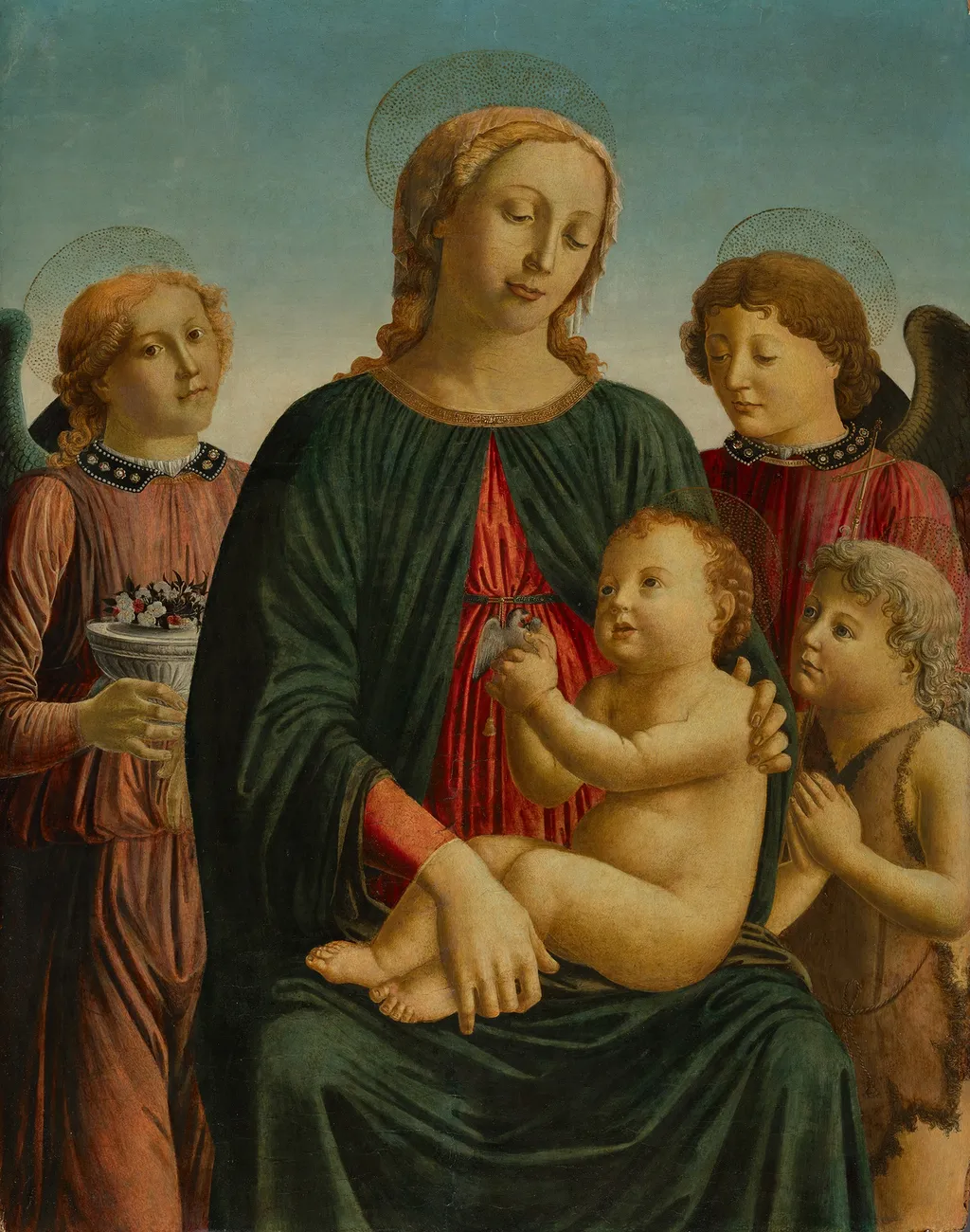
Mary with the Child, the Boy John Adoring the Child, and Two Saints is a paint painting by the Early Renaissance artist Francesco Botticini. It dates from 1490 and is held in the collection of the Gemäldegalerie Berlin.
About this work
Overview
Executed in paint on a poplar panel, this religious work depicts the Madonna and Child with attendant figures in a symmetrical, pyramidal composition.
Mary with the Child, the Boy John Adoring the Child, and Two Saints is a devotional painting by Francesco Botticini, dated to 1480. Executed in paint on a poplar panel, this religious work depicts the Madonna and Child with attendant figures in a symmetrical, pyramidal composition. The painting is held in the collection of the Gemäldegalerie Berlin, where it remains an important example of Botticini's contribution to late quattrocento Florentine devotional imagery. As a product of the period when circular paintings, or tondi, were popular forms of domestic decoration in Florence, the work exemplifies the intimate religious art produced for private contemplation during this era.
Subject & Meaning
The painting presents a sacred conversation centered on the Virgin Mary, who sits holding the nude Christ Child on her lap. The infant grasps a small bird, an element that may carry symbolic resonance. To the right, the young Saint John the Baptist, identifiable by his curly hair and fur garment, presses his hands together in prayer, adoring the Christ Child. Behind the central pair stand two winged figures with halos, one in pink holding a vase of white and red flowers, the other in red with a jeweled collar, serving as attendant angels. All five figures wear dotted circular halos, unifying the holy assembly. The flowers offered by one angel may allude to the purity of love or the Passion, common symbolic associations in Florentine devotional painting. The composition emphasizes the intimate relationship between the holy figures while directing the viewer's attention to the Christ Child as the focal point of veneration.
Technique & Style
The work is painted in paint on a poplar panel, a support typical of Florentine panel painting. The surface exhibits fine craquelure throughout, consistent with its age and medium. Botticini's handling shows smooth modeling with soft transitions in flesh tones, while the drapery is rendered with deep, regular folds. Light falls evenly from the left, illuminating faces and hands to create a gentle, unified atmosphere. The composition is pyramidal and symmetrical, with the central figures occupying most of the frame, a structural choice that lends stability and monumentality to the intimate scene. The background consists of a flat blue-green sky, against which the figures are clearly silhouetted. This approach, combining careful observation of form with a balanced, harmonious arrangement, reflects the influence of Verrocchio's circle on Botticini's early development.
History & Provenance
The painting is dated to 1480, placing it within Botticini's mature period. Its provenance before entering the Gemäldegalerie Berlin is not documented in the available sources. The work is currently located at the Gemäldegalerie Berlin, where it is catalogued under the title Mary with the Child, the Boy John Adoring the Child, and Two Saints. No exhibition history is recorded in the provided sources.
Context
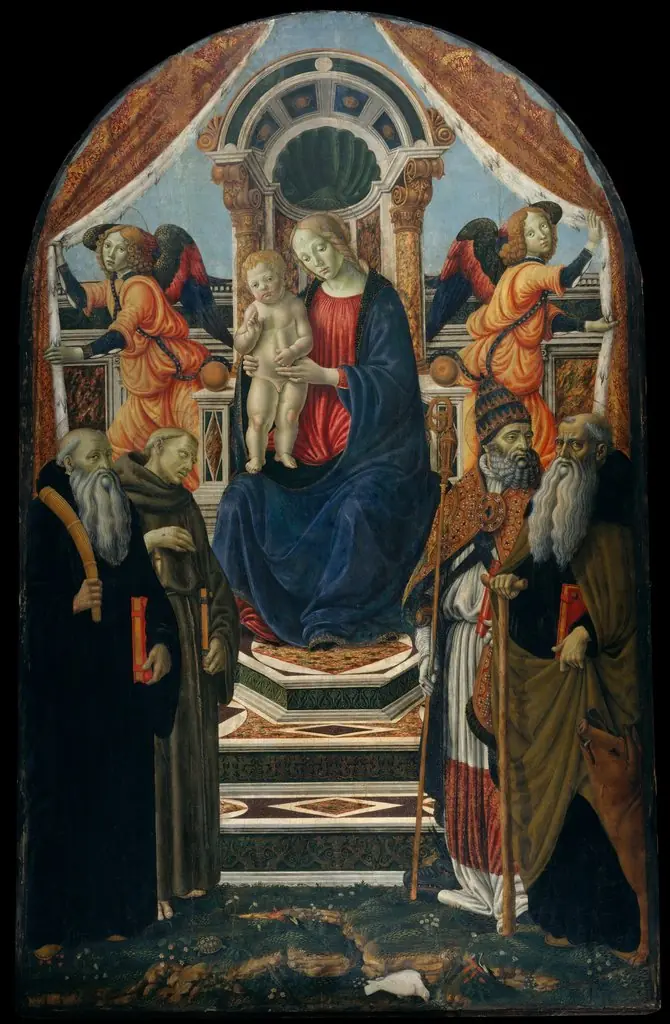
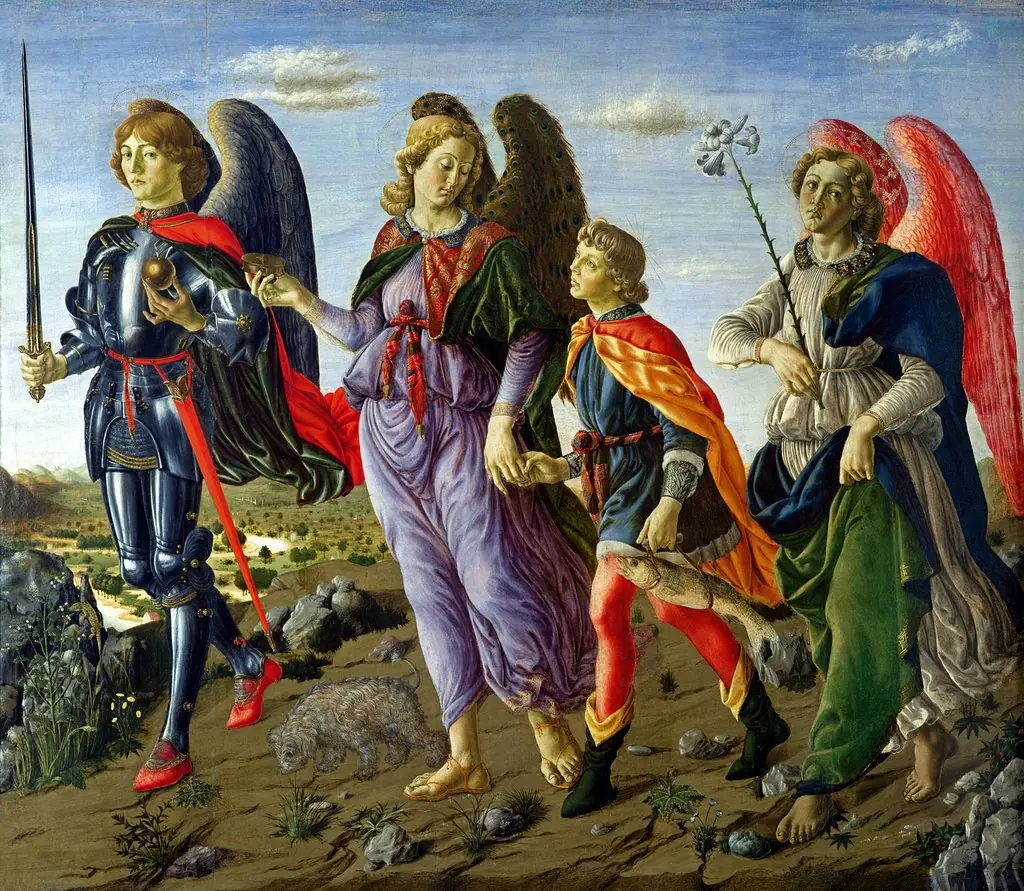
Francesco Botticini (1446-1498) was an artisan painter who, like his reputed teacher Neri di Bici, adapted to the swiftly changing currents in late quattrocento Florence. His influences were various and included Verrocchio, Botticelli, and latterly Filippino Lippi. While Botticini painted larger-scale altarpieces such as the Madonna and Child enthroned at the Metropolitan Museum of Art and Saint Monica and Augustinian nuns at San Spirito in Florence, he also produced numerous smaller devotional paintings of which this panel is representative. The work can be compared to Botticini's other circular devotional compositions, including the Madonna with Child, St John the Baptist, and Angels of circa 1490 in the Galleria Palatina, Florence, and the Madonna and Child with the Infant St John the Baptist in a Landscape in a private collection. The popularity of tondi for domestic decoration in Renaissance Florence, particularly in bedrooms where they were hung high on walls, provided a significant market for such works. Botticini's facility with physiognomy and the portrayal of emotion, as demonstrated in works like The Three Archangels with Tobias in the Uffizi, is evident in the sensitive rendering of the figures in this panel.
Legacy
The painting's place in Botticini's oeuvre and its influence on subsequent art remain subjects for further scholarly investigation. The artist's reputation has been shaped by attributional debates, as seen in comparable cases such as the tondo at the Walters Art Museum, which Federico Zeri attributed to Raffaello Botticini in 1976 but which subsequent scholarship has questioned. Everett Fahy's expertise has been sought in confirming attributions to Francesco Botticini, underscoring the continuing importance of connoisseurship in evaluating this artist's work. The Gemäldegalerie Berlin's holding of this panel contributes to the institutional preservation and study of late quattrocento Florentine devotional painting.
Own this work as a print
Artist & collection
Artist
Francesco Botticini (real name Francesco di Giovanni, 1446 – 16 January 1498) was an Italian painter of the Early Renaissance.

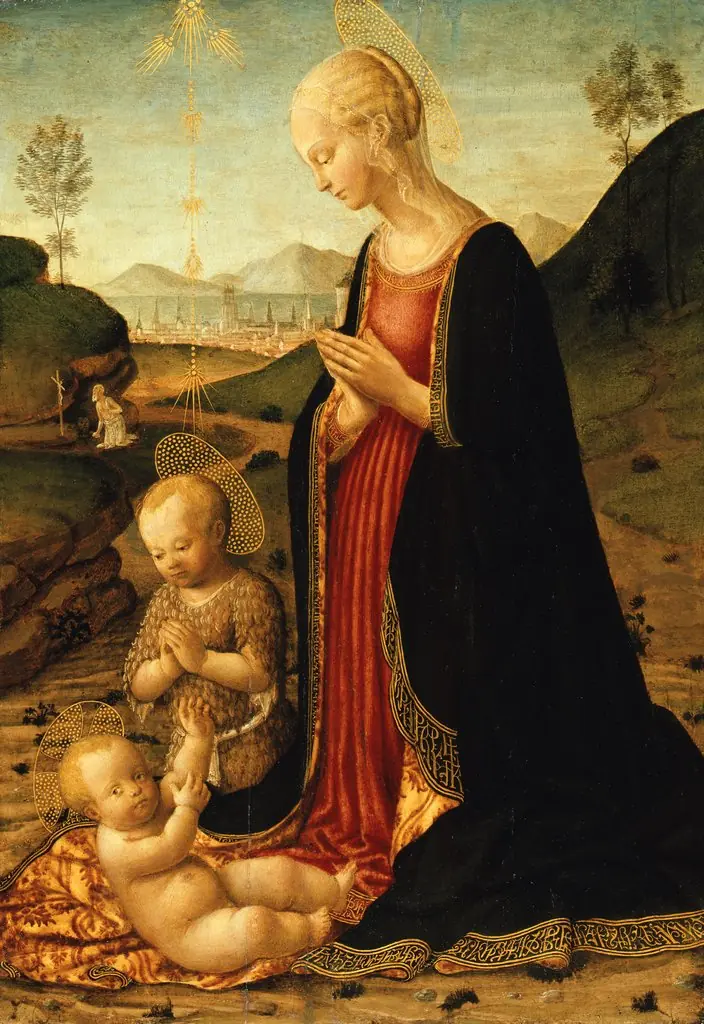
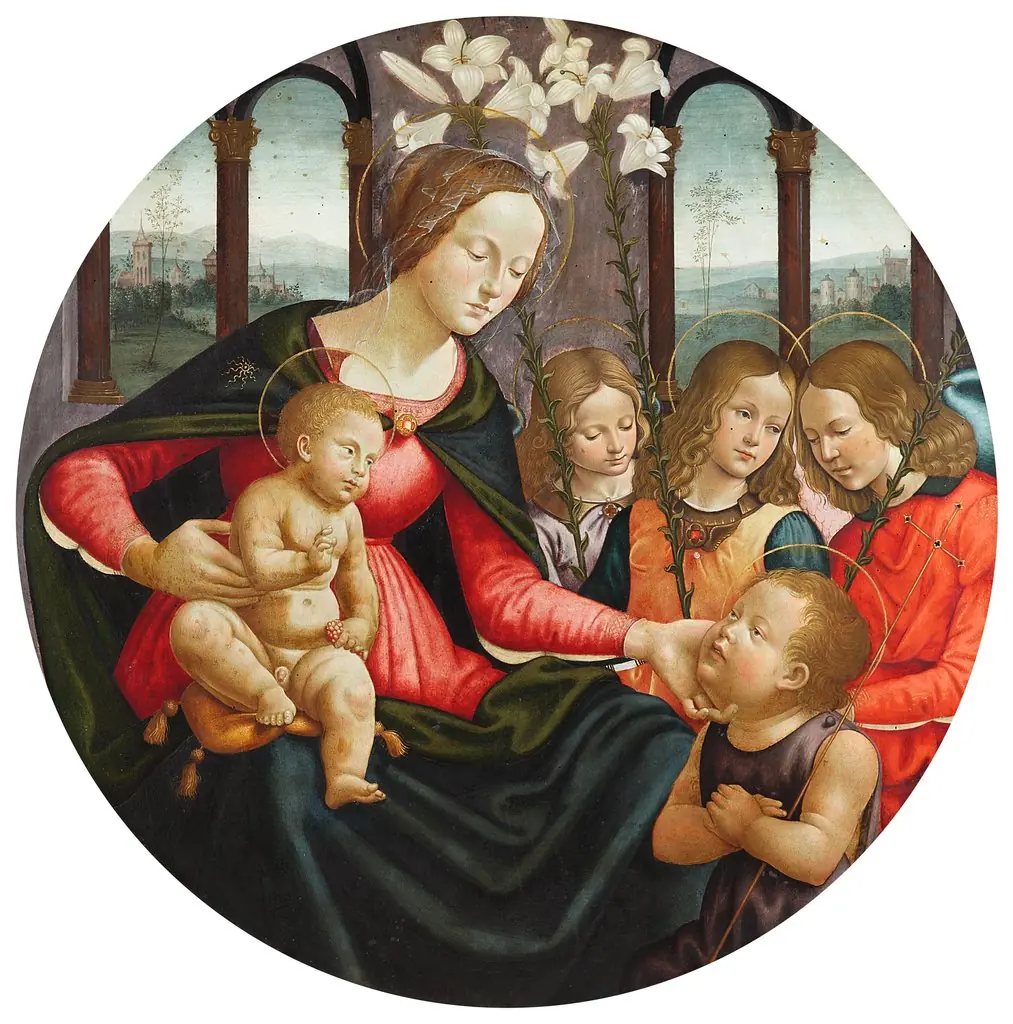
- The Virgin and Blessing Child, Young St. John and three Angels
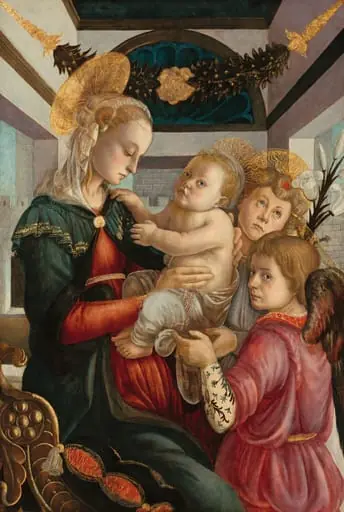 Madonna and Child with Angels
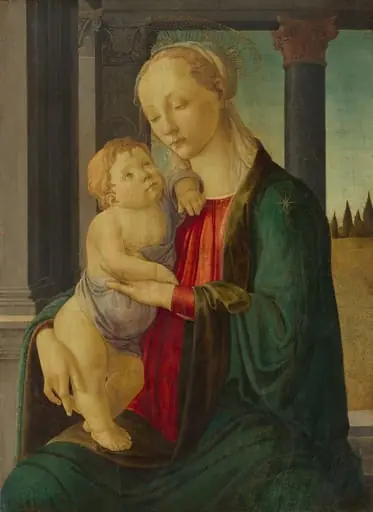 Madonna and Child
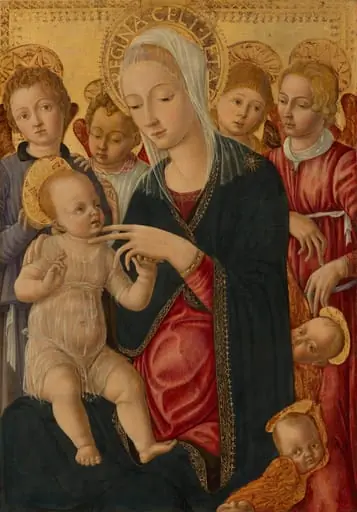 Madonna and Child with Angels and Cherubim
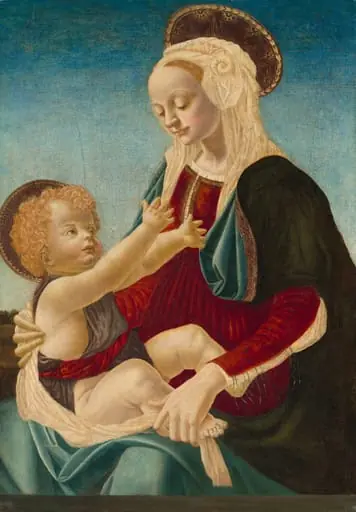 Madonna and Child
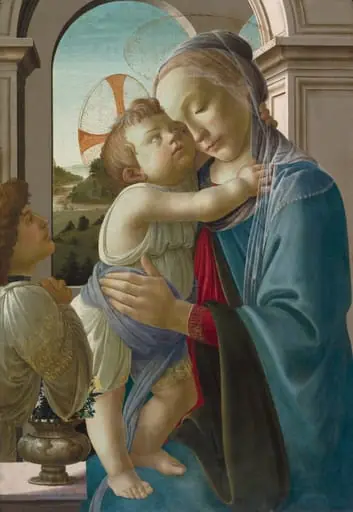 Virgin and Child with an Angel
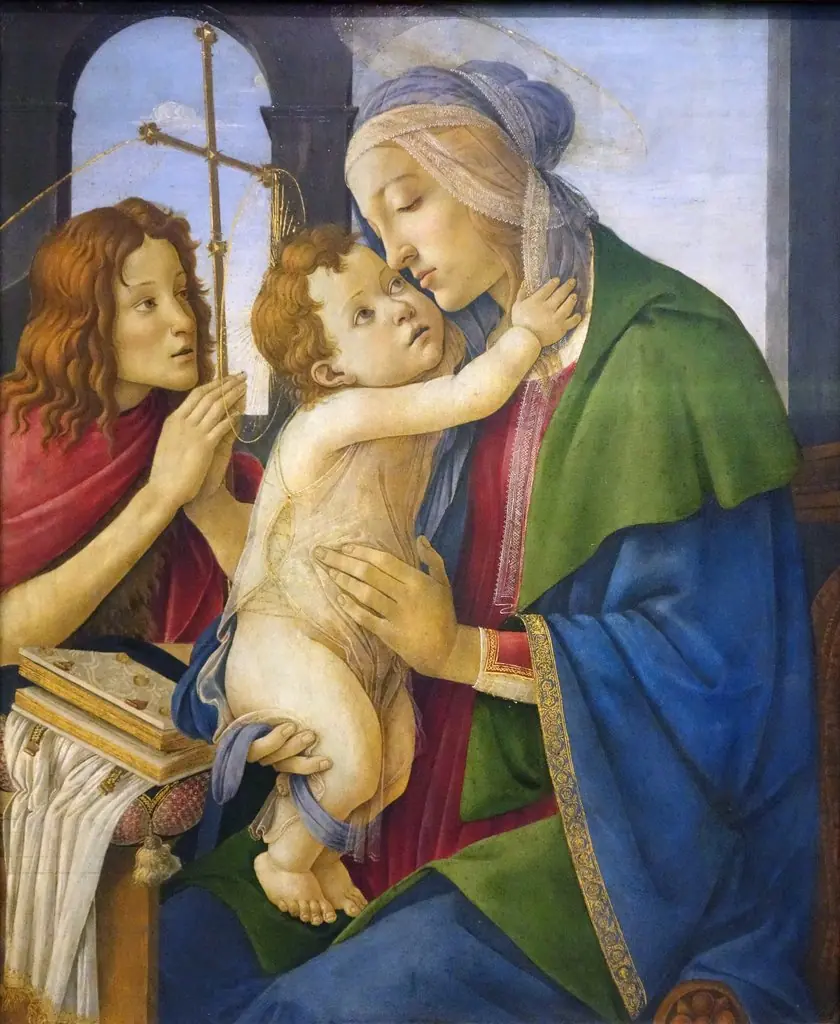 The Virgin and Child with the Young Saint John the Baptist
 Virgin and Child with an Angel
 Virgin and Child with an Angel
 Madonna and Child
 Virgin Mary with lily flowers
 Virgin and Child with Angels