Artwork
Abraham with the three Angels
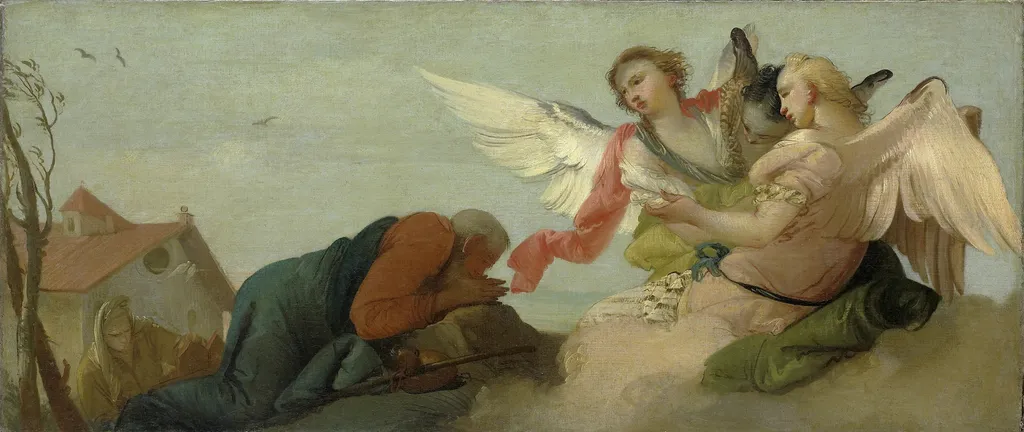
Abraham with the three Angels is an oil painting by the Rococo painting artist Francesco Zugno. It dates from 1750 and is held in the collection of the Rijksmuseum.
About this work
Subject & Meaning
The painting illustrates the biblical moment when the Lord appears to Abraham beneath the oaks of Mamre, a scene drawn from Genesis 18. Francesco Zugno renders this divine encounter with Abraham and three angels, emphasizing the covenantal promise of descendants and land. The composition underscores themes of faith and divine invitation within the religious art tradition.
Technique & Style
Abraham with the three Angels is executed in oil paint on canvas, a medium consistent with Francesco Zugno's broader practice as a Venetian painter of the eighteenth century. The canvas support measures 50.5 cm in height by 120 cm in width, producing a markedly horizontal format suited to the narrative of the Lord appearing to Abraham by the oaks of Mamre, which accommodates multiple figures and expansive landscape within a single pictorial field.
Stylistically, the work is classified as a religious painting, and its elongated proportions are typical of eighteenth-century Venetian decorative compositions intended for domestic devotional settings. The horizontal orientation allows the figures of Abraham and the three angels to be arranged across the foreground, with the surrounding environment extending laterally to frame the encounter.
History & Provenance
According to the Rijksmuseum’s records, the painting has been part of the museum’s collection since at least its acquisition, and it remains housed there today.
Abraham with the three Angels was painted by Francesco Zugno around 1750, executed in oil on canvas measuring 50.5 cm by 120 cm. The work depicts the biblical episode of the Lord appearing to Abraham by the oaks of Mamre. According to the Rijksmuseum’s records, the painting has been part of the museum’s collection since at least its acquisition, and it remains housed there today. No earlier ownership or commission details are recorded in the available sources.
Legacy
Abraham with the three Angels influenced religious art through its vivid portrayal of the biblical narrative, inspiring later interpretations of Abraham’s divine encounter. The work's composition and emotional depth were noted in 19th‑century art criticism, shaping academic studies of Venetian religious painting. Its presence in the Rijksmuseum collection has made it a reference point for exhibitions on 18th‑century European religious art, reinforcing scholarly understanding of Zugno’s role in the genre.
Overview
Francesco Zugno’s oil painting Abraham with the Three Angels, executed circa 1750, portrays the biblical encounter in which angels visit Abraham near the oaks of Mamre. The composition centers on a kneeling Abraham, his head bowed in reverence, while three celestial figures hover above him, their garments rendered in luminous pink and green tones.
Context
Zugno’s work aligns with mid‑eighteenth‑century Venetian art, which favored elegant detail and a decorative approach to religious subjects. The painting’s subject, a biblical episode, was a common motif for artists seeking to combine devotional content with the period’s taste for graceful, light‑filled compositions.
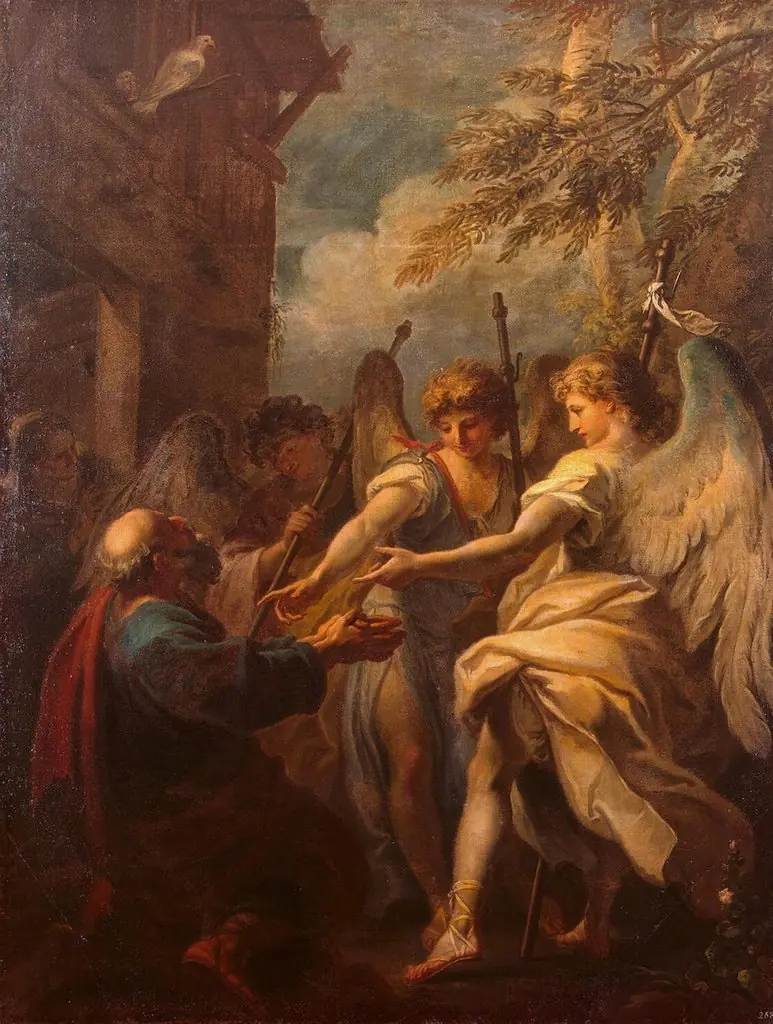
Artist & collection
Artist
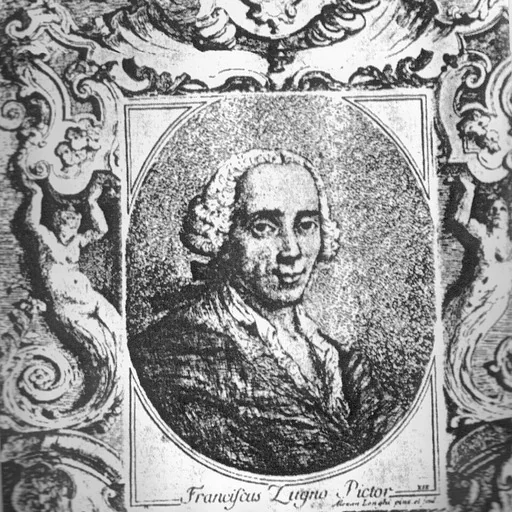
Francesco Zugno (Italian pronunciation: c. 1708–1787) was an Italian painter of the Rococo period who had a successful career in Venice.

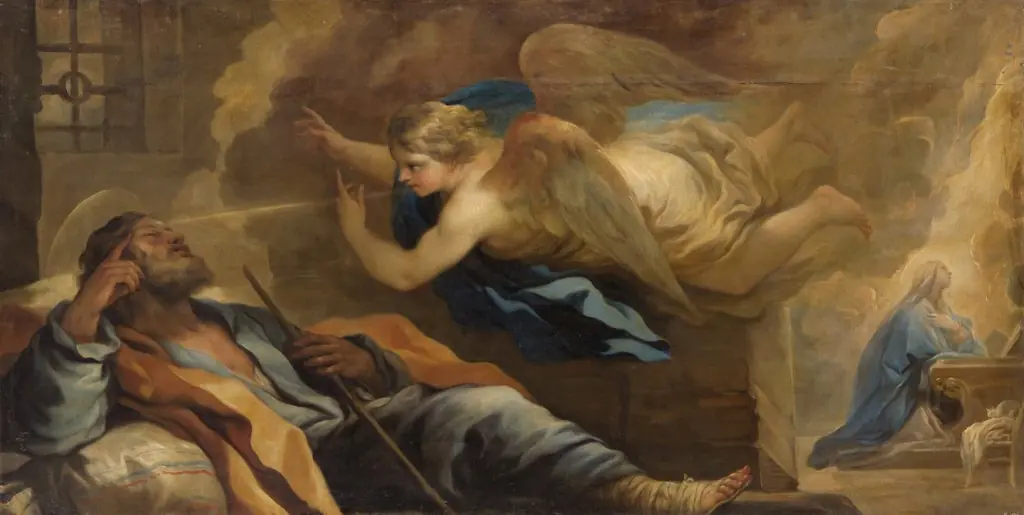 Dream of Saint Joseph
 Model for Altarpiece in St. Peter's
 Mars Asleep
 Model for Altarpiece in St. Peter's
 The angel appears to Hagar in the desert
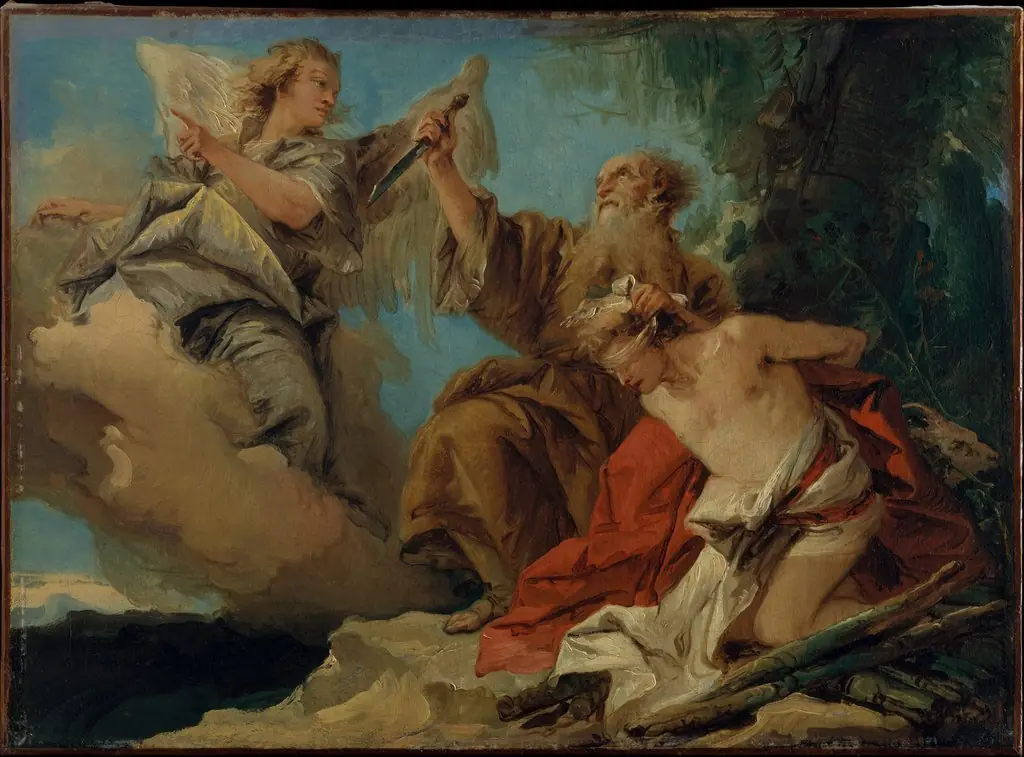 The Sacrifice of Isaac
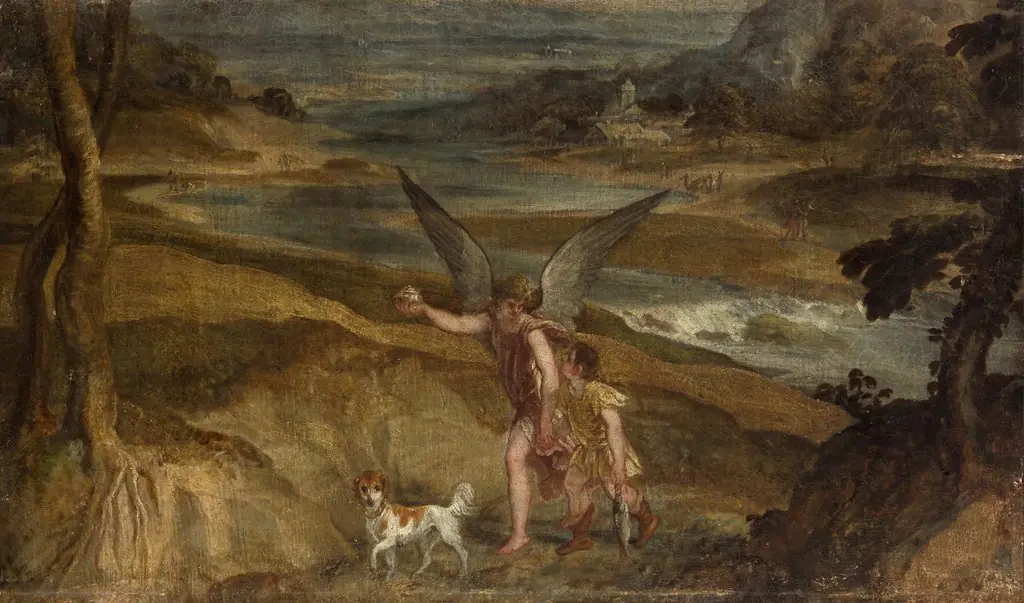 Tobias und der Erzengel Raphael auf Wanderschaft
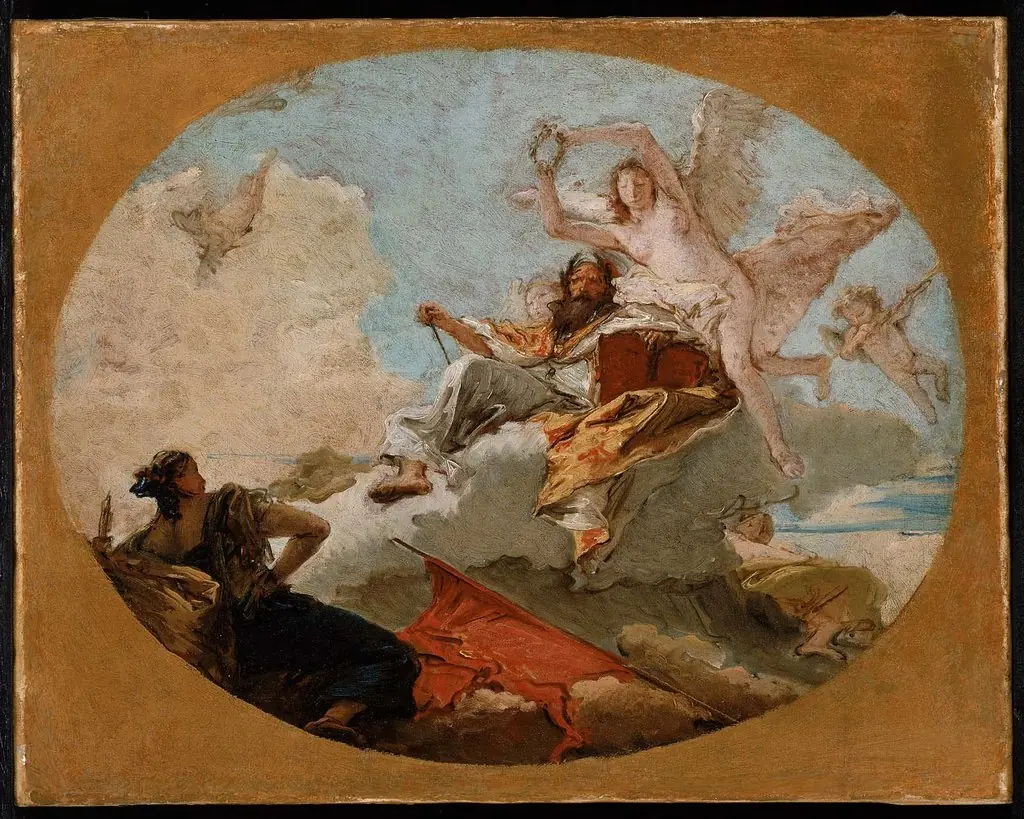 The Crowning of Merit
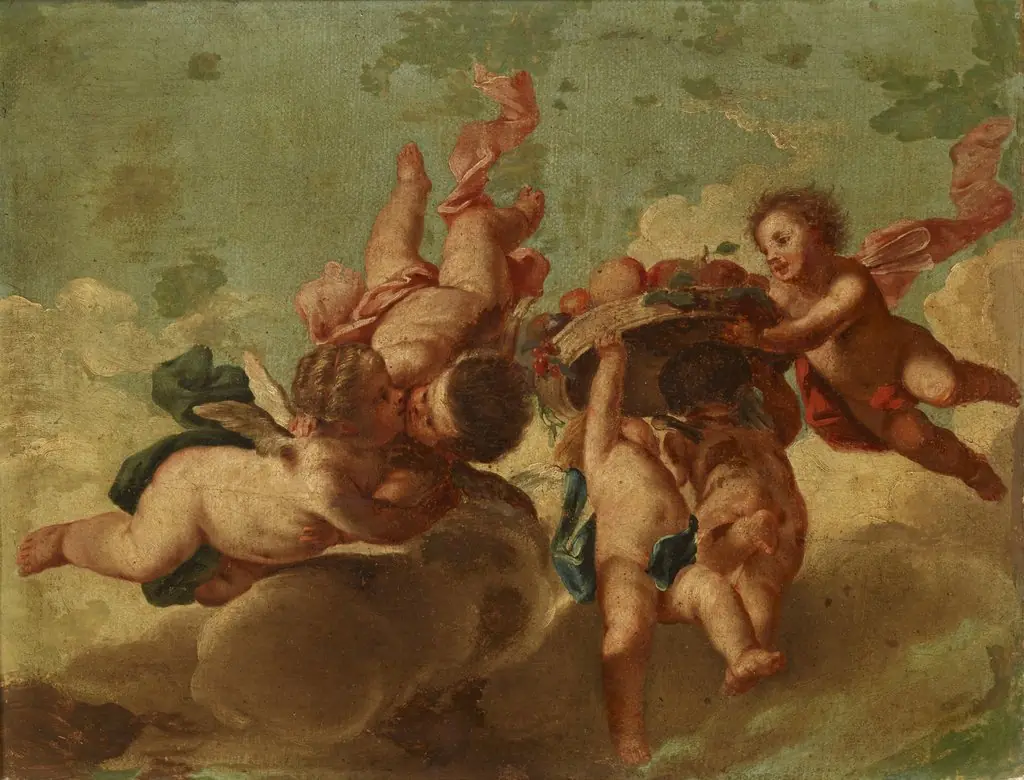 Putti
Putti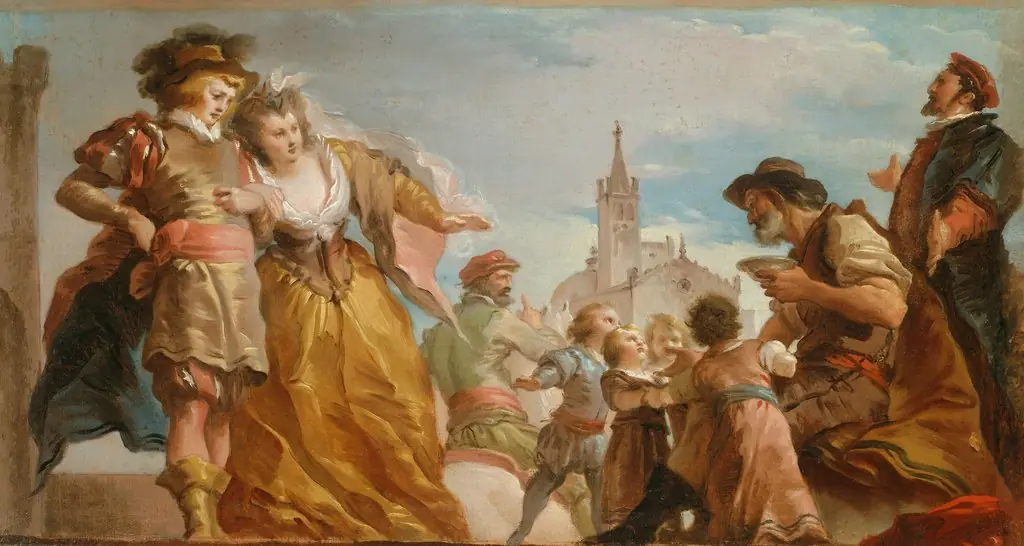 The Meeting of Gautier, Count of Antwerp, and his Daughter, Violante