Artwork
Basket of Pears and Crabapples
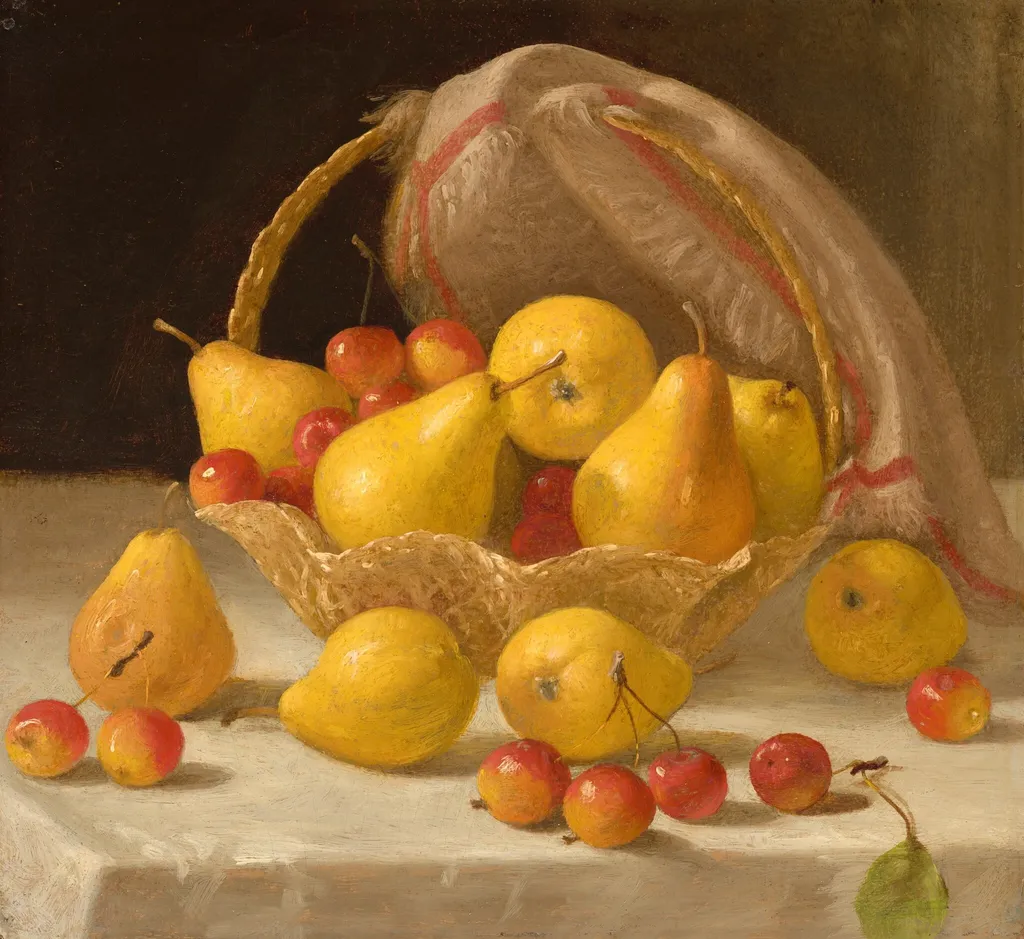
Basket of Pears and Crabapples is an oil painting by the Realist artist John F. Francis. It dates from 1847 and is held in the collection of the National Gallery of Art.
About this work
Subject & Meaning
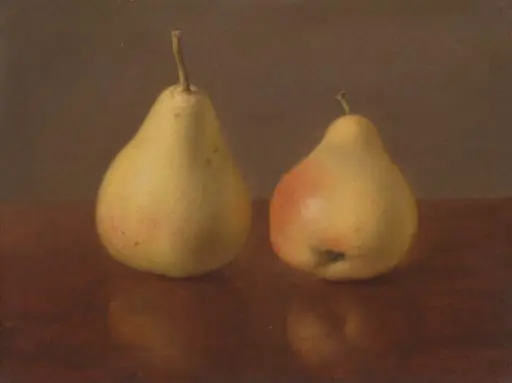
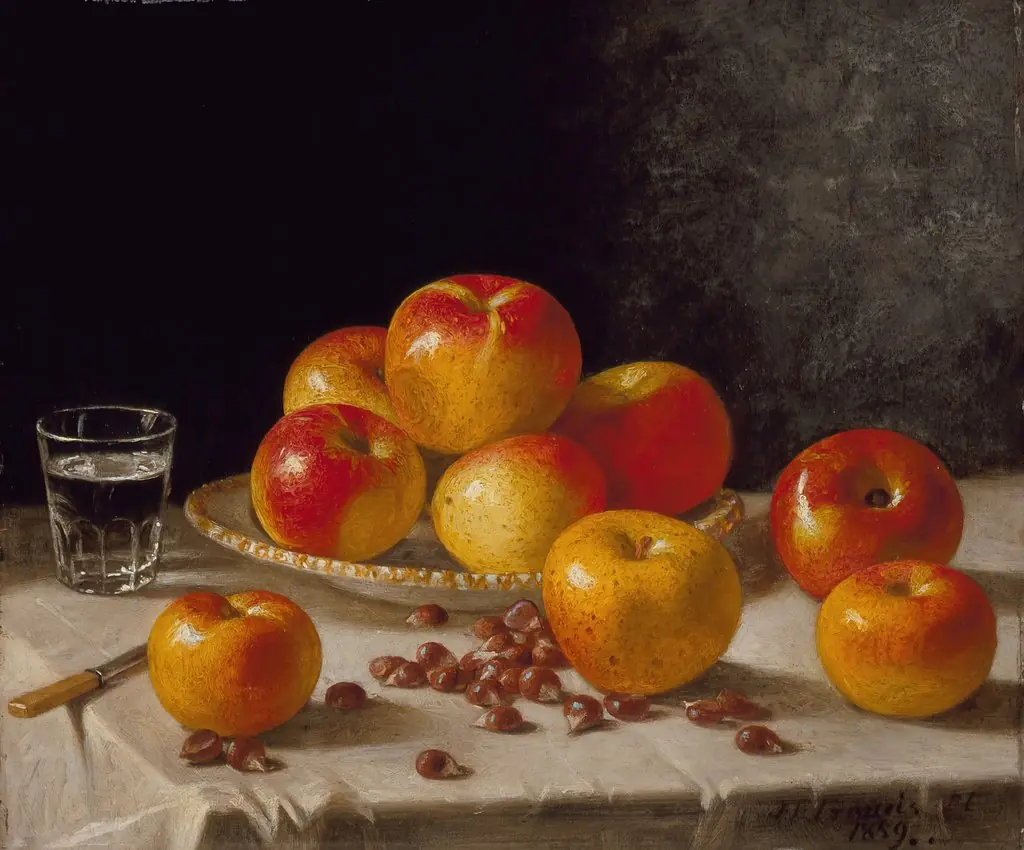
The painting shows a simple still life of fruit arranged on a table, combining ripe pears with small crabapples to create a balanced composition.
The painting shows a simple still life of fruit arranged on a table, combining ripe pears with small crabapples to create a balanced composition. The juxtaposition of cultivated and wild fruit carries symbolic weight related to abundance and the fleeting nature of harvest, reflecting themes often explored in mid‑twentieth‑century American still‑life work. Francis rendered the fruit with careful attention to texture and light, emphasizing the tactile qualities of the surfaces while maintaining a modest, domestic setting that invites contemplation of everyday sustenance.
The work is part of the National Gallery of Art’s collection in Washington, D.C., where it has been exhibited and studied as an example of Francis’s contribution to American modernism.
The piece was documented in a 1965 exhibition at the American Federation of the Arts in New York, and it entered the National Gallery through a 2018 gift from William H. Gerdts.
Technique & Style
The work is an oil painting executed on board, measuring 29.53 cm by 32.39 cm, and is housed at the National Gallery of Art in Washington, D.C. Its surface retains a smooth, blended application of pigment characteristic of mid-twentieth-century American realism, with careful attention to light and composition that emphasizes the quiet stillness of the fruit arrangement.
History & Provenance
Basket of Pears and Crabapples is an undated oil on board by John F. Francis, with no recorded creation date, commission, or early ownership history in the available documentation. The earliest documented owner is the American still-life scholar William H. Gerdts (1929–2020) of New York, who possessed the painting by approximately 1965, when he lent it to an exhibition organized by the American Federation of Arts in New York.
Gerdts retained the work for several decades before giving it to the National Gallery of Art in 2018. The terms of the gift were accompanied by documentation supplied by Abigail Booth Gerdts, which is now maintained in the NGA curatorial files and forms the basis of the recorded provenance.
Basket of Pears and Crabapples is held in the collection of the National Gallery of Art in Washington, D.C. It entered that museum as a gift in 2018 from William H. Gerdts [1929–2020] of New York, who had owned the painting by at least 1965. According to documentation supplied by Abigail Booth Gerdts at the time of the gift and held in NGA curatorial files, Gerdts had lent the work to an exhibition organized by the American Federation of Arts in New York around 1965.
No further accession number or inventory designation is recorded in the available sources.
Overview
Basket of Pears and Crabapples, executed in 1847 by John F. Francis, is a quintessential example of American Luminist still life. The composition centers on a woven basket resting on a wooden table, overflowing with ripe pears and crabapples. Francis employs a meticulous technique, utilizing oil on board to render the distinct textures of the fruit with high fidelity; soft, diffused highlights define the pears' skin, while the crabapples display sharper, glossy reflections.
The arrangement is tightly cropped, focusing the viewer's attention entirely on the interplay of form and light without extraneous background details. Created during the mid-19th century, a period when American audiences increasingly valued domestic subjects and scientific observation, this work reflects Francis's specialization in fruit still lifes. His approach aligns with the broader trend of American realism, prioritizing precise observation and the quiet dignity of everyday objects.
The painting demonstrates Francis's mastery in capturing the ephemeral qualities of light on organic surfaces, securing his reputation as a leading figure in the genre alongside contemporaries such as Severin Roesen. This specific work exemplifies his consistent style of combining botanical accuracy with a serene, contemplative atmosphere.
Own this work as a print
Artist & collection