Artwork
Mytton Hall
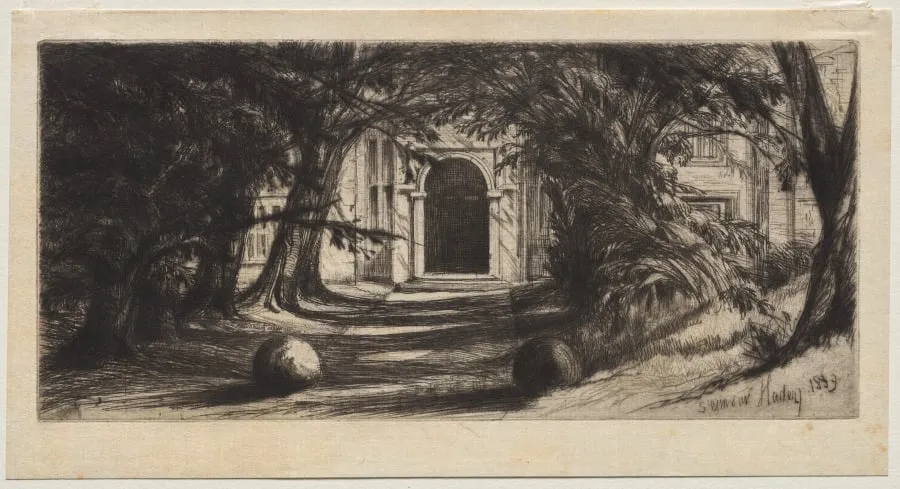
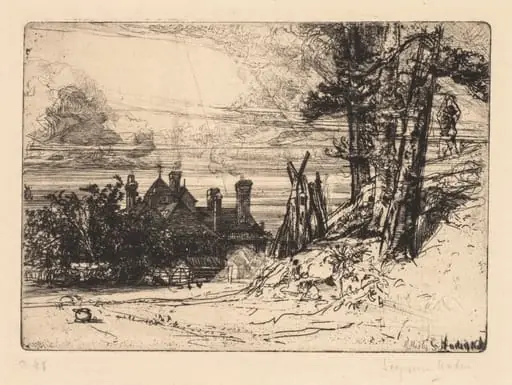
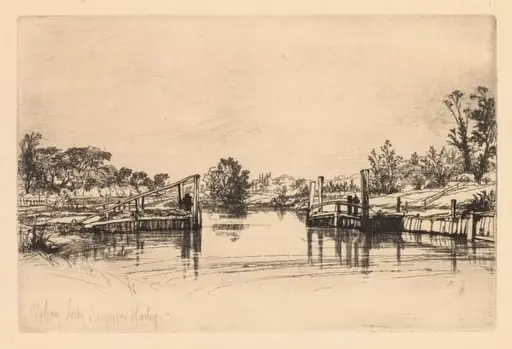
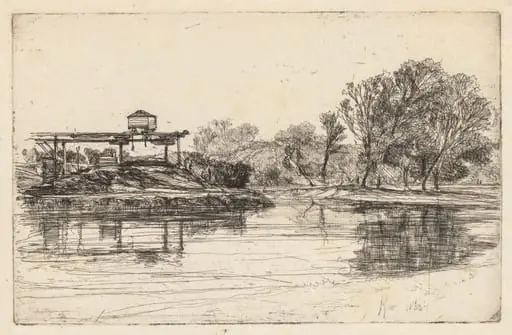
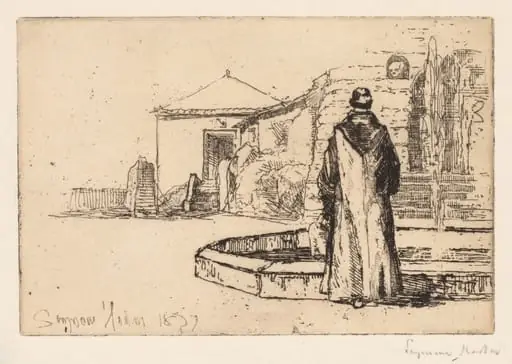
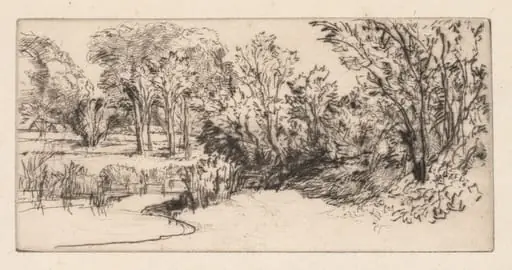
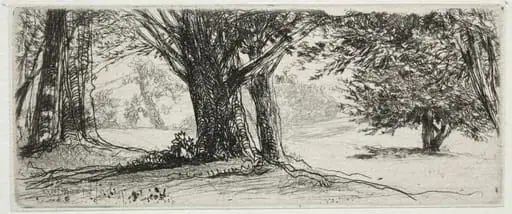
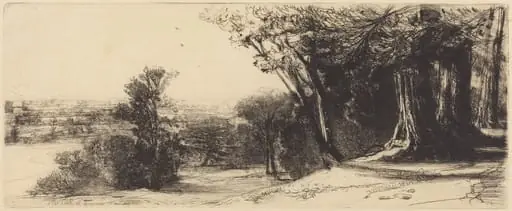
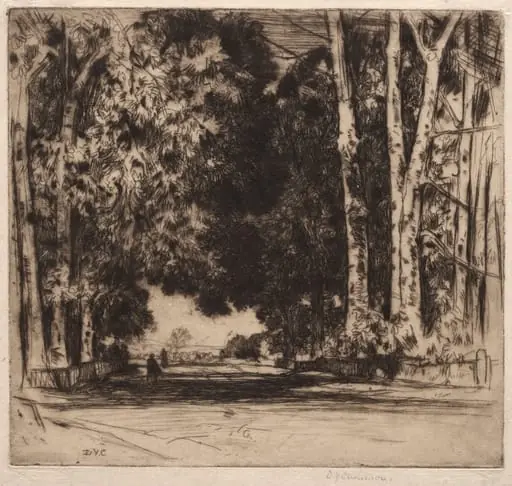
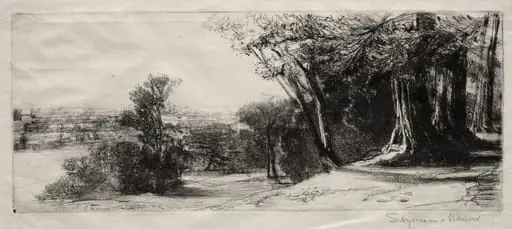
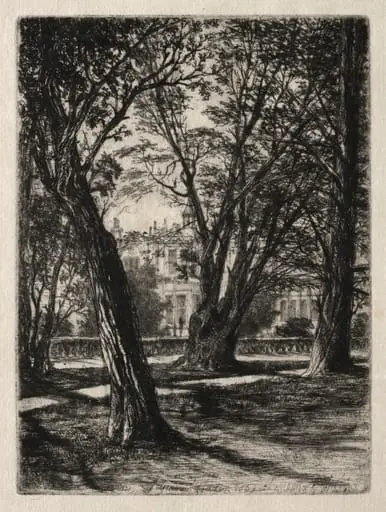
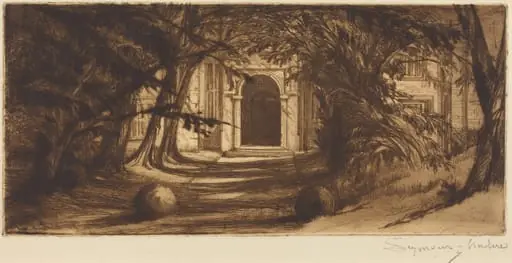
Mytton Hall is a print by the Impressionist artist Francis Seymour Haden. It dates from 1869 and is held in the collection of the Cleveland Museum of Art.
- Accession no.
- 1921.170
- Credit line
- Gift of The Print Club of Cleveland
About this work
Overview
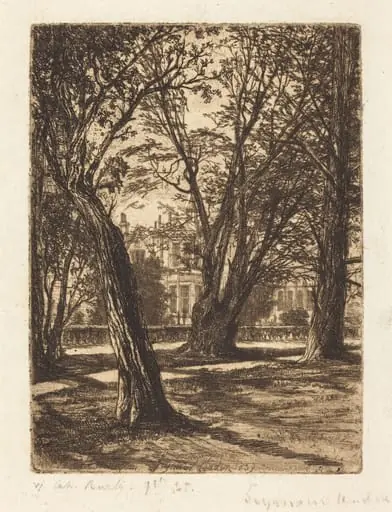
Created in 1869 by Francis Seymour Haden, this print depicts Mytton Hall, a country estate in England. Executed in a loose, atmospheric style, the work captures a quiet, rain-washed approach to the building. The composition emphasizes mood over architectural detail, using ink and wash to convey the damp, overgrown surroundings. It resides in the collection of The Cleveland Museum of Art.
Subject & Meaning
The scene portrays a secluded path winding toward the entrance of Mytton Hall, framed by dense, overhanging trees. Figures near the doorway are indistinct, suggesting transient human presence rather than narrative. The wet ground and reflected light imply recent rain, enhancing the sense of solitude and quiet decay. The image evokes contemplation rather than celebration of the estate.
Technique & Style
Haden employed rapid, expressive ink lines and subtle tonal washes to render texture and light. The trees are suggested through layered, sketchy strokes, while puddles on the path are indicated by faint, irregular highlights. The absence of sharp detail prioritizes atmosphere, aligning with the aesthetic of etching as a medium for immediacy and emotional resonance rather than precision.
History & Provenance
The print was made in 1869 during a period when Haden was deeply engaged in landscape etching. It was likely created from on-site sketches, reflecting his interest in capturing transient natural effects. The work entered The Cleveland Museum of Art’s collection through established acquisition channels, though its early ownership history remains undocumented in public records.
Context
Haden’s work emerged alongside the British etching revival, which sought to elevate printmaking as a fine art form. His focus on unidealized, everyday landscapes aligned with broader Realist tendencies in 19th-century art. Unlike grand historical scenes, this piece values quiet observation, reflecting a shift toward personal, intimate responses to the environment.
Legacy
This print exemplifies Haden’s influence on the revival of etching as a medium for personal expression. His emphasis on mood, texture, and natural light inspired later generations of printmakers to prioritize atmosphere over detail. Though not widely reproduced, it remains a key example of his quiet, poetic approach to landscape.
Artist & collection