Artwork
Doña Joanna the Mad
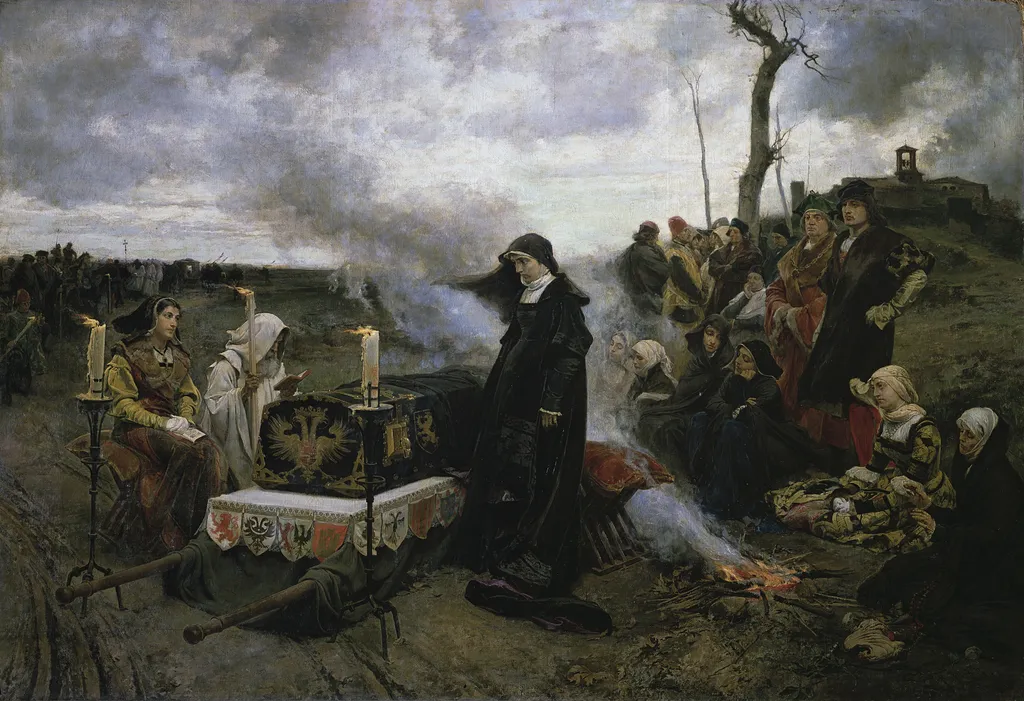
Doña Joanna the Mad is an oil painting by the Post-Impressionist artist Francisco Pradilla y Ortiz. It dates from 1889 and is held in the collection of the Museo del Prado.
About this work
Subject & Meaning
Pradilla renders her in late-stage pregnancy, her face gaunt and expression vacant, hands tightly clenched at her sides as she watches over the coffin.
The painting shows Joanna of Castile standing upright before the open casket of her husband Philip I, who died of typhoid fever in 1506. Pradilla renders her in late-stage pregnancy, her face gaunt and expression vacant, hands tightly clenched at her sides as she watches over the coffin. Around her, courtiers are arranged in varied poses, their faces conveying boredom, fatigue, and quiet compassion for the queen's madness.
The composition places the grieving queen at the center of a somber, candlelit scene that memorializes her obsessive vigil over Philip's remains, a ritual she maintained until her own death. Warm lighting and rich textures echo Rembrandt, while the harmonious arrangement of figures underscores the tragic dignity of her devotion.
The work commemorates a historically documented episode: after Philip's sudden death in 1506, Joanna carried his casket with her for years, insisting he would awaken, a practice that became legendary. Pradilla's depiction transforms this personal anguish into a public spectacle of royal mourning, reflecting 19th-century Spanish historical painting's fascination with psychological depth and national identity.
Technique & Style
Executed in 1877, this work is an oil painting on canvas measuring 340 by 500 centimeters. The composition exemplifies the Spanish historical genre, characterized by a warm tonal palette and dramatic lighting effects reminiscent of Rembrandt. Pradilla demonstrates compositional virtuosity through the harmonious arrangement of figures within an outdoor setting, aligning the characters' postures with the pathos of the scene.
The central figure of Queen Joanna is depicted standing upright in black velvet, her face gaunt and hands clenched, conveying an expression of emptiness while gazing at her husband's casket. Surrounding courtiers display varied expressions ranging from boredom to fatigue, contrasting with the queen's intense focus. The artist's handling of light and shadow enhances the emotional weight of the vigil, creating a striking visual narrative of grief and madness.
History & Provenance
Francisco Pradilla y Ortiz painted Doña Joanna the Mad in 1877 while residing at the Spanish Academy in Rome, where he had won a scholarship. The oil on canvas work was completed and sent to Spain, where it debuted at the National Exhibition of Fine Arts in 1878 and earned the medal of honor. Contemporary accounts describe the painting as portraying Joanna of Castile overseeing the funeral of her husband, Philip I of Castile, standing upright beside his casket while pregnant, surrounded by courtiers whose expressions range from boredom to compassion.
The artwork was immediately successful, leading to numerous oil copies and recognition in international expositions in Paris, Berlin, and Vienna. It remains part of the permanent collection of the Museo del Prado in Madrid.
Doña Joanna the Mad is held in the collection of the Museo del Prado in Madrid, Spain. The work was created in Rome and first exhibited in May 1877, where it achieved immediate success. It subsequently earned the Medal of Honor at the National Exposition of Fine Arts in 1878.
The painting also garnered international acclaim through presentations at the Universal Expositions in Paris (1878), Berlin, and Vienna (1882). Due to its popularity, numerous oleographic copies were produced shortly after its debut. A separate version or replica attributed to the artist has been identified in the Museo Nacional del Palacio Venezia in Rome.
Context
Upon its completion in 1877, Doña Joanna the Mad was immediately recognized as a landmark of Spanish historical painting. The work secured the highest award at the 1878 National Exposition of Fine Arts in Madrid, and soon after received major prizes at the Universal Exhibitions in Paris and Berlin, establishing Pradilla’s international reputation.
Contemporary critics praised the composition’s expressive force and the psychological intensity of Joanna’s portrayal, singling out the harmonious arrangement of courtiers and the Rembrandt-like play of light. The painting’s rapid dissemination through numerous oleographic copies underscored its broad cultural impact and cemented its place in the canon of nineteenth‑century Spanish art.
Legacy
Pradilla’s Doña Joanna the Mad rapidly became a touchstone of Spanish historical painting after its completion in 1877. The work’s immediate reception was marked by widespread acclaim: it received the top honor at the 1878 National Exposition of Fine Arts in Madrid and was awarded major prizes at the Universal Exhibitions in Paris (1878) and Berlin, with further recognition in Vienna.
Its popularity spurred a proliferation of oleographic copies, testifying to its cultural resonance beyond elite circles. The composition’s dramatic staging of Joanna’s grief and its technical command, evident in the harmonious arrangement of figures and Rembrandt-like light effects, cemented its status as a canonical example of the Spanish historical genre.
Overview
Francisco Pradilla’s 1877 oil on canvas, titled Doña Joanna the Mad, portrays the Castilian queen in a moment of mourning. Executed while the artist was in Rome, the work entered the collection of Madrid’s Museo del Prado, where it remains on display as a representative example of 19th‑century Spanish historical painting.
Own this work as a print
Artist & collection
Artist
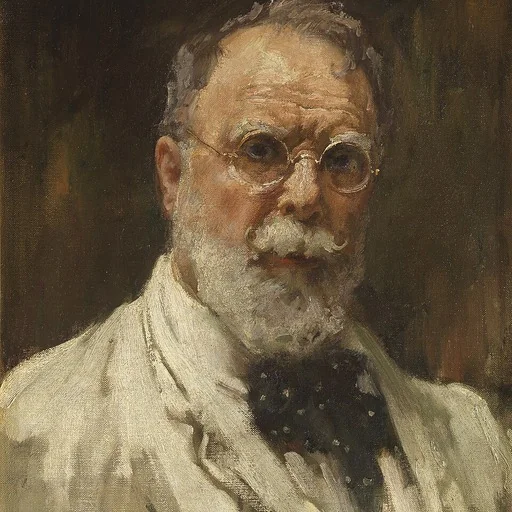
Francisco Pradilla y Ortiz (24 July 1848 – 1 November 1921) was a prolific Spanish painter famous for creating historical scenes.

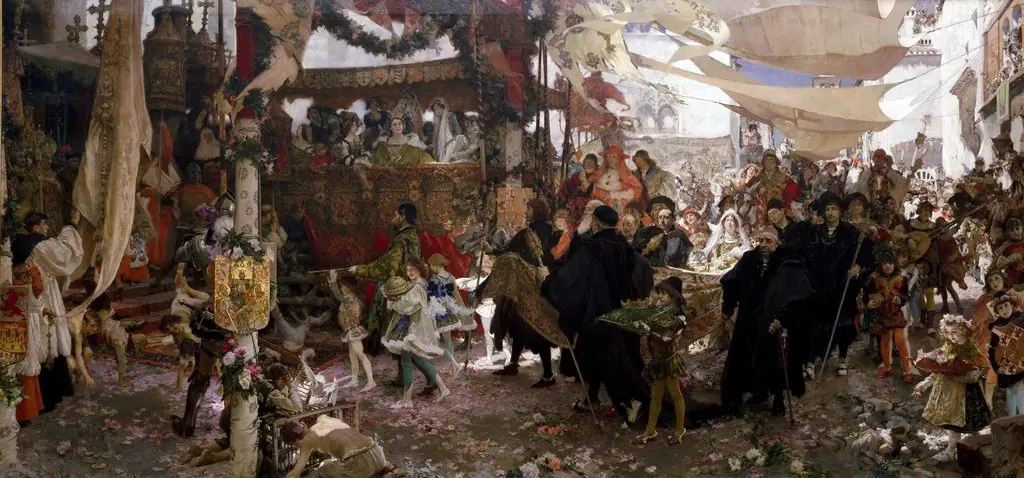
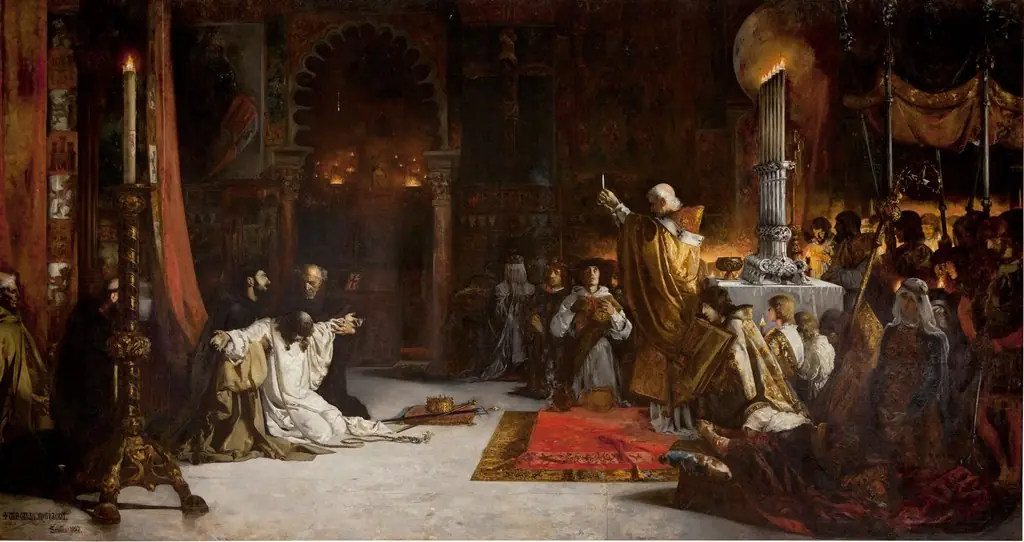 Las postrimerías de Fernando III el Santo
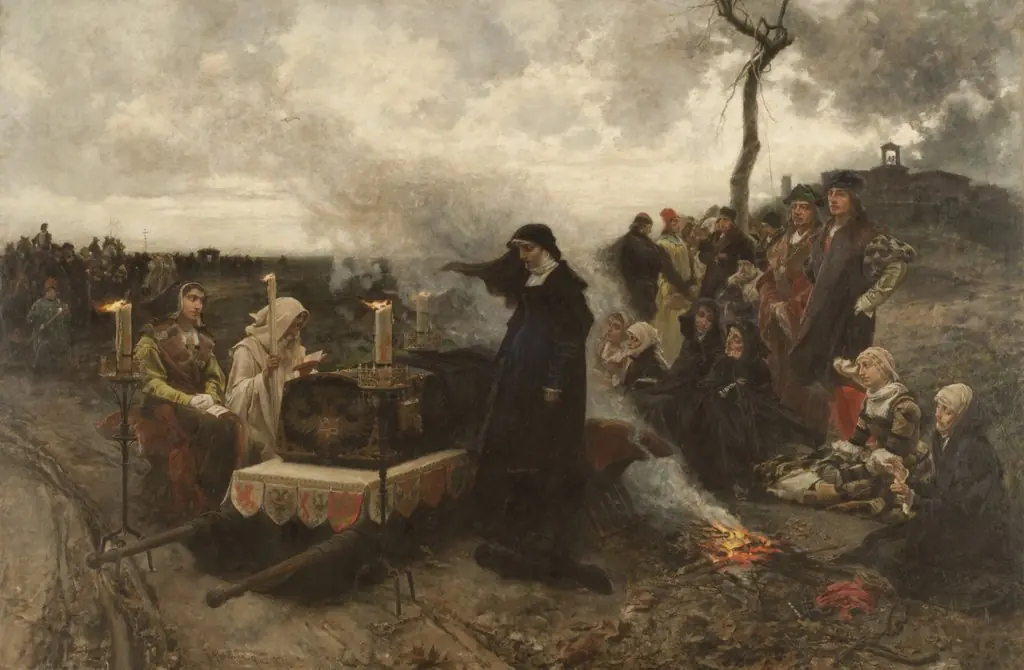 Doña Juana la loca
 Muerte del príncipe de Viana
 Church of Cervara (Papal States)
 Lope de Vega en el cementerio
 La reina doña Juana la Loca
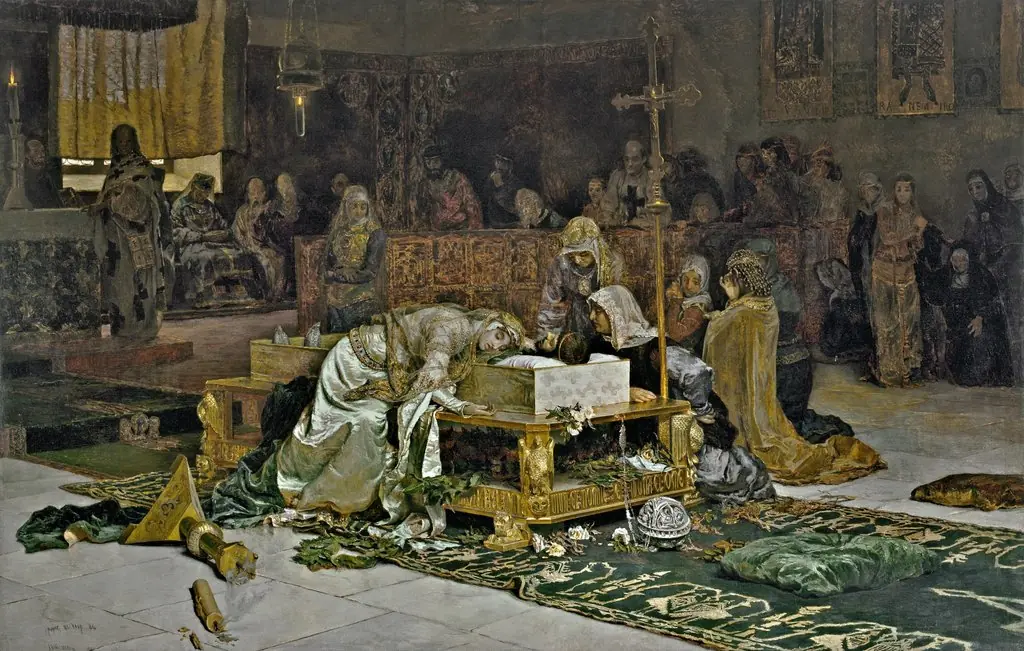 The Lovers of Teruel
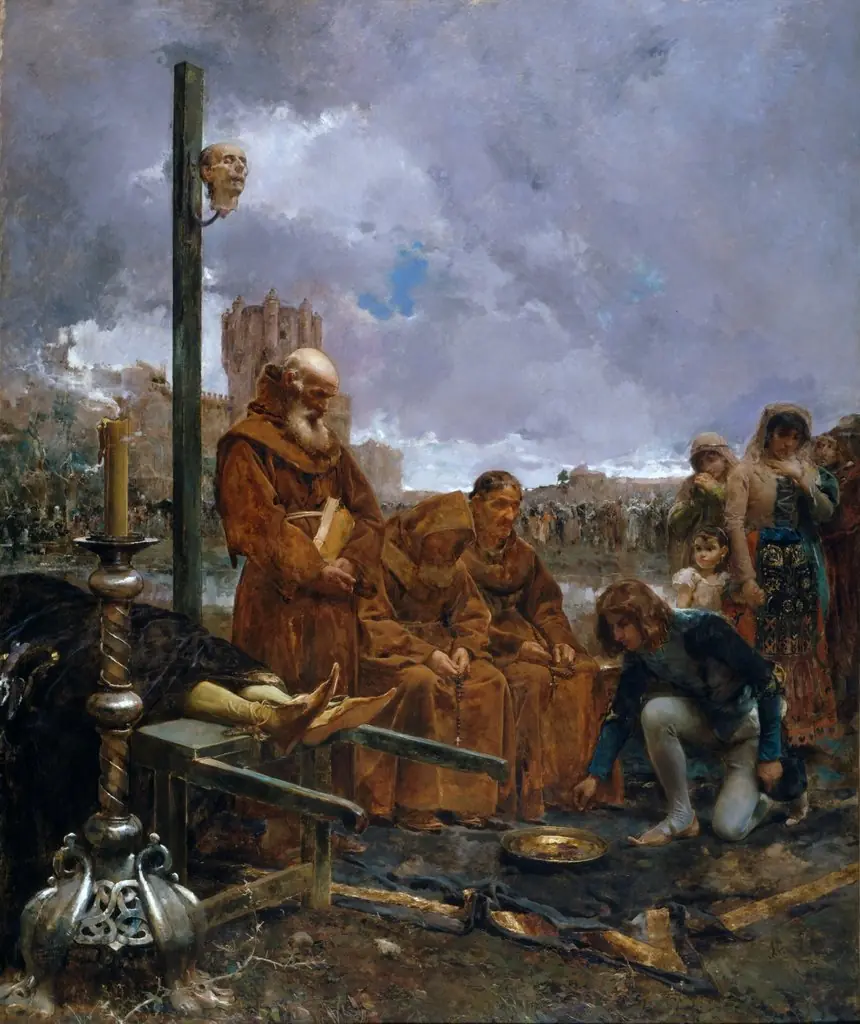 Pedir limosna para enterrar a don Álvaro de Luna
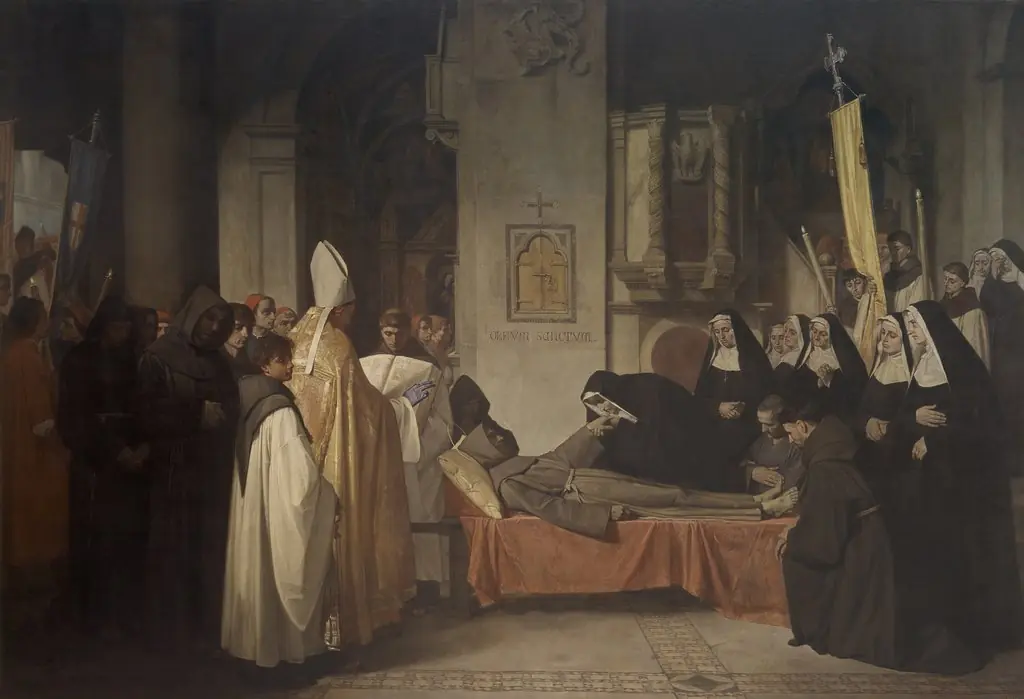 Traslación de San Francisco de Asís
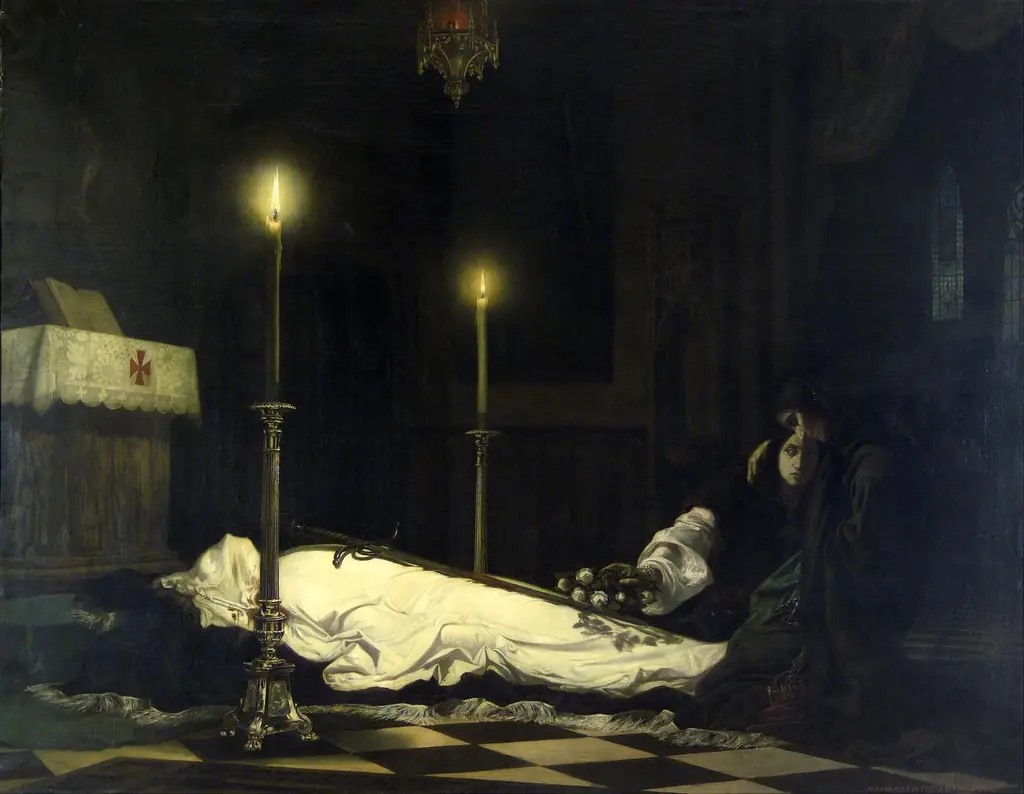 The Mourning of László Hunyadi