Artwork
Las postrimerías de Fernando III el Santo
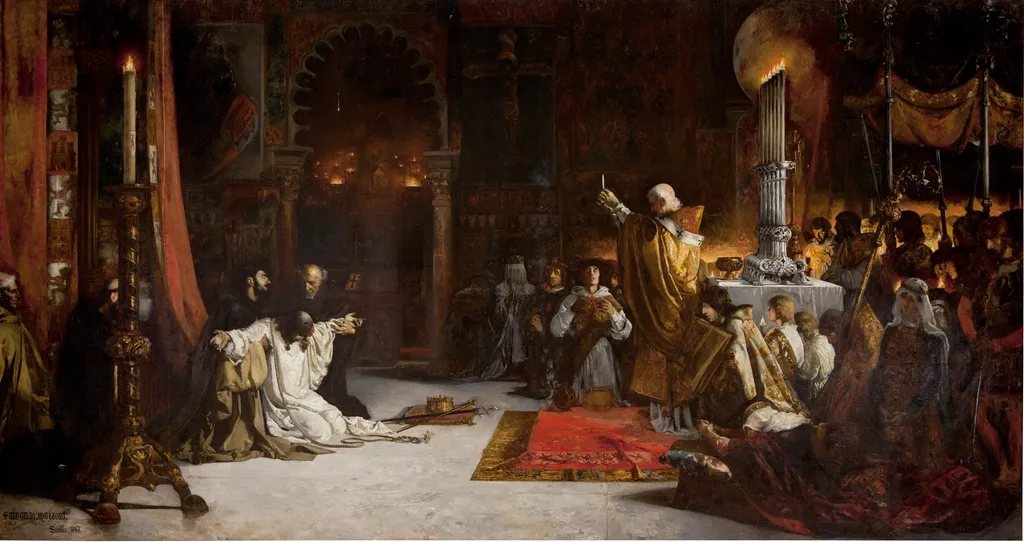
Las postrimerías de Fernando III el Santo is an oil painting by the Post-Impressionist artist Virgilio Mattoni. It dates from 1894 and is held in the collection of the Museo del Prado.
About this work
Subject & Meaning
The painting depicts the final moments of King Ferdinand III of Castile, shown on his deathbed surrounded by the insignia of royal and ecclesiastical authority.
The painting depicts the final moments of King Ferdinand III of Castile, shown on his deathbed surrounded by the insignia of royal and ecclesiastical authority. A sword, flag, book, candle, crown, scepter, sculpture, and chalice are arranged around him, each symbolizing earthly power, piety, and the transition from life to death. The scene emphasizes the king’s Christian virtue and sovereign dignity as he approaches the end of his life, evoking themes of mortality, legacy, and divine judgment common in 19th‑century Spanish academic history painting.
Technique & Style
Executed in 1887, the work is an oil painting on canvas measuring 400 cm high by 750 cm wide.
The handling is consistent with academic history painting of the late nineteenth century, employing smooth, blended brushwork and careful modeling of light to articulate the figures and still-life elements such as the crown, scepter, and books. Subtle glazing contributes to the luminous quality of metallic armor and textiles, while restrained highlights on the sword and insignia emphasize ceremonial dignity.
The composition is symmetrical and frontal, its formal qualities oriented toward clarity and narrative legibility rather than painterly bravura.
History & Provenance
Las postrimerías de Fernando III el Santo is an oil‑on‑canvas painting created in 1887 by Virgilio Mattoni, with dimensions of 400 cm in height and 750 cm in width. The work is catalogued as a painting in the corpus and was executed using oil paint on canvas. It is part of the collection of the Museo del Prado and has been displayed at the Reales Alcázares, reflecting its documented provenance within the institution.
The painting is held in the collection of the Museo del Prado and is located within the Reales Alcázares, Seville.
Its Wikidata entry records an accessioned work with inventory dimensions of 400 cm in height and 750 cm in width, painted in oil on canvas in 1887.
Overview
Virgilio Mattoni de la Fuente's 1894 oil painting, Las postrimerías de Fernando III el Santo, captures a pivotal moment with dramatic intensity. The work depicts a richly detailed, dimly lit interior where a central figure in golden robes presides over a scene involving a kneeling man and an assembled crowd. This significant piece by a leading figure of the modern Andalusian school is housed in the collection of the Museo del Prado.
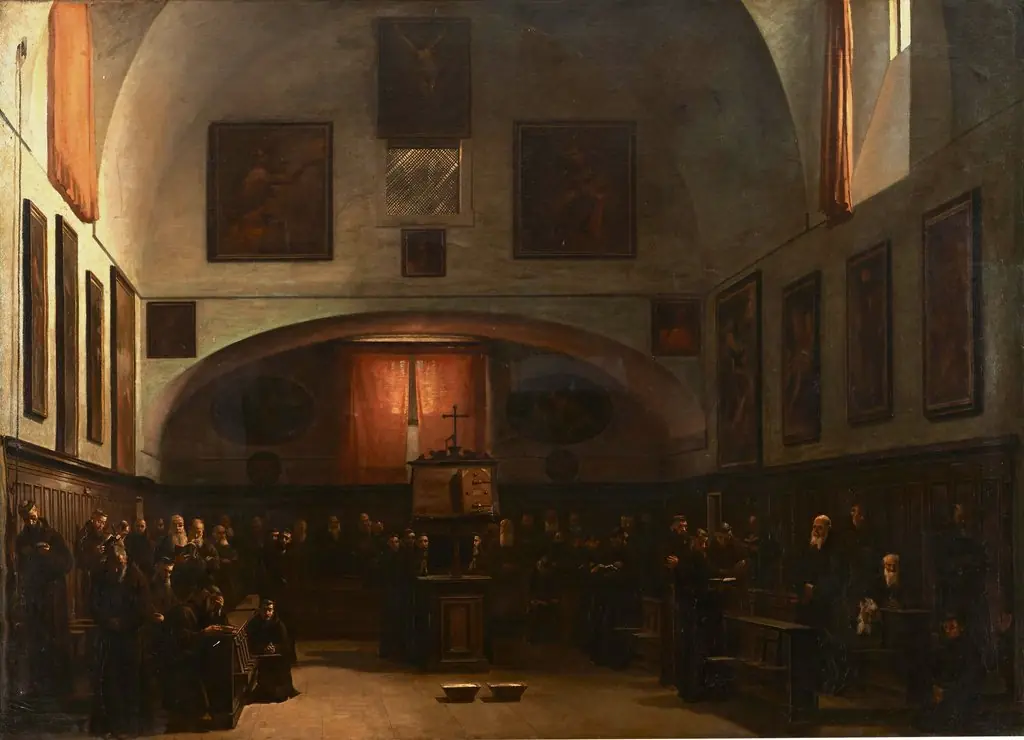
Artist & collection
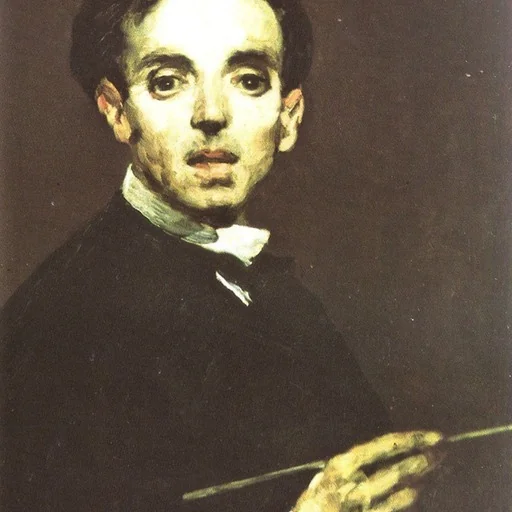
Artist
Virgilio Mattoni de la Fuente (1842–1923) was a painter of post-romantic realism and a central figure in the modern Andalusian school of painters.

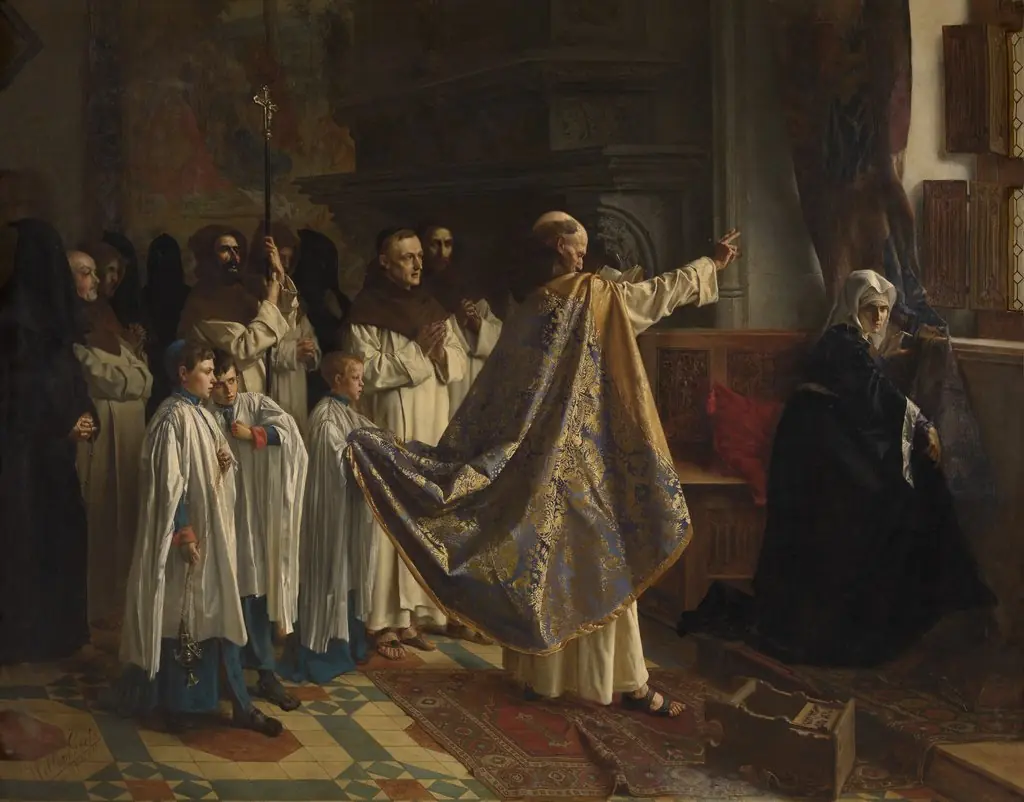 Exorcism of Joanna of Castile
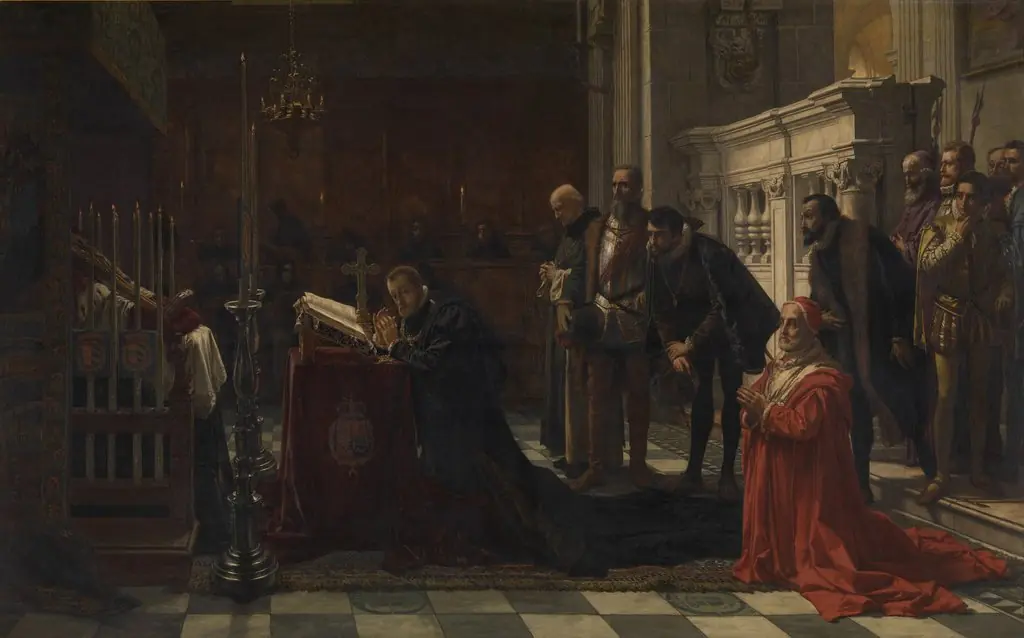 Philip II of Spain Honours Don John of Austria
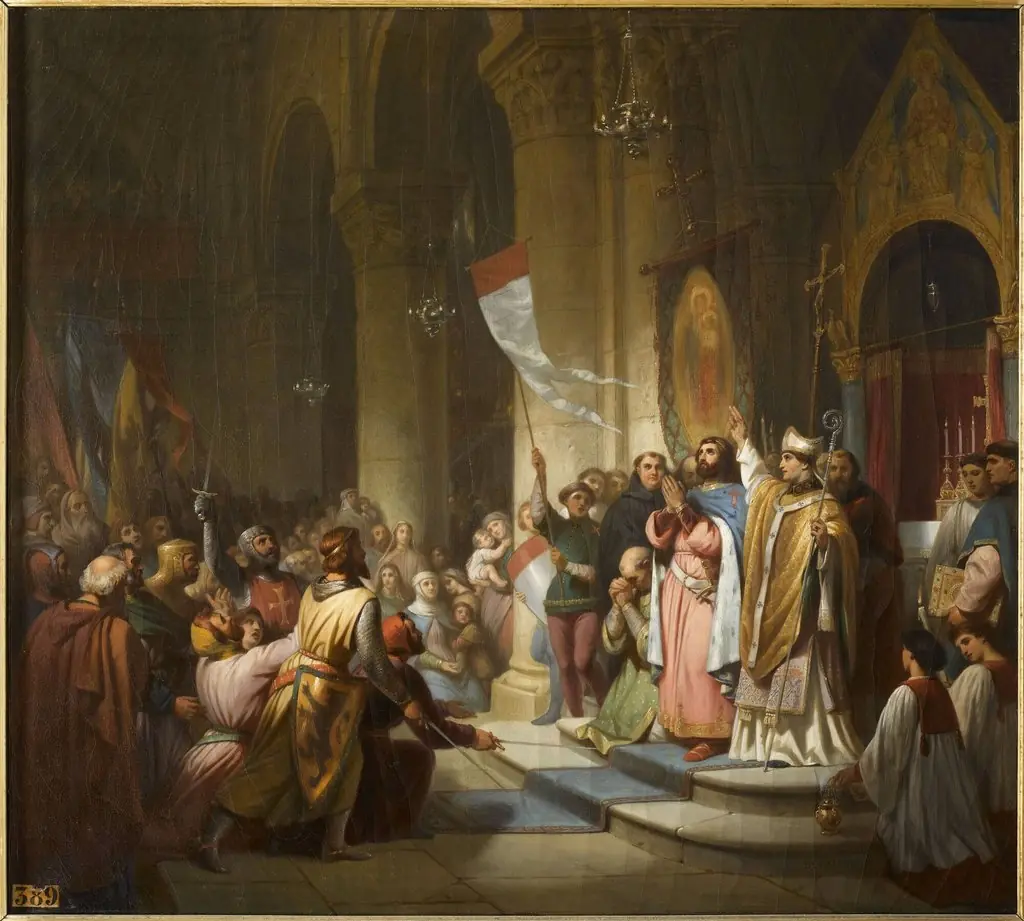 Election of Boniface of Montferrat as leader of the Fourth Crusade.
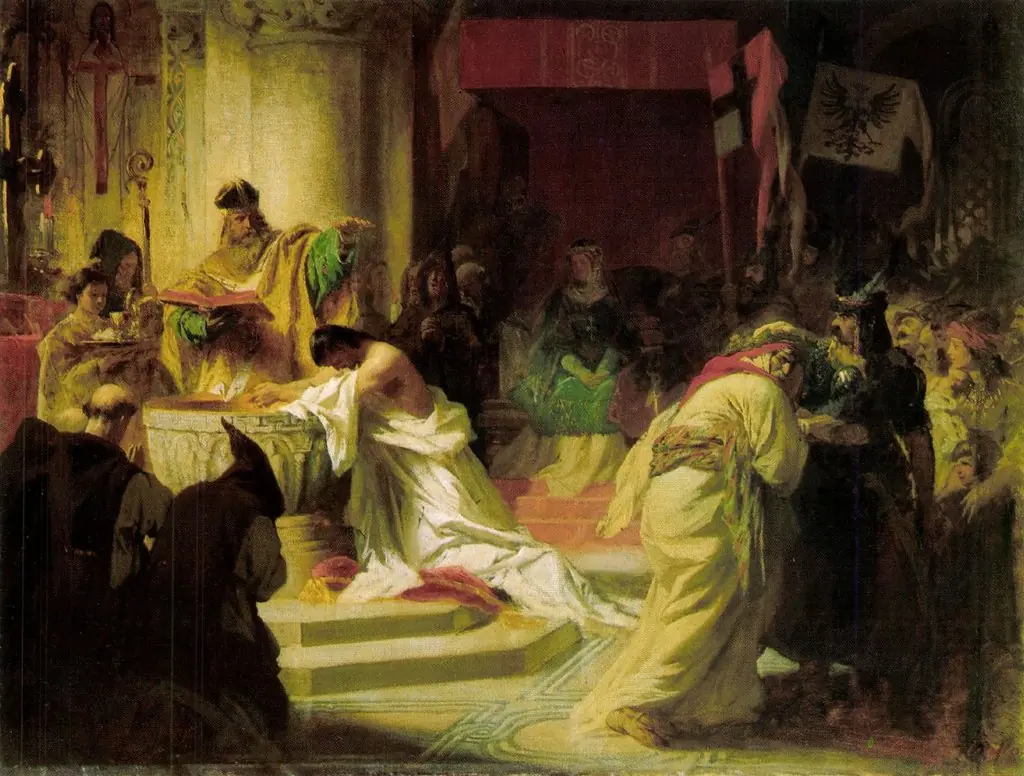 The Baptism of Vajk
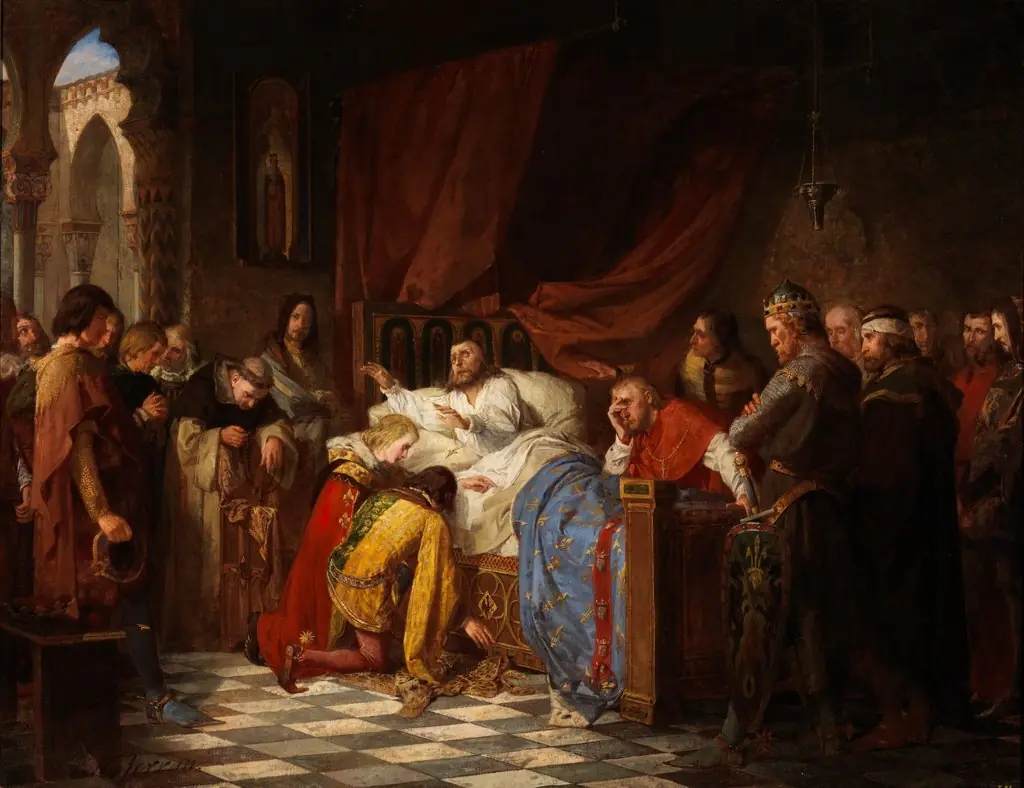 Felipe III de Francia moribundo bendiciendo a sus hijos
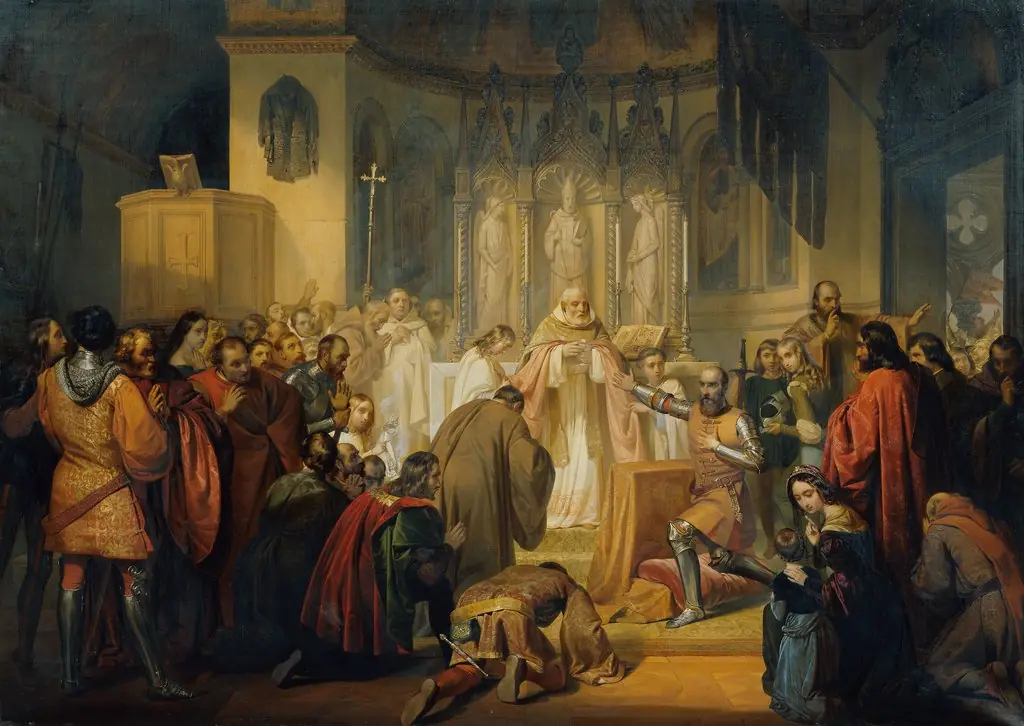 Vittore Pisani receives Holy Communion before taking command of an expedition against the Genoese
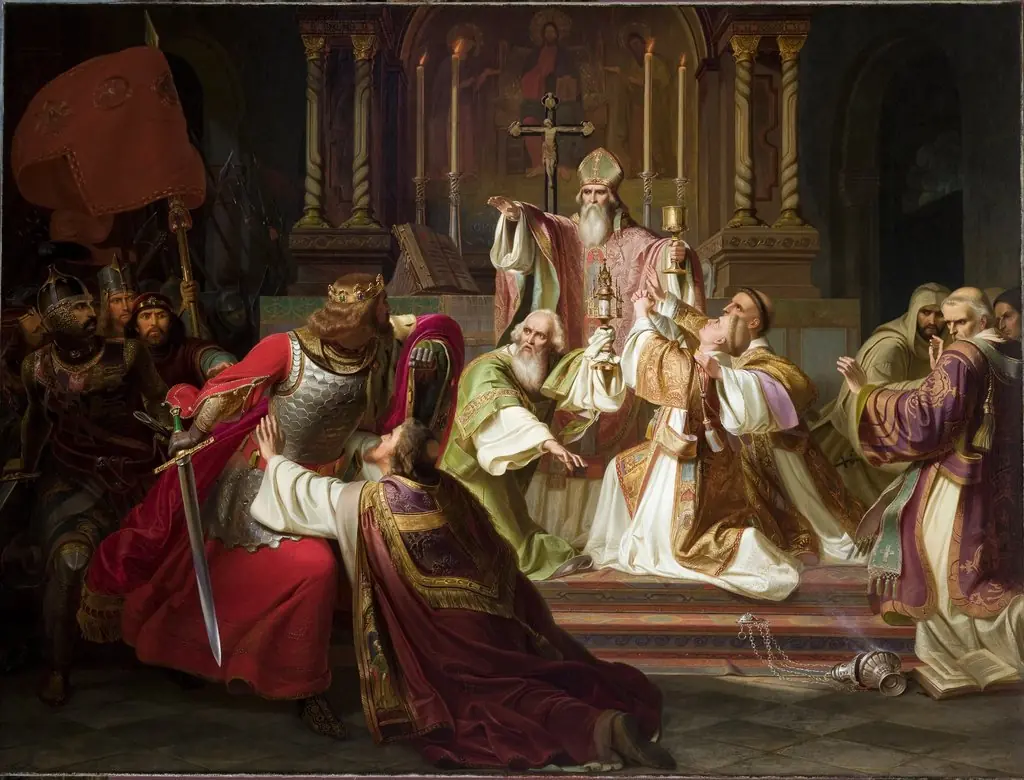 Bishop Stanisław Szczepanowski Putting a Curse on King Bolesław Śmiały
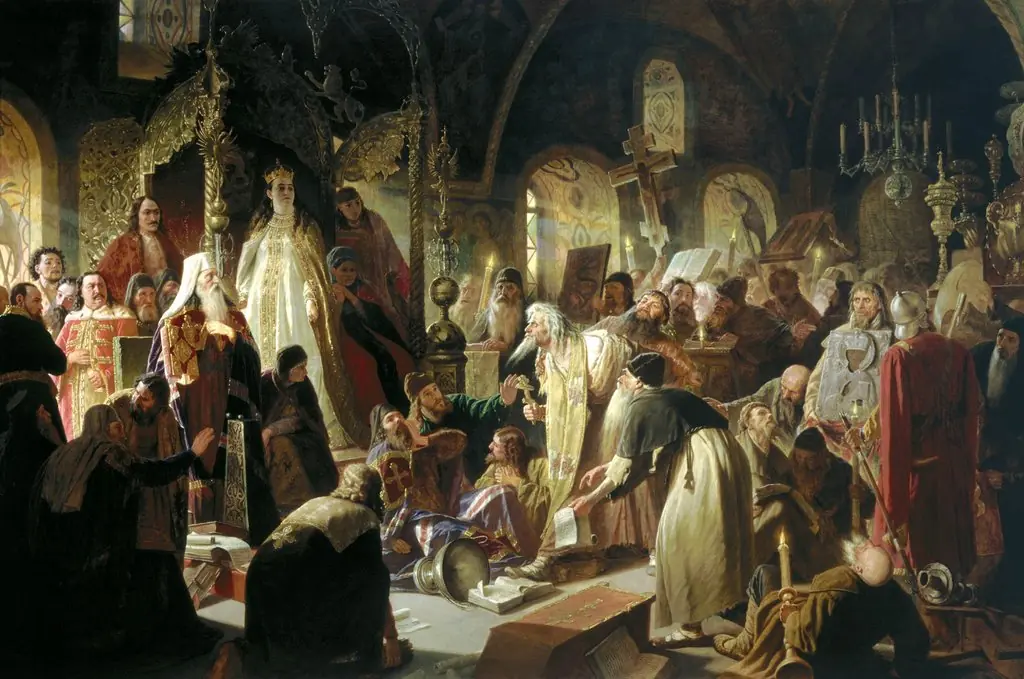 Nikita Pustosvyat. Debate about faith
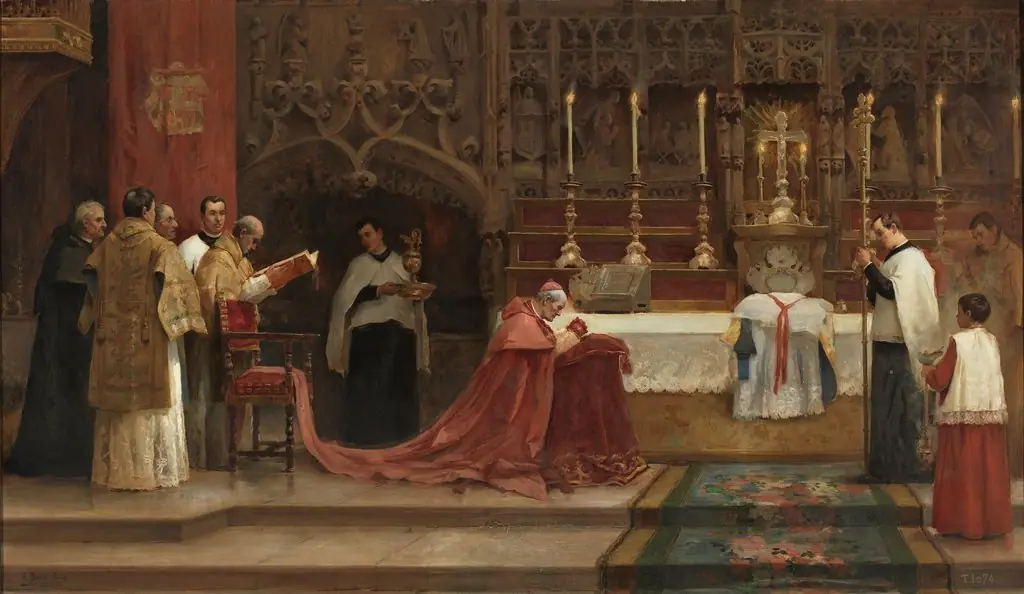 La misa de pontifical
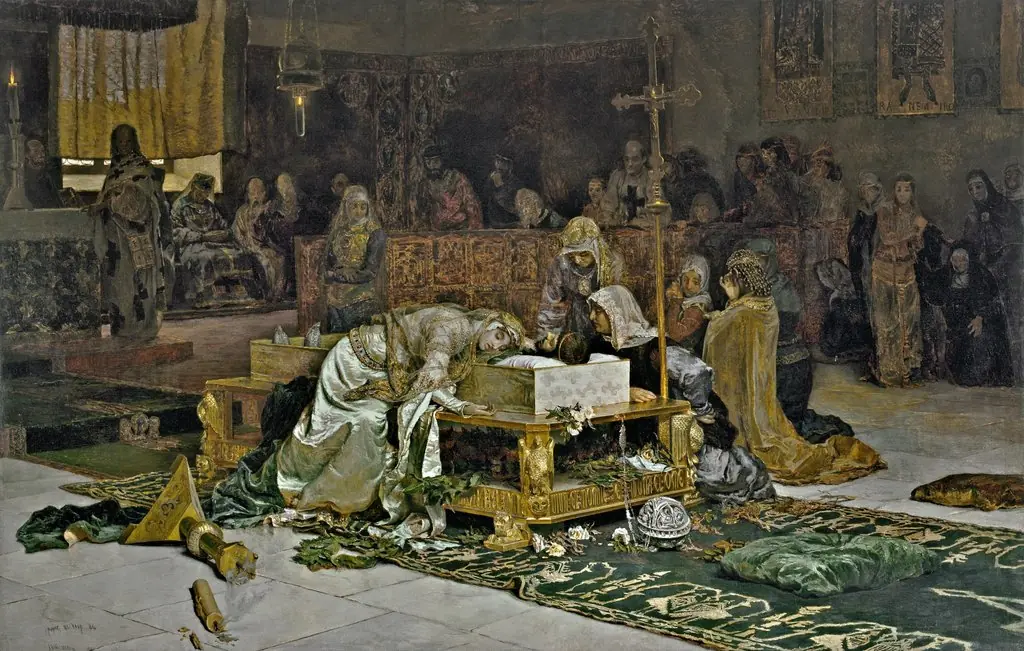 The Lovers of Teruel