Artwork
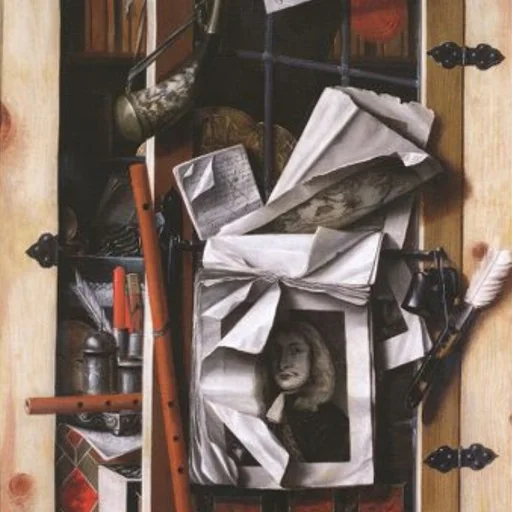
Board Partition with Musical Instruments. Trompe l'oeil
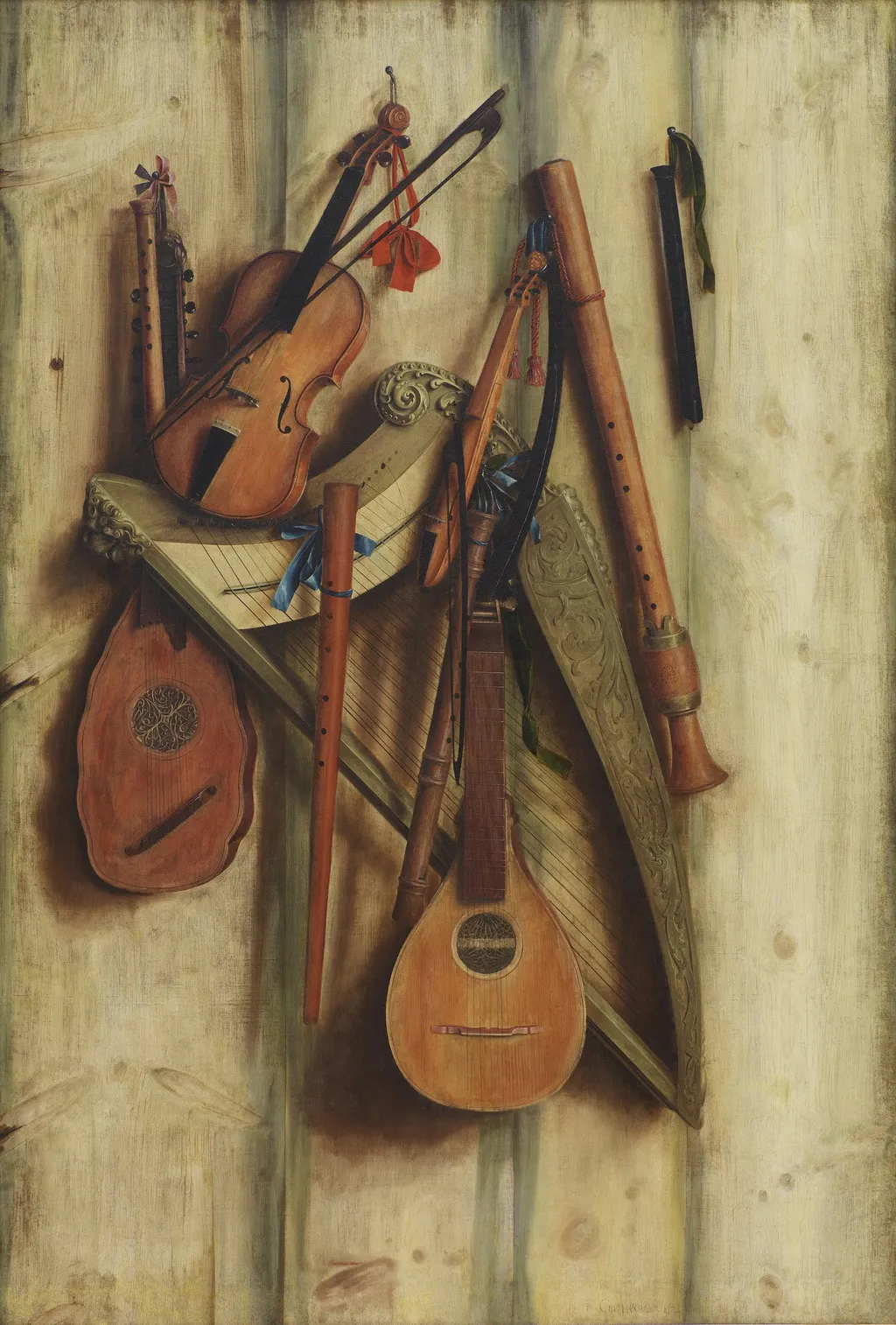
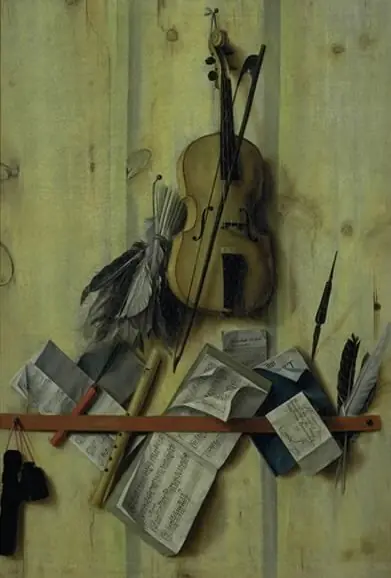
Board Partition with Musical Instruments. Trompe l'oeil is an oil painting by the Dutch Golden Age artist Franciscus Gijsbrechts. It dates from 1672 and is held in the collection of the Statens Museum for Kunst.
About this work
Technique & Style
The handling is smooth and restrained, suppressing visible brushwork to heighten the deception.
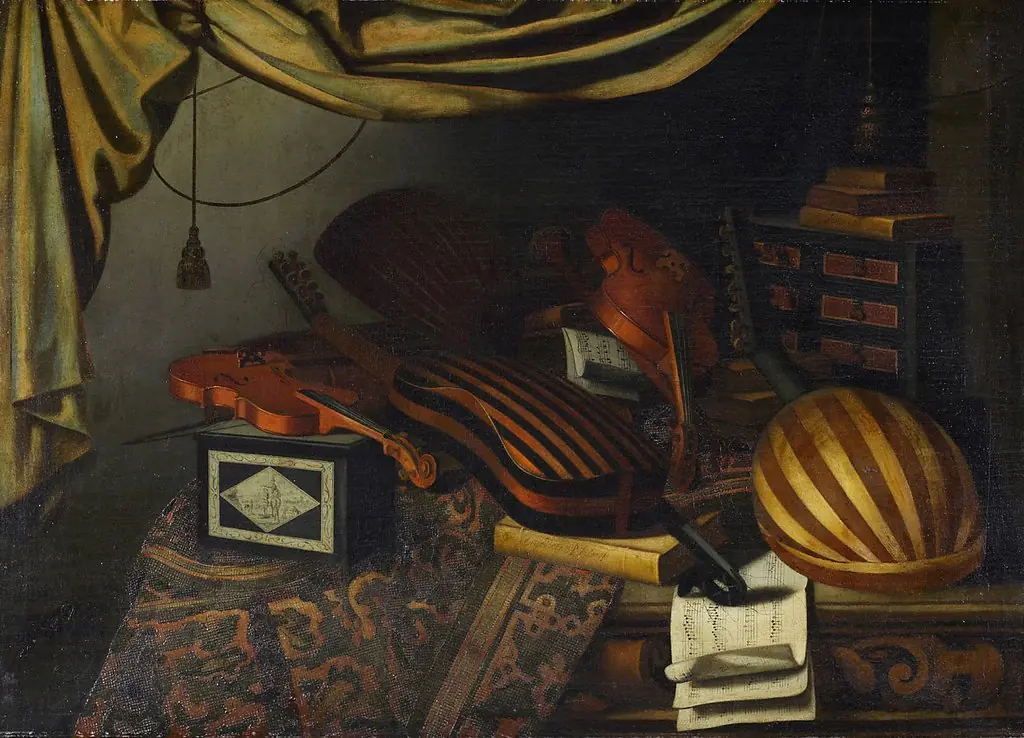
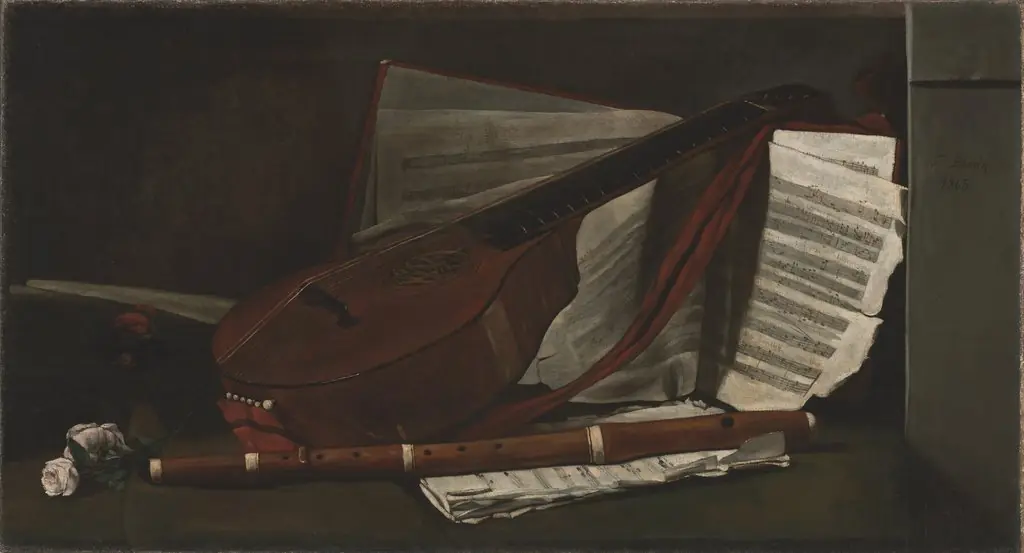
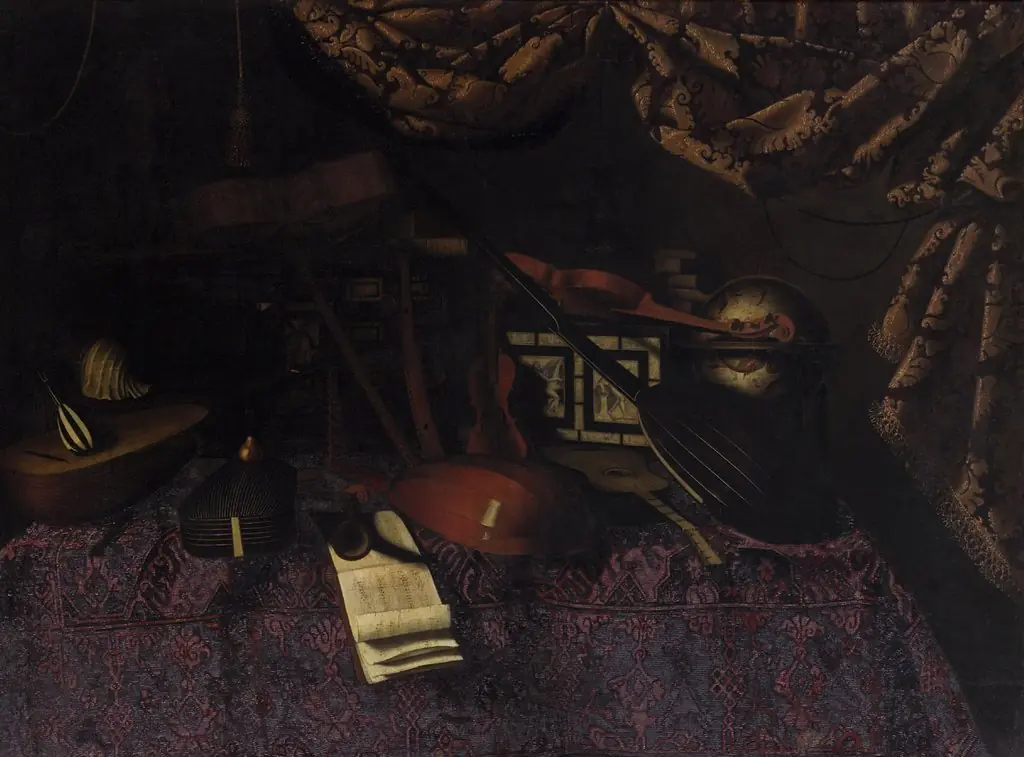
Franciscus Gijsbrechts’s Board Partition with Musical Instruments. Trompe l’oeil (1672) is executed in oil paint on canvas, measuring 169 × 115 cm. The artist employs a meticulous, illusionistic technique characteristic of trompe l’oeil, simulating textures and spatial depth with finely graded tonal transitions and razor-sharp detail. Gijsbrechts renders wood grain, paper edges, and metal hooks with near-photographic precision, while the musical instruments, depicted as if pinned to a wooden partition, project forward into the viewer’s space.
The handling is smooth and restrained, suppressing visible brushwork to heighten the deception. The palette remains subdued, dominated by earthy browns and ochres, with only subtle accents of red and white to draw attention to the sheet music and instrument details. Condition reports from the Statens Museum for Kunst indicate the painting retains its original surface integrity, though minor craquelure is consistent with age.
History & Provenance
The work Board Partition with Musical Instruments. Trompe l'oeil was created by Franciscus Gijsbrechts in 1672. Executed in oil paint on canvas, the piece measures 169 cm in height and 115 cm in width.
It currently resides in the collection of the Statens Museum for Kunst. The painting depicts musical instruments within a trompe l'oeil still life genre.
The painting Board Partition with Musical Instruments. Trompe l'oeil is held in the collection of the Statens Museum for Kunst. Created in 1672 by Franciscus Gijsbrechts, the work is executed in oil paint on canvas and measures 169 cm in height by 115 cm in width.
The available sources confirm its current location and physical attributes but do not provide specific inventory accession numbers or a record of past exhibitions.
Context
Franciscus Gijsbrechts painted Board Partition with Musical Instruments. Trompe l'oeil in 1672, a still life that exemplifies the trompe l'oeil technique through its illusionistic rendering of a wooden board displaying various musical instruments. The work is housed in the collection of the Statens Museum for Kunst, where it is recognized as a notable example of 17th-century Danish painting and contributes to understanding Gijsbrechts' exploration of visual deception within the broader Baroque tradition.
Scholarship highlights its significance within the artist's oeuvre, which often engaged with illusionistic space and the materiality of painted surfaces, situating this piece within the evolution of trompe l'oeil as a distinct genre in European art history.
Overview
Created in 1672, Board Partition with Musical Instruments is an oil painting by the Flemish artist Franciscus Gijsbrechts. Executed as a trompe‑léil still life, the work presents a wooden panel set against a wall, upon which a collection of musical objects is arranged to appear as three‑dimensional forms. The painting belongs to the Dutch Golden Age tradition of illusionistic genre scenes and is currently housed in the Statens Museum for Kunst.
Subject & Meaning
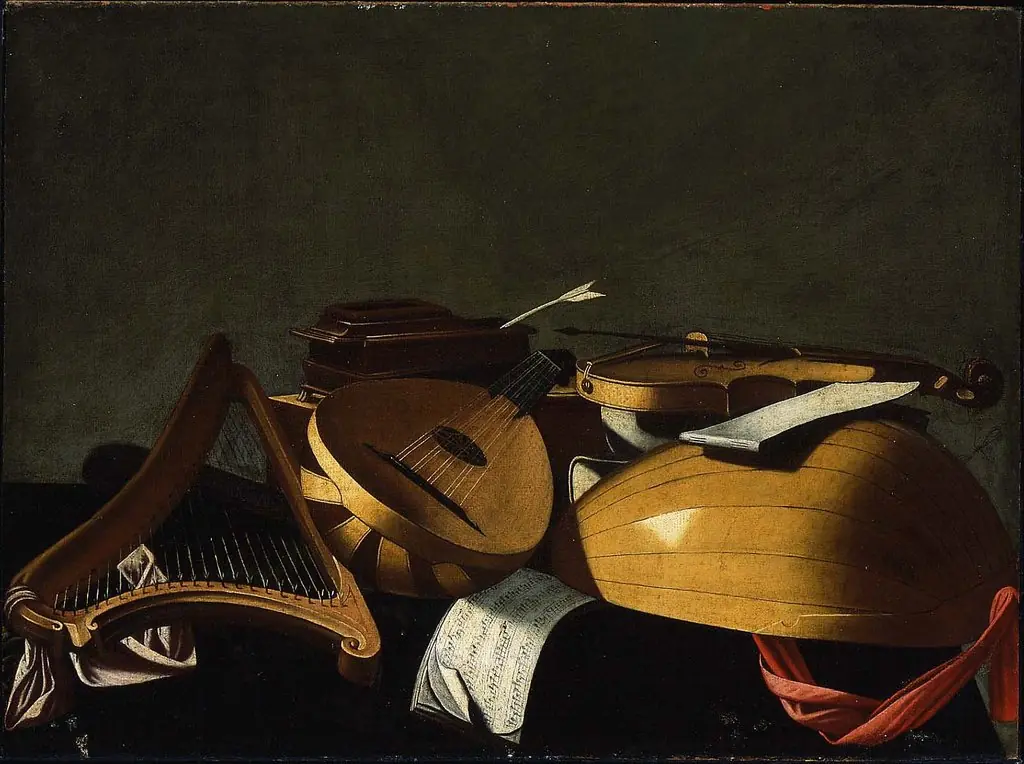
The composition gathers several antiquated instruments, a violin with a red bow, a lute suspended by its strap, a small harp‑type piece with carved detailing, a wooden flute, and an additional bow, leaning casually against a rough wooden board. By rendering these objects with convincing shadows and textures, the artist invites viewers to question the boundary between painted surface and tangible reality, a hallmark of trompe‑léil.
Own this work as a print
Artist & collection
Artist
Franciscus Gijsbrechts, also spelled Gysbrechts, (1649, Antwerp – after 1677), was a Flemish painter who specialised in vanitas still lifes and trompe-l'œil paintings.