Artwork
Trompe l'oeil with Violin, Music Book and Recorder
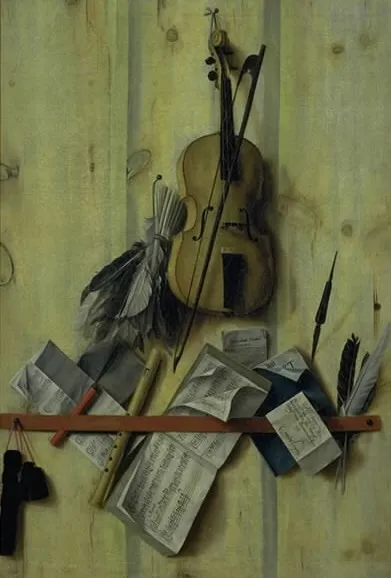
Trompe l'oeil with Violin, Music Book and Recorder is an oil painting by the Dutch Golden Age artist Cornelis Norbertus Gijsbrechts. It dates from 1672 and is held in the collection of the Statens Museum for Kunst.
About this work
Technique & Style
Gijsbrechts arranges a violin, a music book, a recorder, and a feather to simulate a casual assemblage of objects attached to a surface.
Executed in 1672, this work is an oil painting on canvas measuring 117 cm in height and 80 cm in width. The composition employs the trompe-l'oeil style, a genre of still life designed to deceive the eye through hyper-realistic depiction. Gijsbrechts arranges a violin, a music book, a recorder, and a feather to simulate a casual assemblage of objects attached to a surface.
The handling of the oil medium allows for detailed textural differentiation between the wood of the instruments, the paper of the score, and the softness of the feather, creating a convincing illusion of three-dimensional presence on a two-dimensional support.
History & Provenance
Trompe l'oeil with Violin, Music Book and Recorder is an oil on canvas still-life painted in 1672 by Cornelis Norbertus Gijsbrechts. The work is held in the collection of the Statens Museum for Kunst in Copenhagen and measures 117 cm in height by 80 cm in width. The painting depicts a violin, a music book and a recorder, rendered in oil paint. It belongs to the still-life genre, reflecting the decorative and illusionistic trends of 17th-century European art.
Overview
Cornelis Norbertus Gijsbrechts, a Flemish painter active in the latter half of the 17th century, produced this oil on canvas in 1672 while serving as court painter to the Danish monarchy. The work is a trompe‑l’œil still life that presents a violin, a recorder, a music manuscript and a pair of feathers as if they were pinned to a wooden wall, creating a convincing illusion of three‑dimensional objects.
Subject & Meaning
The composition gathers musical paraphernalia, a light‑brown violin with visible strings, a wooden recorder with its finger holes, and a sheet of music bearing black notation, alongside contrasting black and white feathers. By arranging these items on a flat surface, Gijsbrechts invites the viewer to question the boundary between painted representation and real objects, a common theme in illusionistic art.
Context
The work belongs to the Dutch Golden Age, a period when still‑life painting flourished alongside a booming economy and expanding trade networks. Trompe‑l’œil pieces such as this one catered to a sophisticated clientele interested in visual tricks and the display of learned, musical culture.
Artist & collection
Artist
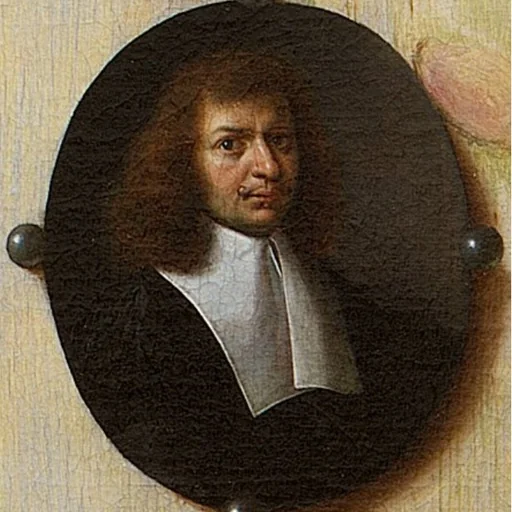
Cornelis Norbertus Gijsbrechts
Cornelis Norbertus Gijsbrechts (1625/1629 – after 1675), was a Flemish painter who was active in the Spanish Netherlands, Germany, Denmark and Sweden in the second half of the seventeenth century.

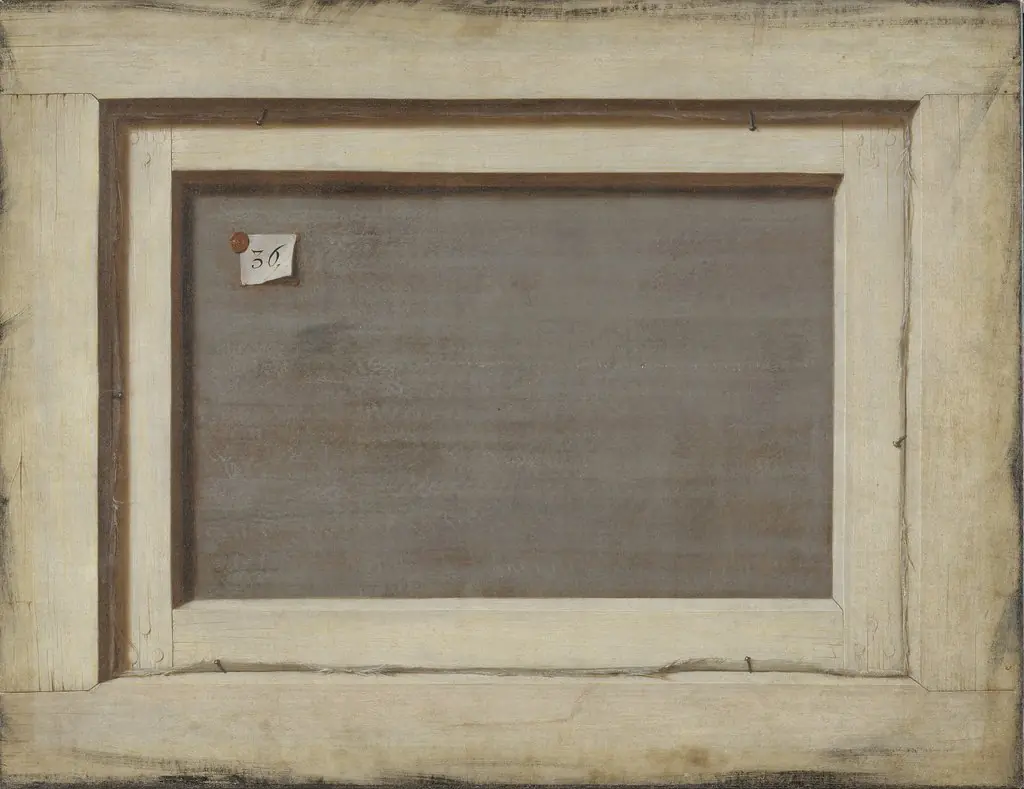
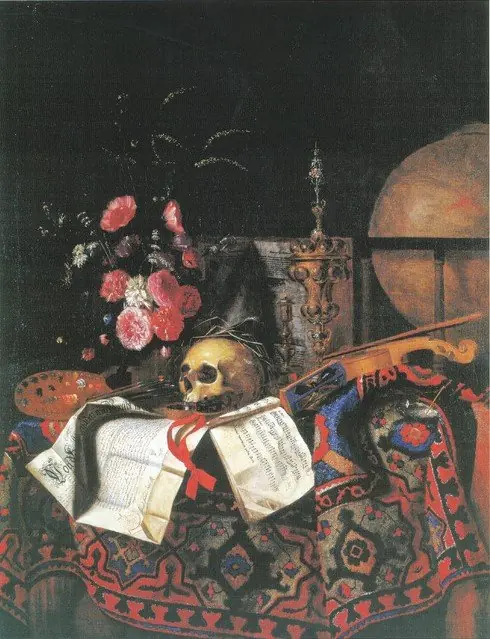
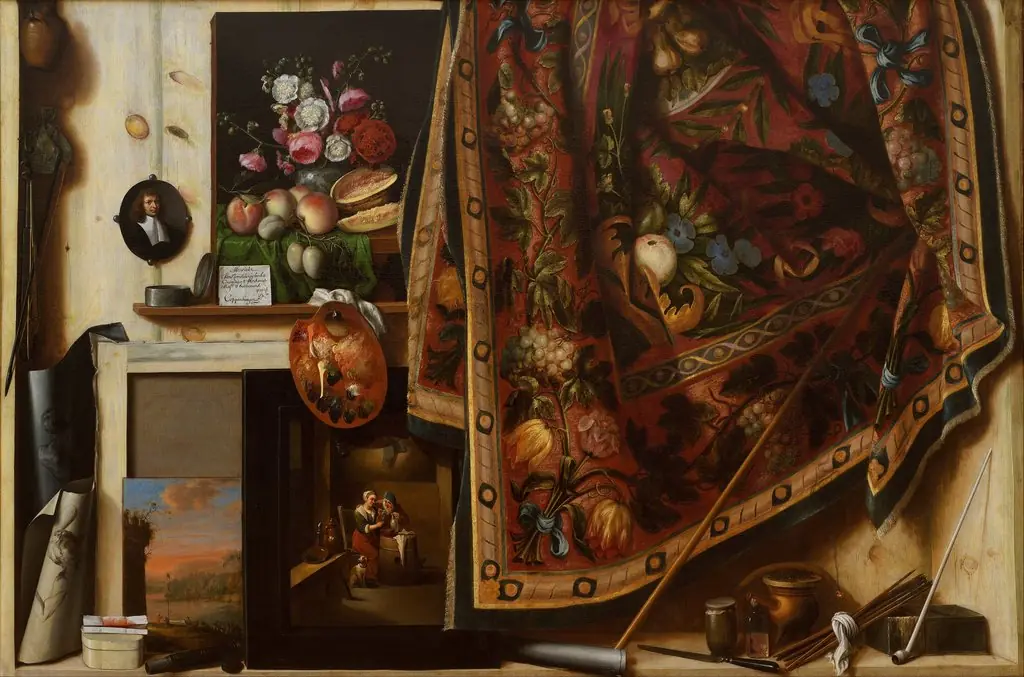
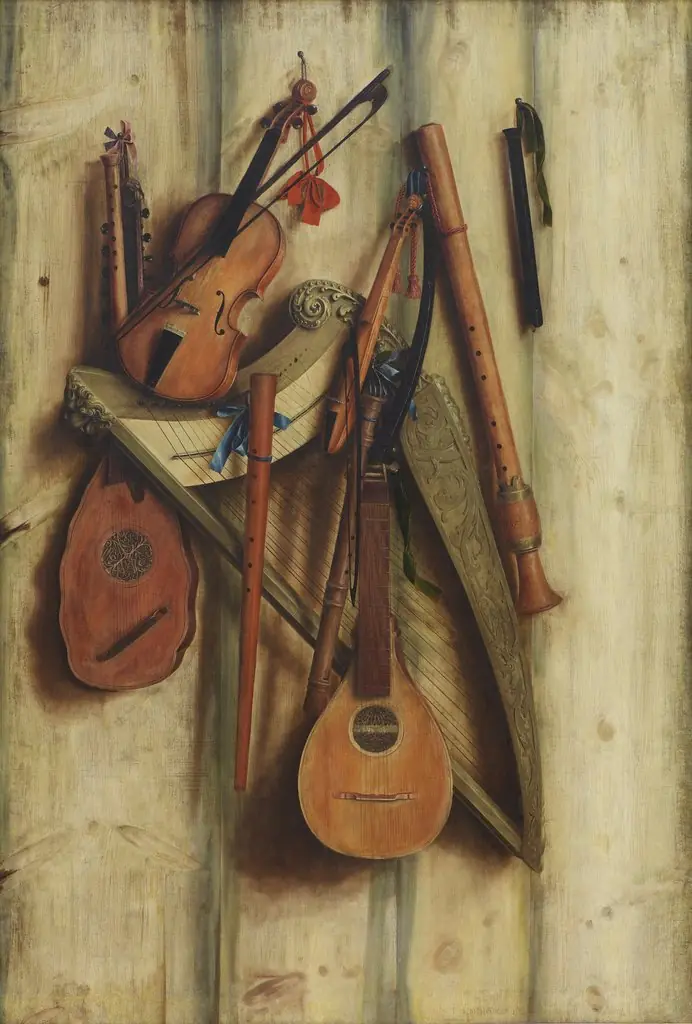
- Board Partition with Musical Instruments. Trompe l'oeil
 Trompe l'Oeil with Trumpet, Celestial Globe and Proclamation by Frederik III
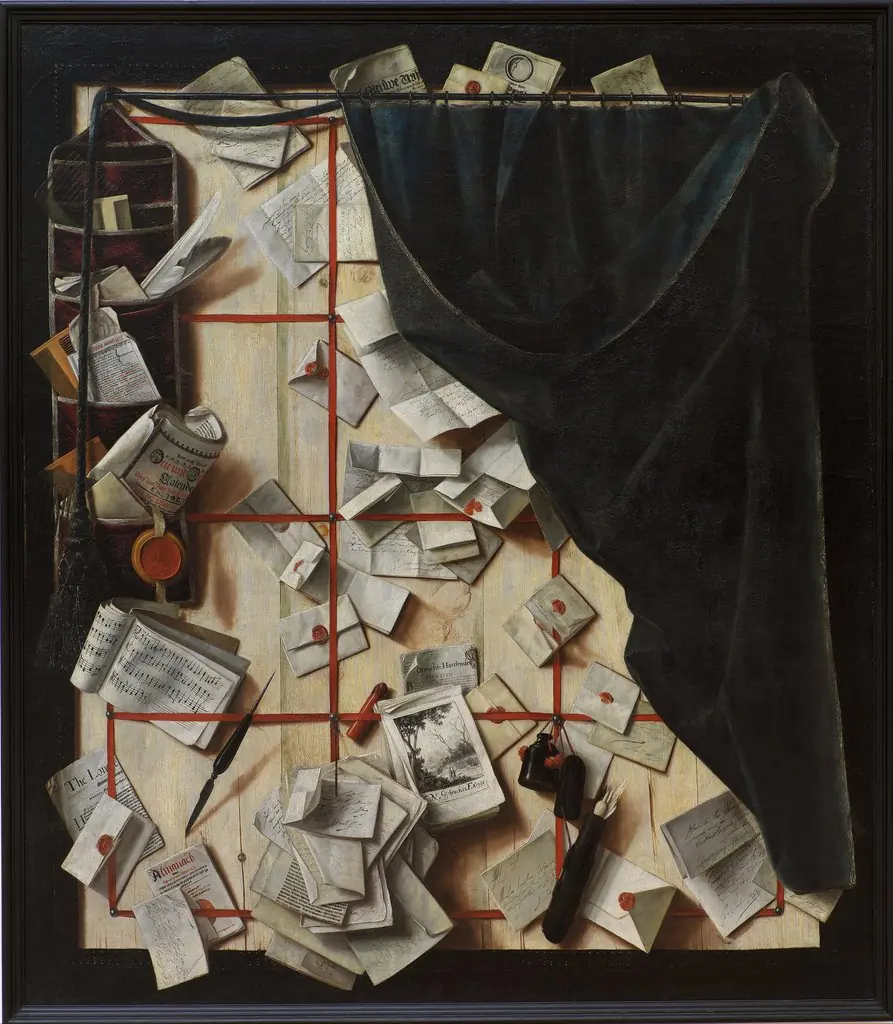 Trompe l'oeil. Board Partition with Letter Rack and Music Book
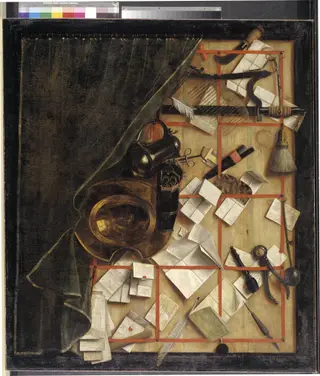 Trompe l'oeil. Letter Rack with a Barber-Surgeon's Instruments
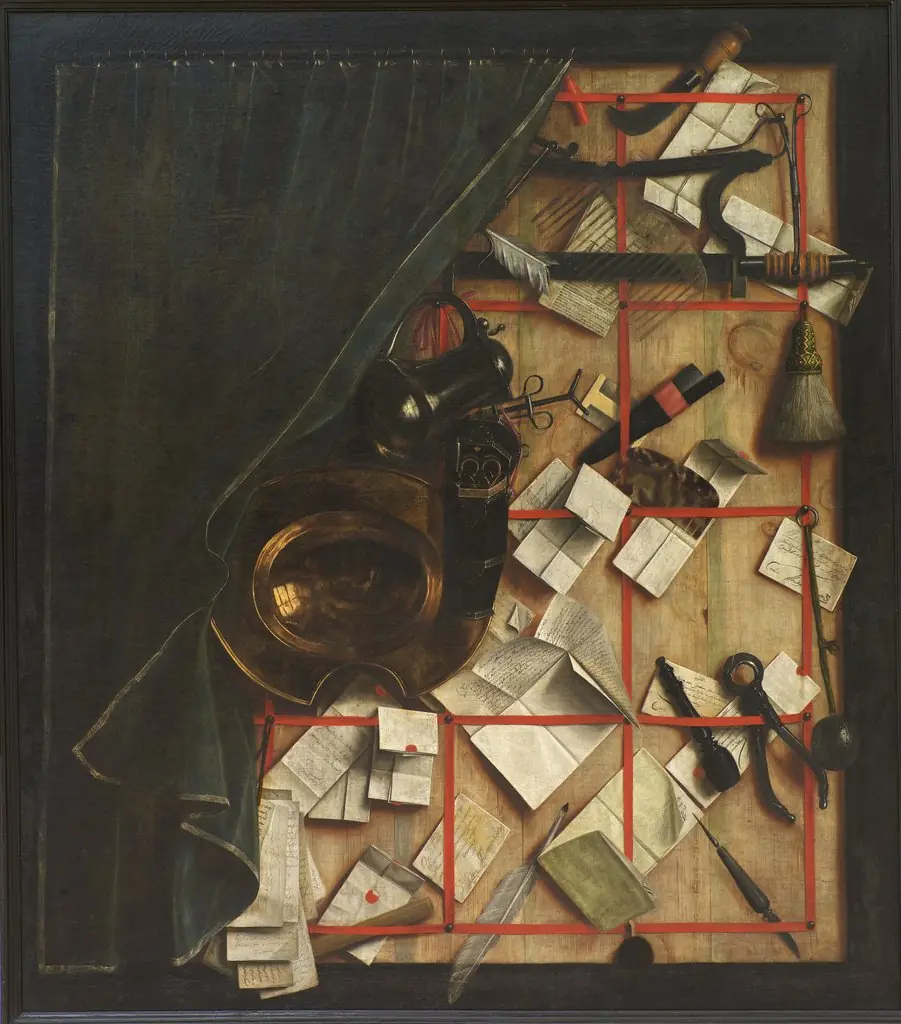 Trompe l'oeil. Letter Rack with a Barber-Surgeon's Instruments
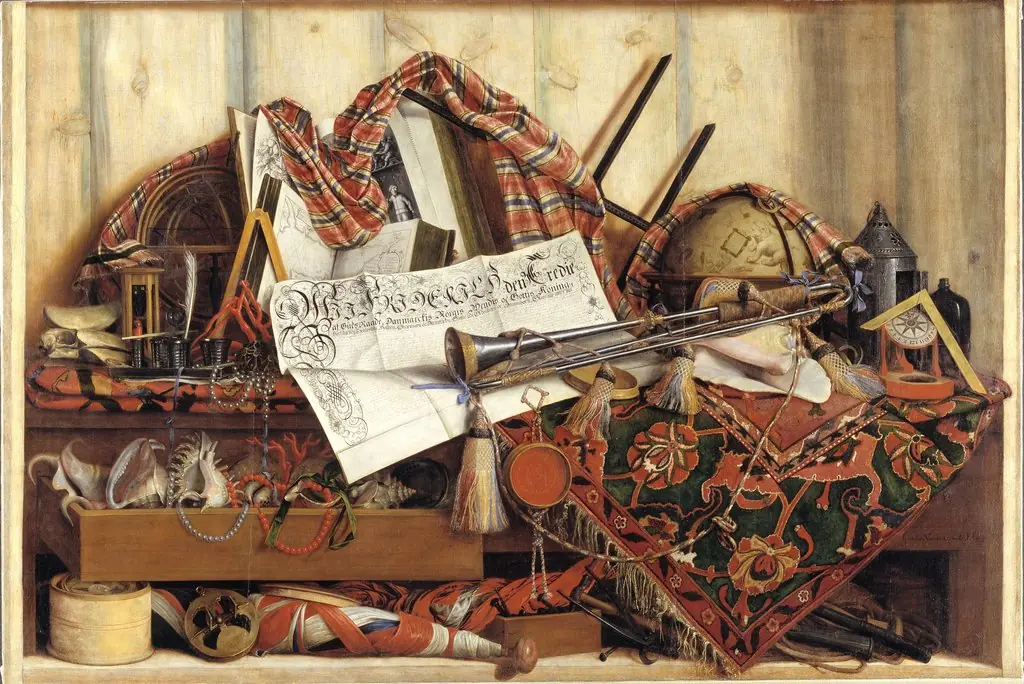 Trompe l'Oeil with Trumpet, Celestial Globe and Proclamation by Frederik III