Artwork
Beggar with Wooden Leg
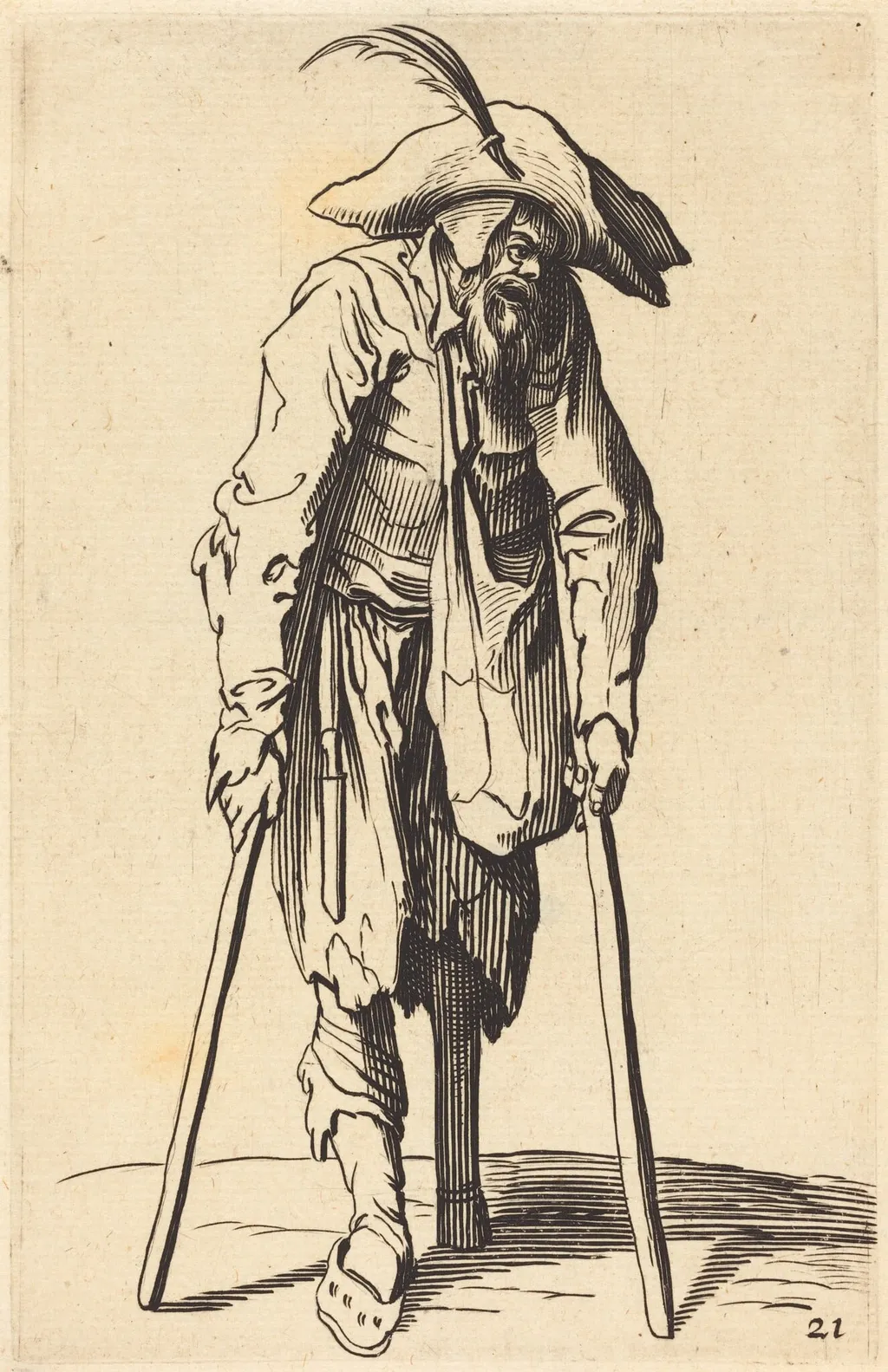
Beggar with Wooden Leg is an ink print by the Baroque artist French 17th Century. It dates from 1622 and is held in the collection of the National Gallery of Art.
About this work
Overview
Beggar with Wooden Leg is an etching on laid paper, a print created using a metal plate with cut lines that hold ink.
Subject & Meaning
The print depicts a man in tattered clothing seated on steps, his right leg amputated and replaced with a wooden stump, with a crutch leaning against the wall behind him.
Technique & Style
The artist employed etching and drypoint techniques; the latter is evident in the soft, fuzzy shadows around the beggar's hands, achieved by dragging a needle across the plate.
Artist & collection

Artist
Seventeenth-century French printmakers worked in burin and acid. See the Beggar Woman with Rosary (1622), etched on laid paper with her hands folded in prayer, or The Siege of La Rochelle (1628/1631), one sheet from a…





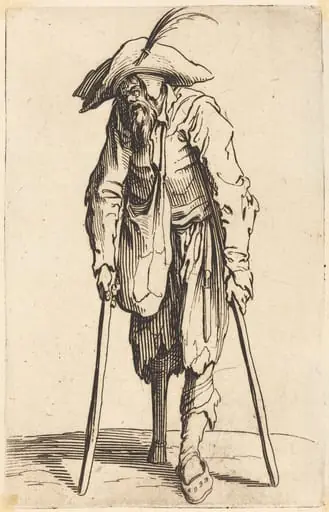 Beggar with Wooden Leg
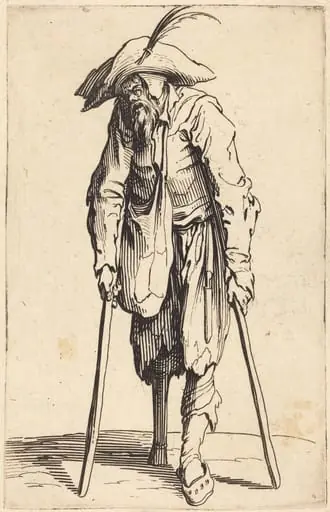 Beggar with Wooden Leg
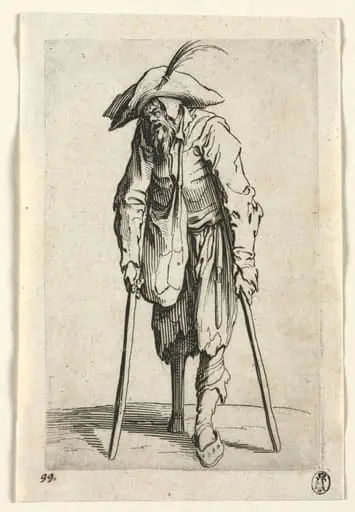 The Beggars: Beggar with Wooden Leg
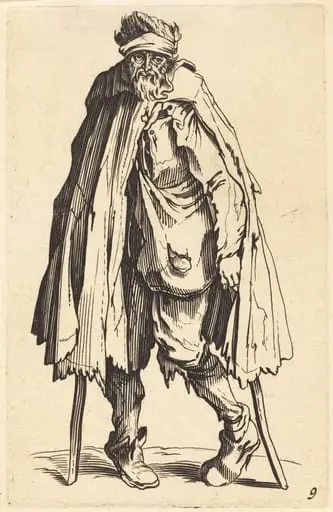 Beggar with Crutches and Sack
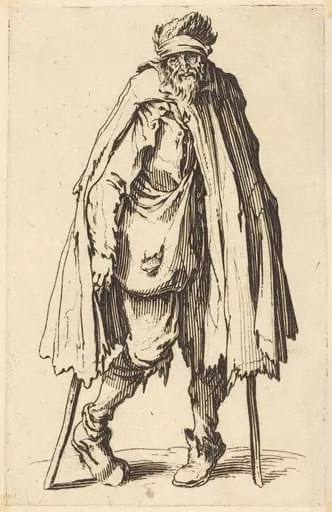 Beggar with Crutches and Sack
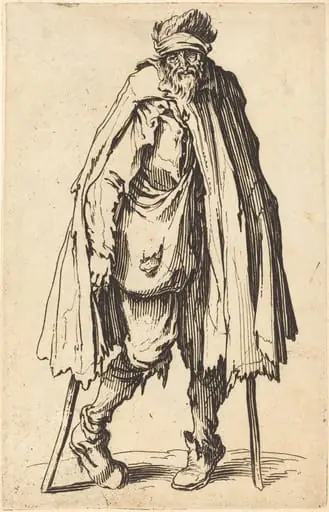 Beggar with Crutches and Sack
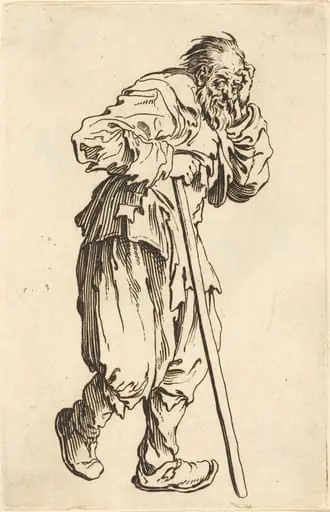 Beggar with a Stick
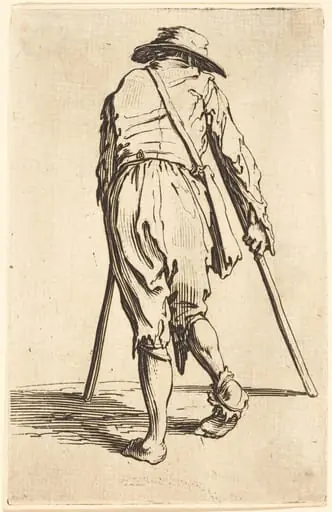 Beggar with Crutches and Hat, Back View
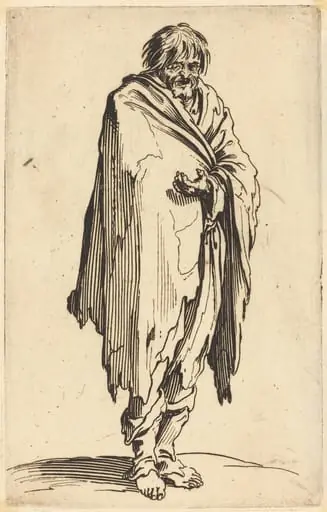 Beggar with Bare Head and Feet
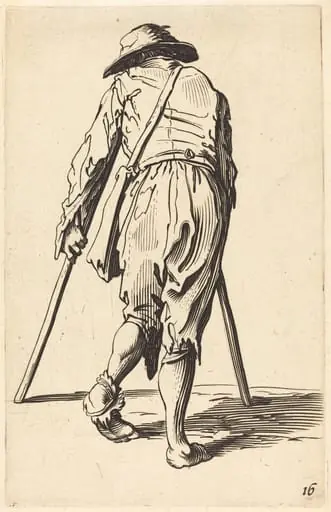 Beggar with Crutches and Hat, Back View
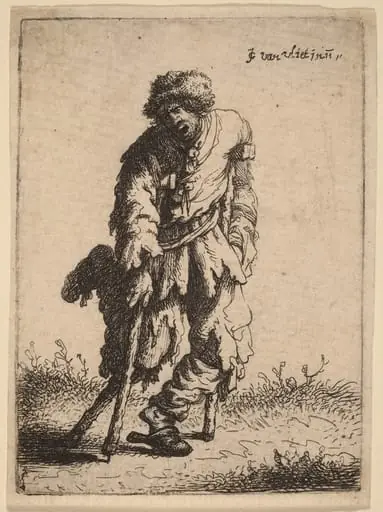 Beggar with a Wooden Leg
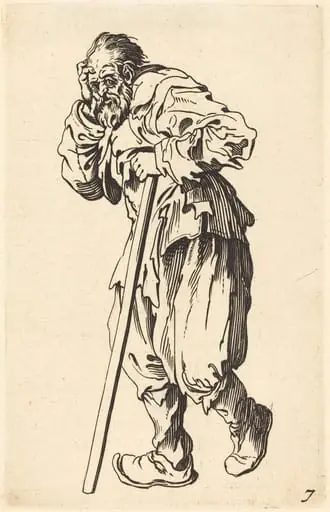 Beggar with a Stick