Artwork
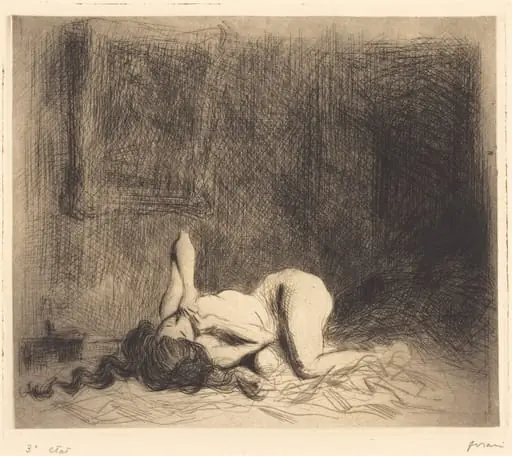
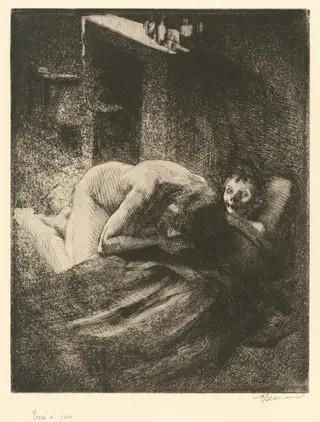
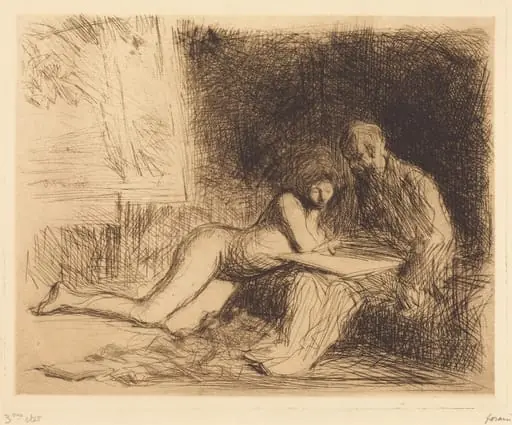
Levite of Ephraim and His Dead Wife
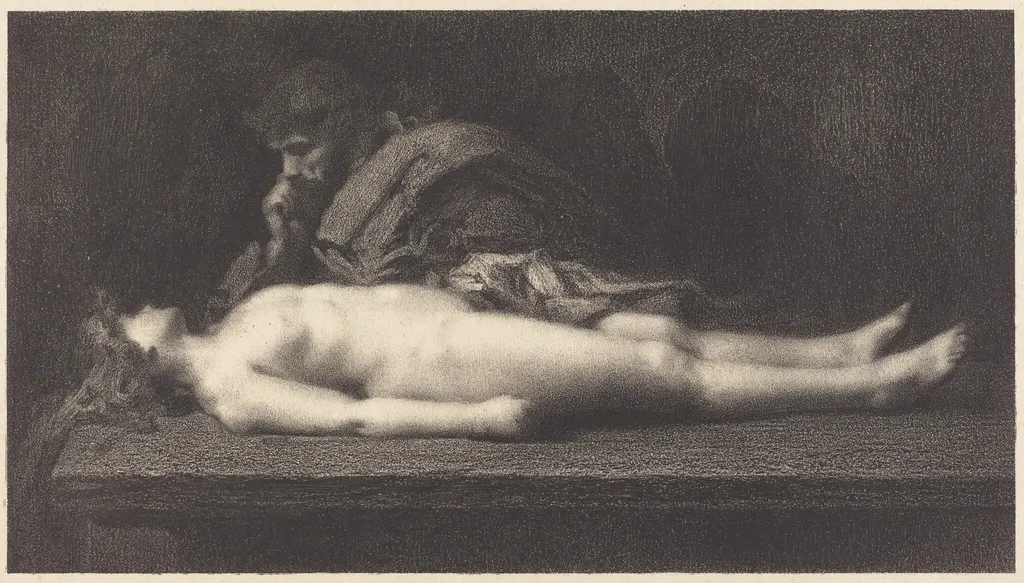
Levite of Ephraim and His Dead Wife is an ink print by the Impressionist artist Fuchs, M.G.. It dates from 1898 and is held in the collection of the National Gallery of Art. Created around 1898, this lithographic proof by M.
- Inscription
- Inscribed:by later hand, along left edge in graphite: R. d. l'Art (not deciphered) II 98; Henner Le Lévite d'Ephraim & sa Femme morte; C. Fuchs lith. 12/21
About this work
Overview
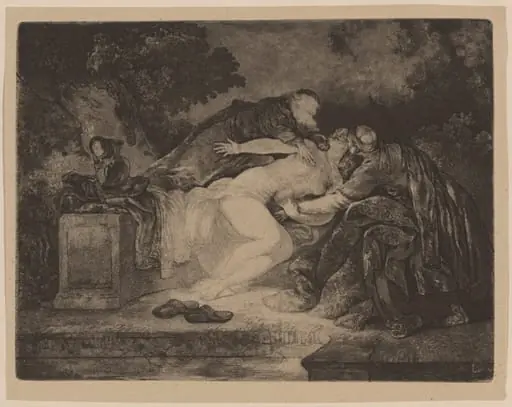
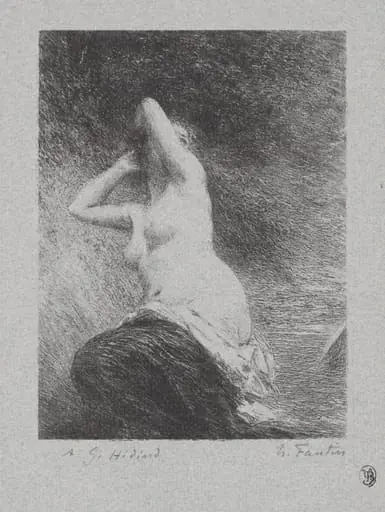
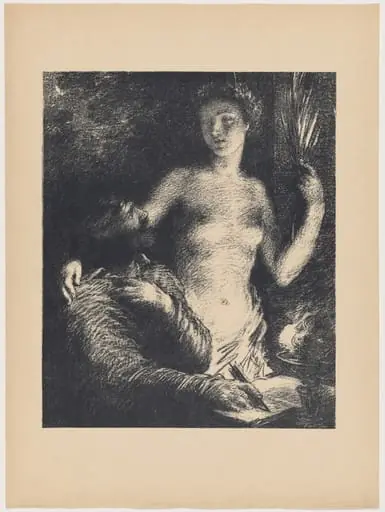
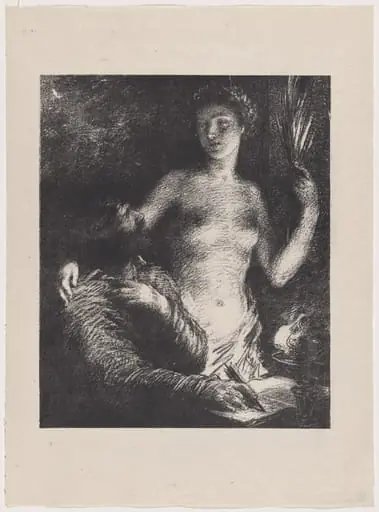
Created around 1898, this lithographic proof by M.G. Fuchs bears the title Levite of Ephraim and His Dead Wife. The work presents a compact, dimly lit tableau that centers on a stark white skull placed on a shelf, accompanied by a tangled heap of fabric and a small dark bundle. A deep, almost black background recedes behind the objects, emphasizing their forms and textures.
Subject & Meaning
The title alludes to a biblical figure and his bereaved spouse, suggesting themes of mortality and loss. By isolating a skull, a traditional memento mori, alongside discarded clothing and an ambiguous wrapped object, the image evokes the quiet aftermath of death, inviting contemplation of the fragile boundary between life’s material remnants and the inevitability of decay.
Technique & Style
Executed as a lithograph on wove paper, the piece relies on the medium’s capacity for fine tonal variation. Fuchs employs a limited palette, allowing the luminous white of the skull to contrast sharply with the coarse, shadowed textures of the fabric and the muted darkness of the backdrop. The composition’s simplicity foregrounds shape and surface over narrative detail.
History & Provenance
The work is catalogued as a proof, indicating it was produced during the preparatory stage of the printing process rather than as a final edition. Its creation at the close of the 19th century places it within a period when artists were exploring lithography’s expressive possibilities, though specific ownership records for this particular proof remain undocumented.
Artist & collection