Artwork
H Beard Print Collection
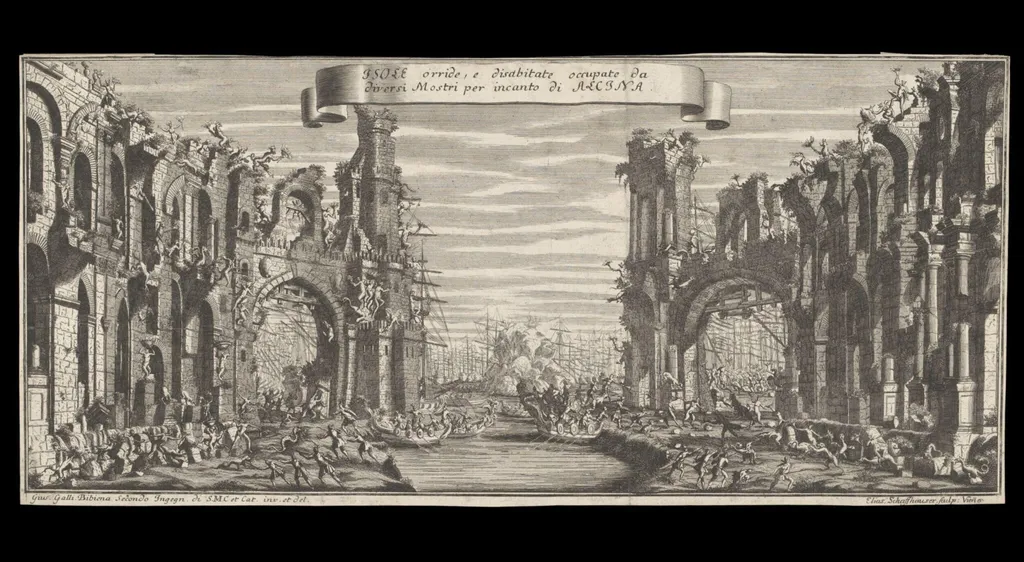
H Beard Print Collection is a print by Giuseppe Galli da Bibiena. It dates from 1750 and is held in the collection of the Victoria and Albert Museum.
About this work
Overview
This print depicts barren, eerie islands overrun by fantastical creatures, attributed to the enchantment of Alcina, a sorceress from Renaissance literature. The scene evokes a magical transformation of nature into a realm of the uncanny, reflecting themes from epic poetry and operatic adaptation. Its title suggests a landscape shaped by sorcery rather than human presence.
Subject & Meaning
The imagery portrays islands rendered desolate and inhabited solely by monstrous forms, a consequence of Alcina’s spell. These figures likely represent transformed lovers or warriors, a motif drawn from Ariosto’s Orlando Furioso. The scene conveys the capricious power of magic to distort reality and imprison the human form within unnatural shapes.
Technique & Style
The print employs fine linear detailing to render twisted, hybrid creatures and jagged terrain, typical of 18th-century illustrative traditions. Contrast between dark, dense forms and open, barren spaces heightens the sense of isolation. The composition lacks perspective depth, emphasizing symbolic rather than naturalistic space.
History & Provenance
The print is part of the H. Beard Print Collection, likely produced in the early 1700s as a theatrical or literary illustration. Its connection to Handel’s opera Alcina suggests it was created to accompany performances or promote the work, drawing on the opera’s source material in Ariosto’s epic poem.
Context
Alcina’s character, originating in Ariosto’s 16th-century romance, became a popular subject in Baroque opera and visual art. Her magic, which turns enemies into beasts, resonated with contemporary fascination with illusion, transformation, and the supernatural. This print reflects the era’s blending of literary myth and stage spectacle.
Legacy
Though not widely reproduced, the image contributes to a visual tradition of depicting magical transformations in European art. It preserves a specific interpretation of Alcina’s domain, bridging literary narrative and graphic representation during the rise of opera as a public art form.
Artist & collection
Artist
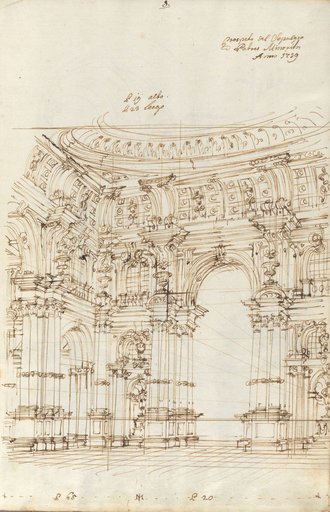
Giuseppe Galli Bibiena, Italian designer, became the most distinguished artist of the Galli da Bibiena family.

- Antiquities of Rome: The Appian Way
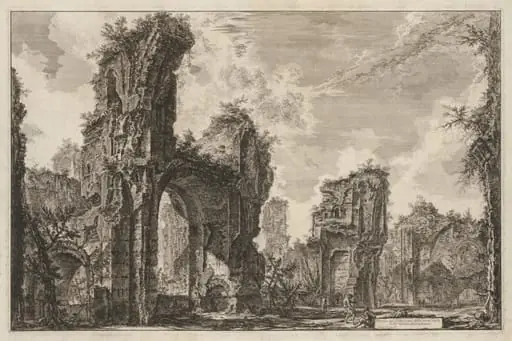 Views of Rome: Rovine del Sisto o sia della gran sala delle Terme Antoniniane
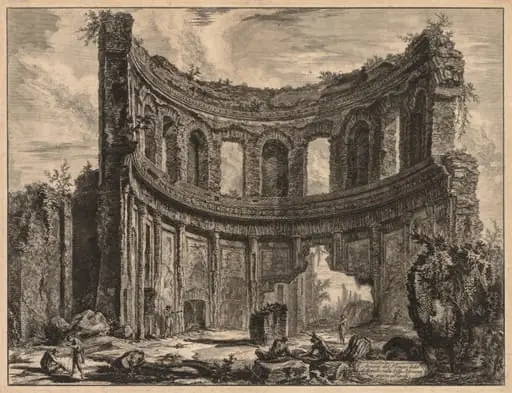 Views of Rome: Remains of the Temple of Apollo near Hadrian's Villa
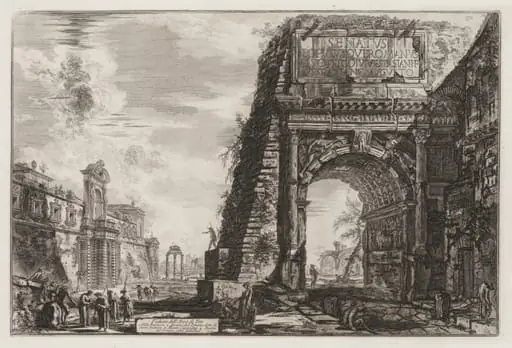 Views of Rome: The Arch or Titus
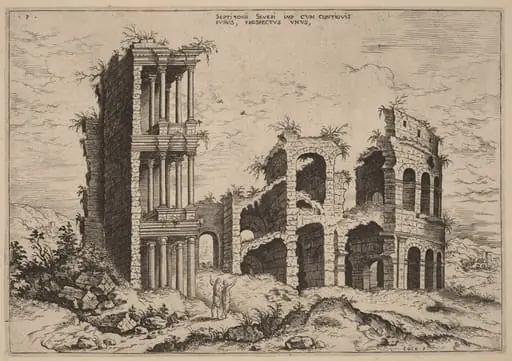 The Septizonium and the Colosseum
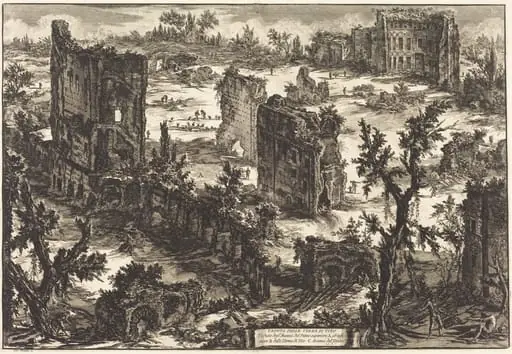 Veduta delle Terme di Tito
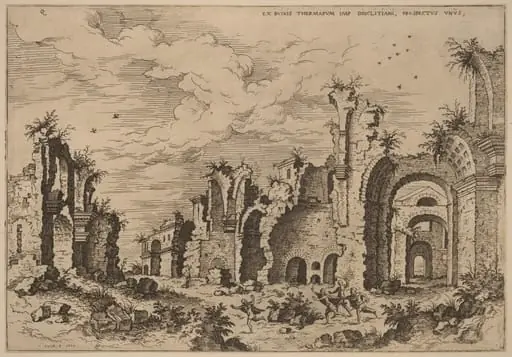 The Baths of Diocletian
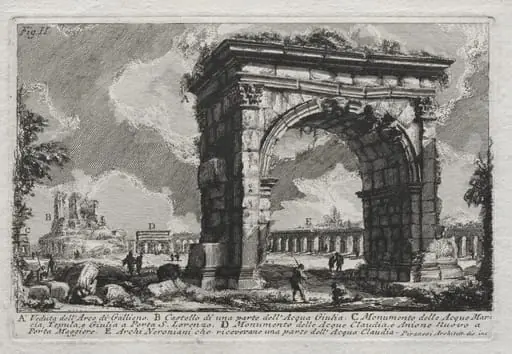 Veduta dell'Arco di Gallieno
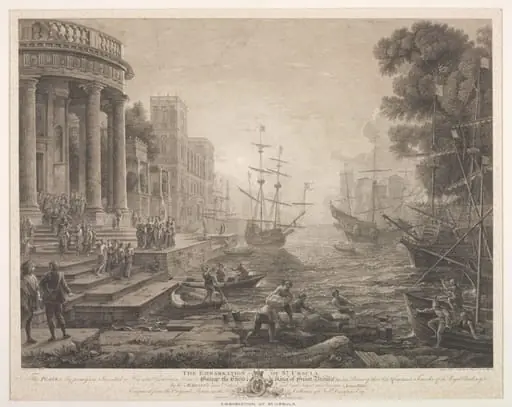 Embarkation of St. Ursula
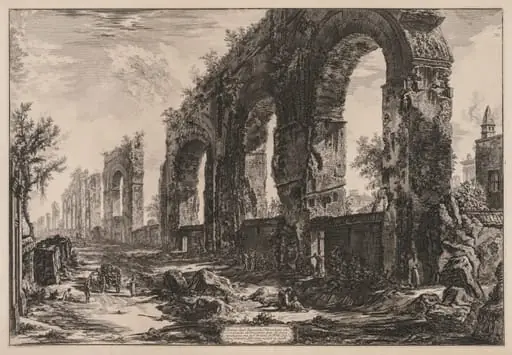 Views of Rome: The Aquaduct of Nero
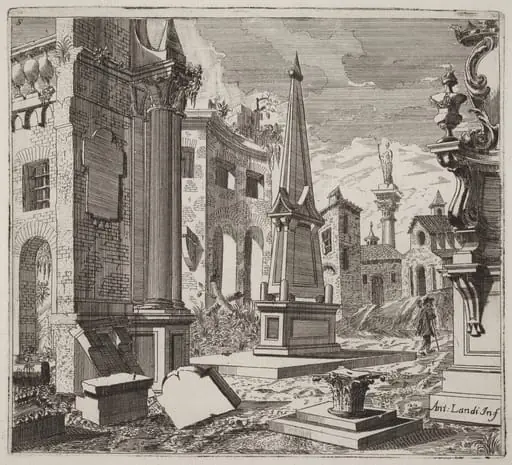 Fantastic Townscape with Ruins
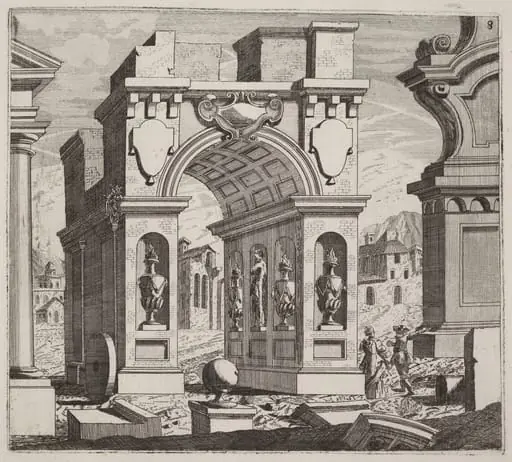 Architectural Fantasy with a Triumphal Arch