Artwork
Holy Trinity
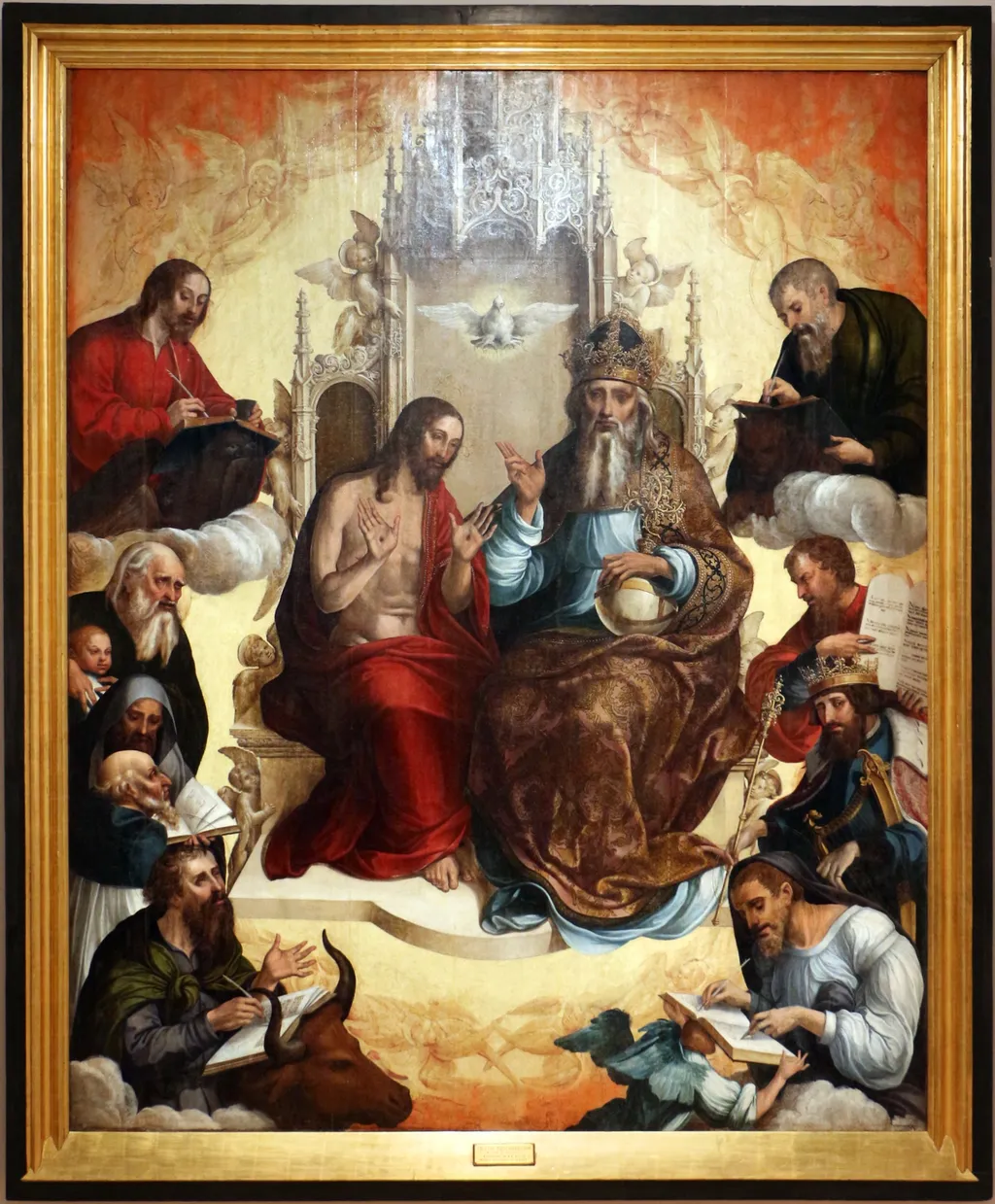
Holy Trinity is an oil painting by the Mannerist artist Garcia Fernandes. It dates from 1537 and is held in the collection of the National Museum of Ancient Art.
About this work
Subject & Meaning
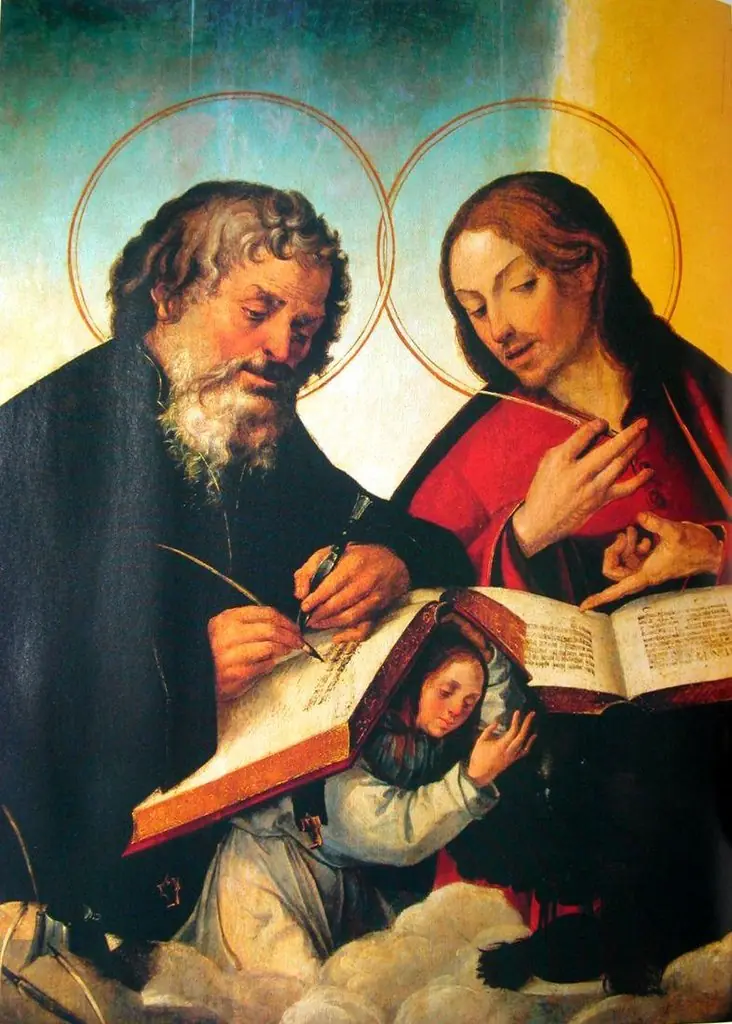
The Trinity is accompanied by the Four Evangelists, John, Luke, Matthew, and Mark, who represent the authors of the Gospels.
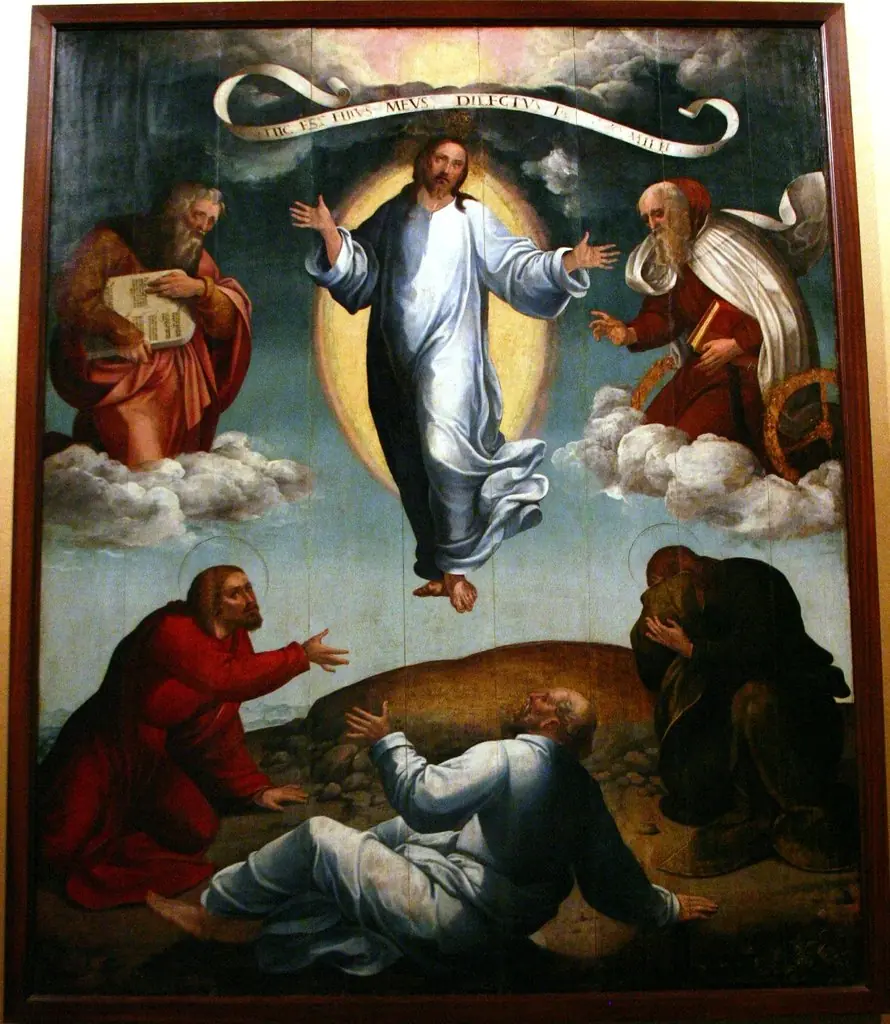
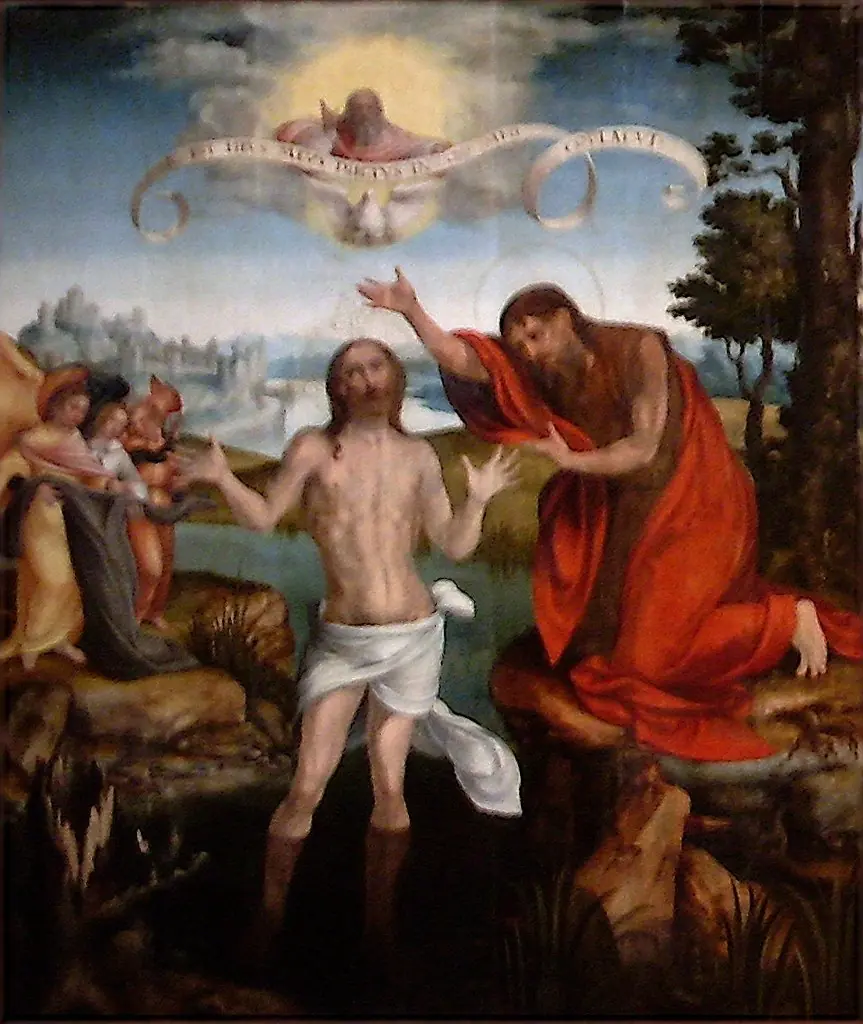
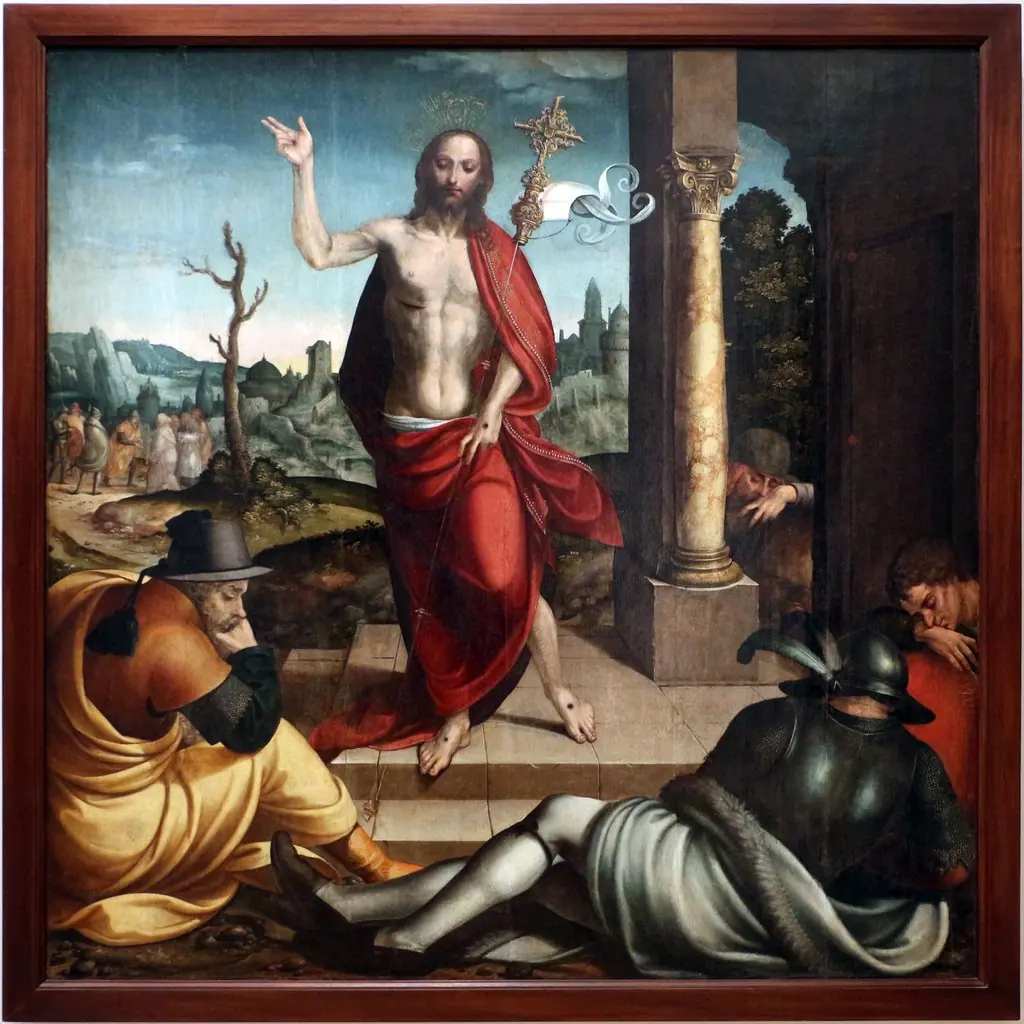
The painting depicts the Holy Trinity as its central subject, surrounded by a host of biblical and saintly figures. The Trinity is accompanied by the Four Evangelists, John, Luke, Matthew, and Mark, who represent the authors of the Gospels. Old Testament patriarchs and prophets also appear: Moses, David, Abraham, and Isaac, linking the scene to salvation history and the continuity between the Old and New Testaments.
Additionally, John of Matha and Felix of Valois, founders of the Trinitarian Order, are present, grounding the work in its specific devotional and institutional context. The composition thus weaves together Trinitarian theology, evangelism, and the veneration of the order's founders.
Technique & Style
The Holy Trinity is an oil painting on wooden panel created in 1537 by Garcia Fernandes. Measuring 255 cm in height and 206 cm in width, the work depicts the Holy Trinity alongside saints John the Evangelist, Luke the Evangelist, Matthew the Apostle, Mark the Evangelist, Moses, David, Abraham, Isaac, John of Matha, and Felix of Valois. Executed in oil on panel, the composition reflects a religious genre typical of early 16th-century Iberian art, with a formal arrangement emphasizing theological symbolism.
The painting is housed in the National Museum of Ancient Art, where it remains part of the permanent collection.
History & Provenance
Garcia Fernandes painted the Holy Trinity in 1537. The work is an oil painting on panel measuring 255 by 206 cm. It depicts the Holy Trinity together with John the Evangelist, Luke the Evangelist, Matthew the Apostle, Mark the Evangelist, Moses, David, Abraham, Isaac, John of Matha, and Felix of Valois. The painting is held in the collection of the National Museum of Ancient Art.
Overview
Created in 1537 by Portuguese painter Garcia Fernandes, this oil on canvas work titled Holy Trinity is part of the collection of the National Museum of Ancient Art. Executed during the height of the Portuguese Renaissance, the painting aligns with the Mannerist aesthetic that followed, combining religious iconography with a heightened sense of composition.
Context
The painting reflects the broader cultural milieu of Manuel I’s Portugal, a period marked by expanding overseas trade and a renewed interest in classical and biblical themes. By integrating figures from both Judaic tradition and Christian hagiography, the work illustrates the era’s effort to present a unified theological narrative that resonated with contemporary devotional practices.
Own this work as a print
Artist & collection
Artist
Garcia Fernandes (died c. 1565) was a Portuguese Renaissance painter. Like many painters of the time, Garcia Fernandes was a pupil in the Lisbon workshop of Jorge Afonso, who was the court painter of King Manuel I. In…