Artwork
Maria with child and two donors
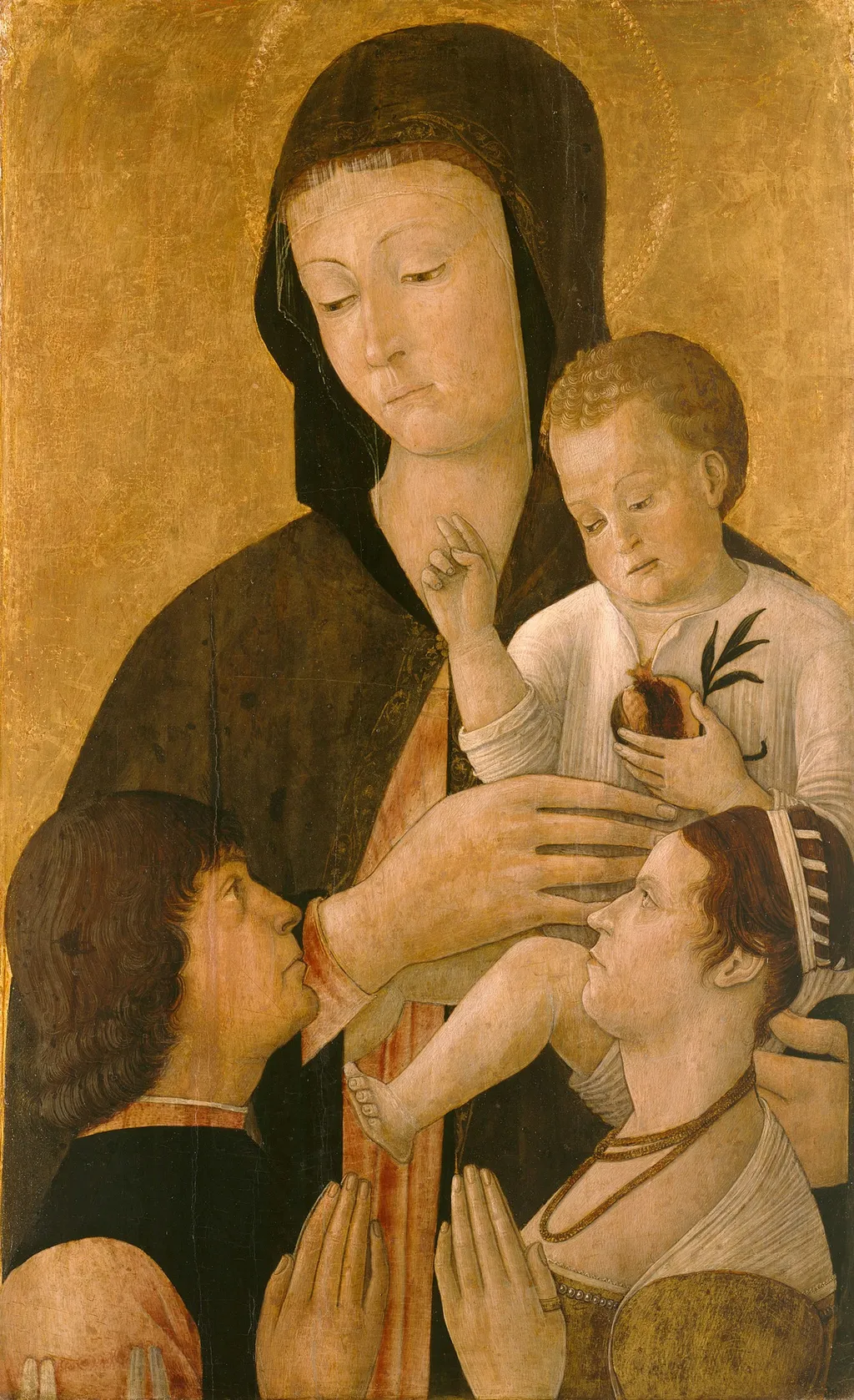
Maria with child and two donors is an unspecified painting by the Early Renaissance artist Gentile Bellini. It dates from 1460 and is held in the collection of the Gemäldegalerie Berlin.
About this work
Overview
Maria with Child and Two Donors is a devotional painting by the Venetian Renaissance artist Gentile Bellini, dated to approximately 1460.
Maria with Child and Two Donors is a devotional painting by the Venetian Renaissance artist Gentile Bellini, dated to approximately 1460. The work, executed in tempera on panel, measures 74 by 46 centimeters and is held in the collection of the Gemäldegalerie in Berlin. It represents an early example of Bellini's engagement with the votive image format, combining sacred iconography with the realistic portraiture that would become a hallmark of his career. The painting occupies a significant place in the study of mid-15th-century Venetian art as a bridge between traditional devotional imagery and the emerging Renaissance emphasis on individual presence and psychological observation.
Subject & Meaning
The composition presents the Virgin Mary holding the Christ Child, flanked at the lower edge by two kneeling donor figures. Mary wears a dark mantle over a red undergarment, her head covered by a black veil with a decorative band, while the infant Christ, dressed in white, sits on her left arm holding a pomegranate with a sprig, an emblem of resurrection and the Passion. The two donors, a male on the left and a female on the right, kneel with hands pressed together in prayer, their gazes directed upward toward the holy pair. The male donor has dark curly hair and wears a dark garment with a red collar; the female donor wears a striped headdress, a gold necklace, and a dress with a jeweled neckline. Their placement at the bottom of the composition, blessed by Christ, suggests they may be praying for offspring, a common function of such votive images. The arrangement follows the conventional hierarchy of Renaissance donor portraits, with sacred figures occupying the dominant central space and the mortal patrons relegated to a subordinate position, yet integrated into the sacred narrative through their directed gaze and gesture of supplication.
Technique & Style
The painting is executed on panel with a matte finish and fine crackling throughout, consistent with tempera technique. The background consists of a flat, burnished gold surface with visible craquelure and wear, described as old-fashioned even by the standards of the 1460s. The palette is dominated by gold, dark brown, black, red, and pale flesh tones. Modeling is smooth with linear precision in drapery folds and facial features, while light falls evenly without strong directional shadows. The handling of the donors' faces demonstrates the realistic portraiture for which Gentile Bellini became renowned, their individualized features and expressions of prayer rendered with psychological truth. The Virgin and Child are presented in a more formal register, the holy figures given the dignity their subjects demand while remaining warm and accessible. This dual register, combining the precise observation of the donors with the more conventional treatment of the sacred figures, reflects the Bellini family's approach to devotional imagery and distinguishes Gentile's early manner.
History & Provenance
The painting is dated to approximately 1460, placing it early in Gentile Bellini's career when he was still establishing his manner under the influence of his father Jacopo's workshop. The panel is described as fragmentarily preserved, suggesting some loss or alteration from its original state. Its dimensions of 74 by 46 centimeters indicate a modest scale appropriate for private devotion. The work entered the collection of the Staatliche Museen in Berlin, where it is now housed in the Gemäldegalerie at the Kulturforum in Tiergarten. The accession number is not specified in available sources. No detailed exhibition history is recorded in the provided materials, though the painting's presence in the Gemäldegalerie has made it accessible to scholarly study and public viewing as part of one of Europe's major collections of Renaissance art.
Context
Gentile Bellini was the elder son of Jacopo Bellini, one of the founding figures of Venetian Renaissance painting, and the brother of Giovanni Bellini, who would achieve greater recognition for spiritual depth and individual genius. Gentile trained in his father's workshop and inherited not only the family business but also Jacopo's books of drawings, which contained decades of accumulated visual thinking. While Giovanni became the more celebrated artist in later critical estimation, Gentile occupied a distinctive position as Venice's public painter, appointed official painter to the Venetian Republic in 1474. His career combined devotional panel painting with vast ceremonial canvases documenting the ceremonies and processions of Venetian public life. The Maria with Child and Two Donors represents his early engagement with the votive image format, demonstrating the documentary richness and breadth of social observation that would characterize his mature work. The painting reflects the complex relationship between art, patronage, and spirituality in mid-15th-century Venice, where families commissioned devotional images to associate themselves with divine grace and demonstrate their piety and social standing.
Legacy
The Maria with Child and Two Donors stands as a significant early document of Gentile Bellini's development and of Venetian Renaissance painting more broadly. It exemplifies the transition from the gold-ground devotional traditions of the earlier 15th century toward a more naturalistic engagement with human presence and individual character. The painting's survival in the Gemäldegalerie has ensured its continued availability for scholarly examination and public appreciation, contributing to understanding of how Venetian artists negotiated the demands of sacred subject matter with the emerging Renaissance interest in psychological truth and social documentation. While Gentile's later reputation would rest more substantially on his large-scale ceremonial canvases and his diplomatic mission to Constantinople in 1479-1480, this early panel demonstrates the foundations of his approach to portraiture and devotional imagery. The work's influence on subsequent Venetian painting lies less in direct stylistic transmission than in its embodiment of the Bellini workshop's synthesis of tradition and observation, a synthesis that would profoundly shape the course of Venetian art through the contributions of Giovanni Bellini and their collective legacy to the broader Renaissance.
Own this work as a print
Artist & collection
Artist
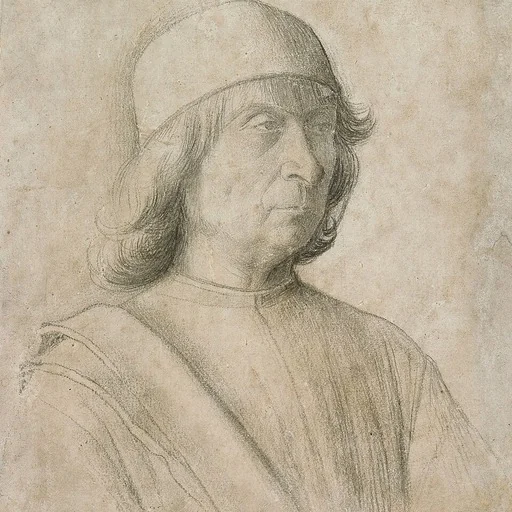
Gentile Bellini (c. 1429 – 23 February 1507) was a Venetian painter of the school of Venice. He came from Venice's leading family of painters, and, at least in the early part of his career, was more highly regarded than…

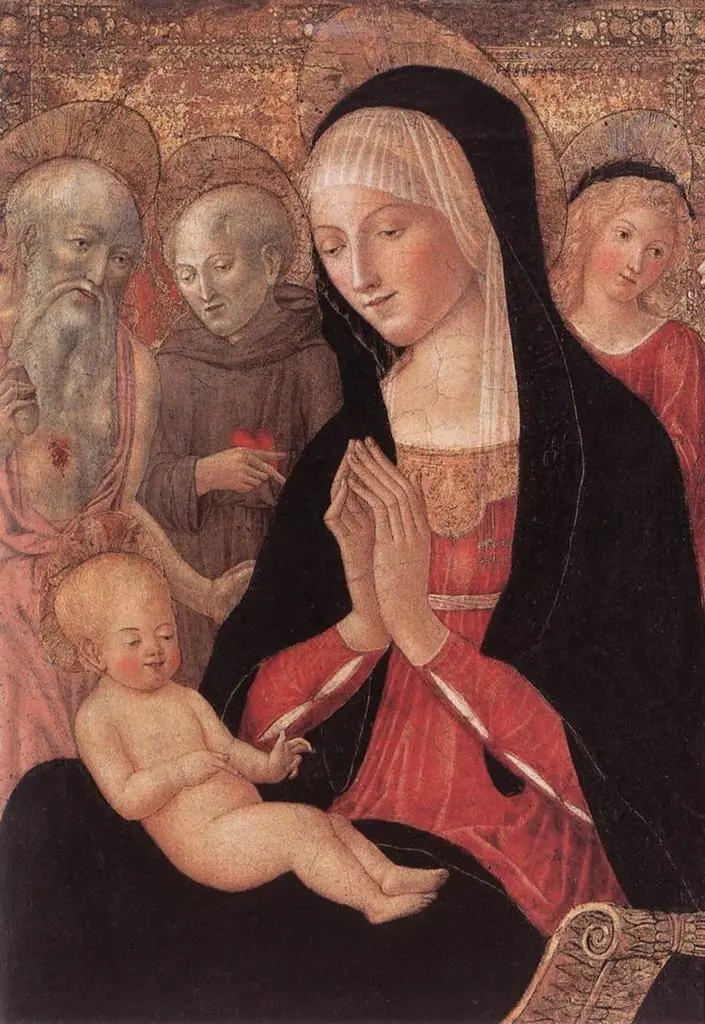 Virgin and Child with Saint Jerome, Saint Anthony of Padua and Two Angels
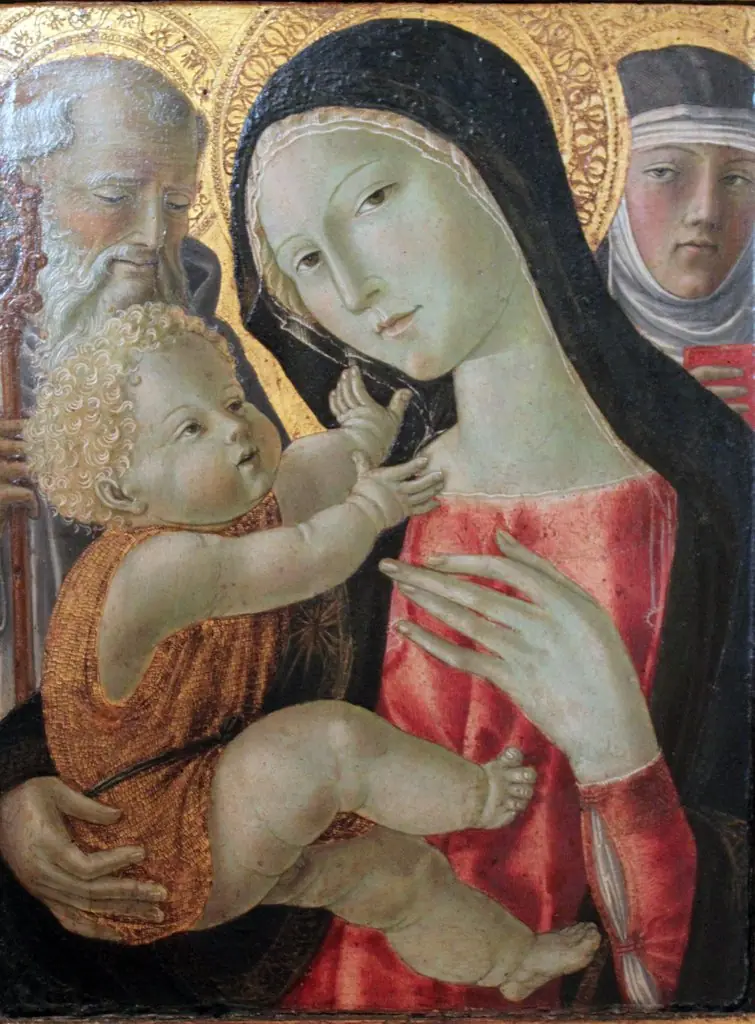 The Virgin and Child, St. Benedict and Saint Catherine of Siena
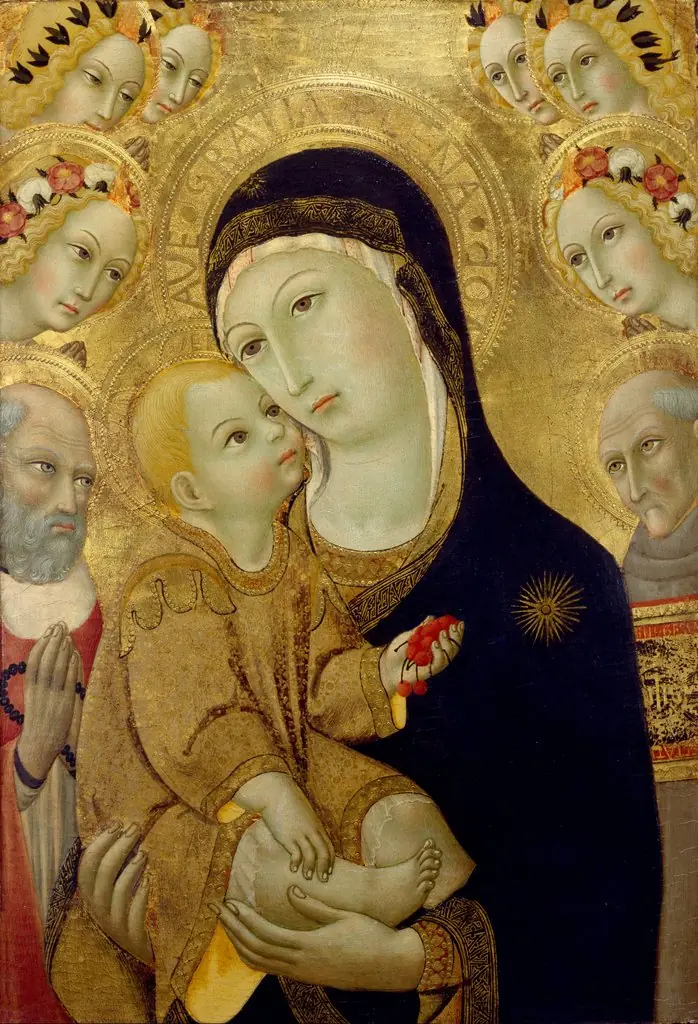 Virgin and Child with Saints Jerome and Bernardino of Siena and Six Angels
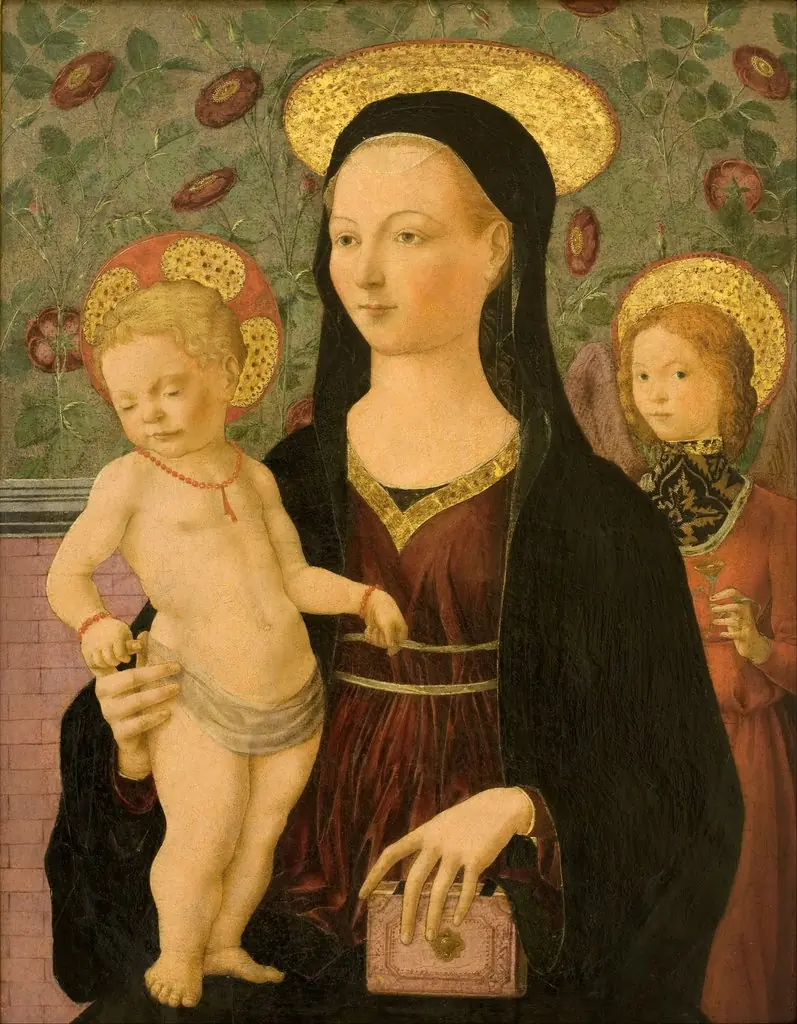 Virgin and Child with an Angel
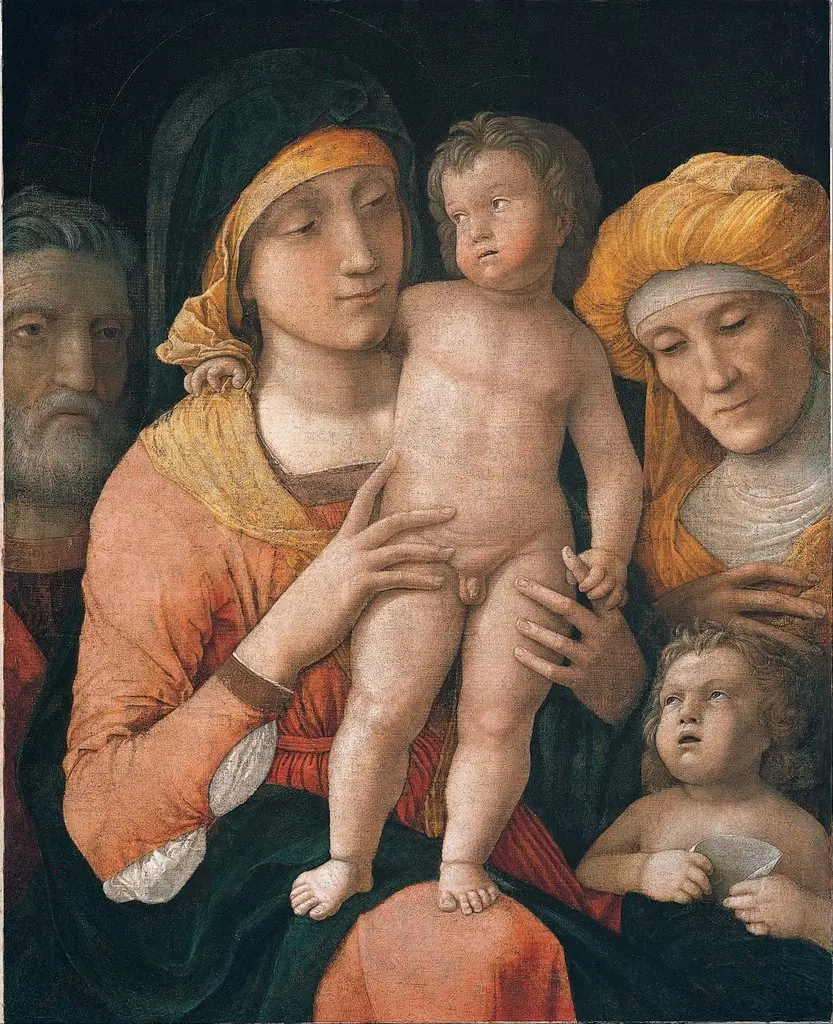 The Madonna and Child with Saints Joseph, Elizabeth, and John the Baptist
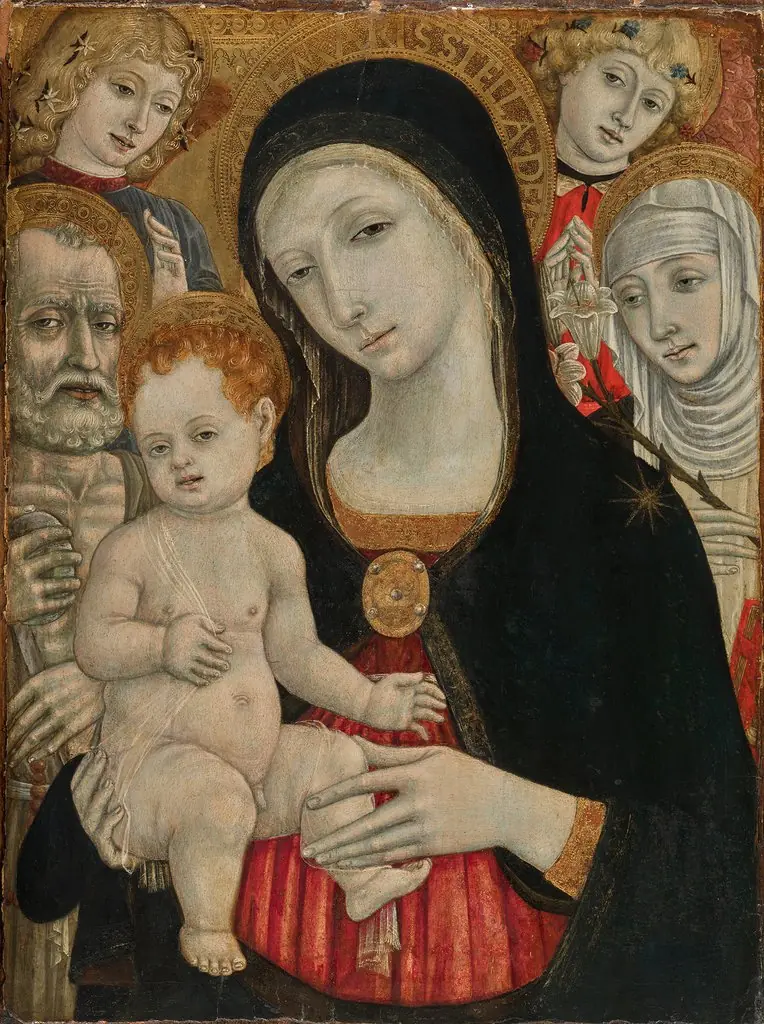 Mary with the Child, Saint Jerome, Catherine of Siena and two angels
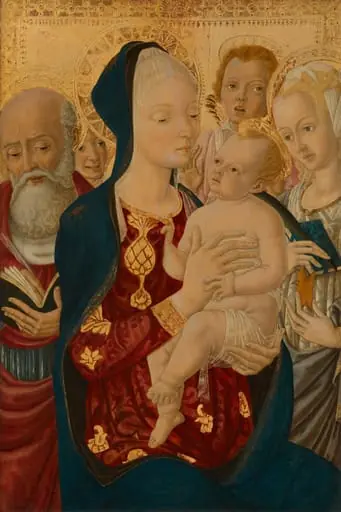 Madonna and Child with Saint Jerome, Saint Catherine of Alexandria, and Angels
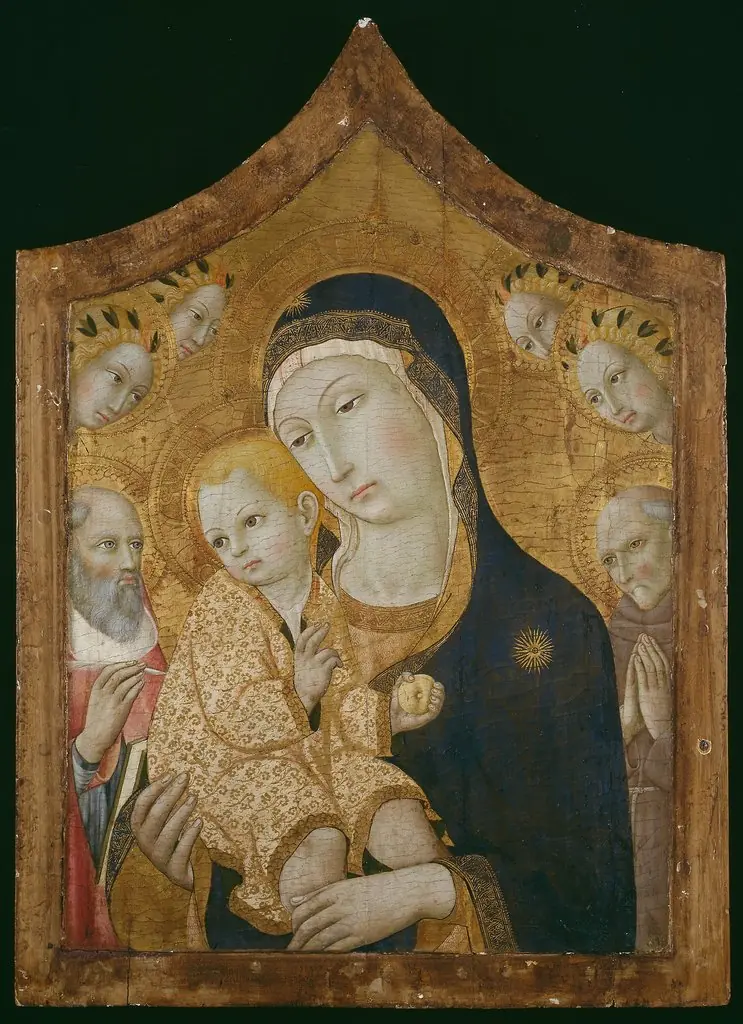 Virgin and Child with Saints Jerome, Bernardino of Siena, and Angels
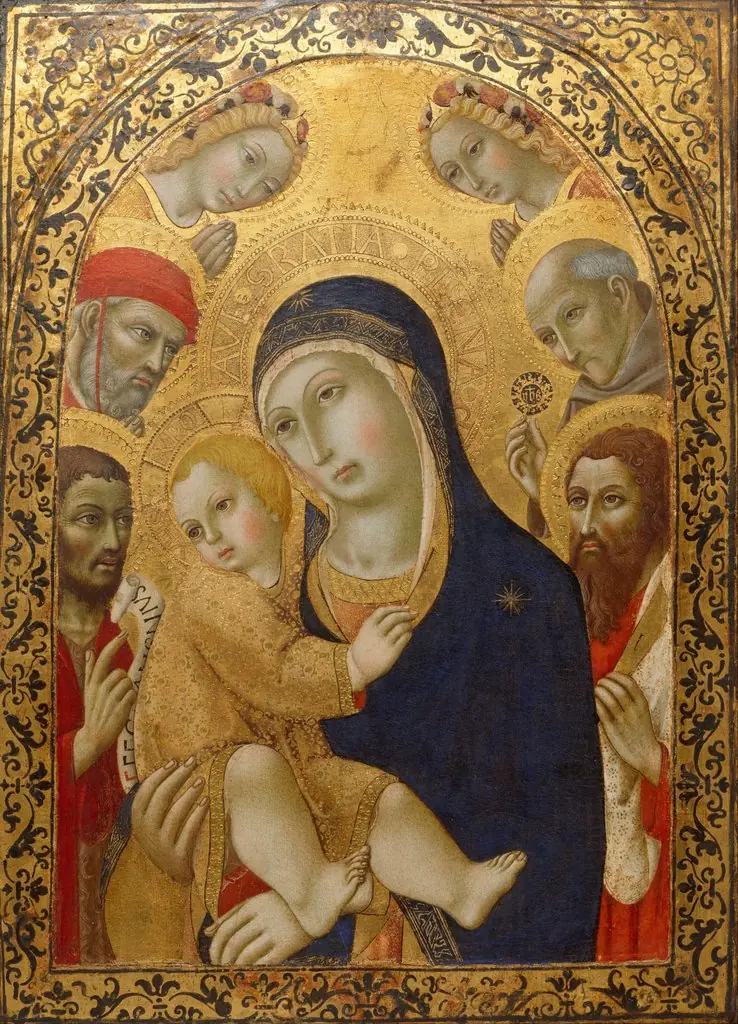 Madonna and Child with Saints Jerome, John the ...