Artwork
The Sultan Mehmet II
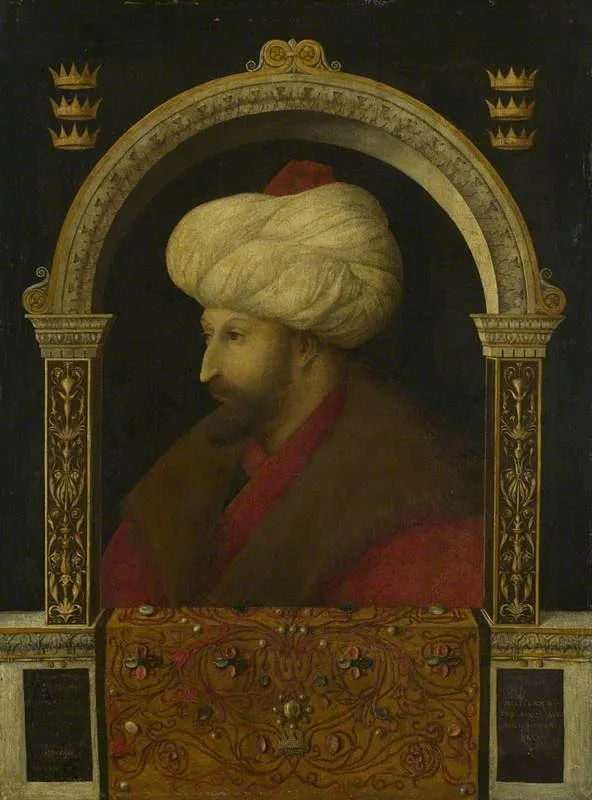
The Sultan Mehmet II is an oil painting by the Early Renaissance artist Gentile Bellini. It dates from 1490 and is held in the collection of the Victoria and Albert Museum.
About this work
Subject & Meaning
He wears a deep red caftan beneath a luxurious brown fur mantle, with a wrapped turban over a red taj signifying his rank and Muslim identity.
The painting depicts Ottoman Sultan Mehmed II, known as Mehmet the Conqueror, shown in a three-quarter pose that allowed Bellini to render both physical and psychological detail. He wears a deep red caftan beneath a luxurious brown fur mantle, with a wrapped turban over a red taj signifying his rank and Muslim identity. A jewel-encrusted embroidered cloth drapes the marble ledge before him, its gems and pearls signaling wealth and magnificence. The sultan is framed within a classicizing arch, a Western symbol of power since the Roman Empire, creating an illusionistic window that separates his space from the viewer's. Seven crowns appear above and on the parapet, though their symbolic meaning remains unclear. The lower-left inscription reads "Victor Orbis" ("Conqueror of the World"), while a partially legible inscription on the right dates the work to 25 November 1480 and credits Gentile Bellini. The portrait represents a deliberate fusion of European and Islamic visual traditions, marking a shift toward naturalism in Western depictions of Ottoman rulers. Commissioned by Mehmed himself, it reflects his desire to be portrayed with accurate, Italianate naturalism despite Islamic conventions against figural representation.
Technique & Style
The Portrait of Mehmed II, painted in 1480 by Gentile Bellini, is executed in oil on canvas, measuring 69.9 cm in height and 52.1 cm in width. It depicts the Ottoman sultan wearing a red caftan layered with a fur veil and a turban, signifying his rank and religious identity. The composition blends European and Islamic elements, including an arch reminiscent of Venetian classicism and inscriptions referencing his conquests. Bellini employed naturalistic detail, such as the sultan’s aquiline nose and embroidered textiles, to convey authority and cultural synthesis. The work reflects Mehmed II’s interest in Italian portraiture and diplomatic engagement with Venice, though 19th-century repainting and restoration have obscured portions of the original. The painting’s condition reveals layers of intervention, with only about 10% attributed directly to Bellini’s hand, yet it remains influential in Ottoman art.
History & Provenance
The portrait of Sultan Mehmet II was commissioned by the Ottoman ruler during his diplomatic outreach to Venice in 1479, reflecting efforts to strengthen ties between the Ottoman Empire and the Venetian Republic after the 1479 peace treaty. Gentile Bellini traveled to Constantinople to fulfill the request, producing the work during his stay from September 1479 to January 1481. The painting was created on canvas and originally executed in oil, though it later underwent significant 19th-century restoration that altered its surface. It bears inscriptions referencing its creation date (November 15, 1480) and the artist’s name, though these are not original. The artwork remained in Ottoman possession before being acquired in 1865 by British archaeologist Austen Henry Layard from a Venetian collector, eventually entering the National Gallery’s collection through the Layard Bequest in 1916. Currently housed at the Victoria and Albert Museum in London, it has been featured in major exhibitions including 'Gentile Bellini and the East' (2005-2006) and 'Ressam Sultan ve Portresi' (1999-2000). The painting is owned by the National Gallery in London and held on long-term loan at the Victoria and Albert Museum (V&A), where it is displayed in Room 63 of the Edwin and Susan Davies gallery. Its official accession number at the National Gallery is NG3099, acquired through the Layard Bequest in 1916. The work was originally purchased in Venice in 1865 by the archaeologist Austen Henry Layard before entering the museum's collection. The portrait has been featured in several major exhibitions focusing on cultural exchange and the artist. It was shown in Istanbul between 1999 and 2000, followed by the exhibition "Gentile Bellini and the East" which traveled to Boston and London from 2005 to 2006. It also appeared in the 2007 Venice exhibition "Venezia e l'Islam. 828-1797."
Context
This portrait marks a pivotal shift from fantastical Western depictions of the Turks toward naturalism, reflecting the diplomatic and commercial ties between Venice and the Ottoman Empire. Commissioned by Mehmed II to foster peace following the 1479 treaty, the work demonstrates the Sultan's desire to be viewed through the lens of Italian Renaissance portraiture. However, the painting's attribution has faced significant scholarly scrutiny due to its poor condition; heavy repainting and over-cleaning in the nineteenth century obscured Bellini's original hand, leading some historians to estimate that only a fraction of the visible surface is authentic. Despite these physical alterations and debates over non-original inscriptions, the majority of critics maintain the attribution to Bellini, citing its inclusion in major exhibitions such as "Gentile Bellini and the East." The image subsequently influenced Ottoman painting, serving as a compositional model for later artists, and remains a cultural icon symbolizing the complex artistic exchange between East and West.
Legacy
The portrait established a lasting precedent in Ottoman art, inspiring subsequent compositions such as those attributed to Shublizade Ahmed that derived their structure from Bellini's work. It is recognized as the first instance of an Ottoman sovereign being depicted by both Western and Eastern artists, marking a pivotal moment in cross-cultural representation. The image achieved significant literary prominence in the 19th and 20th centuries; Marcel Proust referenced the painting in *In Search of Lost Time* to describe a character's face and to illustrate the aesthetic preferences of another. Despite extensive 19th-century over-painting and restoration that obscured the original brushwork, the work remains a celebrated icon of the diplomatic and artistic exchange between Venice and the Ottoman Empire. Its reputation was further solidified through major exhibitions in Istanbul, Boston, London, and Venice during the late 20th and early 21st centuries.
Artist & collection
Artist
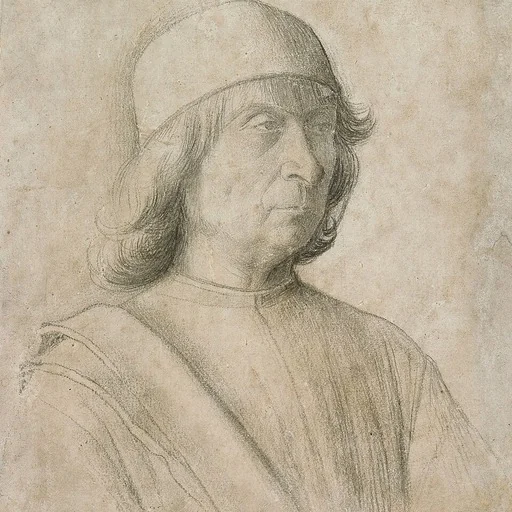
Gentile Bellini (c. 1429 – 23 February 1507) was a Venetian painter of the school of Venice. He came from Venice's leading family of painters, and, at least in the early part of his career, was more highly regarded than…

 Turkish sultans, sultanas and other historical figures
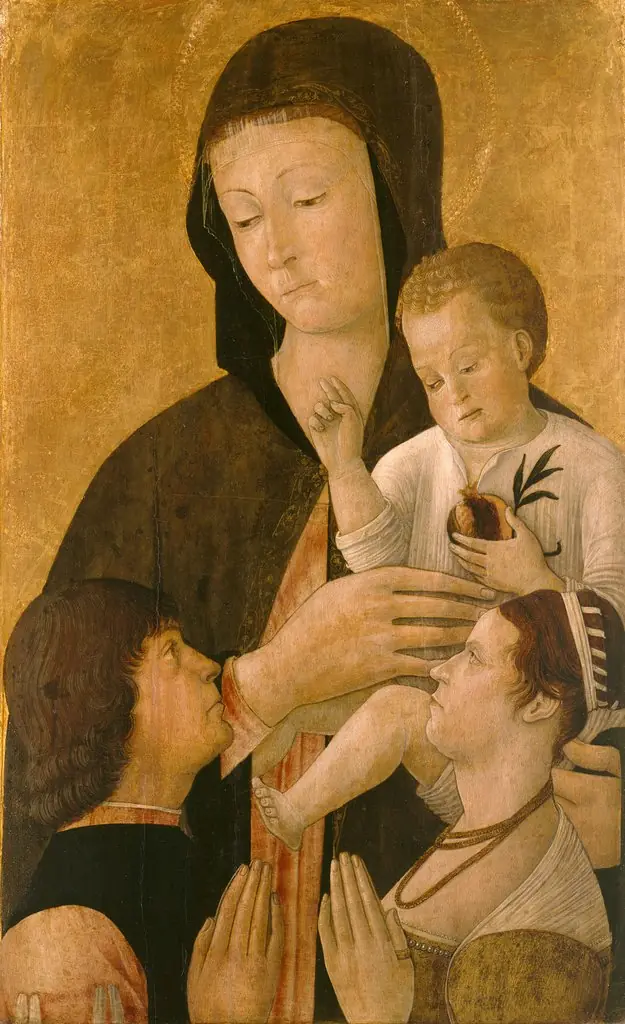
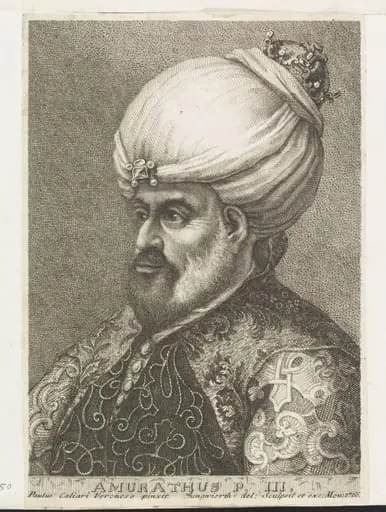 Turkish sultans, sultanas and other historical figures
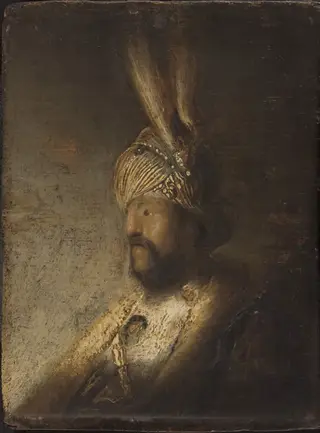 Bust of a Man in a Turban
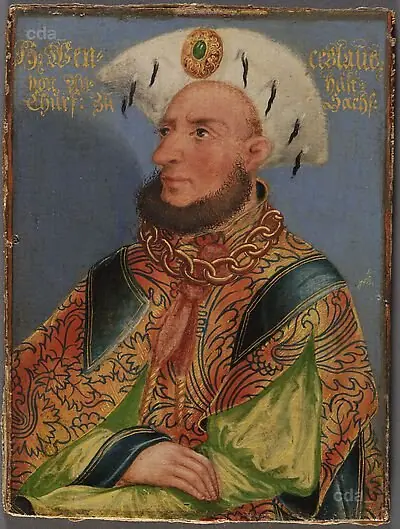 Wenzeslaus, Elector, son of Rudolf I., died 1388
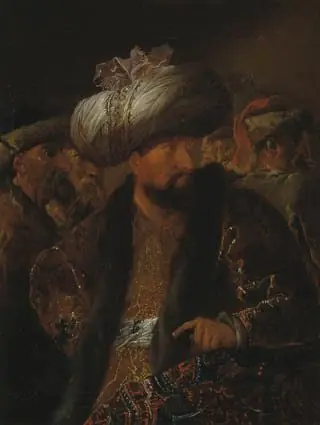 En samling tyrkiske mænd
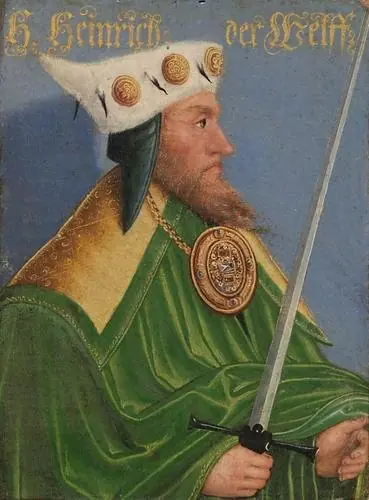 Duke Heinrich the Proud (son of Duke Heinrich the black of Bavaria), died 1139
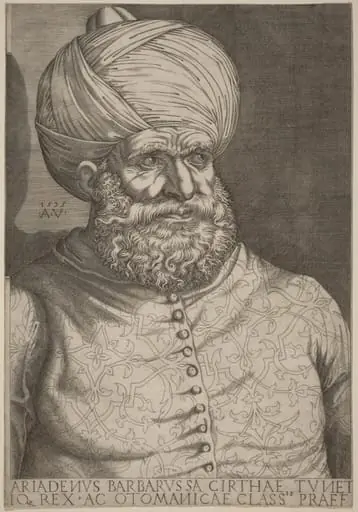 Barbarossa, Khair-ed-Din
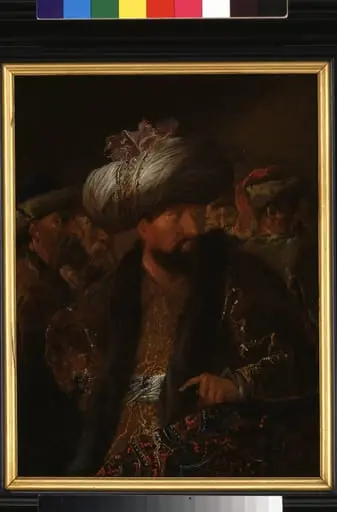 En samling tyrkiske mænd