Artwork
Saint Luke Painting the Virgin
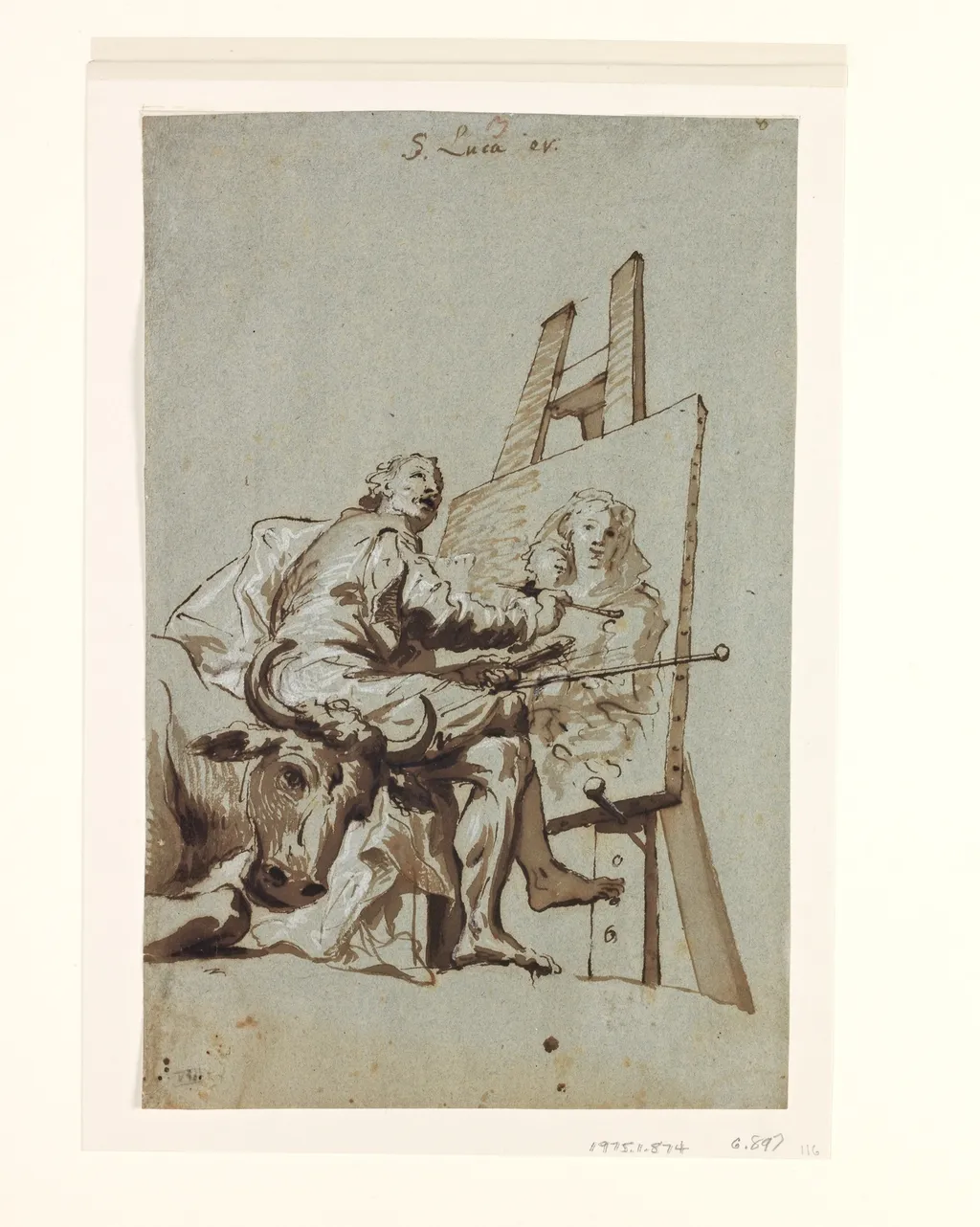
Saint Luke Painting the Virgin is an unspecified painting by Georg Anton Urlaub. It dates from 1750 and is held in the collection of the Metropolitan Museum of Art.
About this work
Subject & Meaning
Georg Anton Urlaub's 1750 painting depicts the traditional religious subject of Saint Luke the Evangelist creating a portrait of the Virgin Mary.
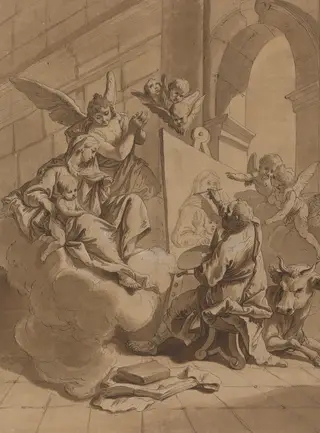
Georg Anton Urlaub's 1750 painting depicts the traditional religious subject of Saint Luke the Evangelist creating a portrait of the Virgin Mary. The composition features the saint actively engaged in the act of painting, with the Virgin serving as his model. Consistent with established iconography for this evangelist, the work includes a bull, which serves as Luke's specific symbolic attribute.
This imagery represents the legend that Luke, often regarded as the first Christian painter, produced the earliest image of the Virgin. The scene underscores the intersection of divine inspiration and artistic creation, validating the role of painting within a religious context.
History & Provenance
The painting Saint Luke Painting the Virgin was created in 1750 by the German artist Georg Anton Urlaub. Classified as a religious work, it depicts the Evangelist Luke alongside the Virgin Mary and a bull, Luke's traditional attribute. The work entered the Metropolitan Museum of Art in New York through the bequest of Robert Lehman and forms part of the Robert Lehman Collection.
It measures 29.9 cm in height and 19.5 cm in width. Specific details of the original commission and the chain of custody prior to Lehman's ownership are not detailed in the available records, and no accession number or exhibition history is documented.
Context
Georg Anton Urlaub's 1750 Saint Luke Painting the Virgin, formerly owned by Robert Lehman and now in the Metropolitan Museum of Art, is an example of mid‑18th‑century German religious painting. The work depicts the evangelist with his traditional attributes, a bull and the Virgin, within a devotional composition consistent with the artist’s focus on ecclesiastical subjects. Its inclusion in the Lehman Collection and subsequent display at the Met place it within the museum’s European religious art holdings.
Overview
Georg Anton Urlaub, a Baroque artist from Franconia, created Saint Luke Painting the Virgin around 1750. This religious painting depicts the traditional scene of Luke the Evangelist portraying the Virgin Mary, accompanied by his symbolic attribute, the bull. The work is characterized by its dynamic composition and is currently part of the collection at The Metropolitan Museum of Art.
Technique & Style
Urlaub's approach in this piece suggests a preliminary study rather than a completed work. The composition features a loose, energetic quality, evident in the quick, visible brushstrokes that define the forms. The artist employs strong contrasts of light and shadow, a technique known as chiaroscuro, to create dramatic depth and model the figures, contributing to the overall expressive character of the sketch.
Own this work as a print
Artist & collection
Artist
Georg Anton Urlaub (20 June 1713 – 20 February 1759) was a Baroque painter from Franconia.

![An Artist's Studio [recto], by Frans Francken the Younger](https://artifactworldgallery.com/img/frans-francken-the-younger--an-artist-s-studio-recto--3de4d020bfd4cb8f-w320.webp)