Artist
Georg Anton Urlaub
Germany
Georg Anton Urlaub is a Germany Romanticism artist. 4 works are cataloged here, principally at National Gallery of Art.
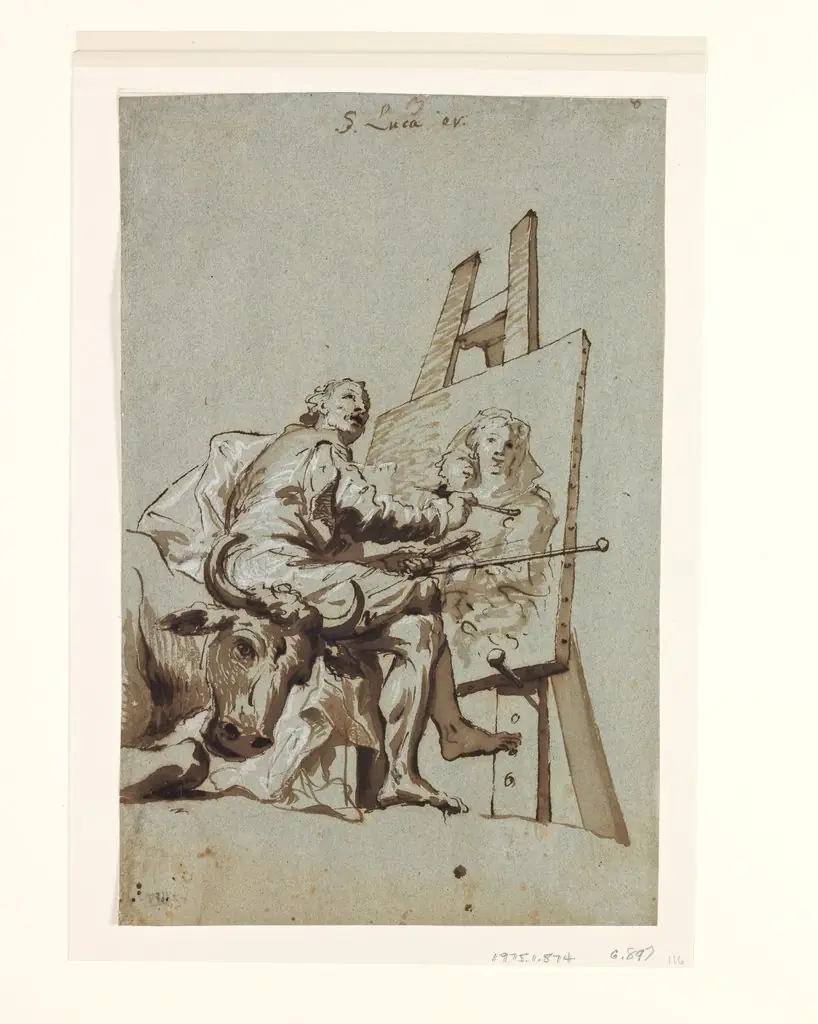
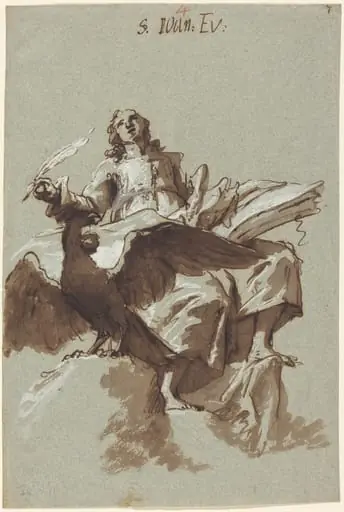
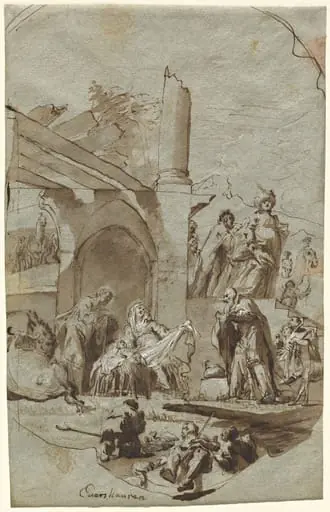
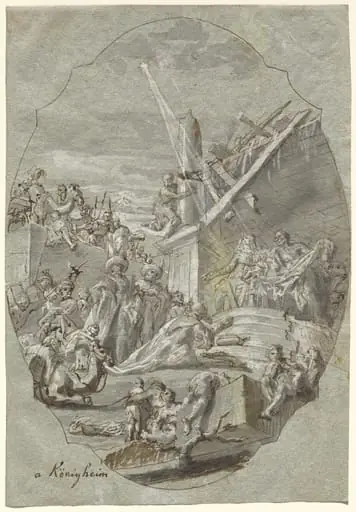
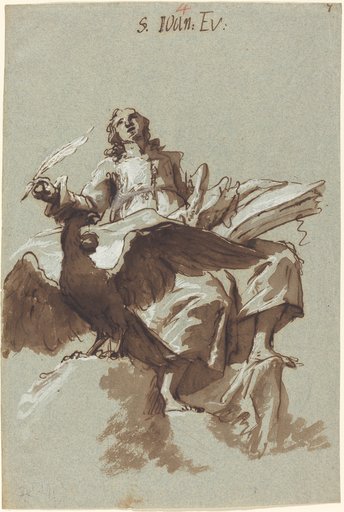
Georg Anton Urlaub (20 June 1713 – 20 February 1759) was a Baroque painter from Franconia. He was associated for part of his career with the court of the prince bishop of Würzburg and painted portraits and also many frescoes and altarpieces for churches in Lower Franconia.
Overview
Georg Anton Urlaub (20 June 1713-20 February 1759) was a German Baroque painter from Franconia whose career was anchored in the ecclesiastical and courtly patronage networks of Lower Franconia. Working primarily for the Prince-Bishops of Würzburg and for religious orders including the Dominicans and Carthusians, he produced portraits, frescoes, and altarpieces that blended Italian academic training with regional Baroque conventions. Though his career was cut short by his death at age 45, Urlaub achieved the distinction of being the first local artist to receive major prestige commissions in Würzburg, and his documented pursuit of advanced study in Vienna, Bologna, and Venice places him within the broader European pattern of artistic wanderjahre that characterized the period.
Biography & dates
Urlaub was born in Thüngersheim, the first or second of nine children of Anna Maria Feser and Georg Sebastian Urlaub. His father and grandfather Egidius were painters, as were two of his brothers, Johann Georg and Georg Christian. Beginning in 1735, he worked at the Würzburg Residence under Prince-Bishop Friedrich Karl von Schönborn, initially as an assistant to the elderly court painter Johann Rudolf Byss. In autumn 1737, von Schönborn sent him to study at the Academy of Fine Arts in Vienna with an annual stipend of 200 guilders. Urlaub remained until 1741, though he complained of overcrowded classes and petitioned unsuccessfully to study with Federico Bencovich. In December 1740, architect Johann Lukas von Hildebrandt noted Urlaub's sculptural gifts and his desire to travel to Rome. Recalled to Würzburg in August 1741, he was appointed court painter in 1742 but grew frustrated executing reverse glass paintings after designs by court sculptor Johann Wolfgang van der Auwera. In mid-1744 he resigned, becoming the only known artist to voluntarily leave von Schönborn's secure patronage. He studied at Bologna's Accademia Clementina, winning prizes in sculpture in 1745 and in figure drawing and sculpture in January 1747. Financial difficulties forced interruptions, and in 1749 he was in Venice studying Tiepolo and the Guardis. He returned to Franconia in 1751 after approximately ten years as a journeyman. On 13 October 1755 he married Anna Maria, a distant cousin from Thüngersheim; their first child Georg Adam Anton was born in 1756 but died 17 August 1756, and a second son Georg Hermann Joseph, born in 1758, died at six months on 28 October. Under Prince-Bishop Adam Friedrich von Seinsheim, Urlaub received the position of Cabinets Inspector with the title Cammerdiener, though the salary was modest. On 15 September 1757 he succeeded Franz Ignaz Roth as court painter. He died in Würzburg on 20 February 1759 and was buried in the cemetery of the Dominican Abbey.
Style & movement
Urlaub's style developed within the Baroque tradition with exposure to Rococo tendencies, shaped by his sequential training in distinct European centers. His early work at Würzburg included a self-portrait in pastels from 1735 and two allegorical paintings around 1737 celebrating the virtues of Prince-Bishop Friedrich Karl von Schönborn, executed in a manner calculated to demonstrate both technical skill and humanist education. His Viennese period brought him into contact with imperial academic conventions, while his Italian sojourn introduced him to the modern painting of Venice, particularly the work of Giambattista Tiepolo and the Guardis, whose influence is documented in his notebooks. The Bologna academy emphasized draftsmanship and sculpture, disciplines in which he won competitive prizes. Upon his return to Franconia, he applied this composite training to ecclesiastical commissions, fresco cycles, and court portraiture. His frustration with executing reverse glass paintings after another artist's designs suggests an ambition for autonomous creative work that his later independent commissions fulfilled.
Major works
Urlaub's documented works include several significant commissions, though some have been lost. Around 1737 he painted two allegories on the life and virtues of Prince-Bishop Friedrich Karl von Schönborn. In 1751, Langheim Abbey commissioned an altarpiece for the parish church in Merkershausen. The following year, 1752, brought multiple major commissions: an altarpiece for the Dominican Church in Würzburg, later destroyed in the bombing of 16 March 1945, and a fresco for the church in Ipthausen. In 1753 he executed another fresco for the parish church of Eyershausen. Between 1753 and 1756, the Dominicans and Carthusians provided further commissions. During the Seven Years' War he painted frescoes and decorative works in Königheim (1756) and Sonderhofen (1757). His later works include the Assumption of St Bruno (c. 1753/54), an Allegory on the Rulership of Prince-Bishop Adam Friedrich von Seinsheim (c. 1755/57), and a Portrait of a child (c. 1757/58).
Influences & students
Urlaub's formation was shaped by successive mentors and institutions. His earliest training came within a family of painters: his father Georg Sebastian Urlaub and grandfather Egidius established the profession, while his brothers Johann Georg and Gebhard Christian continued it. At the Würzburg court, he worked under and sought to succeed Johann Rudolf Byss, whose Dutch-influenced style he initially emulated. Prince-Bishop Friedrich Karl von Schönborn was his decisive patron, funding his Viennese studies, though their relationship ruptured when Urlaub left for Italy. In Vienna, he sought additional training with Federico Bencovich, the Venetian painter who had created altarpieces for the Schönborn chapel in Würzburg. Johann Lukas von Hildebrandt recognized and recommended his talents. At the Accademia Clementina in Bologna, he came under the influence of academic competitions and classical disciplines. In Venice, his notebooks record close study of Giambattista Tiepolo and the Guardis. No pupils or followers are documented in the sources.
Legacy
Urlaub's posthumous reputation rests on his significance as a local artist who broke into the highest levels of Franconian patronage. In 1860, Andreas Niedermayer, in the first history of art in Würzburg, named Urlaub and his brothers among the best painters who worked there. His career has attracted scholarly attention, notably a doctoral dissertation by Nagia Knott published in 1978 as Georg Anton Urlaub (1713-1759): ein fränkischer Maler, and a 1996 exhibition at the Mainfränkisches Museum Würzburg, Georg Anton Urlaub - Ein fränkischer Maler im Banne Tiepolos, which situated him within the sphere of Tiepolo's influence. The sources do not record auction prices or significant museum holdings outside the region. His historical importance lies in documenting the possibilities and constraints of mid-eighteenth-century artistic careers dependent upon princely and ecclesiastical patronage, and in exemplifying the geographical mobility of artists within the German-speaking lands and Italy.
Works by Georg Anton Urlaub
Collections represented


Artists in a similar vein
Artist