Artwork
The Empress Elizabeth of Russia on Horseback, Attended by a Page
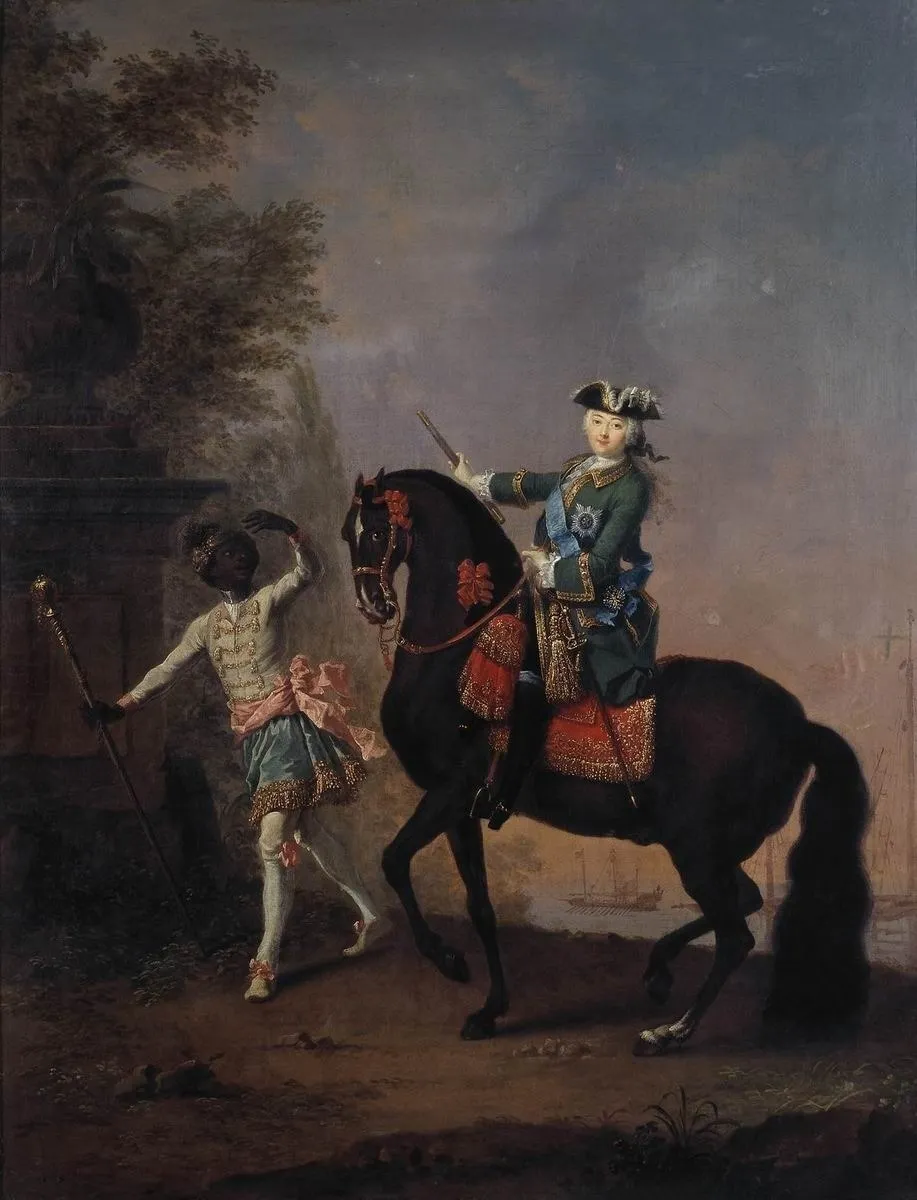
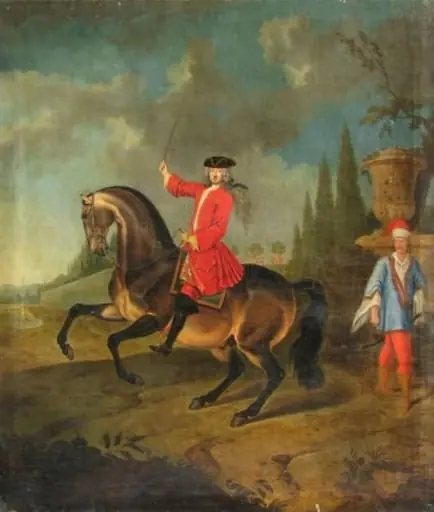
The Empress Elizabeth of Russia on Horseback, Attended by a Page is an oil painting by the Rococo painting artist Georg Cristoph Grooth. It dates from 1743 and is held in the collection of the Tretyakov Gallery.
About this work
Subject & Meaning
A key element of the iconography is the field marshal's baton she holds, which symbolizes her command over the sea.
The painting depicts Empress Elizabeth of Russia mounted on a horse, accompanied by a page. The empress is portrayed wearing a military uniform, a choice that aligns with her role as a ruler. A key element of the iconography is the field marshal's baton she holds, which symbolizes her command over the sea.
The composition presents Elizabeth as being in full command of her horse, reinforcing her authority and power. This equestrian portrait serves to represent the sovereign's military leadership and control.
Technique & Style
Executed in 1743, this equestrian portrait utilizes oil paint applied to a canvas support. The composition features Empress Elizabeth of Russia mounted on a horse, accompanied by a page. Stylistically, the work emphasizes the subject's authority; the Empress is depicted wearing a military uniform and grasping a field marshal's baton, a symbol interpreted as representing her command over the sea.
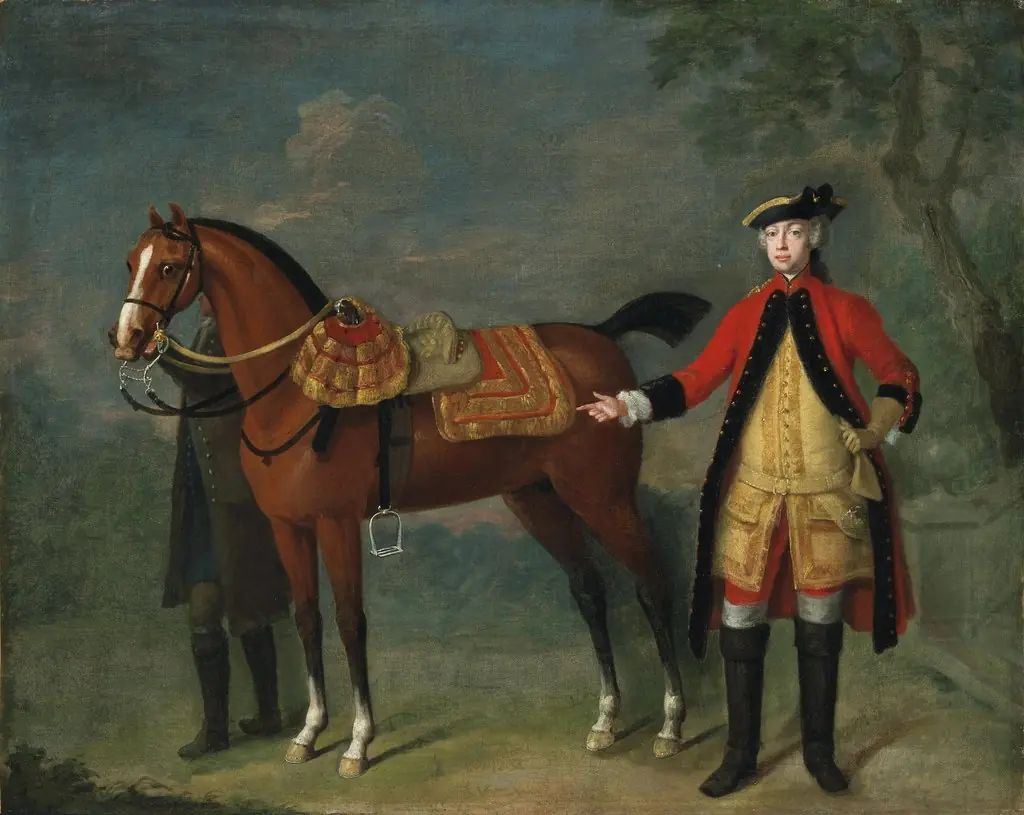
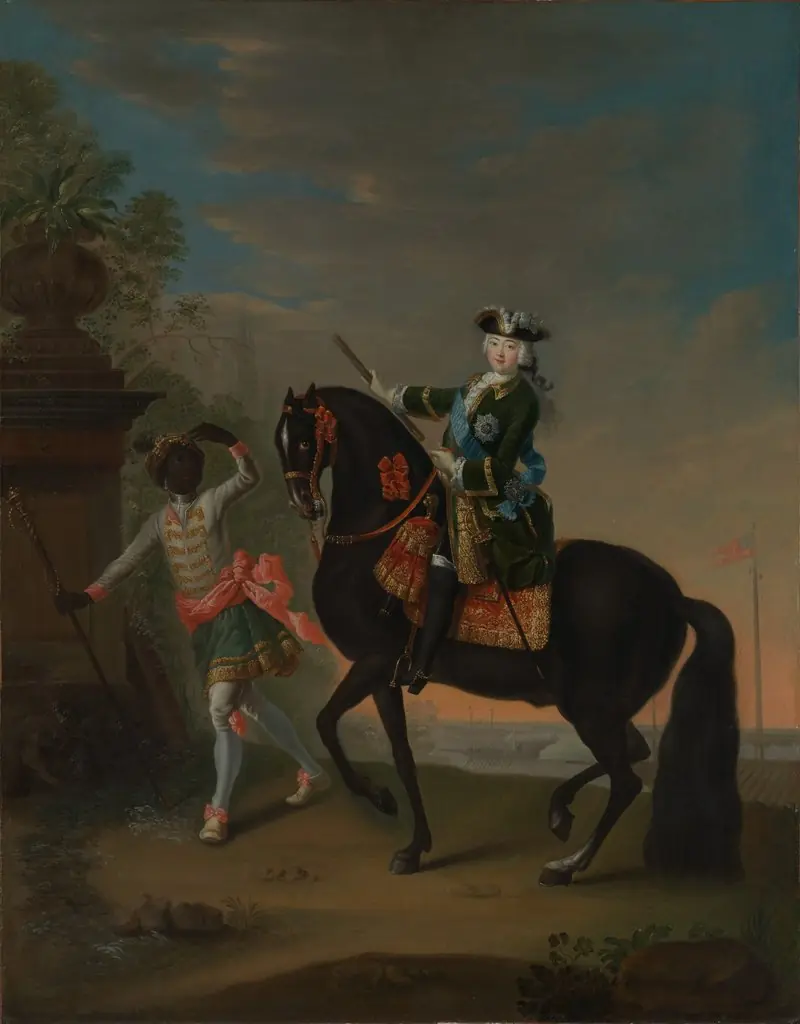
The figure is portrayed as maintaining clear control over the horse, reinforcing the theme of leadership. While the primary version resides in the Tretyakov Gallery, replicas and related versions attributed to the artist exist, including one held by the Metropolitan Museum of Art dated to the period following 1743.
History & Provenance
Georg Christoph Grooth executed this equestrian portrait in 1743, depicting Empress Elizabeth of Russia in military uniform attended by a page. The work, painted in oil on canvas, marked a significant professional success for the artist, who had previously served as an art curator. The primary version of the composition is held in the collection of the Tretyakov Gallery in Moscow.
While the original dates to 1743, replicas exist, including a version attributed to Grooth in the Metropolitan Museum of Art that was produced in the years following the initial creation.
The primary version of this 1743 equestrian portrait is held in the collection of the Tretyakov Gallery in Moscow. A separate version, attributed to the same artist and dated to the years following 1743, resides in the collection of the Metropolitan Museum of Art. The provided sources confirm the existence of these holdings and the creation of several replicas but do not list specific inventory numbers or detail any public exhibition history for the works.
Context
Created in 1743 by Georg Christoph Grooth, this equestrian portrait marked a significant professional milestone for the artist, who transitioned from a career as an art curator to a painter. The work is widely recognized for its successful composition, depicting Empress Elizabeth in military attire wielding a field marshal's baton to symbolize her authority over the sea. As a notable example of the equestrian portrait genre, the painting exists in multiple versions, including a replica held by the Metropolitan Museum of Art and dated to the years following the original 1743 creation. These replicas underscore the work's popularity and its established place within the corpus of 18th-century Russian portraiture.
Legacy
The work achieved immediate acclaim, marking a significant professional success for Georg Christoph Grooth, who had previously served as an art curator before transitioning to painting. Its enduring reputation is evidenced by the existence of several replicas, including a version held by the Metropolitan Museum of Art. This specific replica is attributed to Grooth and dated to the years following the original 1743 creation.
The painting remains a notable example of the equestrian portrait genre within the collection of the Tretyakov Gallery in Moscow.
Overview
Georg Christoph Grooth’s oil on canvas, created in 1743, portrays Empress Elizabeth of Russia mounted on a horse and accompanied by a young page. The work belongs to the Tretyakov Gallery in Moscow, where it is displayed alongside several later copies, including one in the Metropolitan Museum of Art that is also credited to Grooth.
Artist & collection
Artist
Georg Christoph Grooth (21 January 1716 in Stuttgart – 8 October 1749 in St. Petersburg) was a German painter employed at the Duchy of Württemberg before moving to Imperial Russia to paint portraits of Elizabeth of…