Artwork
Equestrian Portrait of Emperor Paul I with his Sons and Joseph I, King of Hungary
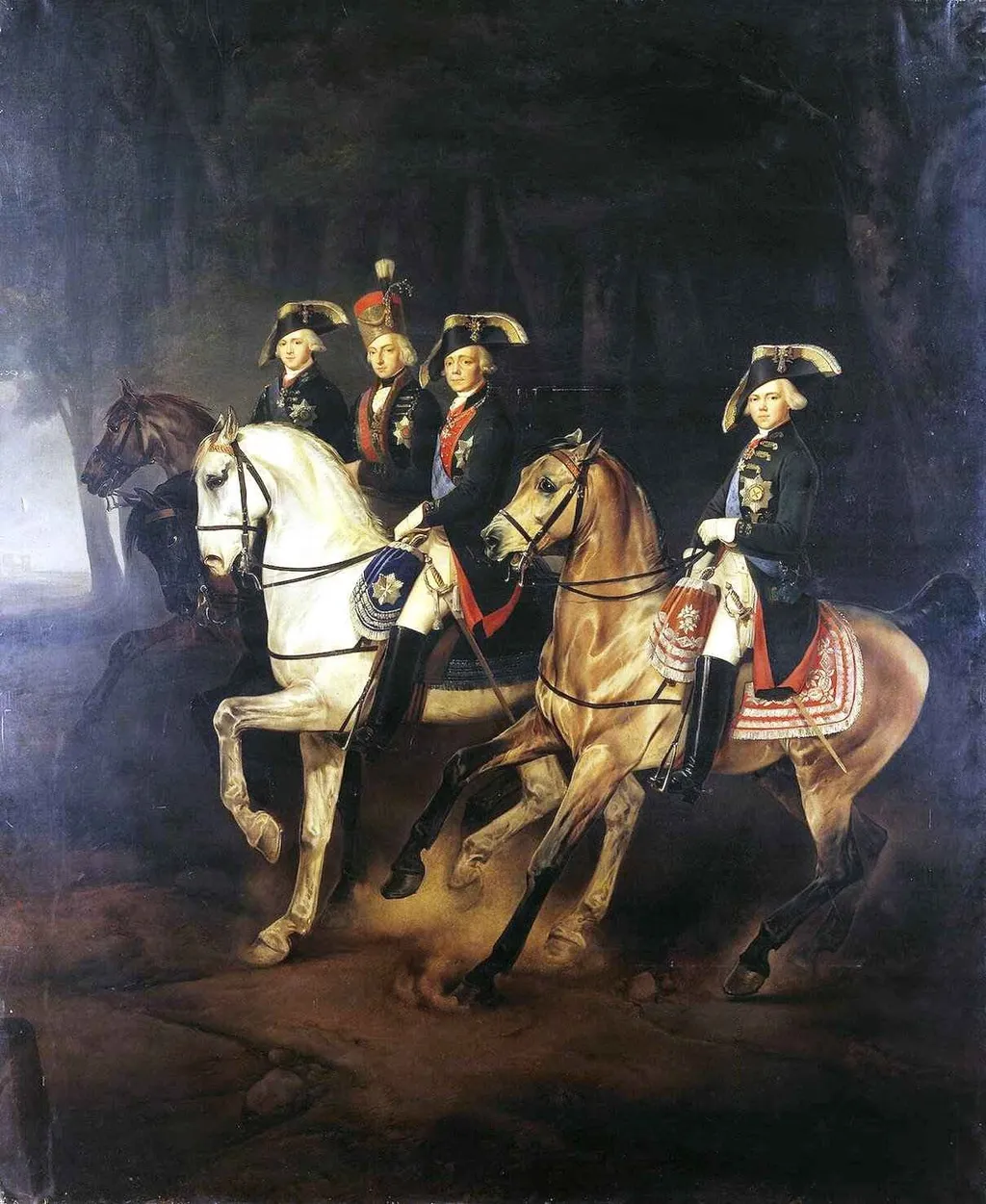
Equestrian Portrait of Emperor Paul I with his Sons and Joseph I, King of Hungary is an oil painting by the Realist artist Georg von Bothmann. It dates from 1848 and is held in the collection of the Hermitage Museum.
About this work
Subject & Meaning
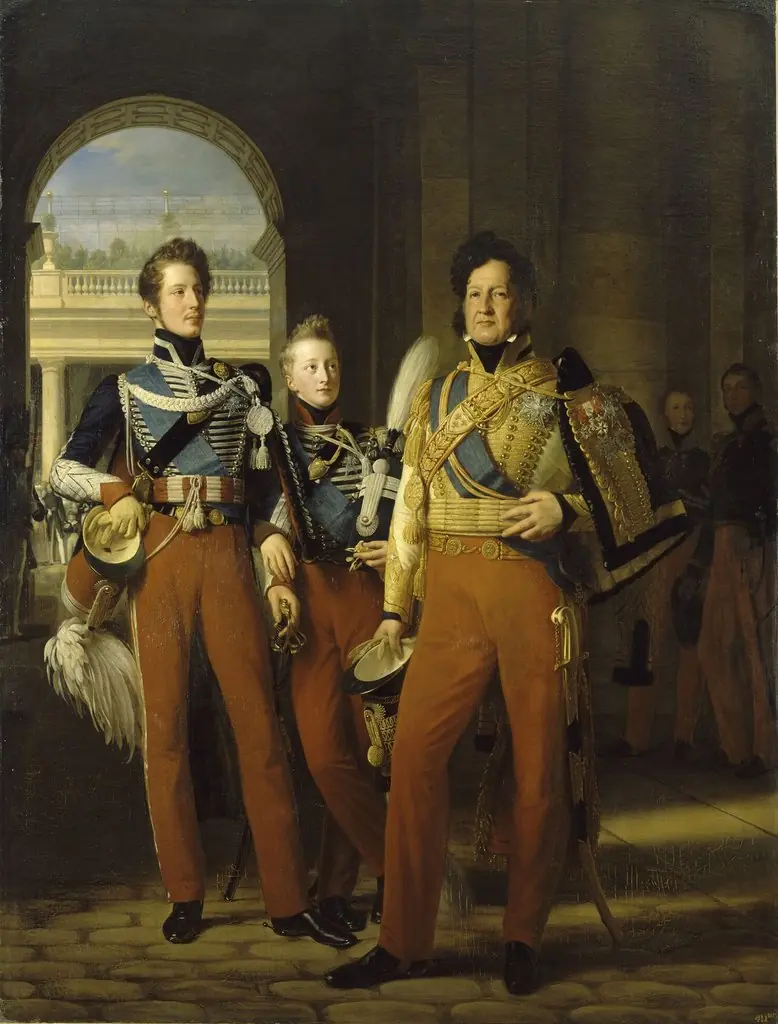
The painting depicts Emperor Paul I of Russia mounted on horseback, accompanied by his sons, Grand Dukes Alexander I and Konstantin Pavlovich.
The painting depicts Emperor Paul I of Russia mounted on horseback, accompanied by his sons, Grand Dukes Alexander I and Konstantin Pavlovich. The composition also includes Archduke Joseph, who served as Palatine of Hungary and King of Hungary, standing alongside the imperial family. As a group equestrian portrait, the work functions as a dynastic statement, visually uniting the Russian imperial line with the Hungarian crown through the presence of Joseph I. The gathering of these specific figures on a single canvas emphasizes the political and familial alliances of the era, presenting a unified front of the ruling houses of Russia and Hungary.
Technique & Style
Created in 1848, the Equestrian Portrait of Emperor Paul I with his Sons and Joseph I, King of Hungary is an oil painting executed on canvas. The work measures 265 cm in height and 216 cm in width, presenting a substantial group portrait within the equestrian genre. The composition depicts Emperor Paul I of Russia alongside his sons and Archduke Joseph, Palatine of Hungary, rendered through the medium of oil paint.
As a formal portrait, the piece utilizes traditional oil techniques to capture the figures in a specific historical grouping, maintaining the scale and material integrity characteristic of mid-19th-century Russian court portraiture.
History & Provenance
The Equestrian Portrait of Emperor Paul I with his Sons and Joseph I, King of Hungary was painted by Georg von Bothmann in 1848, executed in oil on canvas in Russia. The work is held in the collection of the Hermitage Museum, where it is currently located.
The sources do not provide further details regarding the circumstances of its commission, the chain of ownership prior to its acquisition by the Hermitage, or any intermediate provenance stages.
The painting is held in the collection of the Hermitage Museum, where it is located. Created in 1848 by Georg von Bothmann, the work depicts Emperor Paul I of Russia alongside his sons and Joseph I, King of Hungary. The sources confirm its presence in the museum's holdings but do not provide a specific inventory or accession number. Furthermore, no information regarding the exhibition history of this specific artwork is available in the provided records.
Context
The 1848 oil on canvas equestrian portrait of Emperor Paul I accompanied by his sons and Archduke Joseph of Hungary, executed by Georg von Bothmann, exemplifies early‑mid nineteenth‑century Russian imperial portraiture that blends neoclassical formalism with contemporary academic techniques. Its large scale (265 × 216 cm) and inclusion in the Hermitage Museum collection underscore its status as a key work within the artist’s oeuvre and within the broader trajectory of courtly imagery in Russian art history. Scholars have highlighted the painting as a testament to the patronage of the Russian imperial family and as an illustration of the cross‑cultural exchange between Russian and Central European artistic circles.
Overview
Georg von Bothmann's 1848 oil painting, Equestrian Portrait of Emperor Paul I with his Sons and Joseph I, King of Hungary, captures a formal grouping of prominent European figures. This large-scale canvas, executed in oil, presents its subjects mounted on horses, a traditional format for depicting royalty and military leaders. The artwork is currently preserved within the collection of the State Hermitage Museum.
Artist & collection

 Portrait of the Duke of Angoulême
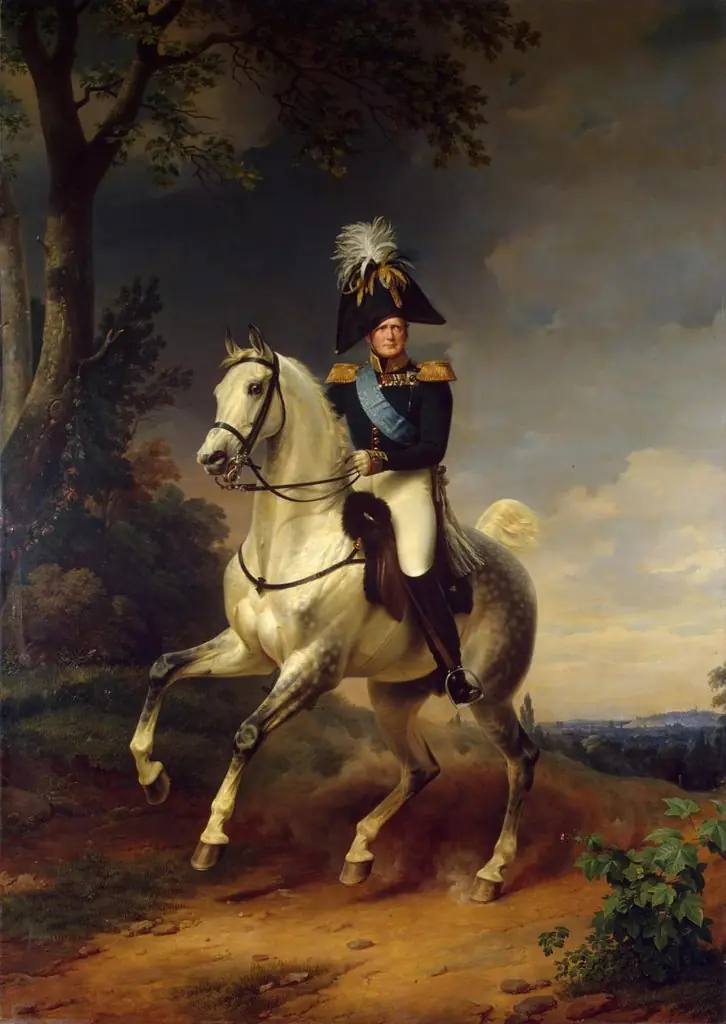
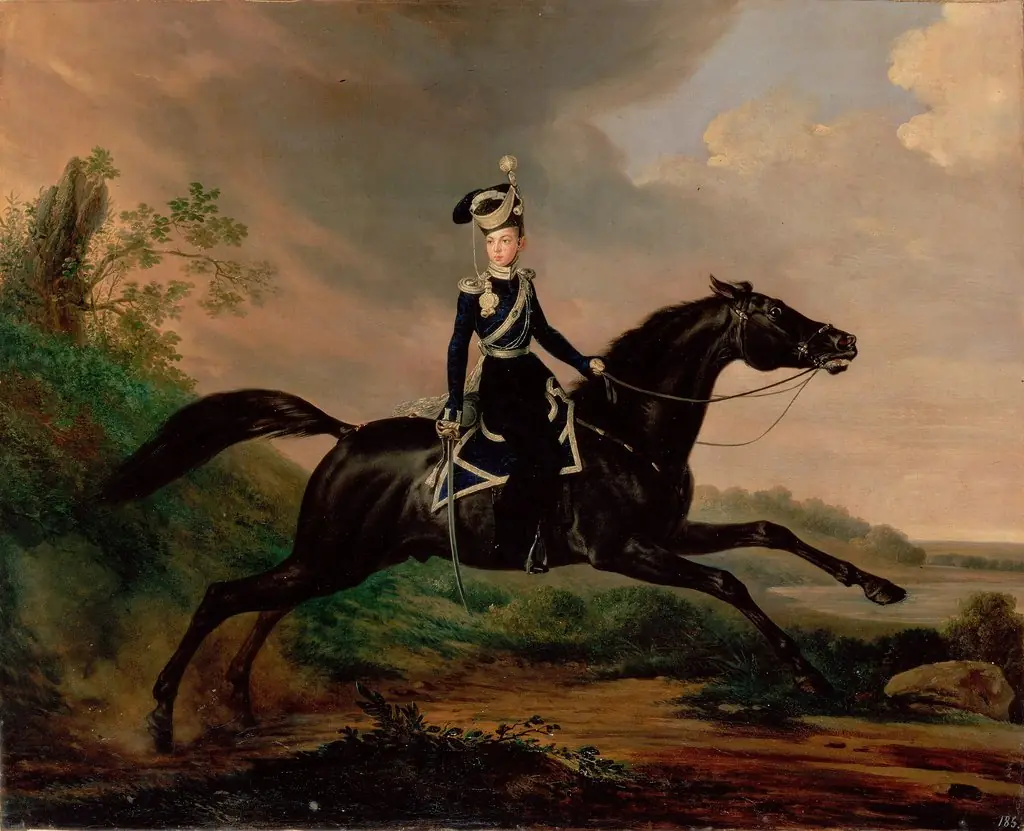 Equestrian Portrait of Grand Prince Alexander Nikolayevich
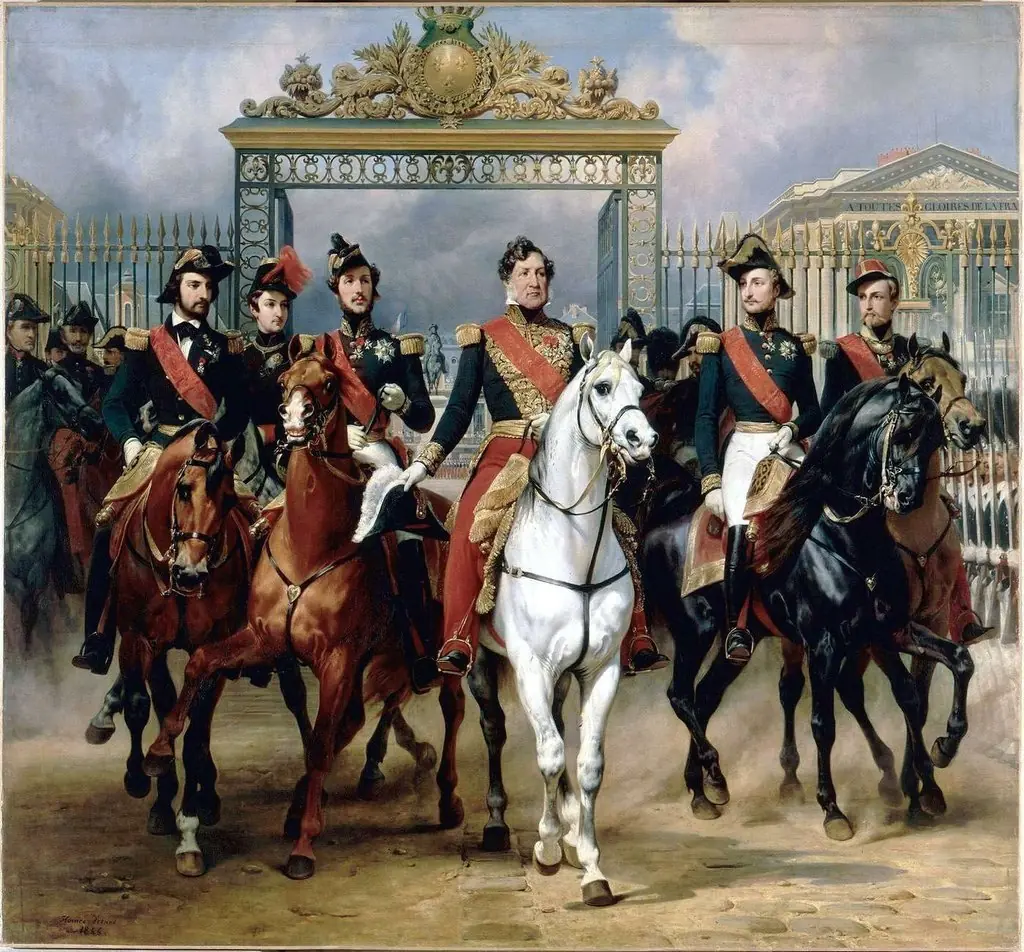 King Louis-Philippe escorted by his sons leaving Versailles on June 10, 1837
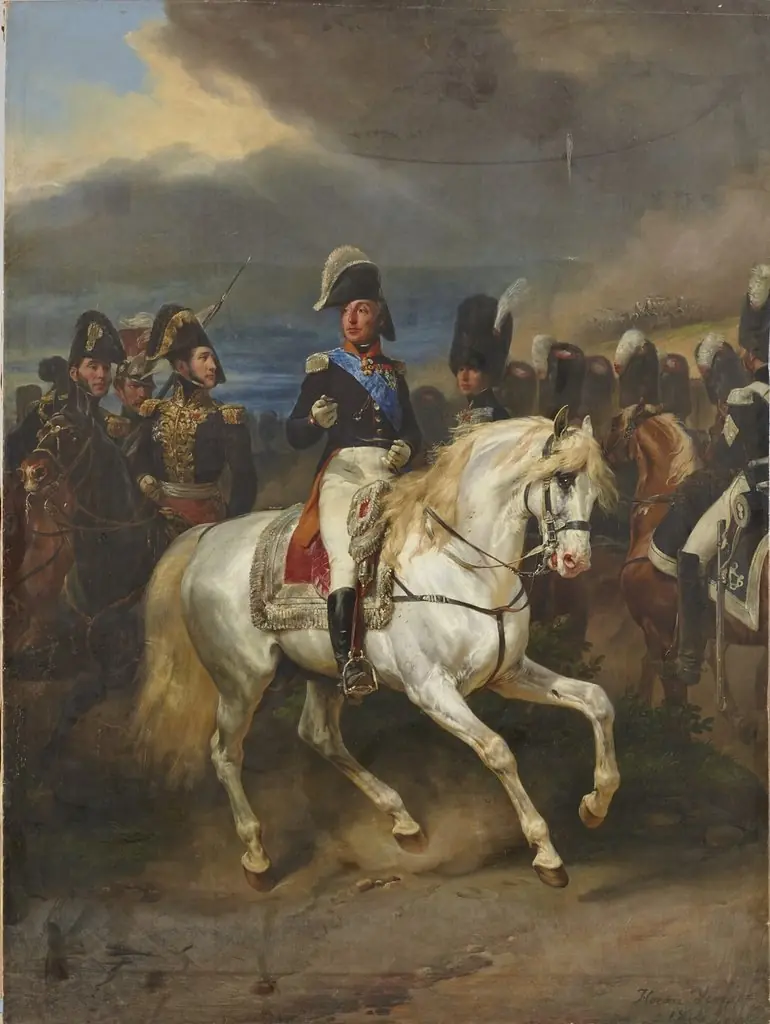
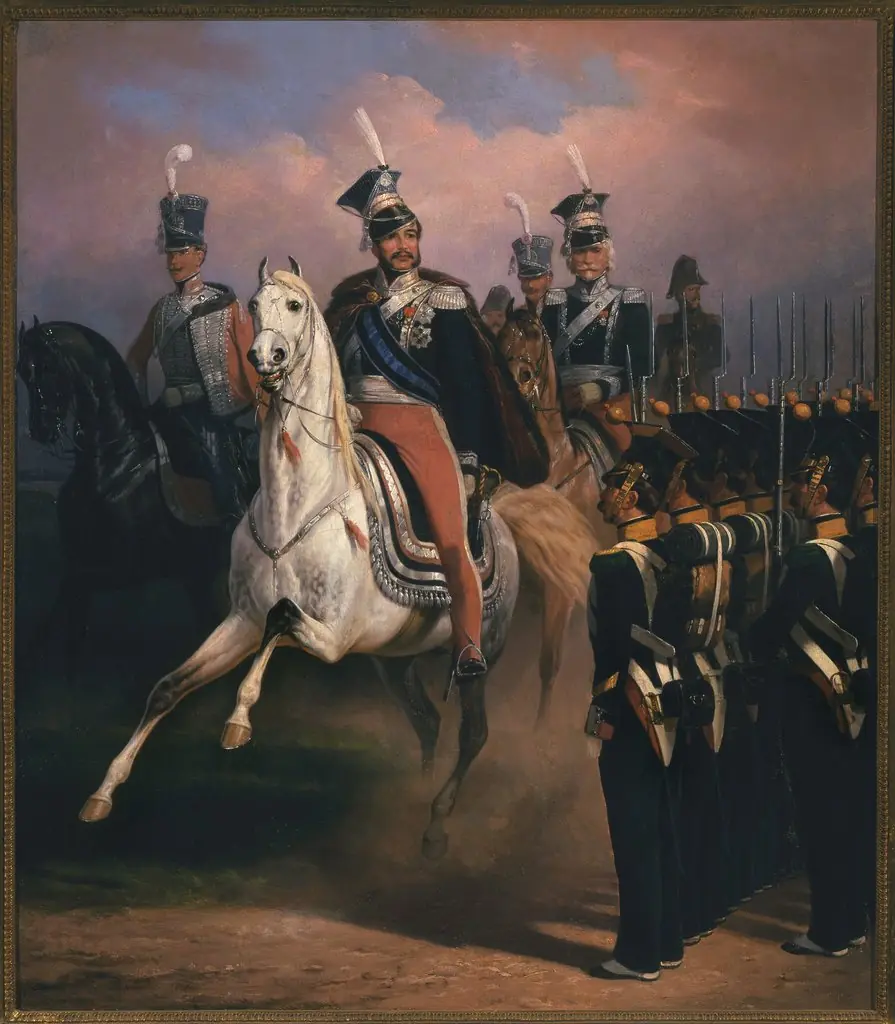 Prince Józef Poniatowski before the front of grenadiers
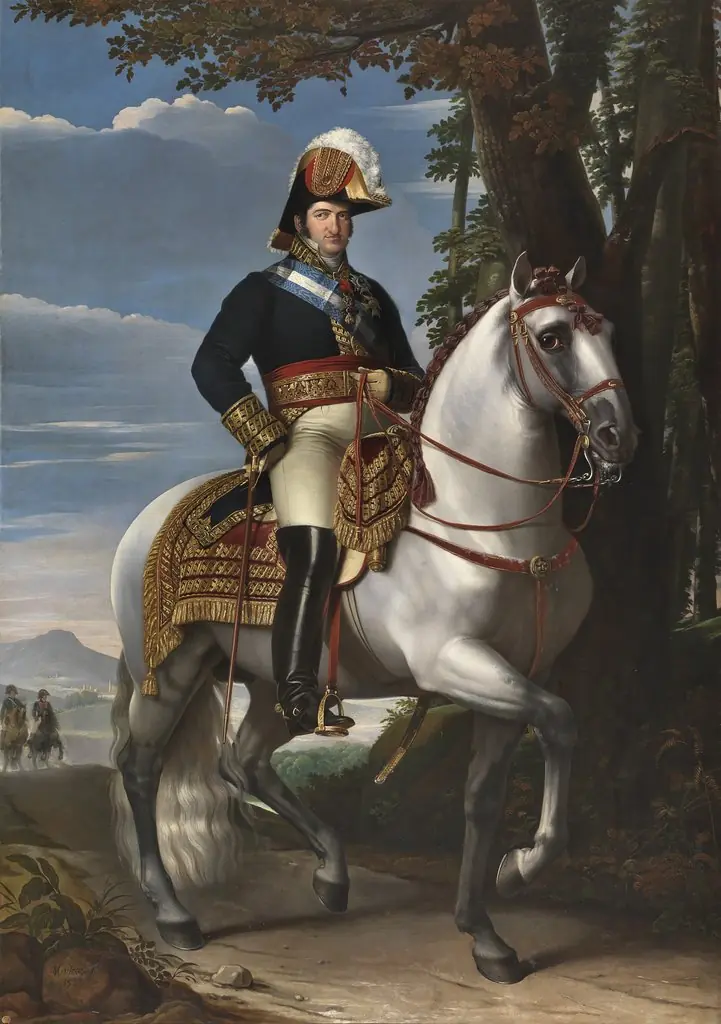 Ferdinand VII of Spain on Horseback
 Untitled
 Blue Hussars
 Equestrian Portrait of Frederick William III
 Napoleon I decorated a soldier of the Russian army in Tilsitt with the cross of the Legion of Honor
 Le duc d'Orléans, les ducs de Chartres et de Nemours. 1830.