Artwork
Mary Crosby
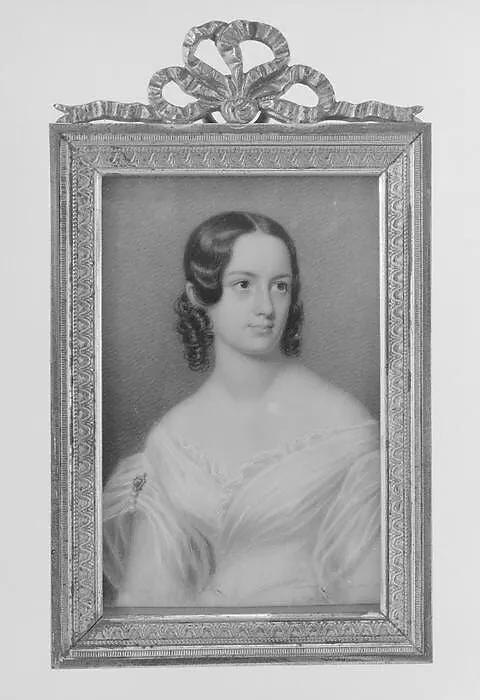
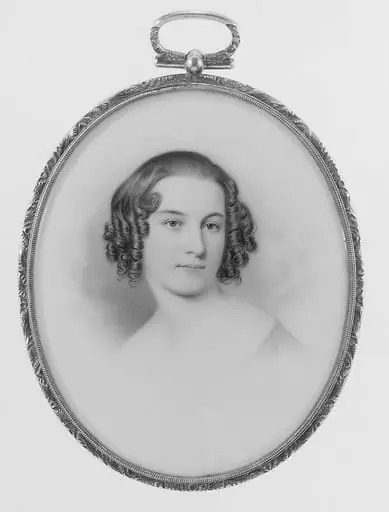
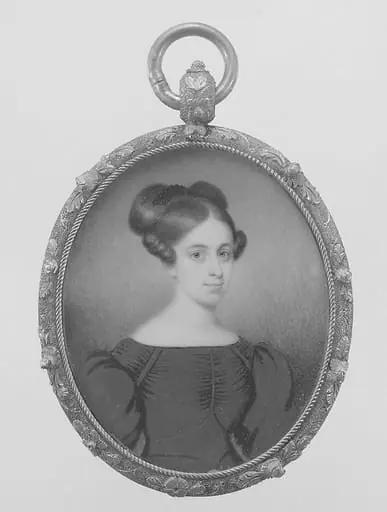
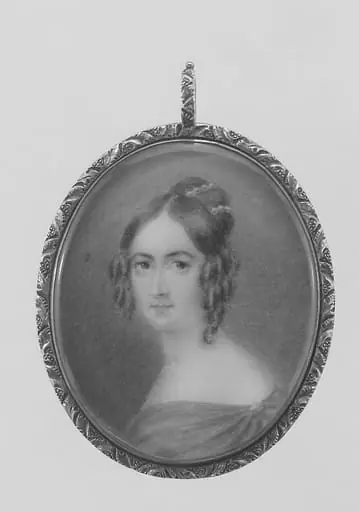
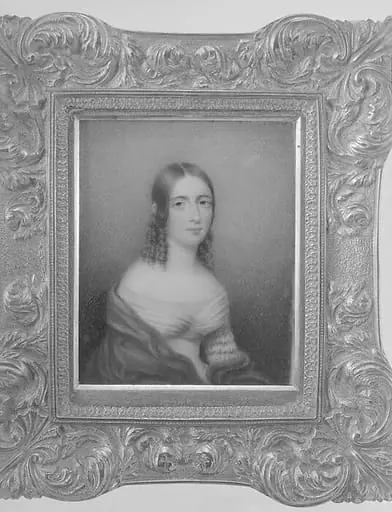
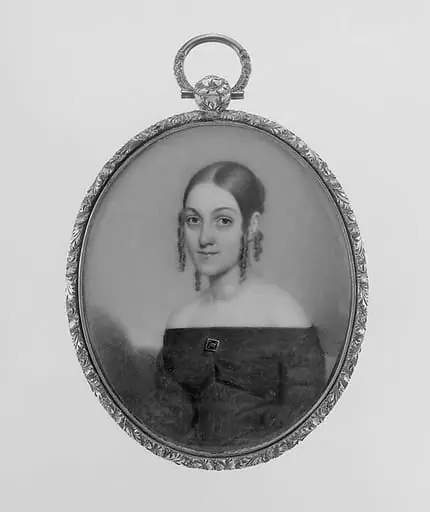
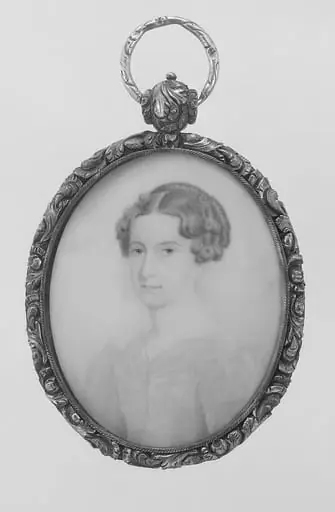
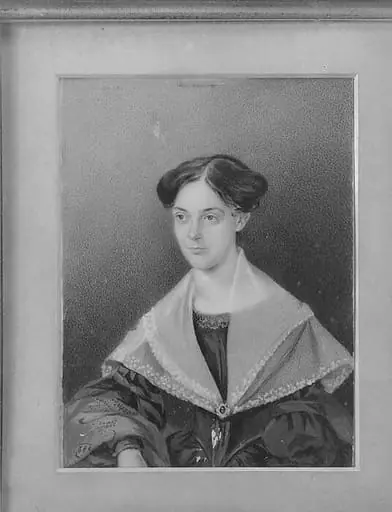
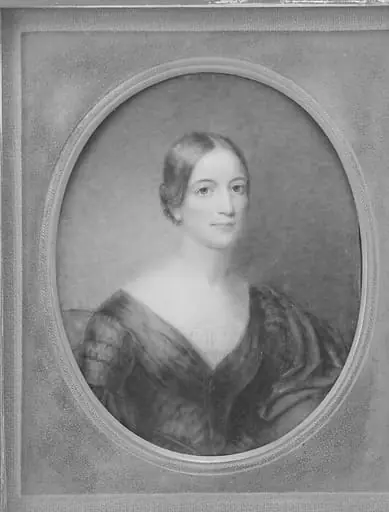
Mary Crosby is a watercolor painting by the American Impressionist artist George Augustus Baker Jr.. It dates from 1840 and is held in the collection of the Metropolitan Museum of Art.
About this work
Overview
The artist utilized soft illumination to highlight her features and the intricate lace of her collar, fostering a serene atmosphere.
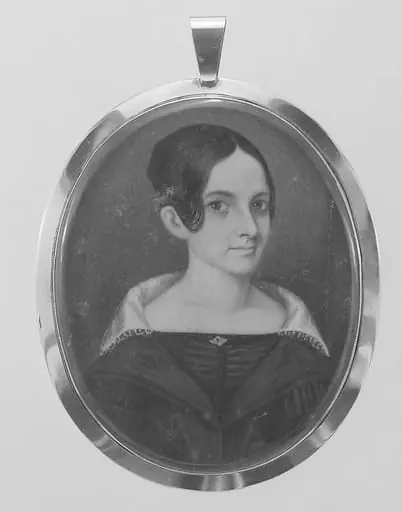
The portrait "Mary Crosby" is a delicate watercolor miniature painted on ivory. It presents a woman in a dark dress, captured in a contemplative pose with her chin resting on her hand. The artist utilized soft illumination to highlight her features and the intricate lace of her collar, fostering a serene atmosphere. These small-scale works were typically created as personal keepsakes, intended for intimate appreciation.
Technique & Style
The choice of watercolor on ivory as a medium allowed for a luminous and refined finish. Artists achieved the subtle nuances of skin tone by applying numerous thin, transparent layers, or glazes. These nearly imperceptible brushstrokes collectively contribute to a radiant, lifelike effect.
The miniature format of the ivory support underscores the meticulous detail and precision characteristic of such intimate portraiture.
Subject & Meaning
Mary Crosby is depicted in a pose suggesting quiet reflection, seated sideways with her chin gently supported by her hand. Her gaze is composed and direct, yet conveys a sense of inner thought. The artist employed a simple, unadorned background to ensure the viewer's focus remains solely on the sitter. Soft light illuminates her face and the delicate texture of her lace, enhancing the portrait's tranquil mood.
Artist & collection
Artist
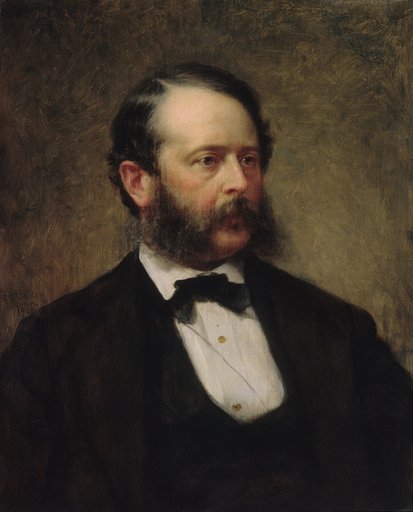
George Augustus Baker (March 19, 1821 – April 2, 1880) was an American portrait painter.