Artwork
Hannah P. Moore
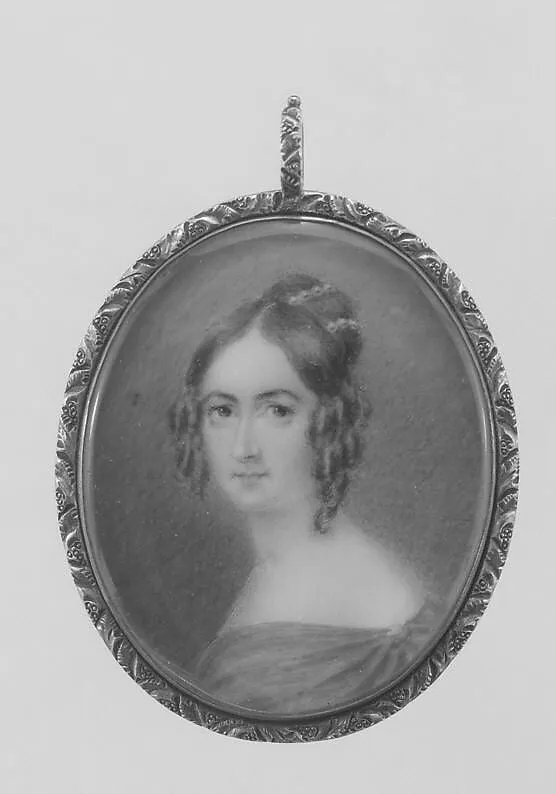
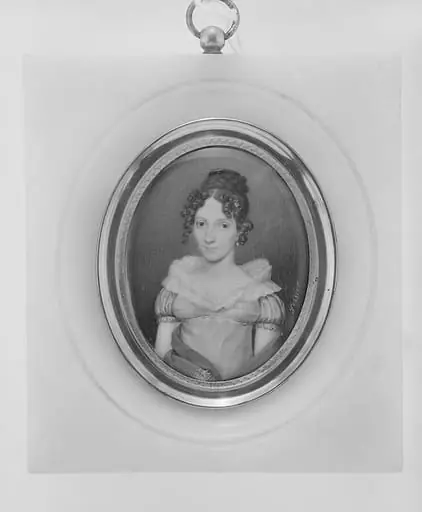
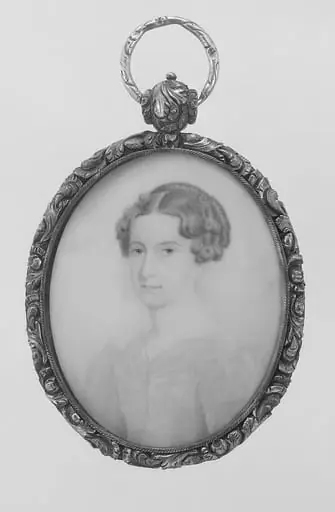
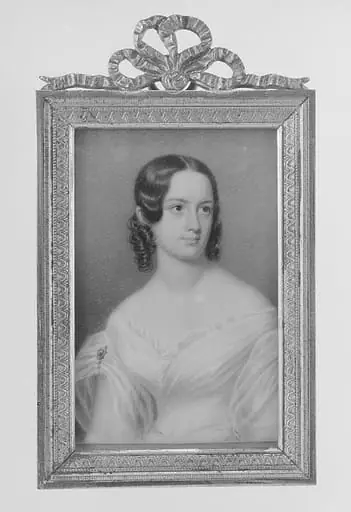
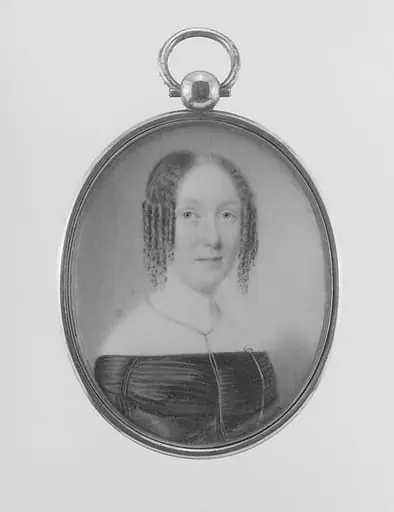
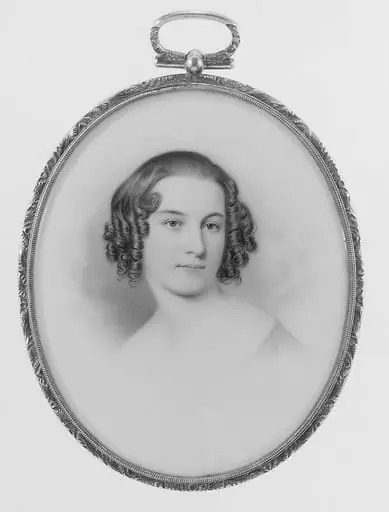
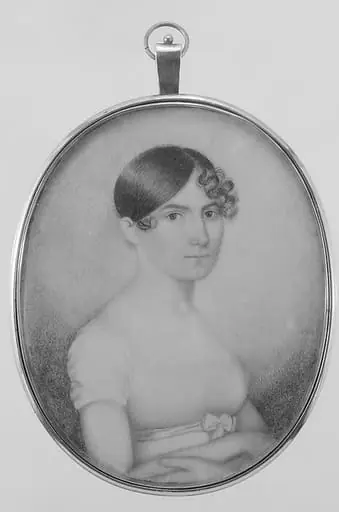
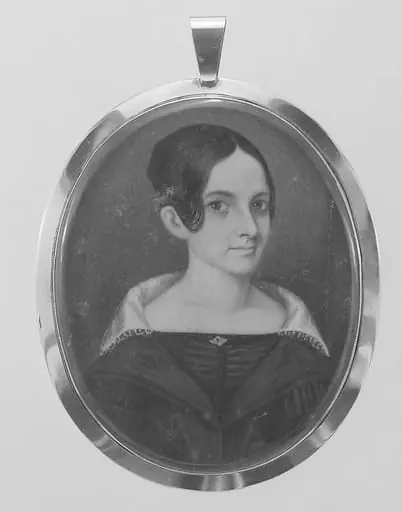
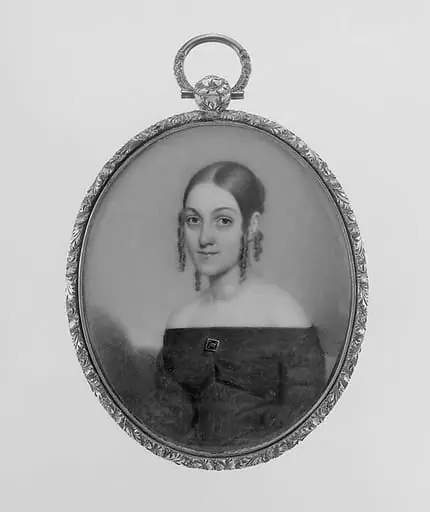
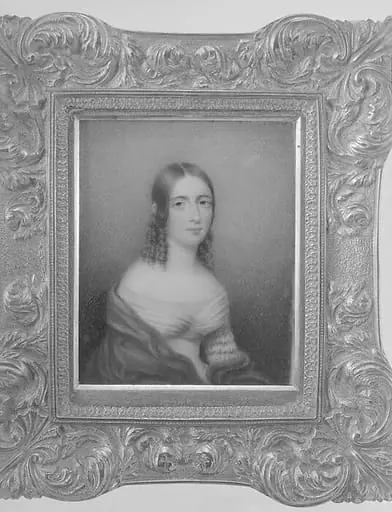
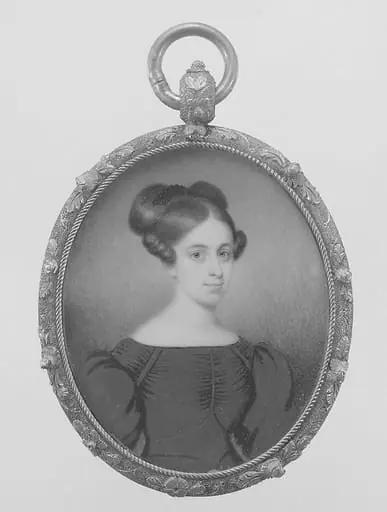
Hannah P. Moore is a watercolor painting. It dates from 1835 and is held in the collection of the Metropolitan Museum of Art. This miniature portrait depicts Hannah P.
- Accession no.
- 2006.235.198
- Credit line
- Fletcher Fund, 2006
About this work
The artist used watercolor so thin it lets the ivory glow through, making her skin look warm.
A young woman looks straight at you, her dark curls tucked under a lace cap. She wears a high-necked dress with tiny buttons and holds a book in her lap. The background is soft gray, almost like fog.
This tiny painting is done on ivory, not paper. The artist used watercolor so thin it lets the ivory glow through, making her skin look warm. On the back, there’s a lock of real hair pressed under glass, a keepsake from 1835.
Look up more small portraits like this under the subject portraits.
Overview
This miniature portrait depicts Hannah P. Moore, a young woman presented with a direct gaze. Rendered in watercolor on ivory, the artwork is housed within a gilded copper case. The sitter's dark curls are neatly contained by a lace cap, and she wears a high-necked dress, holding a book in her lap. A soft, muted gray background frames her figure, contributing to the intimate scale of the piece.
Subject & Meaning
Hannah P. Moore is portrayed with a composed demeanor, her direct gaze engaging the viewer. The presence of a book in her lap suggests an association with education or piety, common virtues celebrated in portraits of the era. The inclusion of a lock of her hair on the reverse side underscores the personal and sentimental function of this small artwork, likely commissioned as a cherished memento for a loved one.
Technique & Style
The artist employed watercolor on a thin slice of ivory, a common support for miniature portraits. This choice of material allowed for a delicate application of pigment, with the translucent ivory surface contributing a subtle warmth to the sitter's complexion. The precise brushwork captures fine details, from the lace cap to the tiny buttons on her dress, characteristic of the meticulous style required for such small-scale works.
Context
Created in 1835, this miniature exemplifies a popular form of personal remembrance during the 19th century. The practice of incorporating a lock of the sitter's actual hair, preserved under glass on the reverse, transformed the object into a deeply personal keepsake. Such intimate portraits were often exchanged between family members or lovers, serving as tangible tokens of affection and presence in an era before photography became widespread.
Artist & collection