Artwork
Chinese barber's apparatus
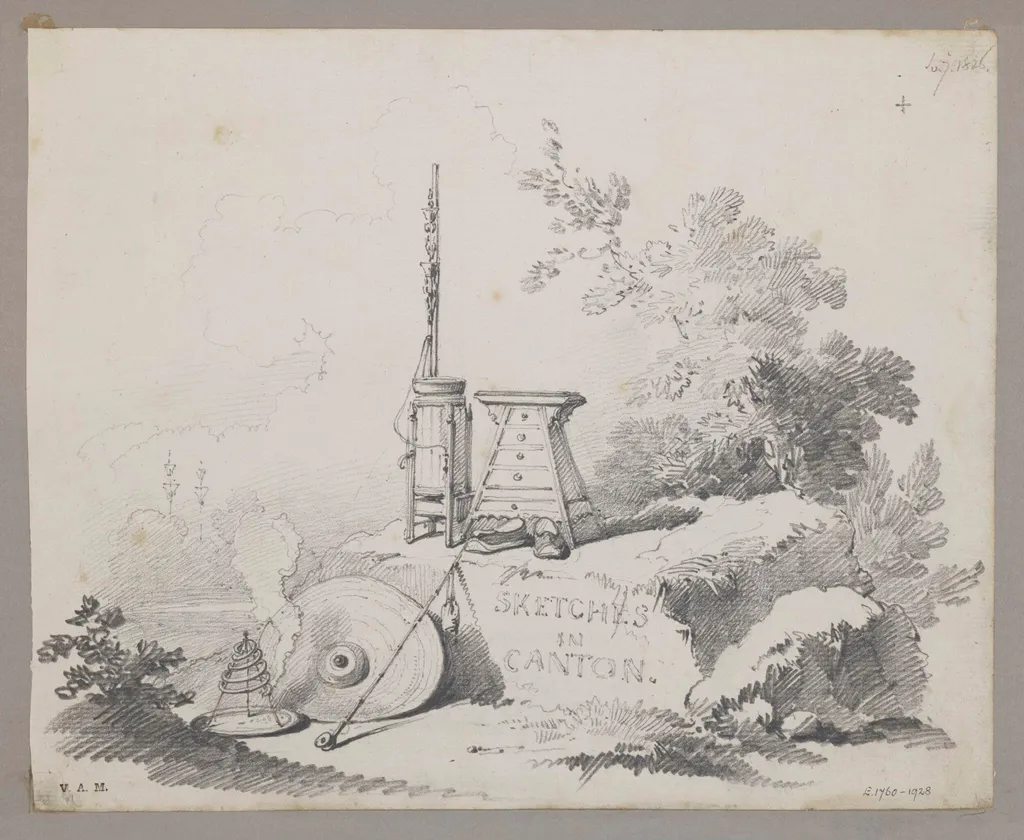
Chinese barber's apparatus is a drawing by the Romanticist artist George Chinnery. It dates from 7 and is held in the collection of the Victoria and Albert Museum.
About this work
This drawing shows a barber’s tools laid out on a rock. George Chinnery made it in 1826 as a title page for a sketchbook.
It mixes everyday items, a water container, slippers, a hat, with a tobacco pipe and incense spiral. The rock is marked “SKETCHES IN CANTON,” hinting at travels.
It’s a quiet snapshot of travel and daily life. Look up the technique called cross-hatching next.
Overview
This 1826 drawing by George Chinnery was conceived as a title page for a sketchbook. It depicts a collection of a Chinese barber's portable apparatus and personal items arranged on a rock.
Subject & Meaning
The composition juxtaposes the barber's professional tools (water container, slippers, chest) with personal accoutrements (tobacco pipe, broad-brimmed hat, lighted incense spiral), capturing a serene moment of daily life during the artist's travels.
Technique & Style
The drawing employs cross-hatching, a technique utilizing closely spaced parallel lines that follow the contours of the subject, to achieve detailed, high-contrast renderings of the various objects on the rock.
History & Provenance
Created in 1826, the work bears the inscription 'SKETCHES IN CANTON' on the rock, indicating its origin during Chinnery's time in Canton (now Guangzhou), China.
Context
As a title page for a sketchbook, this drawing sets the tone for a collection of artworks likely documenting Chinnery's observations of life and culture during his travels in China.
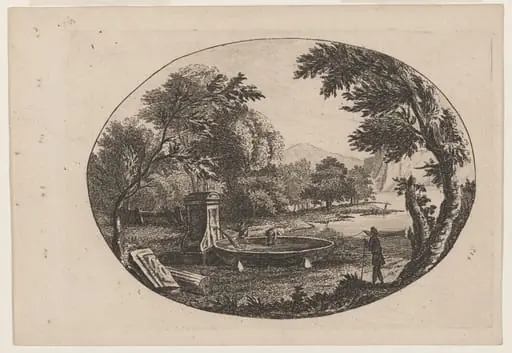
Own this work as a print
Artist & collection
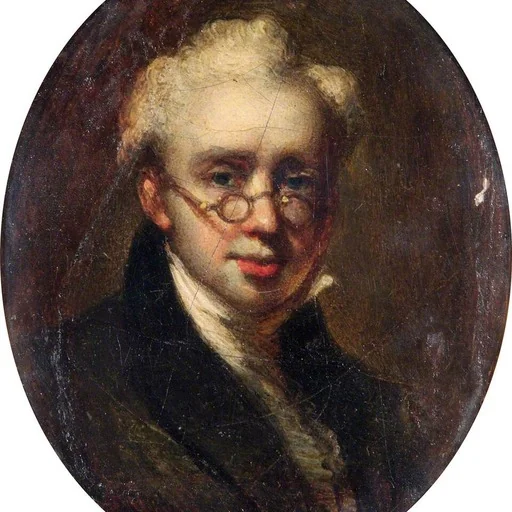
Artist
George Chinnery (Chinese: 錢納利; 5 January 1774 – 30 May 1852) was an English painter who spent most of his life in Asia, especially India and southern China.

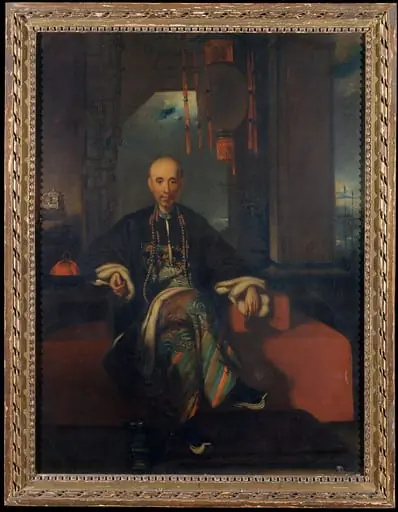
- Wooded Landscape with Drinking Spout and Basin
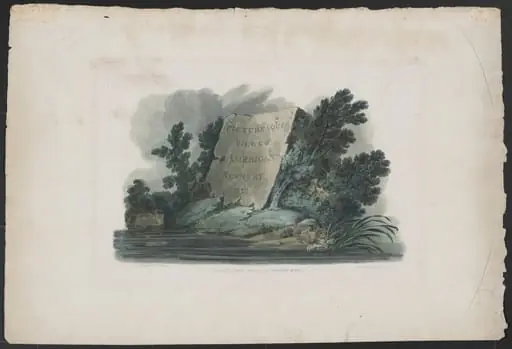 Title Page for the series "Picturesque Views of American Scenery"
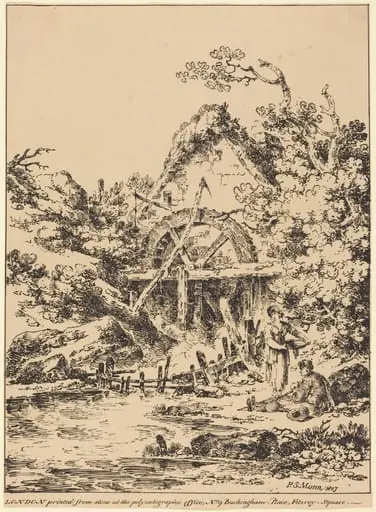 Old Water Mill
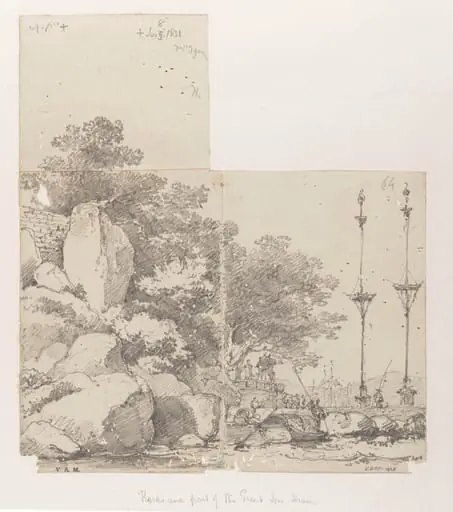 The rocky shore by the A-Ma Temple, Macau
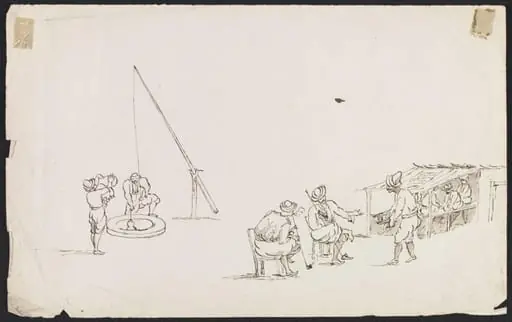 Wayside café, with men drawing water from a well, and others seated, smoking, being served with coffee
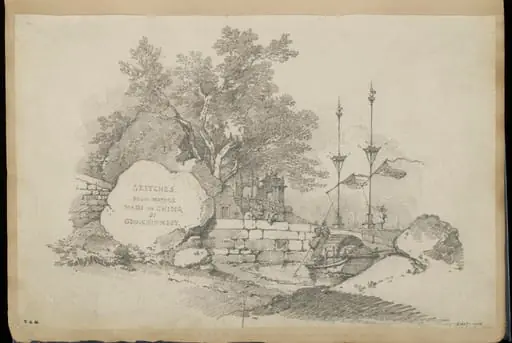 Vignette of the A-Ma Temple, Macau, for a titlepage inscribed 'Sketches from Nature made in China by Geo. Chinnery'
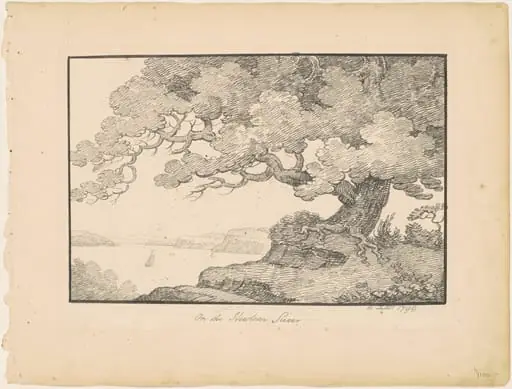 On the Hudson River
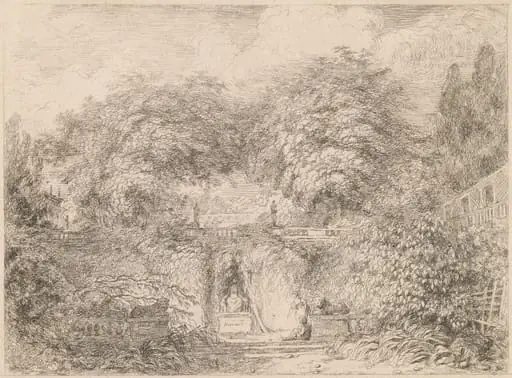 The Little Park (Le petite parc)
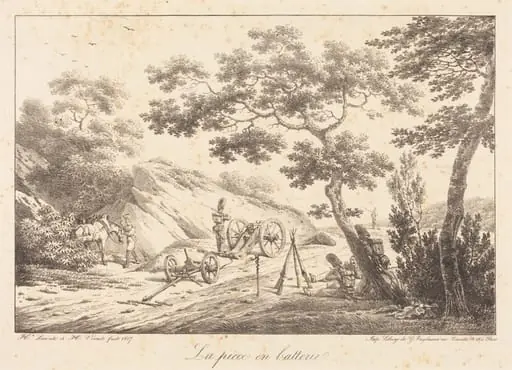 La piece en batterie
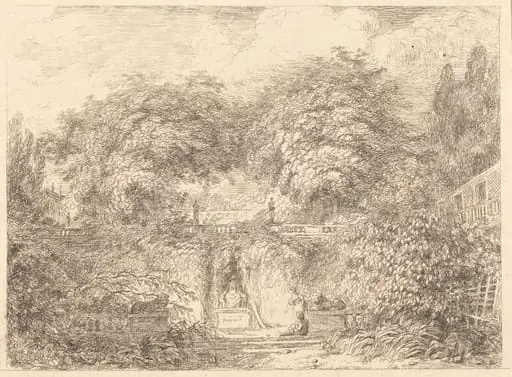 The Little Park (Le petit parc)
 A barber with a seated customer
 An ox and cart by a ruined building, Bengal