Artwork
Gilbert Elliot, 1st Earl of Minto (1751-1814), Viceroy of British India and Governor General of the Dutch East Indies (1812-14)
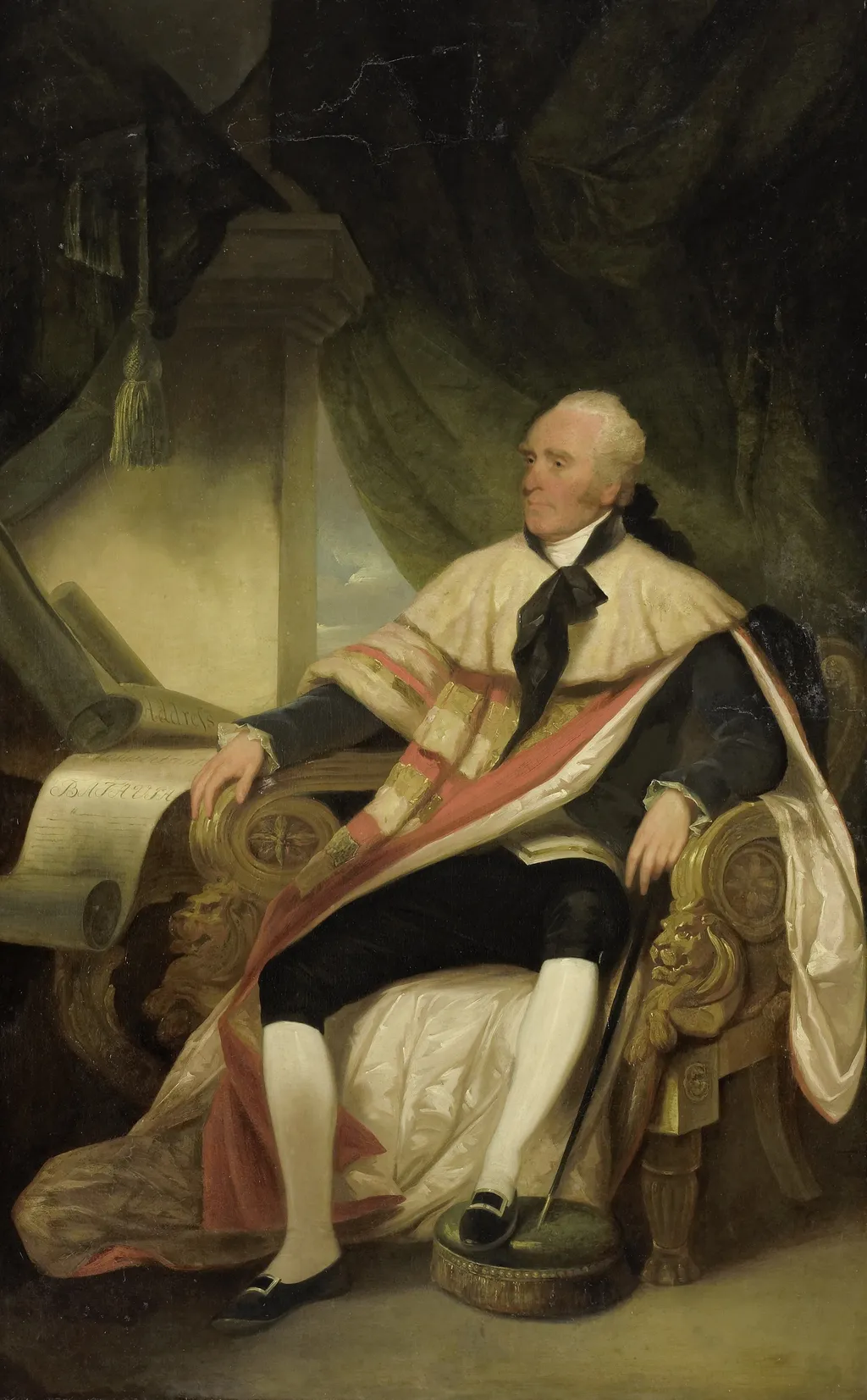
Gilbert Elliot, 1st Earl of Minto (1751-1814), Viceroy of British India and Governor General of the Dutch East Indies (1812-14) is an oil painting by the Patna School of Painting artist George Chinnery. It dates from 1829 and is held in the collection of the Rijksmuseum.
About this work
Subject & Meaning
By depicting Minto in this monumental scale, the work emphasizes the political importance of his dual role in British and Dutch colonial governance.
The painting is a posthumous portrait of Gilbert Elliot-Murray-Kynynmound, 1st Earl of Minto, who served as Viceroy of British India and later as Governor General of the Dutch East Indies. Created fifteen years after his death in 1814, the work belongs to the genre of formal portraiture associated with colonial administrators of the early nineteenth century. As a commemorative likeness, it functions both as a record of the sitter's appearance and as a visual statement of his imperial standing, presenting him in the dignified manner typical of viceregal imagery.
The portrait is held in the Rijksmuseum collection, and its large vertical canvas format, 238 cm in height and 149 cm in width, is consistent with full-length or three-quarter-length state portraits intended to convey authority and rank. By depicting Minto in this monumental scale, the work emphasizes the political importance of his dual role in British and Dutch colonial governance.
Technique & Style
The portrait of Gilbert Elliot, 1st Earl of Minto, was executed in oil paint on canvas, a standard medium for formal portraiture in the early 19th century. Measuring 238 cm in height and 149 cm in width, the work features a large-scale support that accommodates a life-sized depiction of the sitter, enhancing its authoritative presence.
Chinnery’s handling demonstrates a controlled yet fluid application of paint, characteristic of his mature style. The brushwork is refined in the rendering of facial details and textiles, while broader, more gestural strokes define the background and drapery, creating a sense of depth and movement. The palette is restrained, dominated by rich, dark tones for the sitter’s attire, contrasted with subtle flesh tones and highlights that emphasize volume and texture.
History & Provenance
The portrait of Gilbert Elliot, 1st Earl of Minto, painted by George Chinnery in 1829, is part of the Rijksmuseum collection in Amsterdam, where it remains on display in the gallery dedicated to Dutch colonial figures. The work was first exhibited at the Royal Academy Summer Exhibition of 1829 before entering the Rijksmuseum's holdings in 1885 through a bequest from the artist’s descendants. It is catalogued in the museum’s inventory as 1885-A-12 and has been featured in exhibitions on British imperial portraiture at the Rijksmuseum in 1998 and on colonial governors at the National Gallery of Victoria in 2005.
Overview
George Chinnery’s 1829 oil portrait presents Gilbert Elliot, 1st Earl of Minto, in formal attire. The sitter is seated before a dark, rock‑like backdrop, his left hand resting on a scroll and his right holding a pipe placed in a small basket. The composition emphasizes the figure’s dignified posture and the rich details of his costume, including a white wig, black bow tie, and a red‑gold robe trimmed with gold buttons.
Context
The portrait belongs to the company painting genre that flourished under British rule in India, where European artists documented the lives of expatriate officials. Such works served both as status symbols for the subjects and as records of the cultural exchange between the British Empire and its Asian territories, reflecting the visual language of power and prestige of the early nineteenth century.
Own this work as a print
Artist & collection
Artist
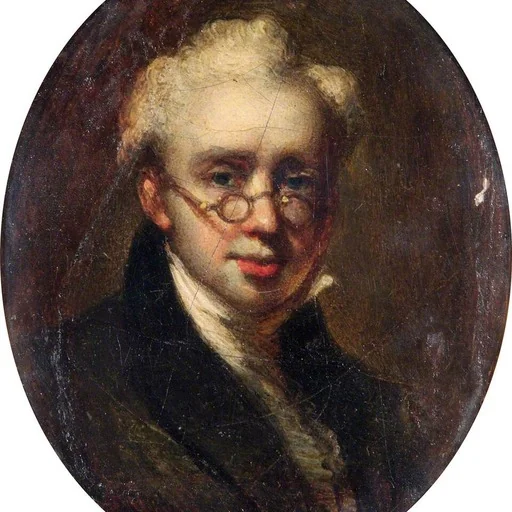
George Chinnery (Chinese: 錢納利; 5 January 1774 – 30 May 1852) was an English painter who spent most of his life in Asia, especially India and southern China.

- John Fane, 10th Earl of Westmoreland
 Portrait of Joseph Farington, R.A.
 Mathew Davies
 Abbott Lawrence
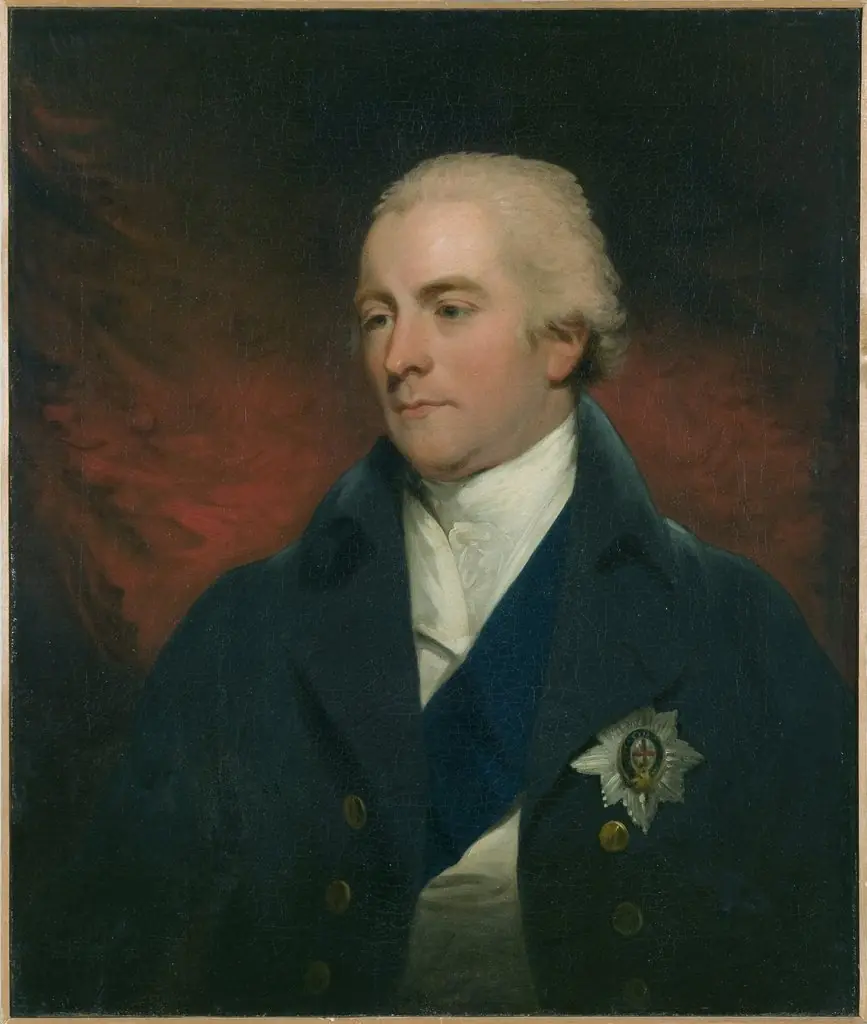 Portrait of Count George Spencer (2nd) (1758-1834)
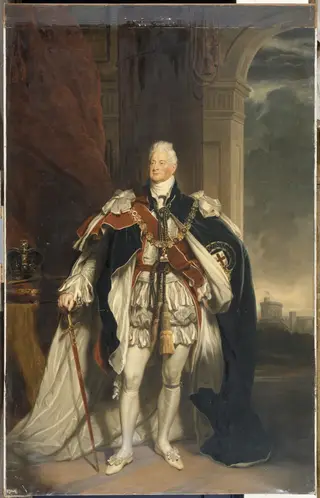 William IV, King of England (1765–1837)
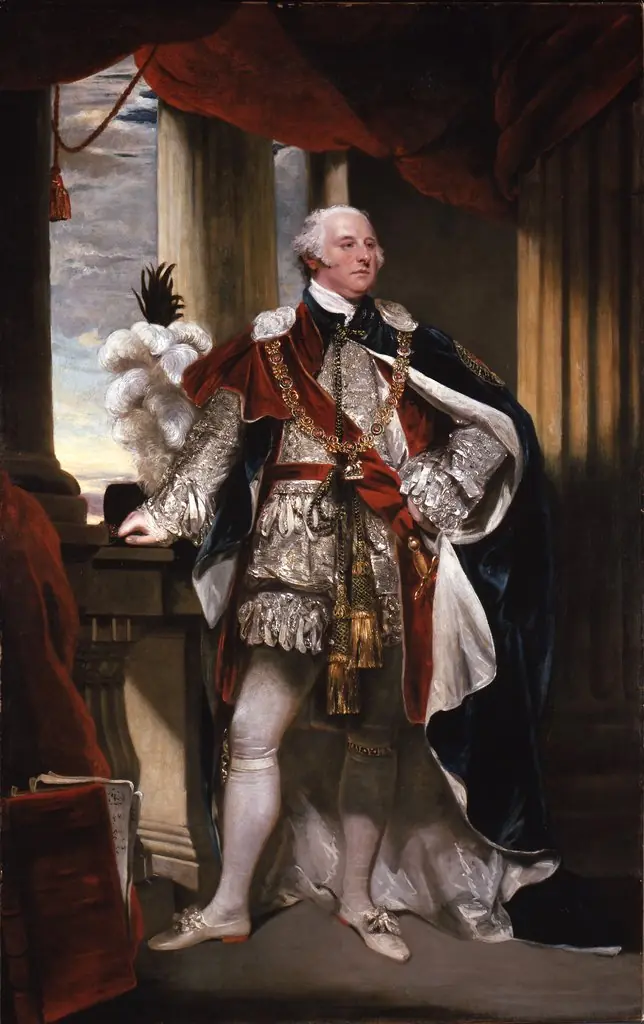 John Jeffreys Pratt, Second Earl and First Marquis Camden as Knight of the Order of the Garter
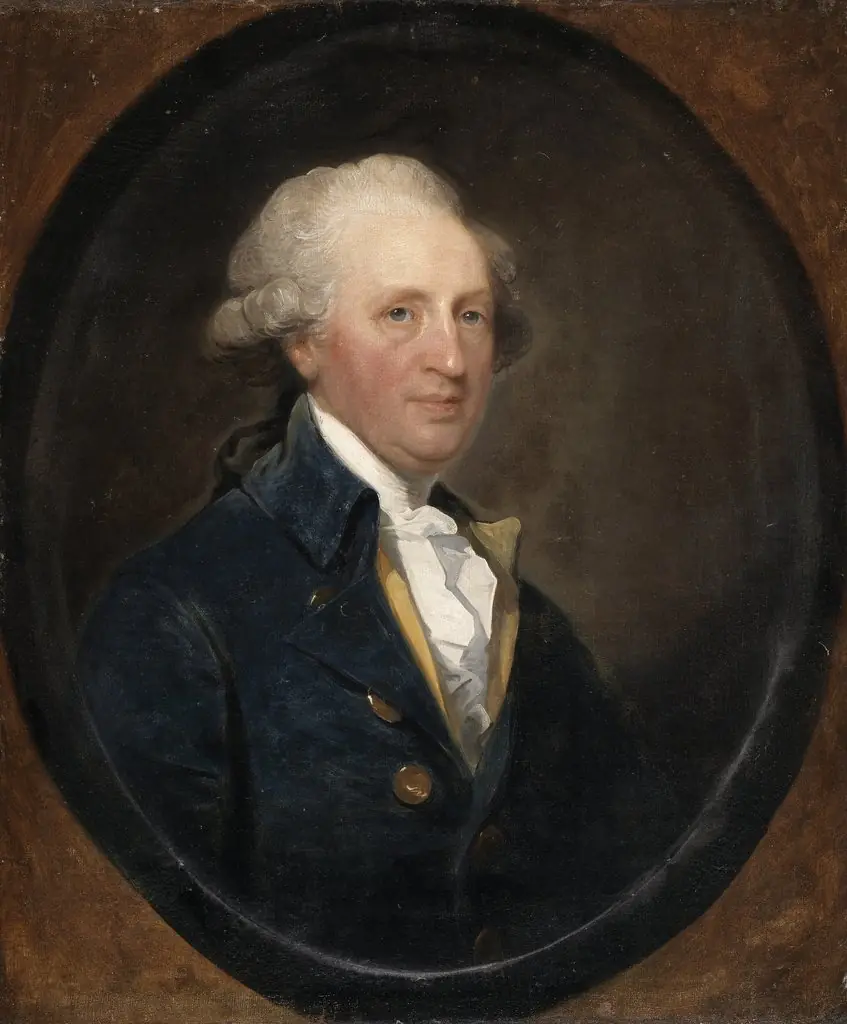 John Beresford (1738-1805), MP
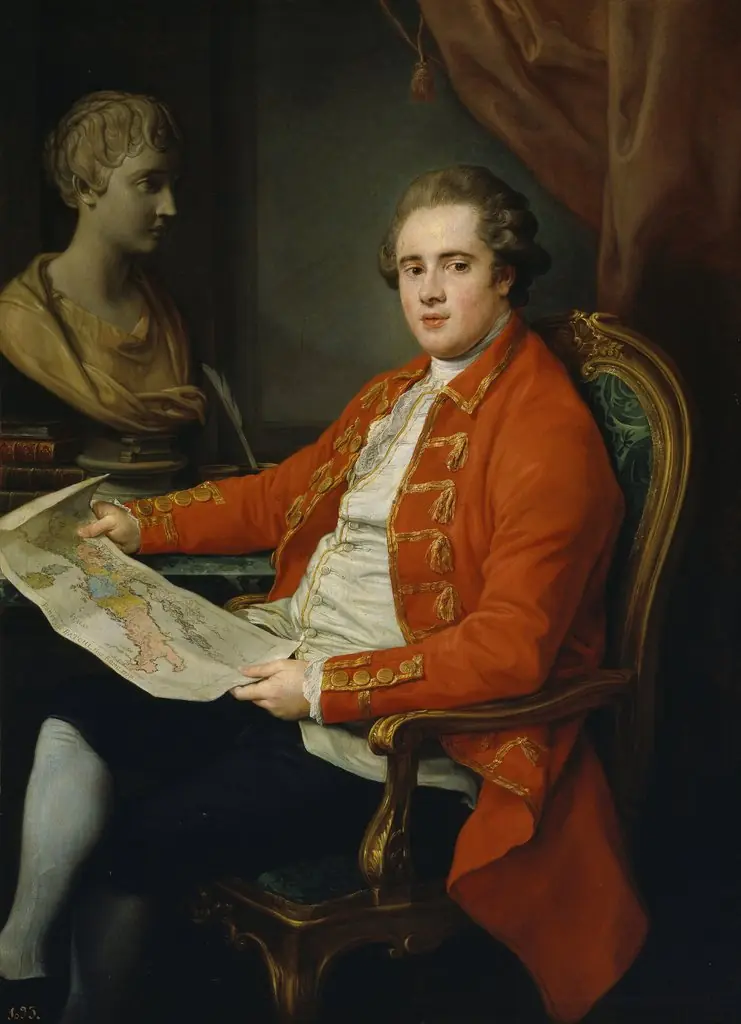 George Legge, Viscount Lewisham
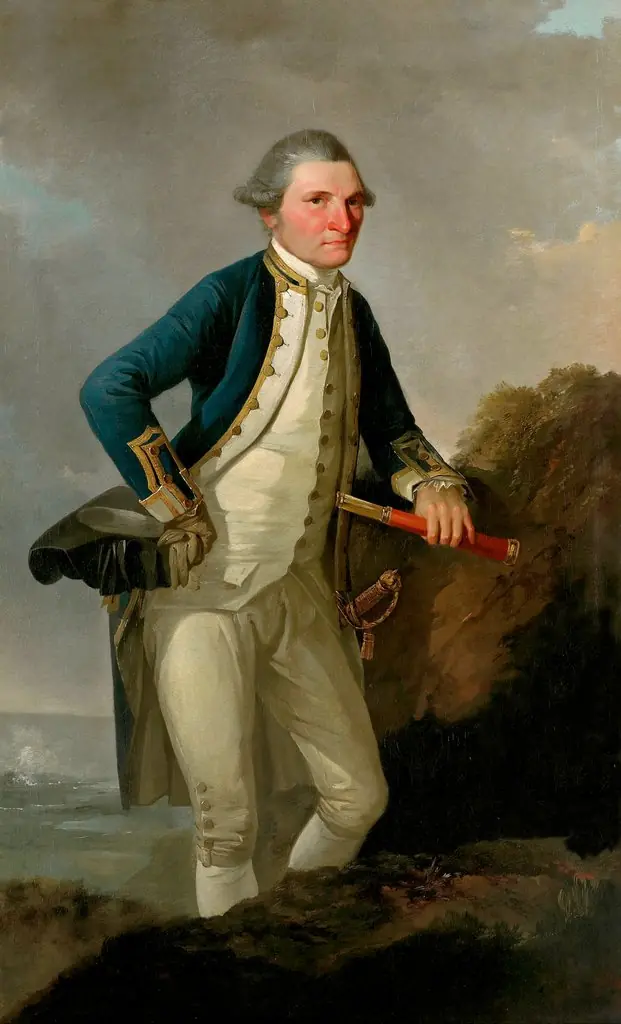 Portrait of Captain James Cook
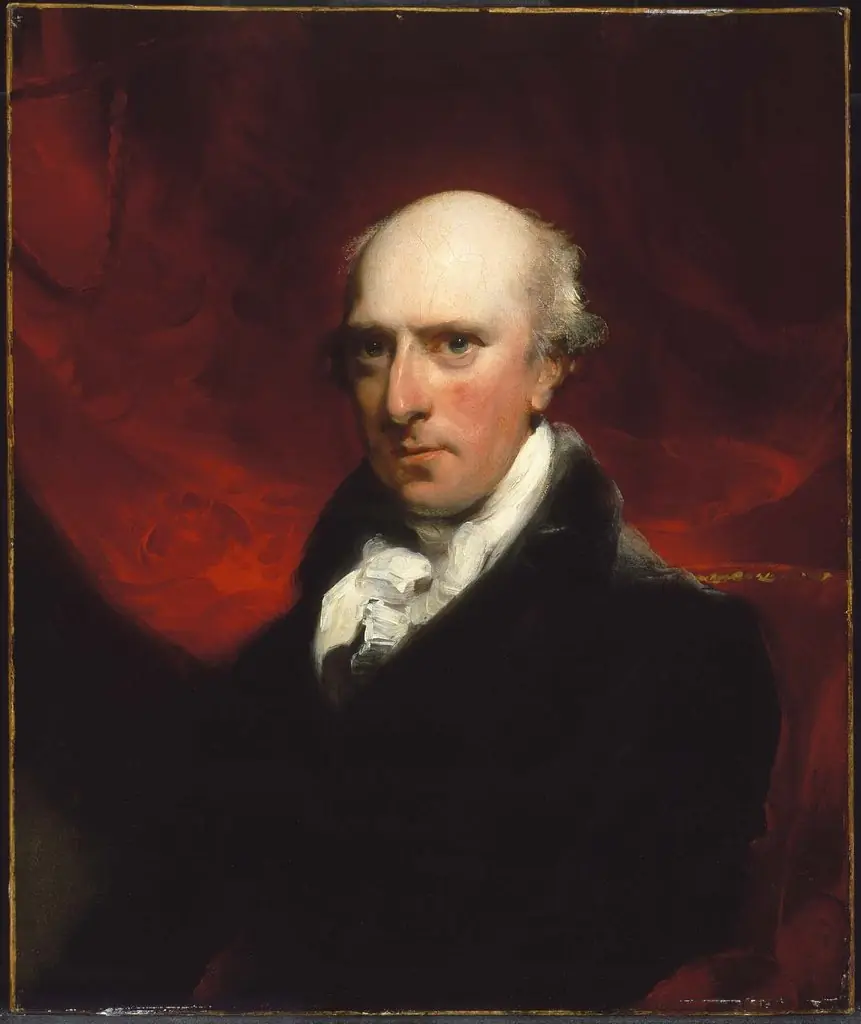 Sir Uvedale Price, Baronet (1747–1829)
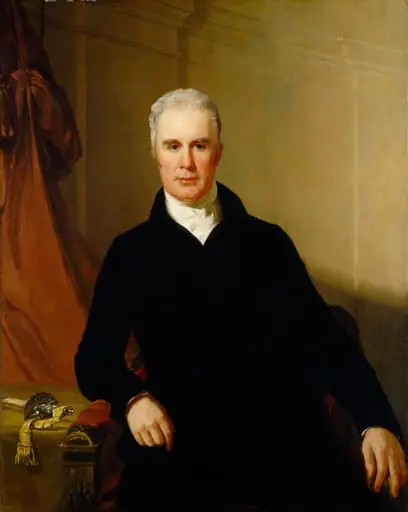 Charles Carnan Ridgely