Artwork
Ariadne
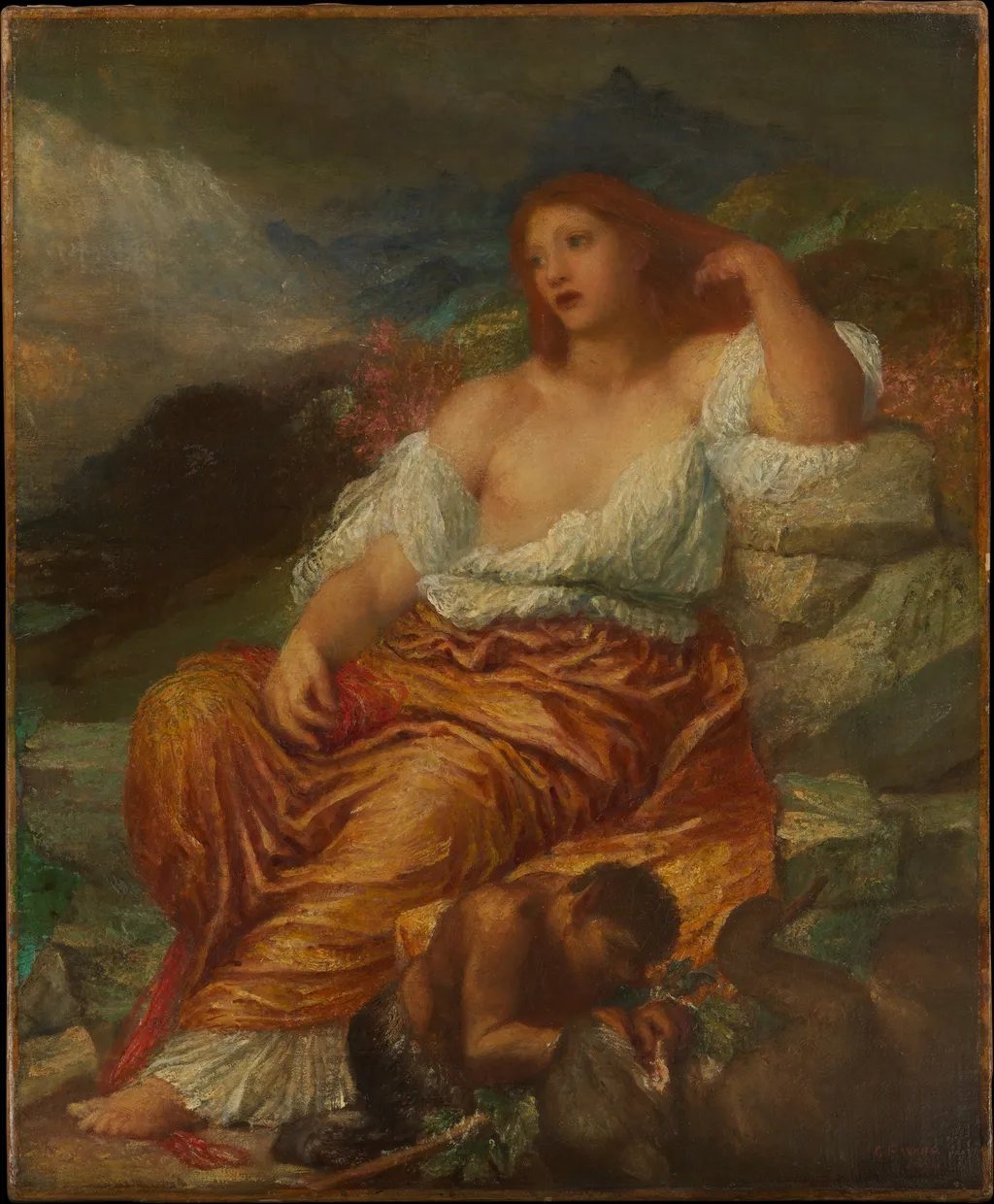
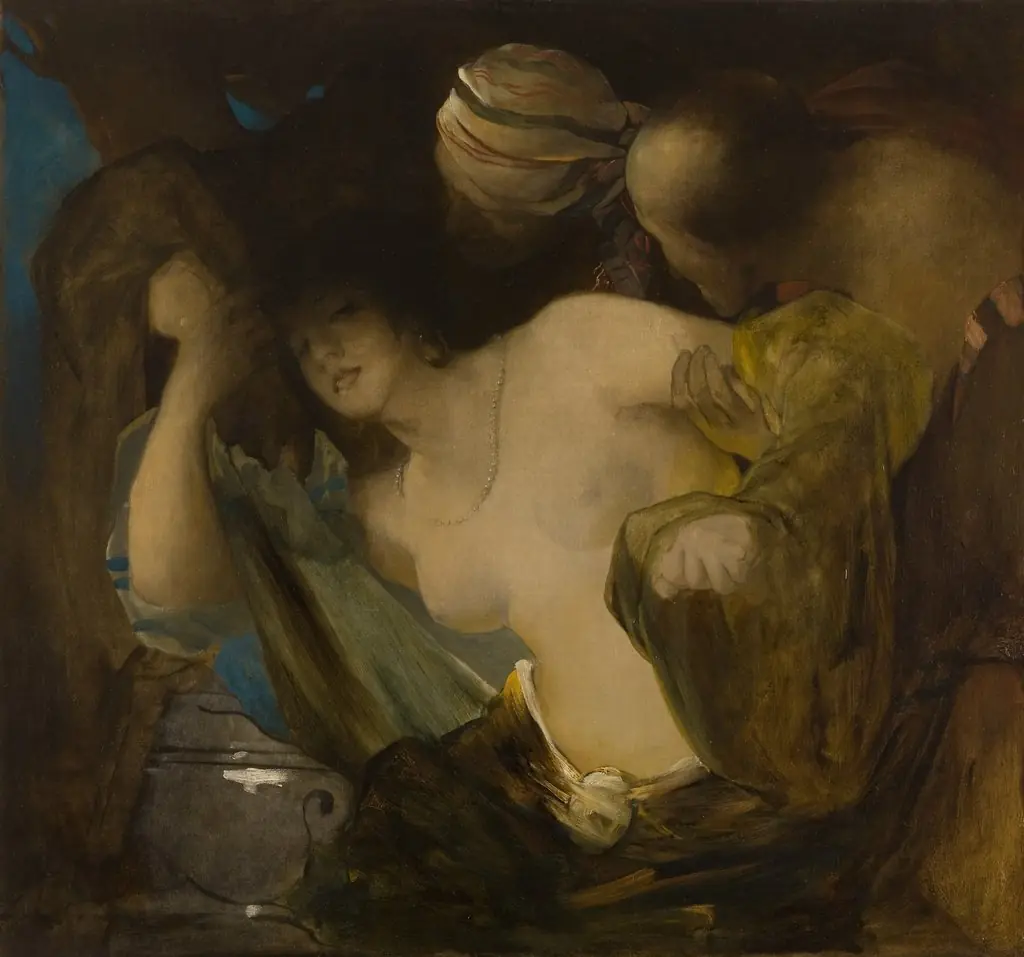
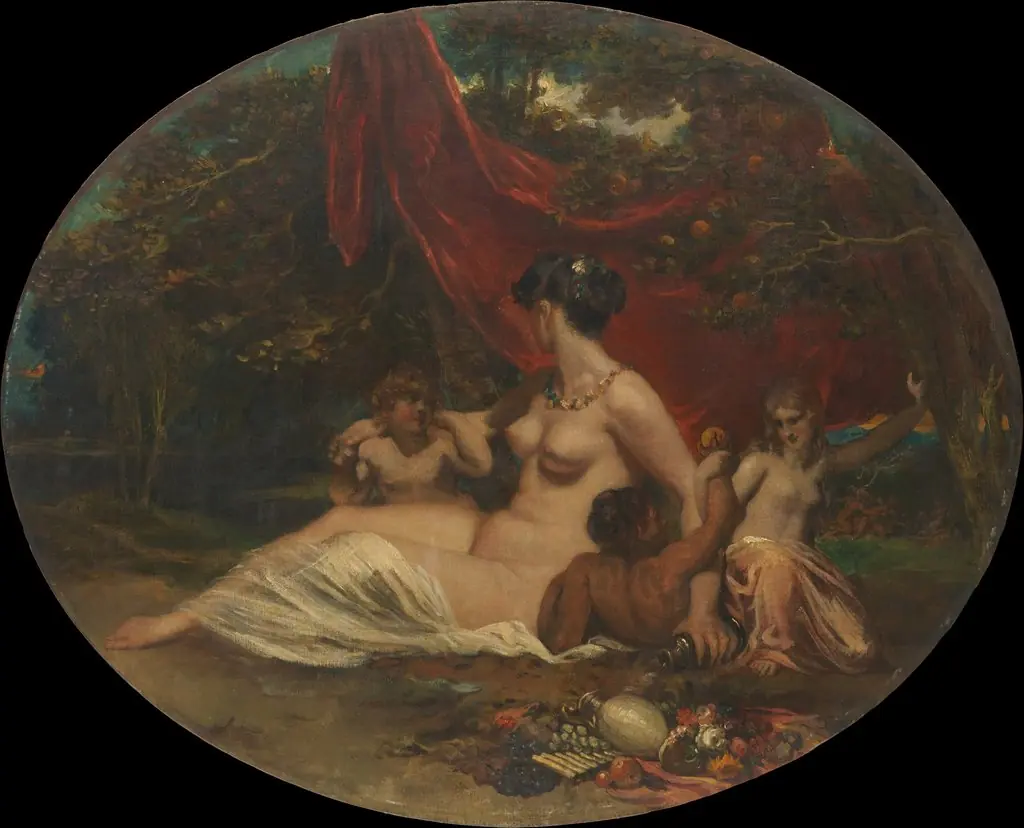
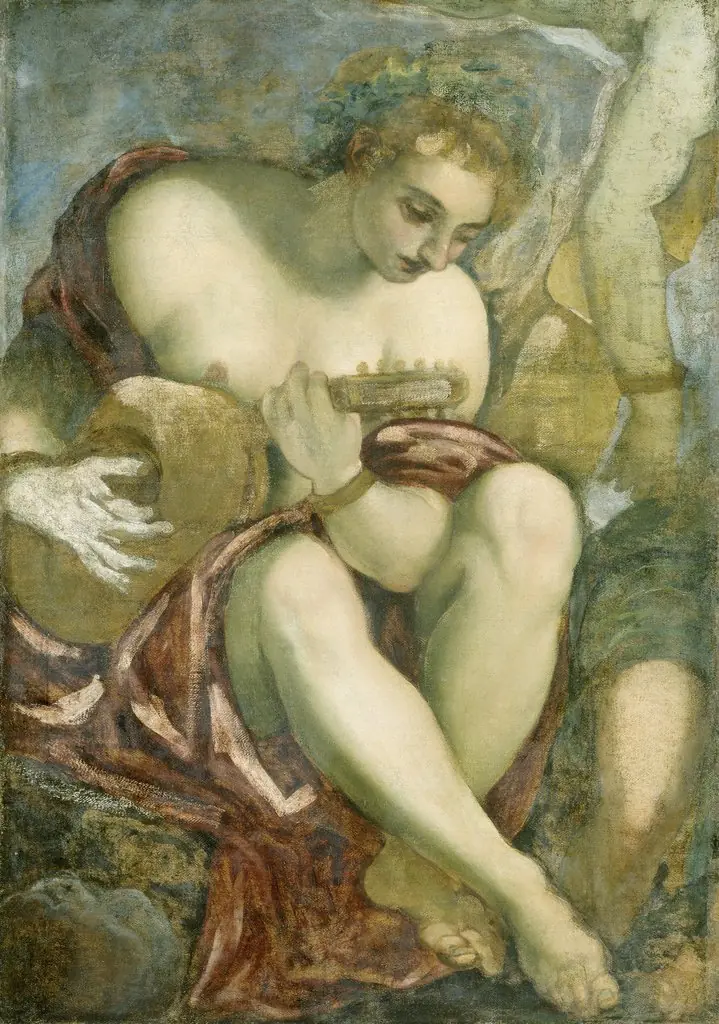
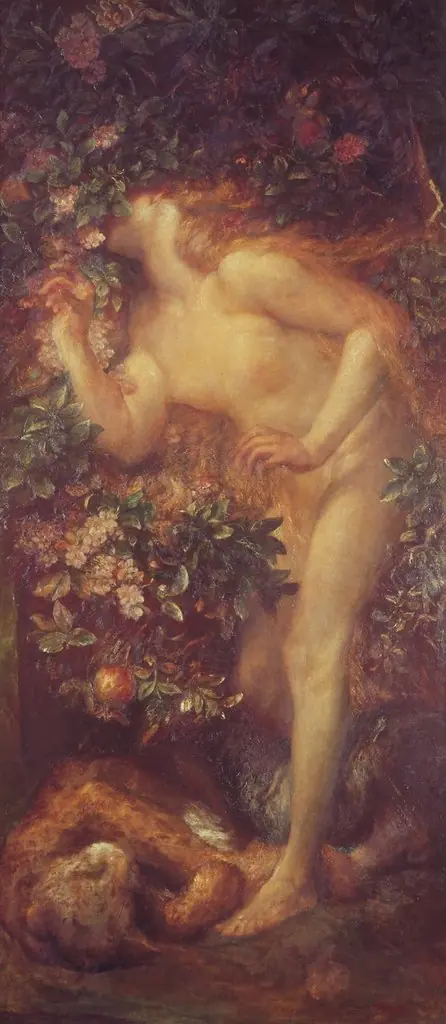
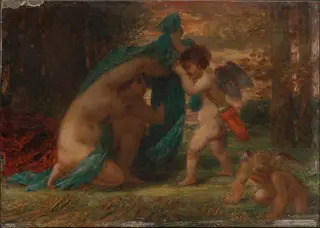
Ariadne is an oil painting by the Symbolist artist George Frederic Watts. It dates from 1898 and is held in the collection of the Metropolitan Museum of Art.
About this work
Subject & Meaning
The composition places the human subject alongside these animal figures, creating a scene that blends classical mythology with wild nature.
George Frederic Watts's 1898 oil painting, Ariadne, depicts the mythological figure Ariadne accompanied by a satyr and a cougar. The composition places the human subject alongside these animal figures, creating a scene that blends classical mythology with wild nature. While the work is titled after the Cretan princess known for her abandonment and subsequent divine union, the visual narrative emphasizes her immediate company rather than her later apotheosis.
The inclusion of the satyr, a creature of rustic wildness, alongside the predatory cougar suggests an interplay of danger and companionship surrounding the central figure, presenting Ariadne as a figure integrated into a primal, animalistic environment.
Technique & Style
Ariadne is an oil-on-canvas painting executed in 1898. The work measures 61 cm in height by 50.8 cm in width and is held by the Metropolitan Museum of Art. It depicts the mythological figure of Ariadne together with a satyr, a cougar, and other animals, rendered in a symbolic visual language.
The composition combines the central figure with the surrounding fauna into a dense, narrative tableau typical of Watts's later Symbolist output.
History & Provenance
George Frederic Watts created the oil painting Ariadne in 1898. Executed on canvas, it measures 61 by 50.8 centimeters and depicts the figures of Ariadne, a satyr, and a cougar. The work is held in the collection of the Metropolitan Museum of Art.
The specific commission details and early ownership chain are not detailed in the available records, which supply no accession number or exhibition history for the piece.
Overview
George Frederic Watts, a British artist linked to the Symbolist movement, completed Ariadne in 1898. This oil painting portrays the mythological figure Ariadne, accompanied by a cougar and a satyr, reflecting Watts's consistent engagement with allegorical subjects. The work exemplifies his approach to art as a means of exploring profound human experiences and universal themes. It is presently part of the collection at The Metropolitan Museum of Art.
Context
As an artist deeply aligned with the Symbolist movement, George Frederic Watts frequently employed mythological and allegorical subjects to explore abstract concepts rather than mere narrative. Ariadne aligns with his broader artistic ambition, exemplified by his extensive House of Life series, which sought to represent fundamental human conditions and moral ideas. This painting thus fits within his lifelong pursuit of art that transcends the literal to address universal truths.
Own this work as a print
Artist & collection

Artist
George Frederic Watts (23 February 1817 – 1 July 1904) was a British painter and sculptor associated with the Symbolist movement.