Artwork
Time, Death and Judgment
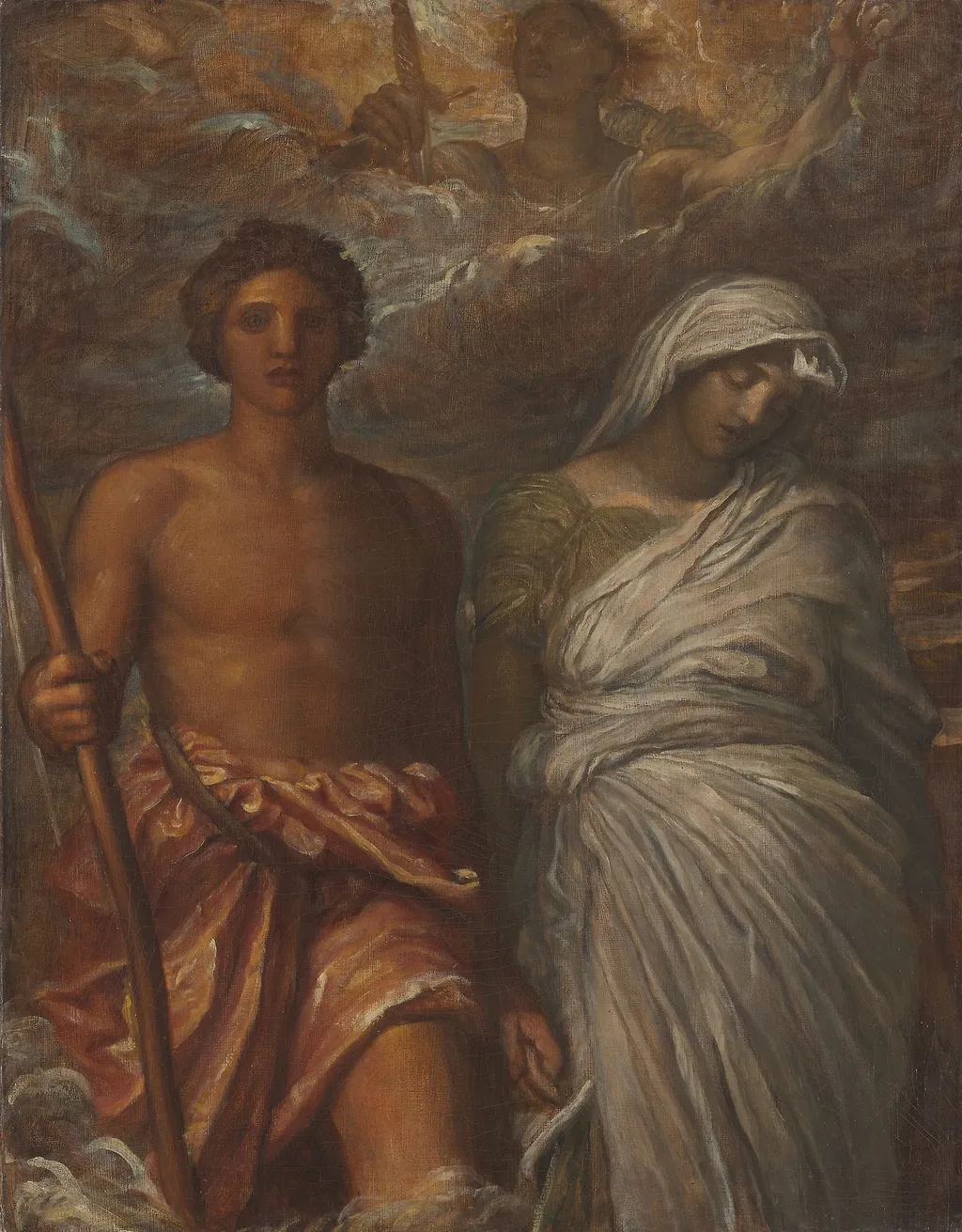
Time, Death and Judgment is an oil painting by the Symbolist artist George Frederic Watts. It dates from 1866 and is held in the collection of the Art Institute of Chicago.
About this work
Overview
' Watts, a British artist associated with Symbolism, sought to convey abstract human conditions through visual metaphors.
Painted in 1866 by George Frederic Watts, Time, Death and Judgment is an oil-on-canvas allegory that forms part of his larger symbolic cycle, the 'House of Life.' Watts, a British artist associated with Symbolism, sought to convey abstract human conditions through visual metaphors. This work, now in the Art Institute of Chicago, reflects his preoccupation with existential themes, presenting a triad of figures that embody inevitable forces shaping mortal experience.
Subject & Meaning
The painting portrays three symbolic figures: a man holding a staff and a snake, representing Time; a veiled woman with closed eyes, signifying Death; and a looming, cloud-born figure with outstretched arms, suggesting Judgment. Their arrangement evokes an inescapable sequence, time passing, death arriving, judgment following. The somber tone and stillness of the figures convey resignation rather than fear, framing mortality as a quiet, universal truth rather than a dramatic event.
Technique & Style
Watts employed muted earth tones and chiaroscuro to heighten the painting’s solemn mood. The figures are rendered with sculptural solidity, their forms emerging from shadowy backgrounds through controlled contrasts of light. The lack of detailed environment focuses attention on the symbolic presence of each figure.
Brushwork is restrained, favoring smooth surfaces and clear contours, reinforcing the timeless, idealized nature of the allegory over naturalistic detail.
History & Provenance
Completed in 1866, the painting was conceived as part of Watts’s ambitious 'House of Life' series, intended to map the human condition through universal symbols. It remained in the artist’s possession until his death in 1904, after which it entered public collections. The Art Institute of Chicago acquired it in the early 20th century, where it has since been exhibited as a key example of Victorian symbolic painting.
Context
Watts worked during a period when British art increasingly turned to moral and philosophical themes, influenced by Romanticism and the decline of religious certainty. His allegories responded to contemporary anxieties about science, faith, and mortality. Time, Death and Judgment aligns with broader 19th-century efforts to replace traditional religious iconography with secular, symbolic narratives that addressed existential questions without doctrinal specificity.
Legacy
Though less widely known than his contemporaries, Watts’s symbolic works, including this painting, influenced later generations interested in spiritual and psychological themes in art. His emphasis on universal symbols over narrative detail prefigured aspects of modernist abstraction. The painting endures as a quiet meditation on inevitability, valued for its restraint and emotional gravity rather than dramatic spectacle.
Own this work as a print
Artist & collection

Artist
George Frederic Watts (23 February 1817 – 1 July 1904) was a British painter and sculptor associated with the Symbolist movement.

- Ariadne
 Hope
Hope Constantine Alexander Ionides (1833–1900)
 Portrait of a Man (sketch for a mural in the Villa Carreggi)
 Portrait of Mrs Caroline Norton (née Sheridan), (1808-1877), Poet
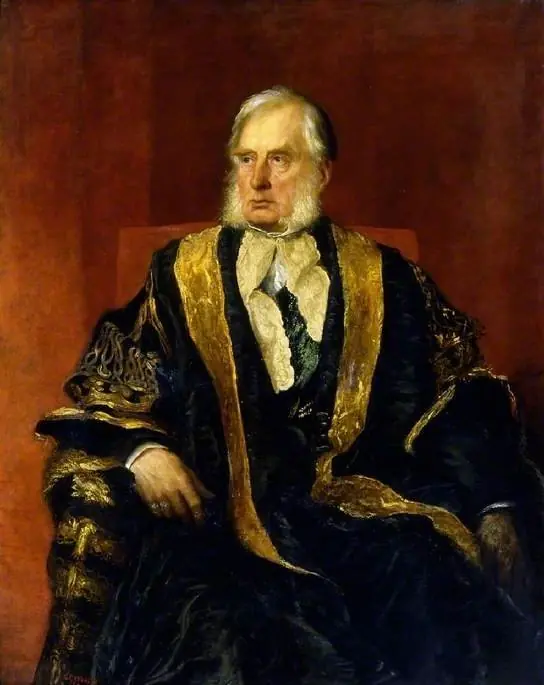 William Cavendish, 7th Duke of Devonshire
 A Lamplight Study: Herr Joachim
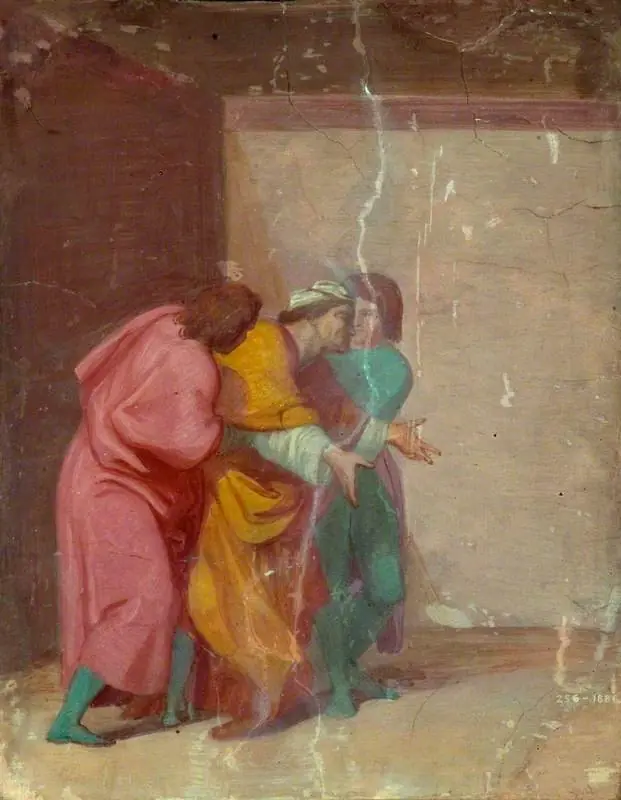 An Old Man Restrained by Two Youths (sketch for a mural in the Villa Carreggi)
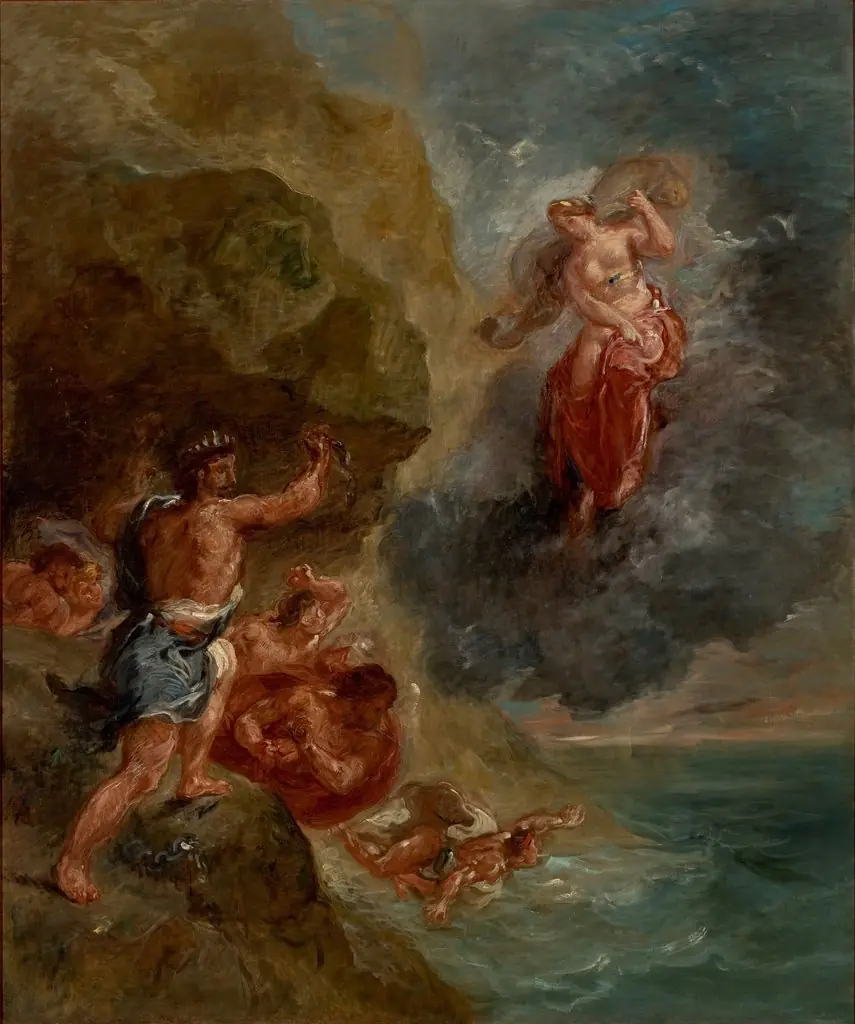 The Winter - Juno beseeches to destroy Eneas' Fleet
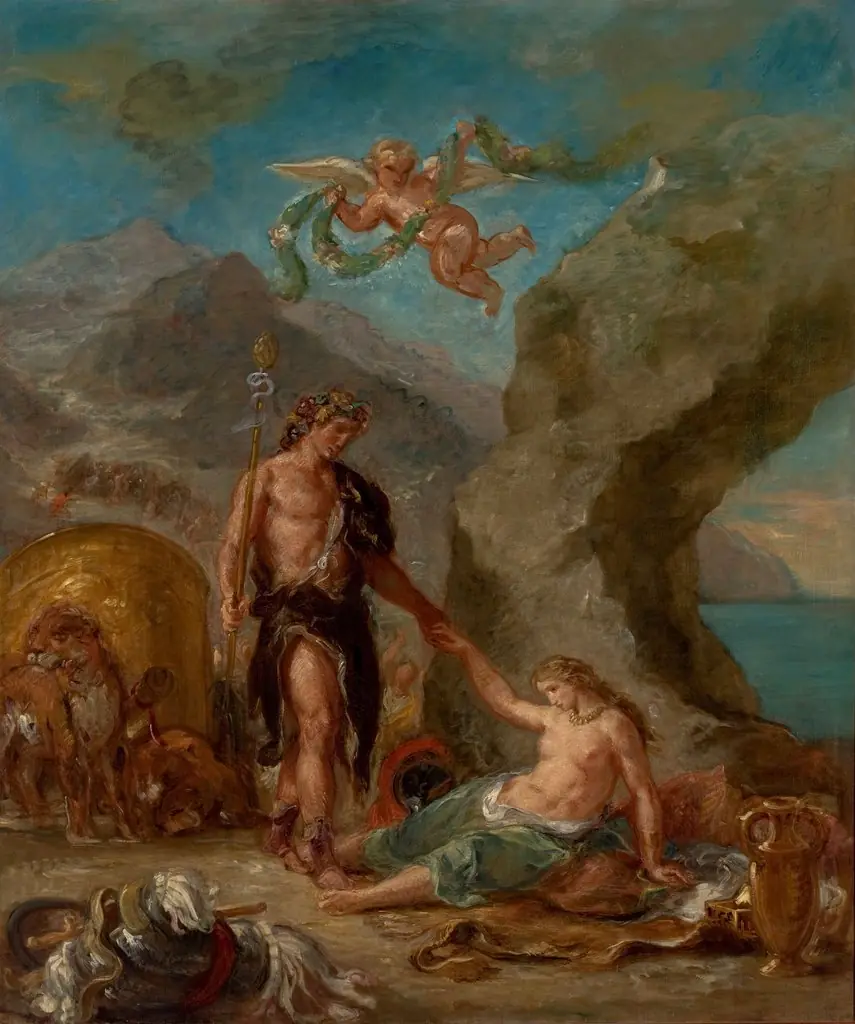 The Autumn - Baccus and Ariadne
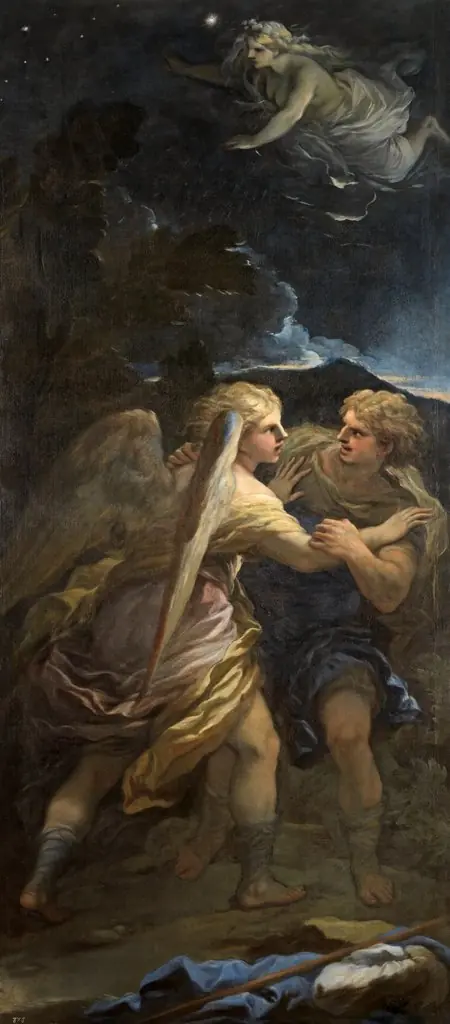 Lucha de Jacob con el ángel
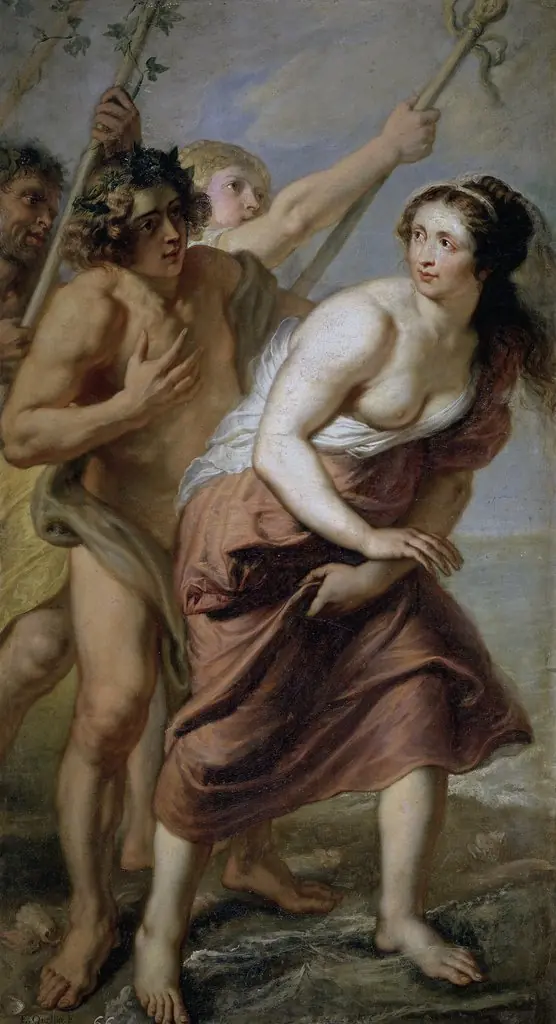 Bacchus and Ariadne
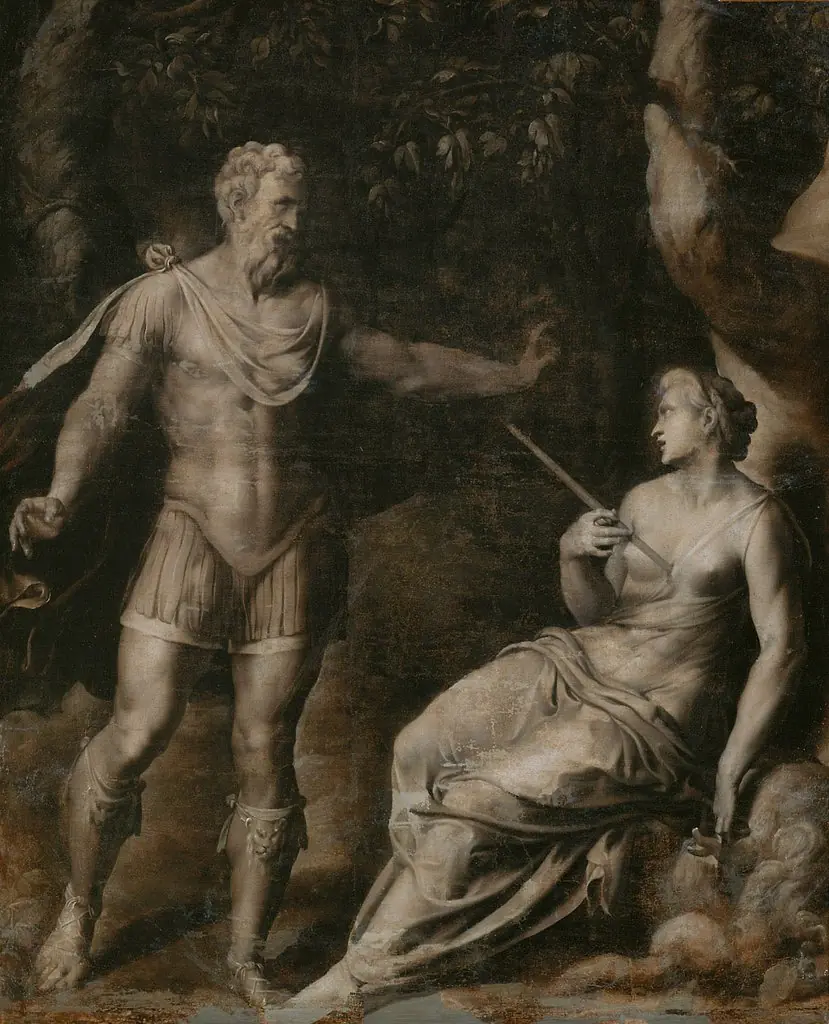 Cephalus und Procris
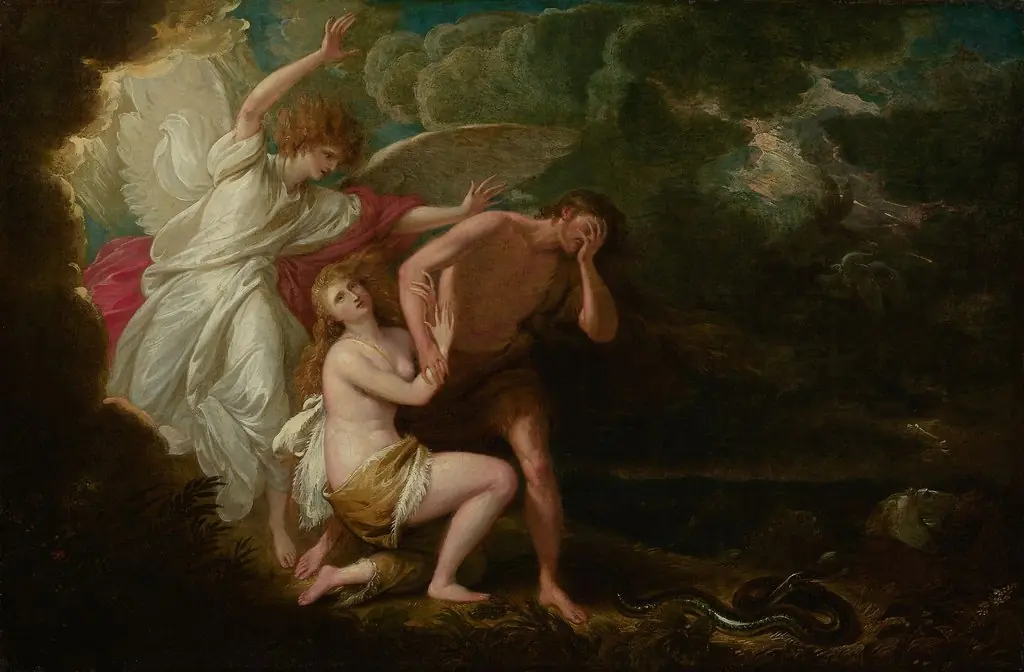 The Expulsion of Adam and Eve from Paradise
 Сивілла Кумська, Еней і перевізник Харон (картина)
 The baptism of Christ
 Adam and Eve Lamenting over the Body of Abel
 Deukalion and Pyrrha
 Jänner und Februar