Artwork
Allegory
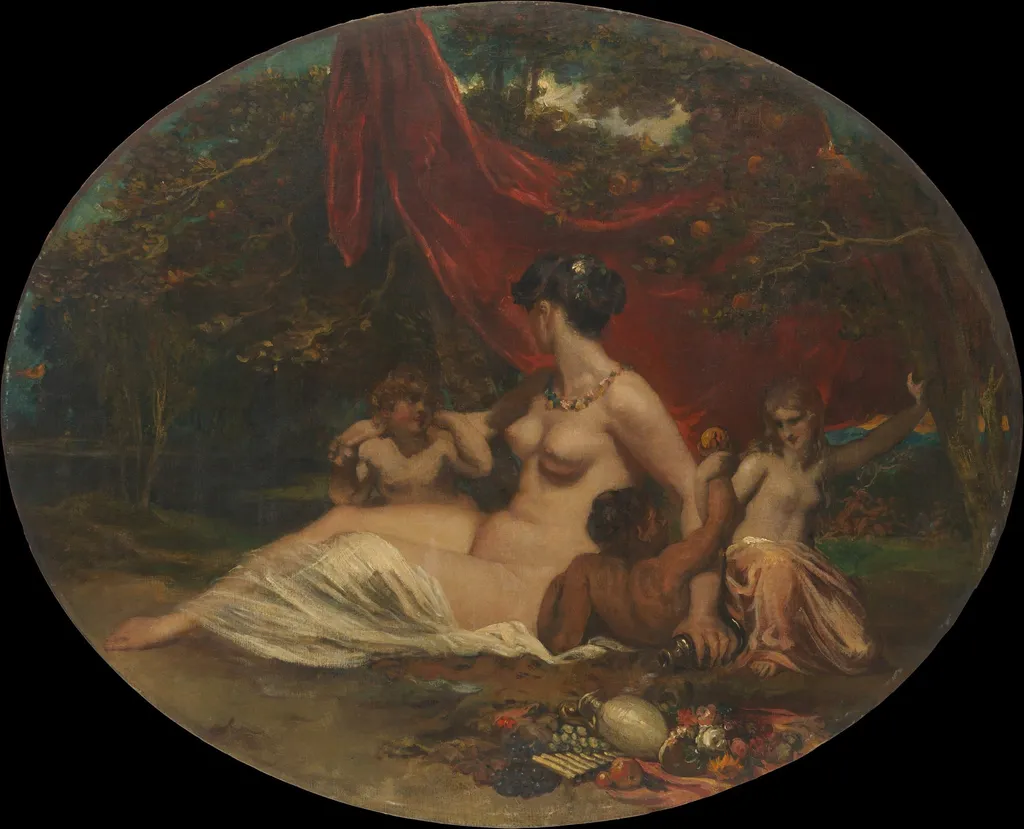
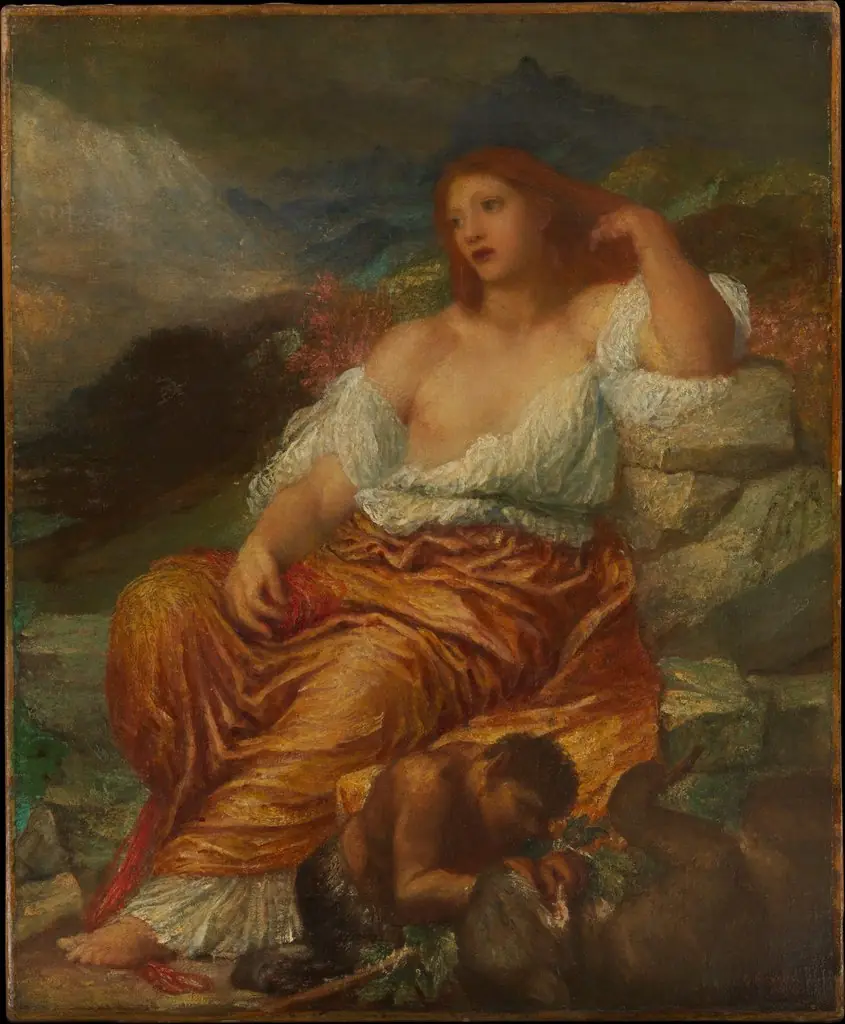
Allegory is an oil painting by the British Romanticist artist William Etty. It dates from 1828 and is held in the collection of the Metropolitan Museum of Art.
About this work
Subject & Meaning
As an allegory, the painting utilizes these specific visual elements to convey a deeper meaning beyond the literal depiction of nature and the human form.
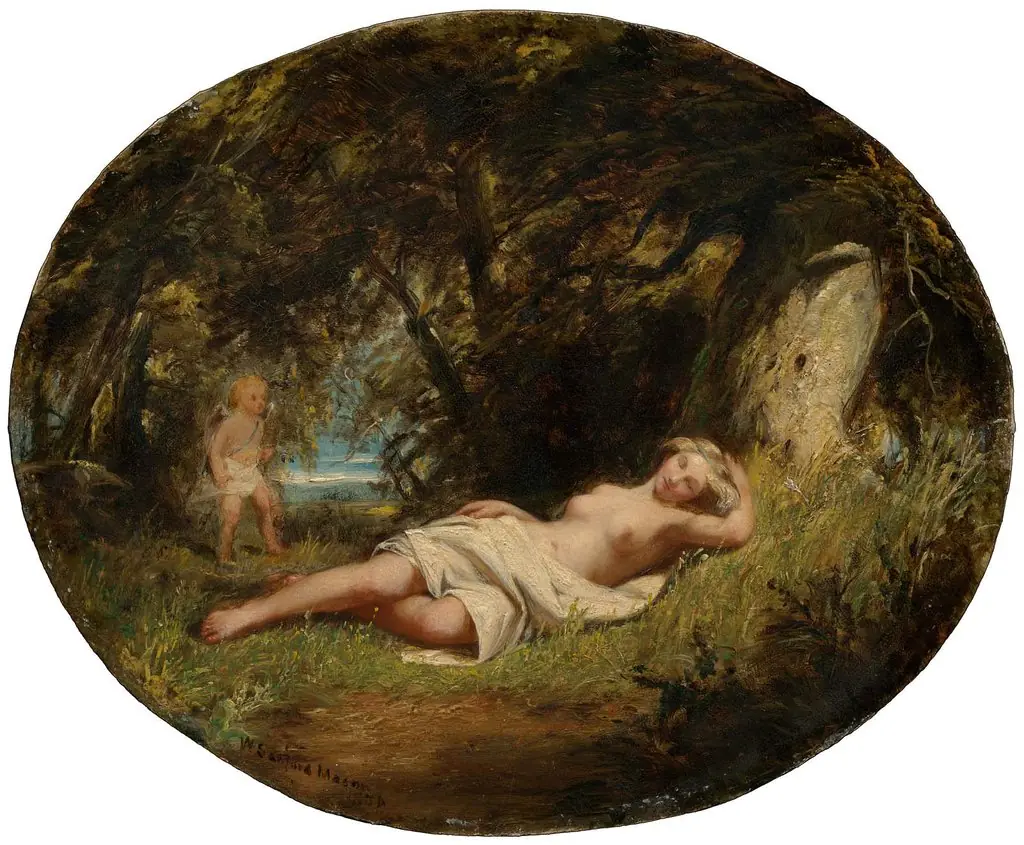
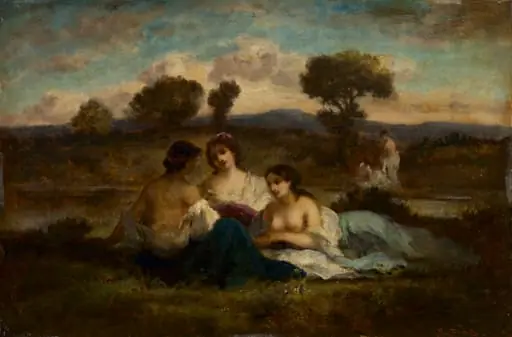
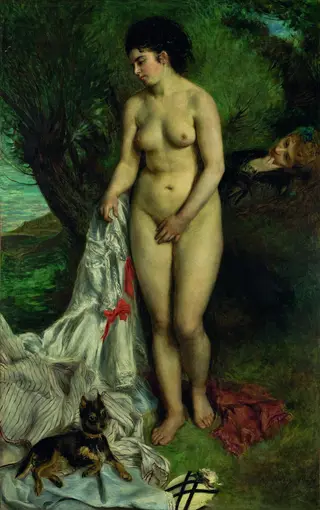
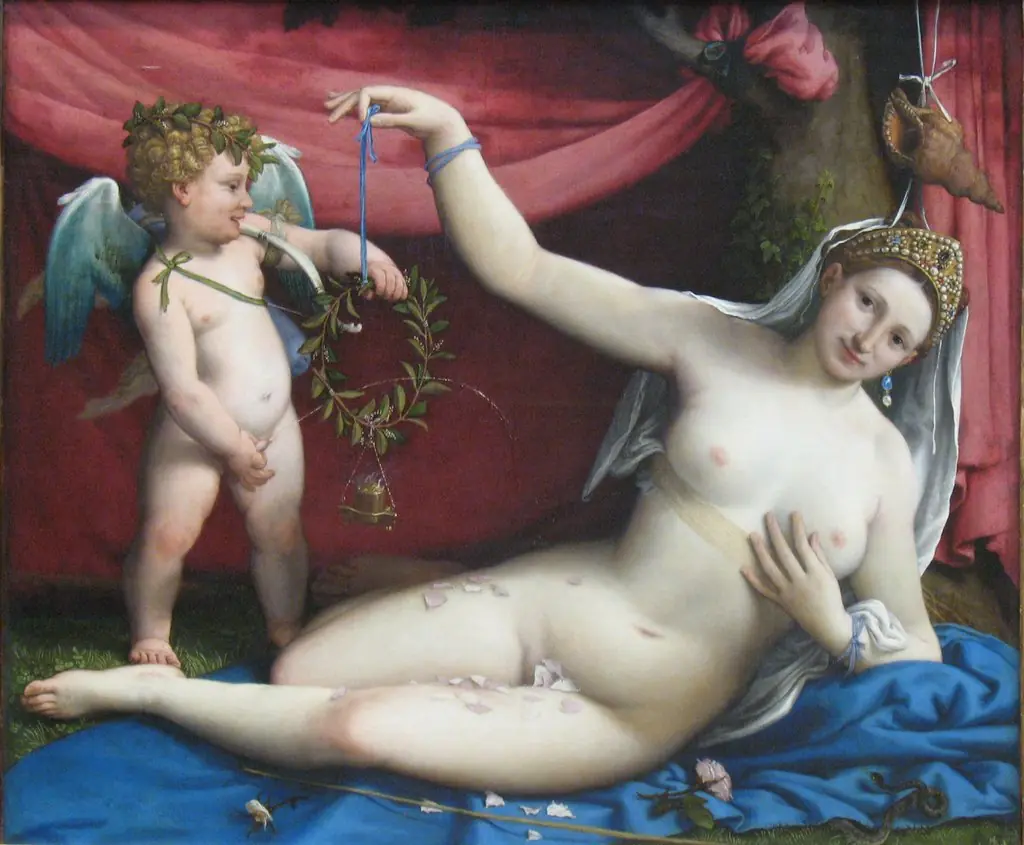
Painted by William Etty in 1828, the work is an allegorical composition executed in oil on canvas. The subject matter centers on a symbolic arrangement that includes a tree and fruit, populated by nude figures. As an allegory, the painting utilizes these specific visual elements to convey a deeper meaning beyond the literal depiction of nature and the human form.
The integration of the nude figures with the arboreal and botanical motifs suggests a narrative or conceptual exploration typical of the genre, where physical forms serve as metaphors for abstract ideas or moral lessons. The Metropolitan Museum of Art holds the piece, which measures 71.1 by 87.6 centimeters.
Technique & Style
Allegory is executed in oil paint on canvas, a standard support for William Etty's allegorical compositions of the late 1820s. The work is relatively modest in scale, measuring 71.1 cm in height by 87.6 cm in width, with the horizontal orientation suiting its compositional arrangement of figures alongside a tree bearing fruit. Etty's handling of the oil medium is consistent with his broader practice of rendering nude figures through richly modeled flesh tones set against landscape elements.
The painting is held in the collection of the Metropolitan Museum of Art, where its condition is maintained under institutional conservation standards, though no specific conservation history is documented in the available sources.
History & Provenance
The painting Allegory by William Etty is dated to 1828, aligning with its inclusion in the artist’s known oeuvre for that year. The work entered the collection of the Metropolitan Museum of Art, where it remains located, as documented in institutional records. The painting’s dimensions (71.1 cm in height and 87.6 cm in width) and medium (oil on canvas) are consistent with Etty’s practices during the late 1820s, further corroborating its creation date.
No explicit commission record has been identified in the provided sources, though the allegorical genre and thematic elements (such as the depiction of a tree and fruit alongside a nude figure) align with Etty’s thematic preoccupations of the period.
The painting is held by the Metropolitan Museum of Art, New York, where it is inventoried as 1975.1.68. It was first publicly exhibited at the Royal Academy in 1828, the same year it was completed, and later shown at the British Institution in 1830.
Overview
William Etty's Allegory, an oil painting from 1828, exemplifies British Romanticism. This work features a central nude female figure accompanied by two children, set amidst a lush arrangement of fruit and flora within a garden landscape. Etty, an English painter recognized for his focus on the human form, created this piece, which is now part of The Metropolitan Museum of Art's collection. It reflects his characteristic engagement with historical and allegorical subjects.
Context
Born in York in 1787, William Etty became a prominent English painter, notably for his dedication to historical and allegorical subjects featuring nude figures. He received his formal education at the Royal Academy Schools in London, where he refined his craft under the tutelage of Thomas Lawrence. Etty's practice of copying masterworks by other artists further developed his technical proficiency, establishing him as the first significant British artist to specialize in the depiction of nudes.
Own this work as a print
Artist & collection
Artist
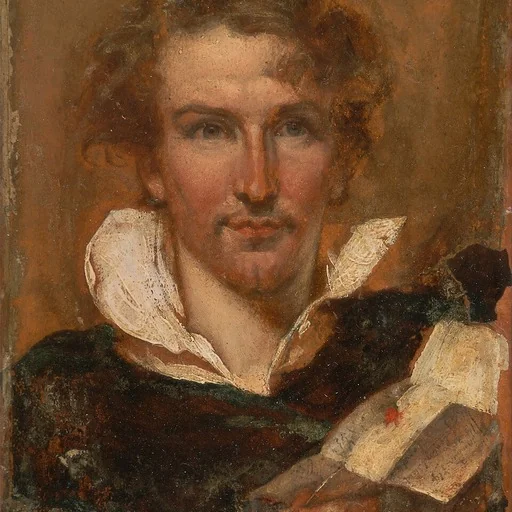
William Etty (10 March 1787 – 13 November 1849) was an English artist best known for his historical paintings containing nude figures.