Artwork
Old Man in his Study
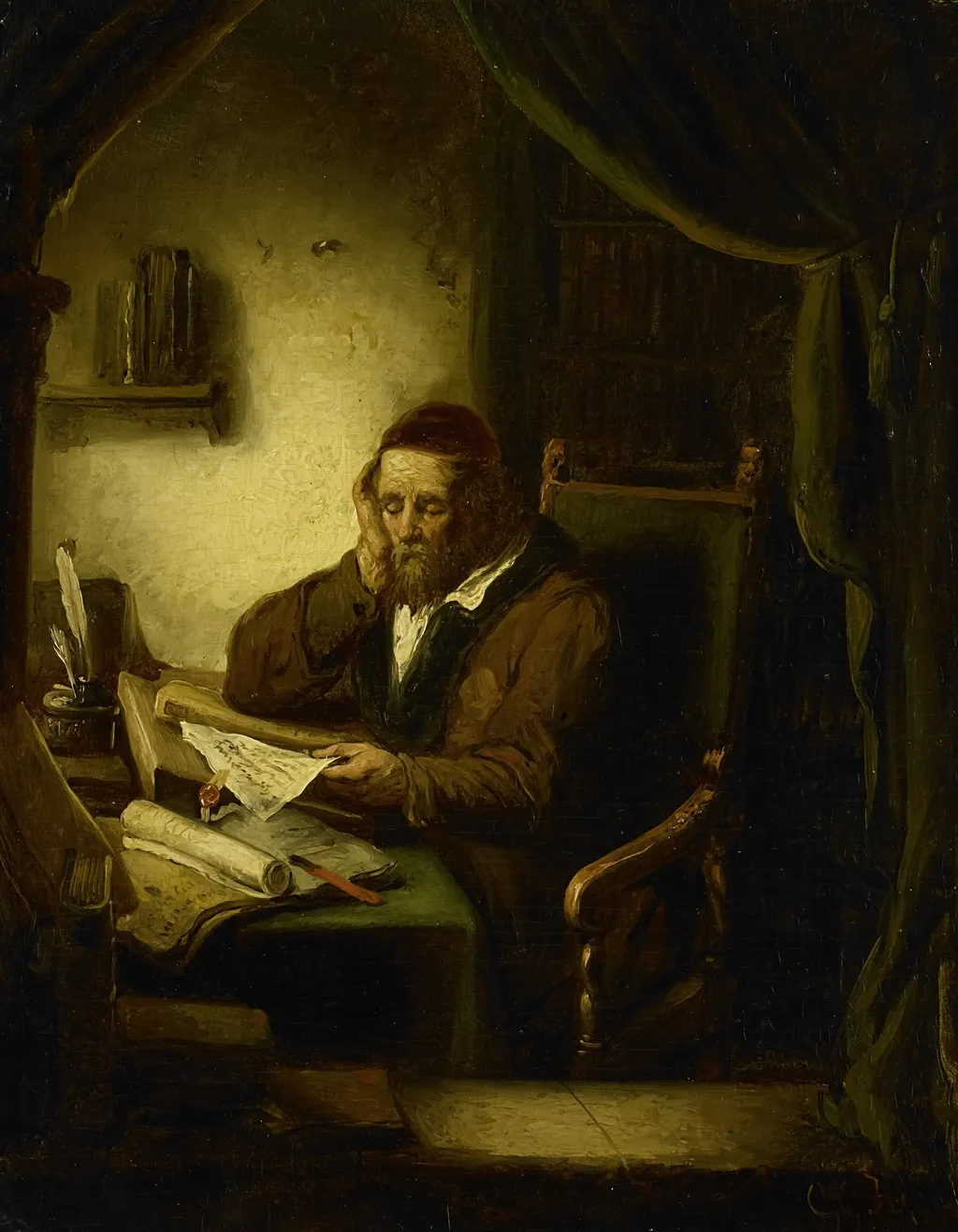
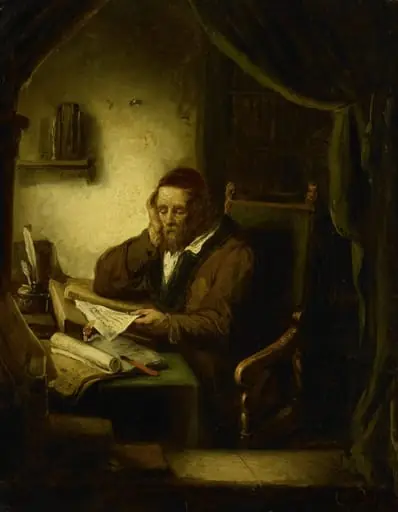
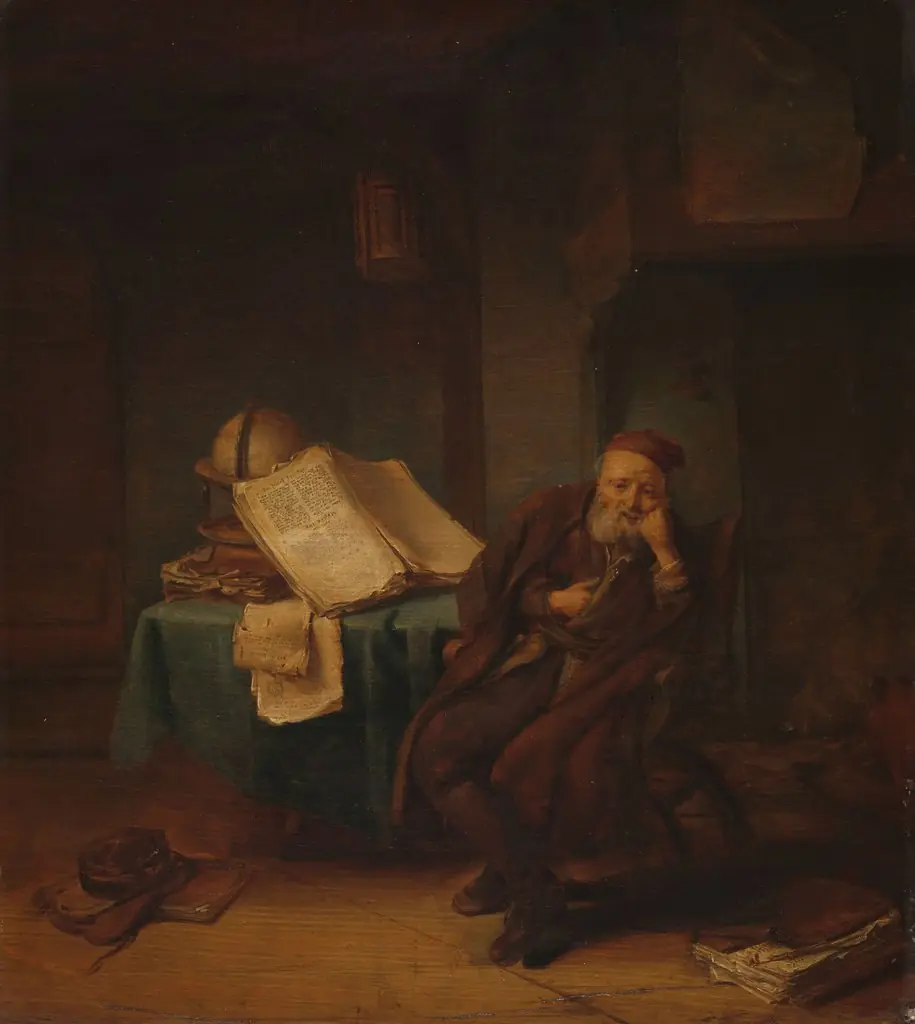
Old Man in his Study is an oil painting by the Biedermeier artist George Gillis Haanen. It dates from 1833 and is held in the collection of the Rijksmuseum.
About this work
Technique & Style
The painting is executed in oil paint on a wooden panel, measuring 32.5 cm by 26.5 cm. It portrays an elderly man seated within a study, and was created in 1833. The work belongs to the genre of genre art and was originally part of the collection of Adriaan van der Hoop, now held by the Rijksmuseum and Amsterdam Museum.
History & Provenance
George Gillis Haanen executed the oil painting Old Man in his Study in 1833. The work was created on a panel support measuring 32.5 by 26.5 units. Upon its completion, the piece entered the collection of Adriaan van der Hoop, who is recorded as its owner.
This acquisition eventually led to the painting's inclusion in the holdings of the Rijksmuseum and the Amsterdam Museum.
Context
Old Man in his Study (1833) by George Gillis Haanen exemplifies early 19th-century Dutch genre painting, depicting a quiet interior scene with meticulous attention to domestic detail. The work reflects the broader Romantic interest in everyday life and the study of individual character within bourgeois interiors, aligning with contemporaries who explored similar themes of domestic tranquility and intellectual contemplation. Its precise rendering of interior space and material textures contributed to the development of genre painting in the Netherlands, influencing later artists who emphasized observational realism in private settings.
Overview
George Gillis Haanen’s 1833 oil painting, Old Man in his Study, presents a quiet interior scene that now belongs to the Rijksmuseum’s collection. The work captures a solitary figure seated at a desk, surrounded by scattered papers and writing implements, bathed in subdued light that emphasizes the contemplative atmosphere of the space.
Subject & Meaning
The central figure is an older man in dark attire, his gaze directed downward as if absorbed in thought. The disorderly arrangement of documents suggests prolonged labor or study, inviting viewers to consider themes of diligence, intellectual pursuit, and the solitary nature of scholarly work.

Own this work as a print
Artist & collection