Artwork
Three Bigots
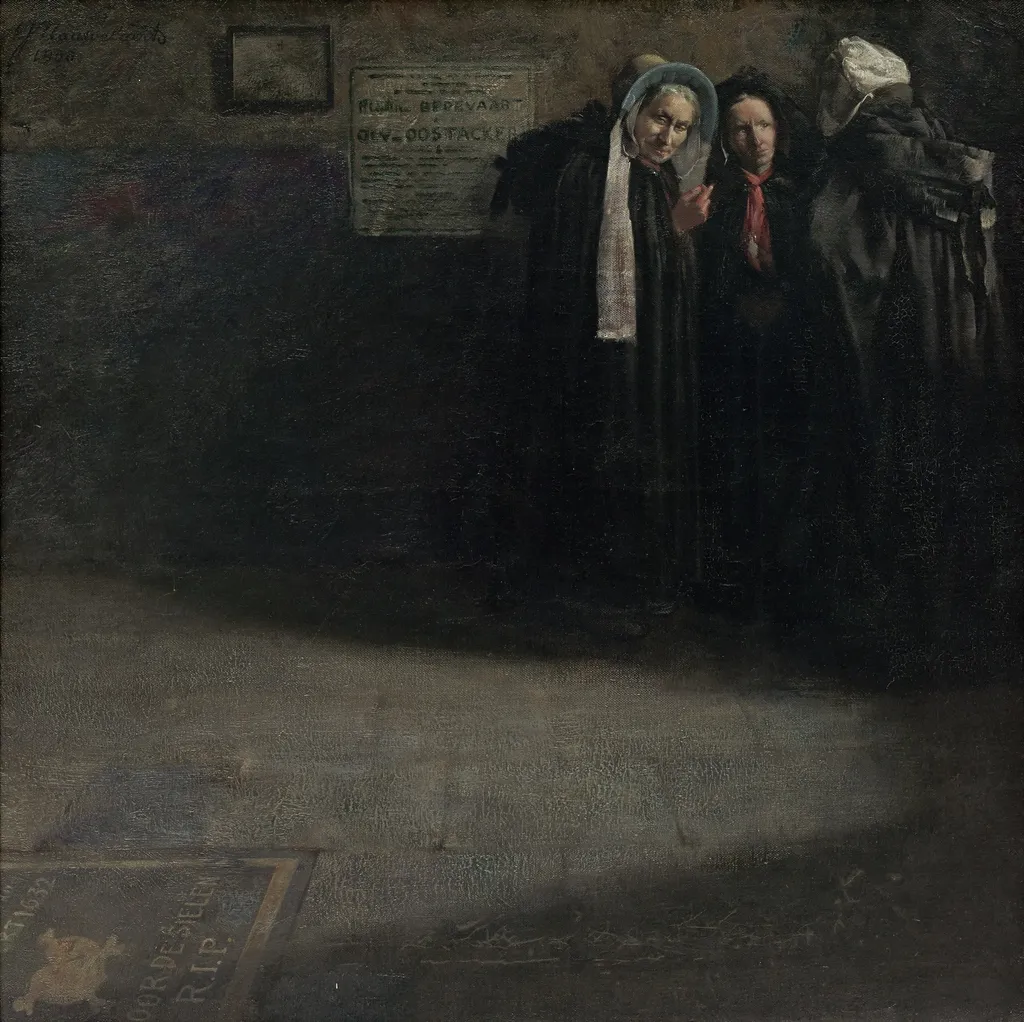
Three Bigots is an unspecified painting by Georges Nauwelaerts. It dates from 1918 and is held in the collection of the Royal Museum of Fine Arts Antwerp.
About this work
To explore more artworks featuring the theme of visitation, consider visiting the Royal Museum of Fine Arts Antwerp.
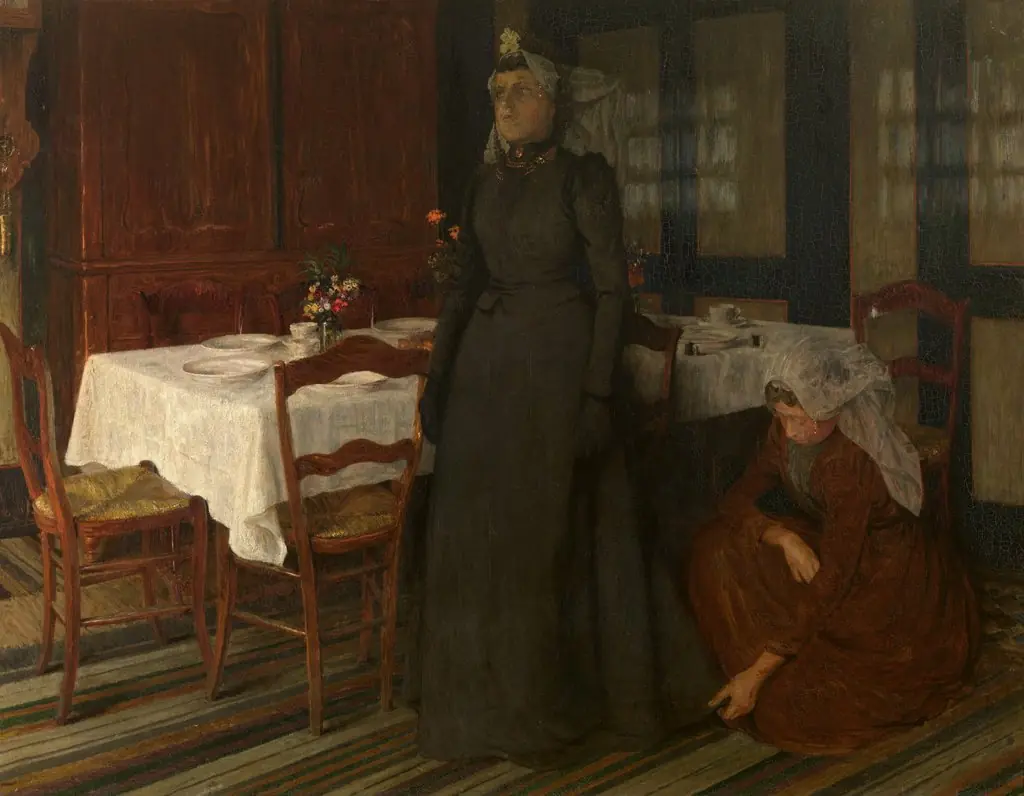
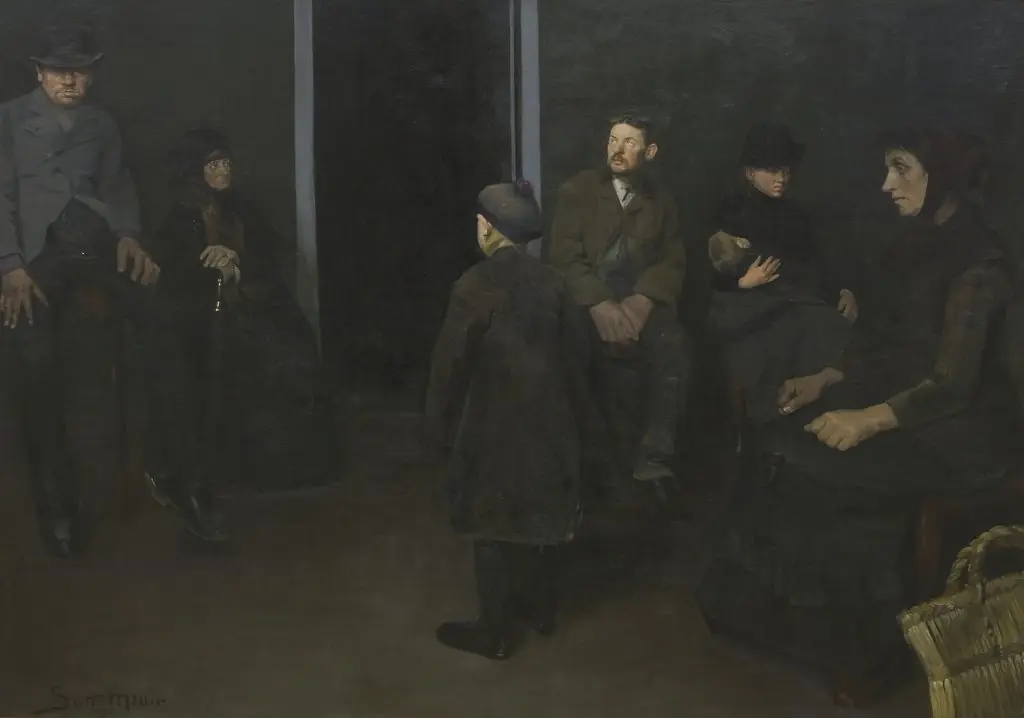
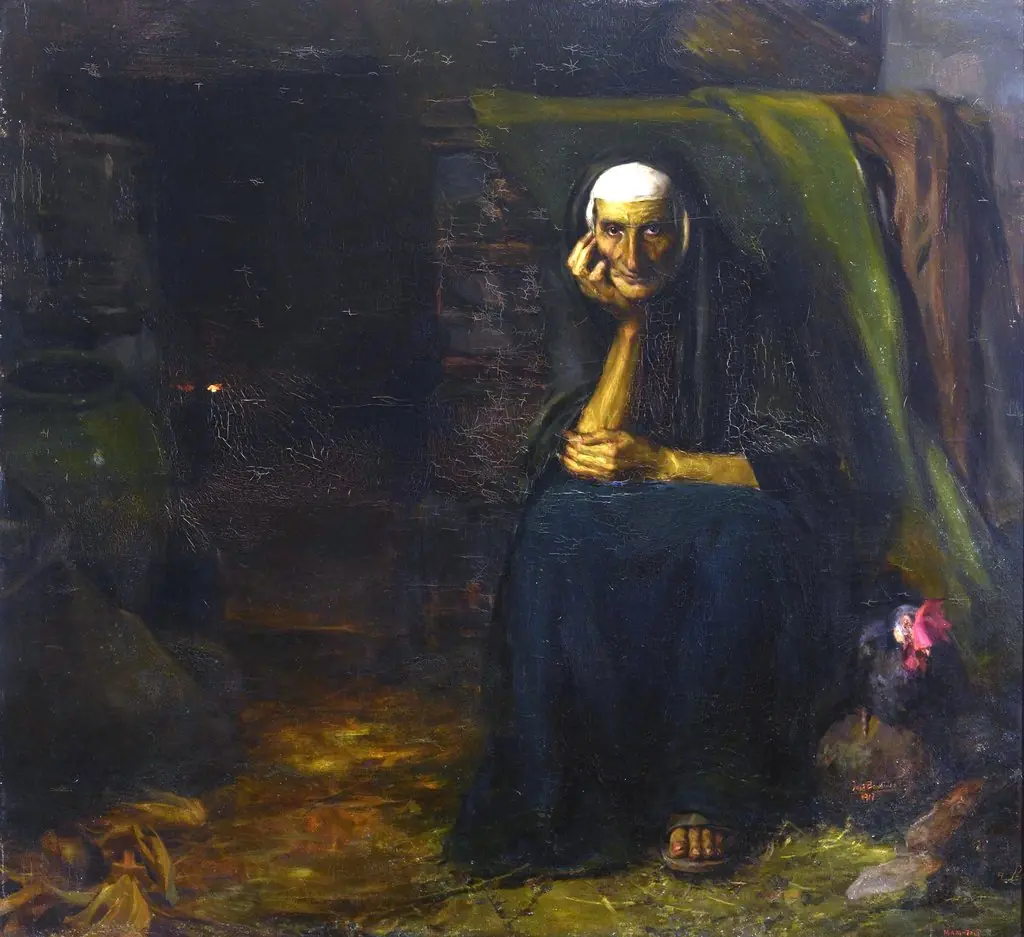
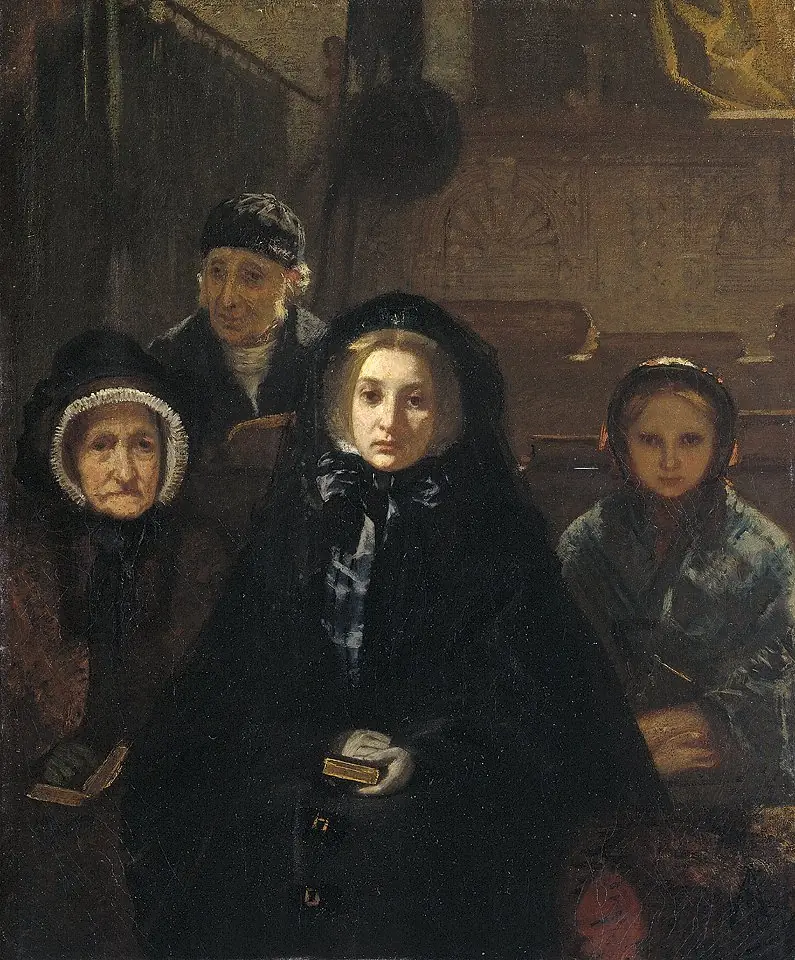
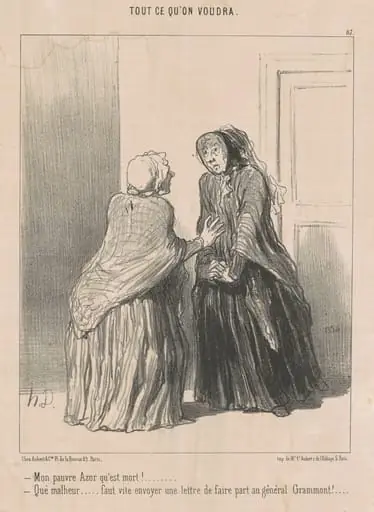
This painting depicts three women standing together, dressed in dark attire. The woman on the left wears a white headscarf, while the one in the middle sports a red neckerchief. The third woman, positioned on the right, has her head covered with a white cloth.
In the background, a wall features a sign with illegible text. A plaque on the floor bears the inscription "R.I.P." and the year "1632," accompanied by an image of a dog.
The overall atmosphere of the painting exudes solemnity. To explore more artworks featuring the theme of visitation, consider visiting the Royal Museum of Fine Arts Antwerp.
Overview
Painted in 1918 by Georges Nauwelaerts, Three Bigots is a figurative composition depicting three women in somber dress. The work resides in the collection of the Royal Museum of Fine Arts Antwerp. Its muted palette and stillness convey a quiet, contemplative mood.
The figures stand in a sparse interior, their postures rigid and uncommunicative, suggesting social isolation or shared conviction.
Subject & Meaning
The three women, distinguished by head coverings in white and red, appear united in demeanor but not in expression. The presence of a funeral plaque marked 'R.I.P. 1632' and a dog’s silhouette introduces a layer of symbolic weight, possibly referencing mortality, memory, or local tradition. The illegible wall sign resists clear interpretation, reinforcing ambiguity around their beliefs or the context of their gathering.
Technique & Style
Nauwelaerts employs a restrained, almost monochromatic palette with subtle contrasts in fabric texture to define form. Brushwork is deliberate and smooth, avoiding dramatic flourish. The figures are rendered with solid volumes, anchored by strong linear composition.
Background elements are minimized, directing focus to the women’s presence and the enigmatic floor inscription, enhancing the painting’s introspective tone.
History & Provenance
The painting entered the Royal Museum of Fine Arts Antwerp’s collection following its creation in 1918. No record of prior ownership or exhibition history is widely documented. Its preservation within the museum suggests early institutional recognition, though it has never been a central focus of public or scholarly attention, remaining a quiet presence in the collection.
Context
Created in the immediate aftermath of World War I, the painting reflects a broader European mood of introspection and loss. While not overtly political, its depiction of closed-off figures may echo societal fragmentation or the persistence of rigid customs. The 1632 date on the plaque could allude to historical trauma in the region, though no direct link has been established.
Legacy
Three Bigots has not been widely reproduced or studied, and remains a lesser-known work in Nauwelaerts’s oeuvre. Its quiet intensity and symbolic ambiguity have not triggered major reinterpretations, but it endures as a subtle meditation on isolation and inherited ritual within early 20th-century Belgian painting.
Own this work as a print
Artist & collection