Artwork
Interior with a Lady
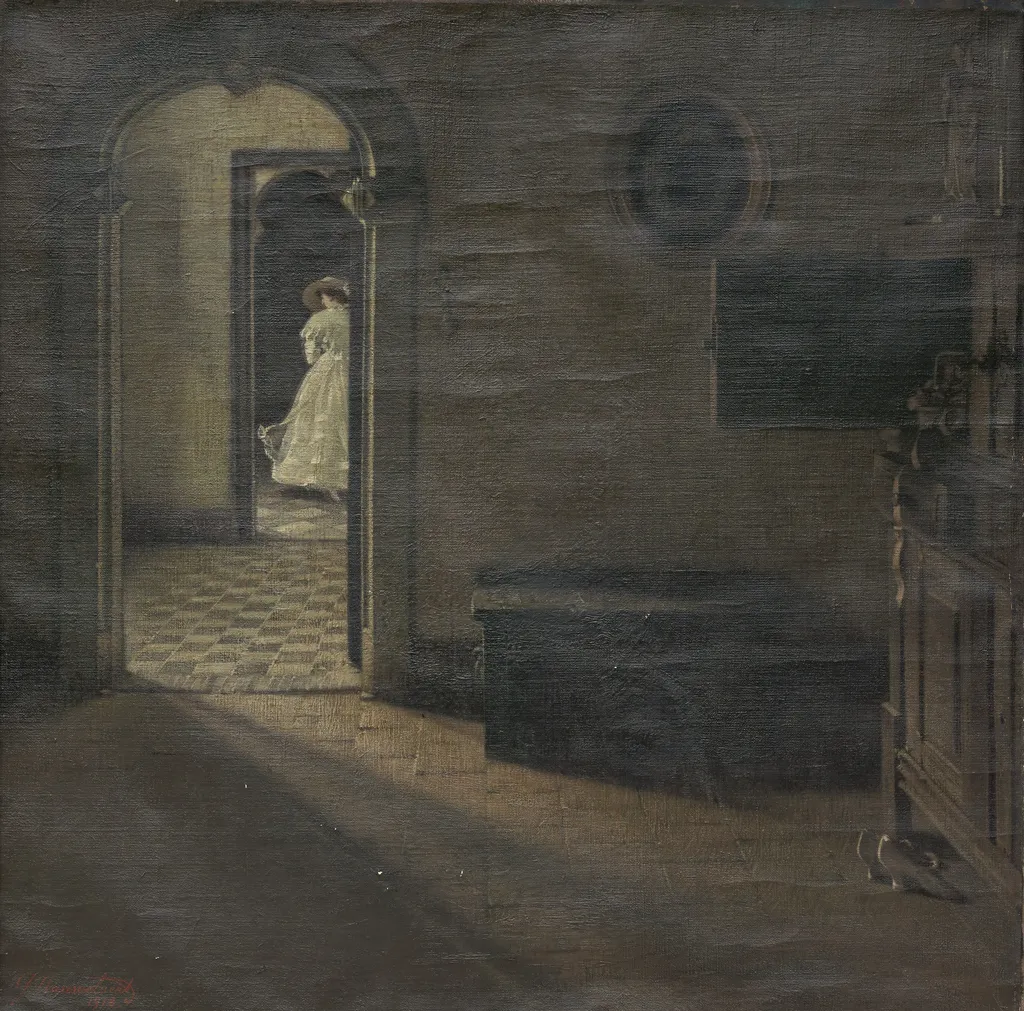
Interior with a Lady is an oil painting by the Post-Impressionist artist Georges Nauwelaerts. It dates from 1918 and is held in the collection of the Royal Museum of Fine Arts Antwerp.
About this work
Overview
Painted in 1918 by Georges Nauwelaerts, this oil on canvas work presents a solitary woman in a domestic interior.
Painted in 1918 by Georges Nauwelaerts, this oil on canvas work presents a solitary woman in a domestic interior. The painting is part of the collection at the Royal Museum of Fine Arts Antwerp. Its quiet composition and subdued palette reflect a moment of stillness, emphasizing atmosphere over narrative. The artist’s focus on light and spatial depth anchors the scene in a tangible, intimate setting.
Subject & Meaning
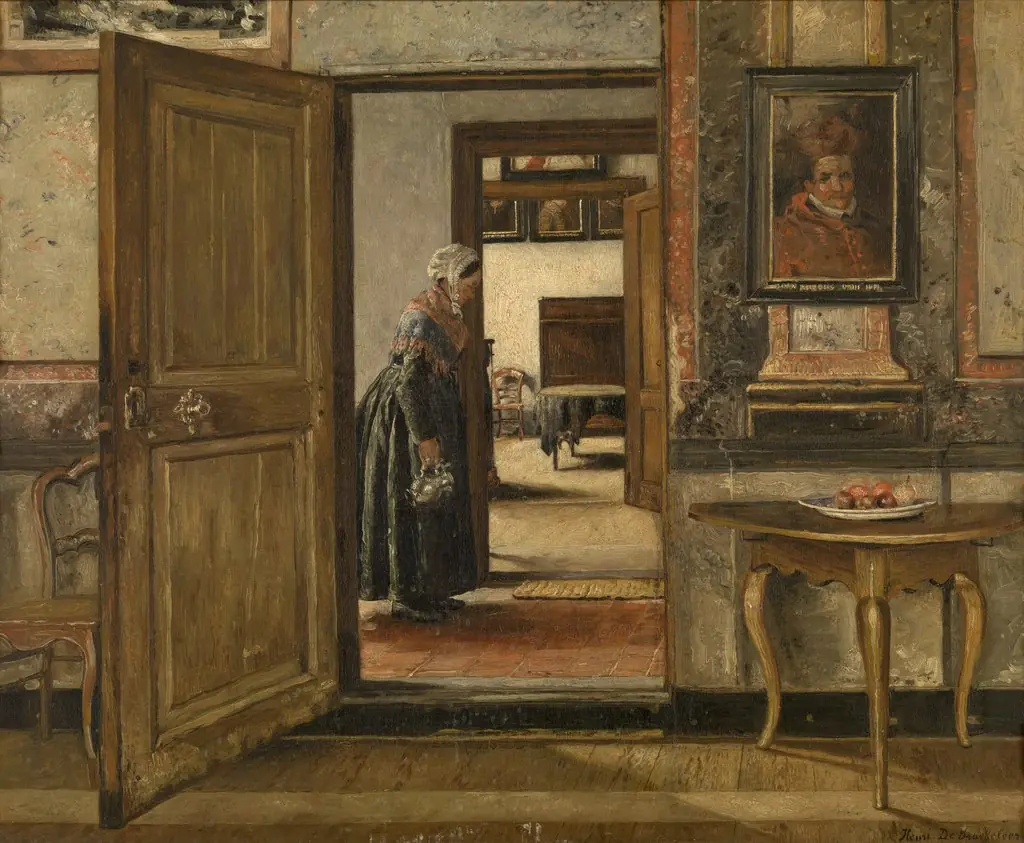
A woman stands in a doorway, her face turned away, holding a parasol. Her long dress and poised posture suggest refinement, yet her anonymity invites contemplation rather than identification. The closed space and lack of clear activity imply introspection or pause.
The parasol, typically an outdoor object, introduces a subtle tension between interior solitude and the world beyond the threshold.
Technique & Style
Nauwelaerts employs chiaroscuro to model form and define space, using sharp contrasts between shadow and muted light. The checkered floor recedes into darkness, enhancing the sense of depth. Brushwork is restrained, favoring smooth transitions and subtle tonal shifts. The dim interior is rendered with precision, avoiding decorative detail to preserve the painting’s somber, contemplative mood.
History & Provenance
Created in 1918, the painting entered the collection of the Royal Museum of Fine Arts Antwerp shortly after its completion. It has remained in public ownership since, with no documented private ownership or major exhibitions beyond institutional holdings. Its preservation reflects its status as a representative work of early 20th-century Belgian interior painting.
Context
Painted in the aftermath of World War I, the work aligns with a broader European tendency toward introspective, quiet domestic scenes. While many artists turned to abstraction or expressionism, Nauwelaerts maintained a figurative approach, drawing from Flemish traditions of interior painting. The subdued tone and restrained composition mirror a cultural mood of reflection and reserve.
Legacy
Though not widely exhibited outside Belgium, the painting is recognized within academic circles as an example of nuanced, tonal realism in early modern Belgian art. It contributes to the understanding of how artists of the period used light and space to evoke psychological stillness, influencing later generations interested in the emotional potential of the everyday interior.
Own this work as a print
Artist & collection