Artwork
The Poor: The Waiting Room of Death
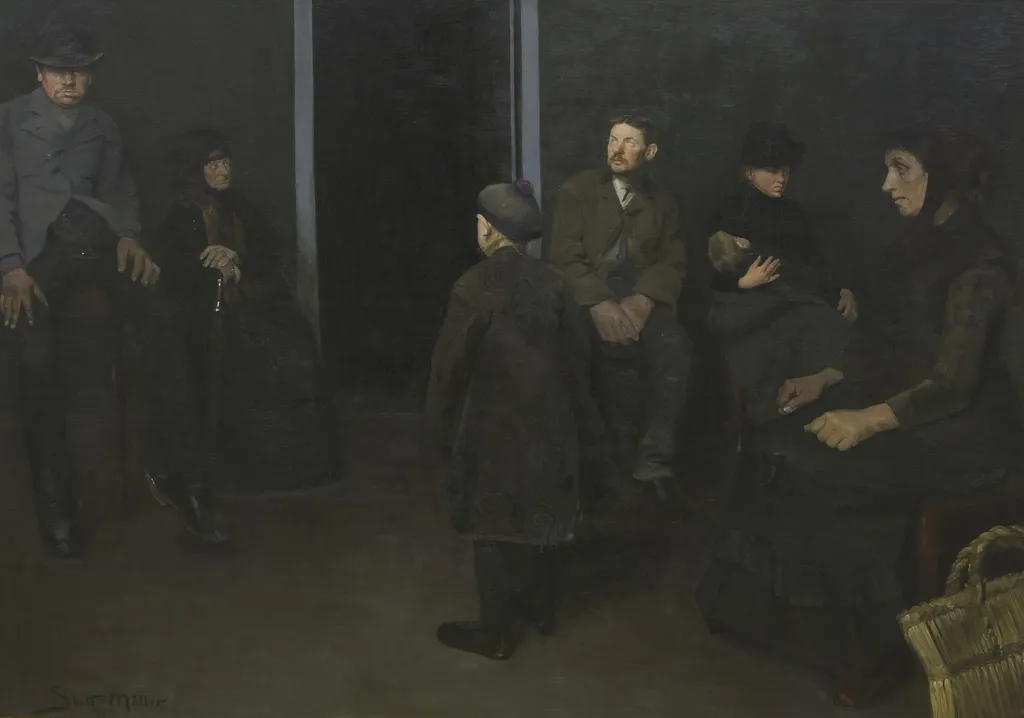
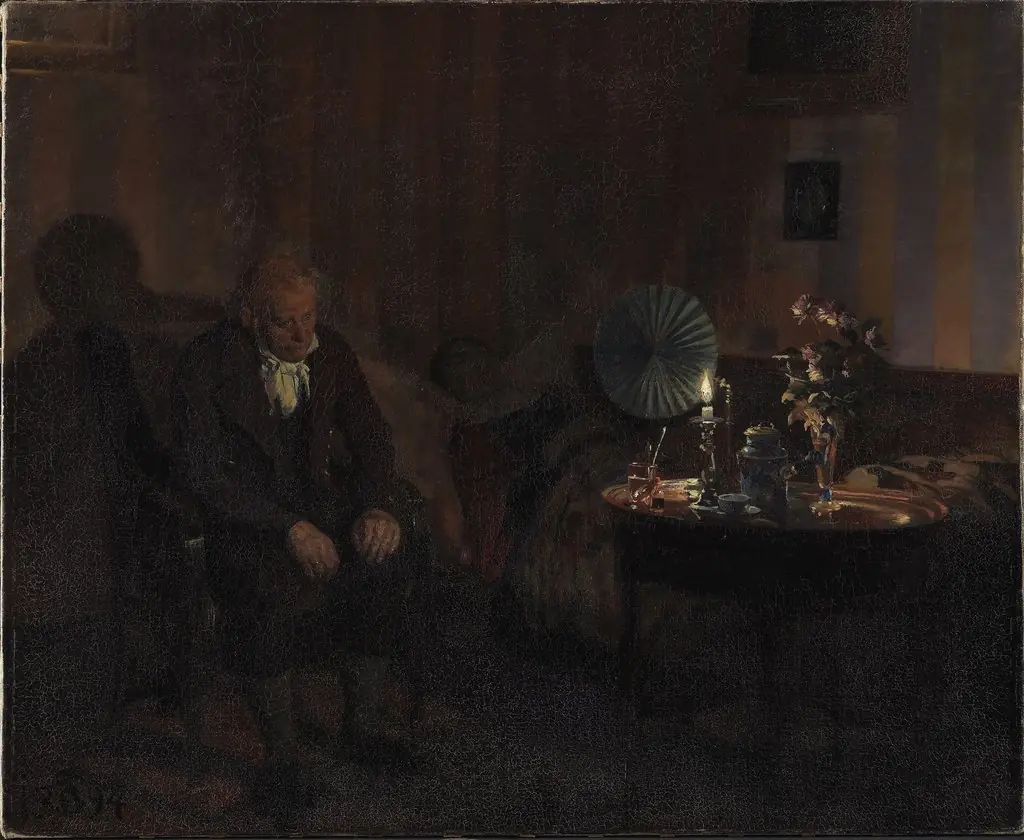
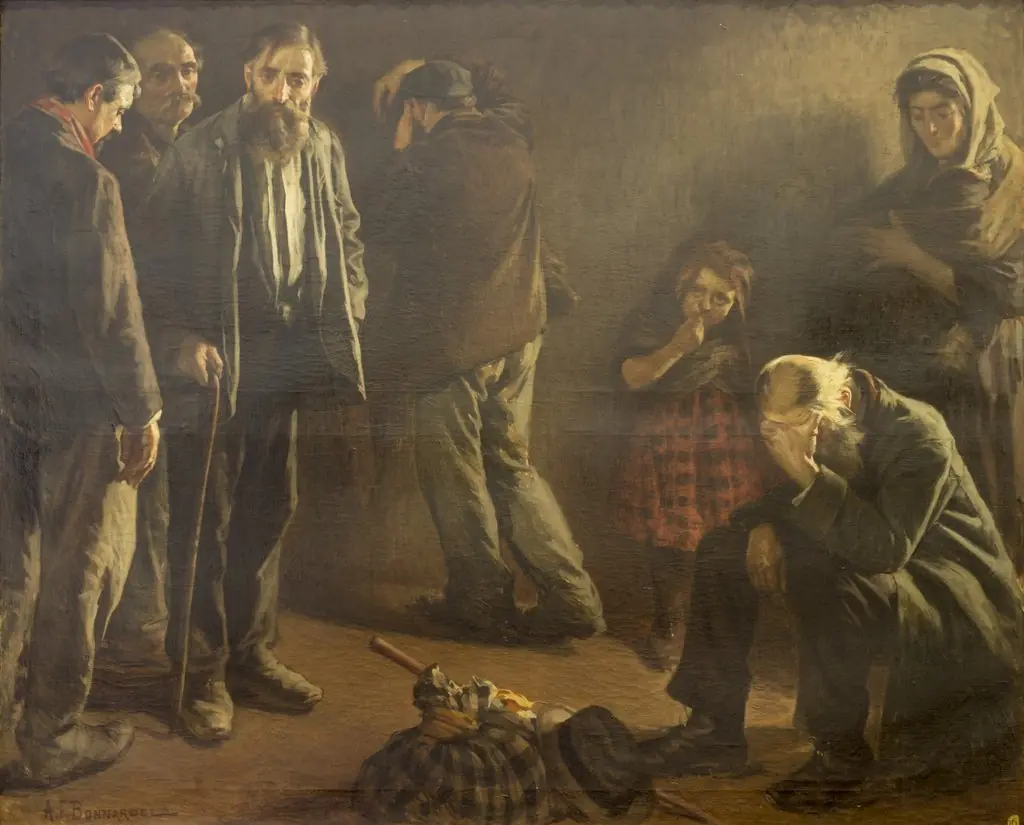
The Poor: The Waiting Room of Death is an oil painting by the Post-Impressionist artist Harald Slott-Møller. It dates from 1894 and is held in the collection of the Statens Museum for Kunst.
About this work
Subject & Meaning
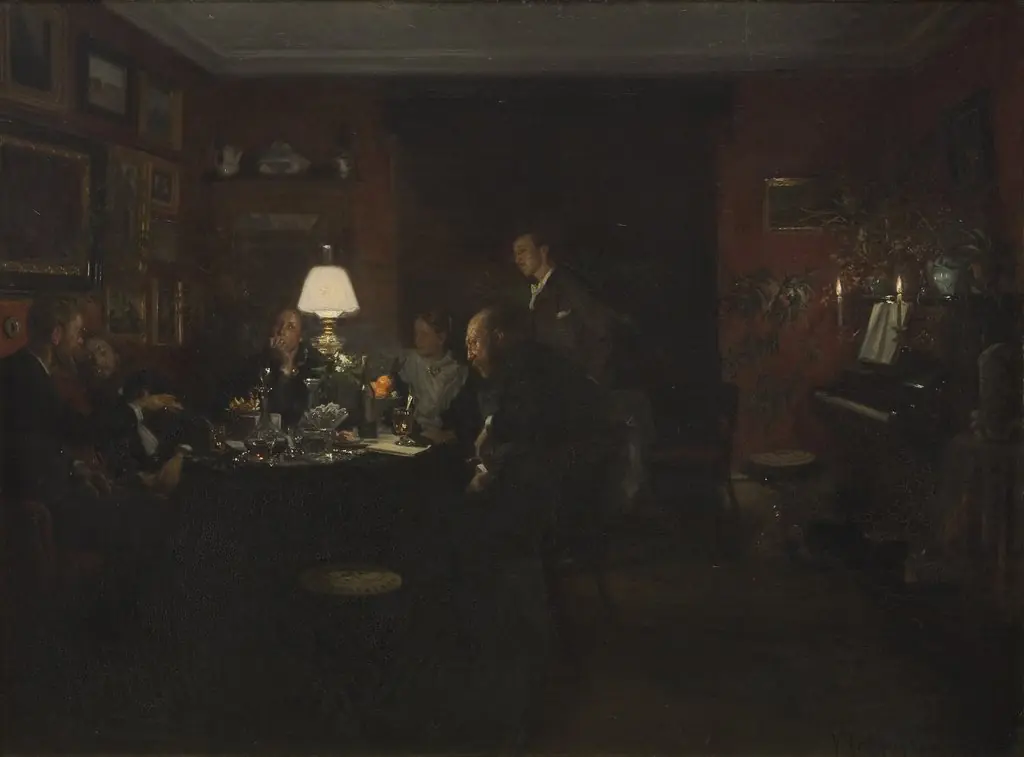
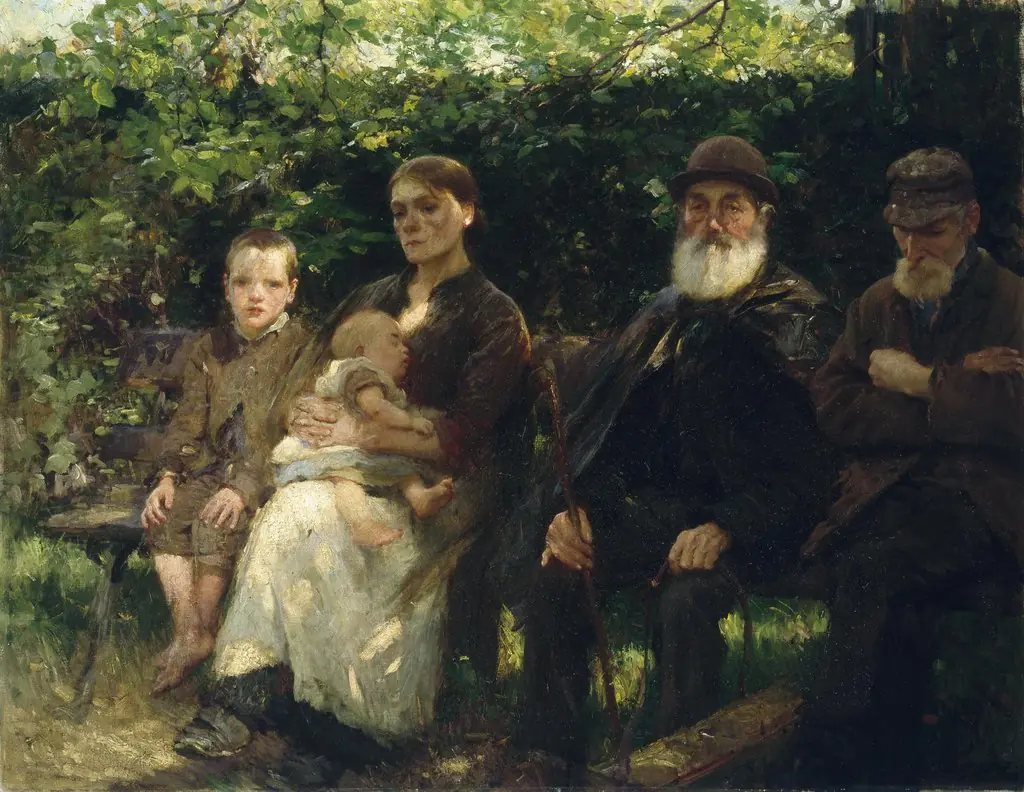
The subject is a gathering of the poor inside a dim, institutional room presided over by a shrouded Death figure, who points to a ledger or record at a lectern.
The subject is a gathering of the poor inside a dim, institutional room presided over by a shrouded Death figure, who points to a ledger or record at a lectern. The figures, an elderly man, a woman holding a child, and others, sit or stand in silent rows, their bowed postures emphasizing resignation and anticipation. Slott-Møller renders the scene without overt allegory, yet the presence of Death and the ledger evoke bureaucratic finality, suggesting an unavoidable, impersonal reckoning.
The composition’s muted tones and the figures’ anonymity underscore the universality of mortality, stripping away individual identity in favor of collective fate. The work functions as a meditation on poverty and mortality, framing death not as a dramatic event but as an administrative inevitability that awaits all, regardless of circumstance.
Technique & Style
Harald Slott-Møller executed The Poor: The Waiting Room of Death in 1888 using oil paint on canvas. The work measures 131 cm in height and 184.5 cm in width, classifying it as a large-scale genre painting. The composition depicts a group of figures, including men, women, and children, alongside a personification of death.
As a genre scene, the piece relies on the traditional handling of oil pigments to render the somber subject matter of mortality and poverty within an interior setting.
History & Provenance
The work titled "The Poor: The Waiting Room of Death" was painted by Harald Slott‑Møller in 1888 as an oil on canvas genre scene. It measures 131 cm × 184.5 cm and portrays a group of figures confronting mortality.
The painting entered the collection of Statens Museum for Kunst, where it remains on display; its provenance traces from the artist’s studio to the museum’s acquisition, reflecting continuous ownership by the institution since its creation.
Context
Harald Slott-Møller's 1888 oil painting, The Poor: The Waiting Room of Death, is recognized as a significant example of late 19th-century genre art. Created during a period when Danish artists increasingly turned toward social realism and symbolic themes, the work depicts a somber gathering of a man, woman, and child alongside personified death. As a genre scene, it reflects the artist's engagement with human vulnerability and mortality, themes that would become central to his broader oeuvre and the Symbolist movement in Scandinavia.
The painting is currently held in the collection of the Statens Museum for Kunst in Copenhagen, where it serves as a key reference for understanding Slott-Møller's early development and his contribution to the evolution of modern Danish painting.
Overview
Danish artist Harald Slott-Møller completed The Poor: The Waiting Room of Death in 1894. This oil painting exemplifies the Post-Impressionist movement through its evocative depiction of human experience. The work portrays a somber genre scene, capturing a group of individuals in a dimly lit interior, conveying a sense of profound anticipation or despair. It is currently housed in the collection of the Statens Museum for Kunst.
Own this work as a print
Artist & collection
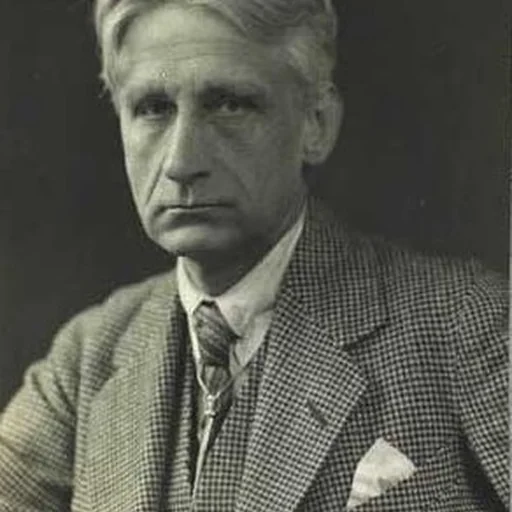
Artist
Harald Slott-Møller (Danish:; 17 August 1864 – 20 October 1937) was a Danish painter and ceramist. Together with his wife, the painter Agnes Slott-Møller, he was a founding member of Den Frie Udstilling (The Free Exhibition).