Artwork
Interior of a Church
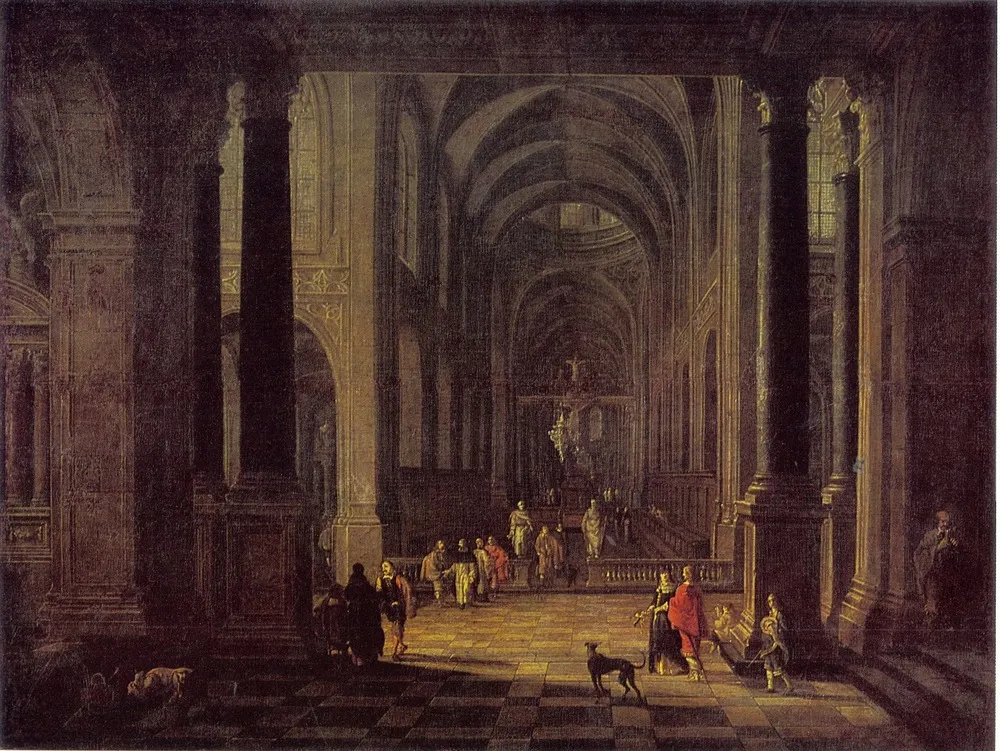
Interior of a Church is an oil painting by the Dutch Golden Age artist Gerard Houckgeest. It dates from 1648 and is held in the collection of the Hermitage Museum.
About this work
Overview
Interior of a Church is an oil painting on panel created in 1648 by the Dutch Golden Age artist Gerard Houckgeest (c.
Interior of a Church is an oil painting on panel created in 1648 by the Dutch Golden Age artist Gerard Houckgeest (c. 1600-1661). Measuring 34 by 45 centimeters, the work is held in the collection of the State Hermitage Museum in Saint Petersburg, where it is catalogued as part of the Pyotr Semyonov-Tyan-Shansky collection. The painting exemplifies Houckgeest's early specialization in fictional church interiors, a genre he practiced before his documented shift around 1650 toward depicting existing architectural spaces. As a pupil of Bartholomeus van Bassen, Houckgeest developed a refined approach to architectural perspective and atmospheric lighting that places this work within the broader tradition of Dutch architectural painting.
Subject & Meaning
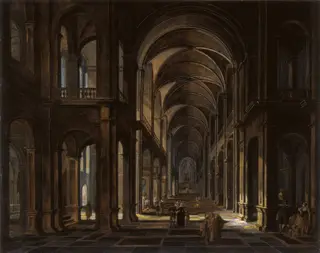
The painting presents a view from the nave of a vast church or cathedral looking toward the choir. Tall fluted columns frame the foreground on both sides, supporting soaring rounded arches and a coffered barrel vault that recedes into deep shadow. The floor is laid with large square tiles in a checkerboard pattern of light and dark stone. Small figures animate the middle and foreground: a group of men in dark and red garments converse near the left columns; toward the center, more figures gather near a balustrade before the choir area, where a crucifix and candlesticks are visible. A man in a bright red cloak stands near a woman in dark dress with a white collar, accompanied by a dog. To the right, a seated woman holds an infant, while another figure stands nearby, and a dog sniffs near the left foreground. The specific church depicted remains unidentified, consistent with Houckgeest's early practice of painting imaginary rather than actual architecture. The inclusion of figures and dogs serves to animate the space and provide scale, while the religious furnishings, crucifix, and candlesticks anchor the scene in its ecclesiastical function without constituting a narrative religious subject.
Technique & Style
The work is executed in oil on panel, a support typical of Dutch cabinet-sized paintings of the period. The palette is dominated by browns, ochres, and muted golds, with touches of red and white reserved for the figures. Light enters from the left, casting long shadows and illuminating the floor tiles while leaving the upper vaults and side aisles in near darkness. The brushwork appears smooth and controlled, with careful architectural detail in the columns, arches, and vaulting, and softer handling of the distant spaces. The overall finish is polished, creating dramatic atmospheric perspective through the progressively darkening nave. This controlled handling and attention to the effects of natural light on interior surfaces demonstrate the influence of Houckgeest's master, Bartholomeus van Bassen, while also anticipating the more pronounced interest in daylight that would characterize Houckgeest's later works of actual church interiors. The relatively small scale of 34 by 45 centimeters indicates a cabinet picture intended for close viewing in a private setting.
History & Provenance
The painting was created in 1648 in the Netherlands, during Houckgeest's documented residence in Delft (1635-1649). It entered the collection of Pyotr Semyonov-Tyan-Shansky, the Russian geographer and explorer, and subsequently passed to the State Hermitage Museum in Saint Petersburg, where it remains today. The work's relatively modest dimensions and its status as a fictional rather than topographically specific interior suggest it was produced for the open market rather than by commission. No exhibition history is documented in the available sources for this specific panel.
Context
Gerard Houckgeest was born in The Hague around 1600 and received his training from Bartholomeus van Bassen, a painter of architectural scenes and perspective fantasies. Houckgeest's early career, spanning roughly from the 1620s through the late 1640s, was devoted to imaginary church interiors and Renaissance buildings in the manner of his master. The present work, dated 1648, belongs firmly to this early phase. Around 1650, Houckgeest underwent a significant shift in his practice, beginning to paint existing buildings, particularly the Oude Kerk and Nieuwe Kerk in Delft. This later work, produced during a concentrated period of about four to five years, introduced an innovative diagonal perspective and paid heightened attention to the effects of daylight entering through church windows. Houckgeest's colleague in this specialization was Emanuel de Witte, though de Witte's more expressive and psychologically charged interiors differ from Houckgeest's measured architectural precision. The 1648 panel thus represents a transitional moment in Dutch architectural painting, standing at the threshold between the tradition of fictional church interiors established by Van Bassen and the documentary approach to actual spaces that Houckgeest would soon pioneer. The work should be distinguished from a larger painting of the same title in the National Gallery, London (inventory number NG924, 68.5 × 98.5 cm, possibly 1644), which was formerly attributed to Pieter Neeffs the Elder and features a forged signature.
Legacy
While the specific later influence of this 1648 panel has not been separately documented, Houckgeest's broader contribution to Dutch architectural painting proved significant. His innovation of the diagonal perspective in church interior painting, first deployed in his 1650 depiction of the Nieuwe Kerk in Delft with the Tomb of Willem the Silent (now in Hamburg), established a compositional model that influenced subsequent generations of architectural painters. The work's residence in the Hermitage, as part of a major Russian collection, testifies to the international dispersal and appreciation of Dutch Golden Age painting. The painting's continued presence in a major museum collection ensures its accessibility for scholarly study of Houckgeest's early development and the broader genre of Dutch architectural interiors. Houckgeest's market recognition is evidenced by auction records for attributed works, with church interiors by or attributed to him appearing regularly in the international art market, including sales at Christie's, Sotheby's, and other major houses. His works are held in several significant public collections, including the Mauritshuis in The Hague and Hampton Court Palace, where his earliest dated painting, a fictive Palace Interior of 1635, remains.
Artist & collection

 Interior of a Catholic Church
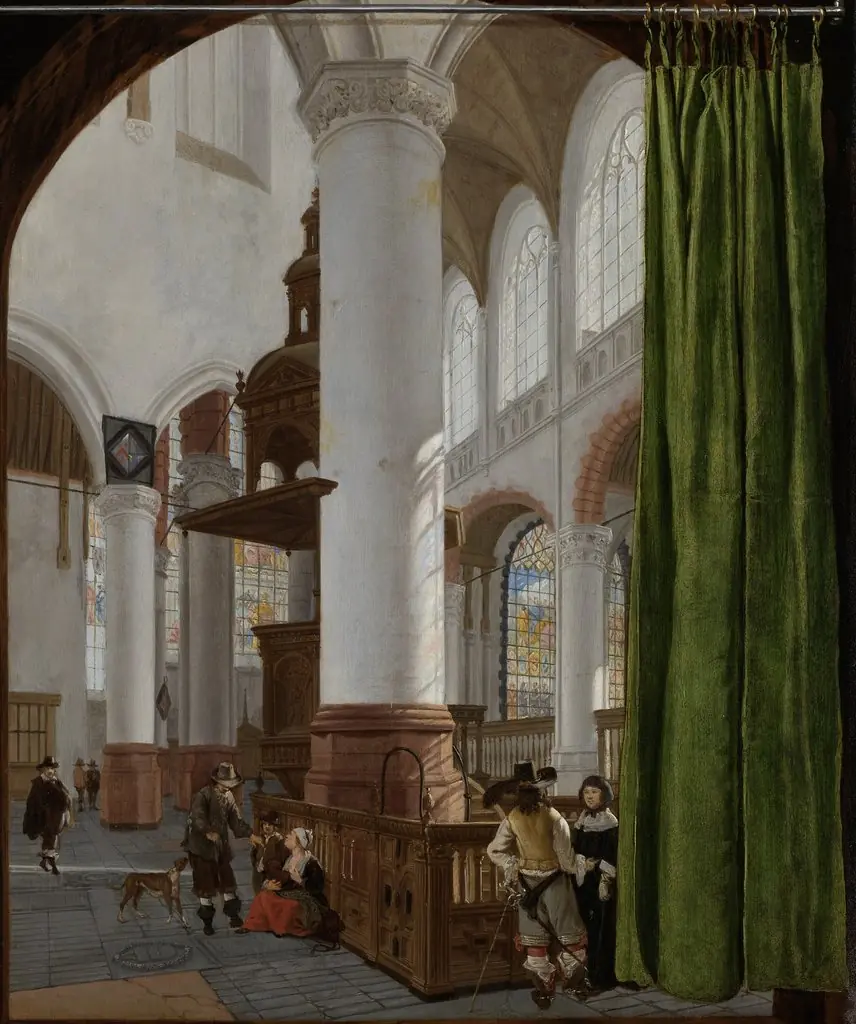 Interior of the Old Church in Delft
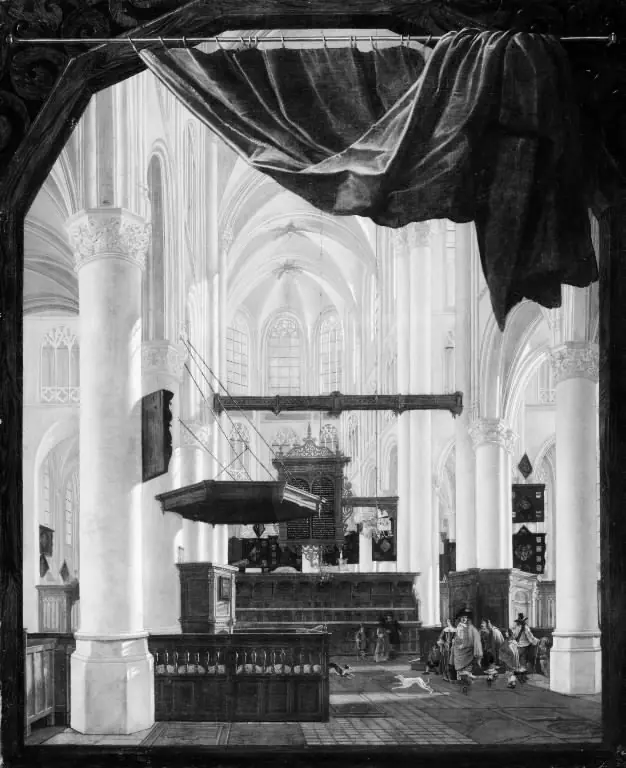 Interior of Sint Gertrudiskerk in Bergen op Zoom
 Interior of the Nieuwe Kerk in Delft with the Tomb of William the Silent
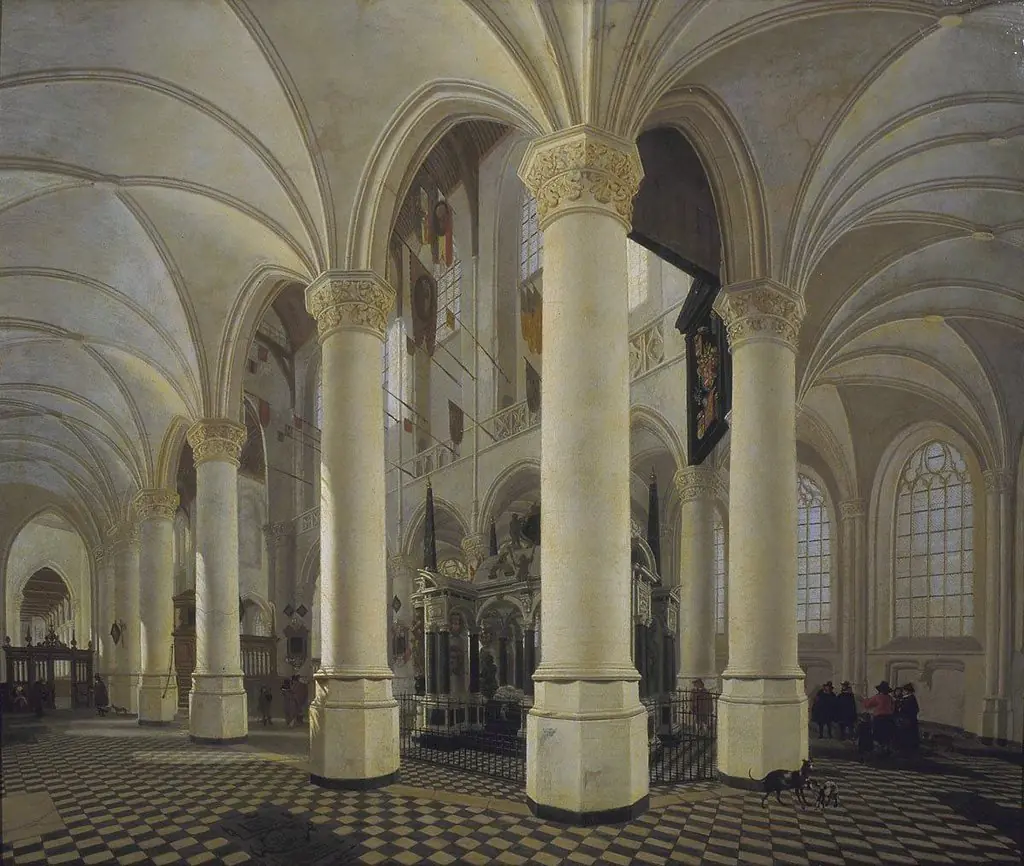 Choir of the Nieuwe Kerk in Delft with the tomb of William the Silent
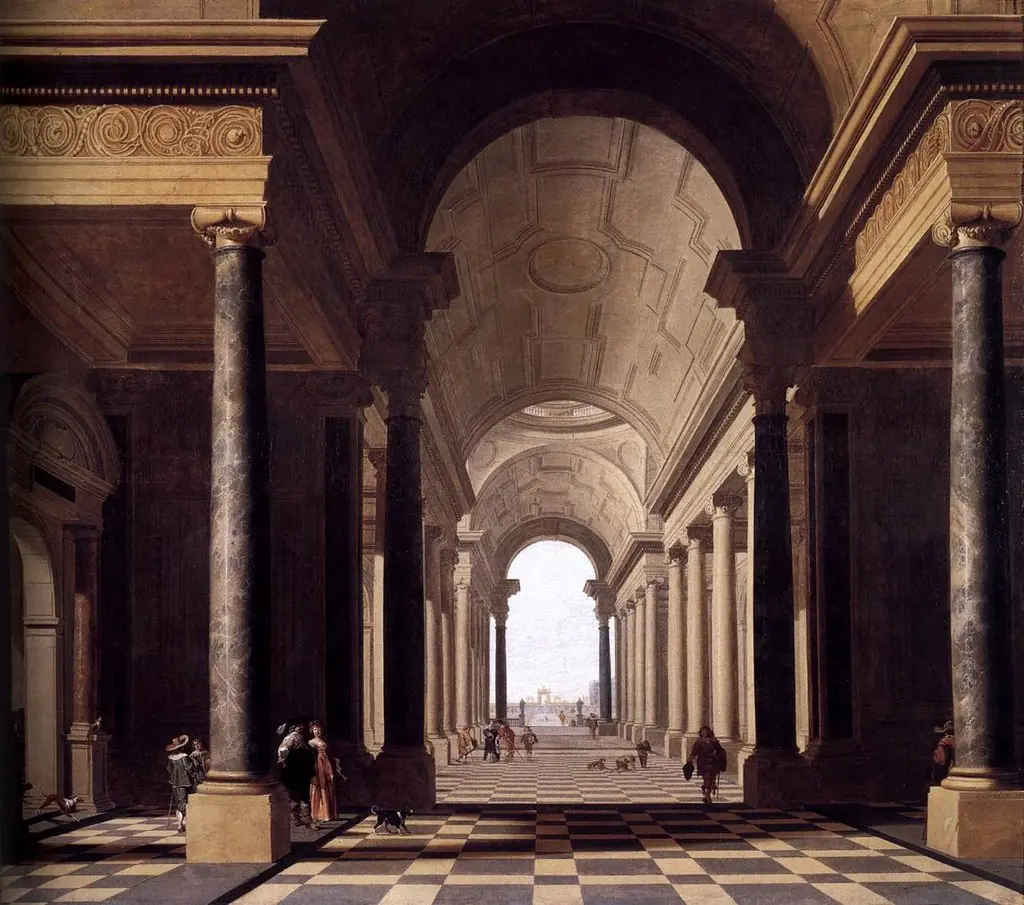 An Architectural Fantasy with Figures
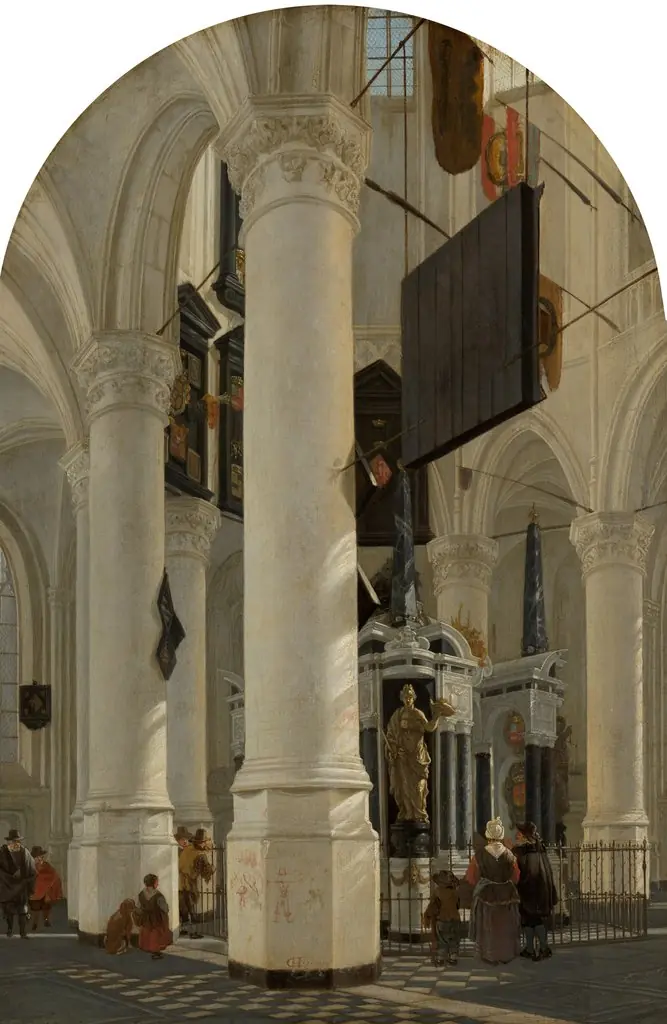 The Tomb of William the Silent in the Nieuwe Kerk in Delft
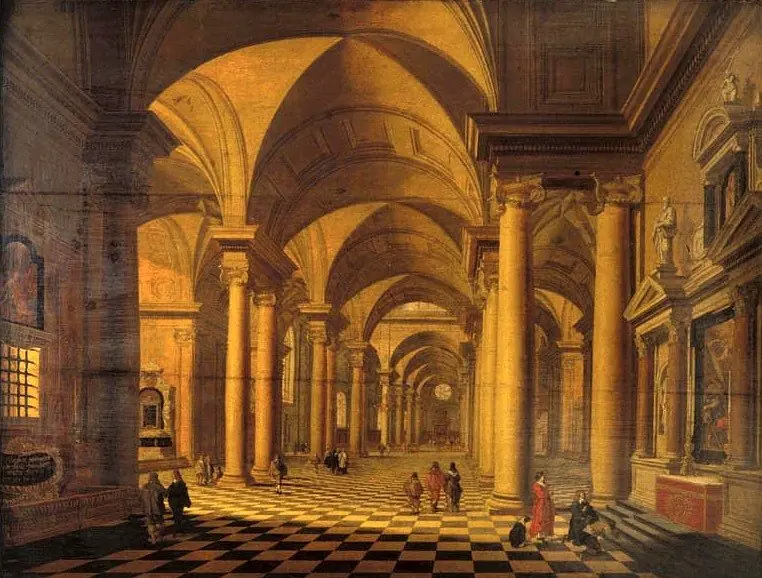 Interior de Igreja Católica