Genre
Architectural
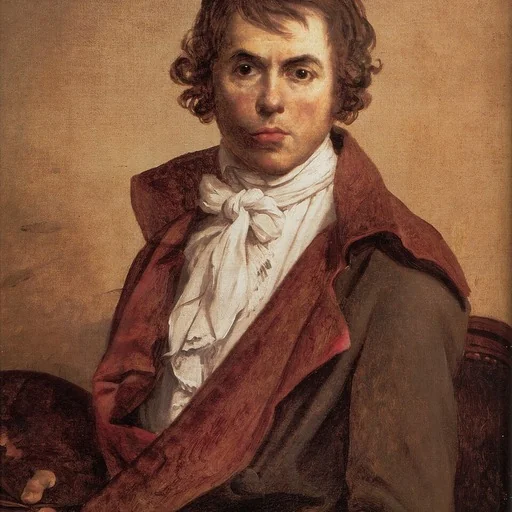
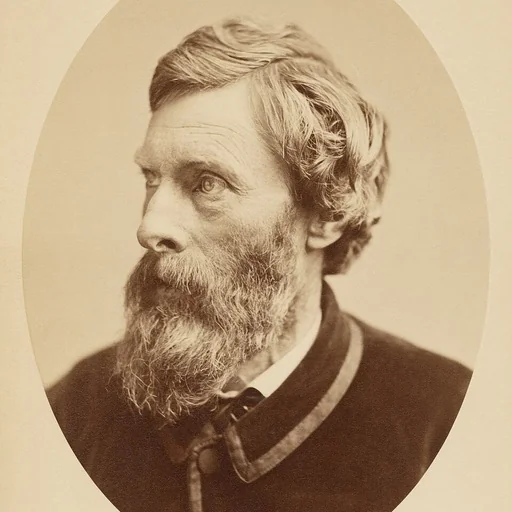
Architectural is an art genre. The gallery holds 2,309 works in this genre, including works by Jacques-Louis David, Jasper Francis Cropsey and John Haberle.
Architectural painting is a branch of genre painting in which buildings—interiors or exteriors, real or invented—are the principal subject rather than a backdrop. Its roots reach to antiquity: the illusionistic frescoes of the Roman Second Style, exemplified by the wall painting from Room L of the Villa of P. Fannius Synistor at Boscoreale (cubiculum decoration of about 50–40 BCE, buried by Vesuvius in 79 CE and rediscovered in 1900), used receding columns, doorways, and a circular tholos to open a flat wall onto imagined space. After Renaissance masters such as Masaccio harnessed the new linear perspective, architecture gradually moved from setting to subject, and by the 16th century the genre achieved independence in Flanders and the Netherlands, where Hans Vredeman de Vries (1527–1607)—both architect and painter—became its first important specialist.
The genre reached its height in the Dutch Golden Age. Painters of church interiors transformed the austere, whitewashed naves of newly Calvinist churches into studies of light, scale, and silence. Pieter Saenredam (1597–1665) pursued an almost archaeological fidelity to real buildings, while Gerard Houckgeest and Emanuel de Witte favored dramatic diagonal viewpoints and atmospheric contrasts of shadow; Dirck van Delen composed grand, partly invented palatial settings peopled with elegant figures.
In 18th-century Italy a parallel tradition flourished around the Grand Tour. The veduta, or topographical "view," was perfected by the Venetian Canaletto and his nephew Bernardo Bellotto, while Giovanni Paolo Panini specialized in Roman vistas and ruins. Its imaginative counterpart, the capriccio—pioneered earlier by Viviano Codazzi—freely combined real and fictional monuments in a single scene.
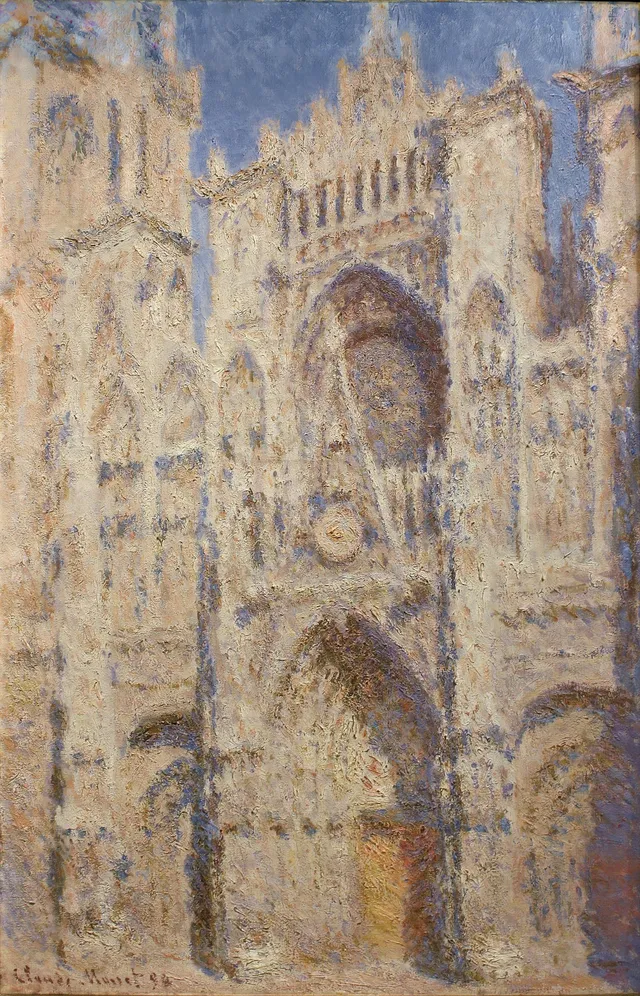
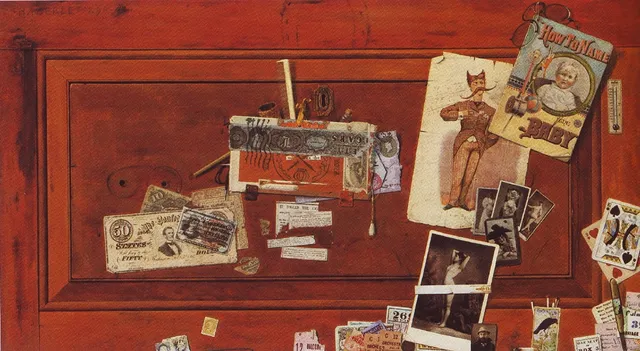
The genre's reach extends well beyond Europe and into illusionism and modernity. Japanese narrative painting rendered palace interiors through the "blown-off roof" (fukinuki yatai) convention, as in Tosa Mitsunori's albums of The Tale of Genji, while American trompe-l'œil painters like John Haberle (1856–1933), in works such as A Bachelor's Drawer and Imitation, exploited architectural surfaces to deceive the eye. Martinus Rørbye's The Prison of Copenhagen brought the genre into 19th-century realism, and Claude Monet's Rouen Cathedral series (painted 1892–93, reworked 1894) dissolved a Gothic façade into pure light, pushing architectural painting toward abstraction.
Key artists
Works
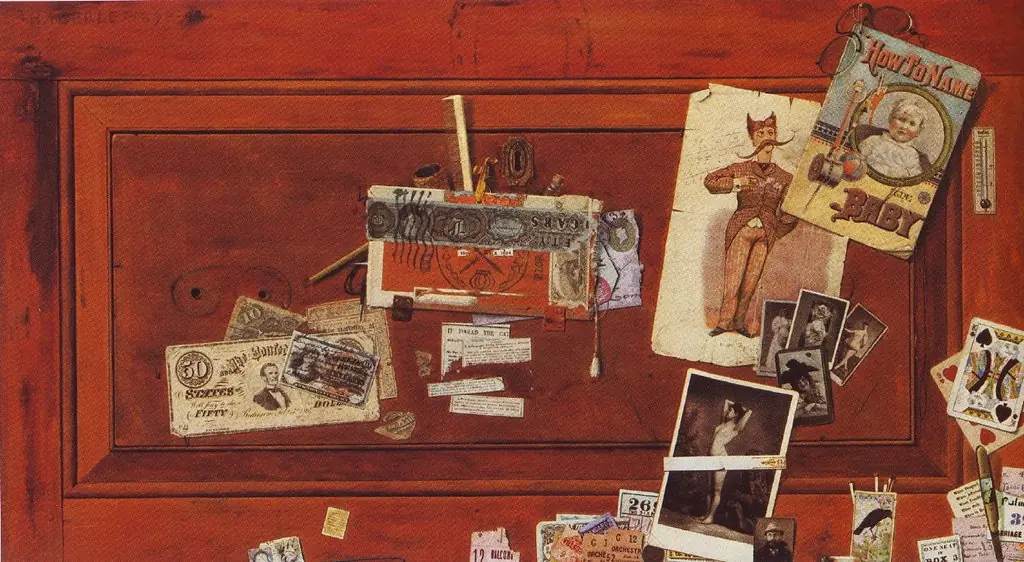 A Bachelor's Drawer
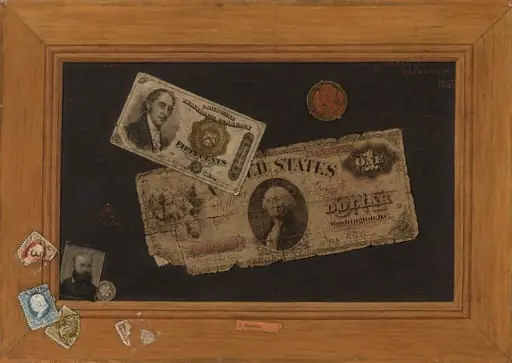 Imitation
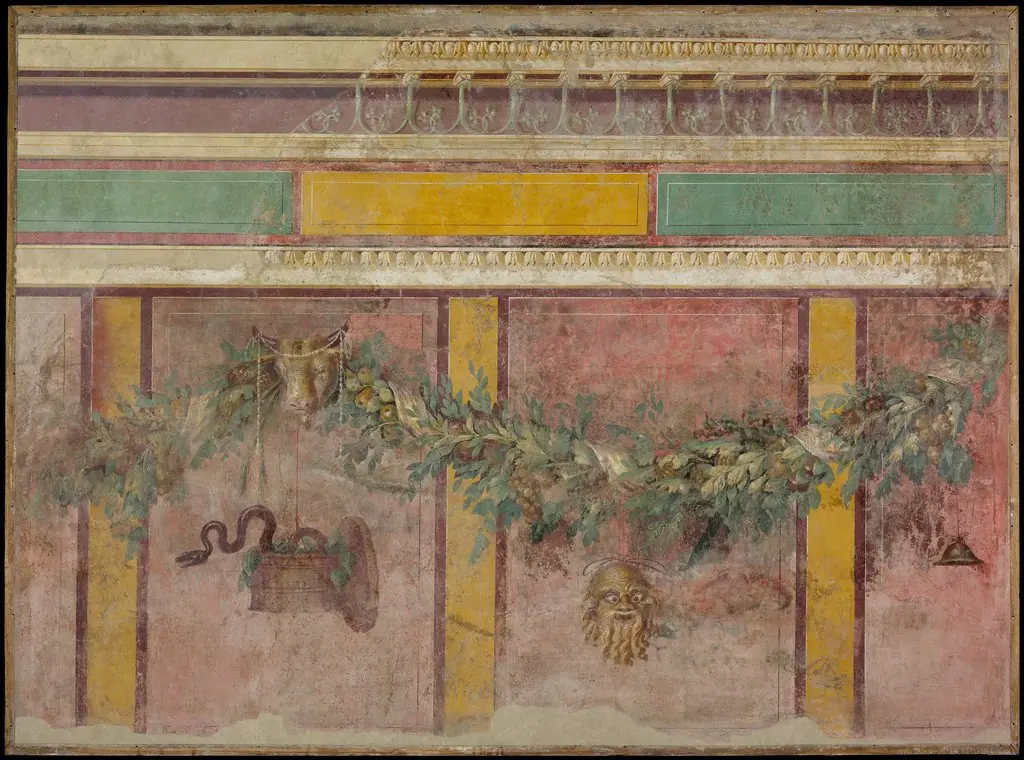 Wall painting from the west wall of Room L of the Villa of P. Fannius Synistor at Boscoreale
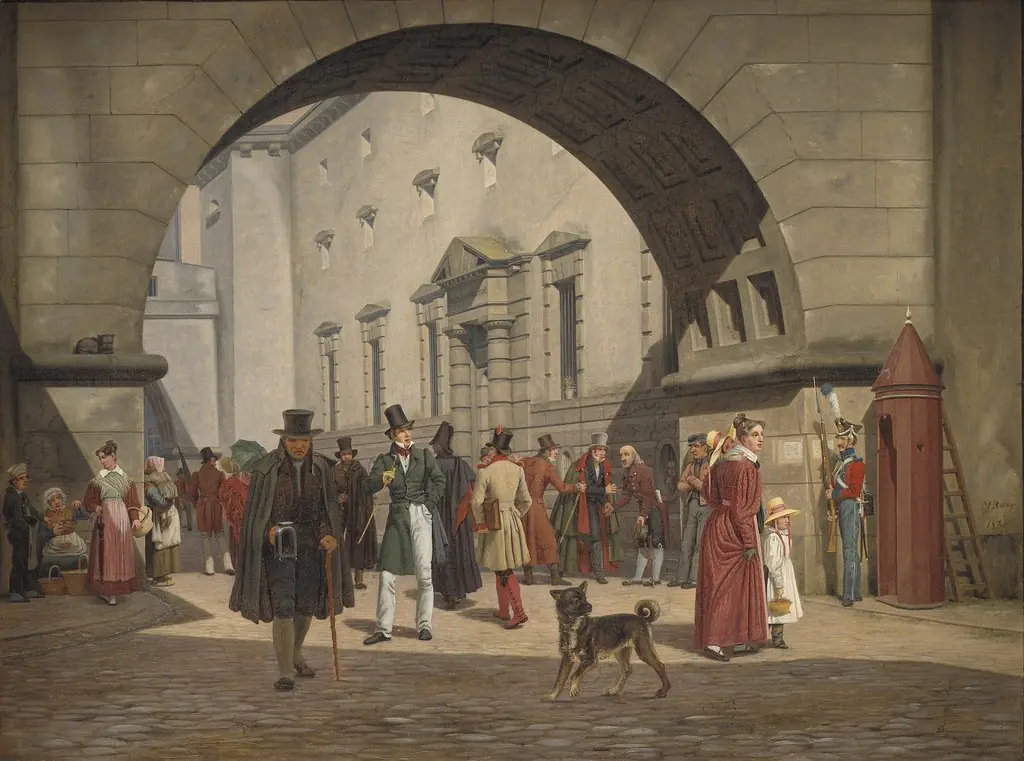 The Prison of Copenhagen
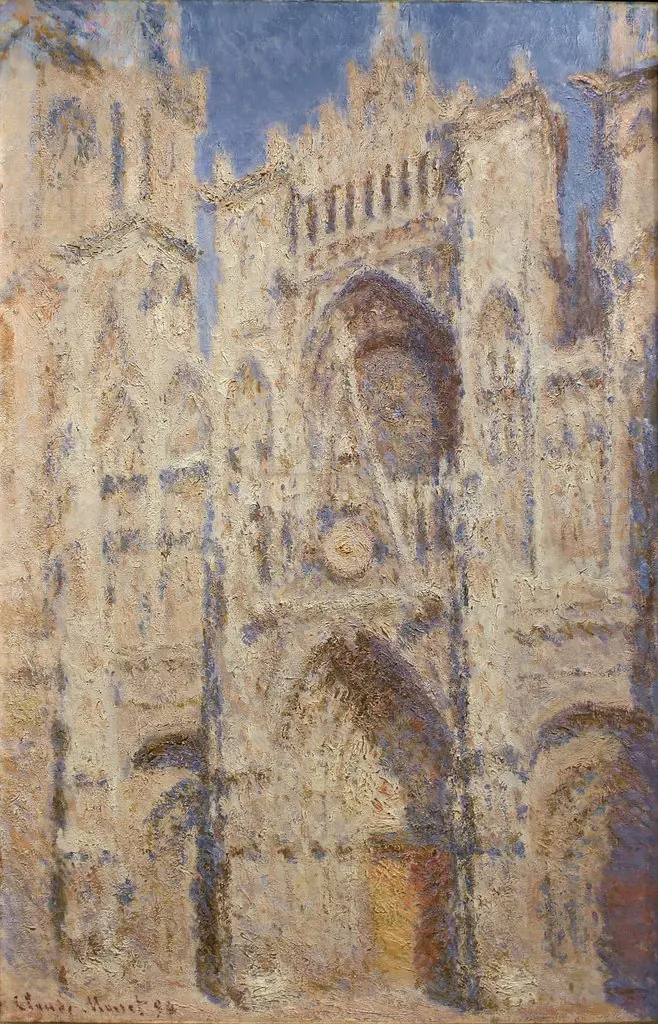 Rouen Cathedral: The Portal (Sunlight)
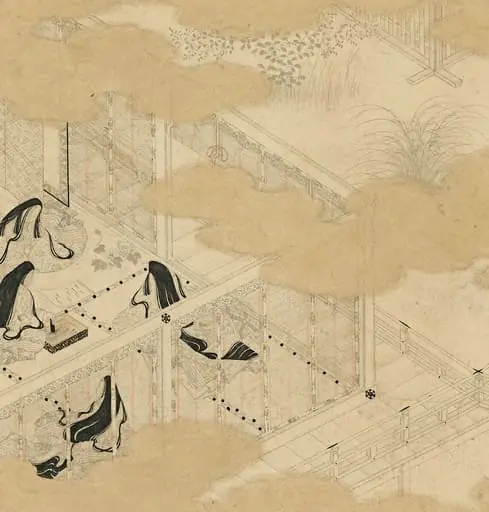 土佐光則筆 源氏物語画帖|Albums of scenes from The Tale of Genji
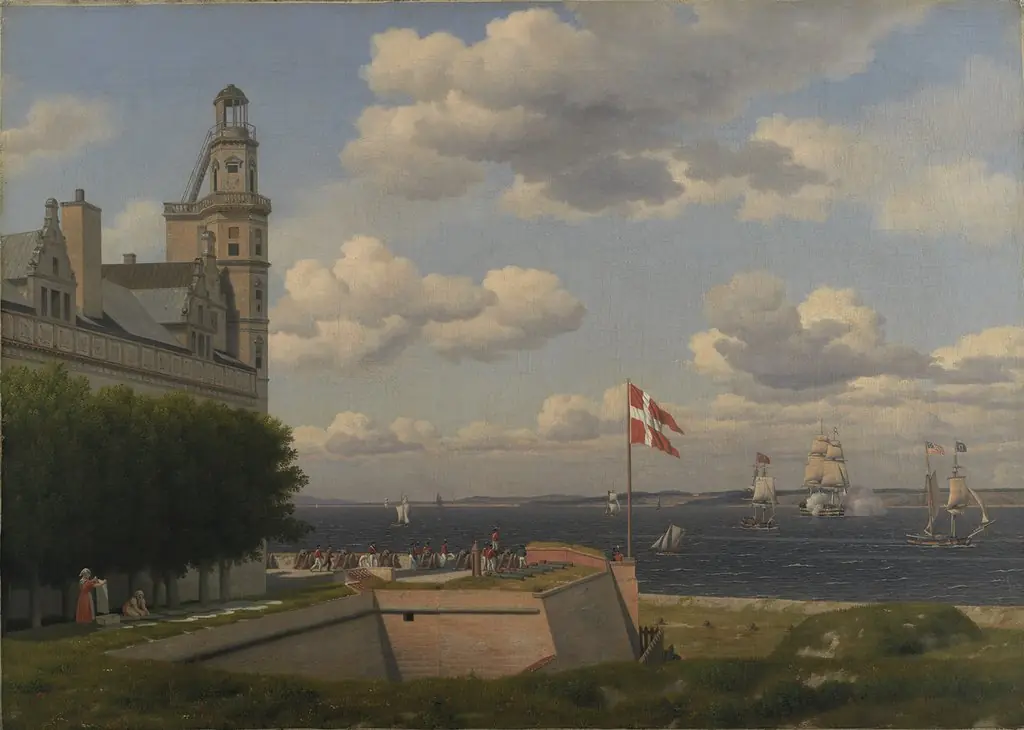 A View towards the Swedish Coast from the Ramparts of Kronborg Castle
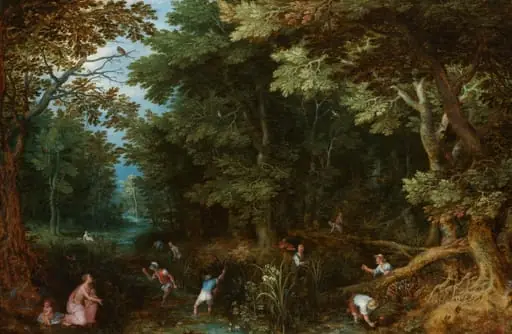 Latona and the Lycian Peasants
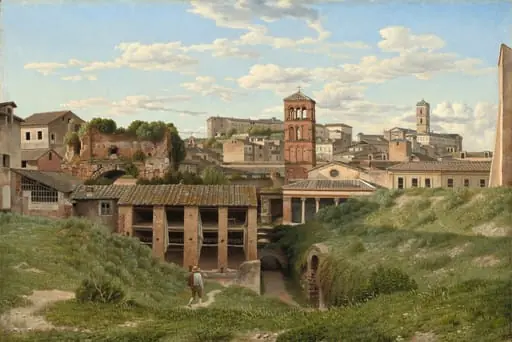 View of the Cloaca Maxima, Rome
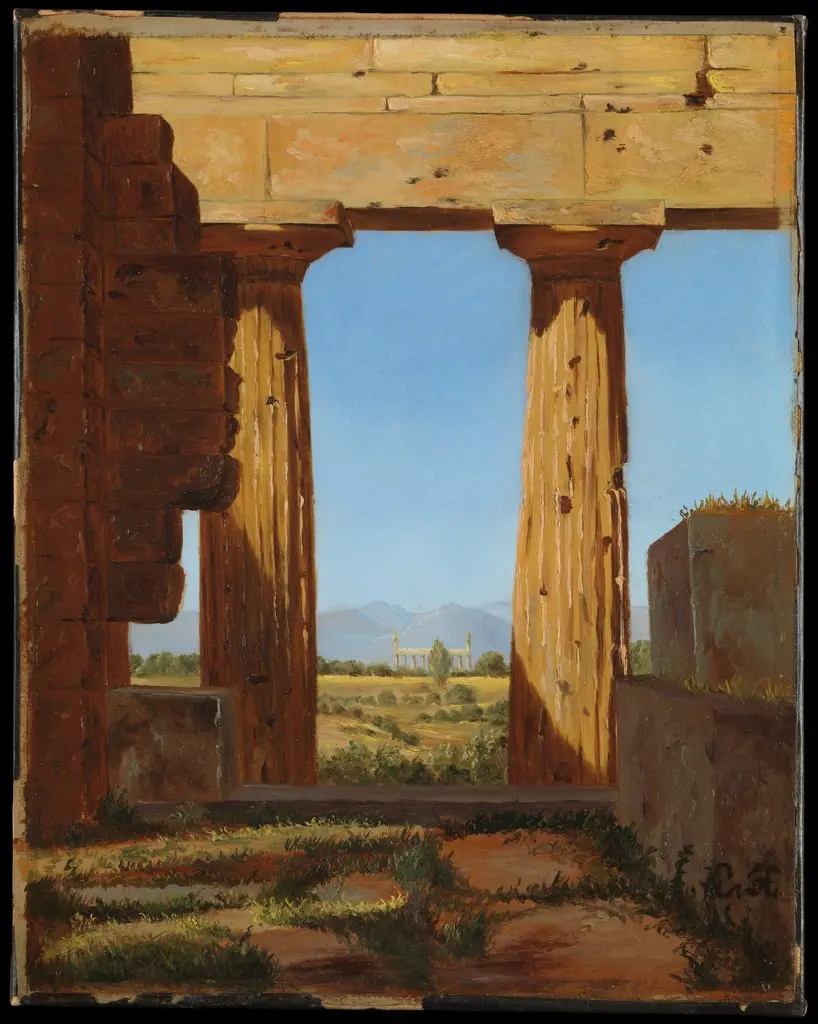 Columns of the Temple of Neptune at Paestum
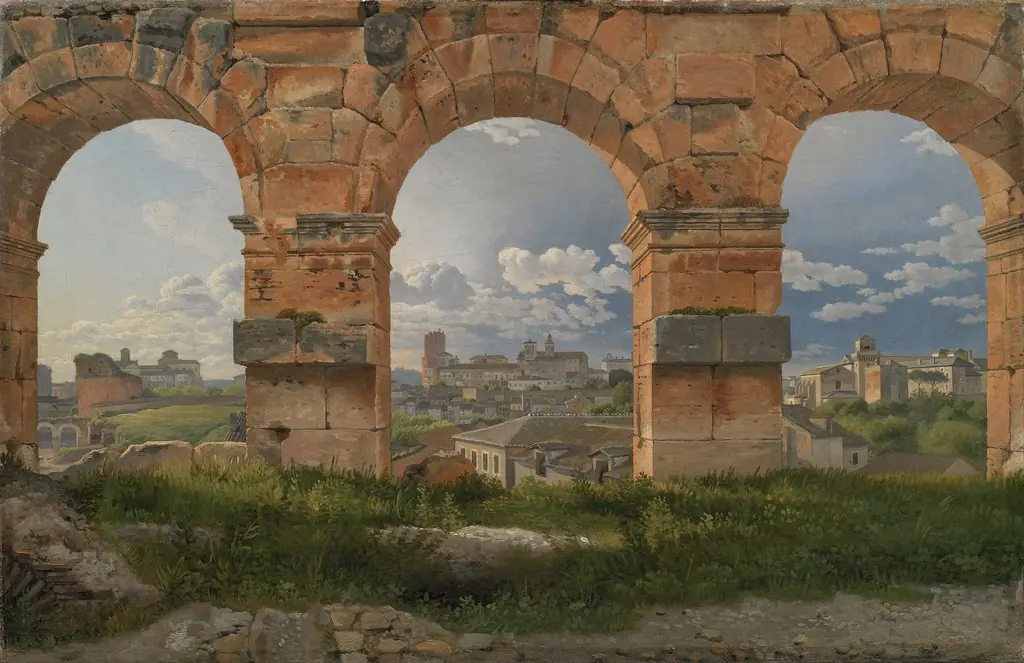 A View through Three of the North-Western Arches of the Third Storey of the Coliseum
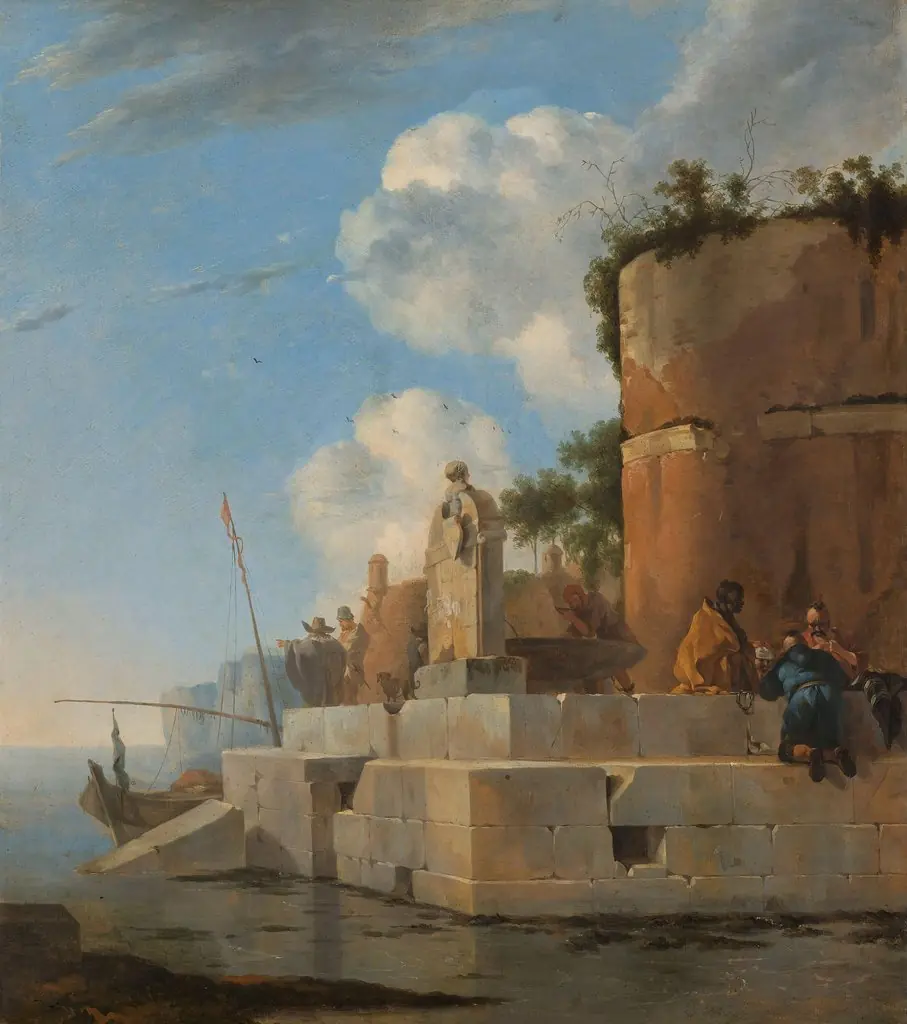 A Coastal Ruin in Italy
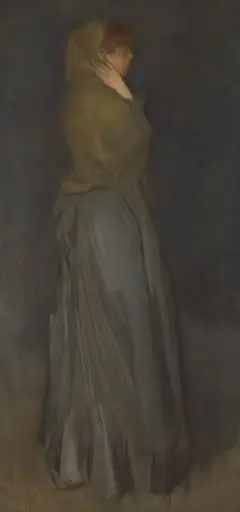 ‘Arrangement in Yellow and Gray’: Effie Deans
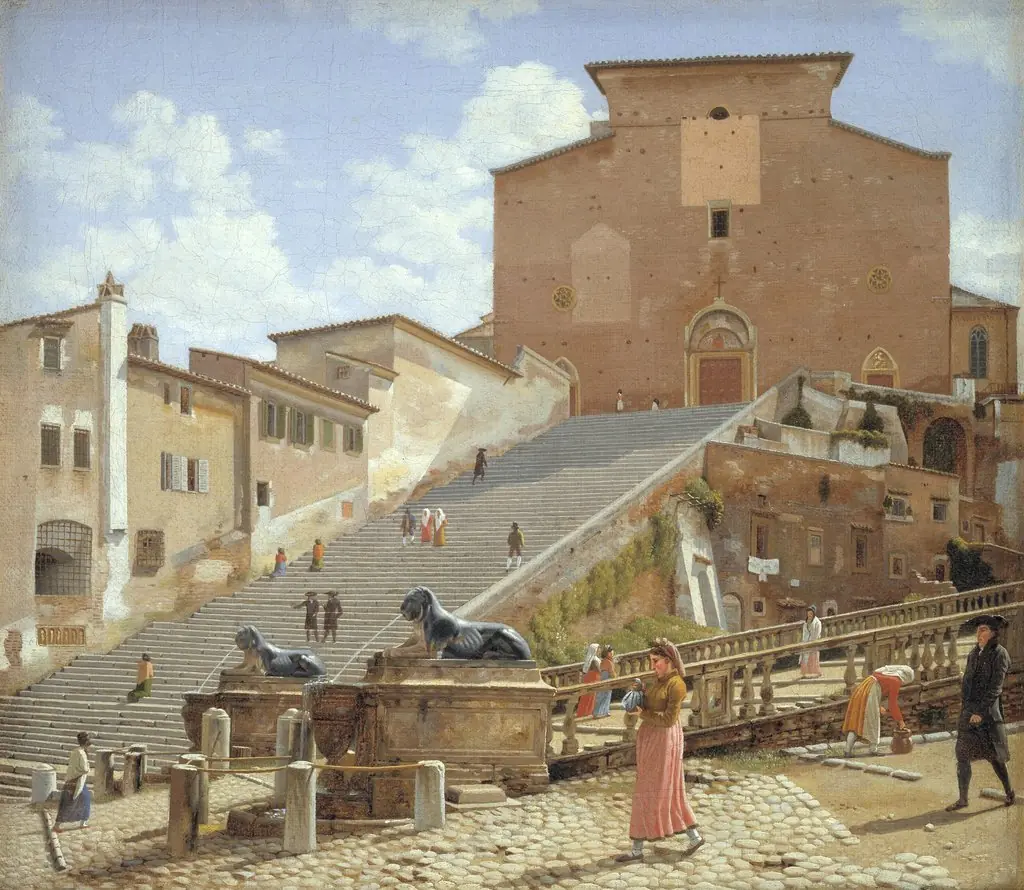 The Marble Steps Leading to the Church of Santa Maria in Aracoeli in Rome
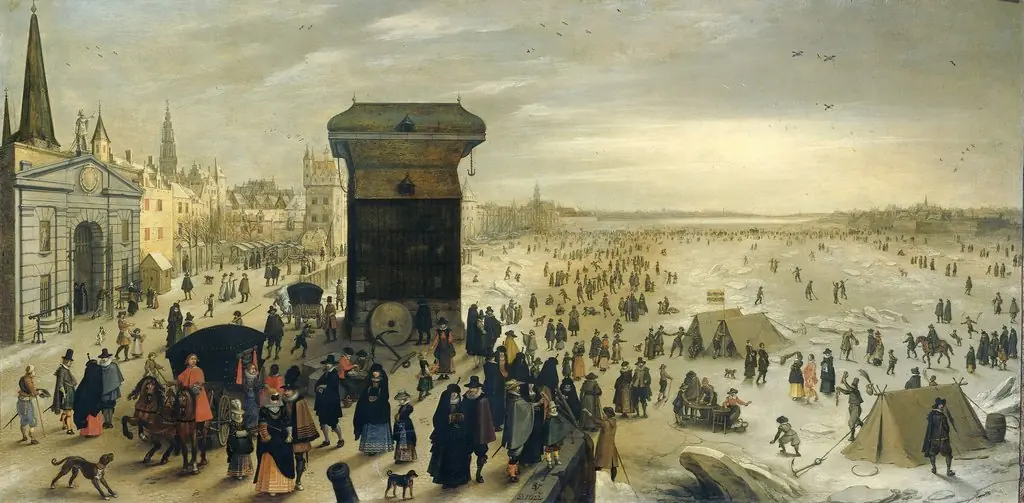 The Kranenhoofd on the Schelde, Antwerp
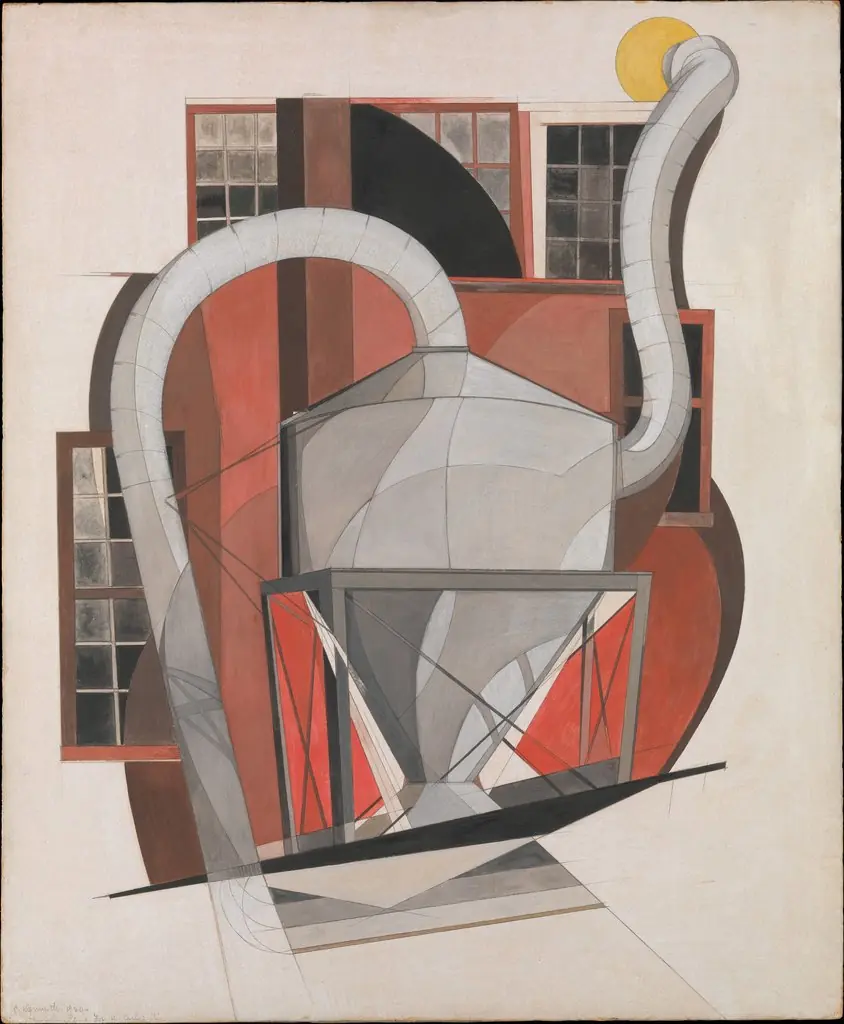 Machinery
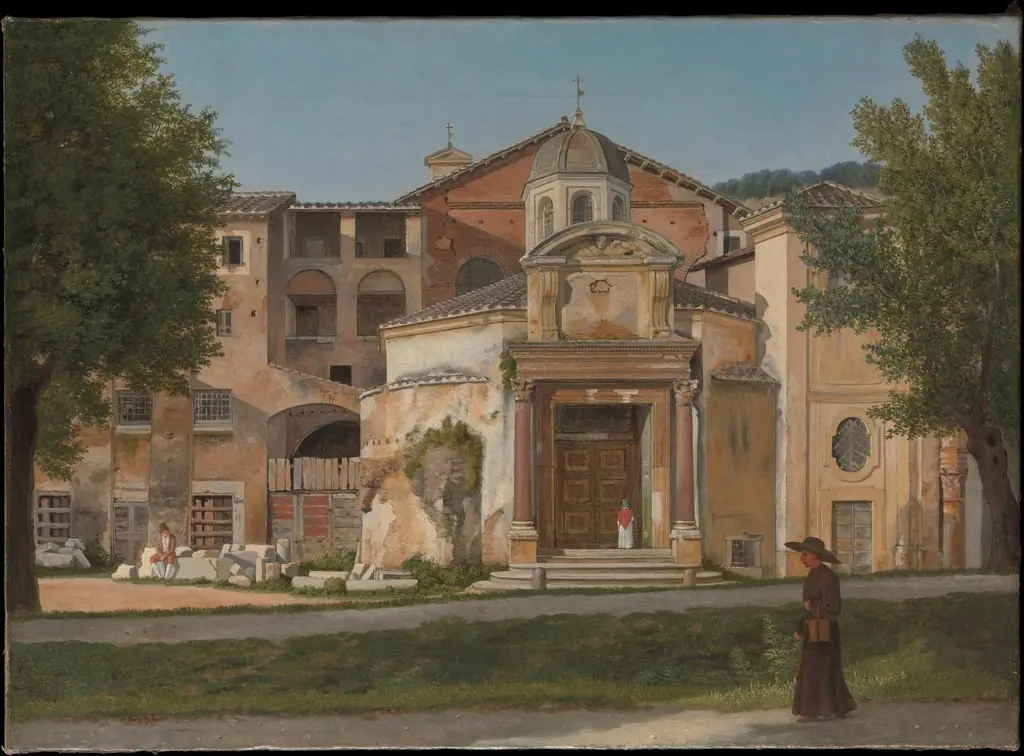 A Section of the Via Sacra, Rome (The Church of Saints Cosmas and Damian)
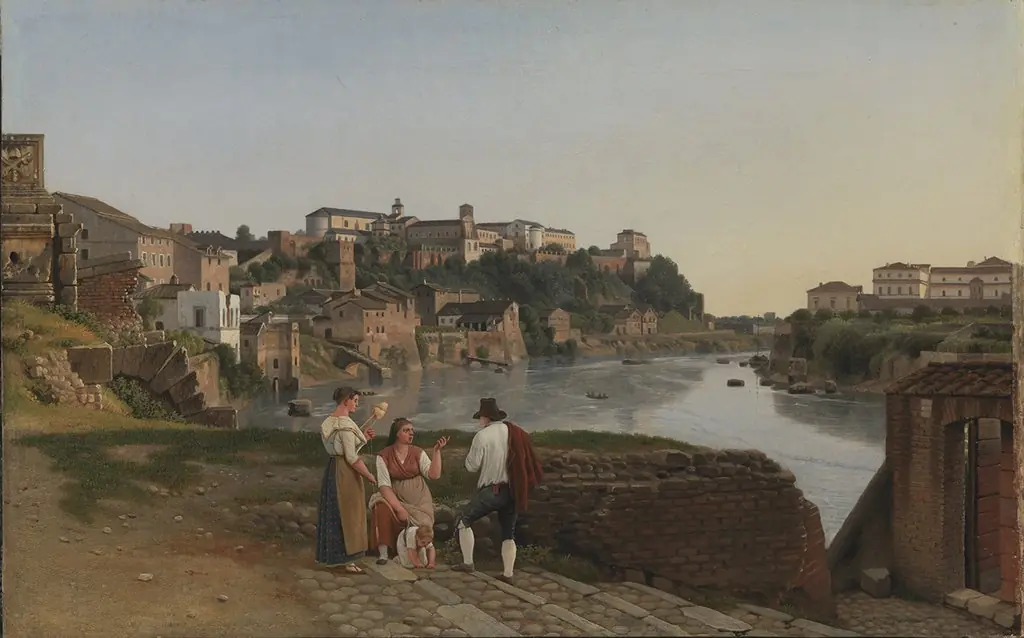 Udsigt over Tiberen i nærheden af den sammenstyrtede bro Ponte Rotto i Rom
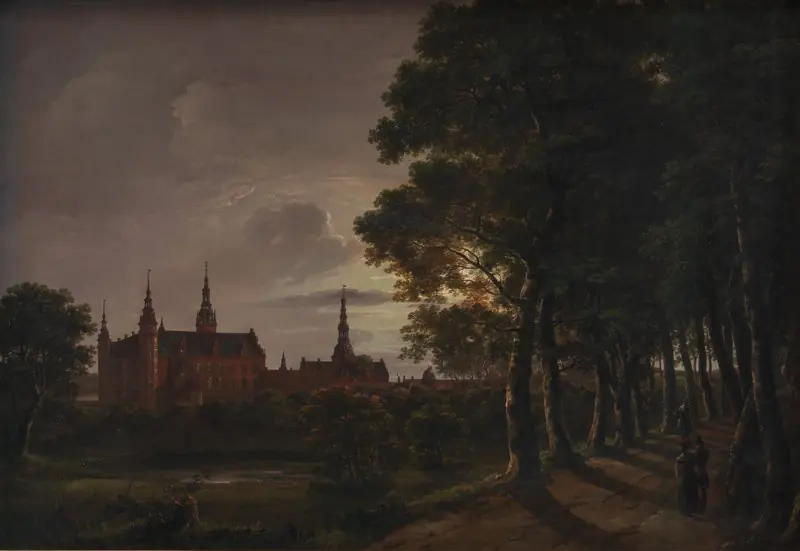 Frederiksborg Castle by Moonlight
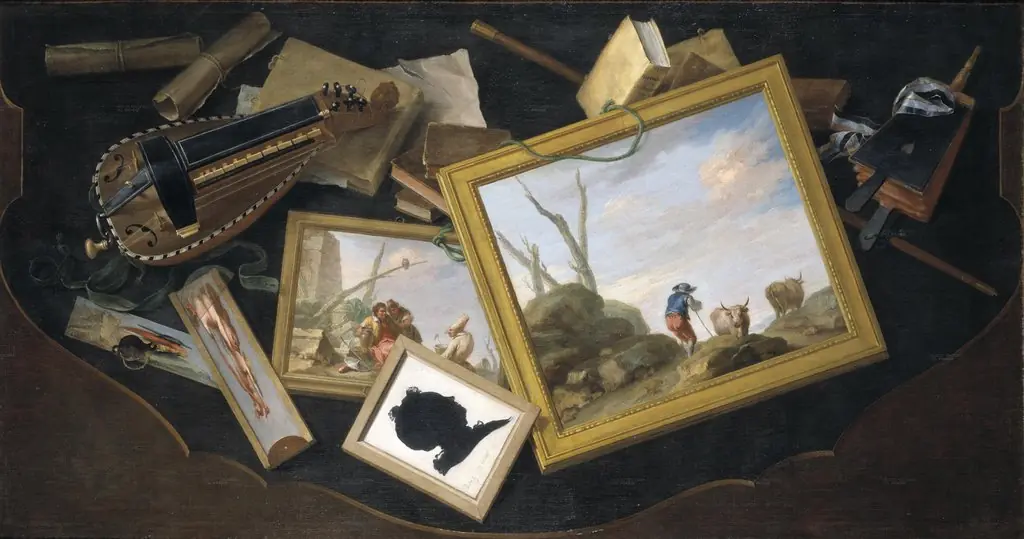 Trompe-l'œil of a Table in a Mess with Paintings, a Hurdy-Gurdy, Books and Other Objects
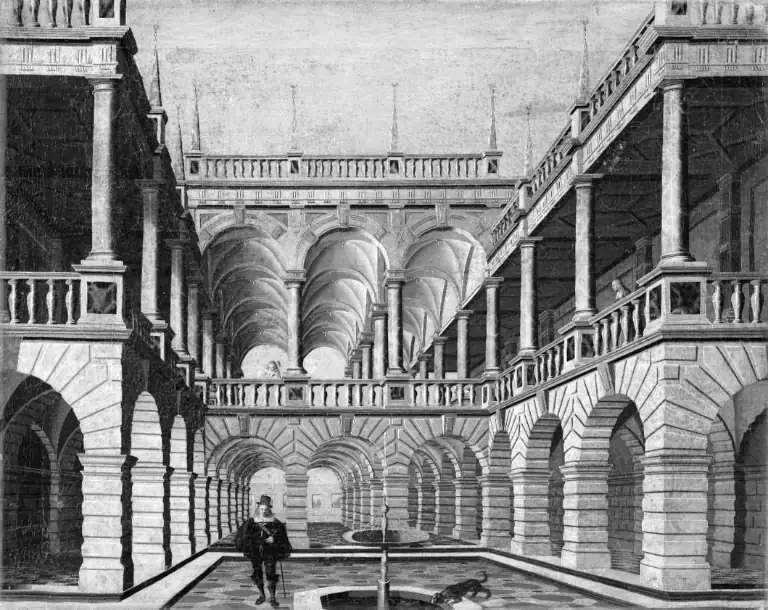 Coutyard with Arcades
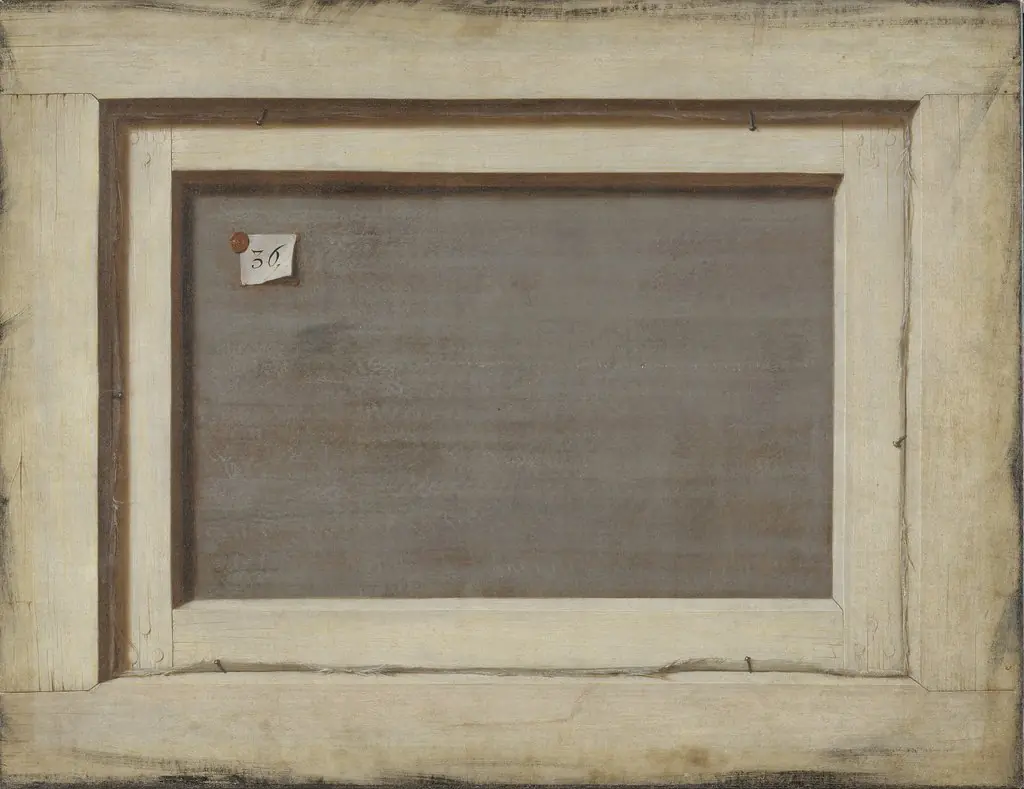 Trompe l'oeil. The reverse of a framed painting.
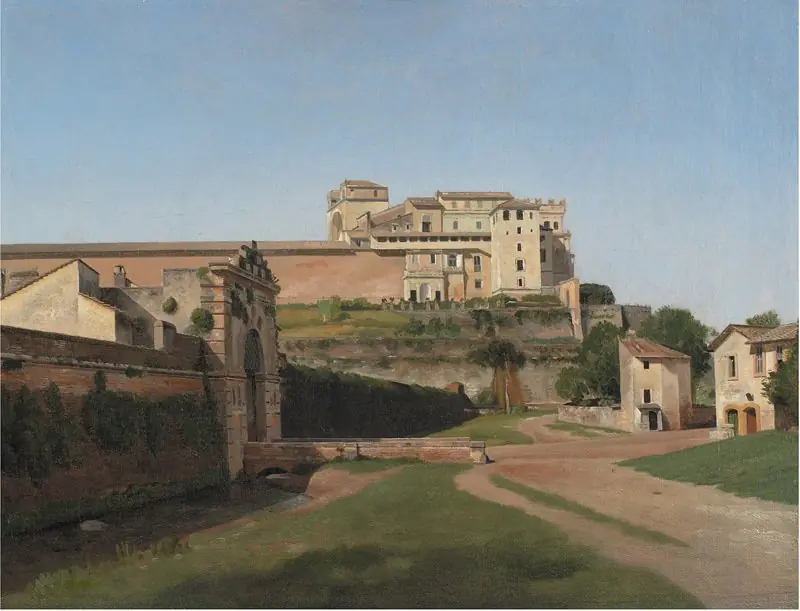 Porta Angelica and Part of the Vatican
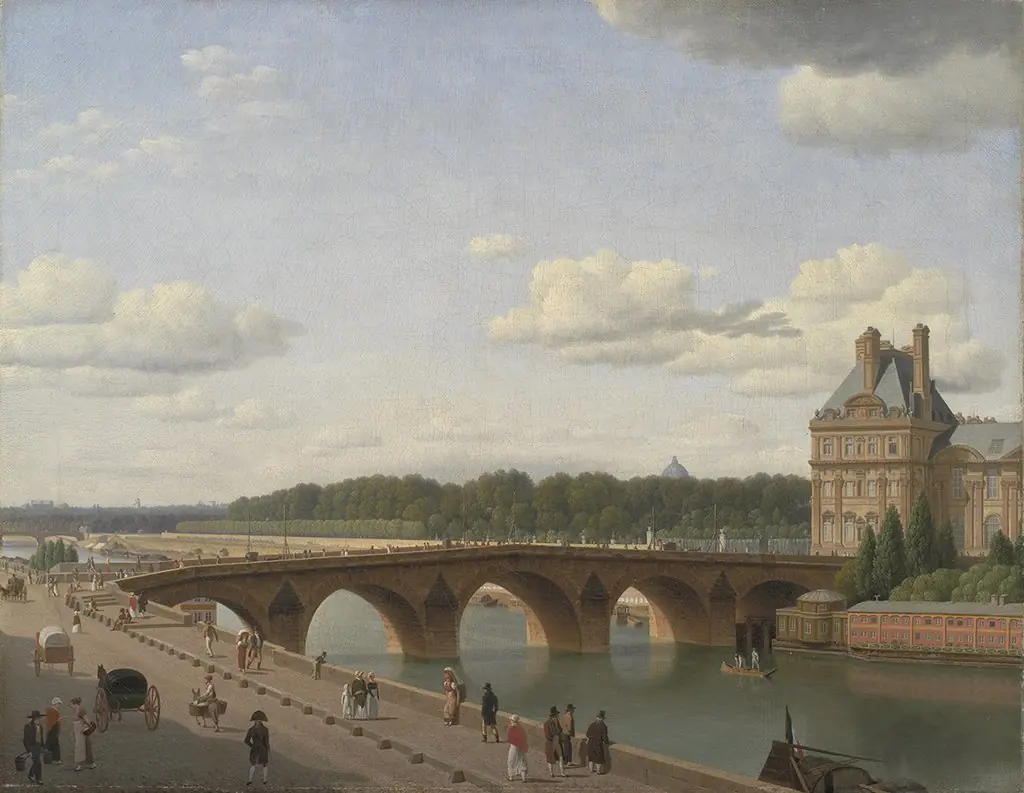 Pont Royal seen from Quai Voltaire
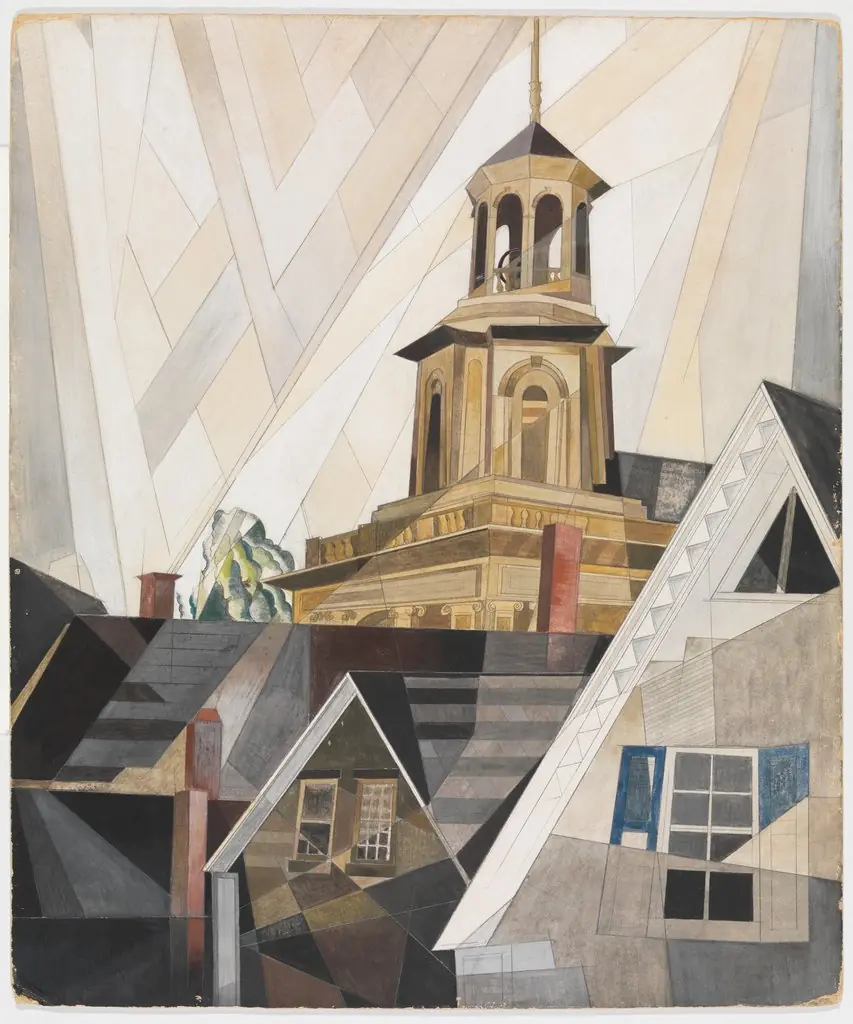 After Sir Christopher Wren
 A waterfall
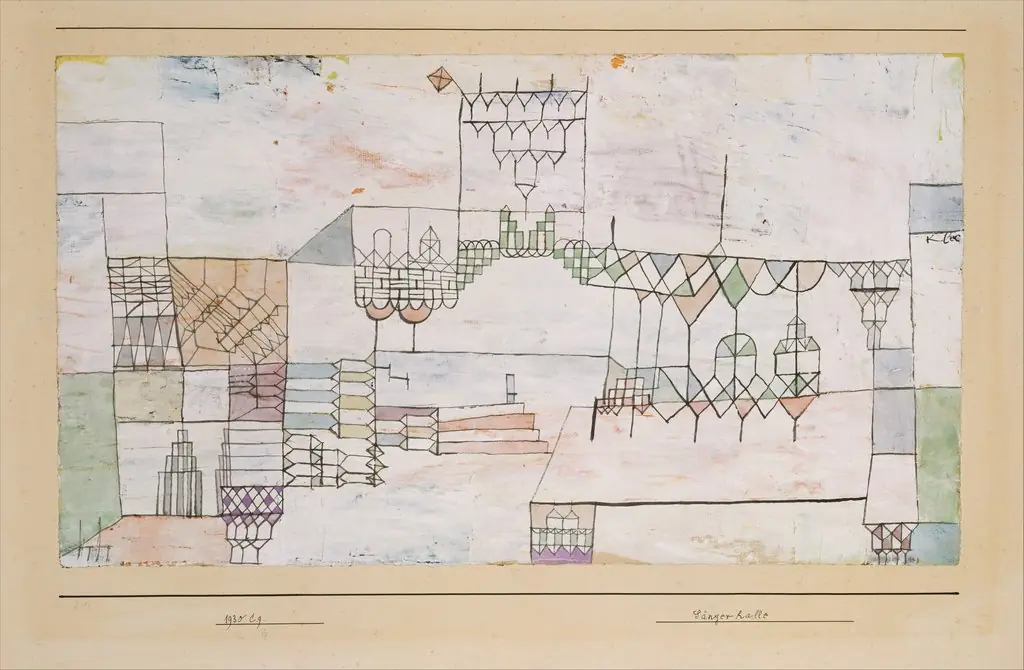 Great Hall for Singers
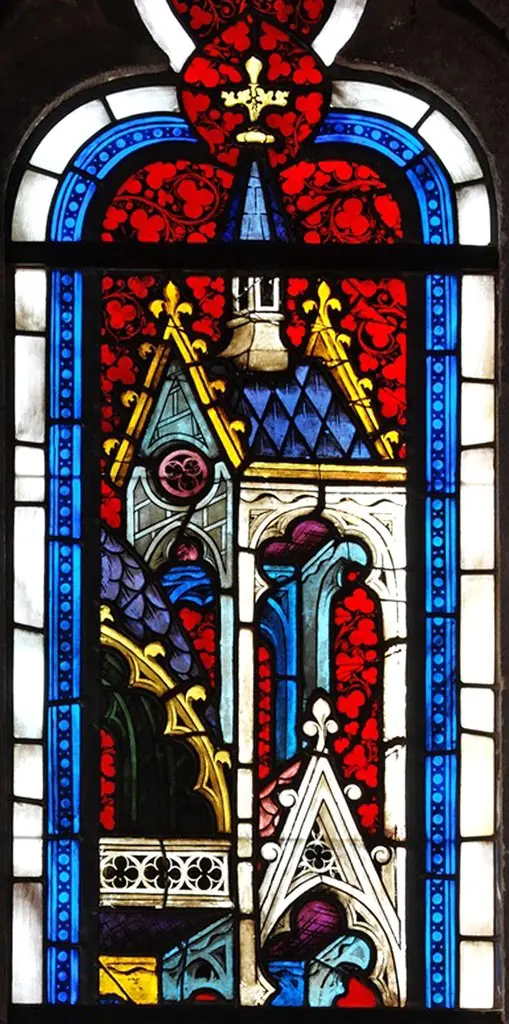 Cusped Lancet head
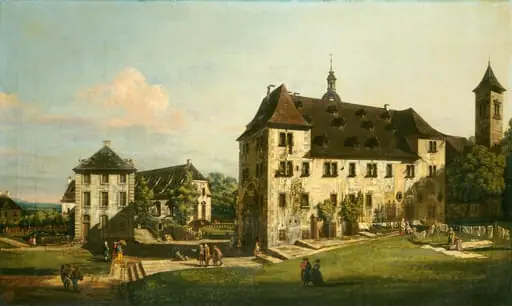 The Fortress of Königstein: Courtyard with the Magdalenenburg
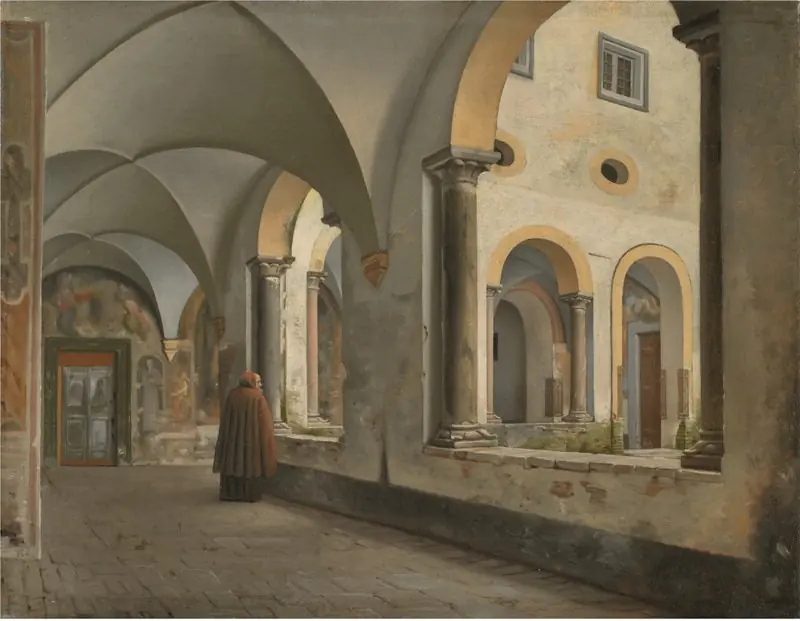 The Cloisters of the Franciscan Monastery Santa Maria in Aracoeli in Rome
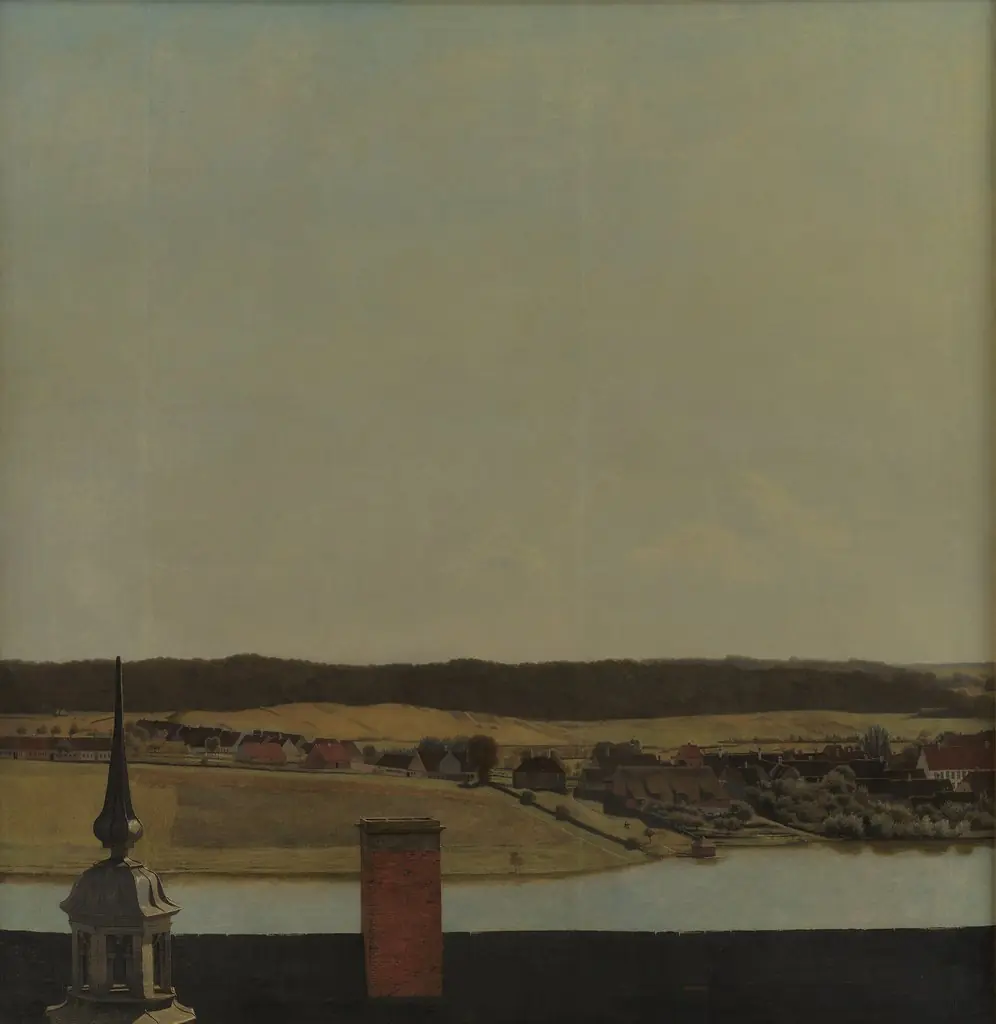 Roof Ridge of Frederiksborg Castle with View of Lake, Town and Forrest
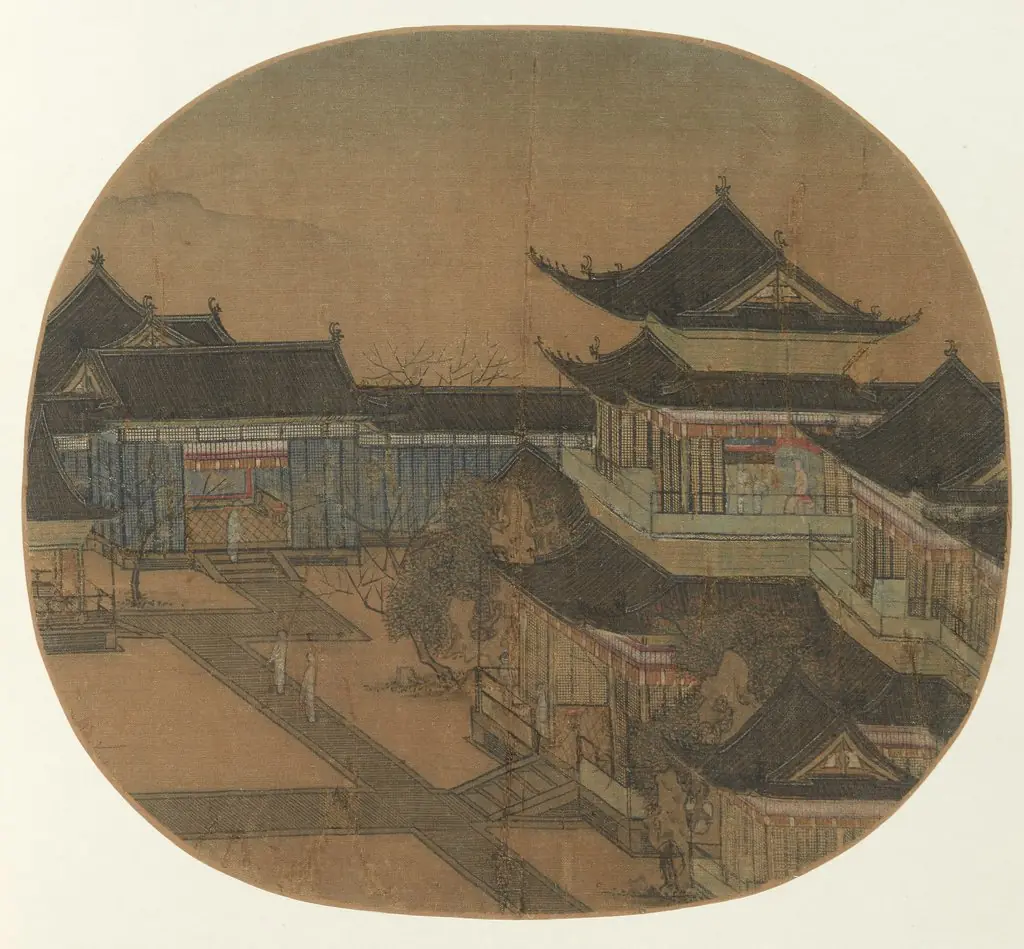 A Palace
 The Shadow Dancers
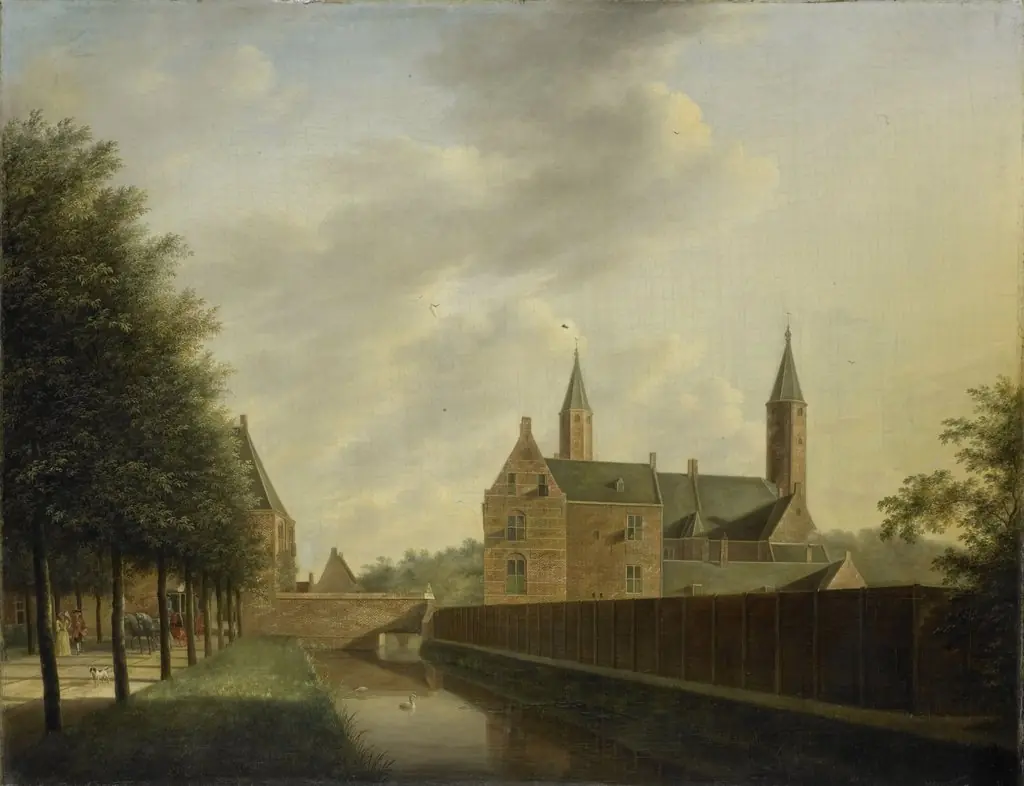 Heemstede Castle
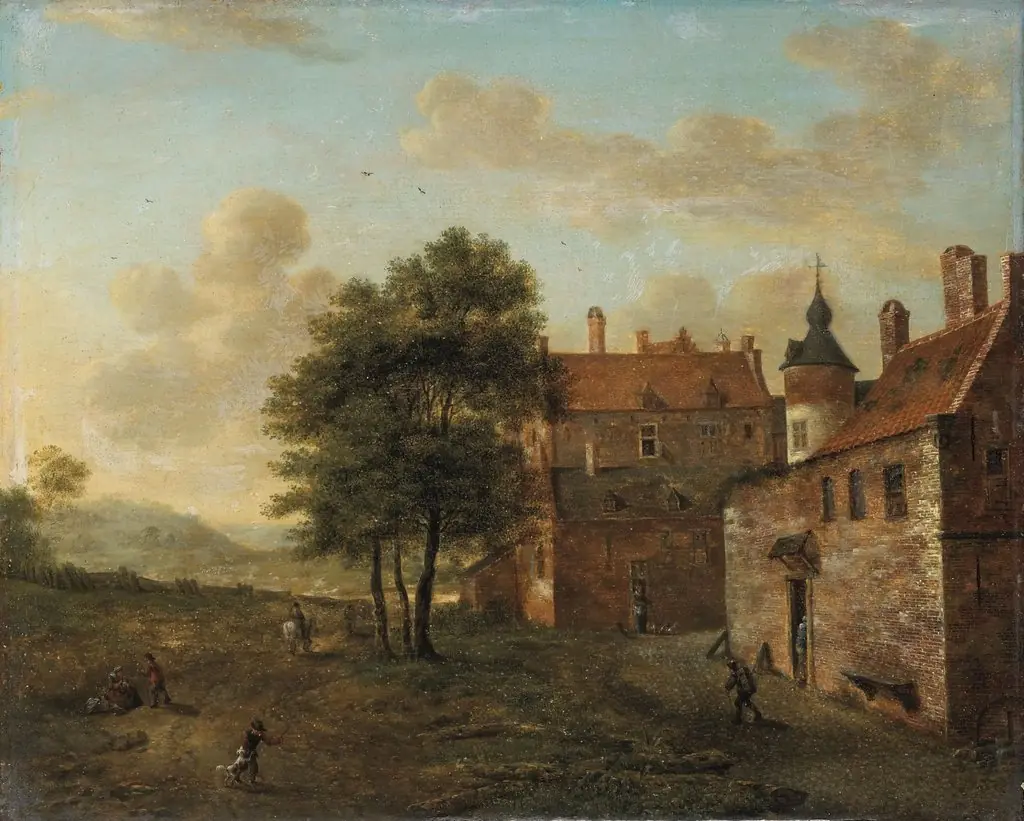 A country home
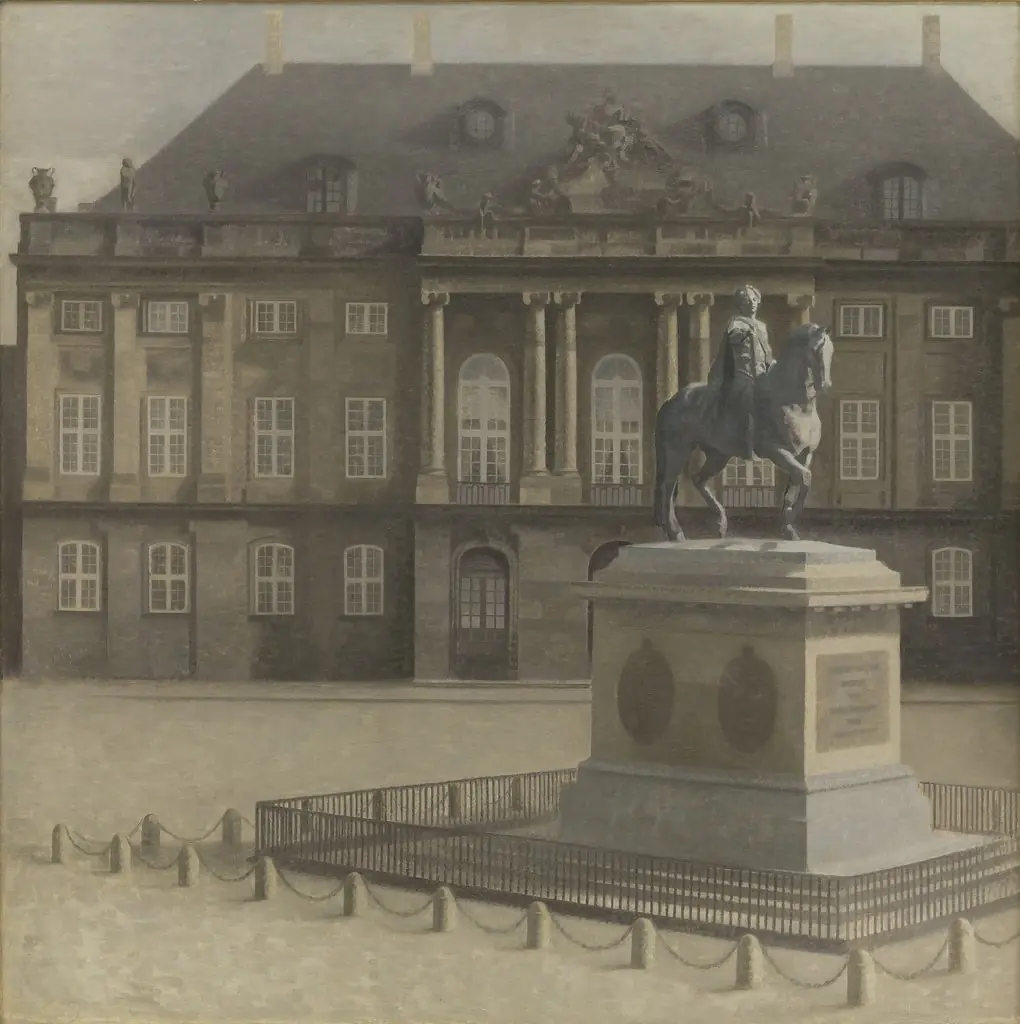 Amalienborg Square, Copenhagen
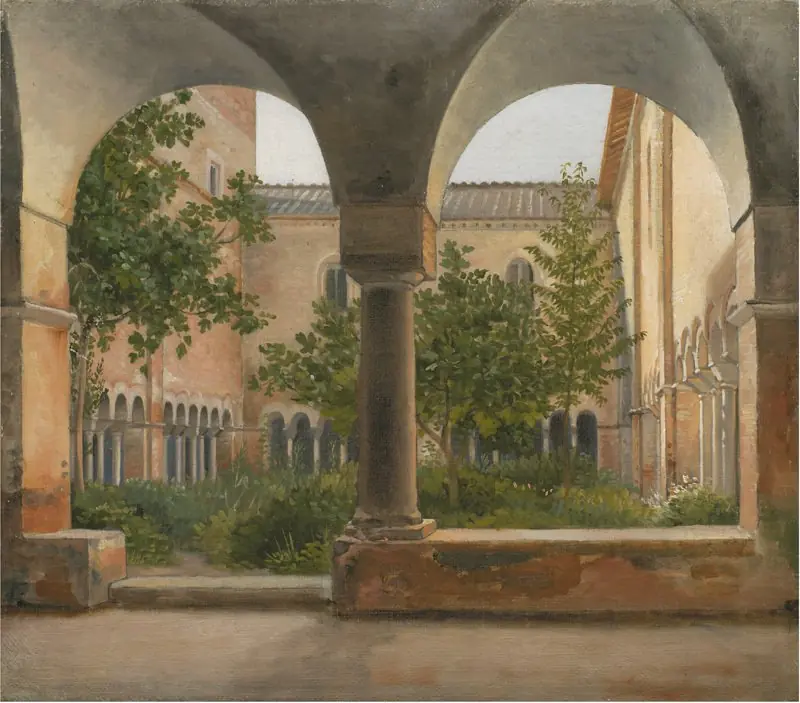 The Cloisters of San Lorenzo fuori le mura in Rome
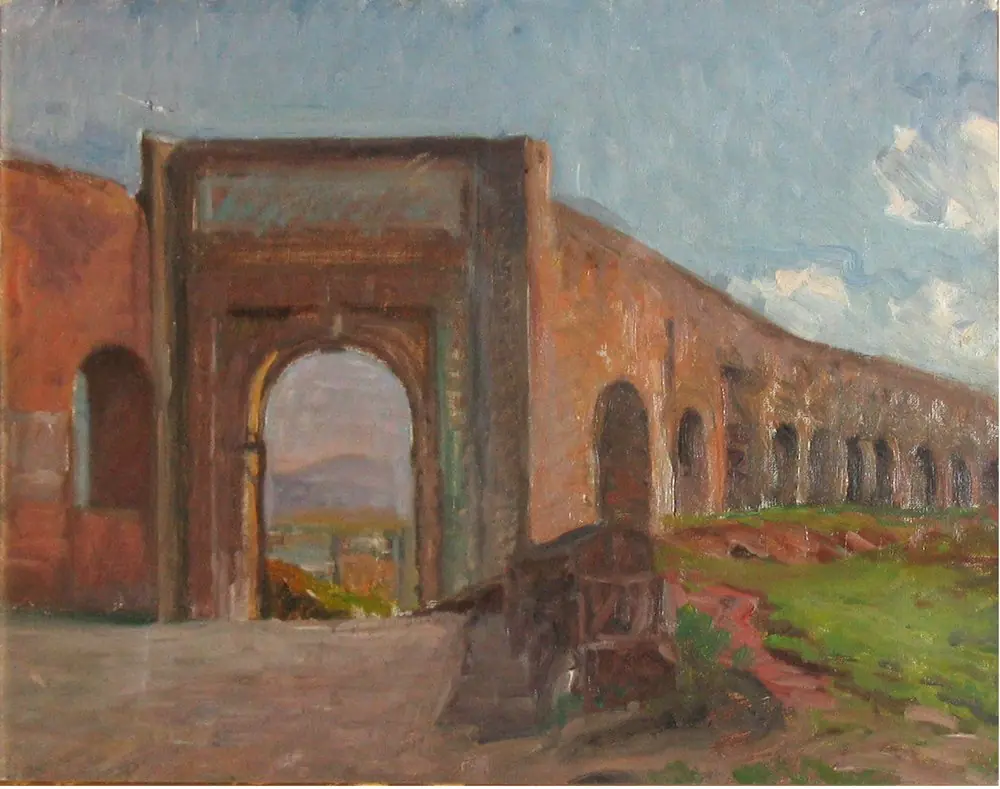 Porta Furba, Rome
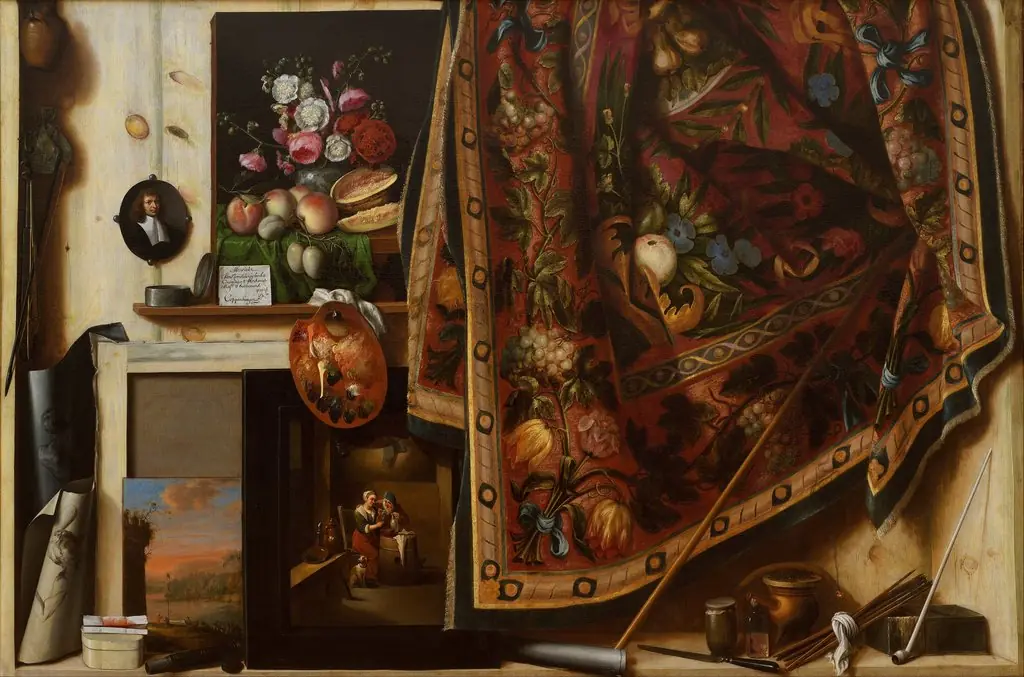 Trompe-l'œil. A Cabinet in the Artist's Studio
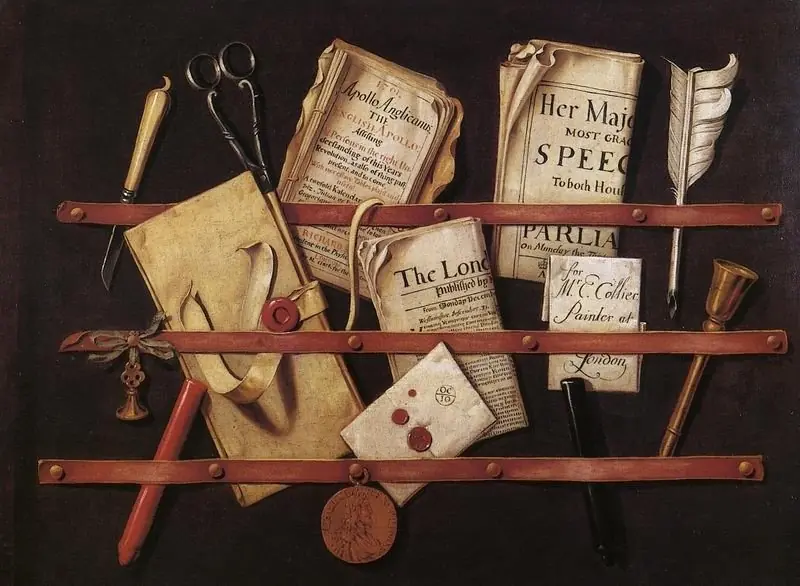 Trompe l'œil with Writing Materials
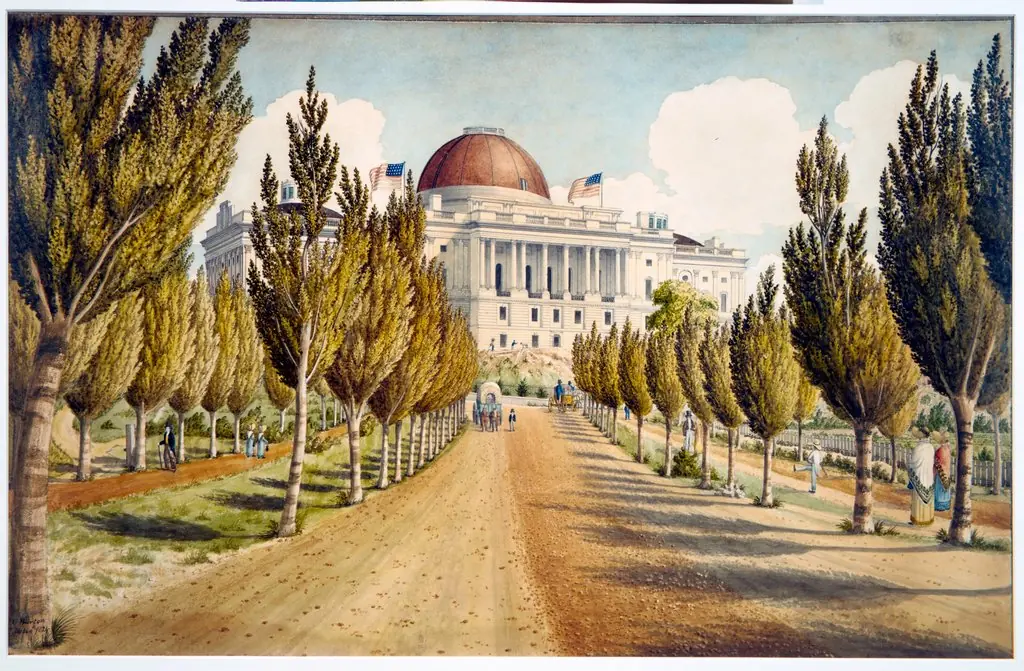 View of the Capitol
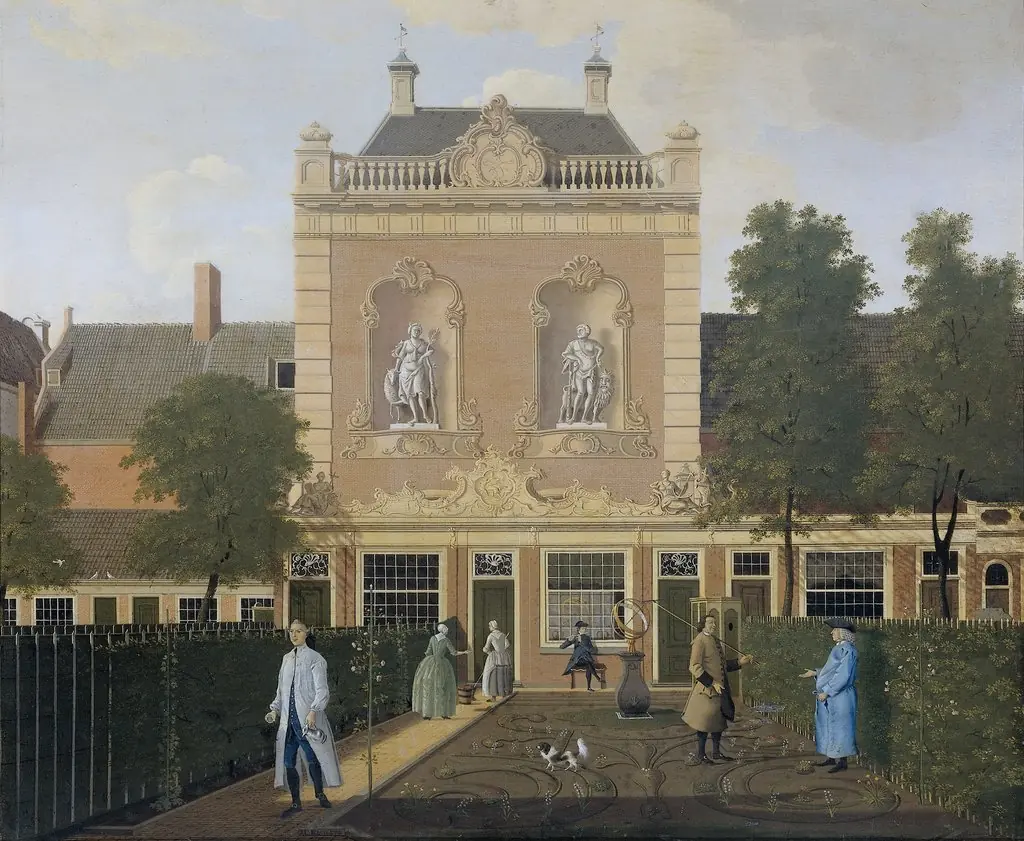 The Garden and Coach House of 524 Keizersgracht in Amsterdam
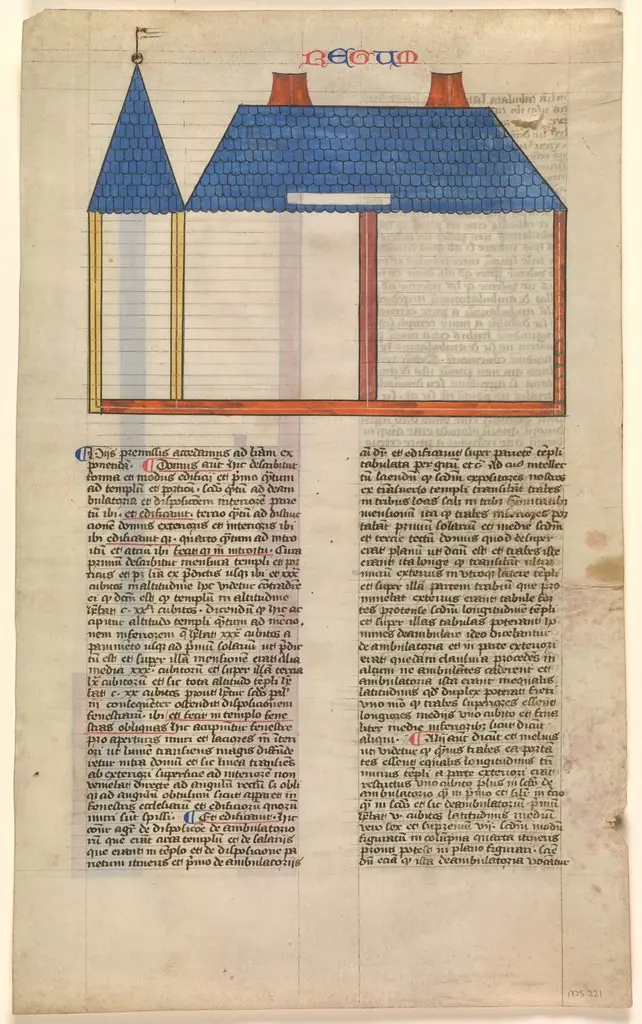 Elevation of Solomon's Temple, one of six illustrated leaves from the Postilla Litteralis (Literal Commentary) of Nicholas of Lyra
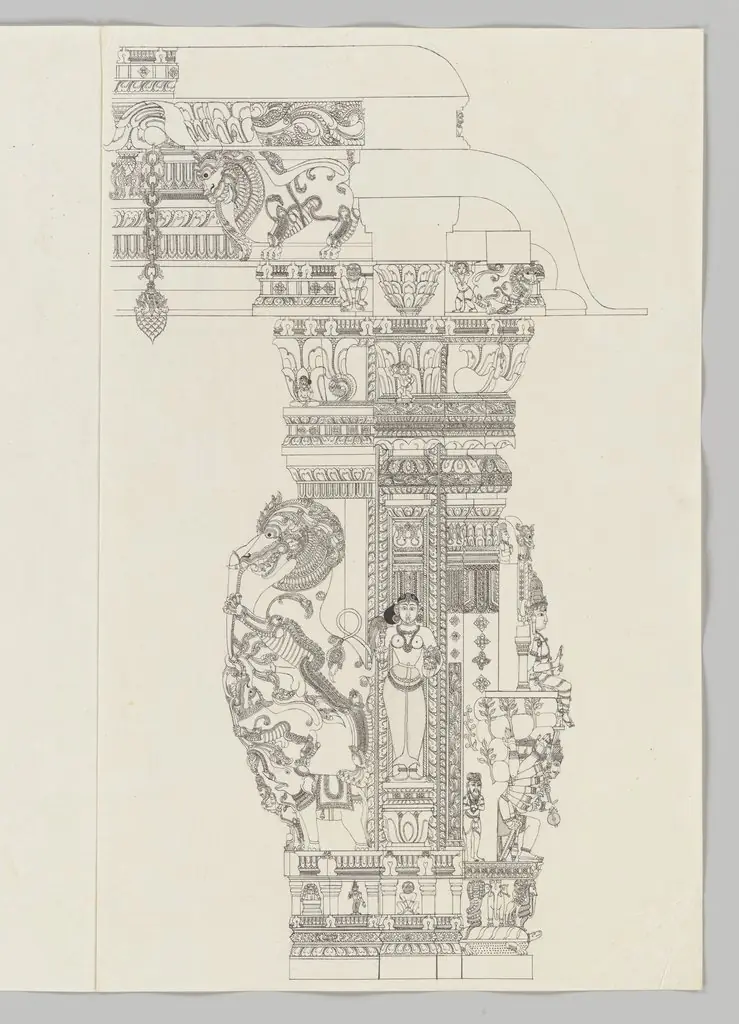 Shiva Ravananugrahamurti; woman holding a flywhisk; rearing yali
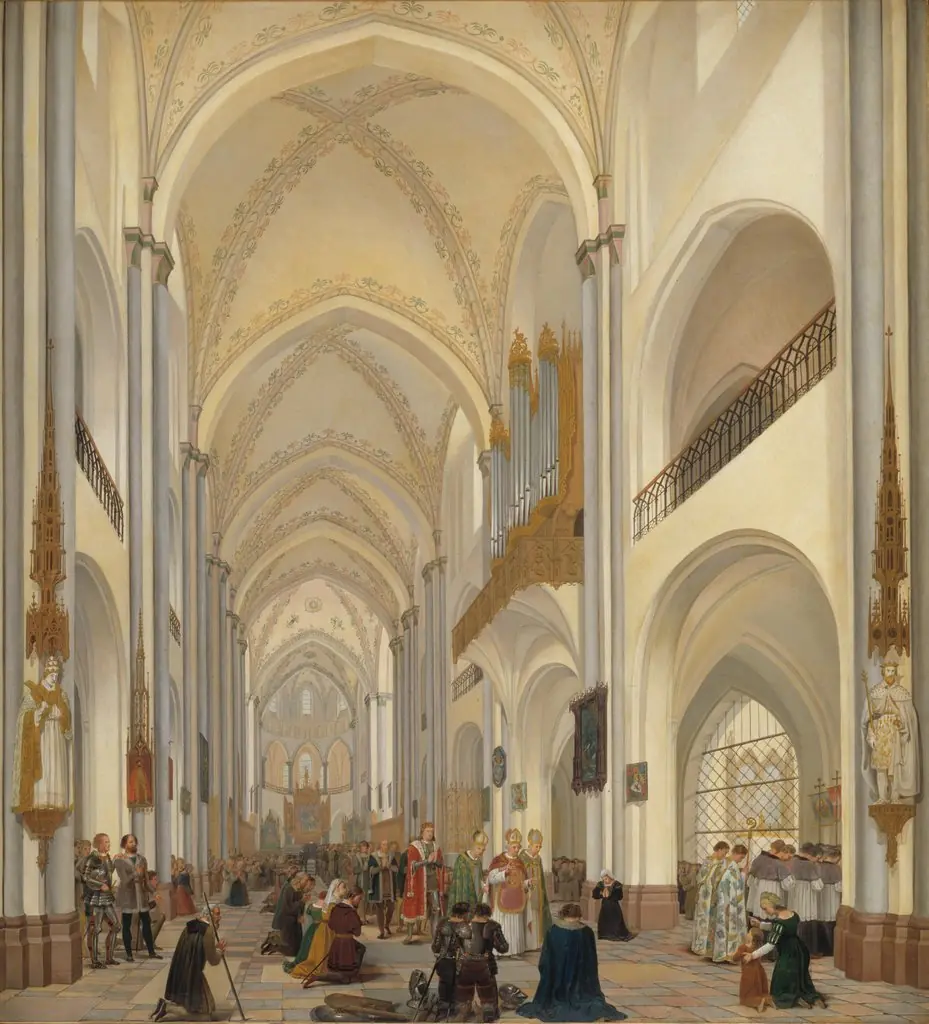 Det indre af Roskilde Domkirke
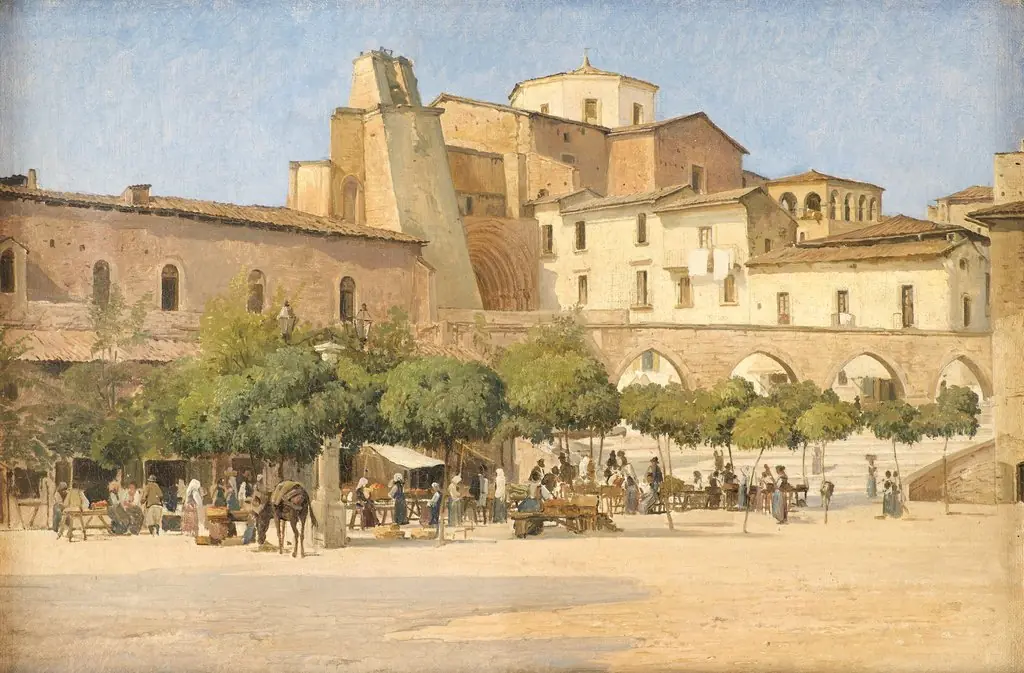 Torvet i Sulmona
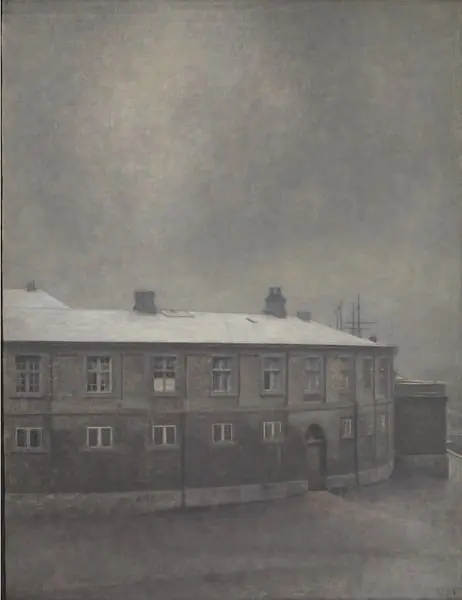 A Wing of Christiansborg Palace
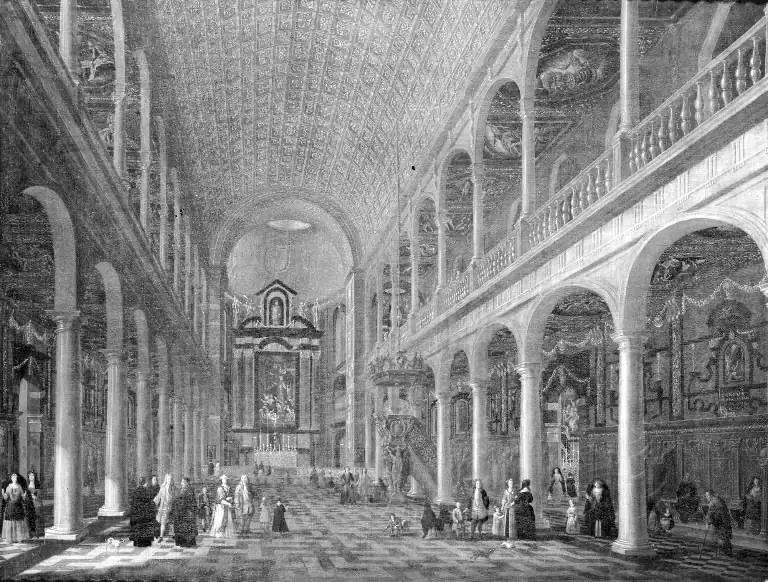 Interior of the Jesuit Church in Antwerp
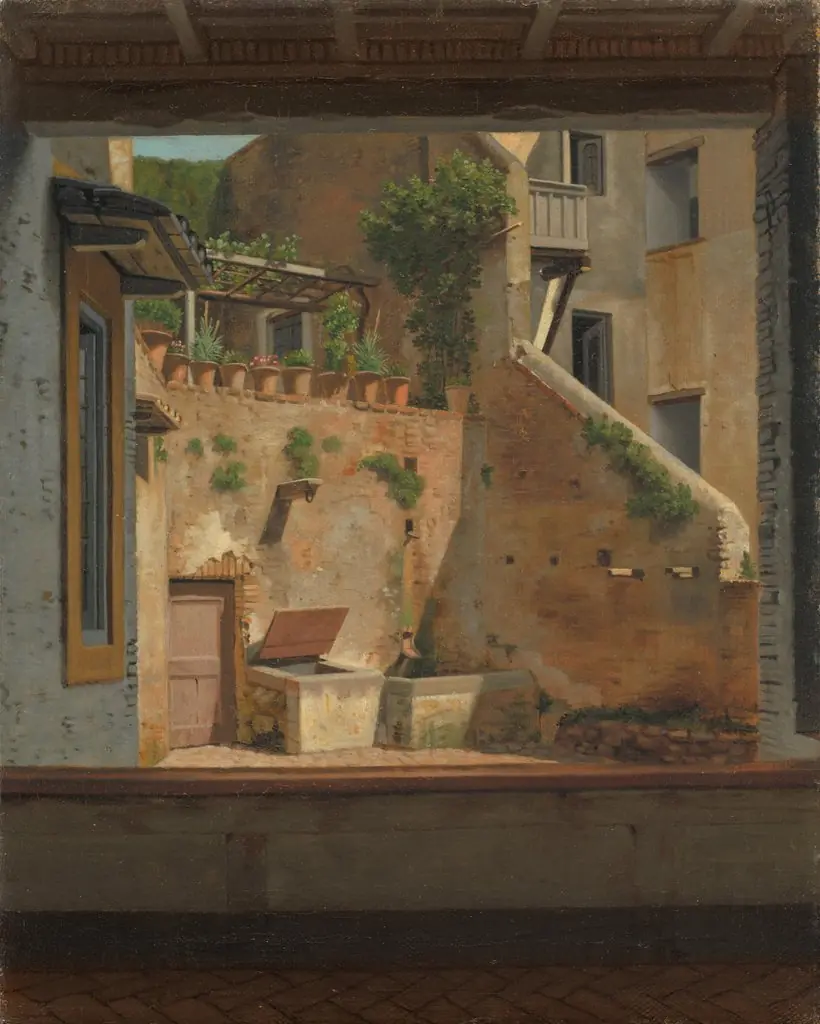 Roman Courtyard Interior. Copy after Eckersberg
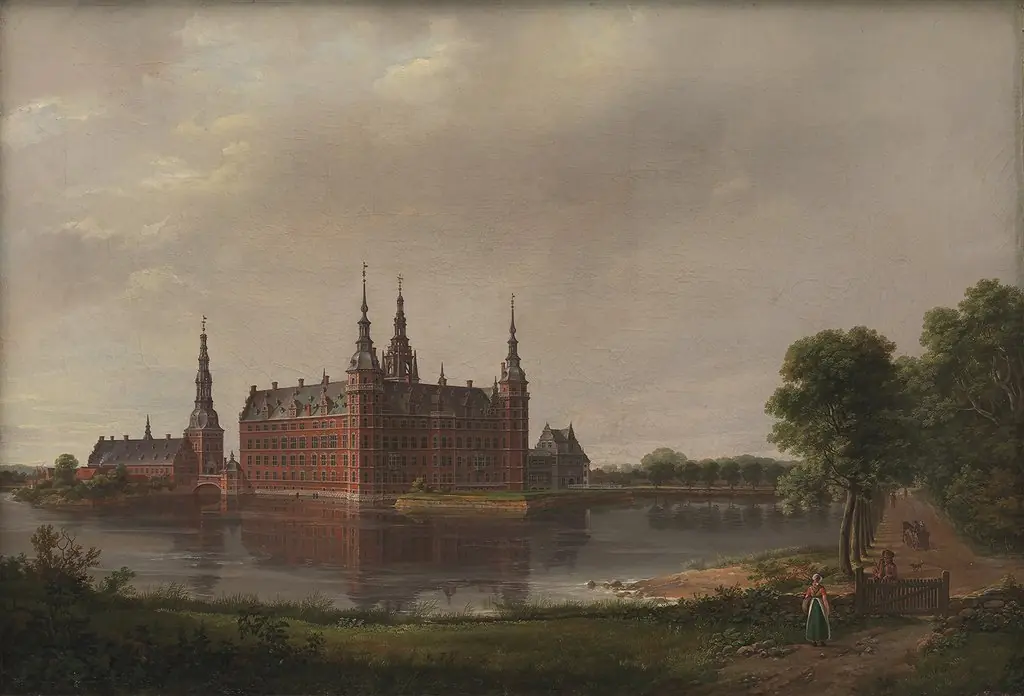 Frederiksborg Castle
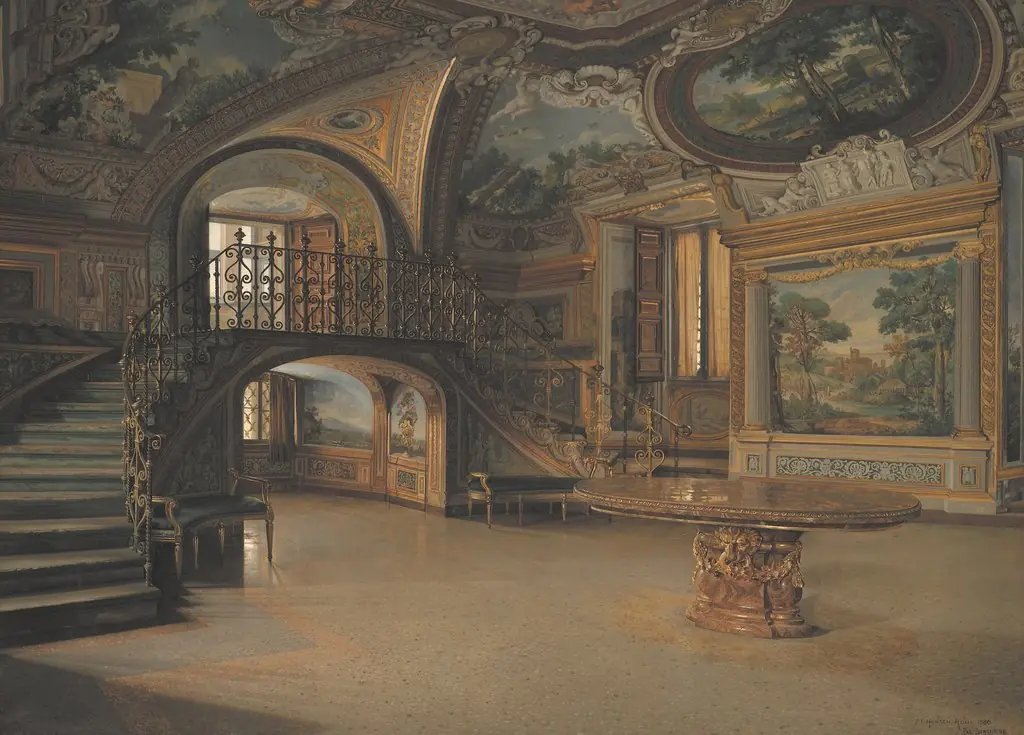 En sal i Palazzo Borghese
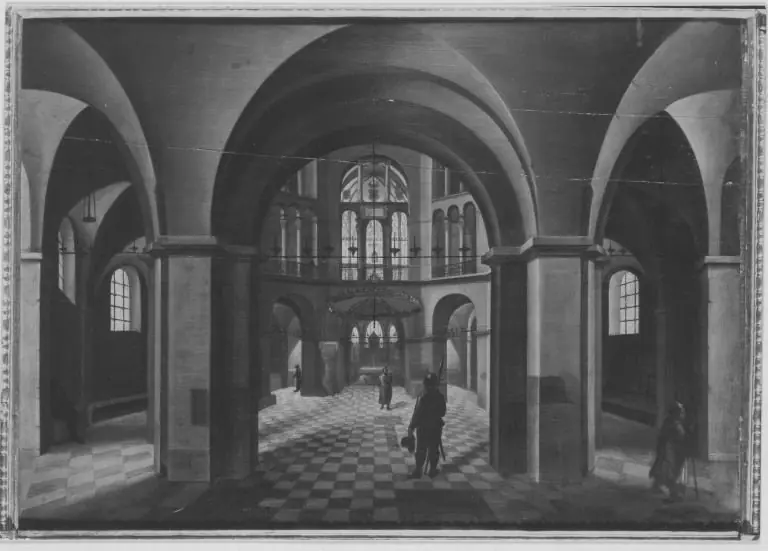 The Interior of Aachen Cathedral
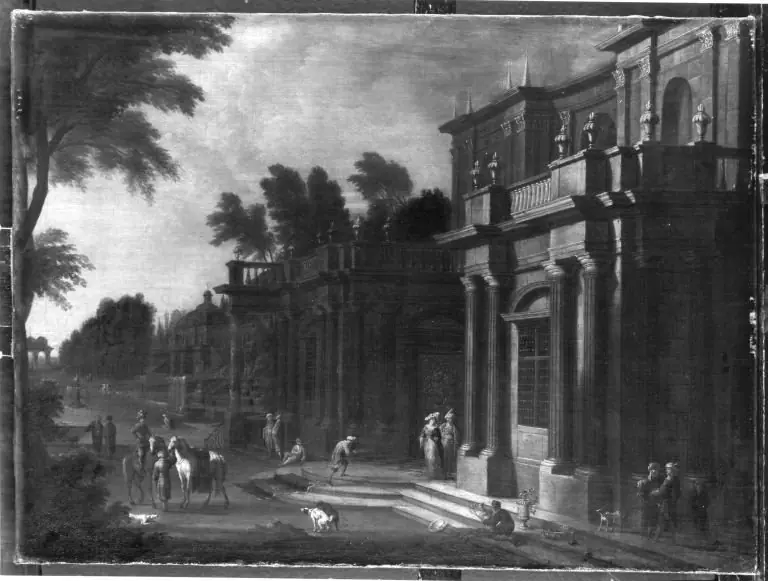 Architectural image
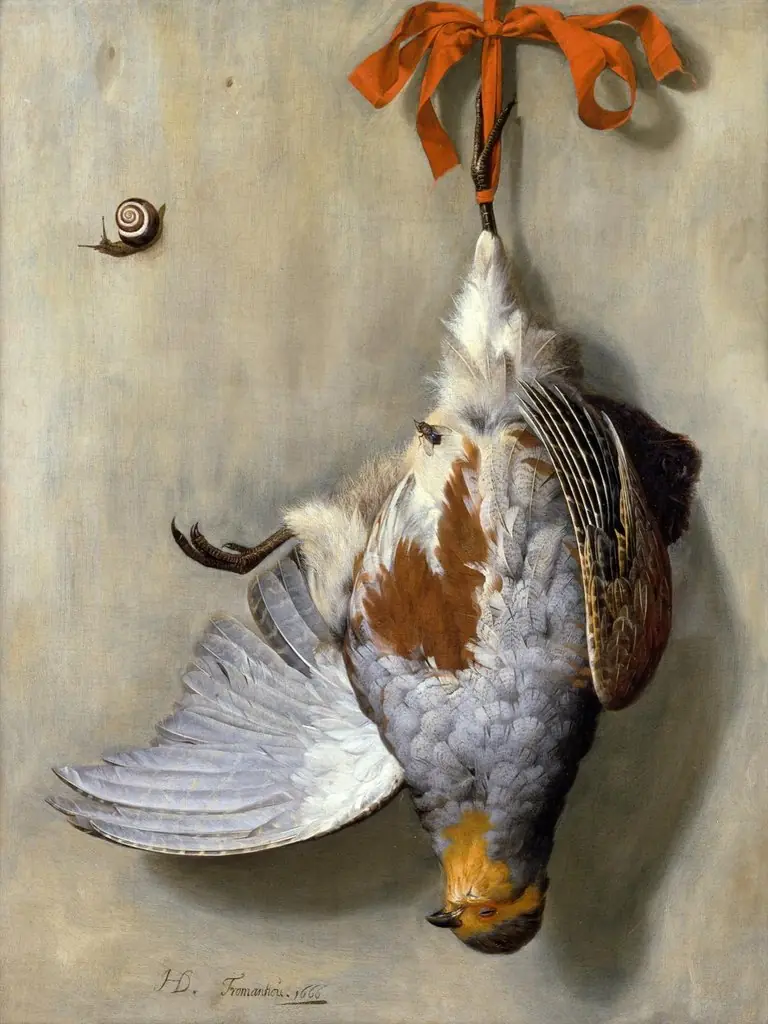 Trompe l'Oeil with a Dead Partridge
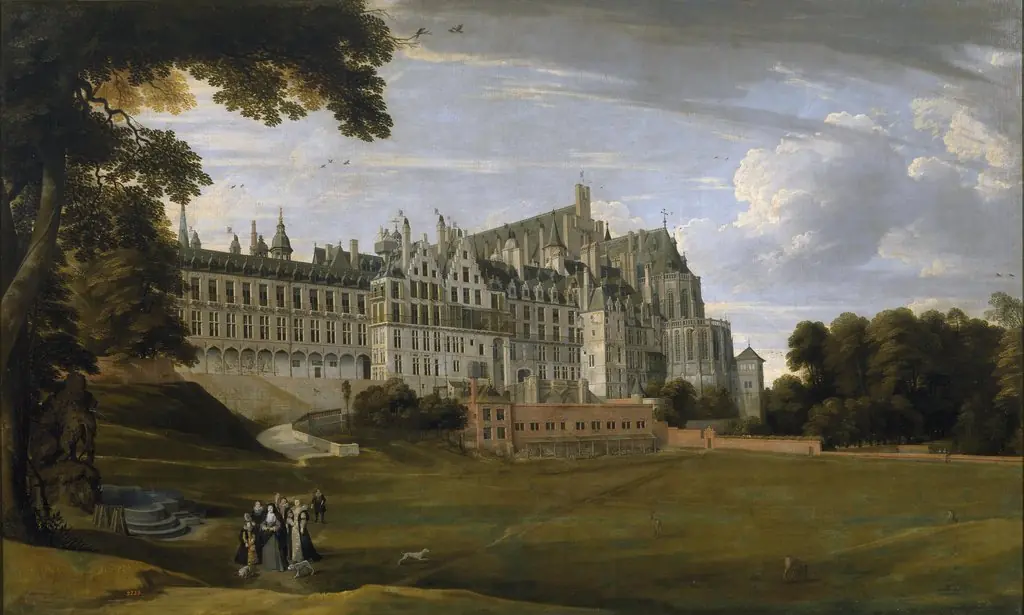 The Royal Palace in Brussels (The Palace of Coudenberg)
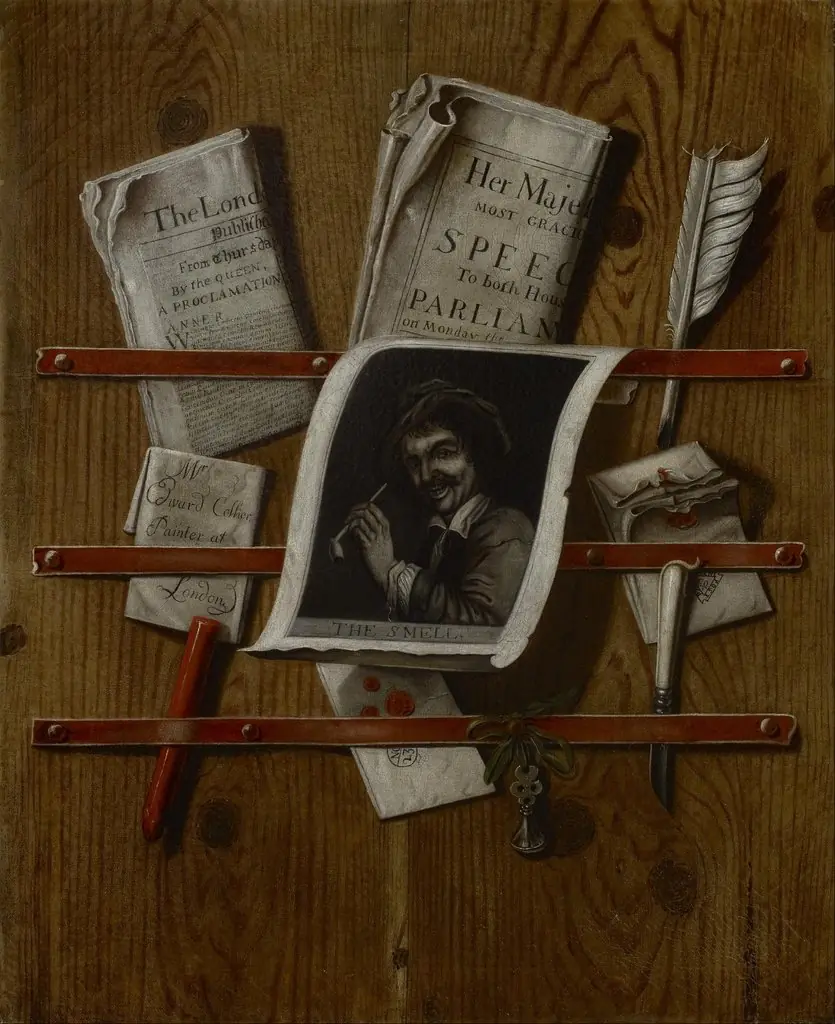 Still Life: The Smell
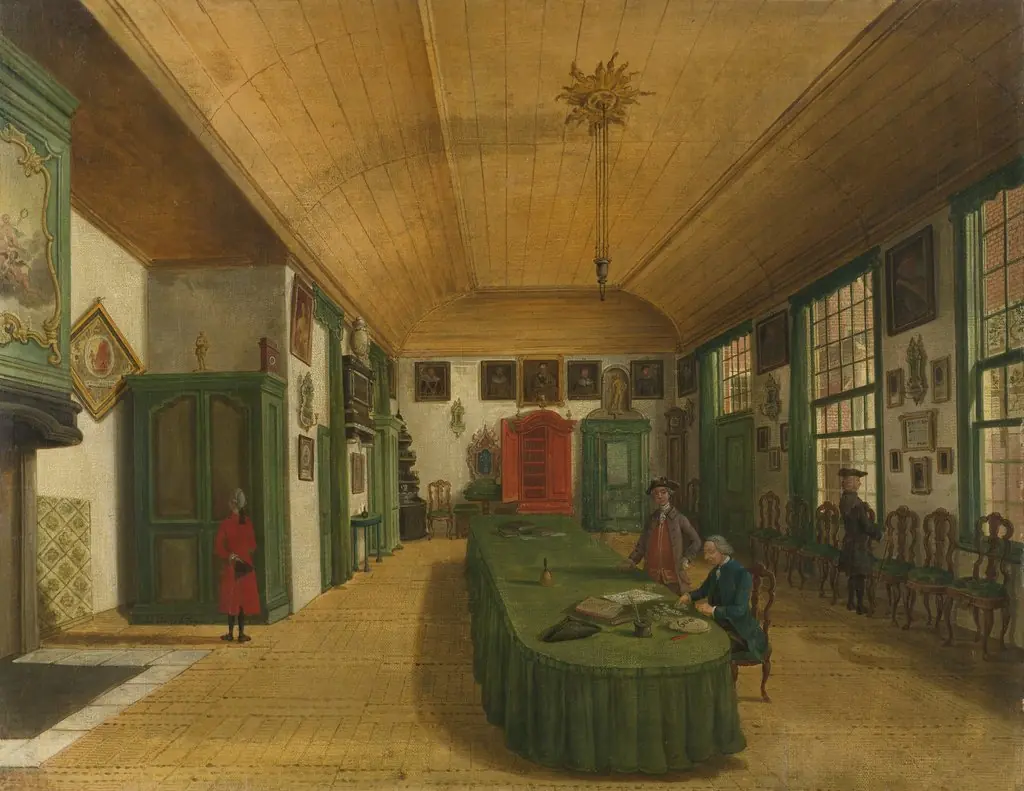 Interior of the Hall of the "Art Is Obtained by Labor Society" in Leiden
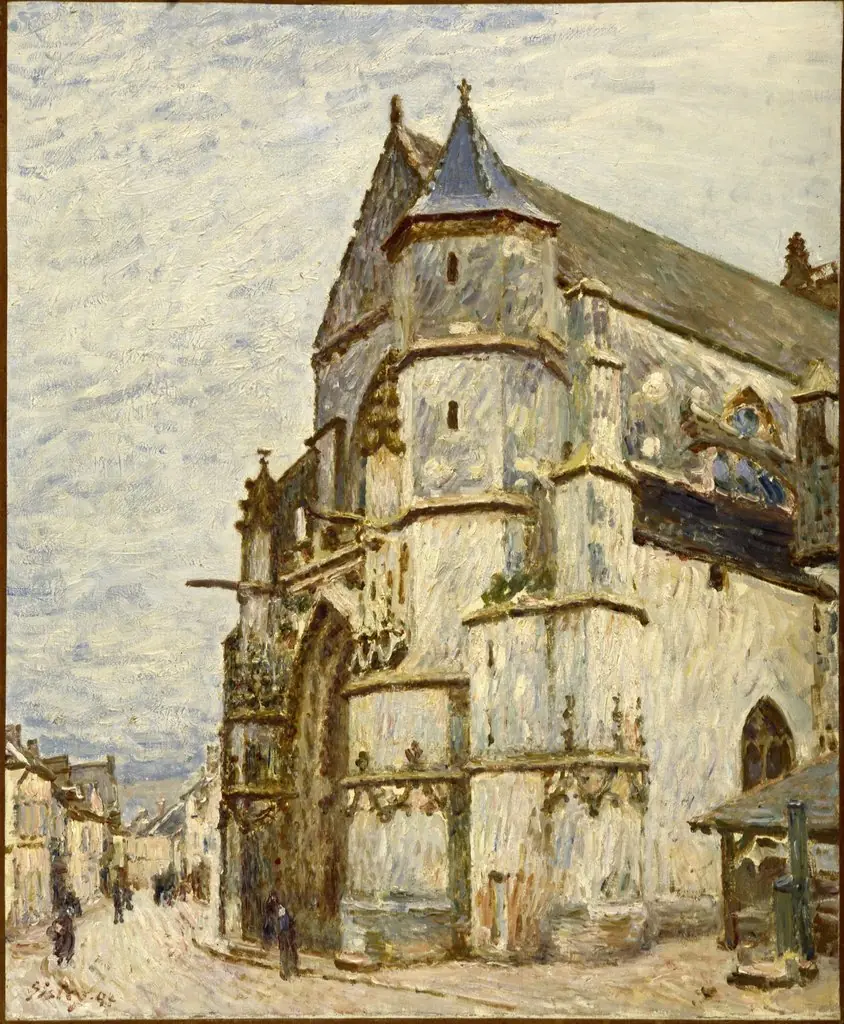 The Church in Moret after the Rain
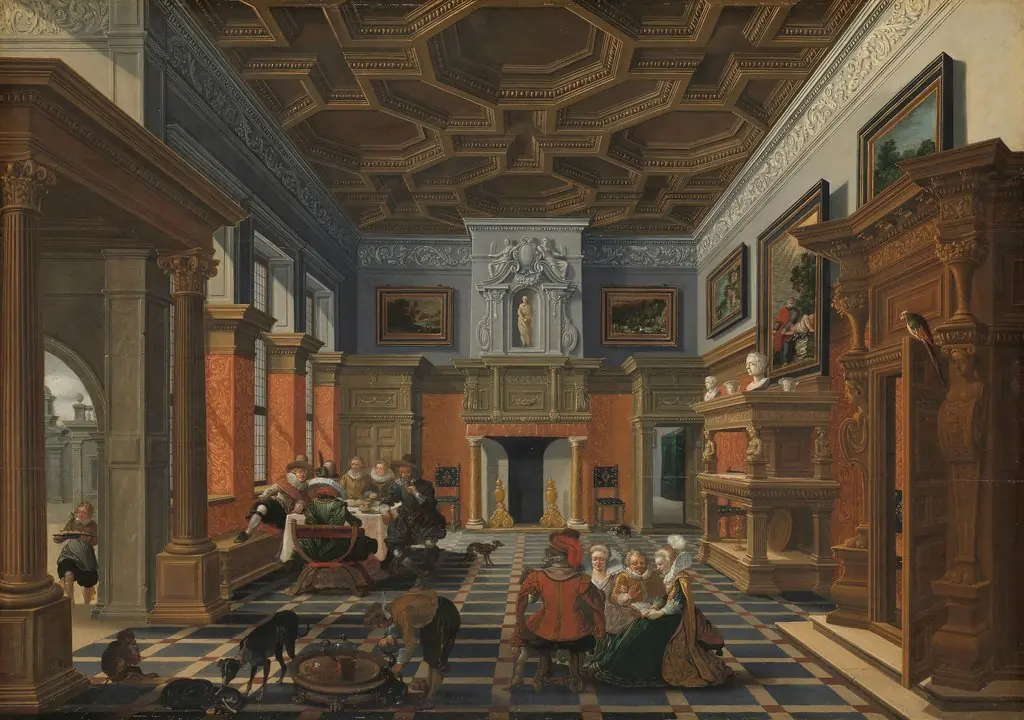 Interior with a Company
 Elegant Party on a Terrace of a Venetian-inspired Setting
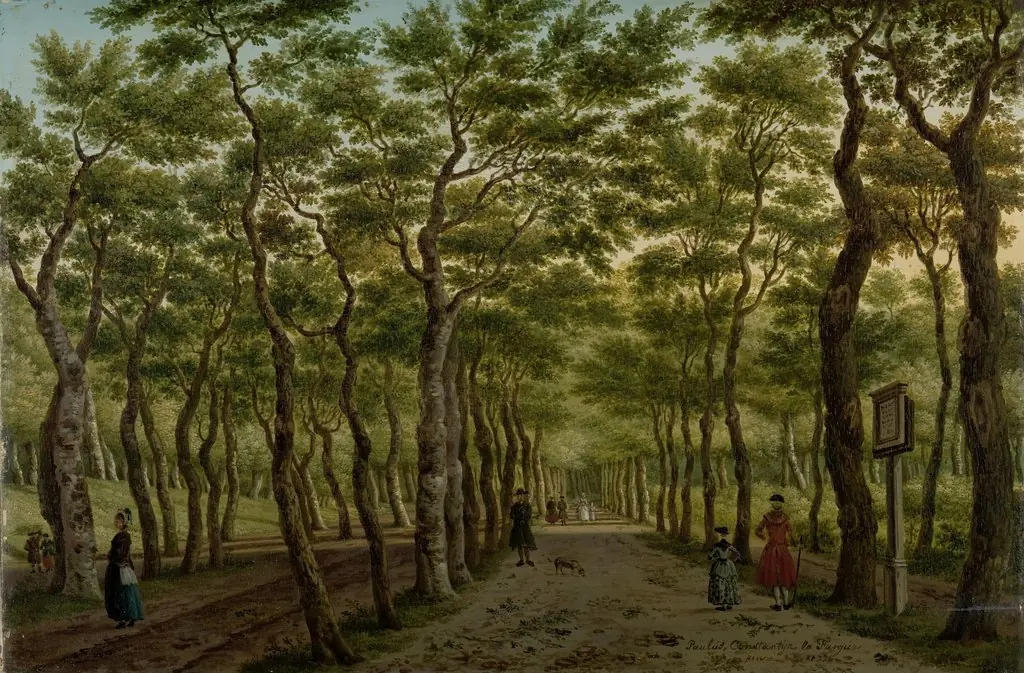 The Herepad in the Haagse Bos
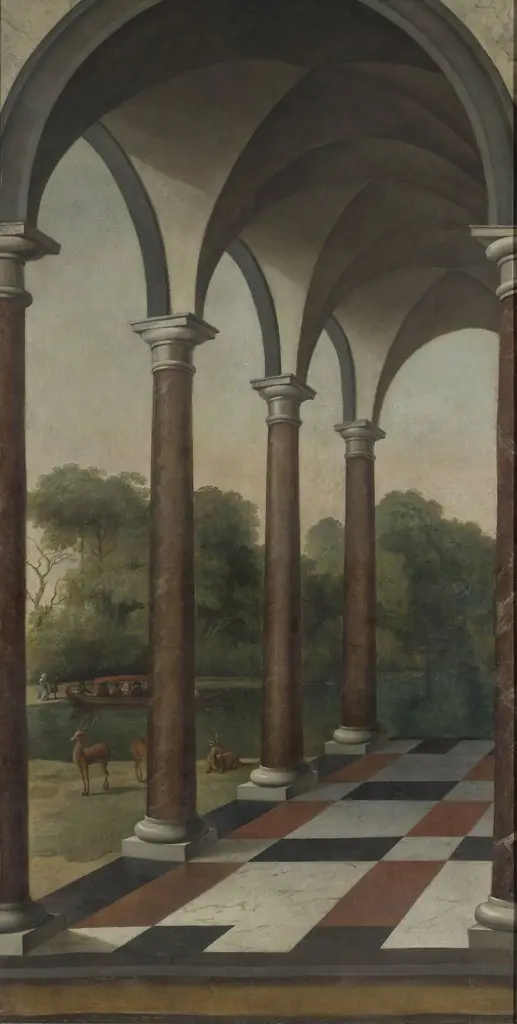 Colonnade giving onto a park
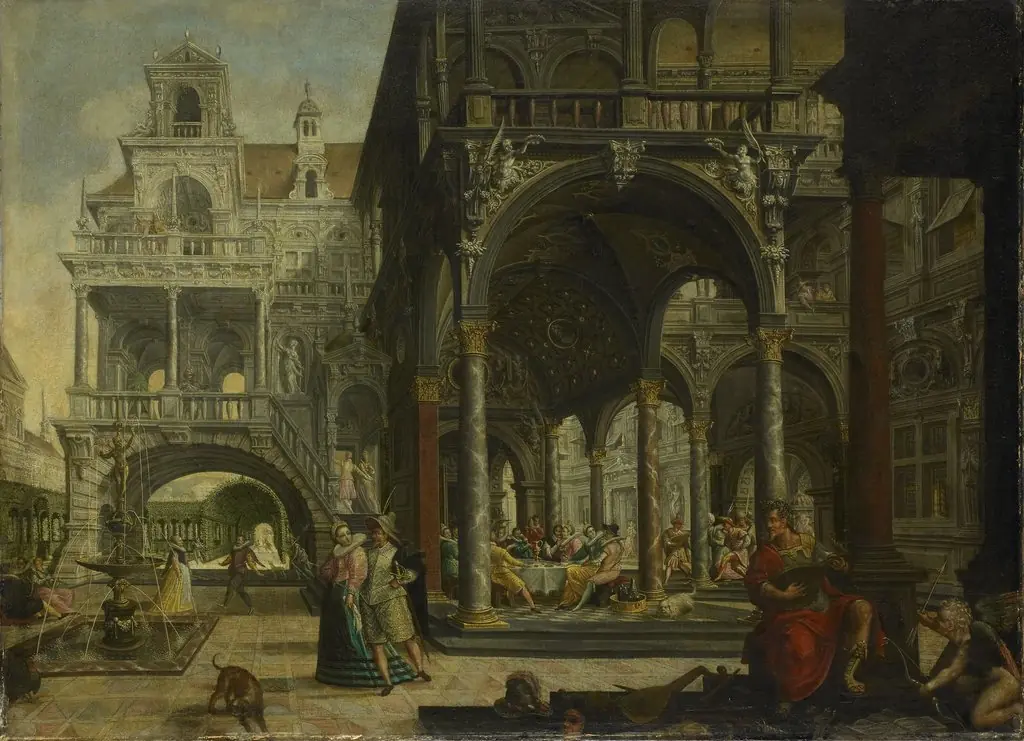 Phantasy Renaissance palace
 Bird's-eye View of the Vredenburg (Vredeborch) Castle in Utrecht
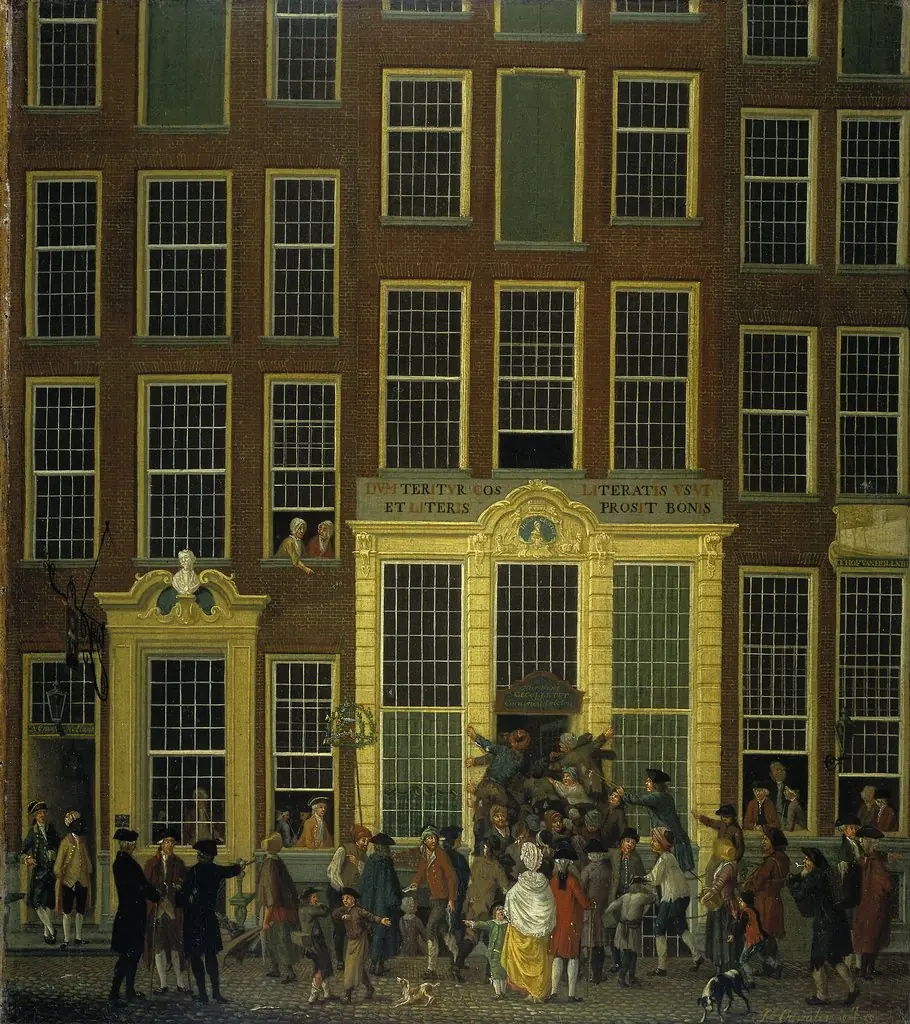 The Bookshop and Lottery Agency of Jan de Groot in the Kalverstraat in Amsterdam
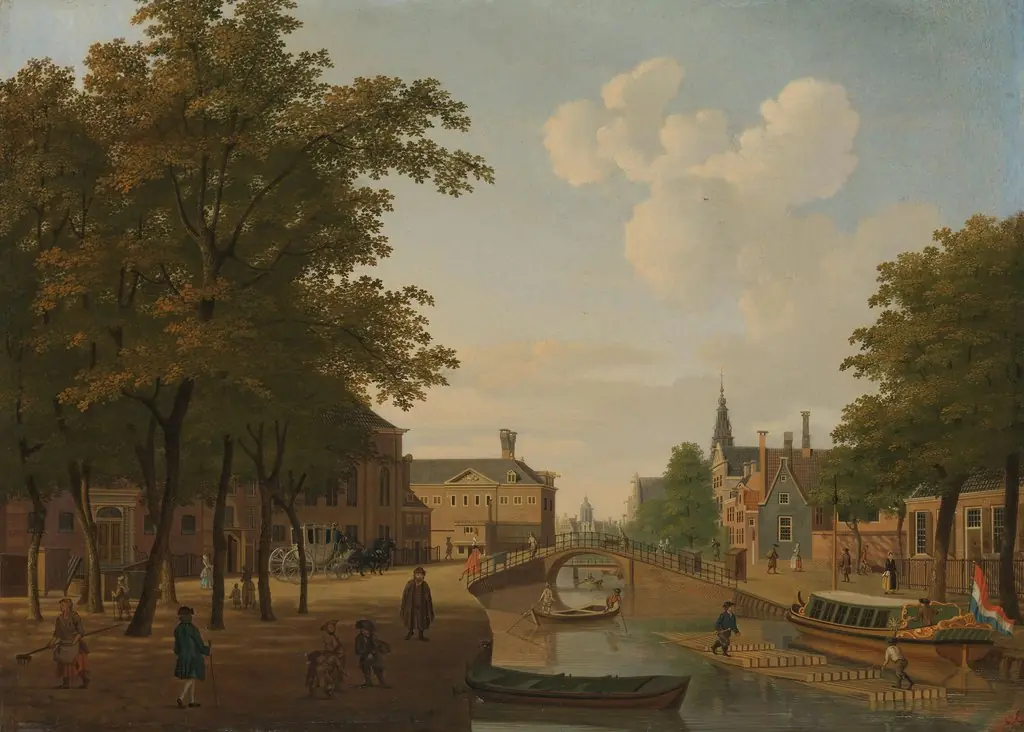 Gezicht op de Houtmarkt te Amsterdam
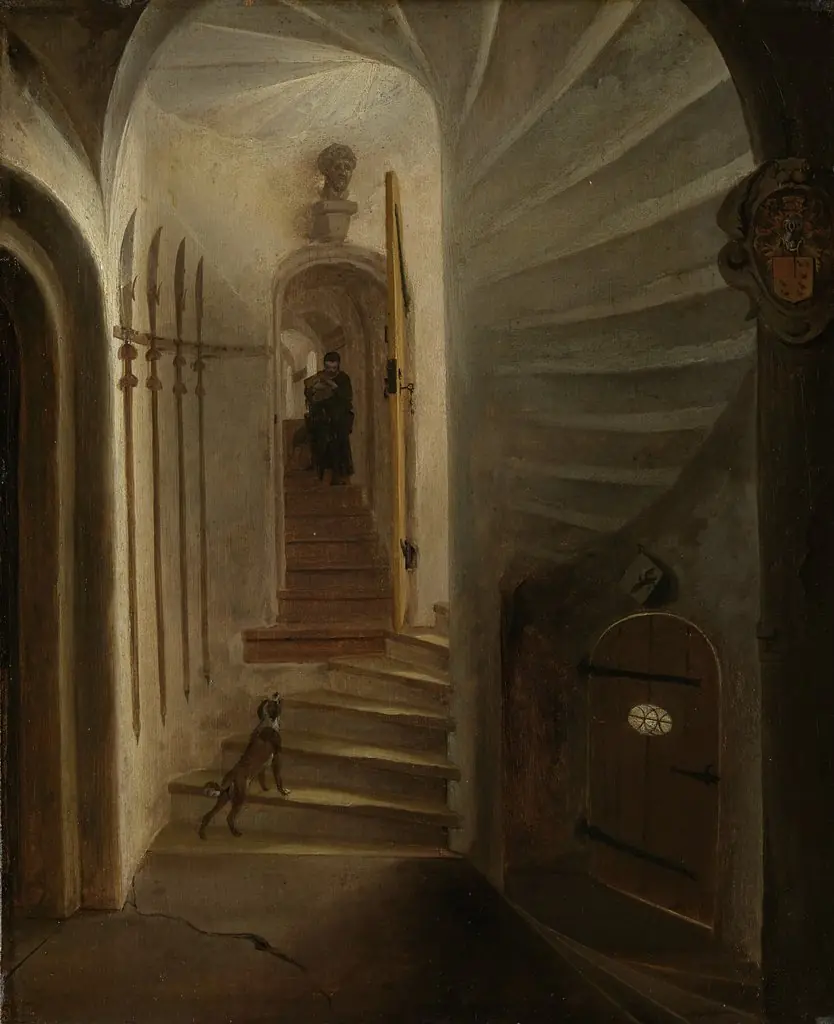 Portal of a stairway tower, with a man descending the stairs: presumably the moment before the assassination of William the Silent in the Ptinsenhof, Delft
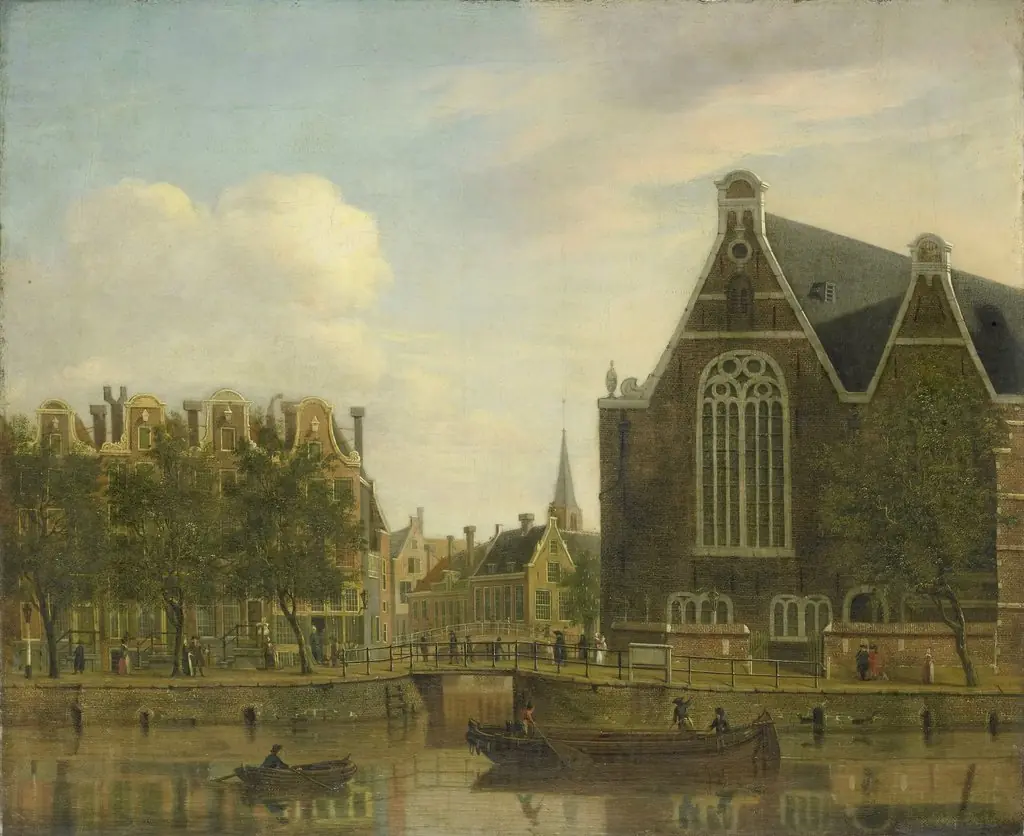 The so-called Boerenverdriet on the Spui, Amsterdam
 The great hall in the Hradschin in Prague
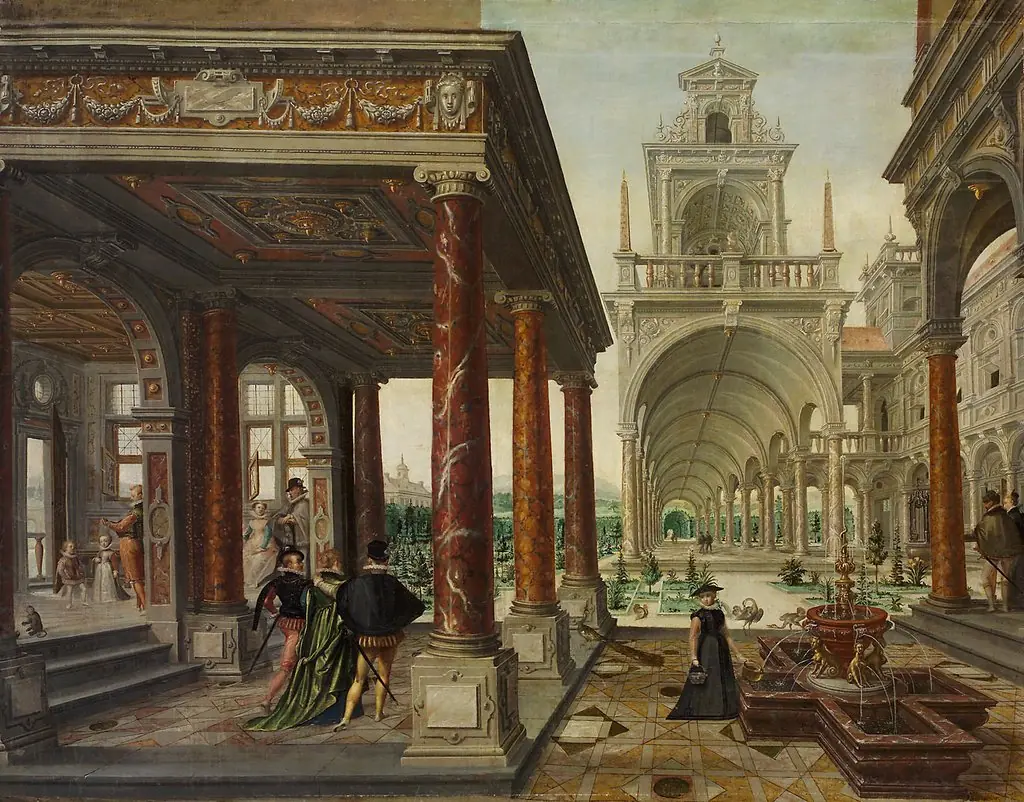 Love garden with elegant figures
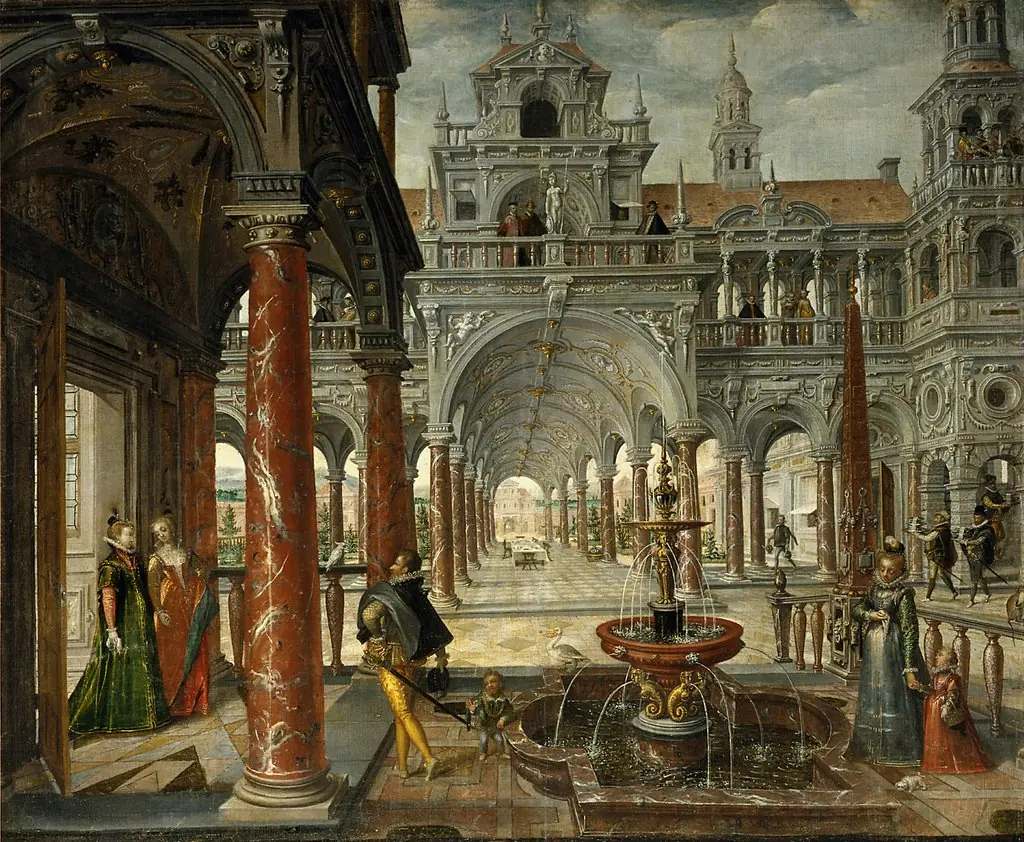 Palace Architecture with Distinguished Visitors
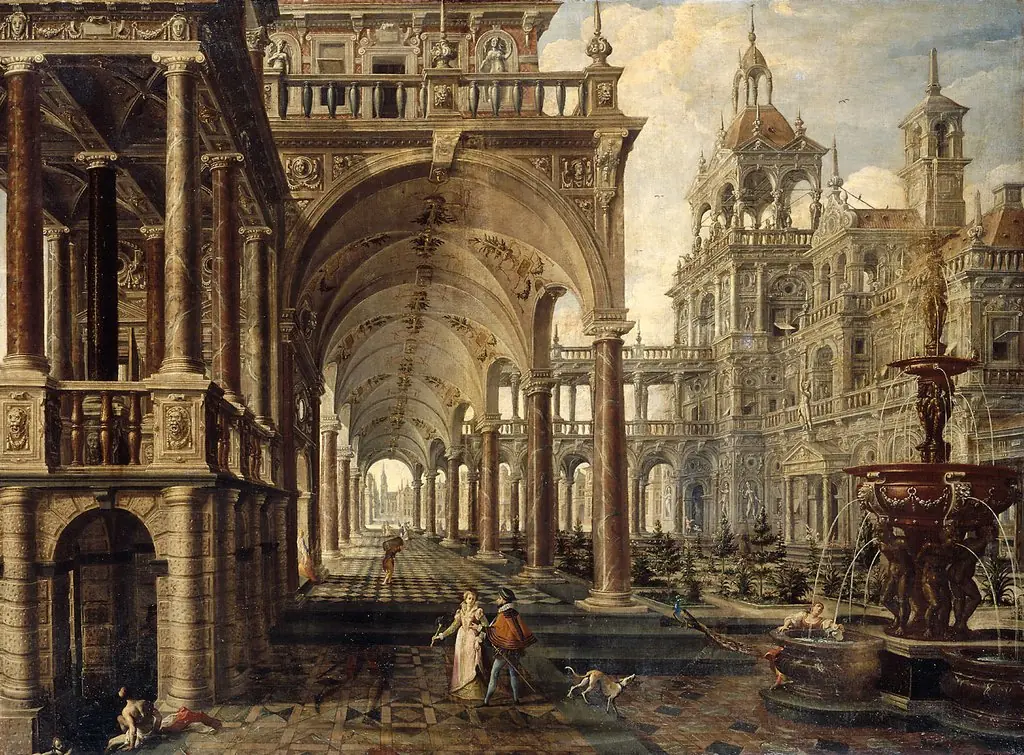 Palastarchitektur mit Badenden
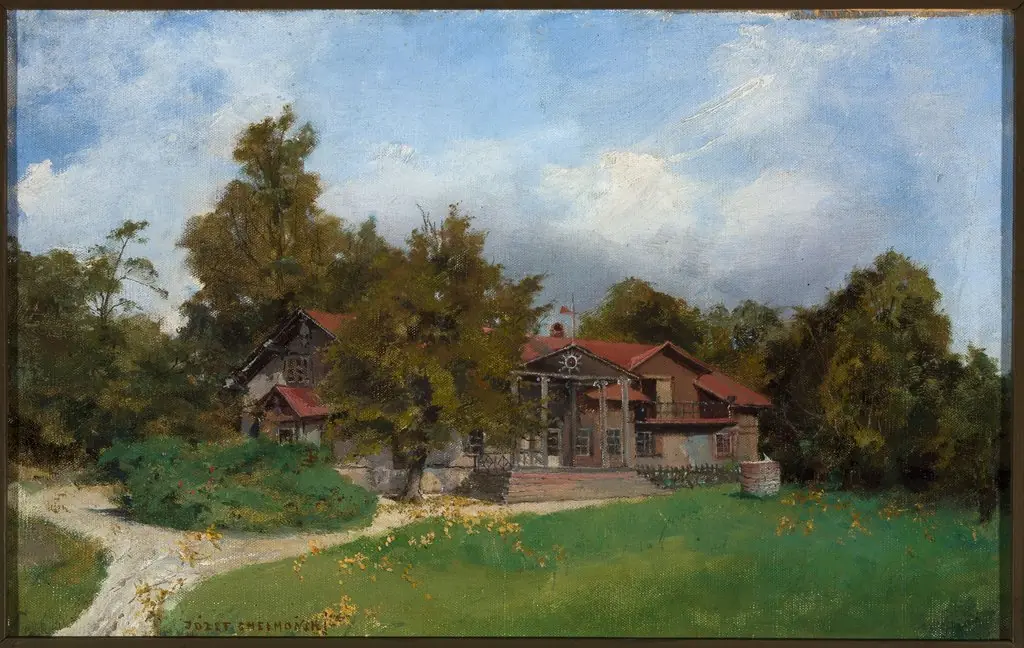 Villa in the garden – Kuklówka
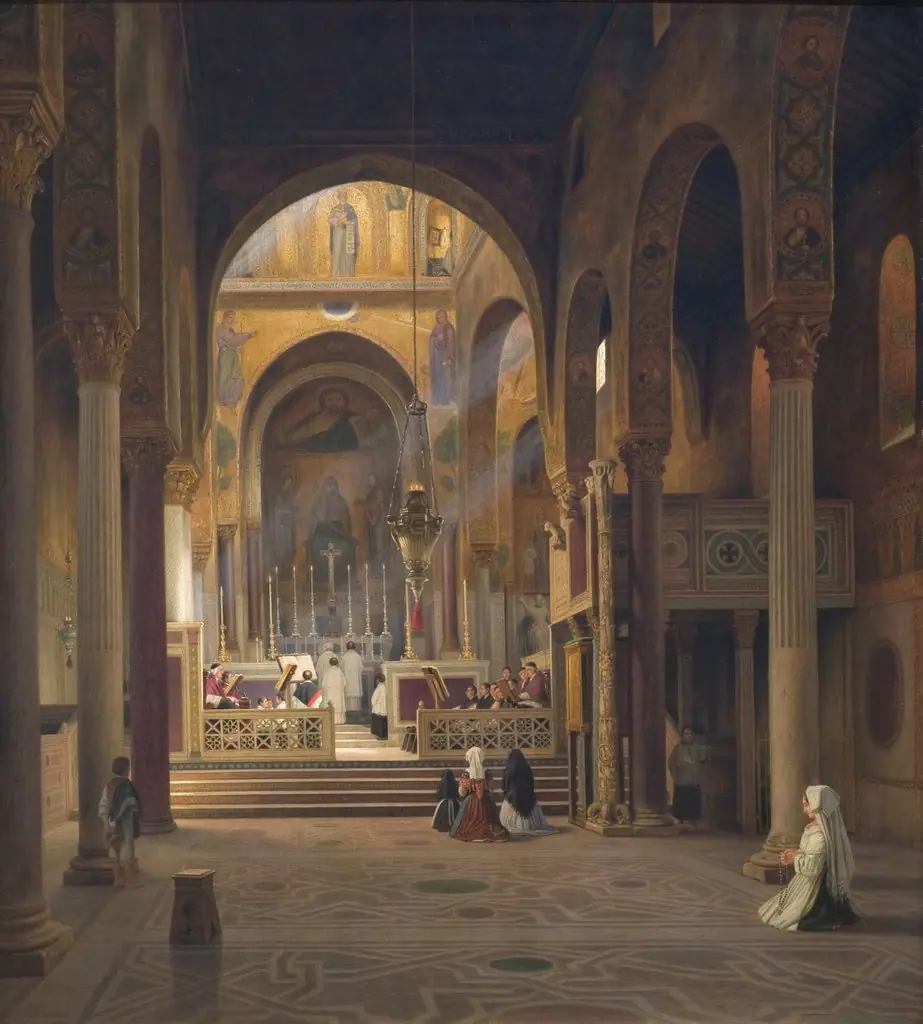 Interior of the Capella Palatina in Palermo, Italy
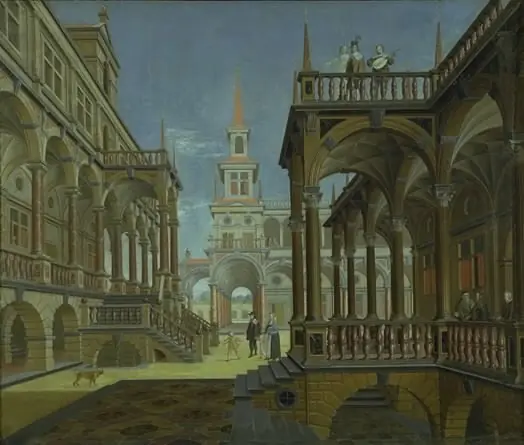 Architectural Motif Piece
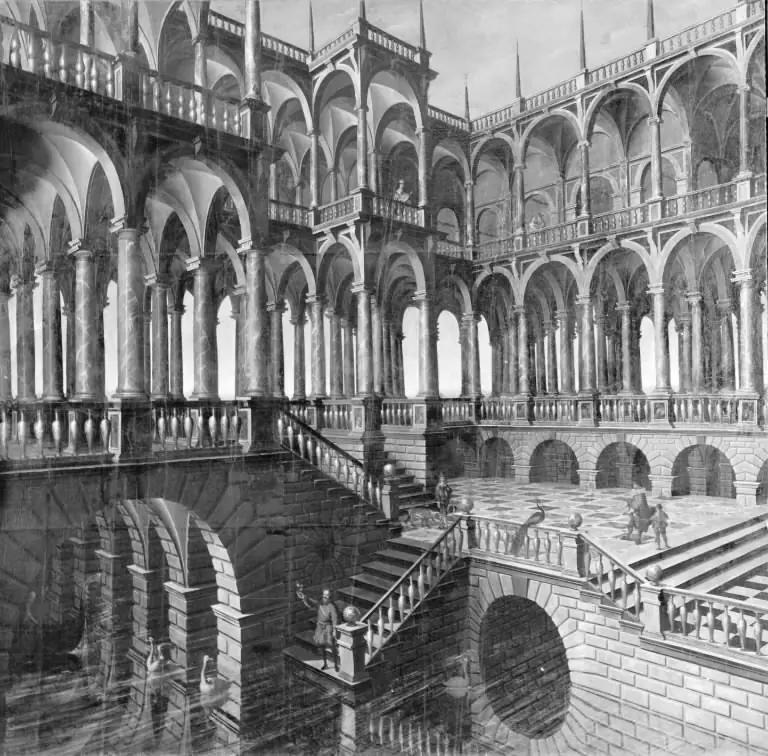 Columns
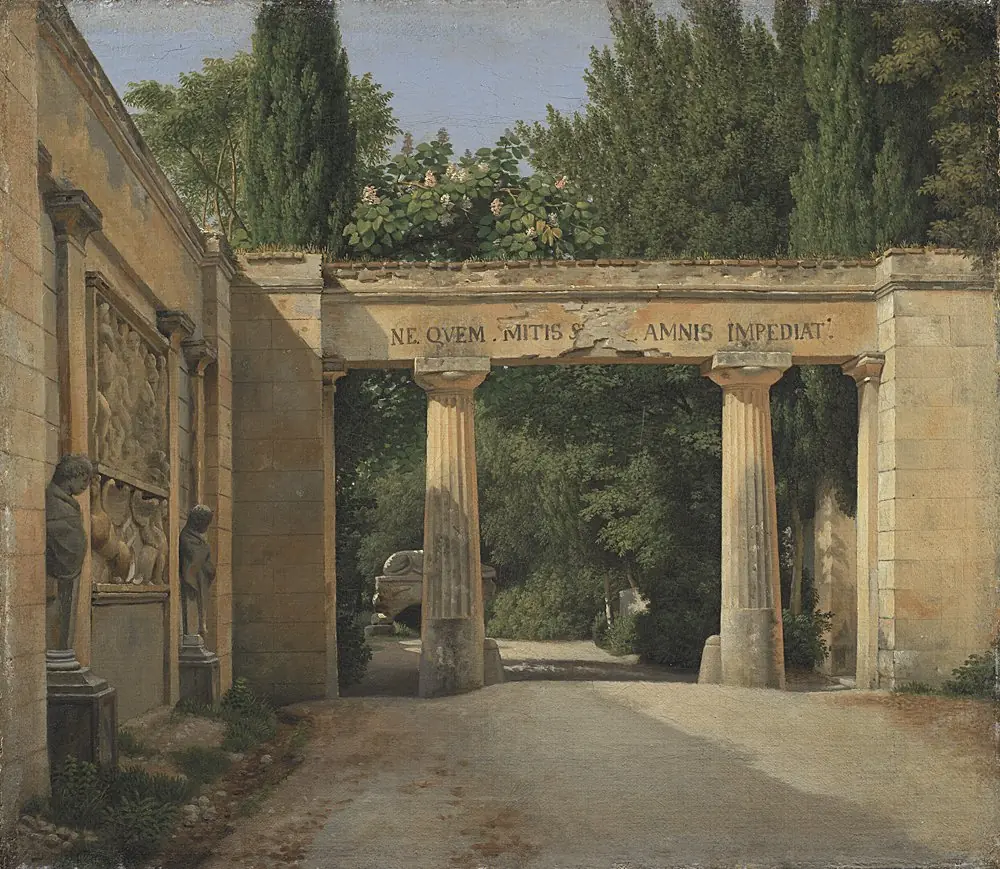 View of the Garden of the Villa Borghese in Rome
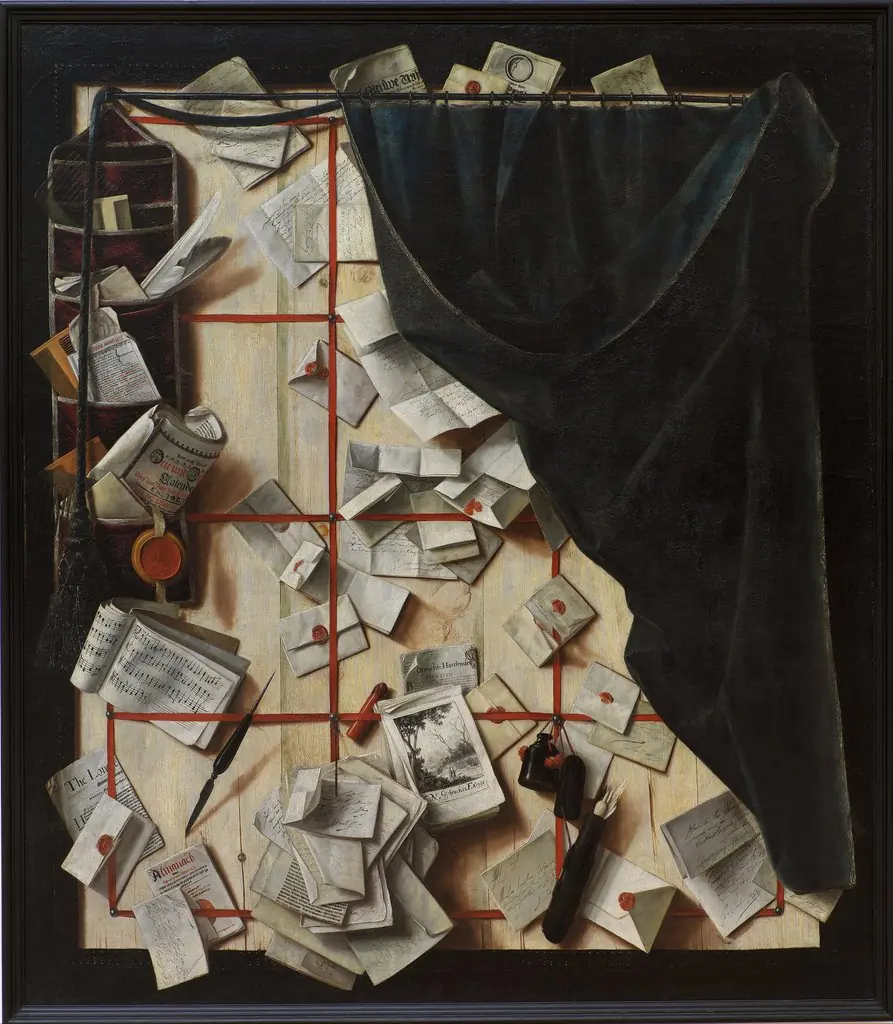 Trompe l'oeil. Board Partition with Letter Rack and Music Book
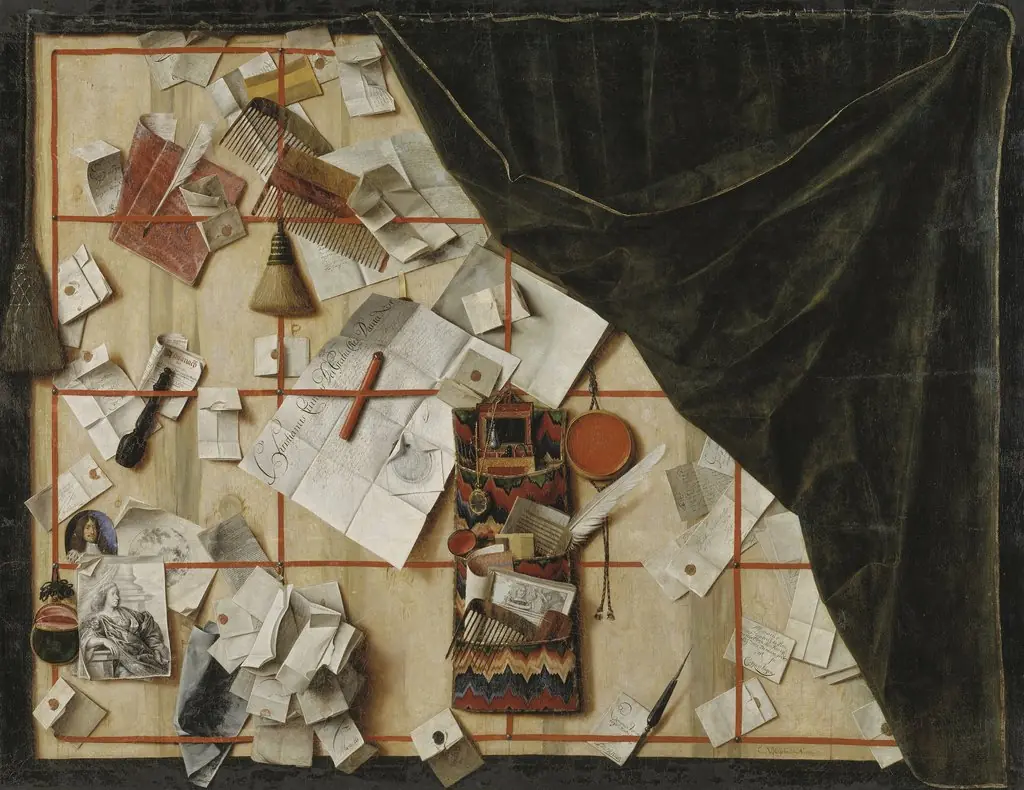 Trompe l'oeil of a Letter Rack with Christian V's Proclamation
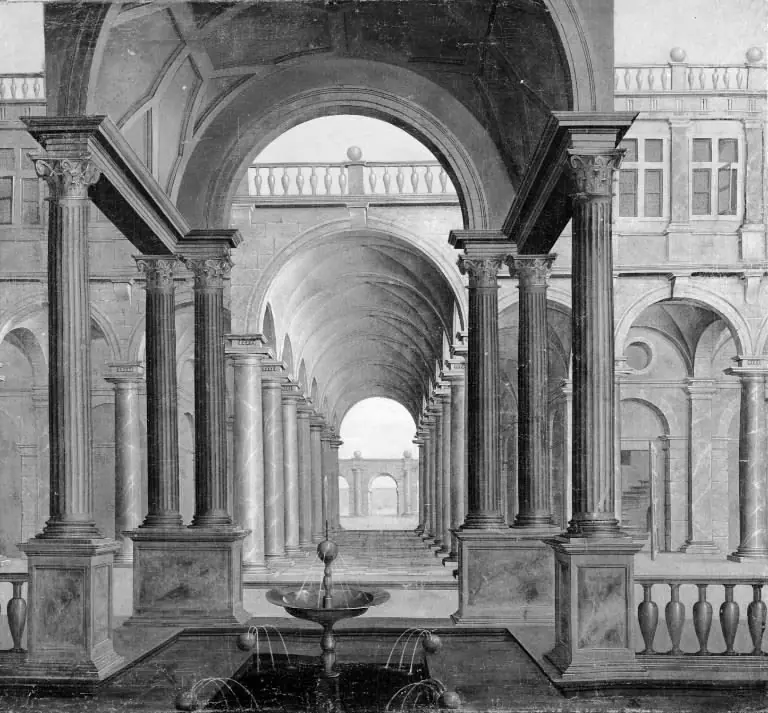 Colonnade
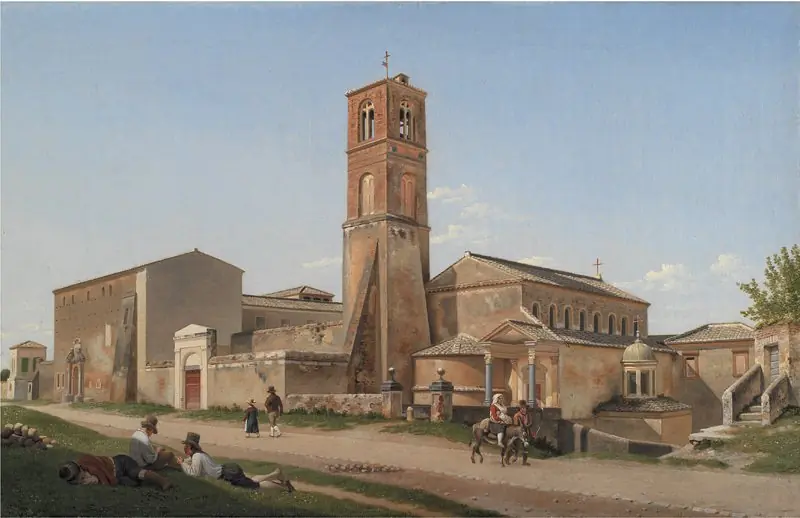 S. Agnese fuori le mura, Rome
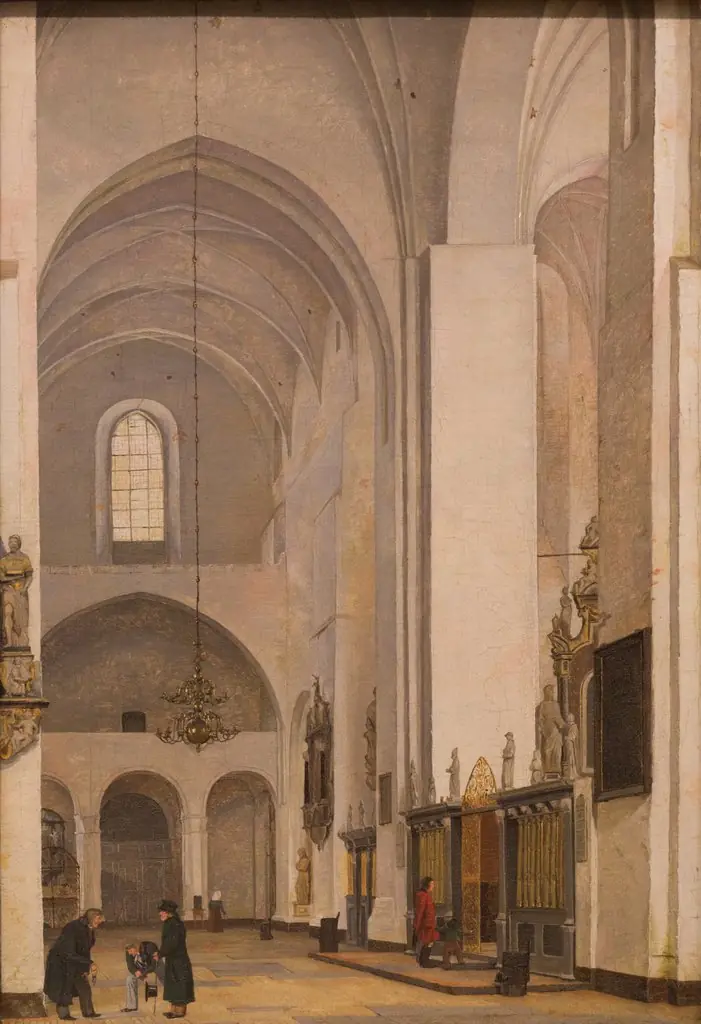 The Transept of Århus Cathedral
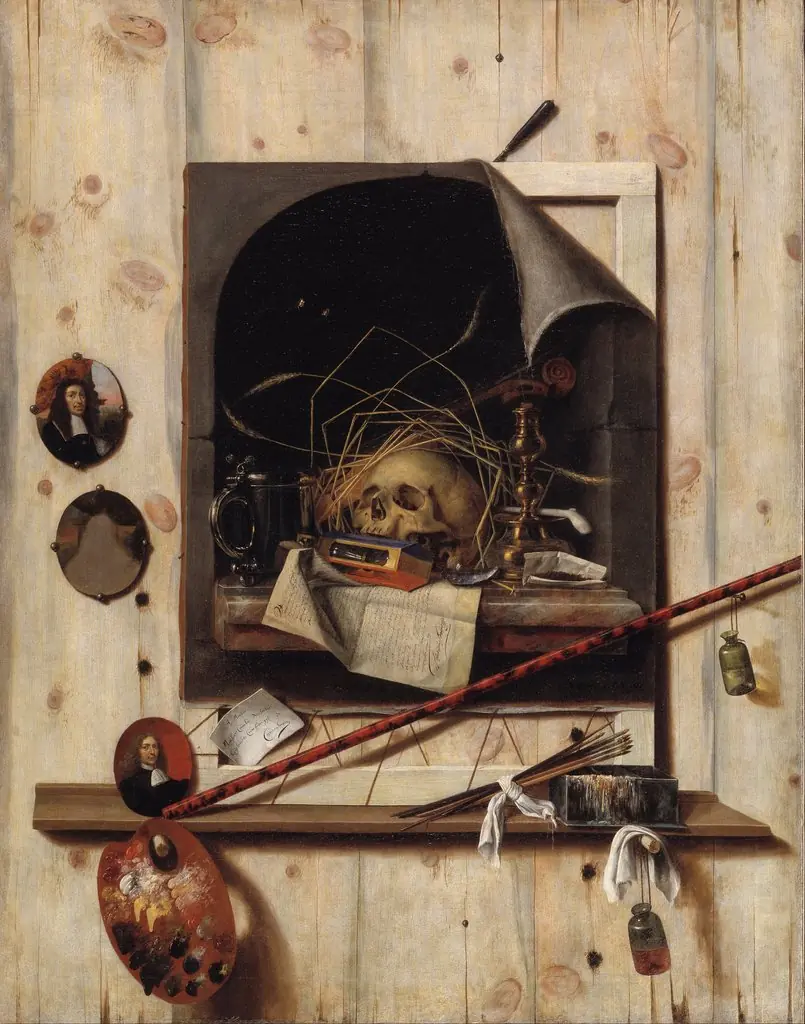 Trompe l'oeil with Studio Wall and Vanitas Still Life
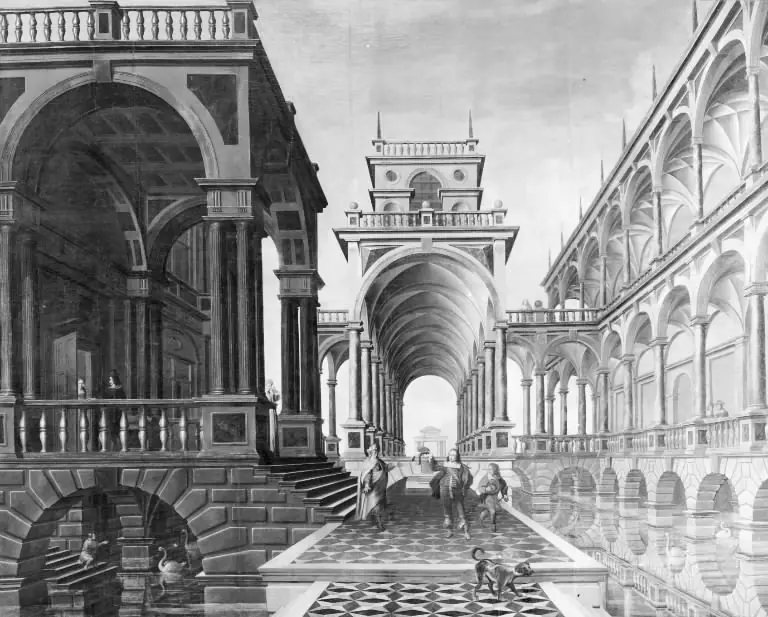 The Departure of the Prodigal Son
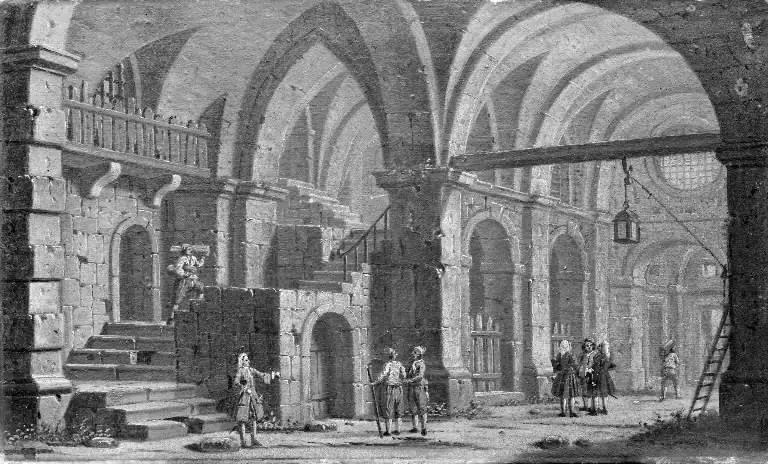 An Architectural Fantasy with Male Figures
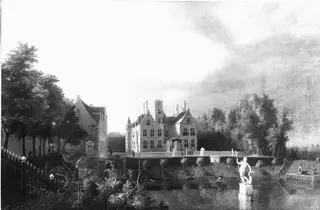 The Manor House Spijck
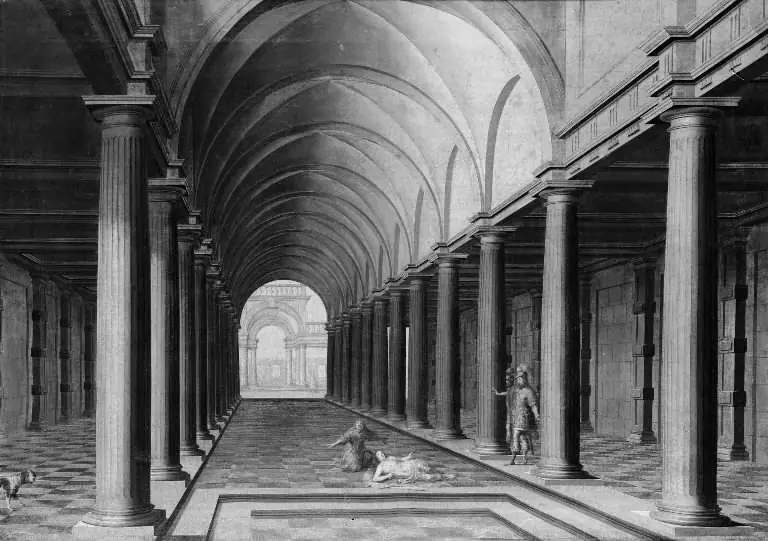 Peristyle with Lucrece
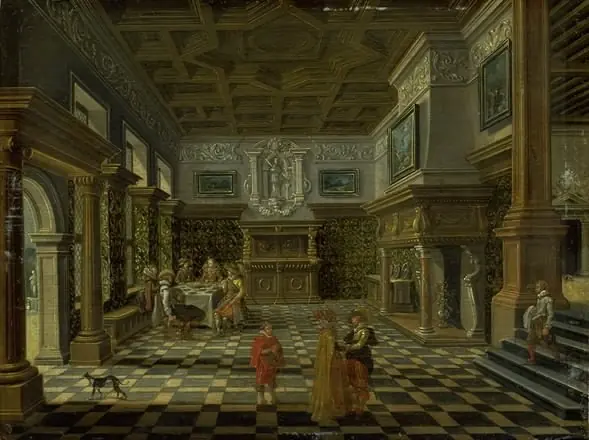 Sumptuous renaissance interior with a banquet
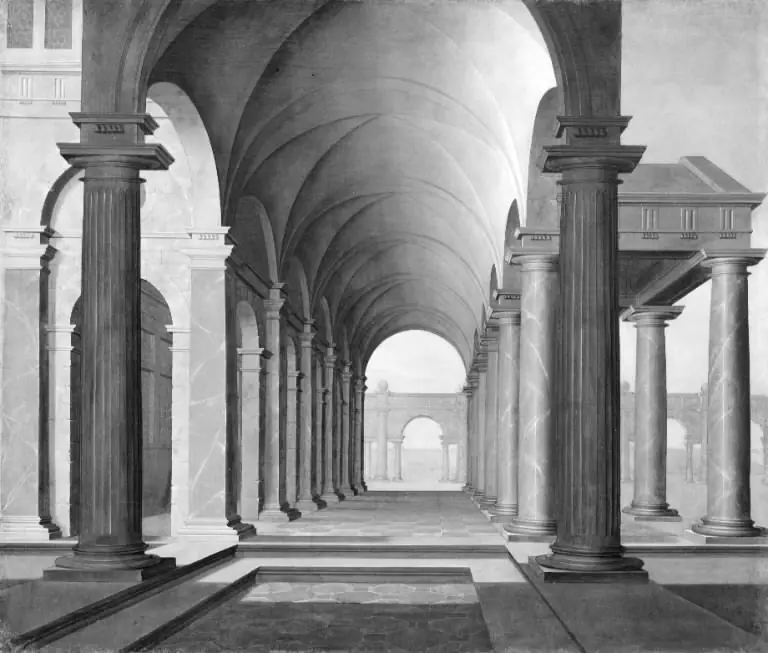 Architectural Fantasy
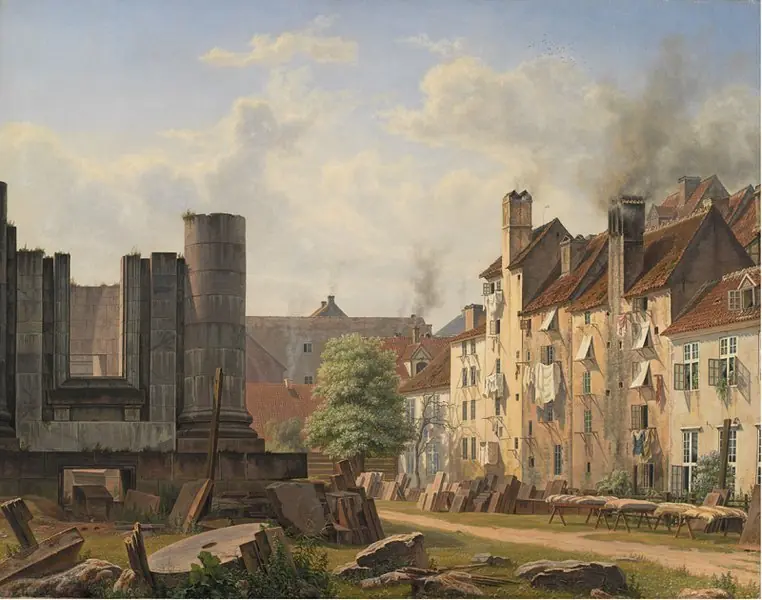 View of the Marble Square with the Ruins of the Uncompleted Frederik's Church
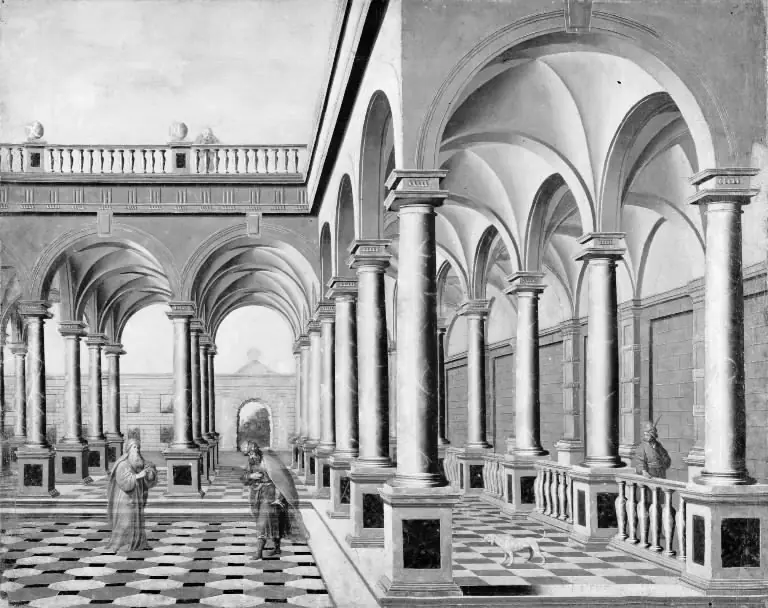 Old Man Received by a Gentleman in an Oriental Costume
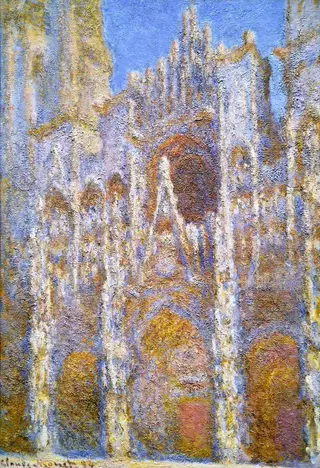 Rouen Cathedral, Façade
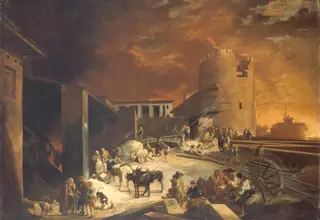 A Roman Lime Kiln
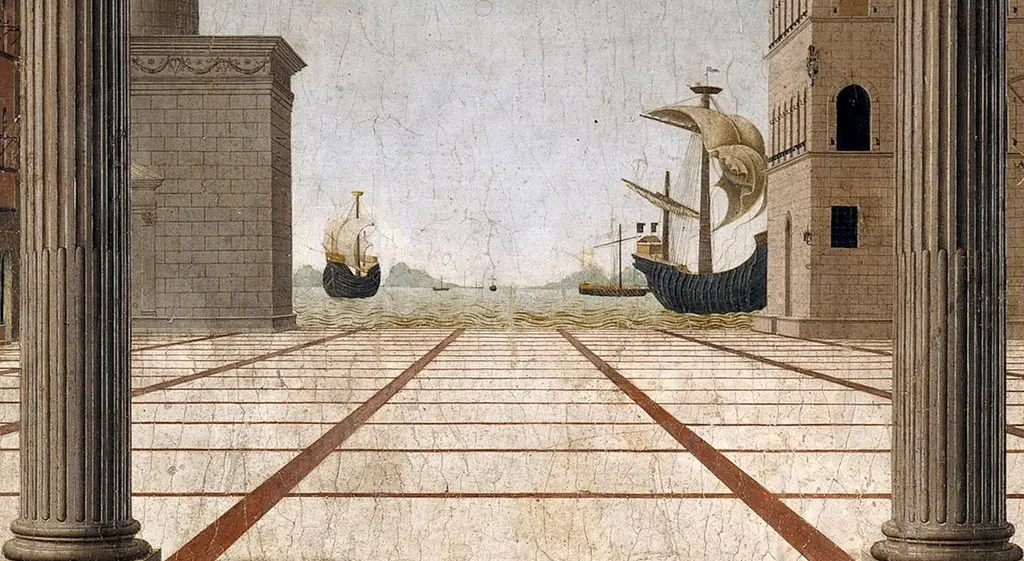 Ideal City
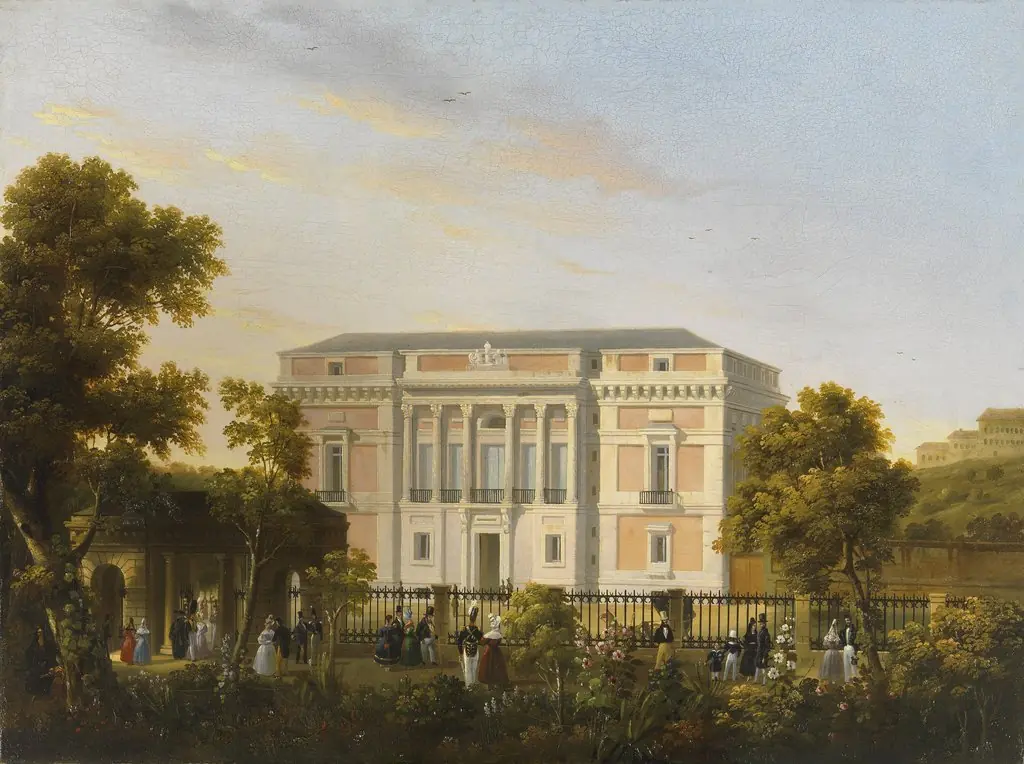 View of the south Façade of the Museo del Prado from inside the Botanical Gardens
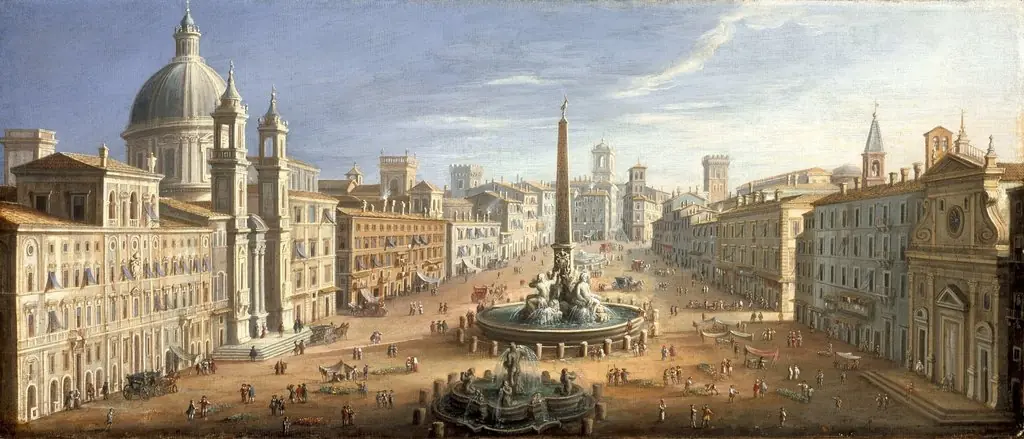 A View of the Piazza Navona, Rome
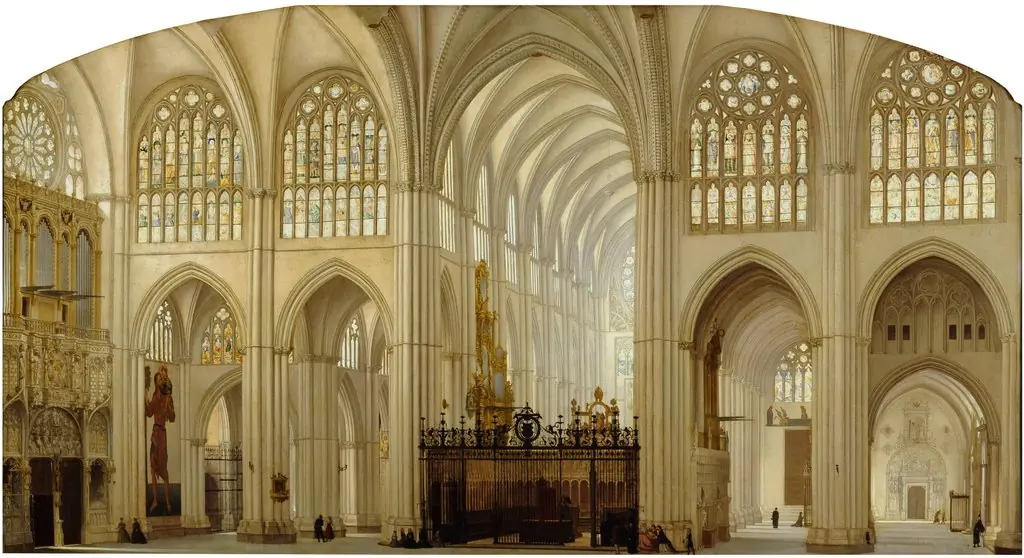 Interior de la Catedral de Toledo
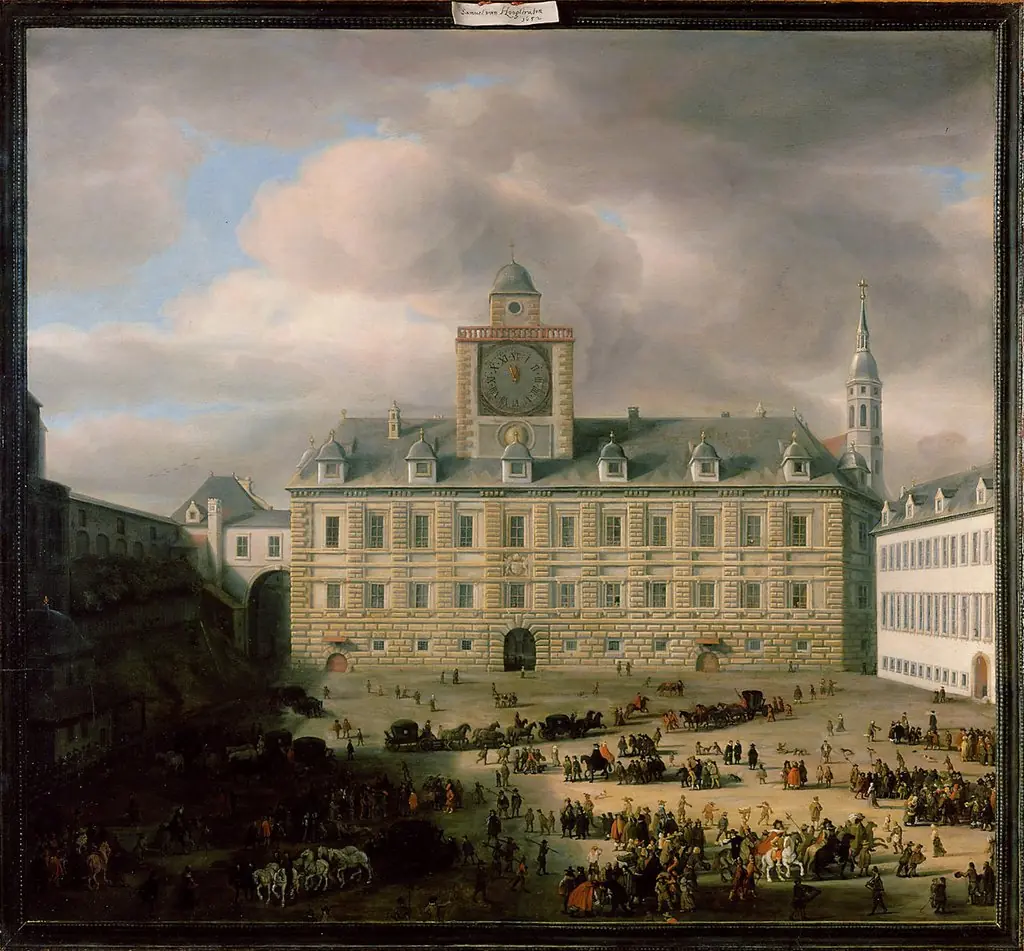 View of the Hofburg in Vienna
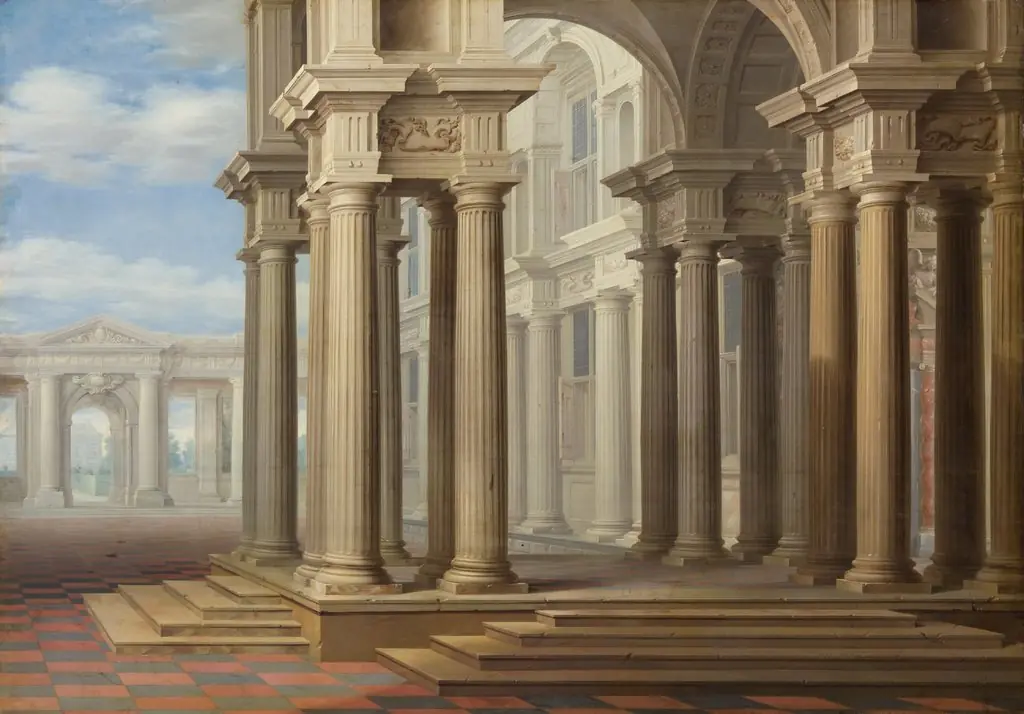 Fantasy architecture with steps and columns
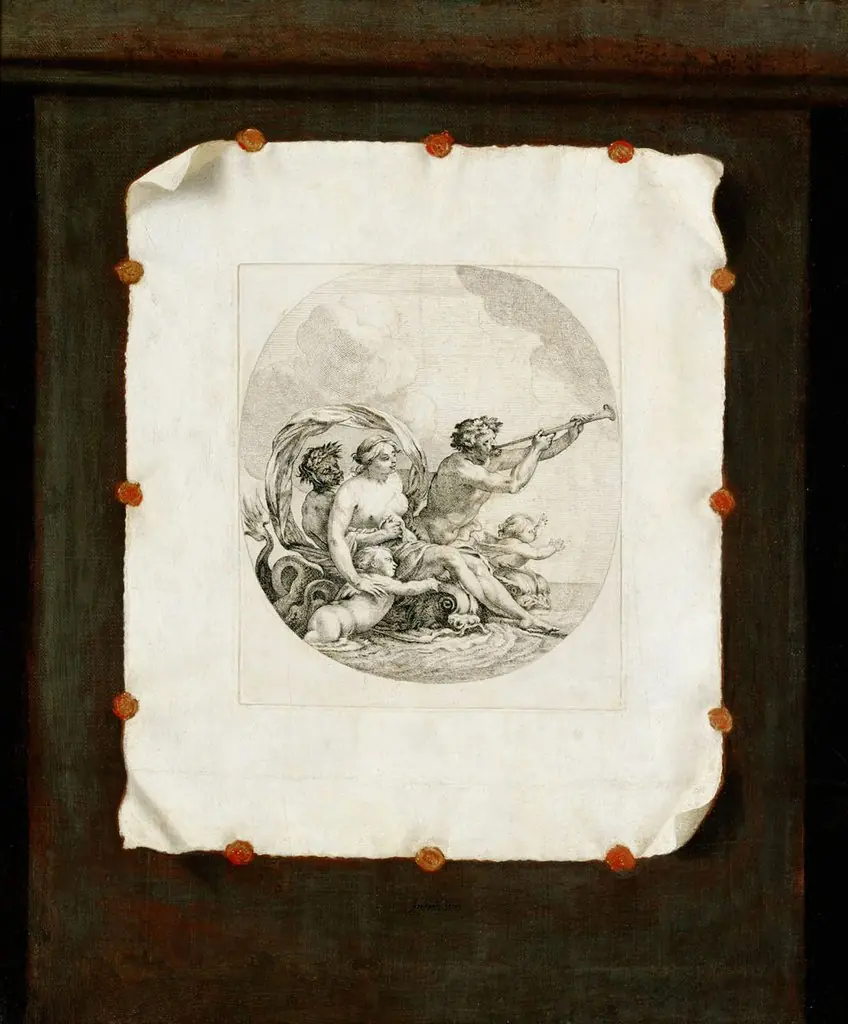 Trompe l'oeil (Galatea).
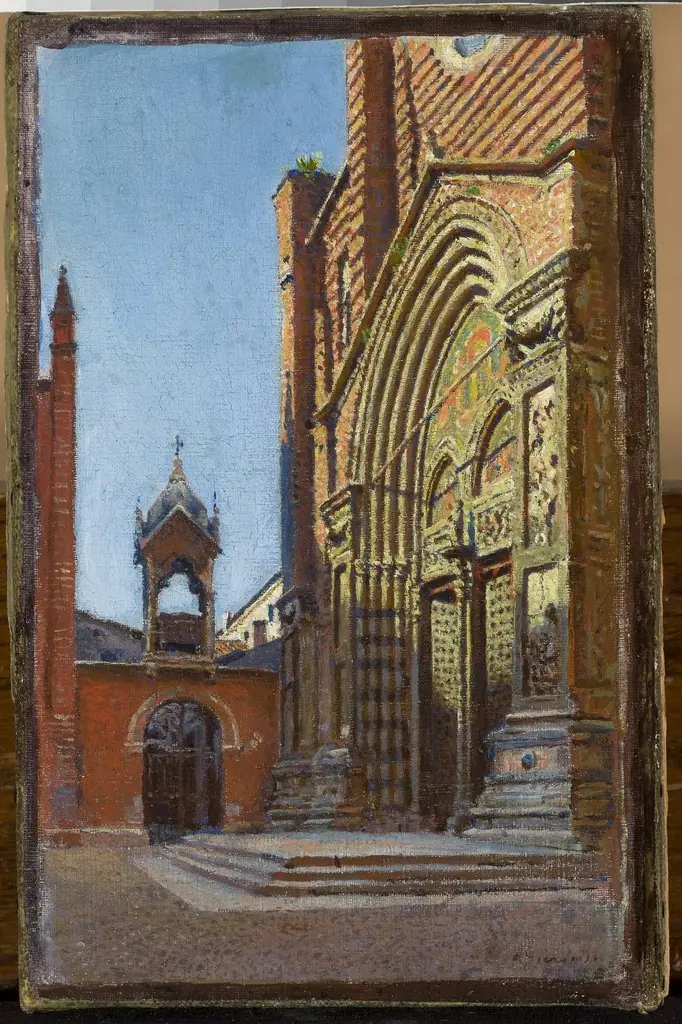 Portal of the church of St. Anastasia in Verona
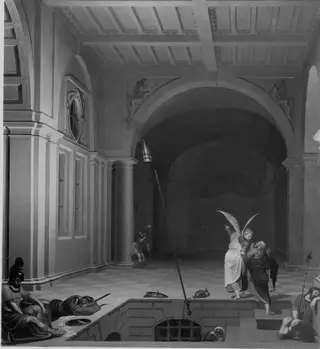 Liberation of Saint Peter from Prison
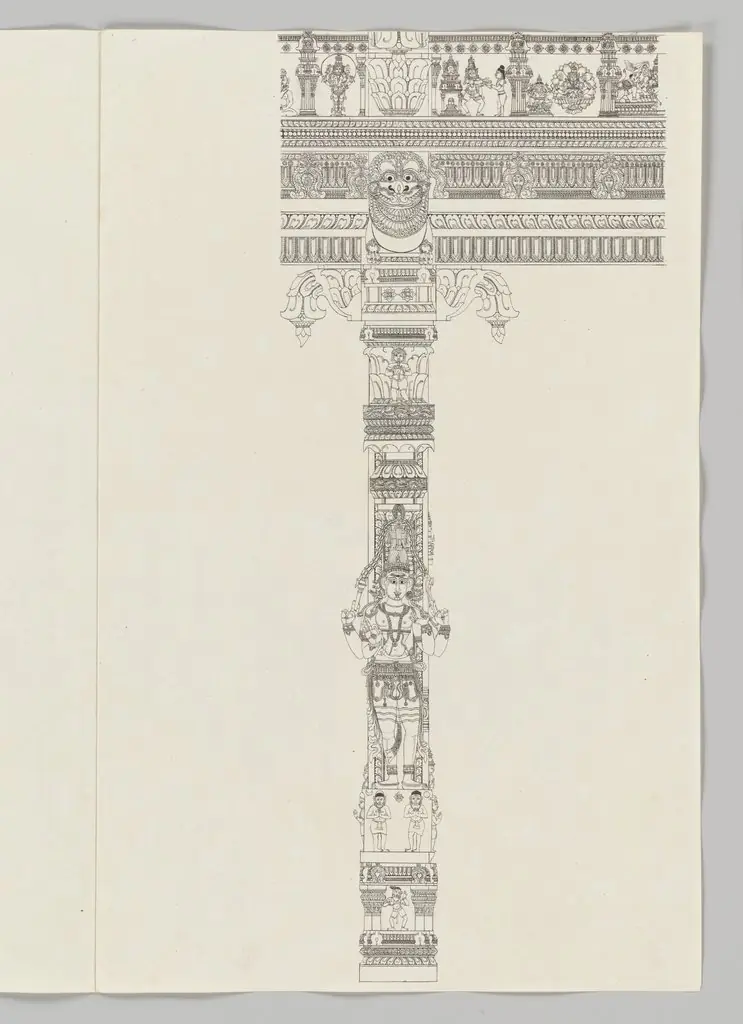 Sundareshvara teaching a bird a mantra
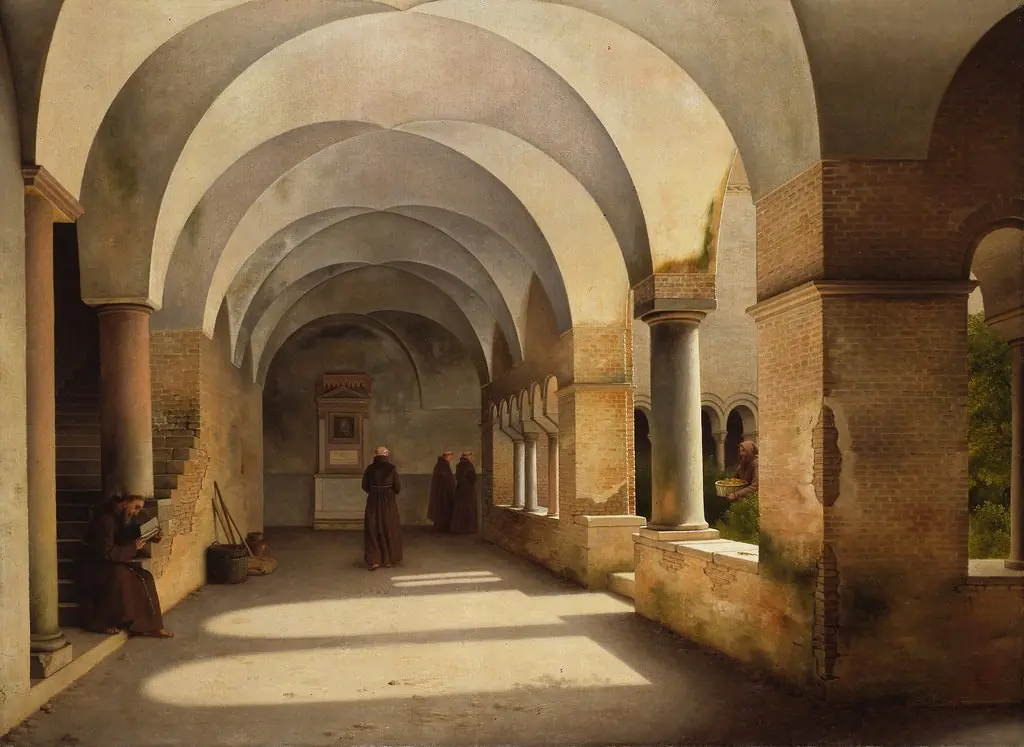 The Cloisters, San Lorenzo fuori le mura
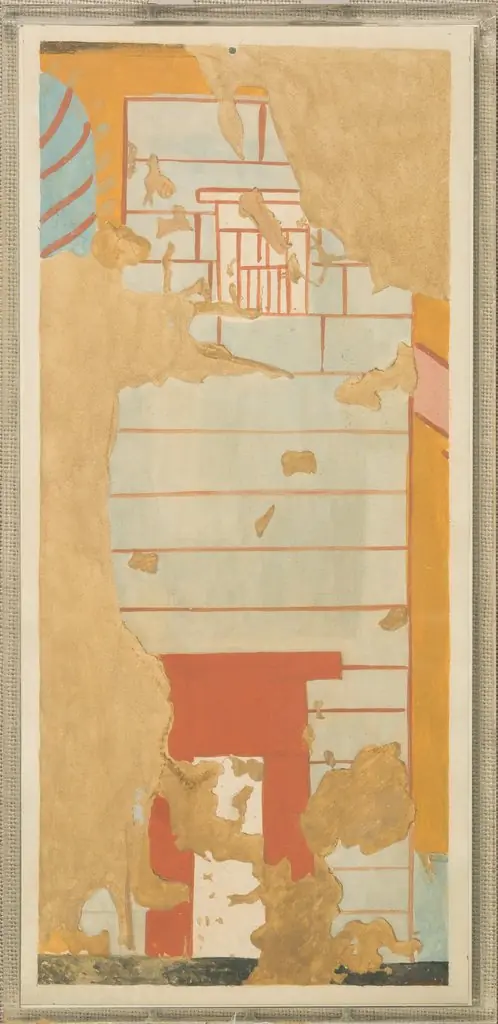 Facade of a House, Tomb of Djehutynefer
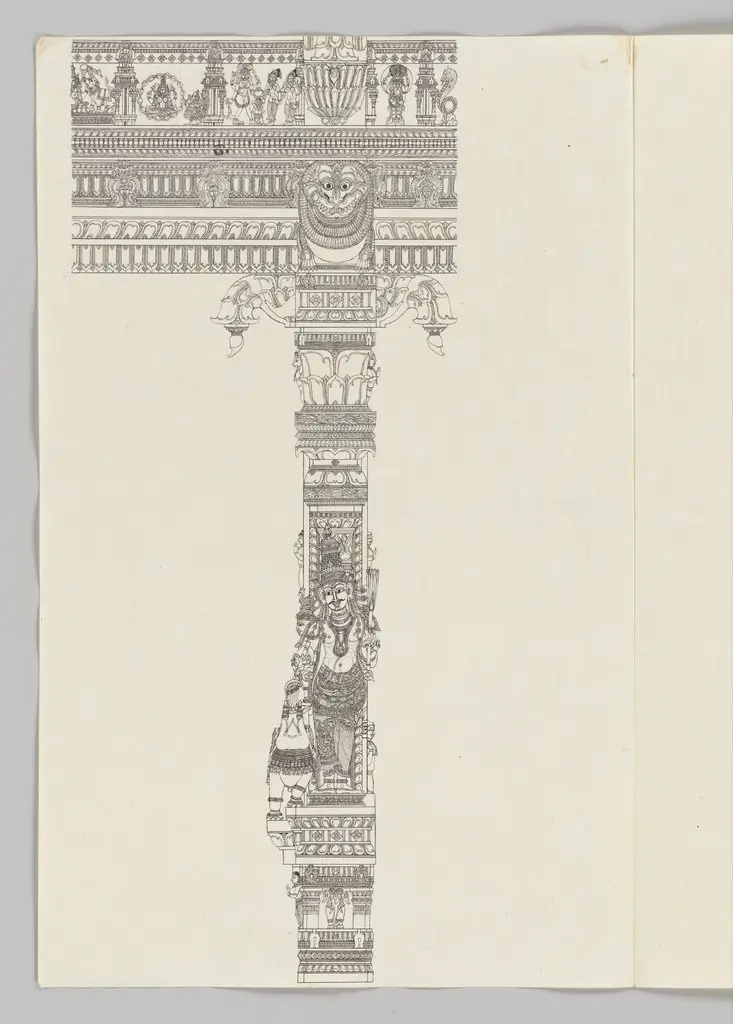 Sundareshvara as a siddha feeding sugarcane to the elephant.
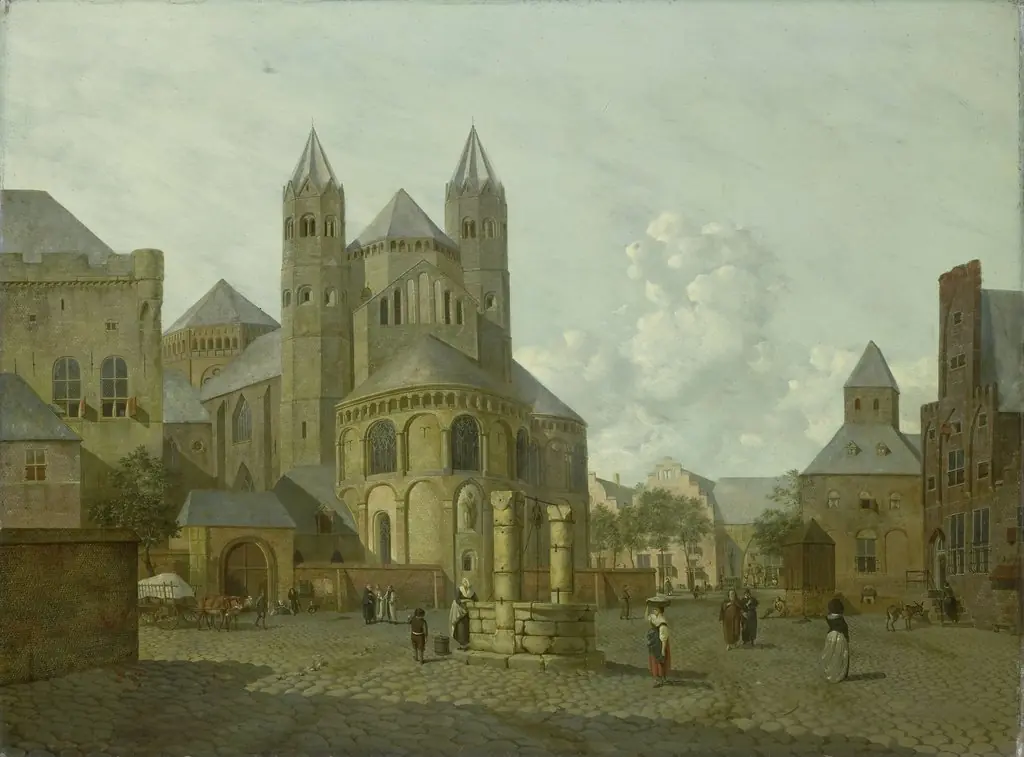 Imaginary Cityscape with Romanesque Church
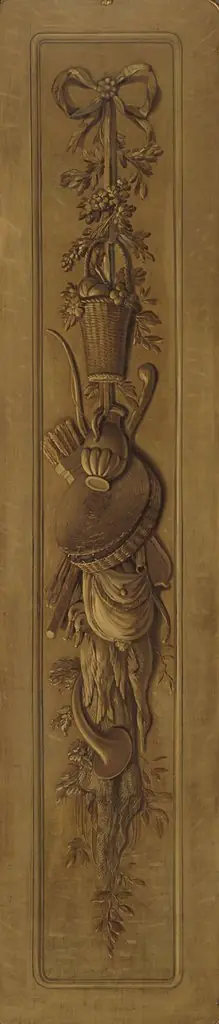 Schildering in grisaille met een aan een strik opgehangen trofee
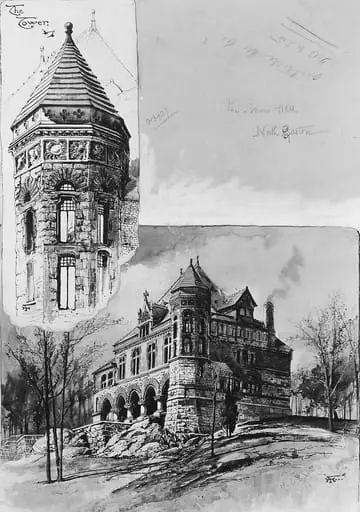 The Town Hall, North Easton, Massachusetts
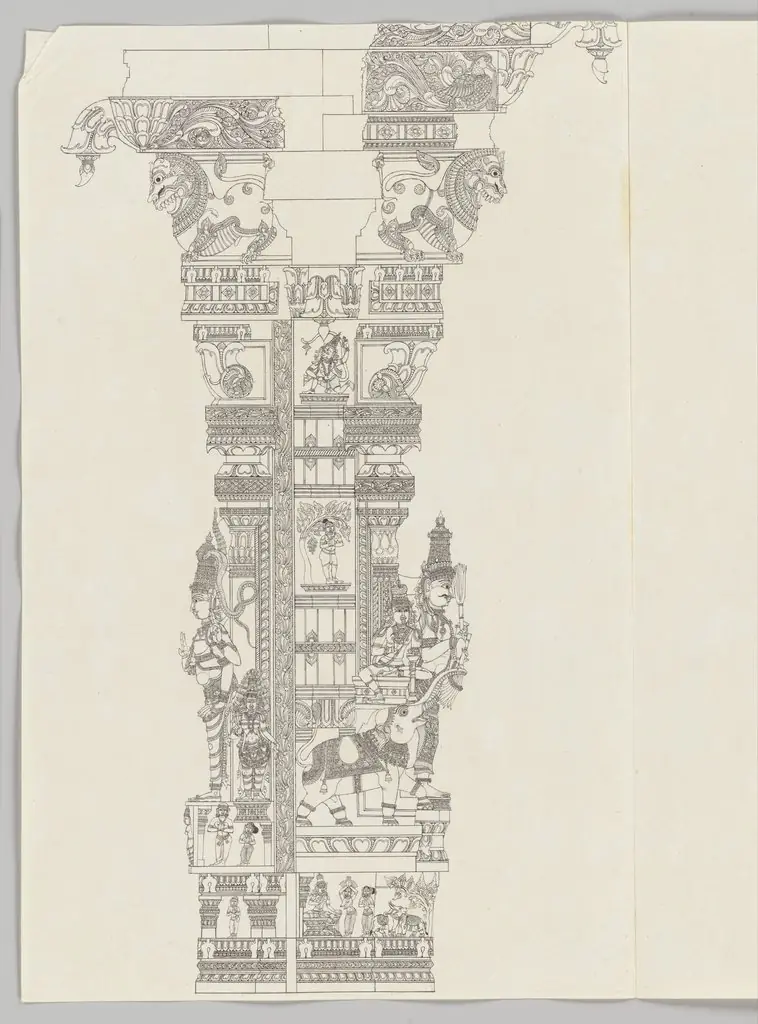 Sundareshvara feeding sugarcane to the elephant
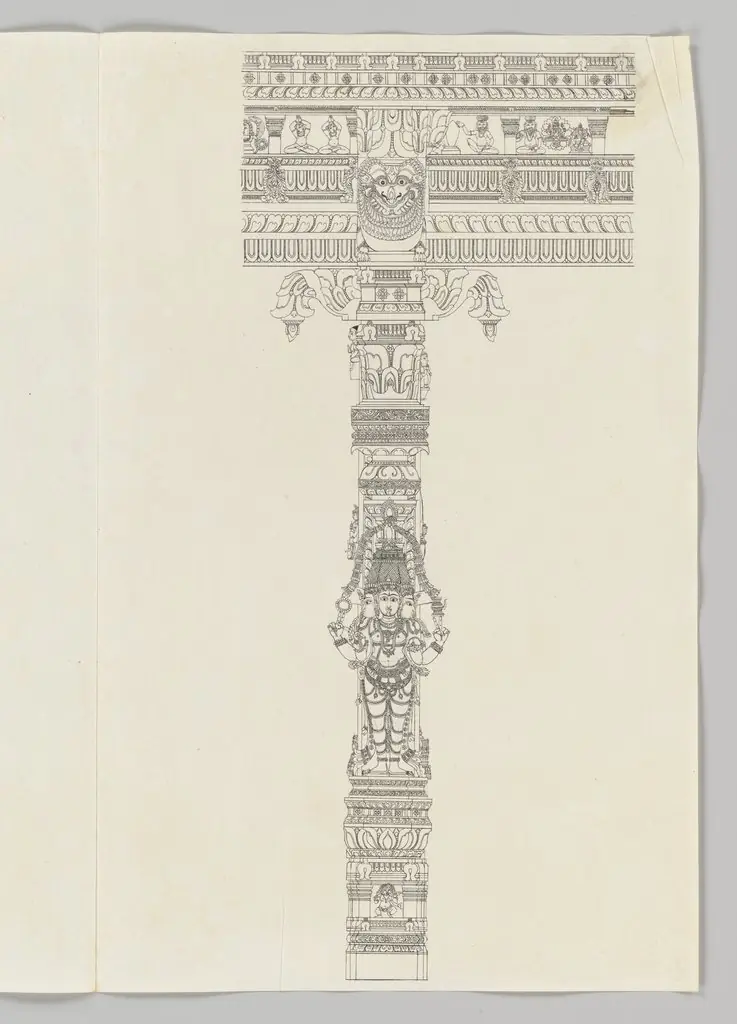 Brahma
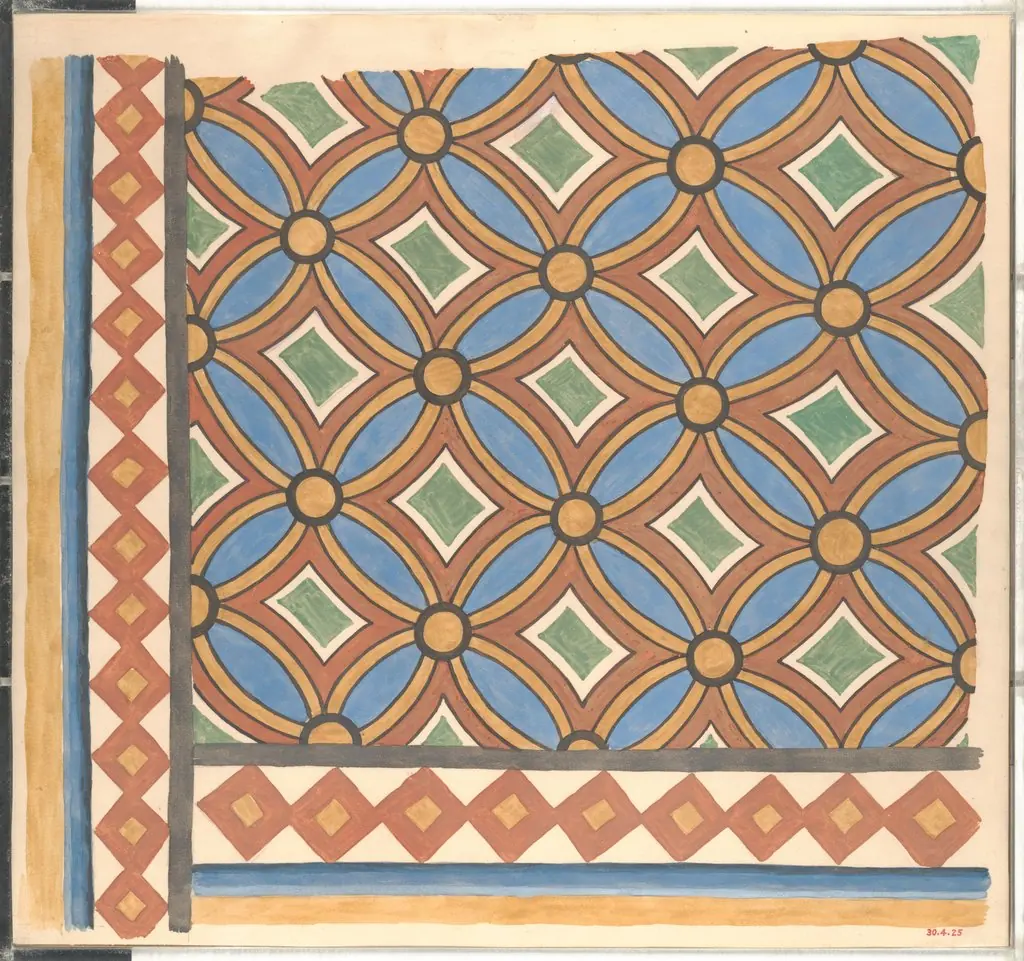 Ceiling Fragment
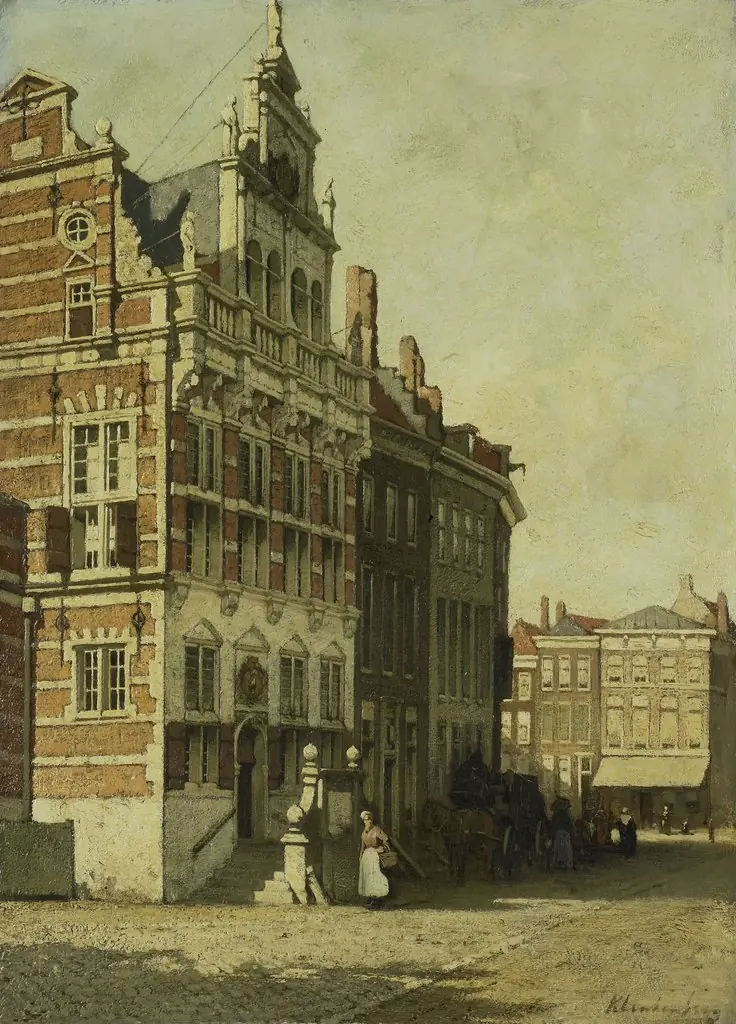 The Town Hall, The Hague
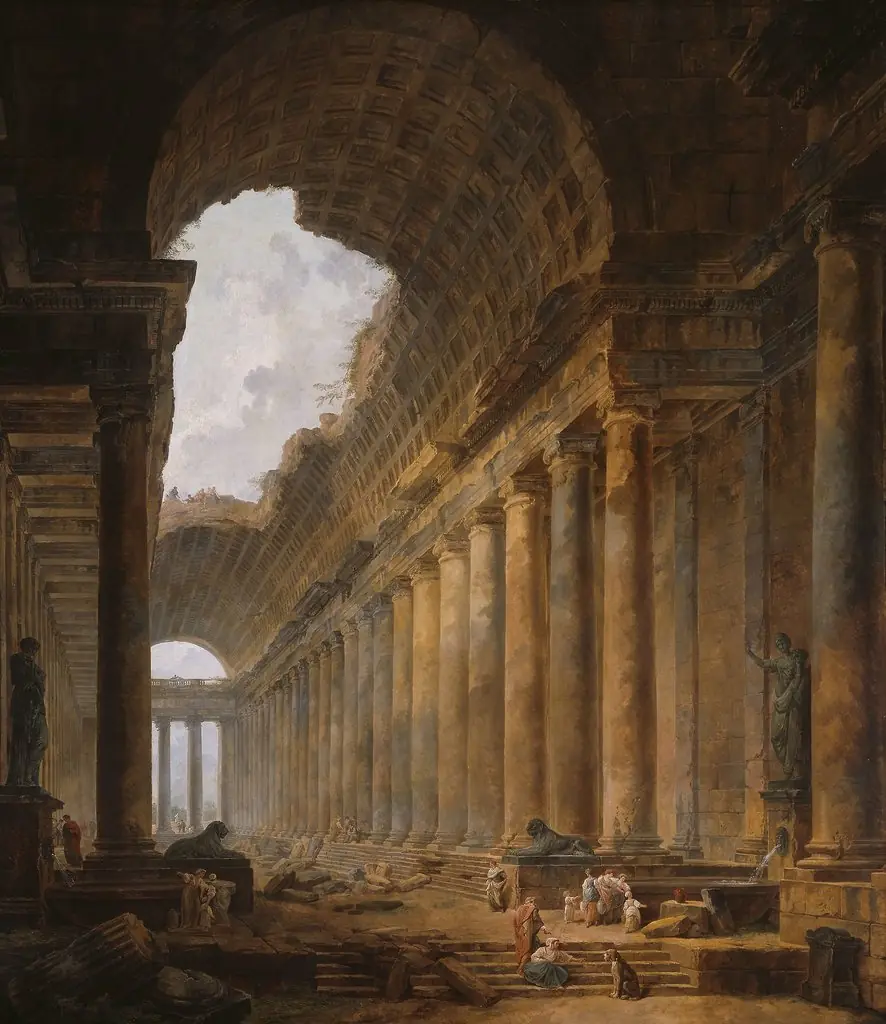 The Old Temple
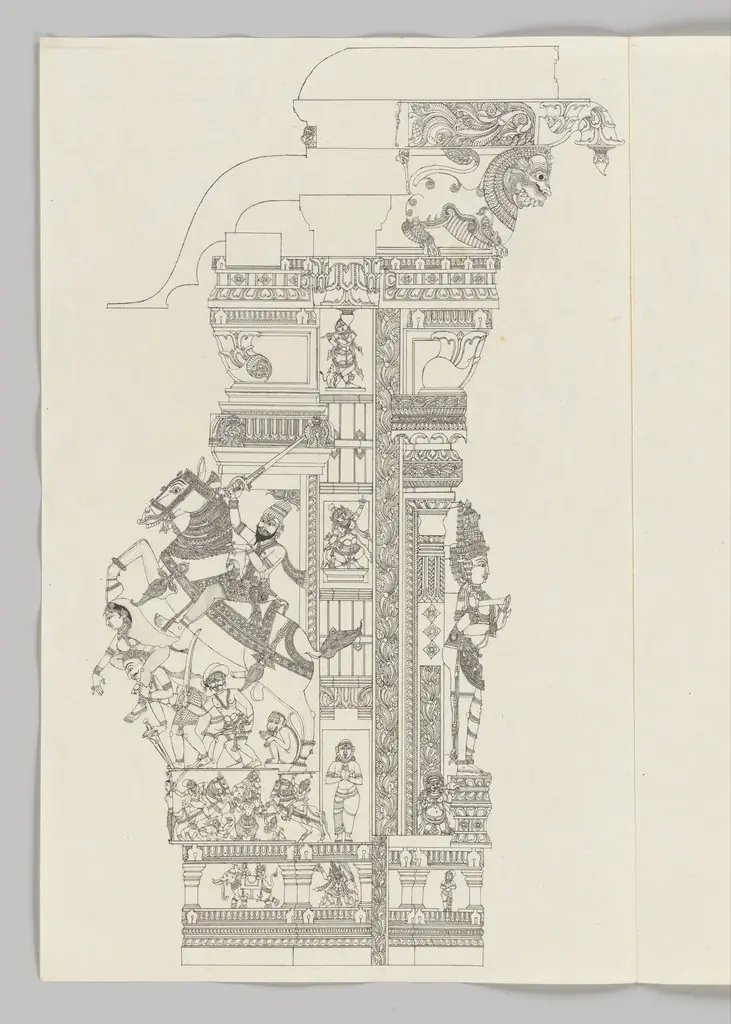 Ardanarishvara; equestrian warrior with raised sword
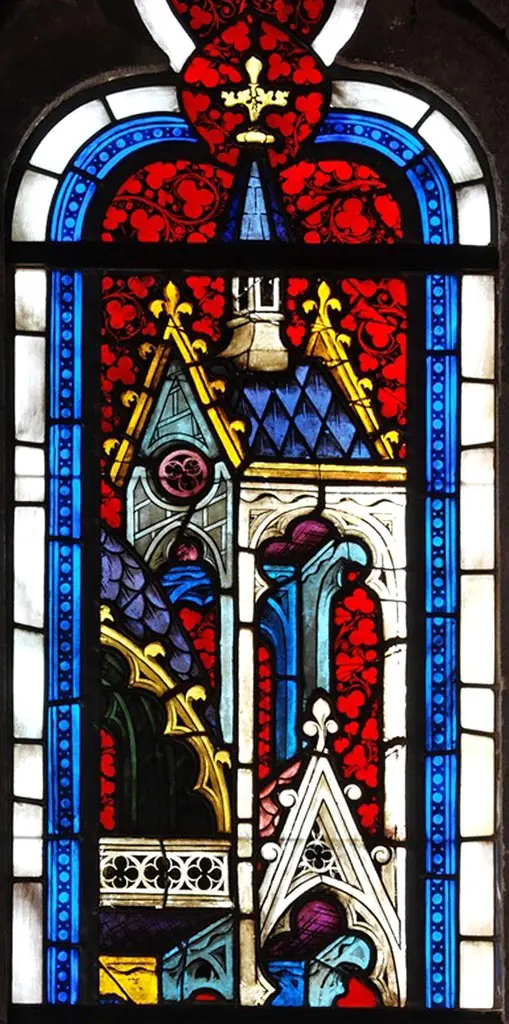 Architectural Canopy
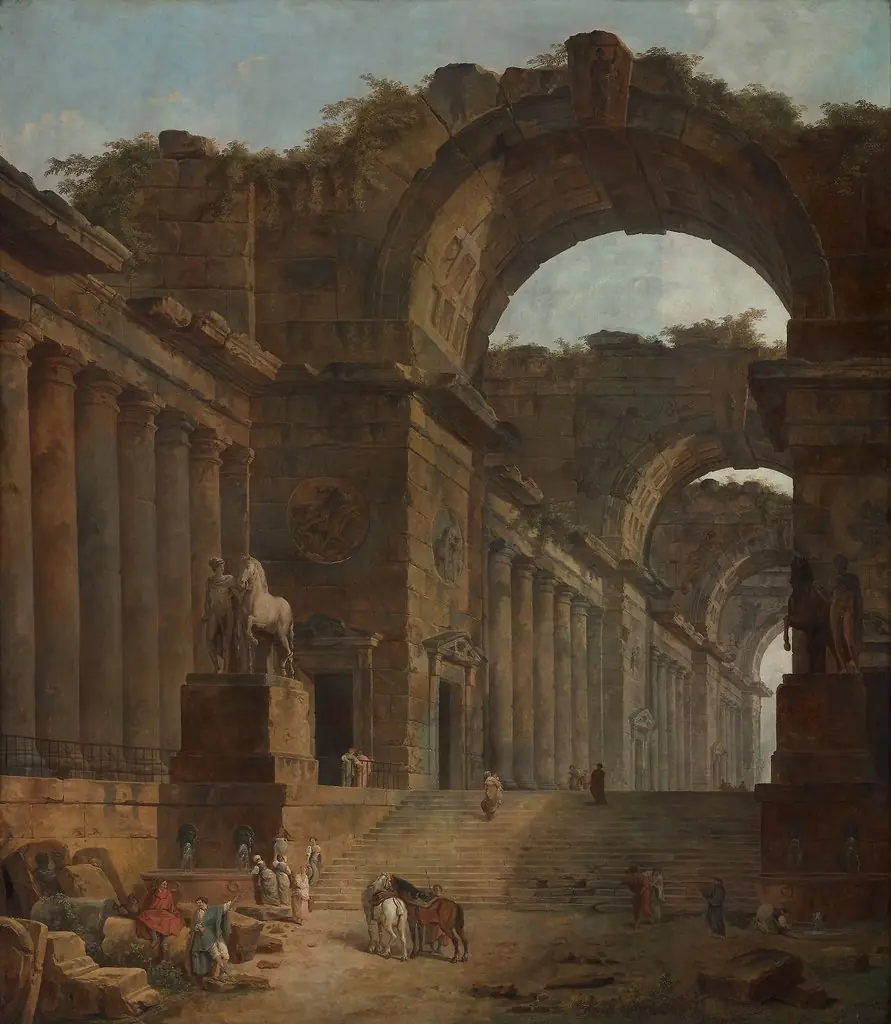 The Fountains
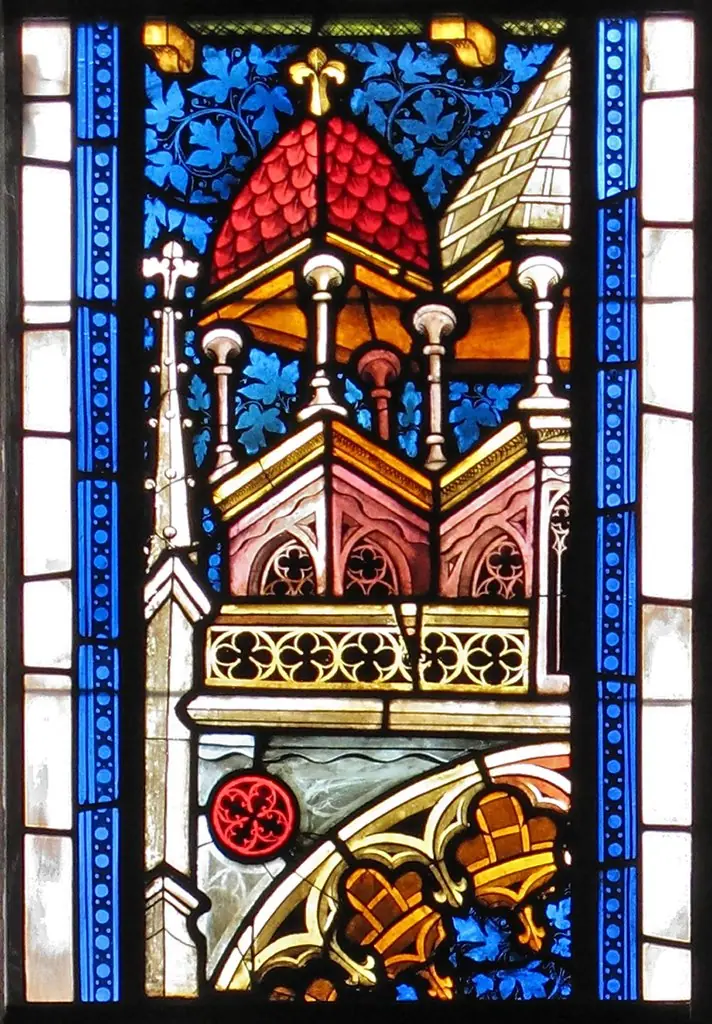 Architectural canopy
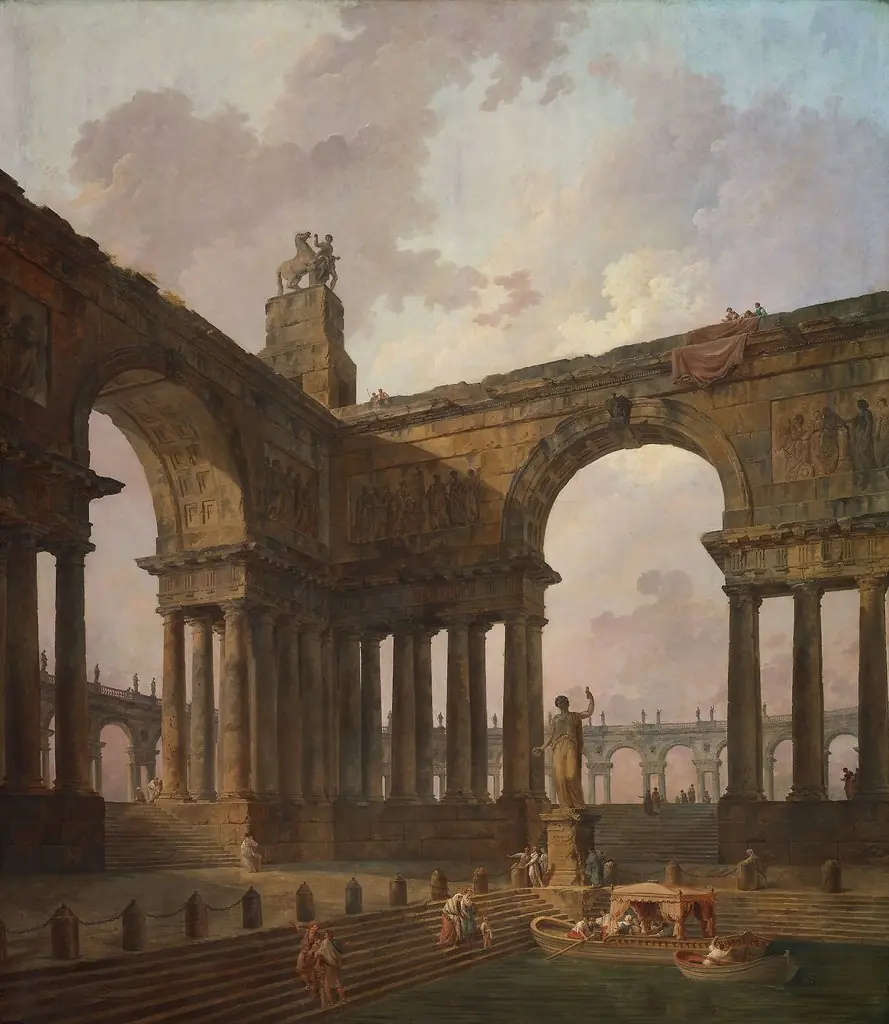 The Landing Place
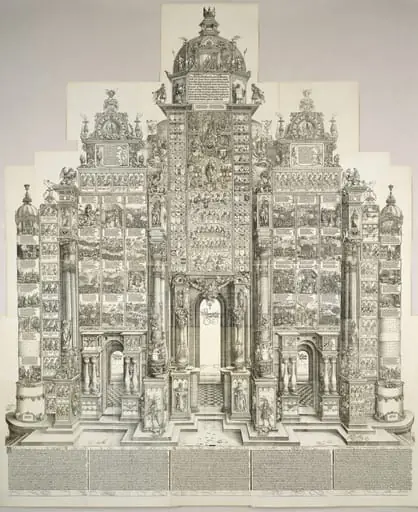 The Triumphal Arch of Maximilian
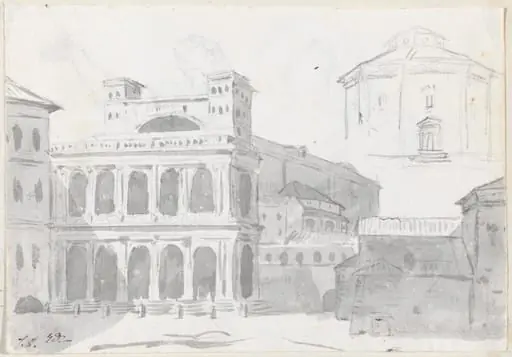 San Giovanni Laterano and a Baptistry
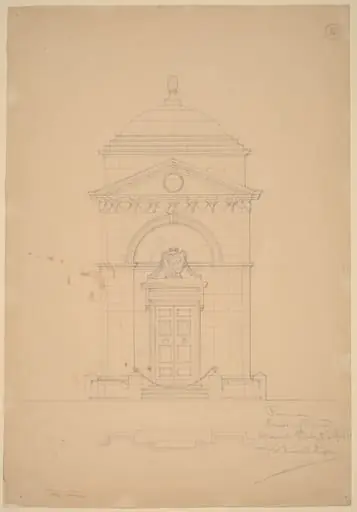 Tomb of Dante, Ravenna
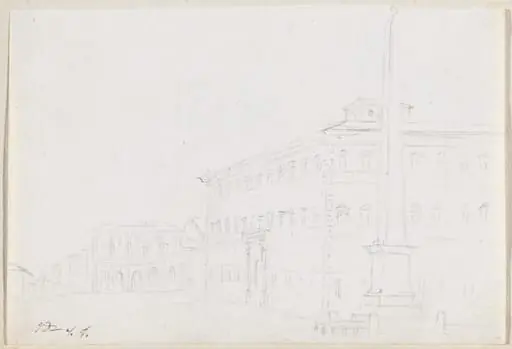 A Piazza with an Obelisk
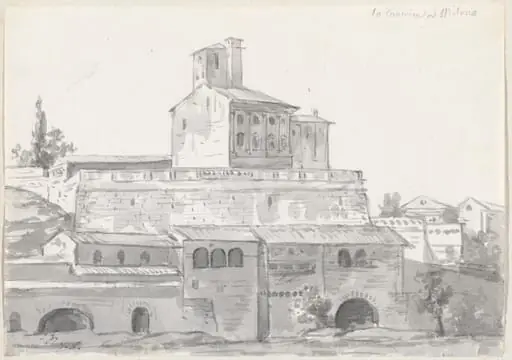 The Canonica of Sant'Ambrogio, Milan
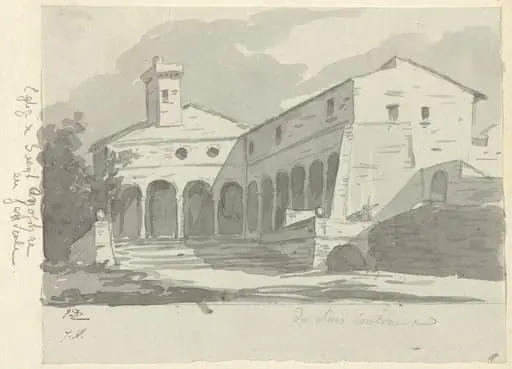 Church of Sant' Onofrio, Rome
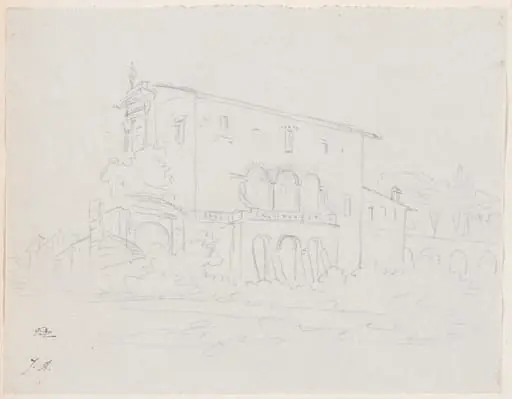 A Roman Church
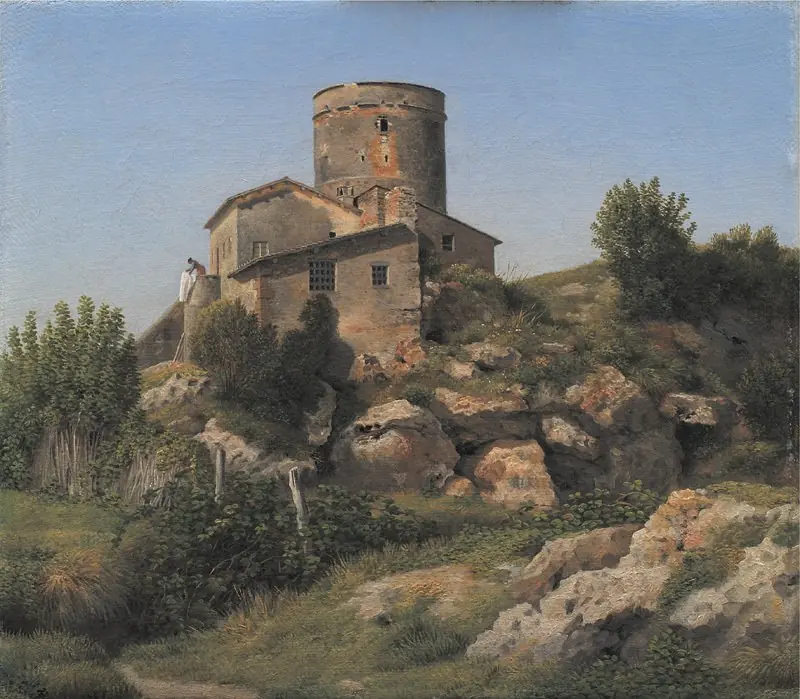 A Building near Tor di Quinto outside Rome
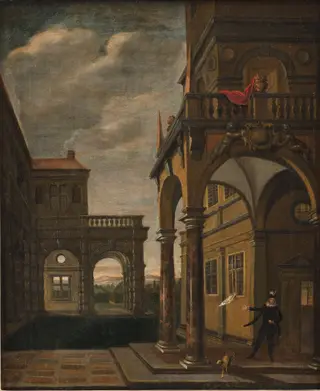 Arkitekturstykke
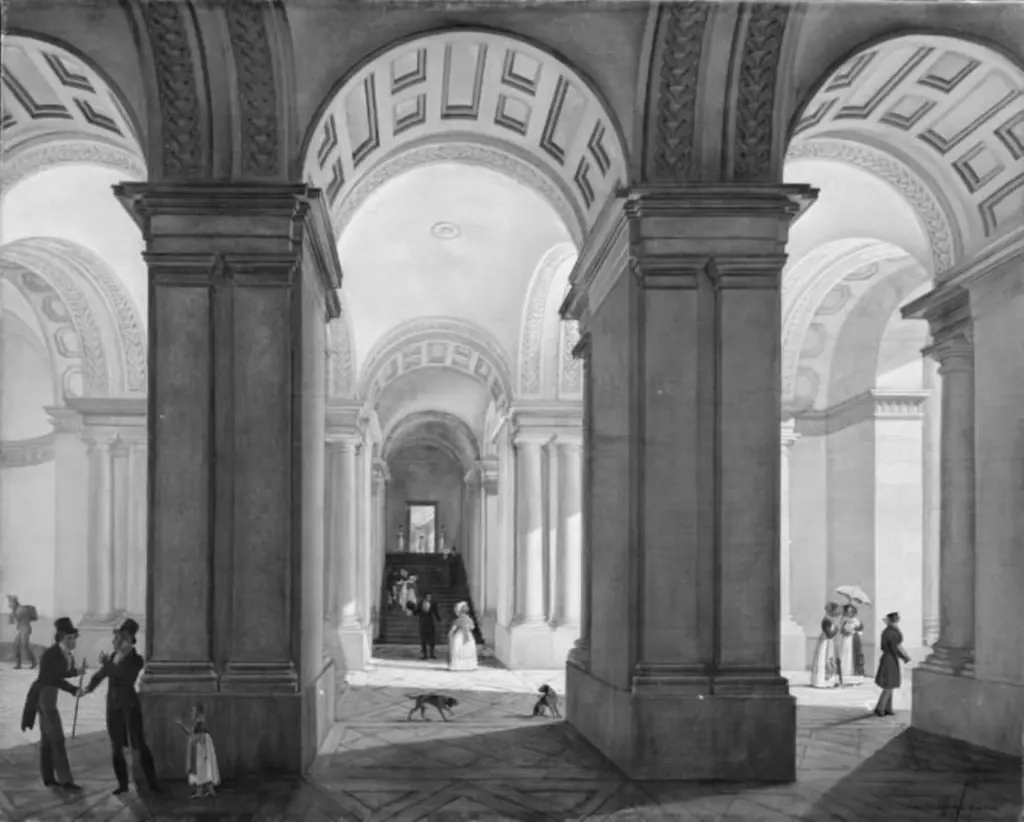 Christiansborg Slots vestibule
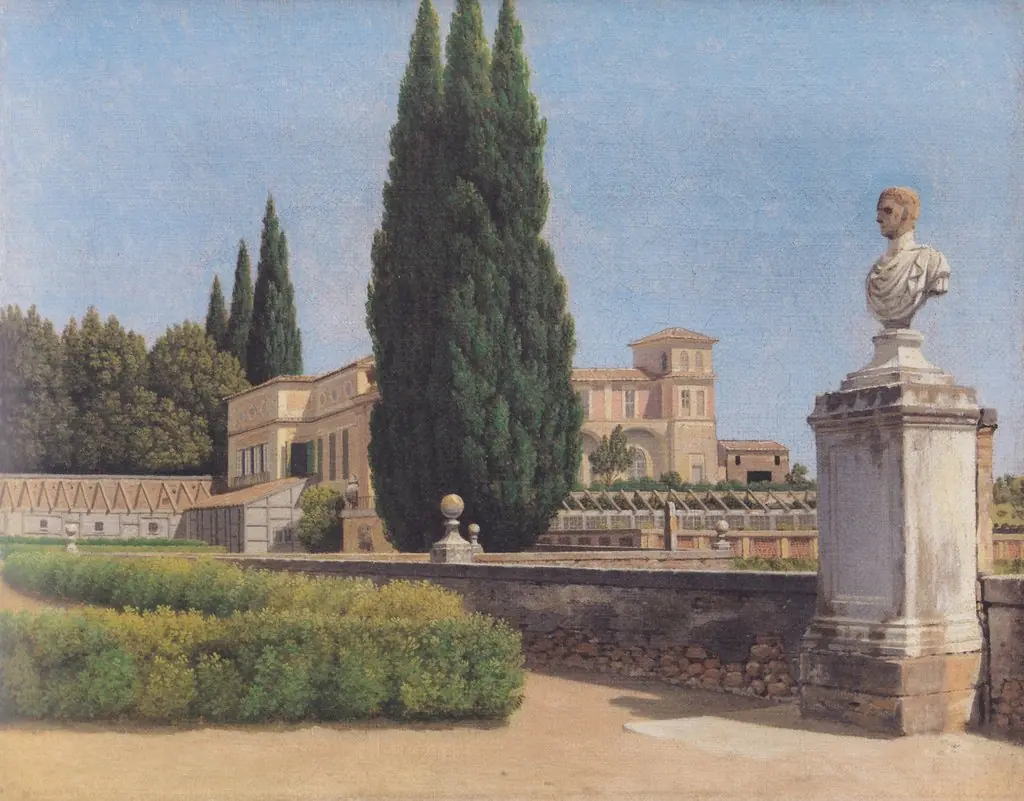 Villa Albani seen from the Garden. Rome
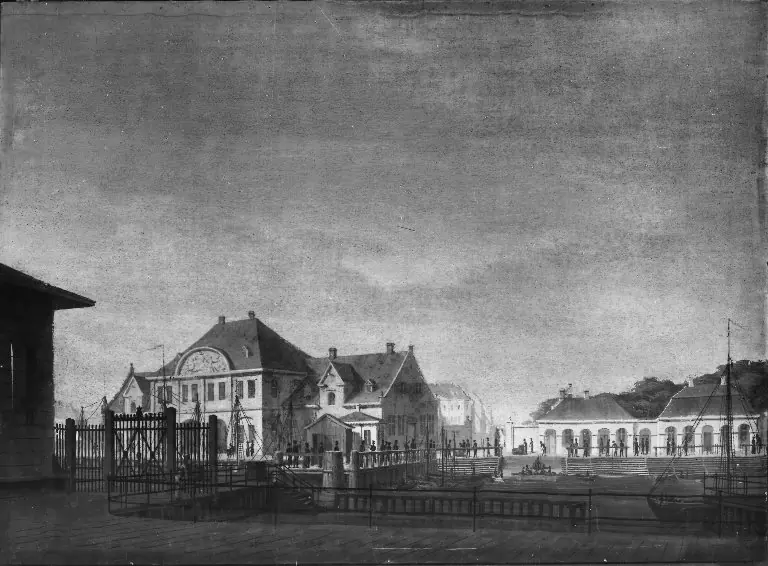 Parti af Toldboden
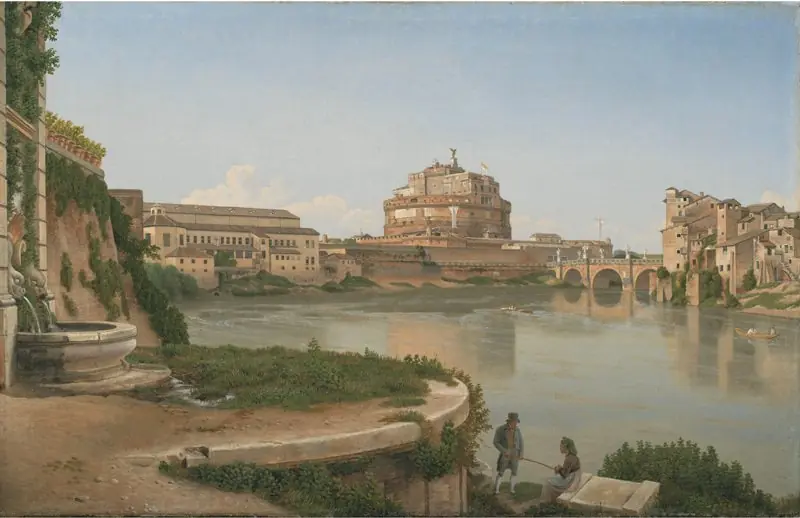 Udsigt over Tiberen fra Trastevere mod Engelsborg og Ponte San Angelo
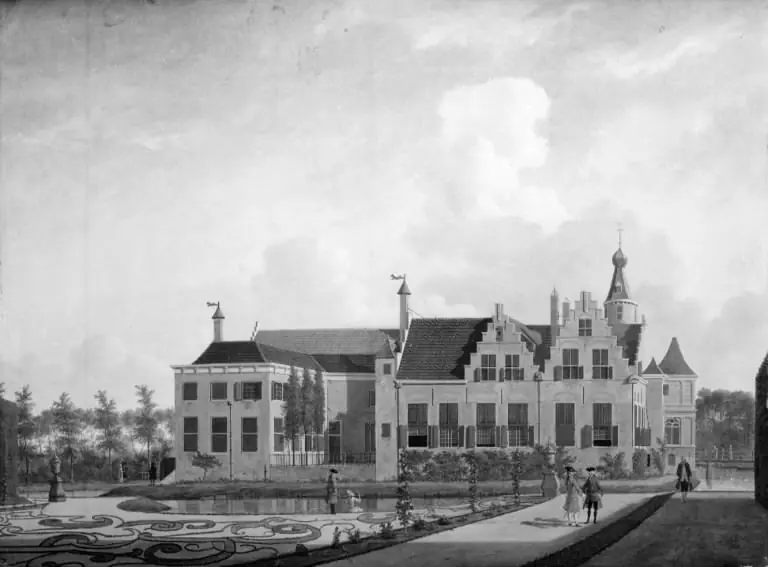 A Dutch Manor
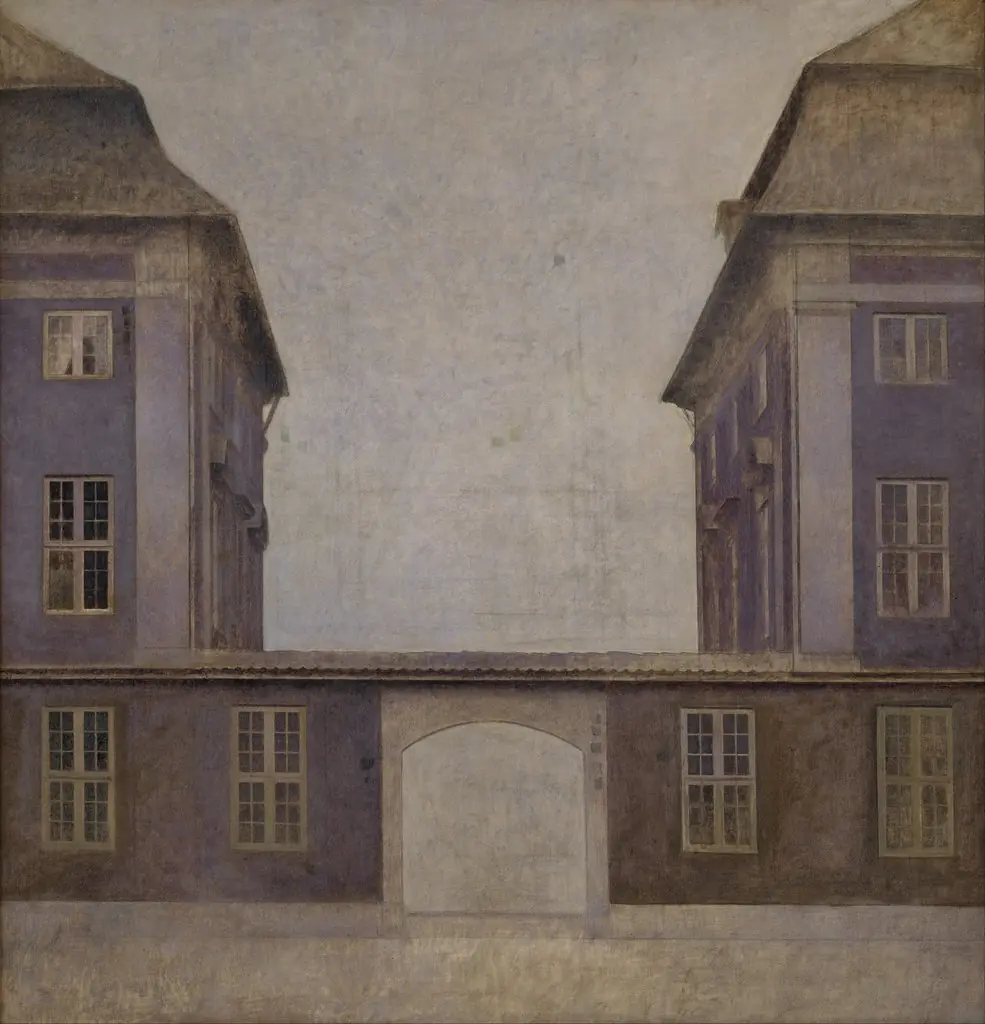 The Buildings of the Asiatic Company, seen from St. Annæ Street, Copenhagen
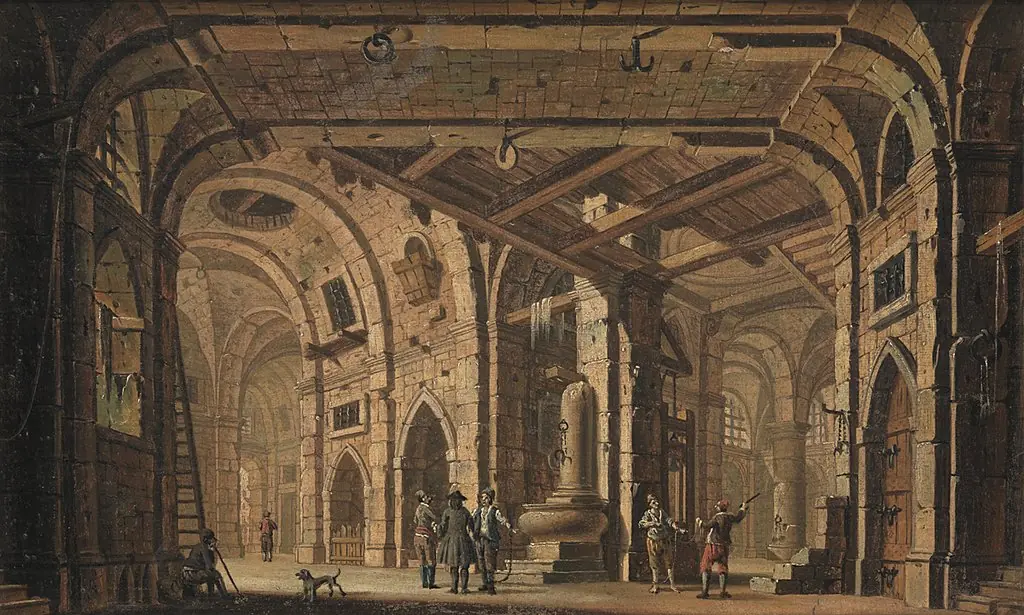 Fængselsdekoration med fanger og fangevogtere
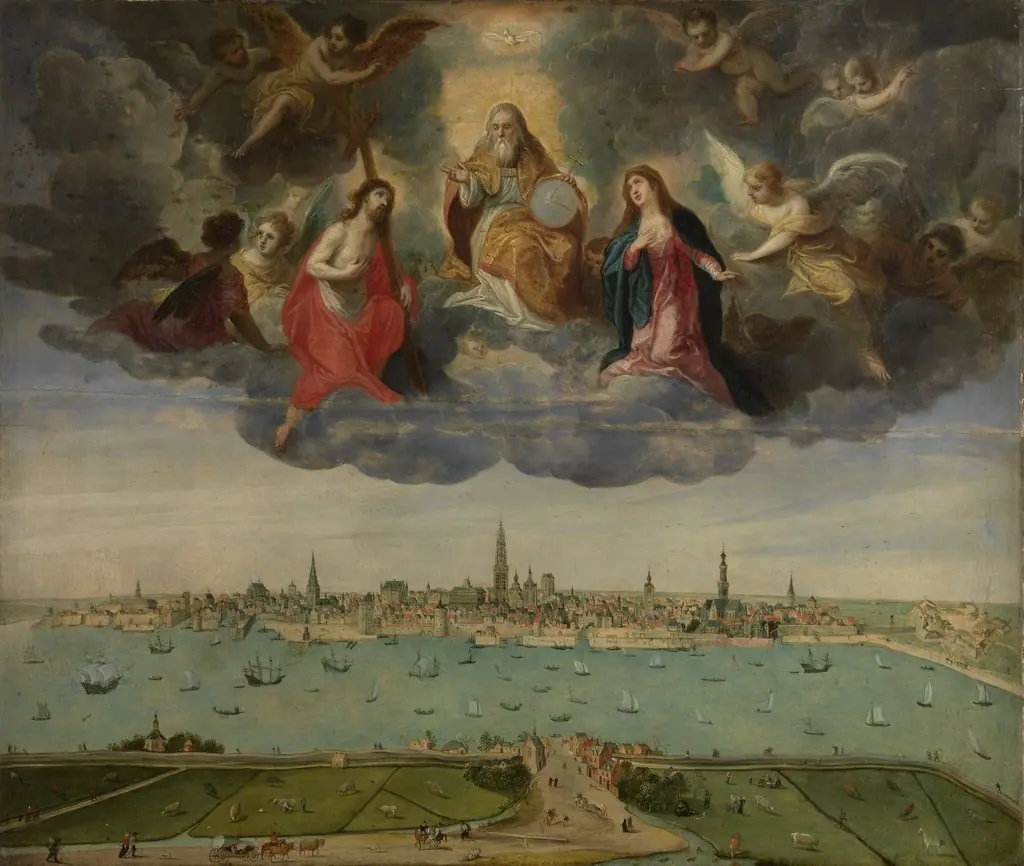 Antwerp and the Vlaams Hoofd in 1600
 Chariclea is Recognized by her Parents
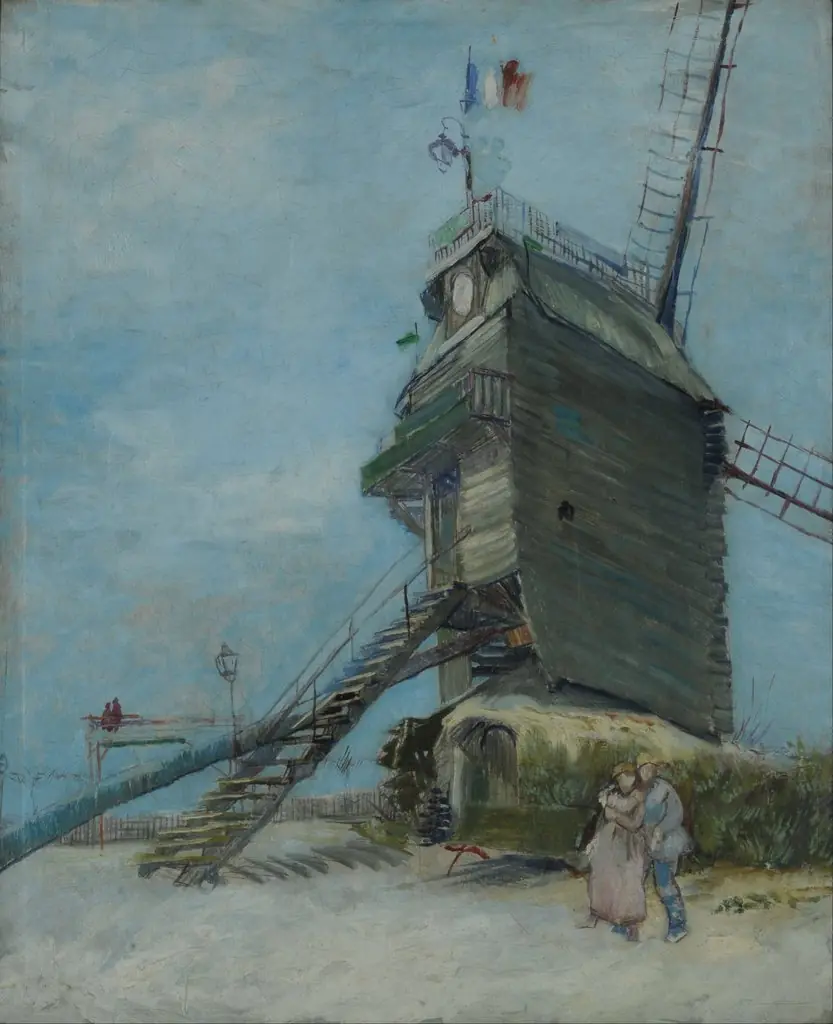 Le Moulin de la Galette
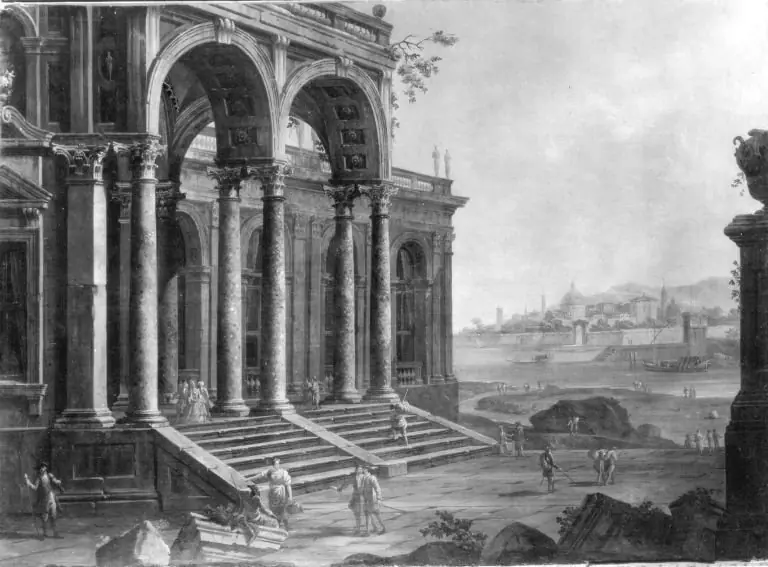 Architekturbild
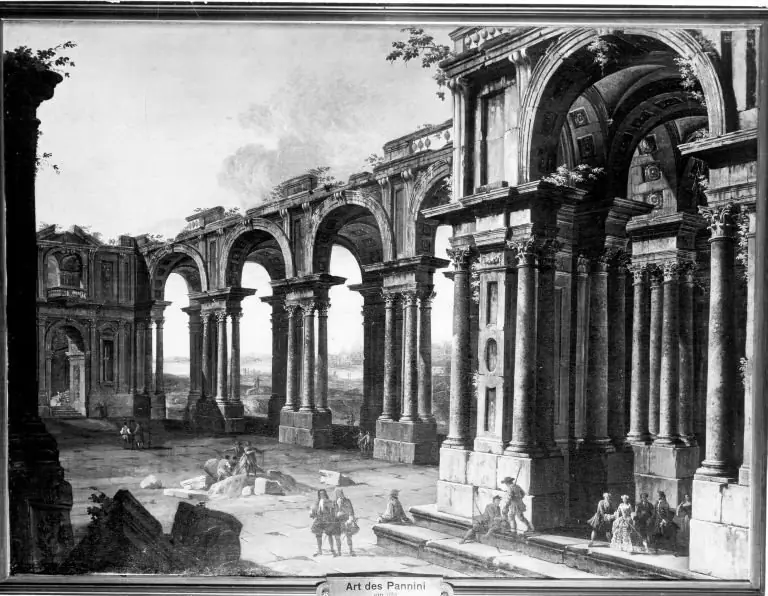 Architekturbild (Art des)
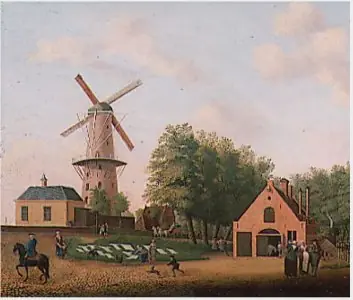 Village with a Windmill
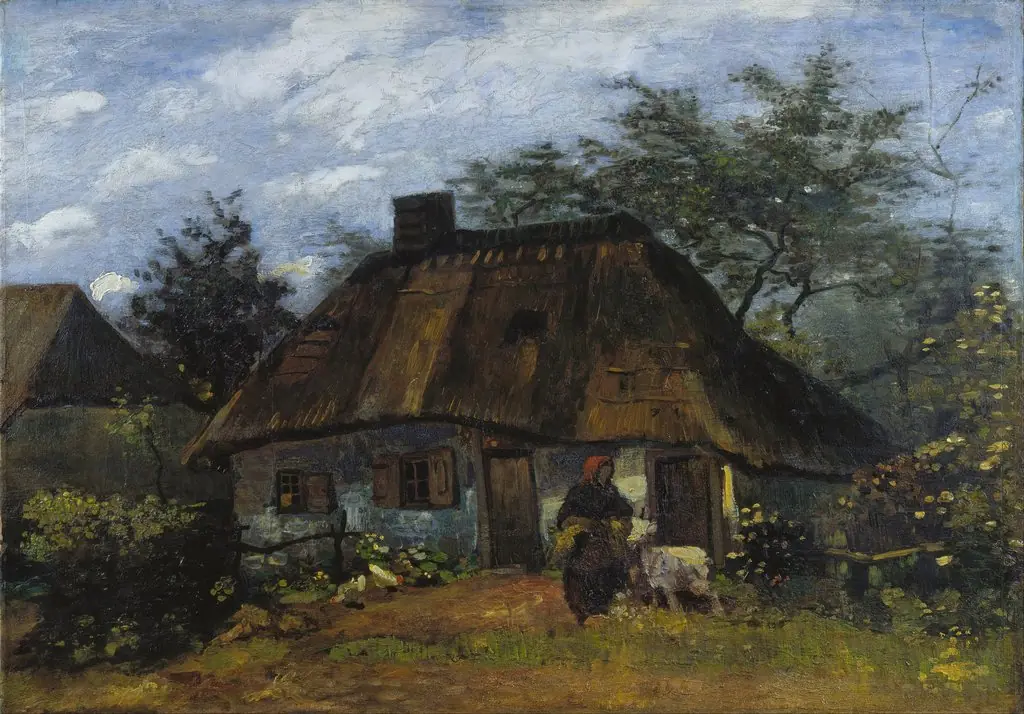 Cottage and Woman with Goat
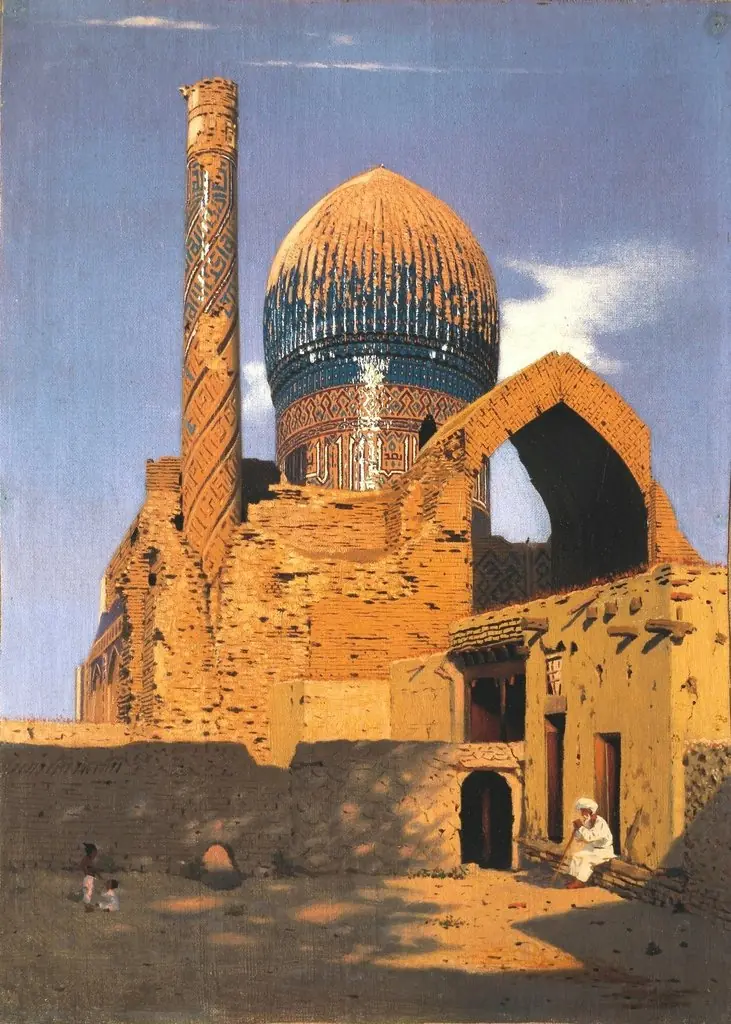 Gur Emir mausoleum. Samarkand
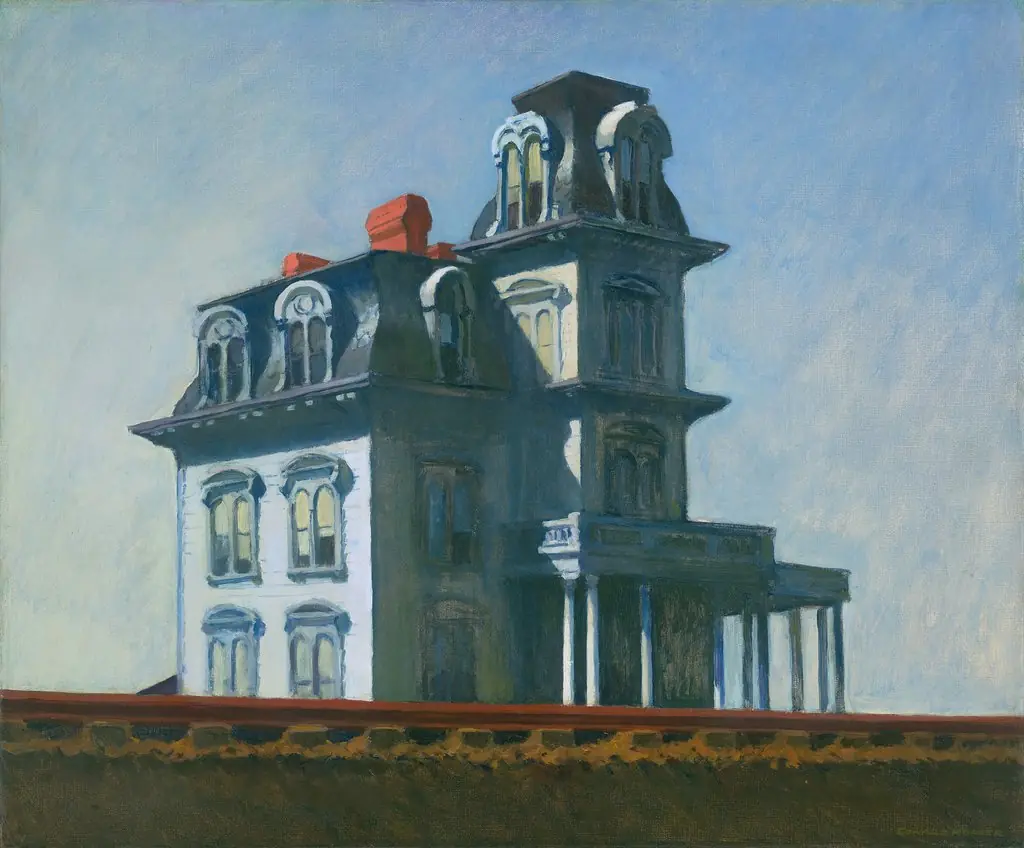 House by the Railroad
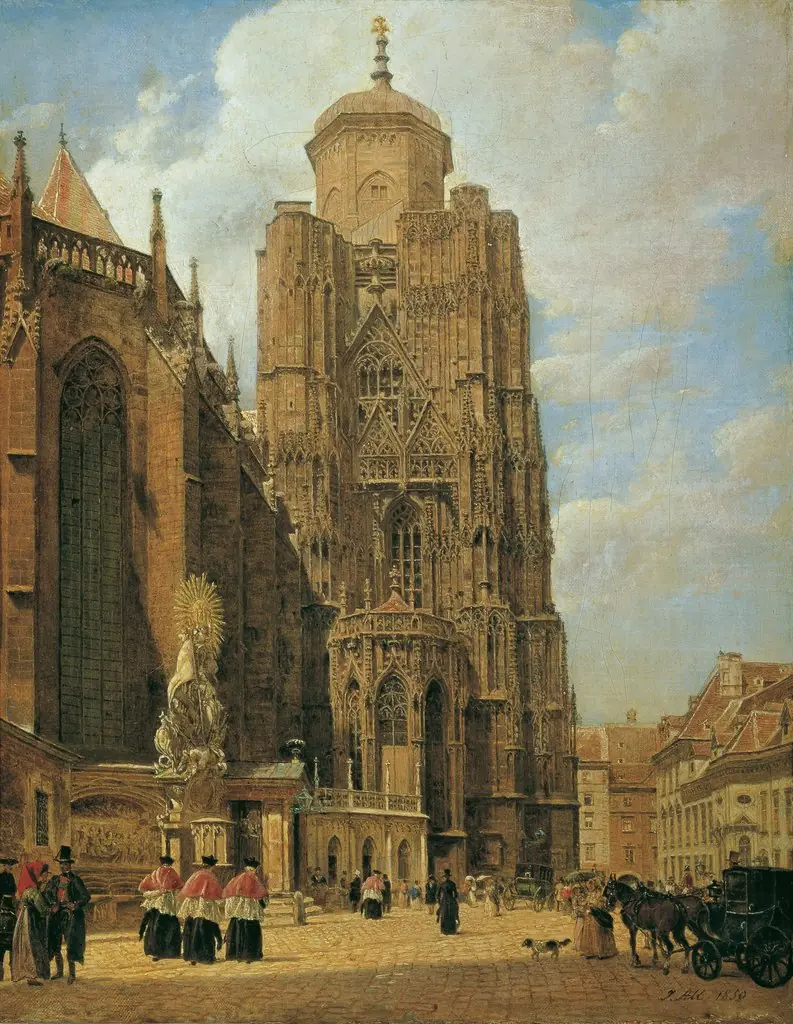 St. Stephen's Cathedral in Vienna
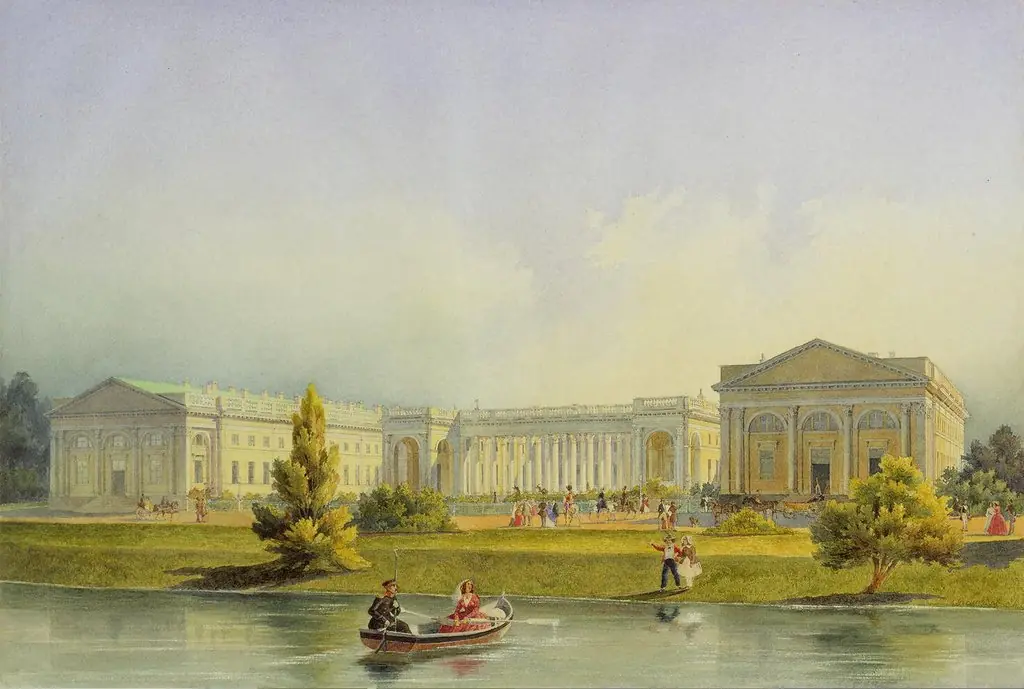 Alexander Palace in Tsarskoye Selo
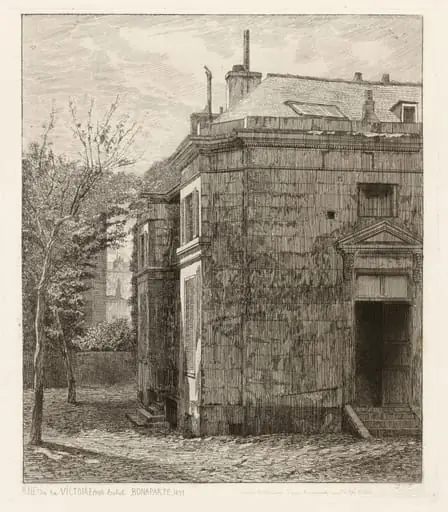 Rue de la Victoire (70). Hôtel Bonaparte
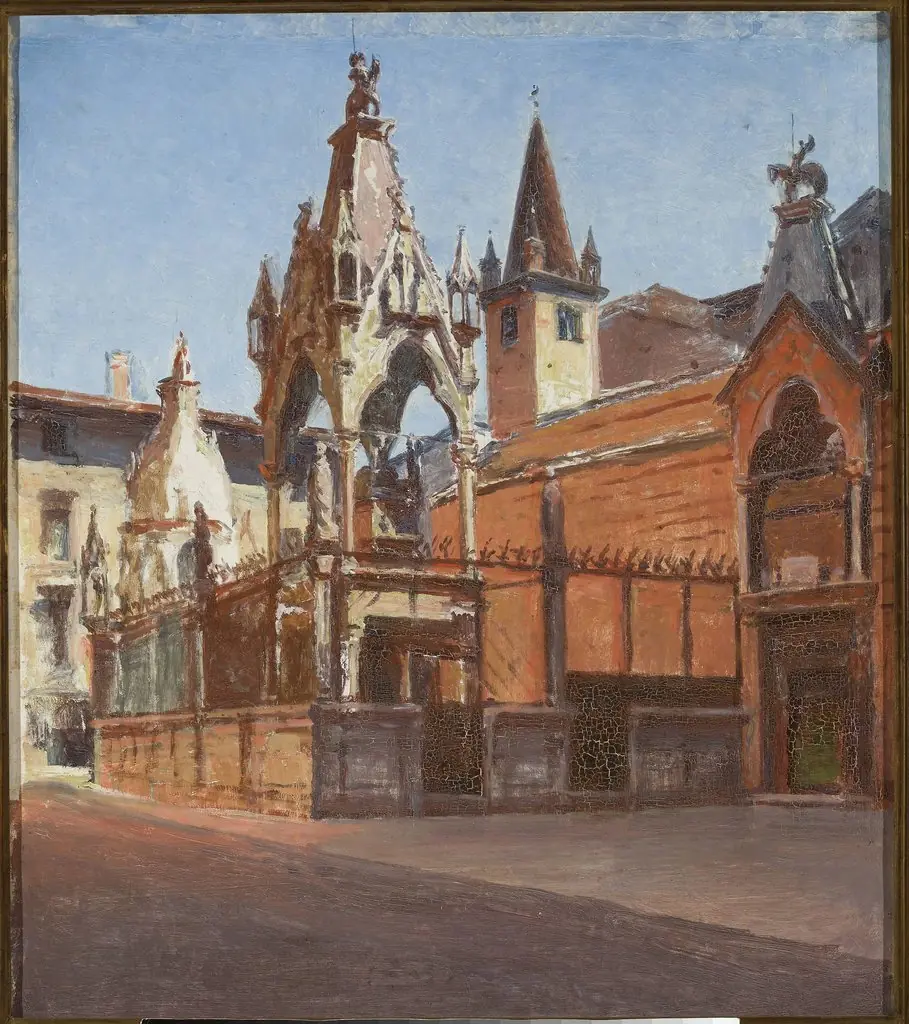 Scaliger Tombs in Verona
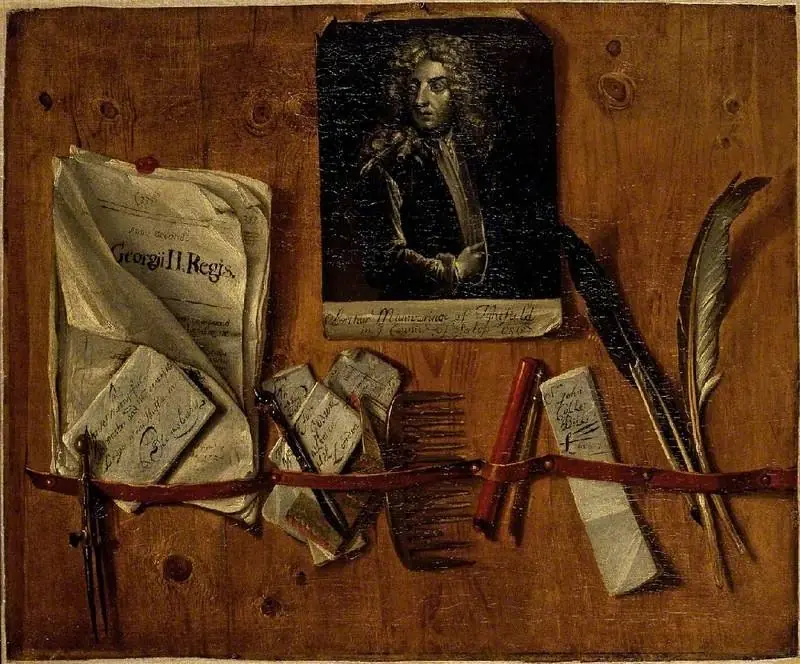 Trompe l'oeil painting
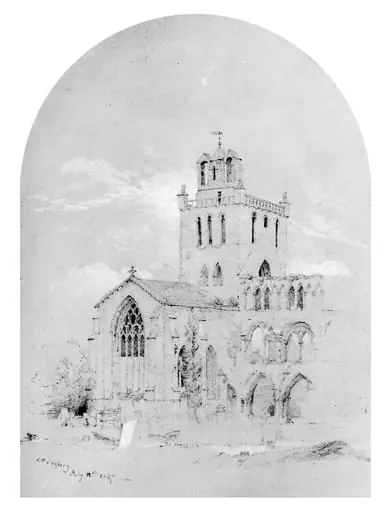 Jedburgh Abbey (from Cropsey Album)
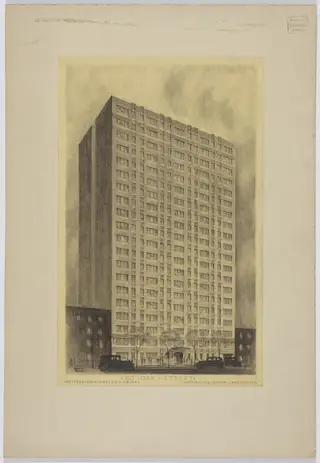 Bhairavi Ragini, Page from a Bundi Ragamala Set
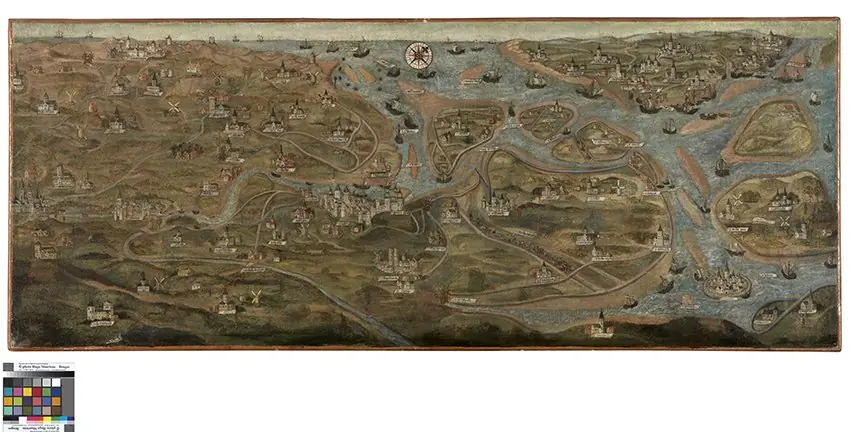 Map of the Zwin Area
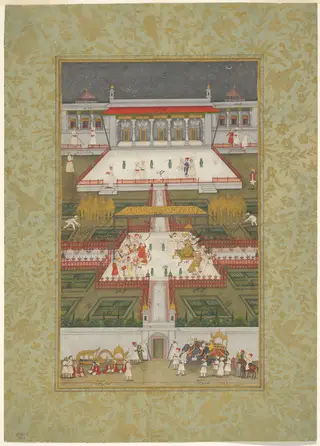 Ruler Entertained by Dancers in a Paradise Garden
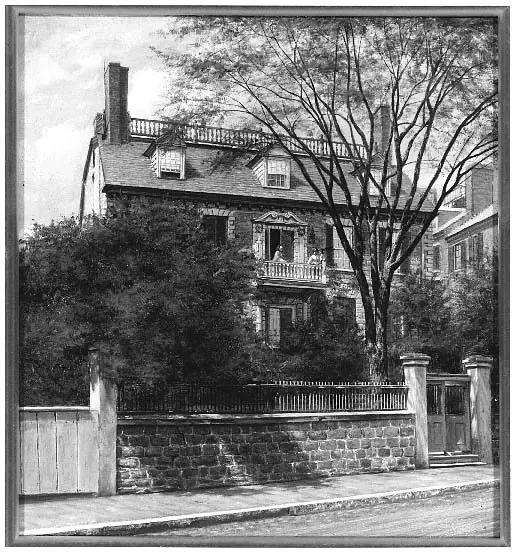 View of the John Hancock House
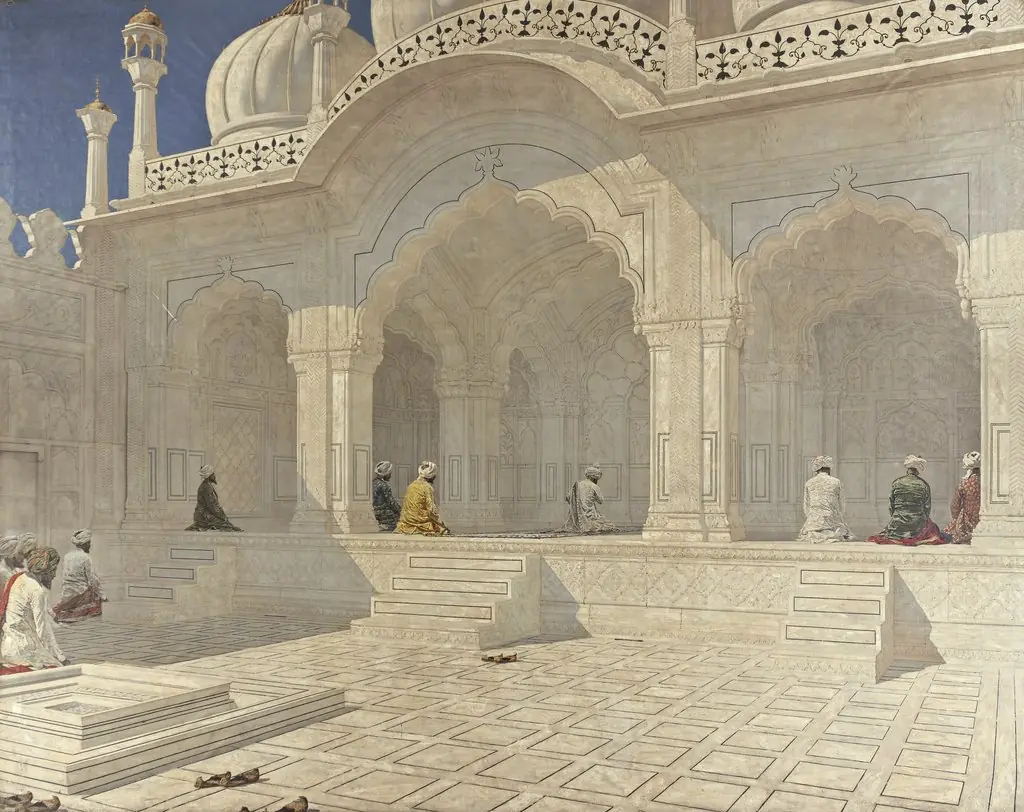 Pearl Mosque, Delhi
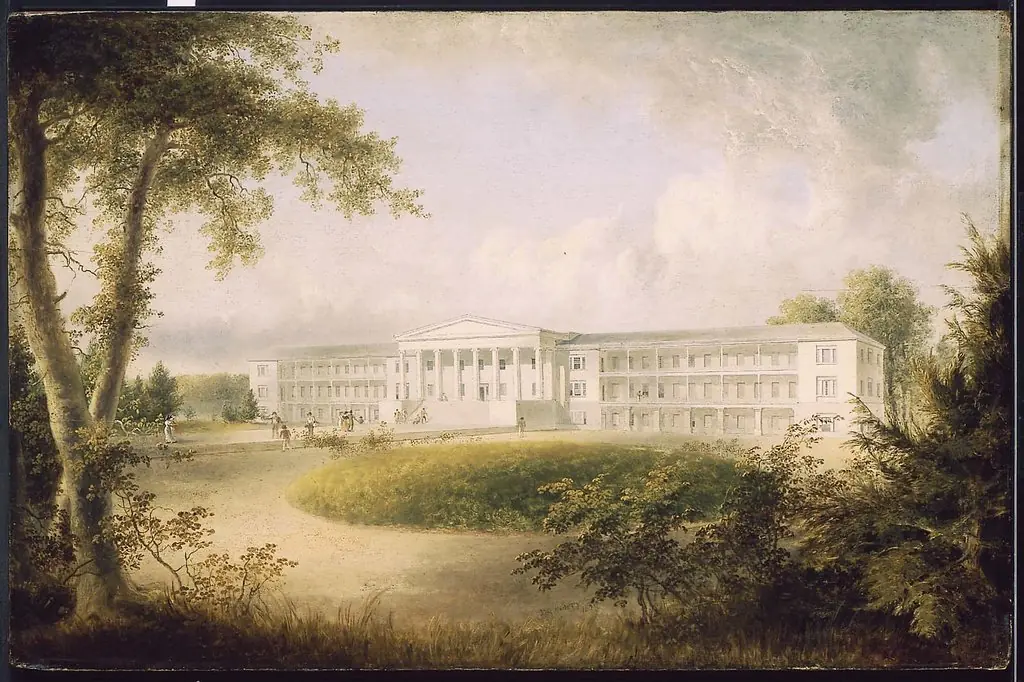 The Naval Home, Gray's Ferry, Philadelphia
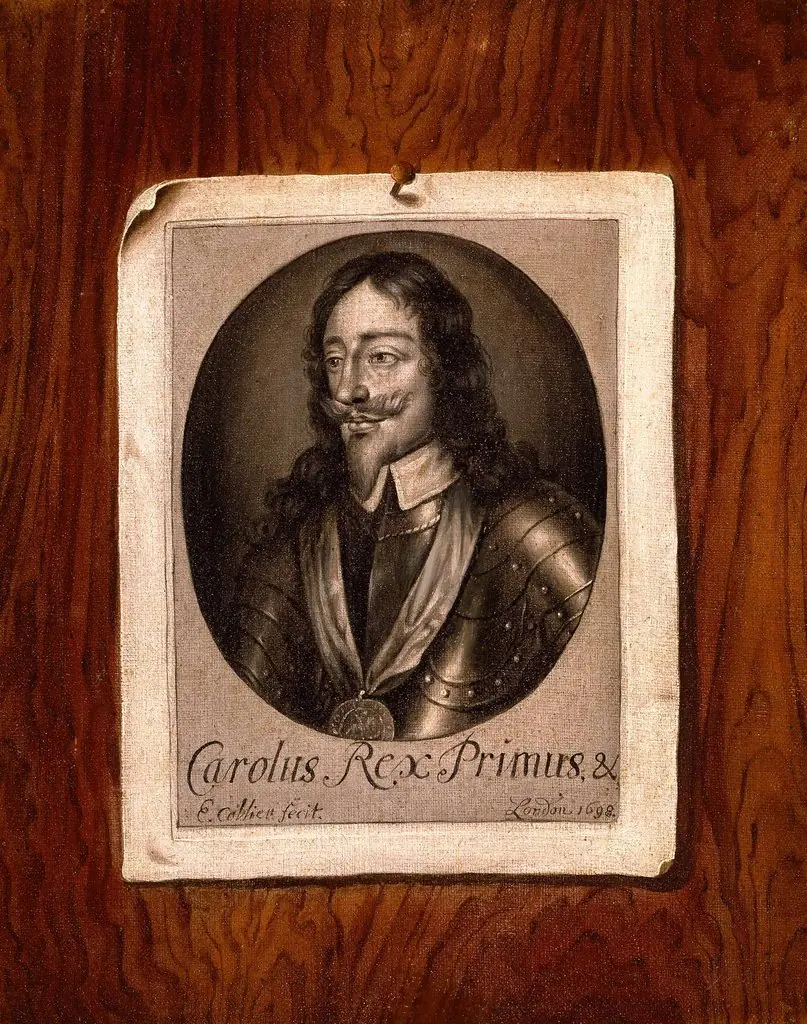 Charles I
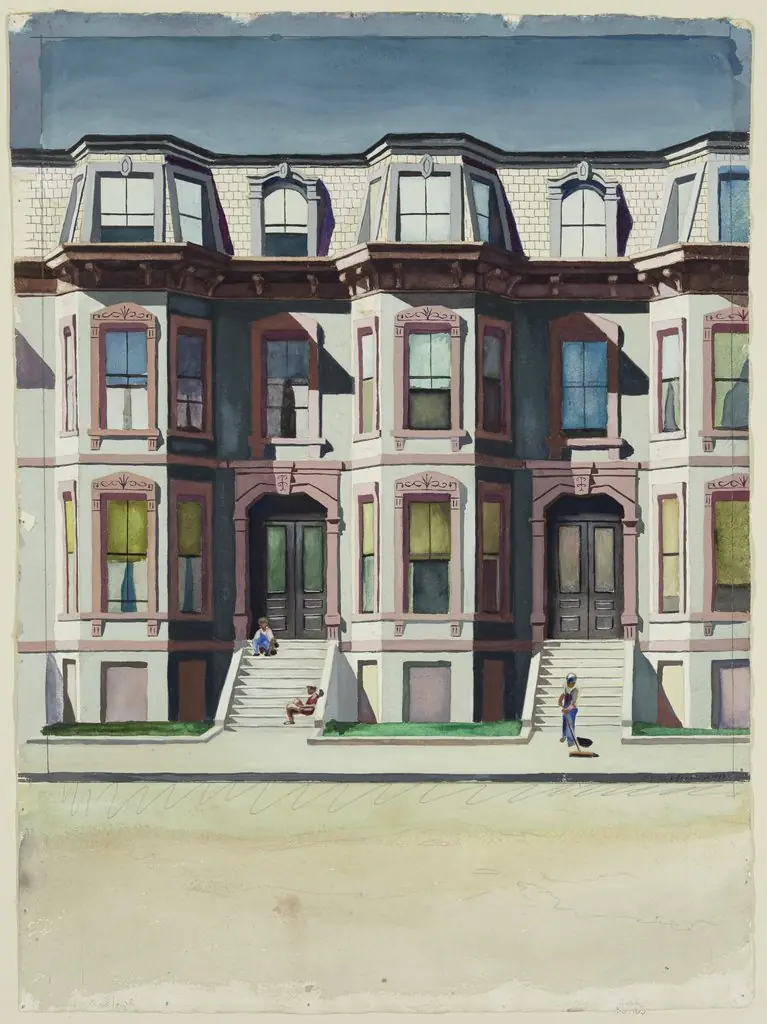 Old Roxbury
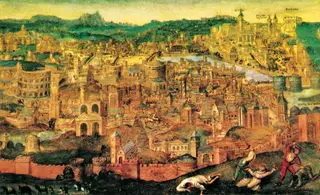 The sack of Rome in 1527
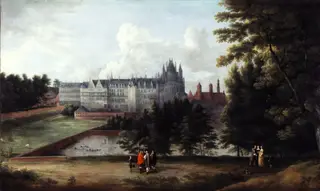 The Palace of Coudenberg
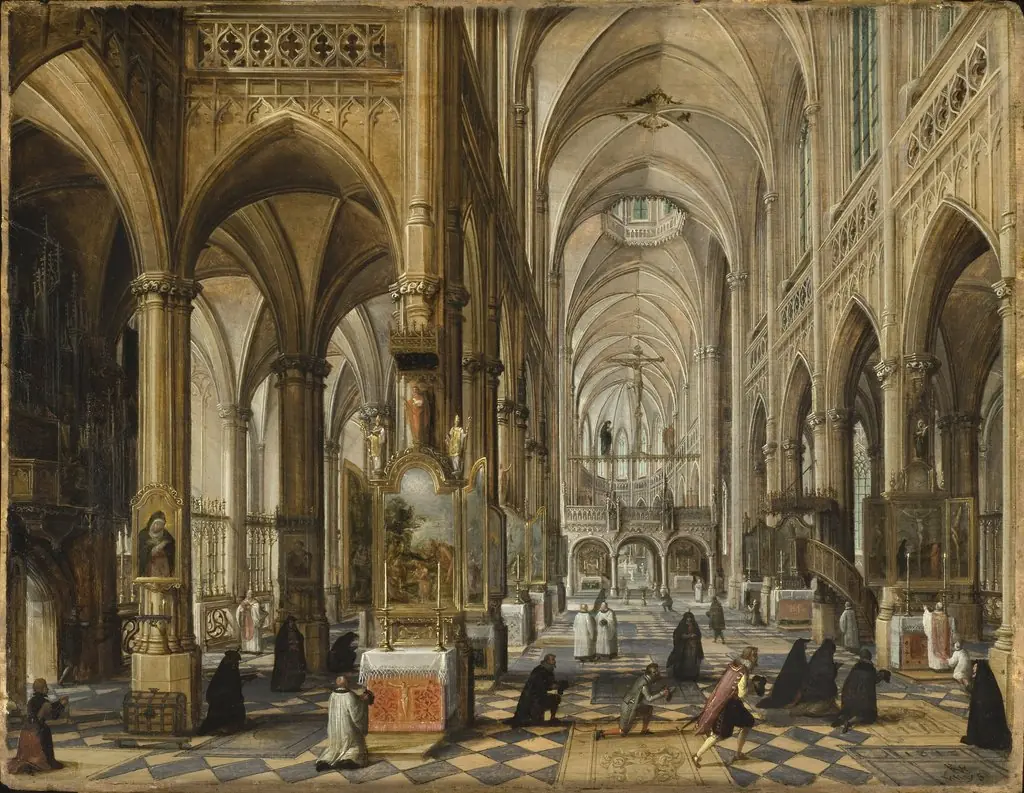 Interior of a Gothic Cathedral
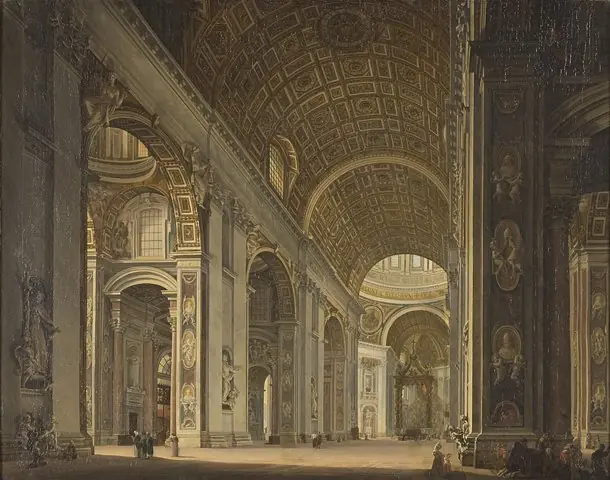 Interieur van de Sint Pieterskerk te Rome
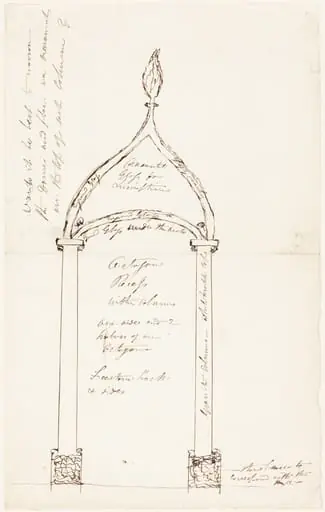 Sketch of Octagon Recess with Columns
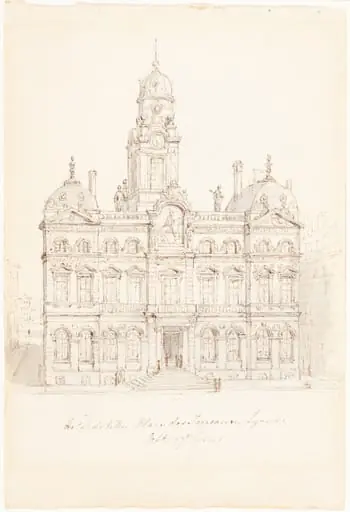 Hôtel de Ville, Place des Terreaux, Lyons
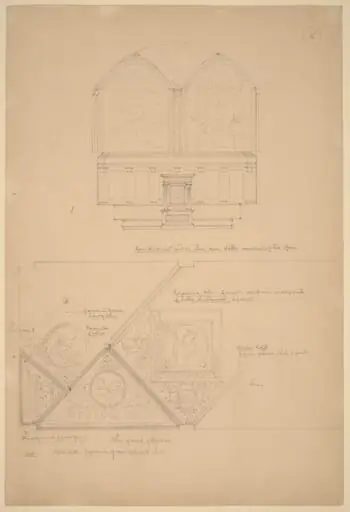 Study of an Altarpiece and Ceiling Panels
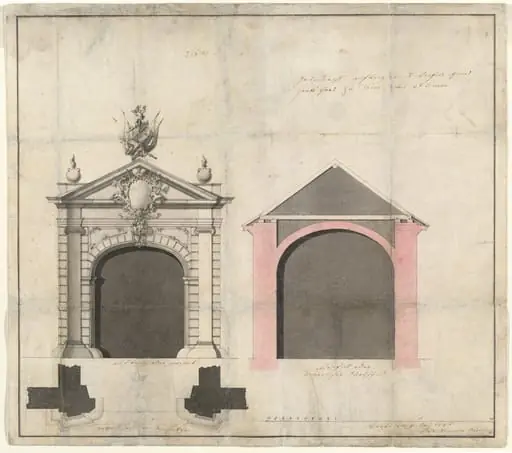 Design for a City Gate in Trier
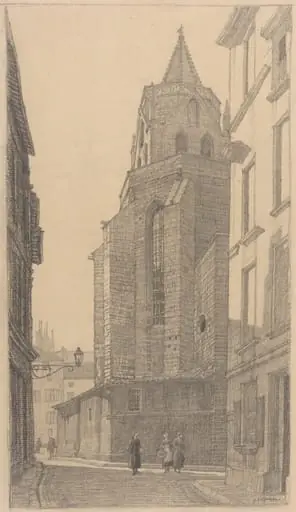 Apse of St.-Didier, Avignon
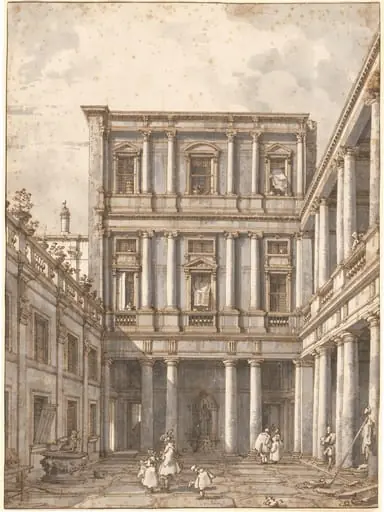 A Venetian Courtyard, in the Procuratie Nuove
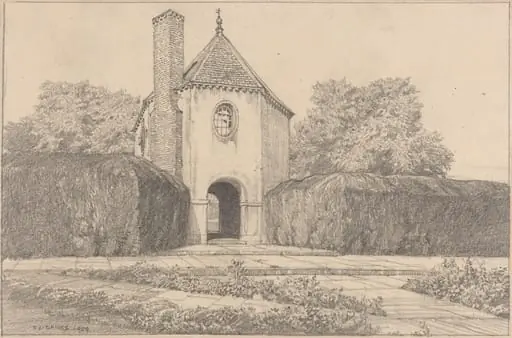 Garden House
![Designs for Palatial Arches [verso]](https://artifactworldgallery.com/img/lorenzo-sacchetti--designs-for-palatial-arches-verso--07f8f4d11d000c62-w320.webp) Designs for Palatial Arches [verso]
Designs for Palatial Arches [verso]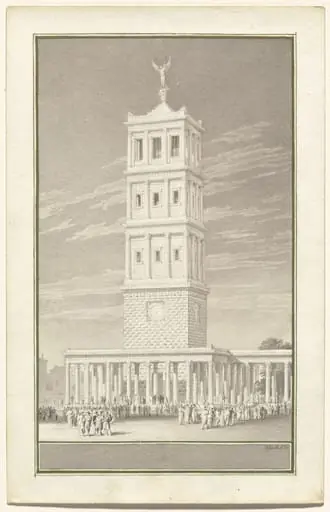 Campanile of a Cathedral for Berlin
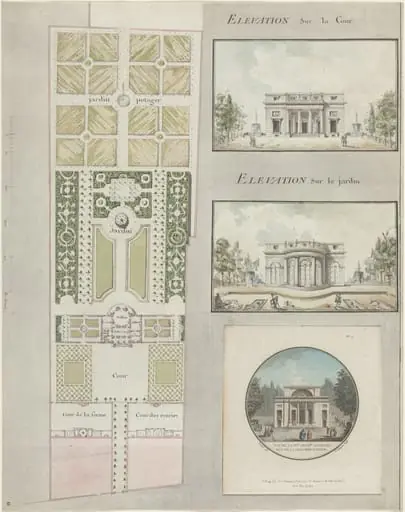 Project for the House and Gardens of Mlle. Guimard
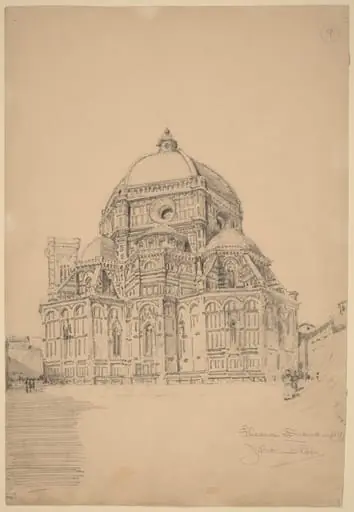 The Duomo, Florence
![The Erectheum, West Elevation [left half]](https://artifactworldgallery.com/img/john-russell-pope--the-erectheum-west-elevation-left-half--10b9b48e87f30a0f-w320.webp) The Erectheum, West Elevation [left half]
The Erectheum, West Elevation [left half]![Tower of a Fortified House [recto]](https://artifactworldgallery.com/img/friedrich-salathe--tower-of-a-fortified-house-recto--123693842ba6a52f-w320.webp) Tower of a Fortified House [recto]
Tower of a Fortified House [recto]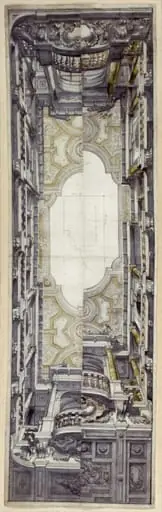 Presentation Drawing for the Ceiling Fresco of the Ognissanti
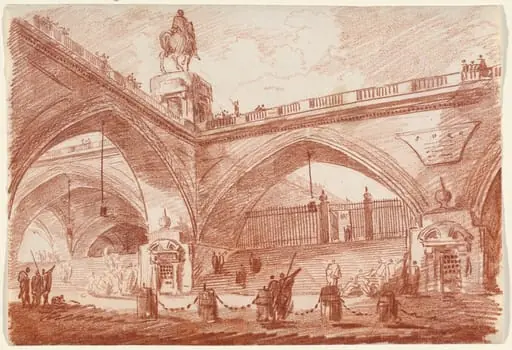 Architectural Fantasy with a Triumphal Bridge
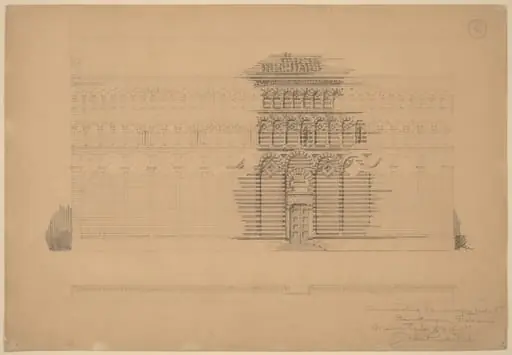 An Interesting Romanesque Treatment, San Giovanni, Pistoia
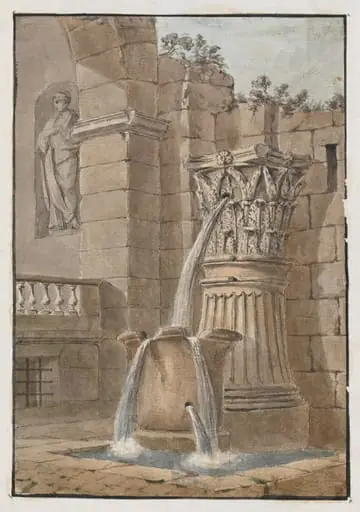 Fountain in a Courtyard
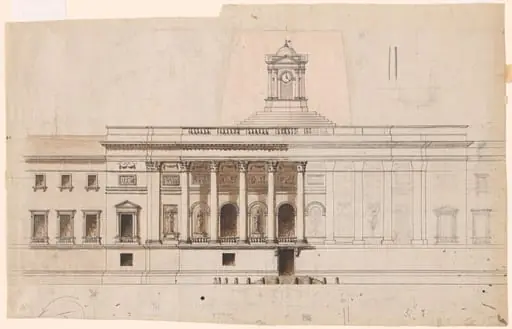 Architectural Study
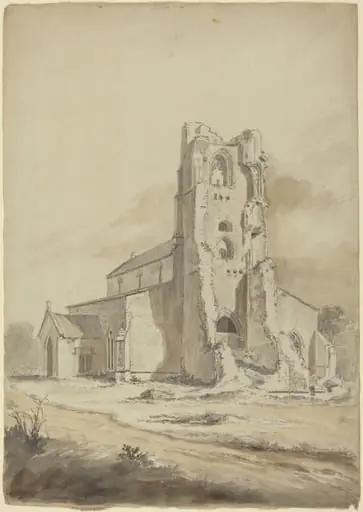 Ruined Church
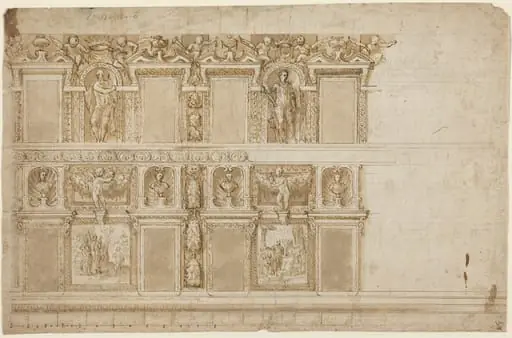 A Palatial Wall Ornamented with Sculptures and Paintings
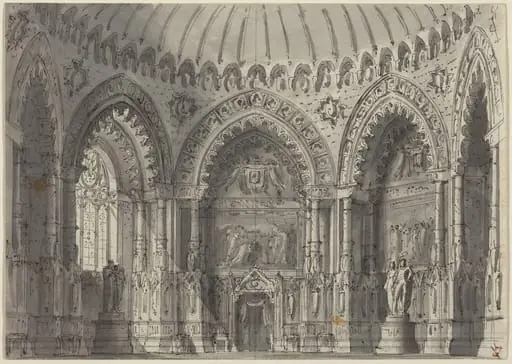 Rotunda in Gothic Style
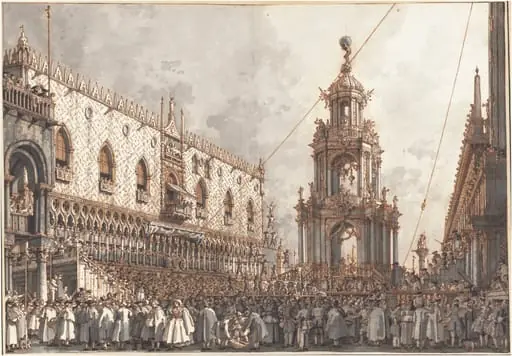 The "Giovedì Grasso" Festival before the Ducal Palace in Venice
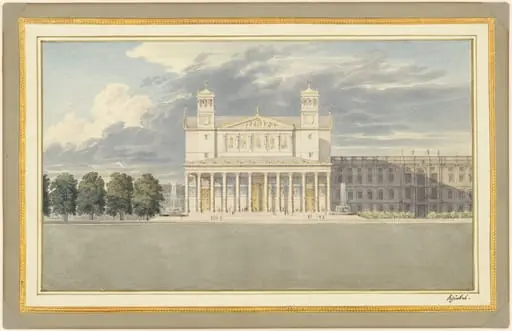 The Façade and Suroundings of a Cathedral for Berlin
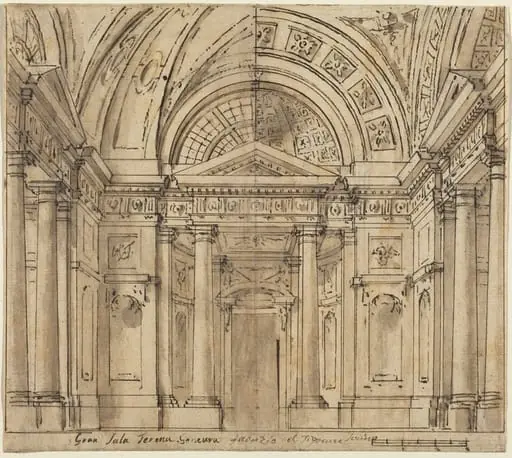 Design for Entrance to a Hall
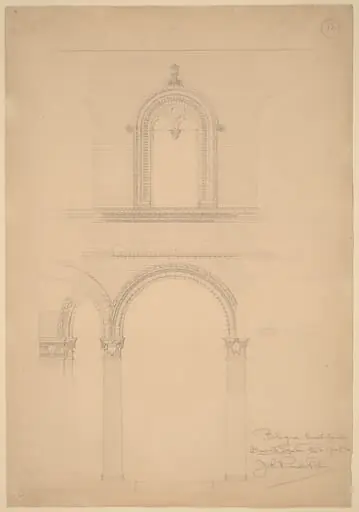 Bologna Brick Wall
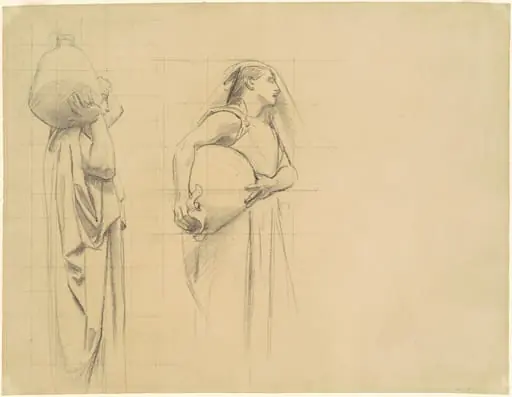 Study for "The Danaïdes"
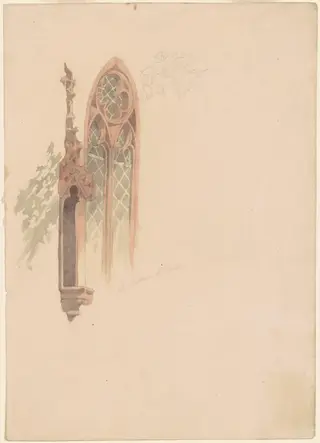 St. Peter's Church
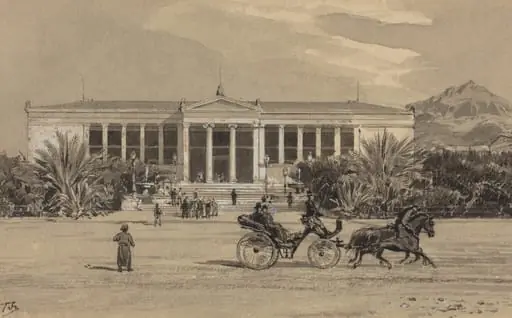 University
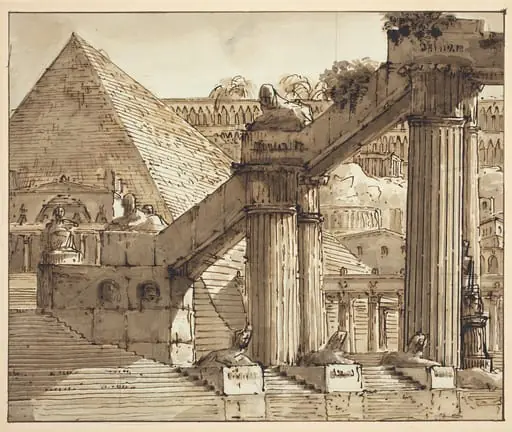 Egyptian Stage Design
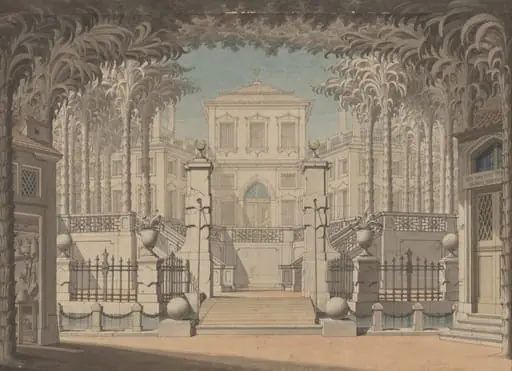 A Turkish Palace (Probably for Mozart's "Abduction from the Seraglio")
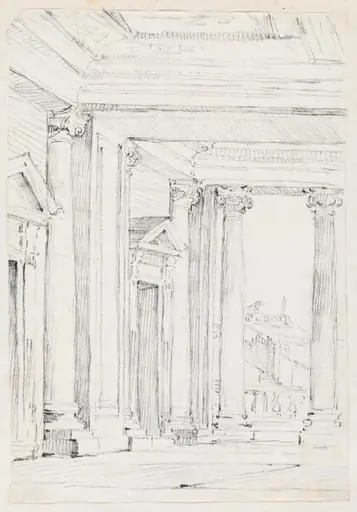 Portico of the Palazzo Nuovo, on the Campidoglio
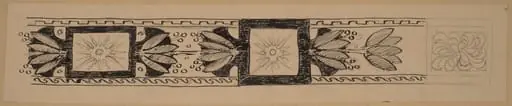 Study for a Border Design
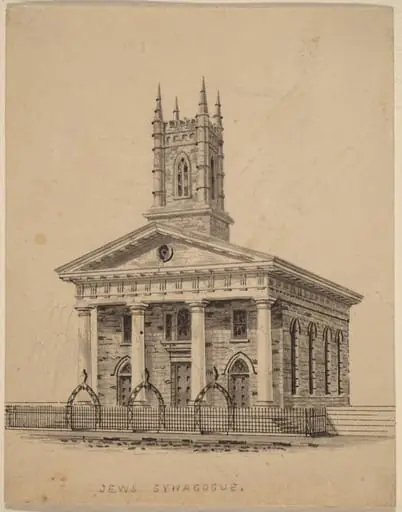 Jewish Synagogue, N.Y.
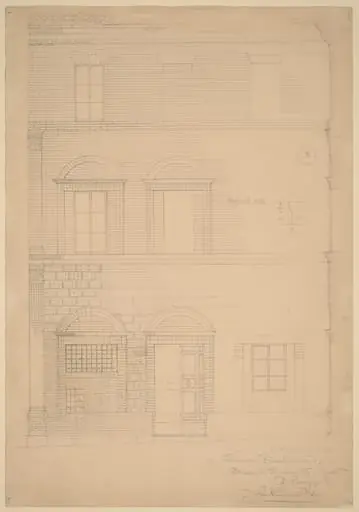 Siena Brickwork
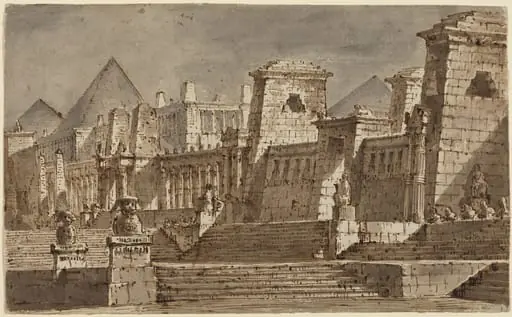 An Egyptian Stage Design
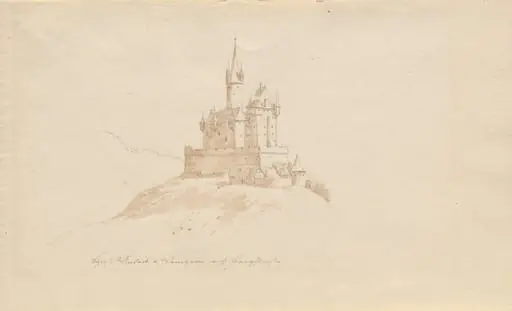 Schloss Windeck b. Weinhelm a. d. Bergstrasse
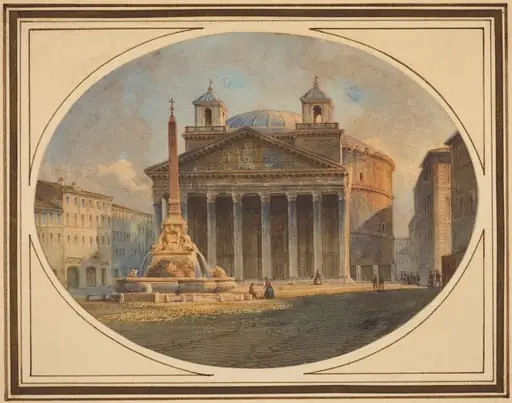 The Pantheon
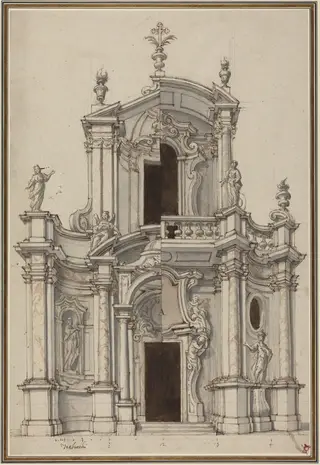 Elevation for a Church Facade, with Alternatives
Frequently asked questions
What is Architectural?
Architectural is an art genre. A genre of painting devoted to buildings — their exteriors, ruins, imaginary compositions, and the interplay of structure and light.
How many Architectural works does Artifact World Gallery have?
Artifact World Gallery holds 2,309 public-domain Architectural works, all free to view and download.
Who are the key Architectural artists?
Key Architectural artists in the collection include Jacques-Louis David, Jasper Francis Cropsey and John Haberle.
Where can I see Architectural works?
Architectural works in the collection are held by Victoria and Albert Museum, National Gallery of Art and Museum of Modern Art.