Artwork
The Waag (weigh-house) and Crane on the Spaarne, Haarlem
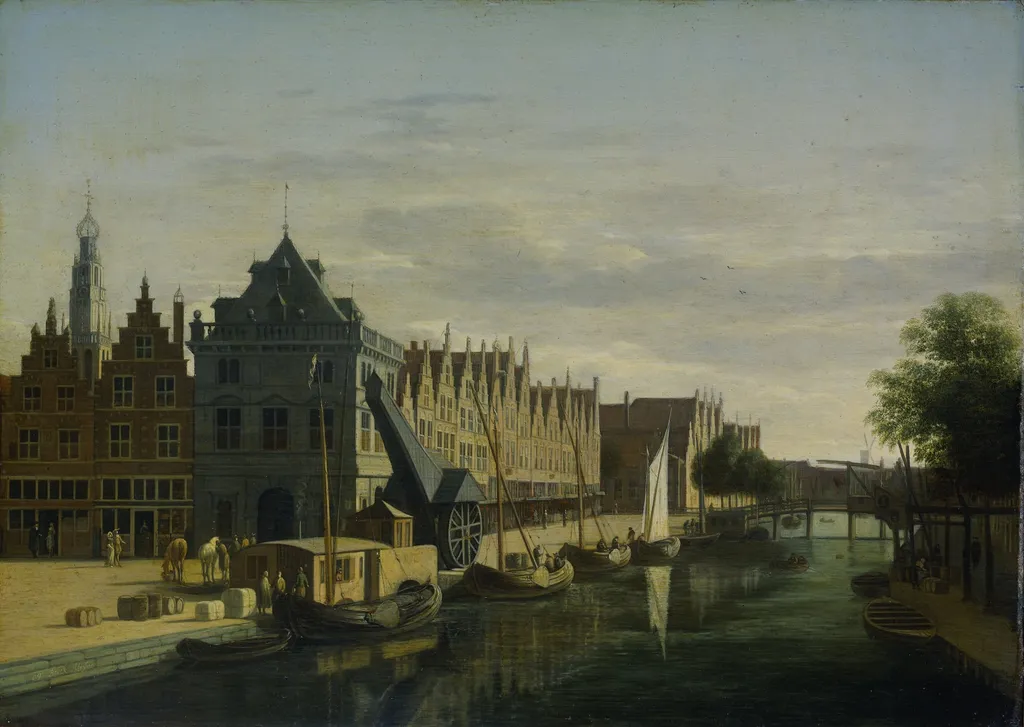
The Waag (weigh-house) and Crane on the Spaarne, Haarlem is an oil painting by the Dutch Golden Age artist Gerrit Adriaenszoon Berckheyde. It dates from 1670 and is held in the collection of the Rijksmuseum.
About this work
Subject & Meaning
The composition includes the Gravestenenbrug bridge and the spire of the Bakenesserkerk in the background, as well as barges moored along the quay.
The work depicts the Haarlem weigh house (Waag) and its adjacent tread‑wheel crane on the Spaarne river, set at the Damstraat. The composition includes the Gravestenenbrug bridge and the spire of the Bakenesserkerk in the background, as well as barges moored along the quay. The Waag, erected between 1594 and 1599 under architect Lieven de Key, functioned as the city’s official site for weighing goods under municipal supervision to ensure fair trade.
The crane, used to unload cargo from the Spaarne, symbolizes the commercial activity that the weigh house regulated. Together they illustrate Haarlem’s organized urban economy and civic pride, a theme typical of Berckheyde’s cityscape genre.
Technique & Style
The painting is executed in oil on panel. Its small scale and urban subject align with Berckheyde’s characteristic city views, where architectural detail and waterfront activity are rendered with a precise, linear clarity. The composition balances the vertical mass of the weigh-house with the crane’s functional silhouette, while horizontal accents from the Spaarne’s surface and moored barges stabilize the scene.
Light falls evenly across façades and rigging, flattening relief to emphasize planar structure and linear rhythm rather than atmospheric depth.
History & Provenance
Created in 1670 by Gerrit Adriaenszoon Berckheyde, this oil painting on panel depicts the Waag and crane in Haarlem. The work is signed 'g Berck Heyde' on the quay wall in the lower left corner. Art historical analysis suggests it was produced after 1660, following the artist's permanent return to his birthplace after travels in Germany.
The painting first appeared in the estate auction of Adriaan La Coste in Dordrecht on July 10, 1832. By approximately 1850, it entered the collection of Johannes Rombouts in Dordrecht. Upon Rombouts' death in 1850, the work passed to his nephew, Leendert Dupper, who had already inherited the collection.
Dupper bequeathed the painting to the Rijksmuseum in 1870, where it was assigned inventory number SK-A-35. In 2003, the Rijksmuseum transferred the work on permanent loan to the Frans Hals Museum in Haarlem.
The painting is held by the Frans Hals Museum in Haarlem, where it has been on permanent loan from the Rijksmuseum since 2003. Its Rijksmuseum inventory number is SK-A-35. The work entered the Rijksmuseum's collection in 1870 as part of the bequest of Leendert Dupper (1799–1870), who had inherited the art collection of his uncle Johannes Rombouts (1772–1850) of Dordrecht.
Earlier, around 1850, the painting was in Rombouts's possession, and its first documented appearance was at the estate auction of Adriaan La Coste (1745–1821), held on 10 July 1832 in Dordrecht. According to the Wikidata record, the work has been included in the exhibition "Blik op Haarlem". lists both the Rijksmuseum and the Frans Hals Museum as collections and locations, and notes prior ownership by Leendert Dupper and Adriaan Lacoste; confirms the Frans Hals Museum as the holding institution and supplies the Rijksmuseum inventory number SK-A-35 along with the full provenance chain.
Legacy
The painting has been recognized as a key example of Haarlem’s Golden Age cityscape tradition, often cited in Dutch art surveys for its precise depiction of civic infrastructure and mercantile life. It entered public discourse through the 1832 Dordrecht sale of Adriaan Lacoste’s collection and later formed part of the Rombouts–Dupper bequest to the Rijksmuseum in 1870, securing its place in a national collection. Since 2003 the work has been on permanent loan to the Frans Hals Museum in Haarlem, where it features in displays on Haarlem’s topography and Berckheyde’s oeuvre, reinforcing its local and scholarly reputation as a defining image of the city’s historic weigh-house and crane.
Overview
This oil painting, created by Gerrit Adriaenszoon Berckheyde in 1670, captures a vibrant scene along the Spaarne River in Haarlem. It presents a detailed cityscape, characteristic of the Dutch Golden Age, focusing on the city's commercial activity. The work is currently housed in the Rijksmuseum collection.
Context
As a prominent painter of cityscapes during the Dutch Golden Age, Gerrit Adriaenszoon Berckheyde was active in several key Dutch cities, including Haarlem, Amsterdam, and The Hague. His work, including this depiction of Haarlem, reflects the era's appreciation for realistic portrayals of urban life and the prosperity of the Dutch Republic.
Own this work as a print
Artist & collection
Artist
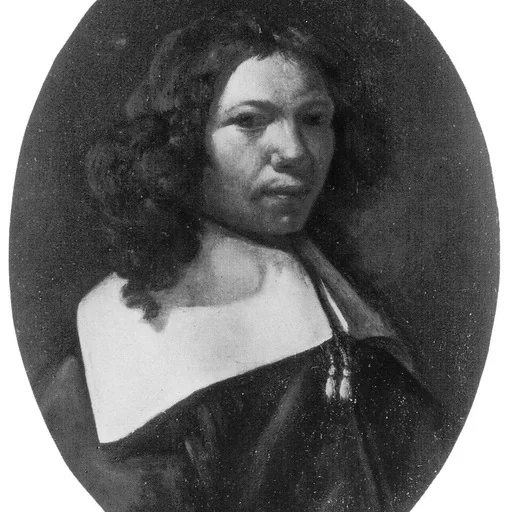
Gerrit Adriaenszoon Berckheyde
Gerrit Adriaenszoon Berckheyde (1638 – 10 June 1698) was a Dutch Golden Age painter, active in Haarlem, Amsterdam, and The Hague, who is best known today for his cityscapes.

 View of the Two Synagogues of Amsterdam
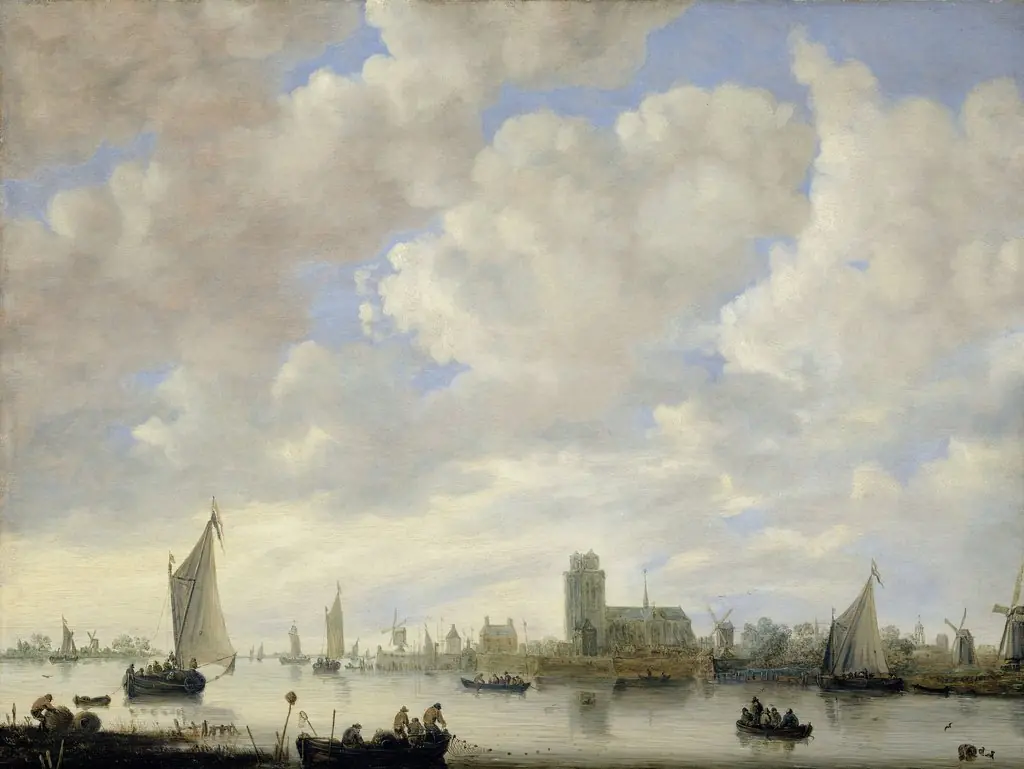 View of the Merwede off Dordrecht
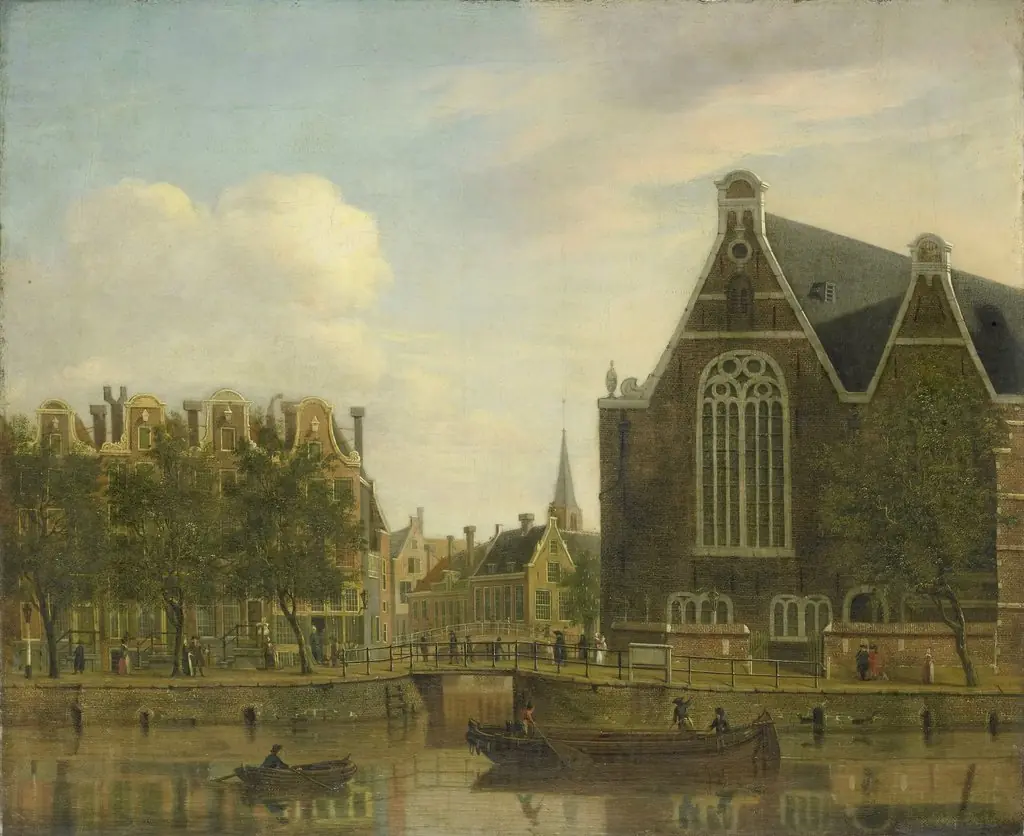 The so-called Boerenverdriet on the Spui, Amsterdam
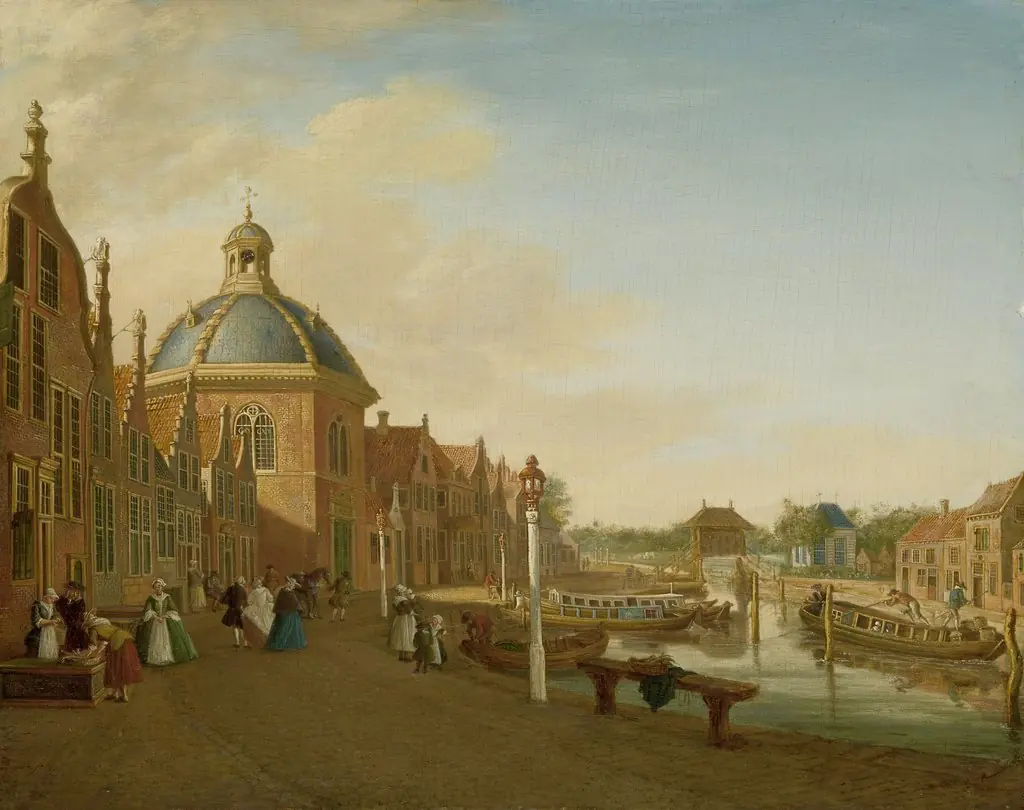 The Docking Basin in the Barge Canal in Leidschendam
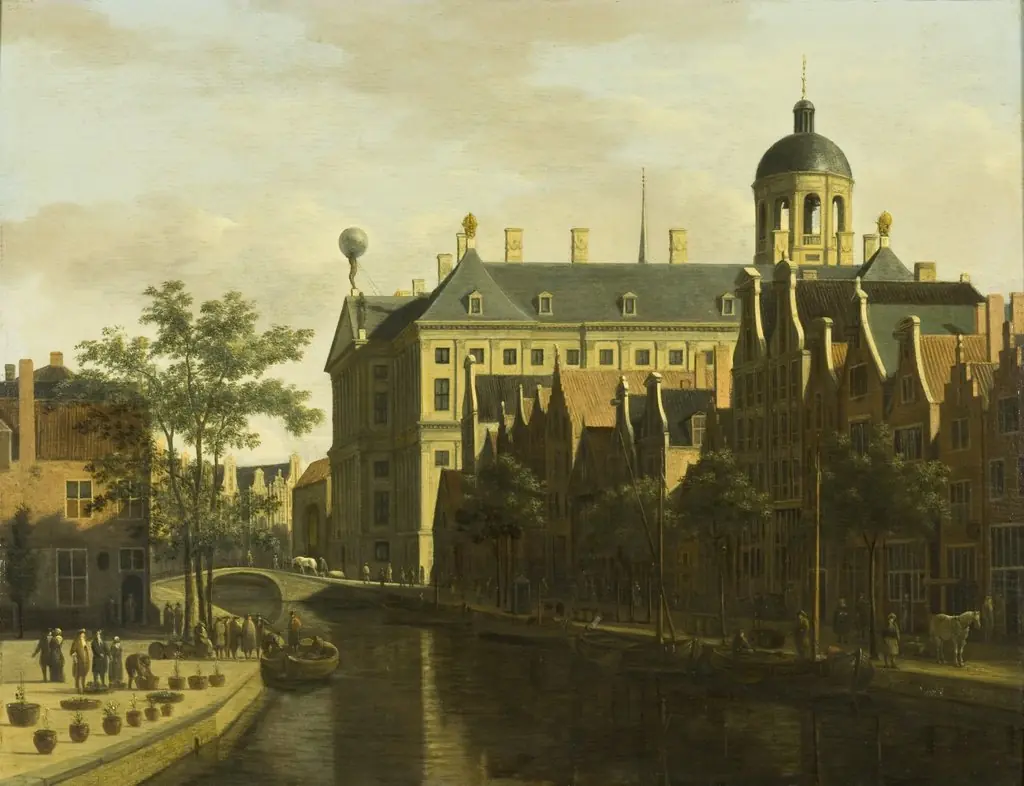 The Nieuwezijds Voorburgwal with the Flower and Tree Market in Amsterdam
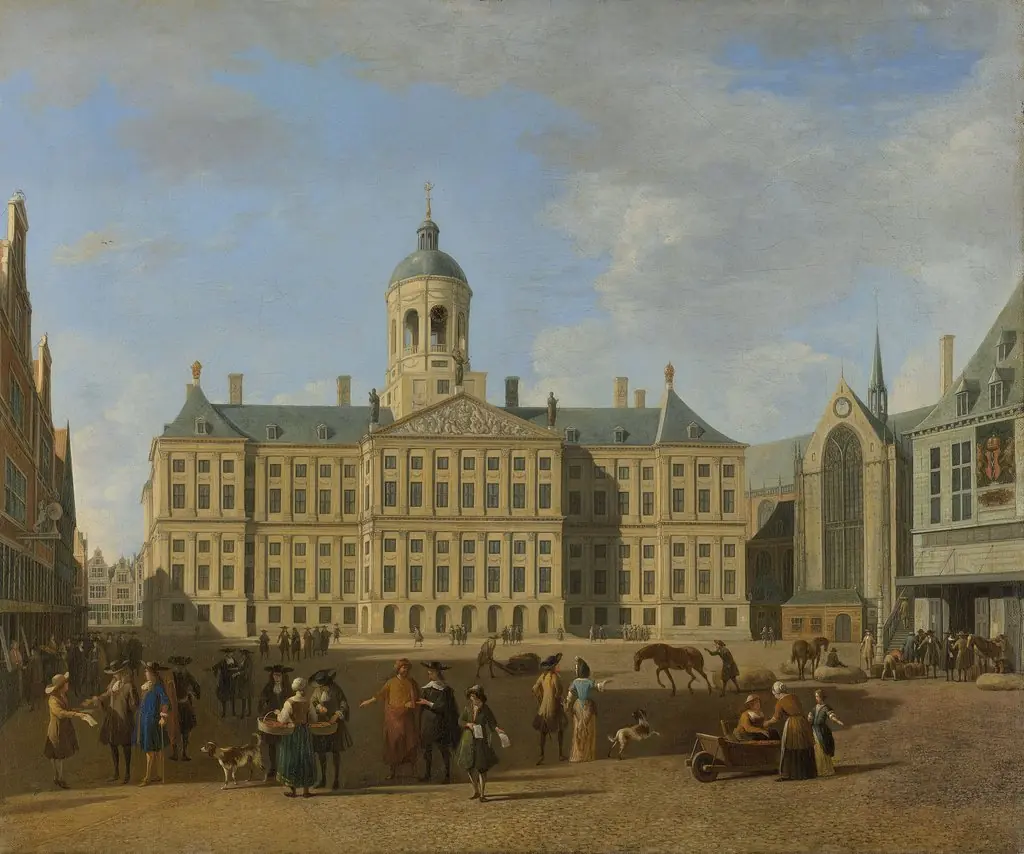
 View of the Ratshuis in Amsterdam
 Gezicht op de Houtmarkt te Amsterdam