Artwork
Saul honoring David after his victory over Goliath
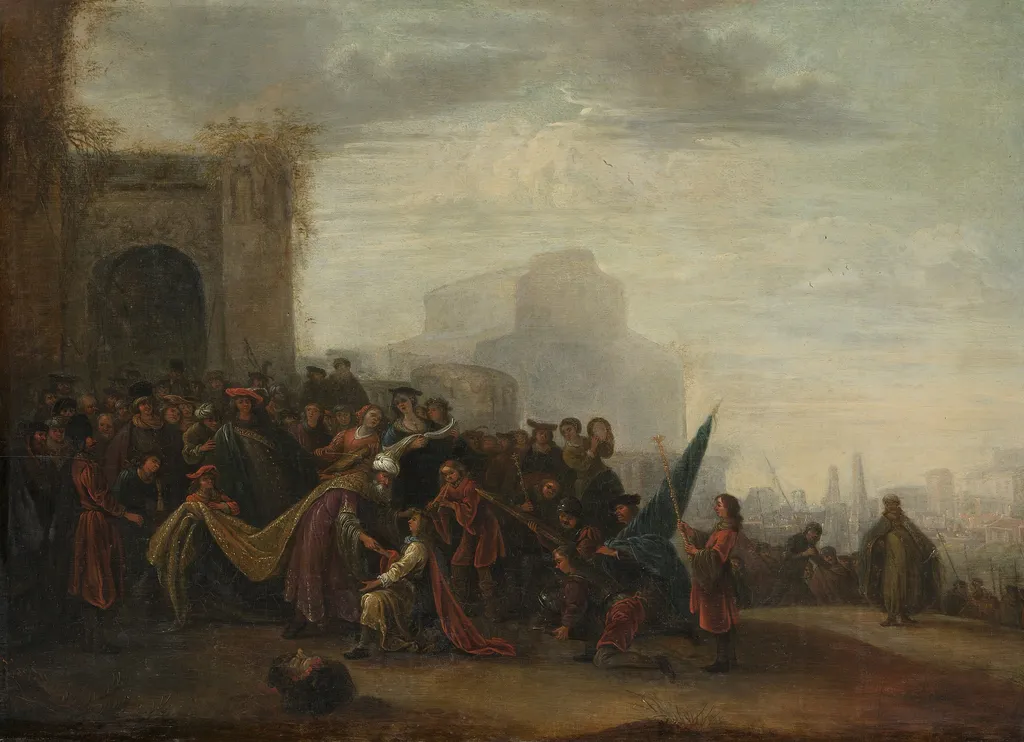
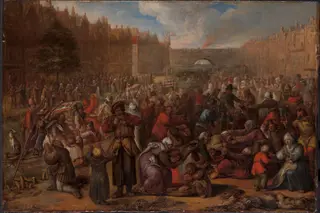
Saul honoring David after his victory over Goliath is an oil painting by the Dutch Golden Age artist Gerrit de Wet. It dates from 1640 and is held in the collection of the Rijksmuseum.
About this work
Technique & Style
Gerrit de Wet painted Saul honoring David after his victory over Goliath in 1640 using oil paint on a wooden panel.
Gerrit de Wet painted Saul honoring David after his victory over Goliath in 1640 using oil paint on a wooden panel. The work measures 60.9 cm in height by 84.8 cm in width and belongs to the religious art genre. Executed in the Dutch Golden Age style, the painting depicts the biblical figures Goliath, David, and Saul, reflecting de Wet's focus on narrative biblical scenes.
The artwork is part of the Rijksmuseum's collection and is classified as a religious painting.
History & Provenance
Saul honoring David after his victory over Goliath is an oil painting by Gerrit de Wet dated to 1640. The work is held in the collection of the Rijksmuseum, where it remains located. No further details regarding its commission, earlier ownership, or chain of custody are documented in the available sources.
The painting is held by the Rijksmuseum in Amsterdam, where it forms part of the museum's collection. According to the available records, the work is catalogued as part of the Rijksmuseum holdings, with no further accession number specified in the sources consulted. No exhibition history is documented in the available records.
The panel measures 60.9 cm in height by 84.8 cm in width, and was executed in oil on panel in 1640 by Gerrit de Wet.
Context
Gerrit de Wet's 1640 oil painting Saul honoring David after his victory over Goliath portrays the biblical moment where King Saul blesses David following his triumph over Goliath. The work, classified as religious painting, was created on panel and is part of the Rijksmuseum's collection in Amsterdam, where it remains on display. Its composition and iconography reflect 17th-century Dutch biblical narrative painting traditions, emphasizing heroic valor and divine favor within a Protestant cultural framework.
The painting's subject aligns with Counter-Reformation and Dutch Reformed artistic interests in Old Testament stories as moral exempla, though de Wet's specific role in this genre remains less documented than contemporaries like Rembrandt or Rubens.
Overview
Gerrit de Wet’s oil painting Saul Honoring David after His Victory over Goliath was executed in 1640. The work belongs to the Dutch Golden Age and is part of the Rijksmuseum’s collection. It portrays a biblical moment in a dimly lit public square, populated by figures in period dress, some kneeling, others standing, all directed toward a central action.
Subject & Meaning
The scene captures the aftermath of David’s defeat of Goliath, when King Saul publicly acknowledges the young hero. A man in a red robe is assisted to his feet, while a boy in a plain tunic bears a flag, symbols that emphasize triumph and royal favor. The gathering crowd underscores the communal recognition of divine‑guided victory.
Own this work as a print
Artist & collection
Artist
Gerrit de Wet (1616, Amsterdam? – 1674, Leiden), sometimes called De Wett, Düwett, De Weth, or De Weet, was a Dutch painter. He was a scholar of Rembrandt, whose manner he imitated; he also painted landscapes, and was…

 Fairground with Crenellated Keep
 Street Comedians on the Square
 Battle
 Imperial Coronation
 Charles II (1630-1685) stopping at the Estate of Wema on the Rotte on his Journey from Rotterdam to The Hague, 25 May 1660
 Entrada triunfal de don Juan José de Austria (?)
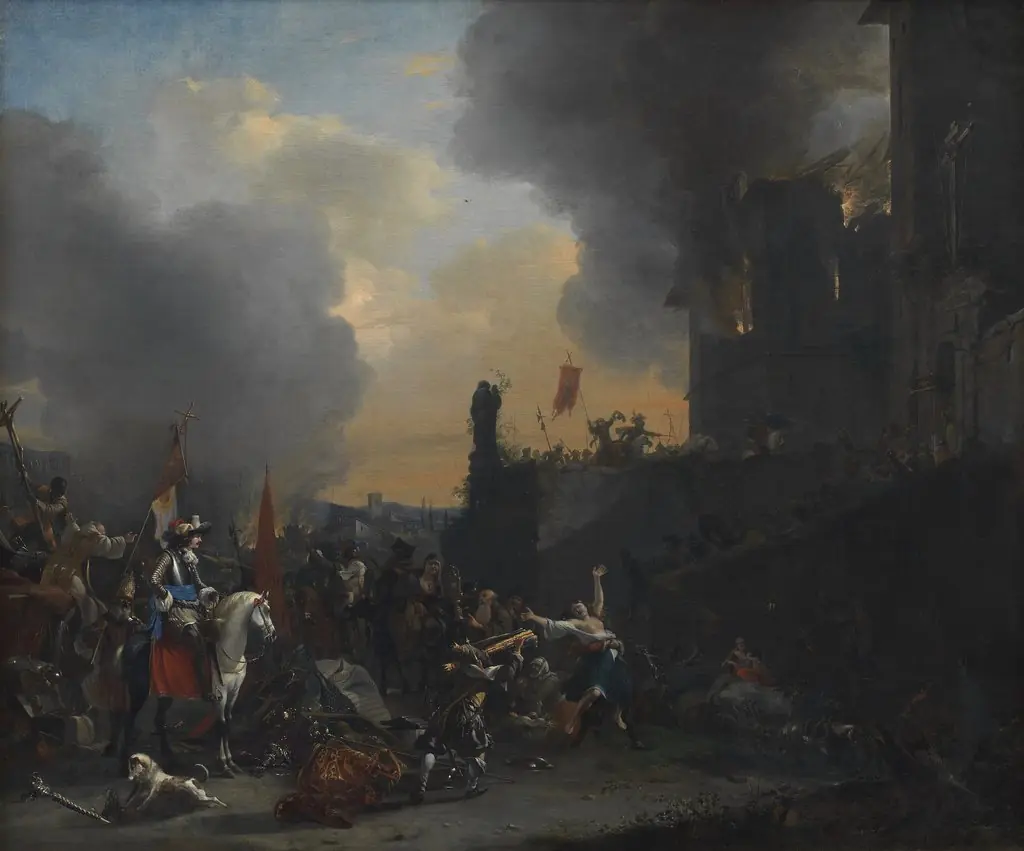 Soldiers Looting and Burning a Convent
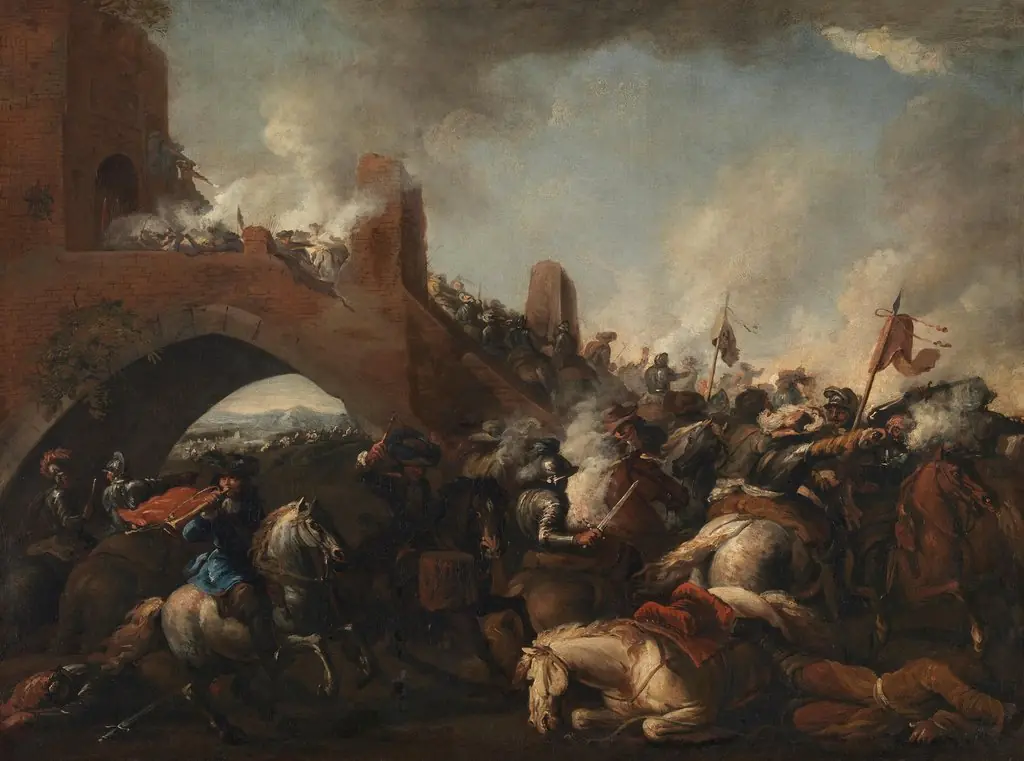 Storming of a castle
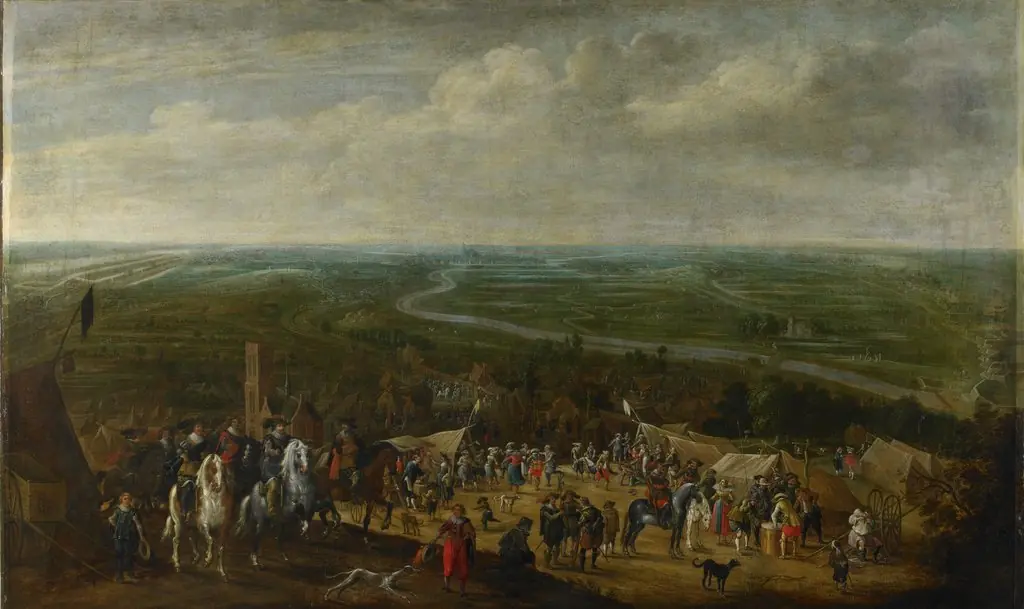 Prince Frederik Hendrik at the siege of 's-Hertogenbosch, 1629
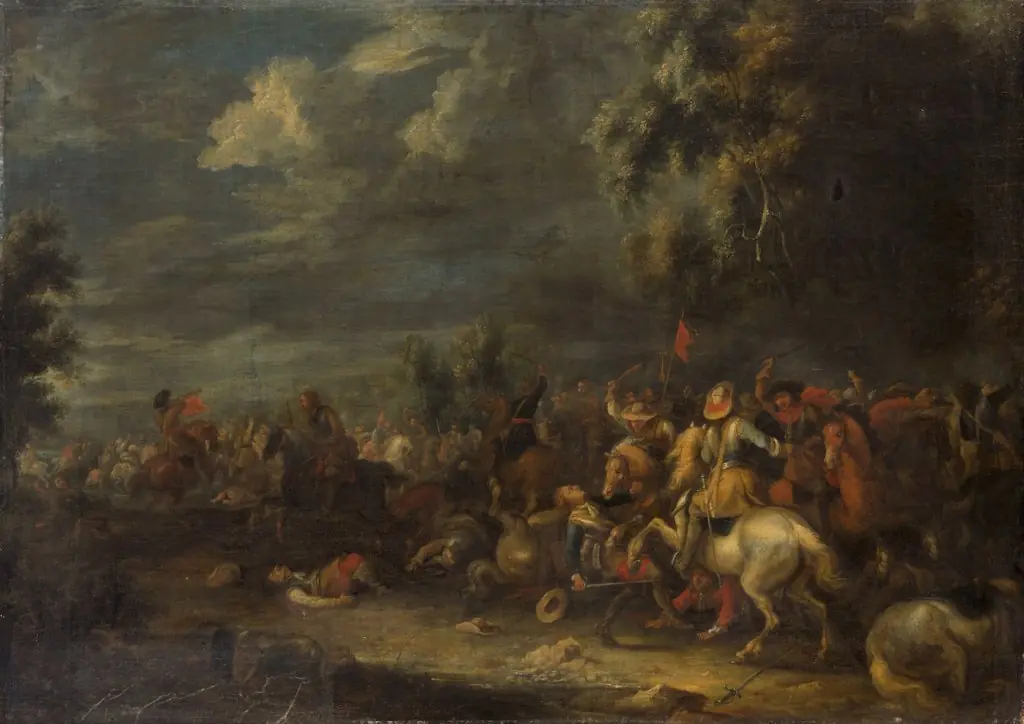 Reitergefecht
 De hongerende bevolking na de opheffing van het beleg van Leiden
- Saul Welcoming David after his Victory over Goliath