Artwork
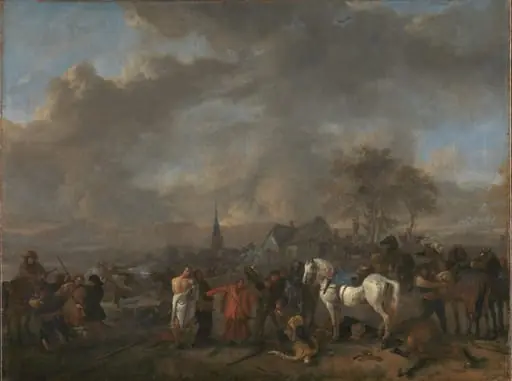
De hongerende bevolking na de opheffing van het beleg van Leiden
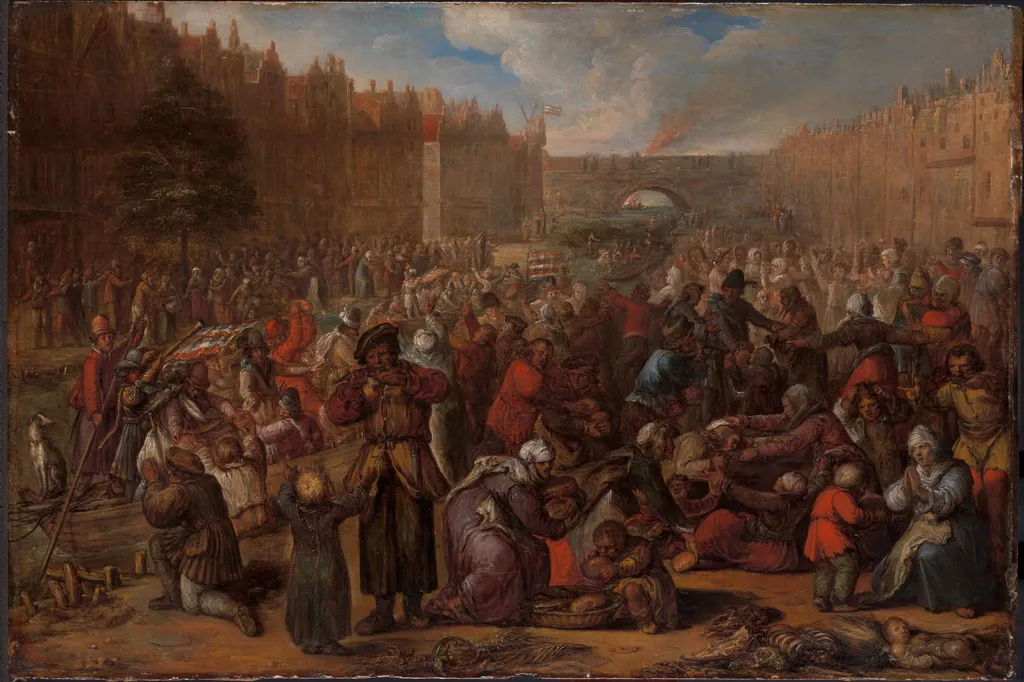
De hongerende bevolking na de opheffing van het beleg van Leiden is an unspecified painting by the Northern Renaissance artist Unknown. It dates from 1602 and is held in the collection of the Rijksmuseum.
About this work
Overview
This painting depicts a pivotal moment in the history of Leiden, capturing the relief and desperation of its citizens after the city was liberated from siege in 1574.
Subject & Meaning
The scene shows a crowd of emaciated and exhausted people awaiting their liberators, who bring much-needed food, primarily herring and white bread, symbolizing the timely arrival of relief.
Technique & Style
The artist's urgent and straightforward approach is evident in the lack of elaborate details, focusing instead on conveying the emotions of hunger and relief.
History & Provenance
The painting is attributed to an unknown artist, as it remains unsigned, and is associated with the historical event of the siege of Leiden.
Artist & collection









 Untitled
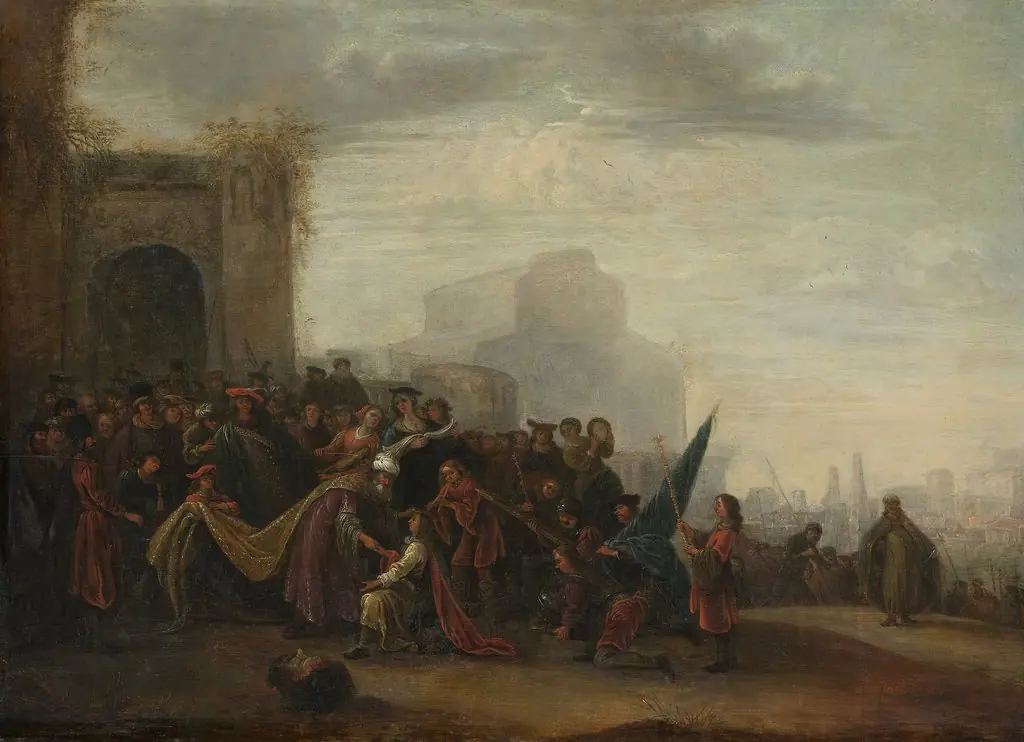 Saul honoring David after his victory over Goliath
 Saul Welcoming David after his Victory over Goliath
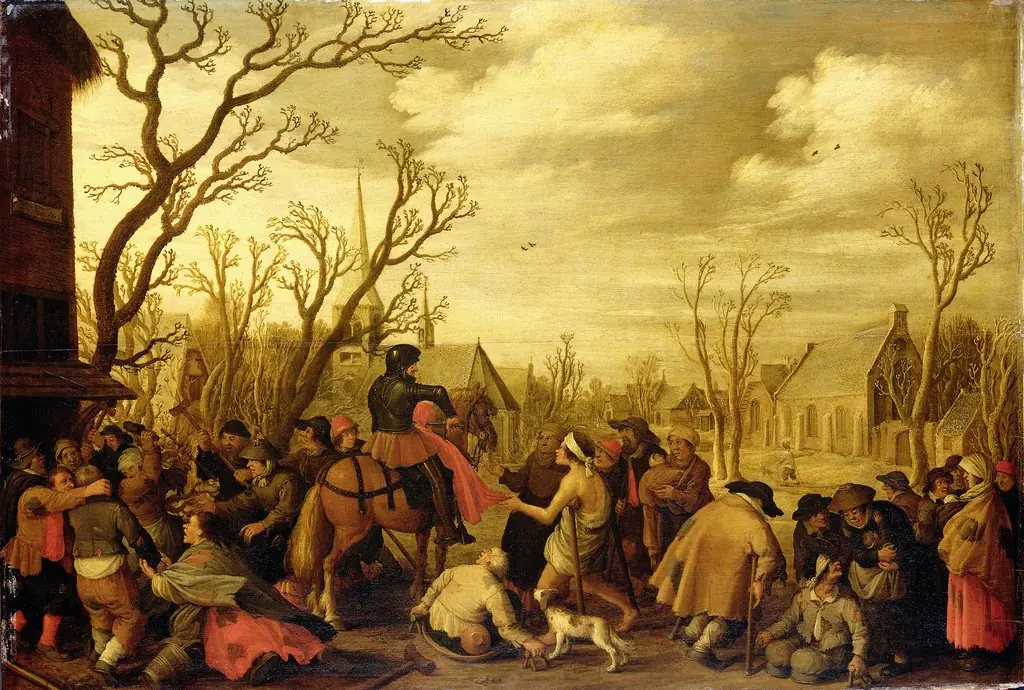 St Martin cutting off part of his cloak for a beggar
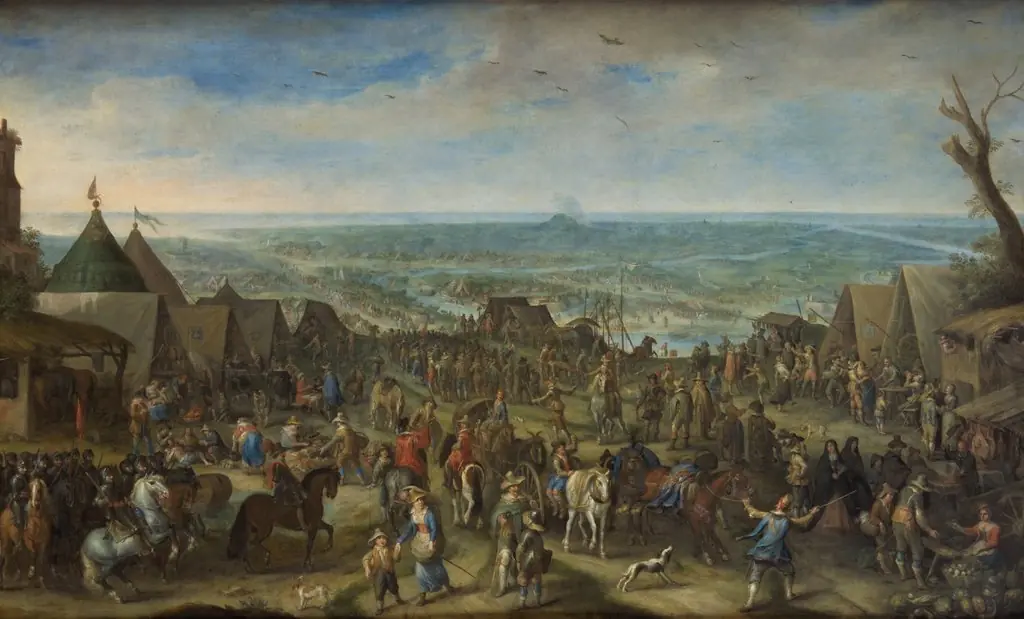 Field camp
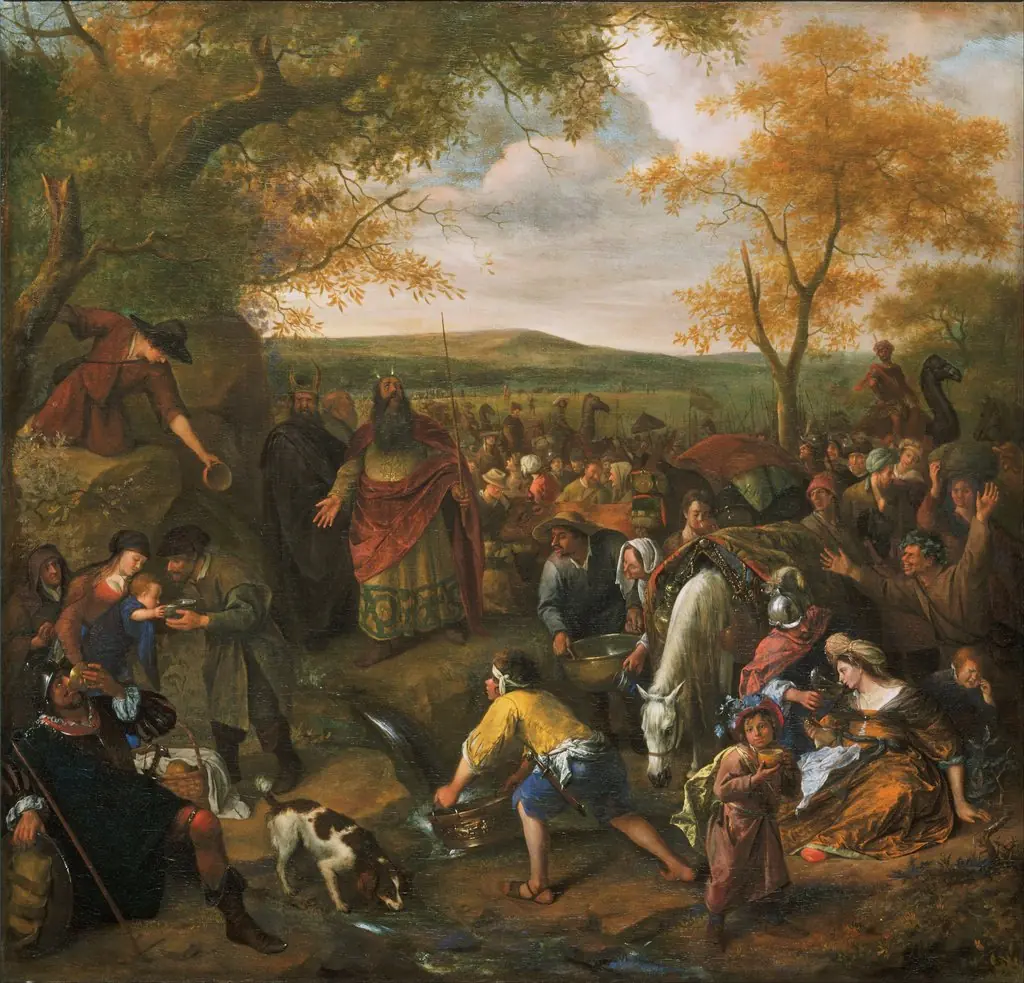 Moses Striking the Rock
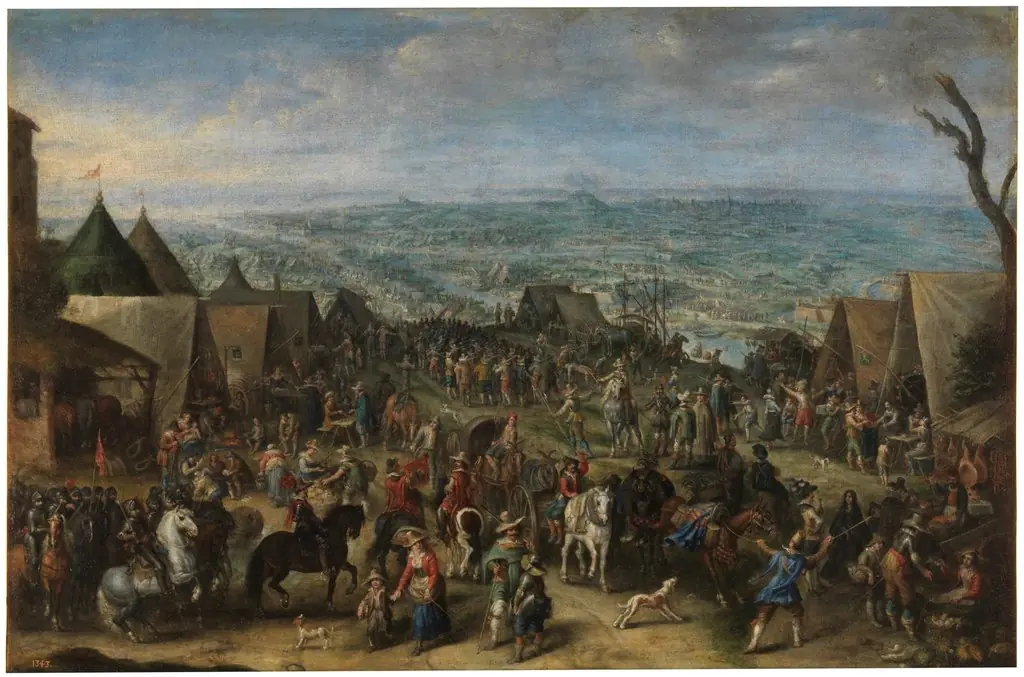 Sitio de Ostende
 Shrove Tuesday on the Ice
 Village Fair
 Village Feast
 "Madrid Fair in Cebada Square"
 The Victory of the Peasants