Artwork
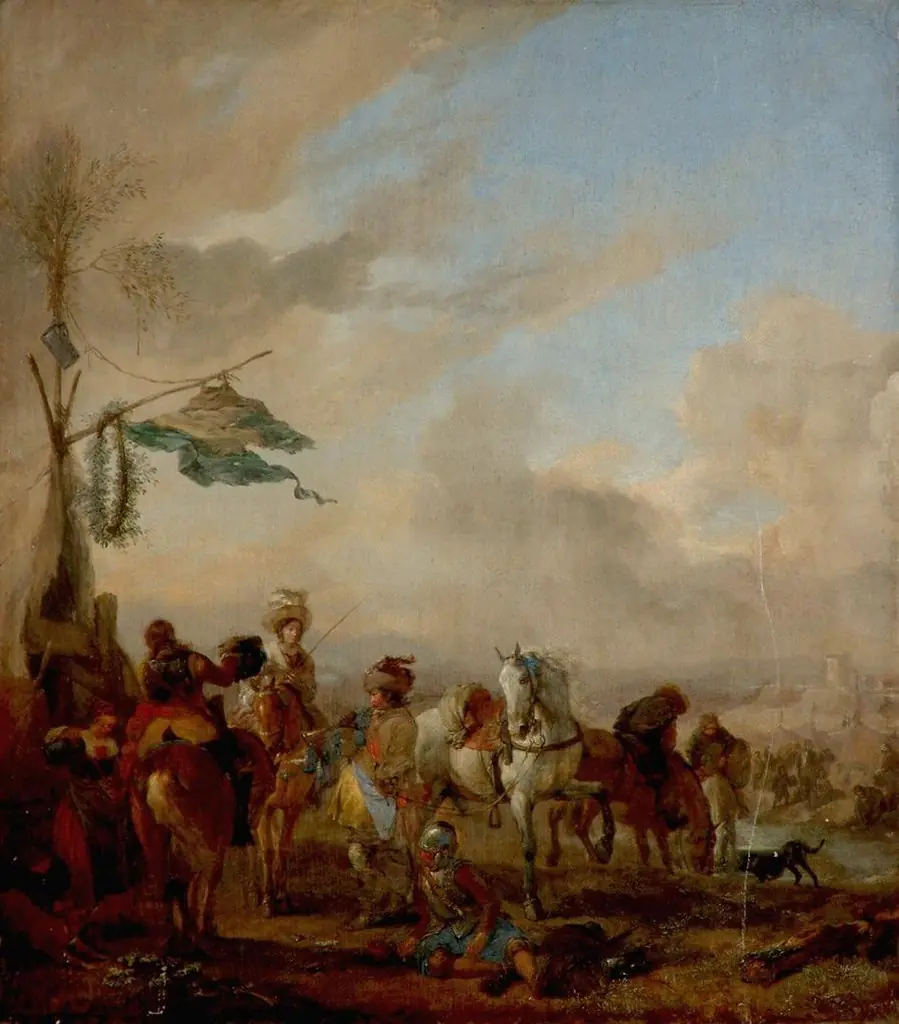
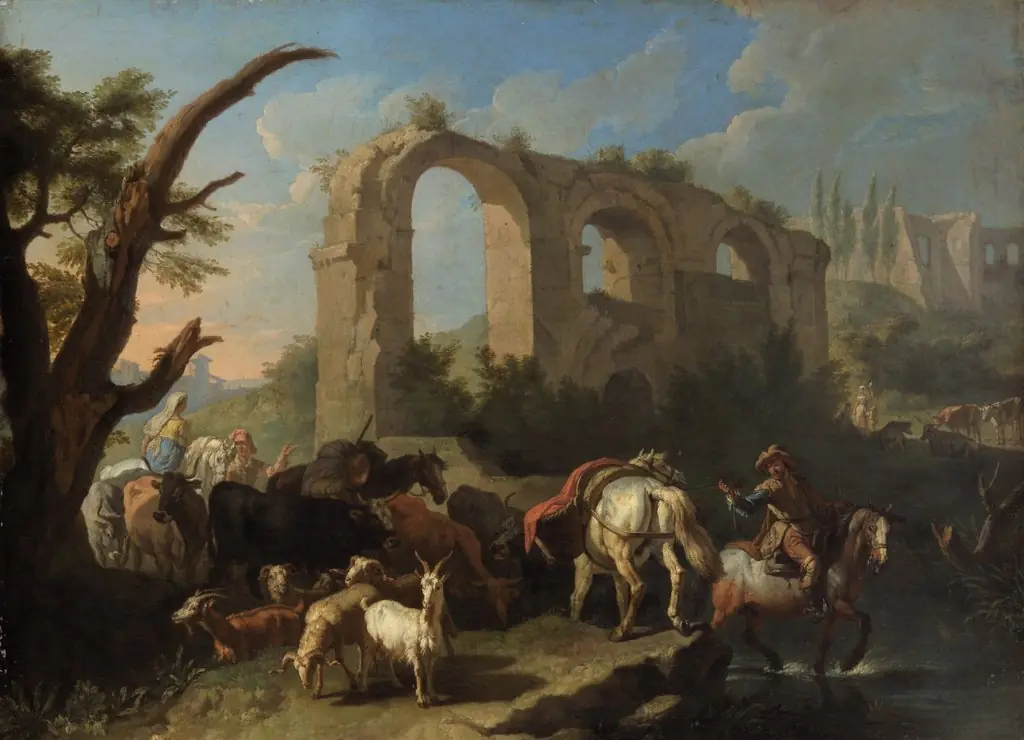
Un mulo caído con su carga y unos arrieros levantándolo
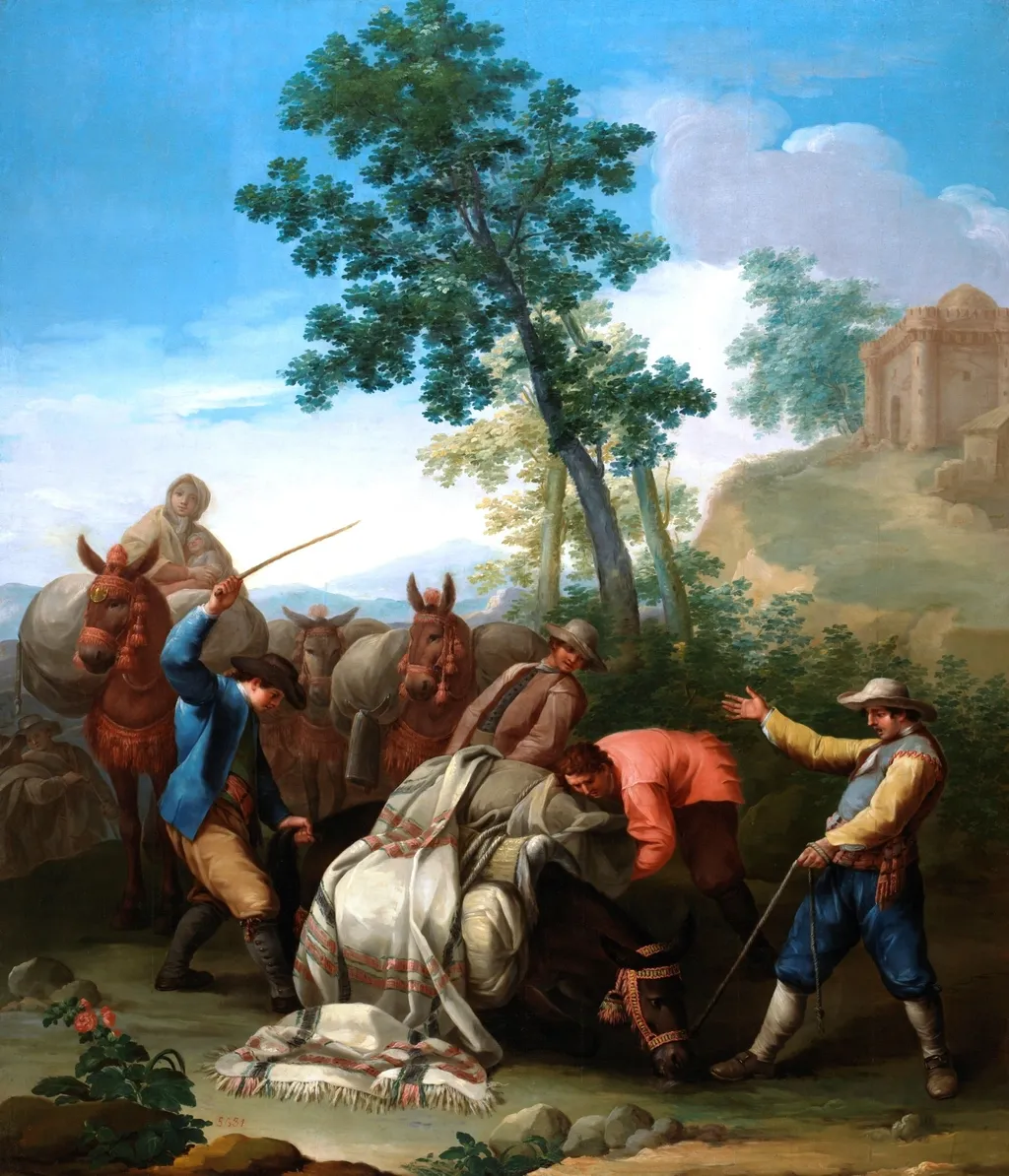
Un mulo caído con su carga y unos arrieros levantándolo is an oil painting by the Spanish Baroque Tenebrist artist Ginés Andrés de Aguirre. It dates from 1701 and is held in the collection of the Museo del Prado.
About this work
Overview
Un mulo caído con su carga y unos arrieros levantándolo is a 1701 oil painting by Spanish Baroque artist Ginés Andrés de Aguirre, characterized by the dramatic use of chiaroscuro typical of the tenebrist movement.
Subject & Meaning
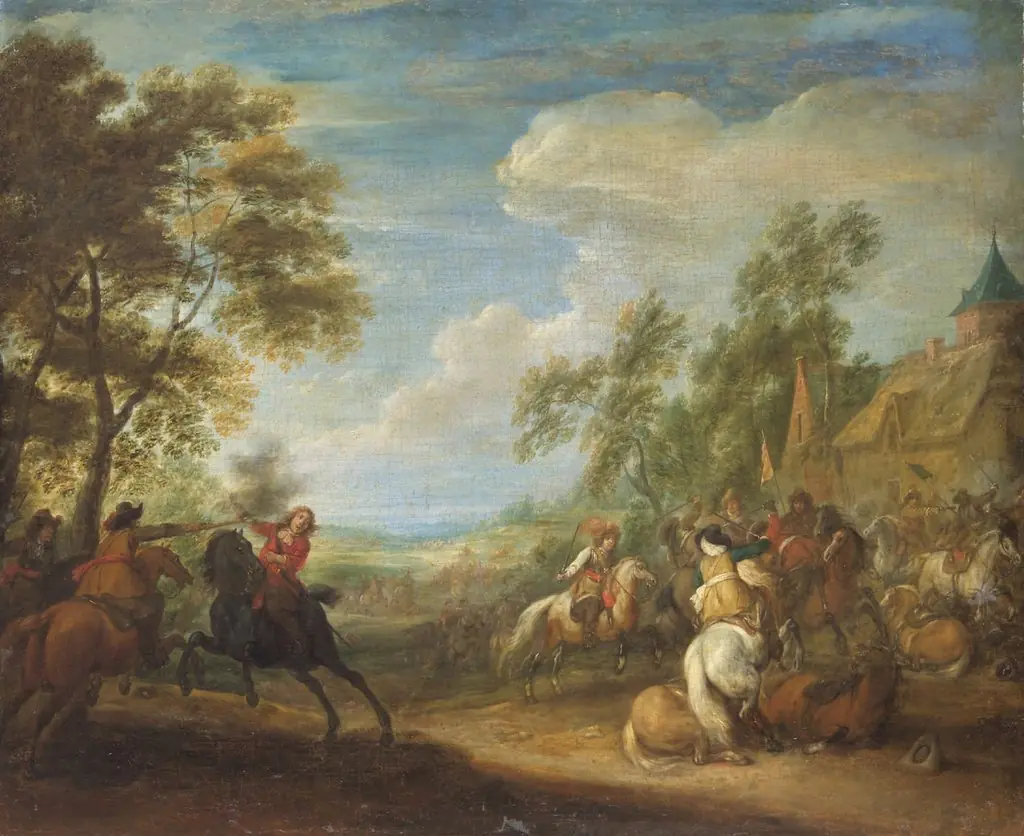
The painting depicts a moment of communal assistance in a rural setting, where muleteers gather to lift a fallen mule laden with cargo, alongside other animals and a woman on horseback observing the scene, conveying a sense of everyday life and cooperation.
Technique & Style
Aguirre employs strong chiaroscuro, a hallmark of Spanish Baroque tenebrism, to create deep shadows and illuminated figures, adding depth and dynamic energy to the outdoor scene.
History & Provenance
Created in 1701, the work is part of the Museo del Prado's collection, reflecting its significance within Spanish Baroque art.
Context
The painting reflects 17th-century Spanish life, capturing the interplay between humans, animals, and the natural world in a rural context, with subtle hints of social interaction among the figures.
Legacy
As a tenebrist work, it contributes to the understanding of Spanish Baroque's emphasis on dramatic lighting, though its broader impact on the art historical canon is more nuanced, primarily valued for its genre representation and technical achievement.
Own this work as a print
Artist & collection
Artist
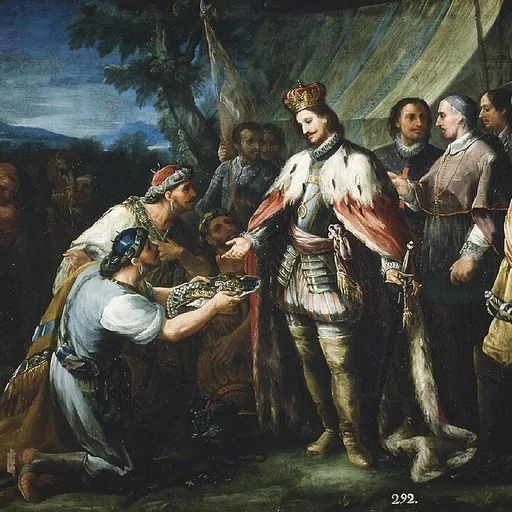
Ginés Andrés de Aguirre (21 October 1727, Yecla - 18 July 1800, Mexico City) was a Spanish painter. Most of his works are urban or pastoral genre scenes.