Artwork
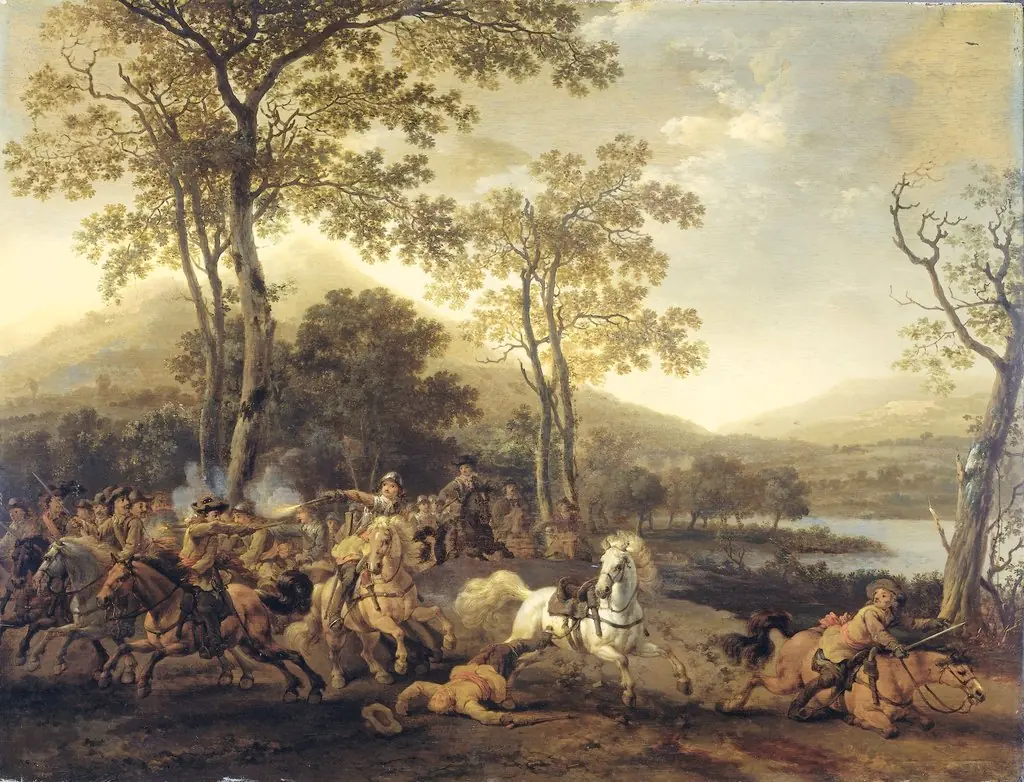
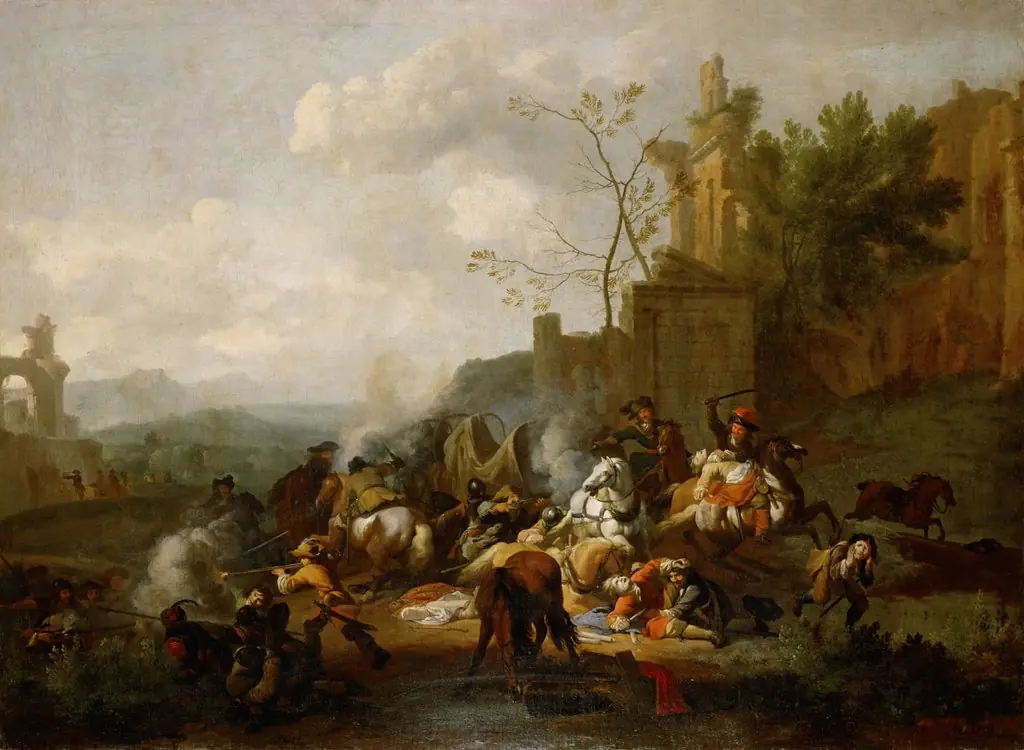
Cavalry Skirmish
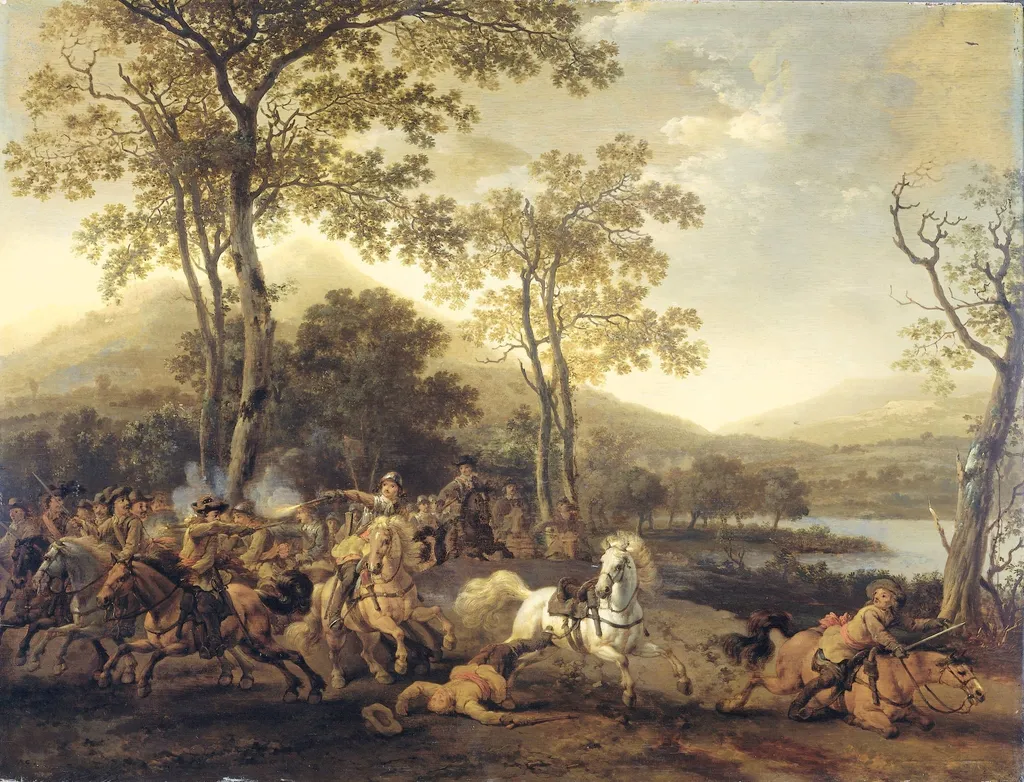
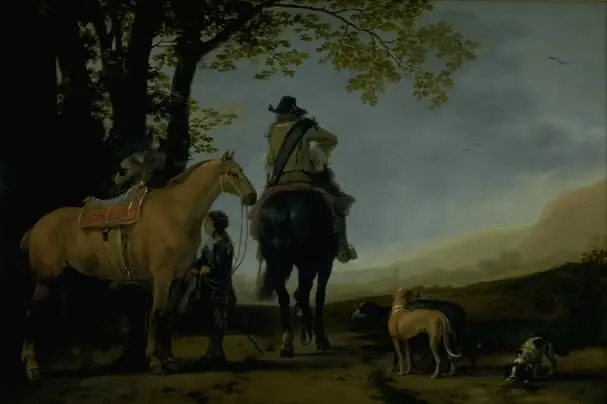
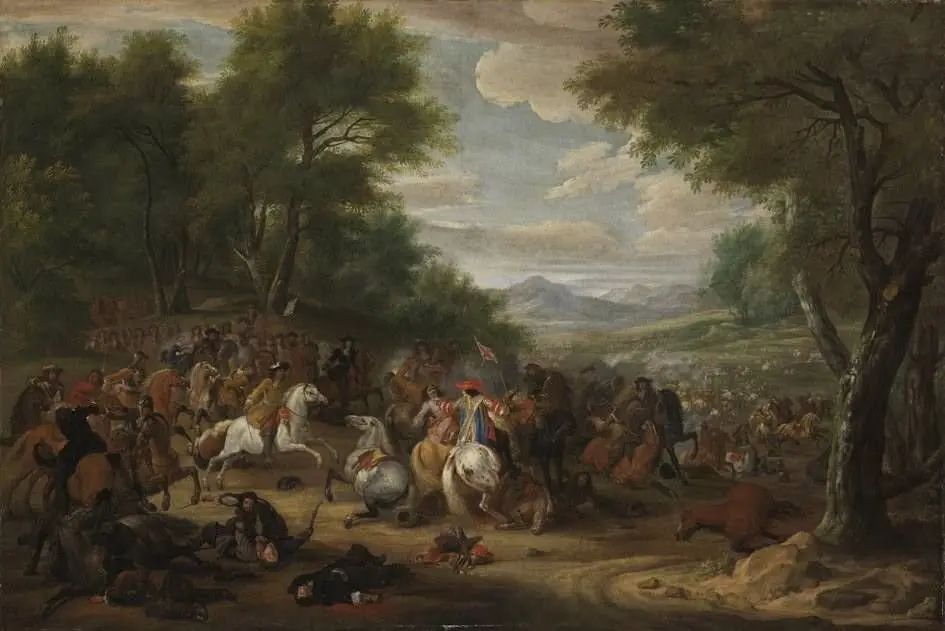
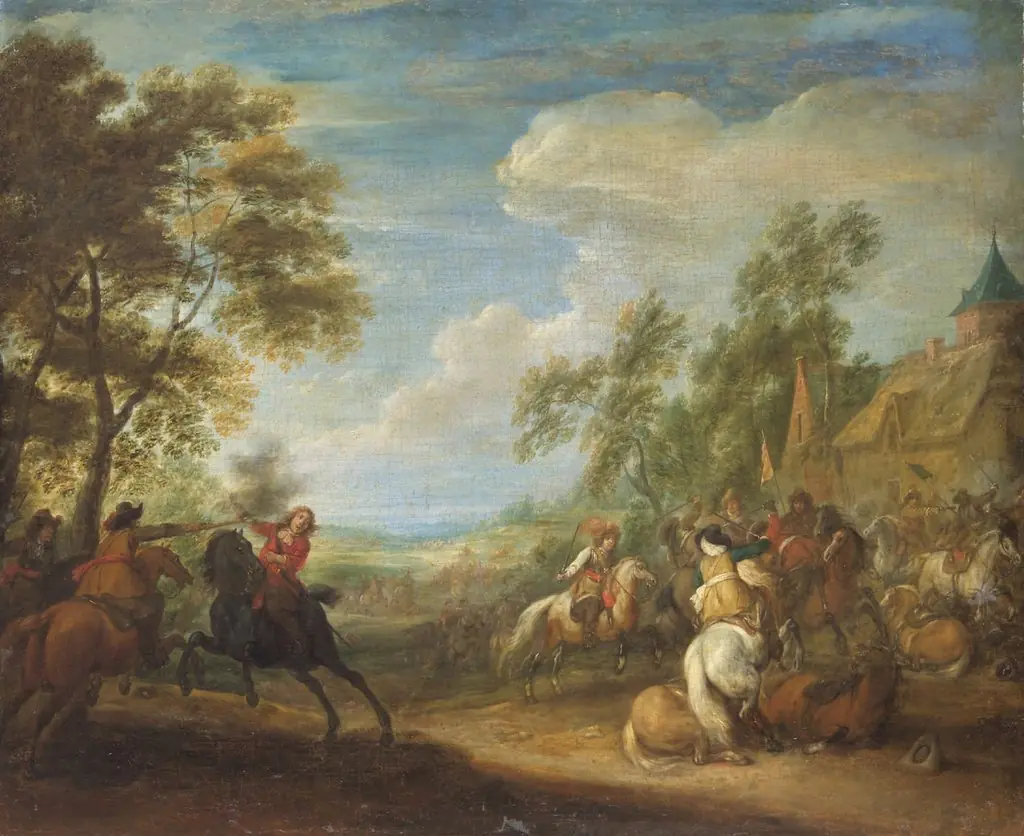
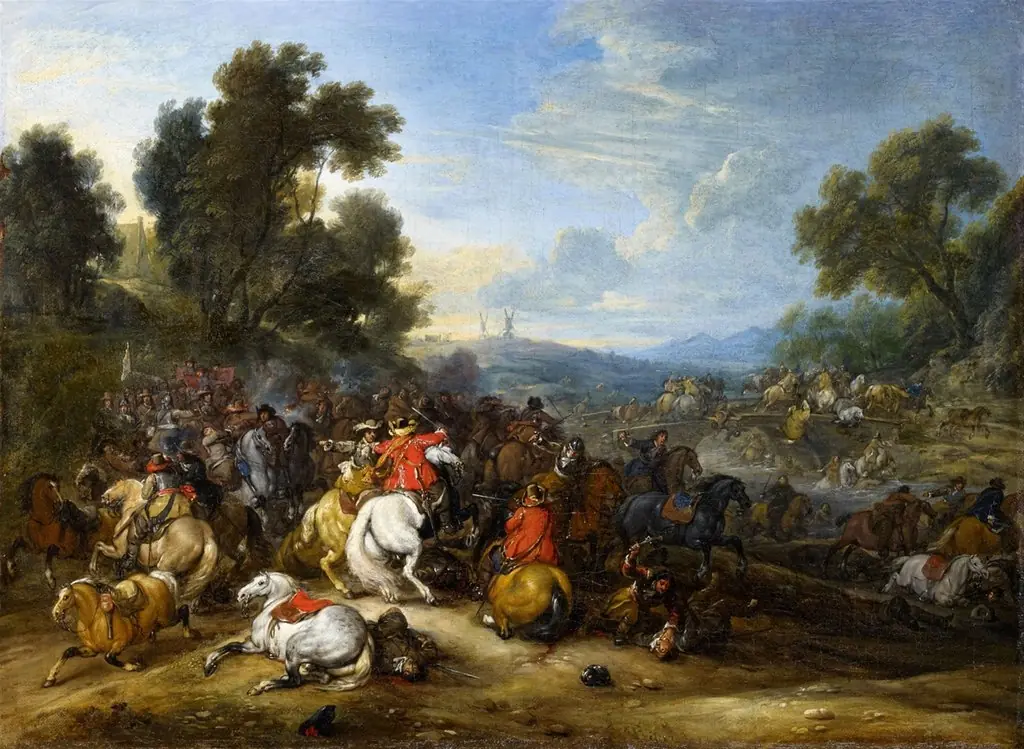
Cavalry Skirmish is an unspecified painting by the Dutch Golden Age artist Abraham van Calraet. It dates from 1691 and is held in the collection of the Rijksmuseum. The canvas depicts a dynamic cavalry clash set in a rolling countryside beside a river.
About this work
Subject & Meaning
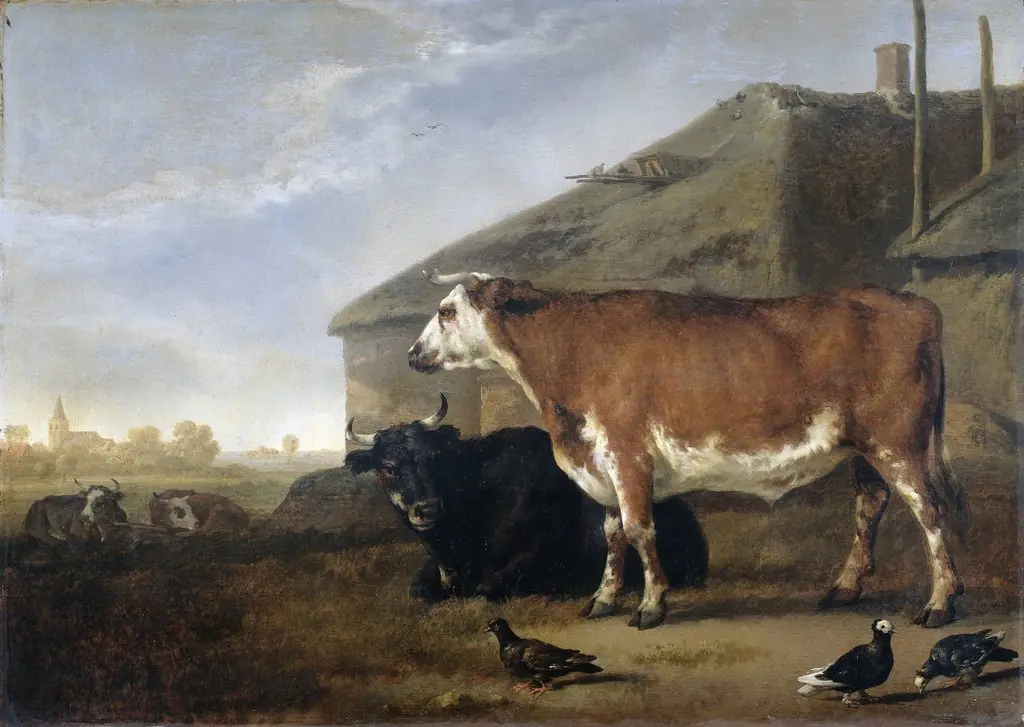
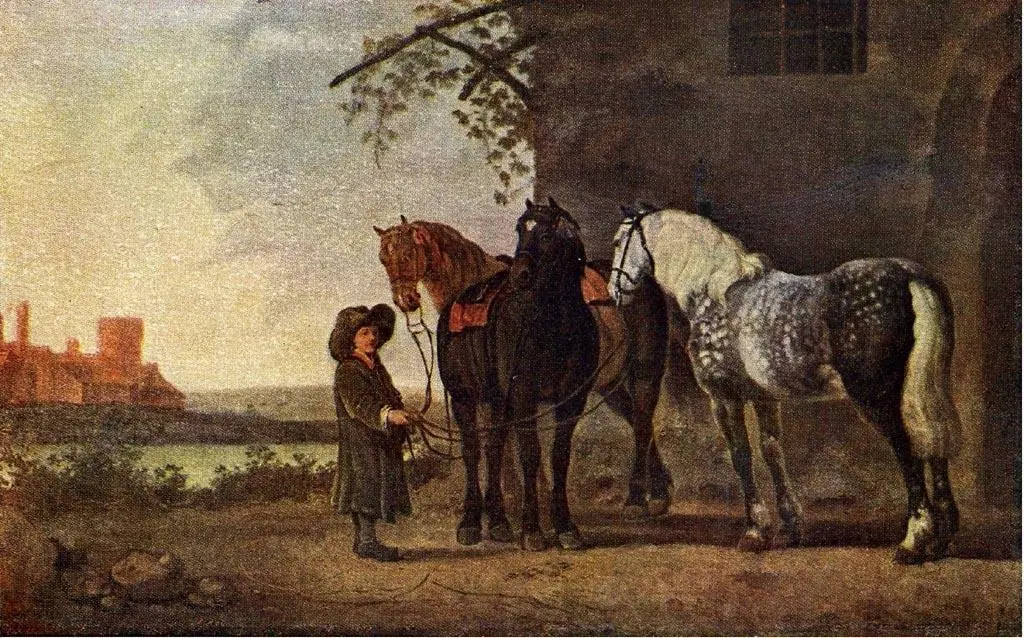
Created by Abraham van Calraet, the work falls within his category of animal and genre painting, specifically illustrating scenes involving horses and riders.
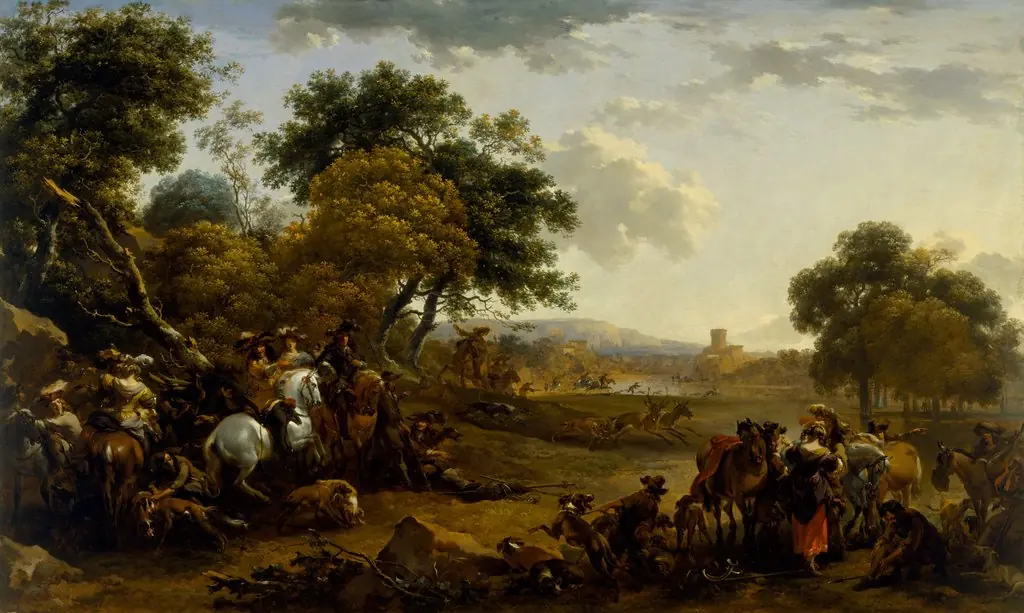
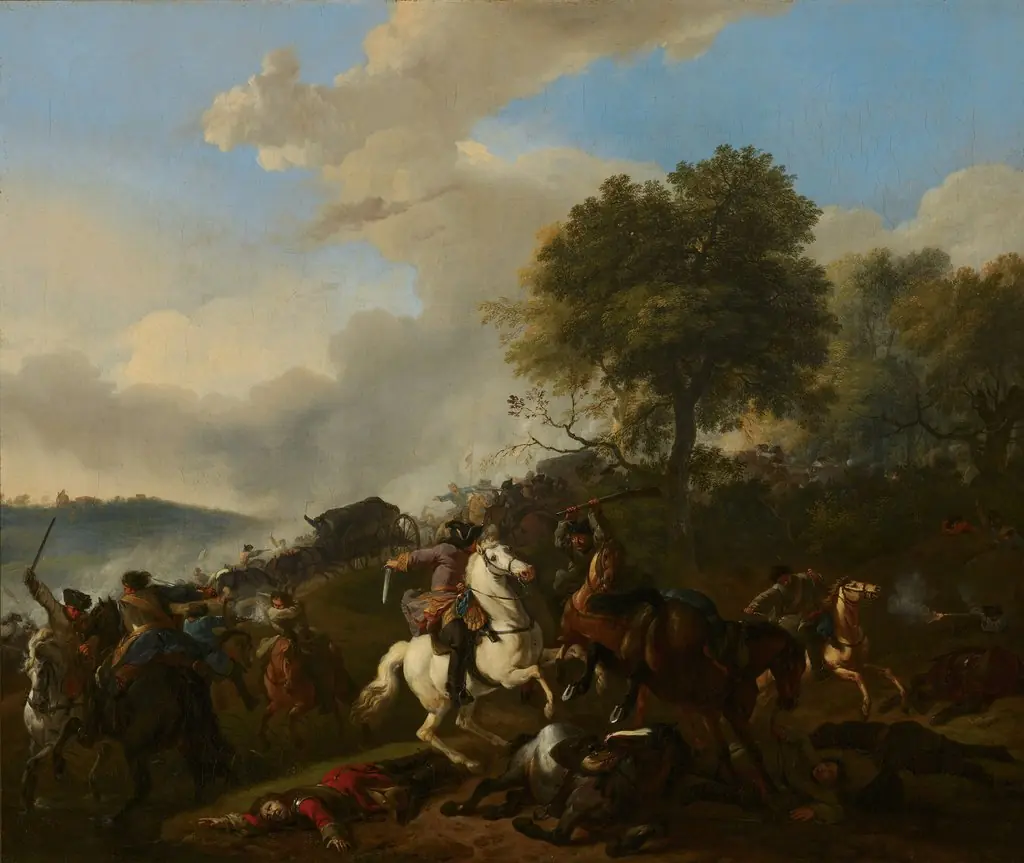
The painting titled *Cavalry Skirmish* (also referred to as *Bataille de cavaliers* or *Bataille de cavalerie*) depicts a dynamic military engagement featuring mounted soldiers in combat. Created by Abraham van Calraet, the work falls within his category of animal and genre painting, specifically illustrating scenes involving horses and riders. While the artist is primarily celebrated for still lifes, this piece demonstrates his engagement with historical and action-oriented subjects, a departure from his more common fruit and floral compositions. The subject matter reflects the influence of Philips Wouwerman and the broader Dutch tradition of equestrian battle scenes, though the horses are often characterized by a more rigid posture compared to the works of Aelbert Cuyp. The monogram 'A.C.' on the canvas historically led to misattributions to Cuyp, but the work is now recognized as a distinct representation of Calraet's capability in depicting violent, kinetic interactions between cavalrymen.
History & Provenance
Abraham van Calraet created the painting *Cavalry Skirmish* (also titled *Bataille de cavaliers*) in 1675. The work is executed on canvas and bears the monogram A. C., a signature that historically led to many of his animal paintings being misattributed to his likely teacher, Aelbert Cuyp. For two centuries, the artist's oeuvre remained largely unrecognized and conflated with Cuyp's until Abraham Bredius identified Calraet's distinct signature in notarial records, successfully re-attributing a group of still lifes and animal scenes. Alan Chong later expanded this re-evaluation, attributing a specific group of 59 paintings to Calraet, including this cavalry battle scene, while noting that Calraet's horses often appear more rigid and coarse compared to Cuyp's. The painting is currently held in a private collection.
Context
For two centuries, Abraham van Calraet's work remained largely unrecognized, frequently misattributed to his more famous contemporary, Aelbert Cuyp, due to their shared monogram "A.C." and Calraet's adherence to Cuyp's style. The art historian Abraham Bredius initiated the painter's rediscovery in the early 20th century by distinguishing specific still-life works and re-evaluating animal scenes. While Bredius successfully argued for the separation of the two artists, the attribution of animal paintings, particularly those depicting horses, sparked significant scholarly debate involving figures like Cornelis Hofstede de Groot and Frits Lugt. Modern scholarship, including Alan Chong's monograph on Cuyp, has further refined this distinction, attributing a group of fifty-nine paintings to Calraet while noting that his equine figures often appear stiffer and more rudimentary than Cuyp's. Consequently, works such as the "Cavalry Skirmish" are now understood as key examples of Calraet's contribution to Dutch Golden Age animal painting, distinct from the master he emulated.
Legacy
For two centuries, Abraham van Calraet's artistic legacy was obscured as his works were frequently misattributed to his contemporary and likely teacher, Aelbert Cuyp. This confusion stemmed from their shared initials and Calraet's stylistic adherence to Cuyp's animal paintings, leading major institutions in London, Rotterdam, and Amsterdam to catalog his pieces under Cuyp's name. The painter's reputation underwent a significant revival in the early 20th century when Abraham Bredius utilized notarial records to distinguish Calraet's signature, successfully re-attributing numerous still lifes and equestrian scenes. Although this correction initially sparked public debate among scholars like Cornelis Hofstede de Groot, Bredius's arguments ultimately prevailed. Modern scholarship, including studies by Alan Chong, has further solidified Calraet's standing by identifying specific stylistic markers, such as his depiction of horses in rigid postures, distinguishing his oeuvre from that of Cuyp.
Own this work as a print
Artist & collection
Artist
Abraham van Calraet, or Kalraat (7–12 October 1642, Dordrecht – 11 June 1722, Dordrecht) was a Dutch Golden Age still-life, portrait- and landscape painter.