Artwork
the tobacco guards
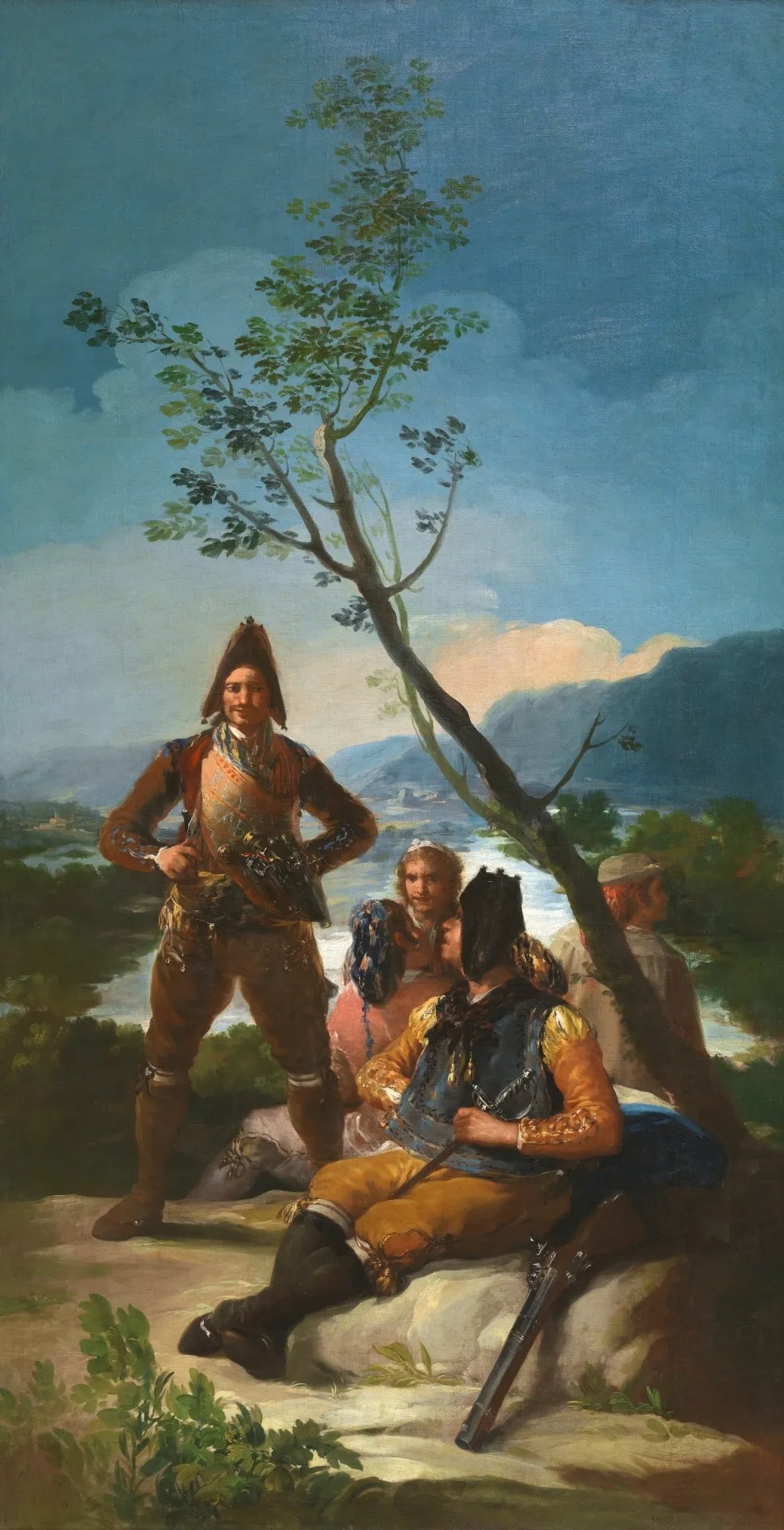
the tobacco guards is an oil painting by the Rococo painting artist Francisco de Goya. It dates from 1790 and is held in the collection of the Museo del Prado.
About this work
Subject & Meaning
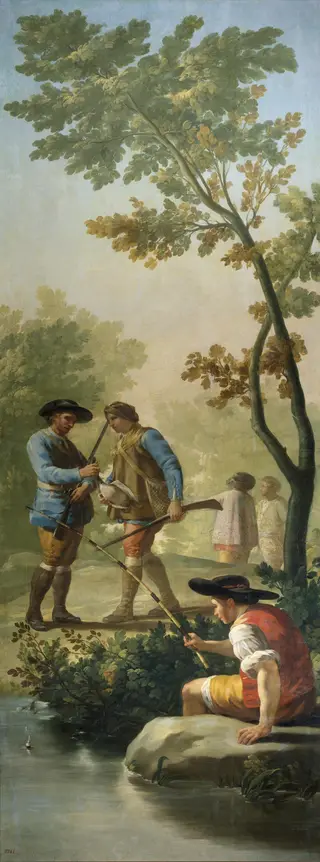
The work depicts five tobacco guards: two seated and one standing near a river, observing their surroundings; two of the figures are armed.
The work depicts five tobacco guards: two seated and one standing near a river, observing their surroundings; two of the figures are armed. The scene treats the familiar theme of tobacco smuggling and its surveillance, a subject known in contemporary Spain. Iconographically, the guards carry firearms and swords, the latter evoking the sword as a bastion of masculinity celebrated in the poetry of Villamediana and Quevedo. Some scholars, notably Janis Tomlinson, argue that the figures may be ruffians rather than official custodians and point to an evident sexual symbolism that is paired with the companion piece La novillada from the same tapestry series. Goya’s own notes describe the scene as ‘five tobacco rent guards, two seated resting and one standing giving them orders.’
Technique & Style
The Tobacco Guards is an oil painting on canvas created by Francisco Goya in 1779-1780. Executed in oil paint, the work measures 262 cm in height by 137 cm in width and is classified as a genre scene. The painting depicts five tobacco guards, two seated, one standing, engaged in vigilance near a river, with two figures depicted with firearms. Originally part of the fourth series of cartoons for tapestry intended for the antechamber of the Prince of Asturias at the Palace of the Pardo, the composition reflects the influence of Diego Velázquez in its landscape background and the portrayal of figures. Though Goya identified the subjects as 'guards,' scholarly analysis suggests they may represent ruffians rather than official custodians, adding interpretive complexity. The work incorporates symbolic elements rooted in Spanish Golden Age literature, particularly the sword as a symbol of masculinity, referencing poets such as Quevedo and the Count of Villamediana. The painting was lost until its rediscovery in 1869 in the basement of the Royal Palace of Madrid and subsequently acquired by the Museo del Prado in 1870, where it remains on display in Room 91. Its stylistic qualities include a chulosque demeanor in one figure, distant characters, and a river rendered with techniques echoing Velázquez, while the use of oil on canvas supports a richly textured, narrative-driven composition.
History & Provenance
Francisco Goya created the oil painting the tobacco guards in 1779 as part of the fourth series of cartoons intended for tapestry hangings in the Prince of Asturias' antechamber at the Palacio del Pardo. The work was commissioned by the Royal Factory of Tapestries for display in the southern wall of the royal princes' antechamber, alongside La Novillada, and was delivered on 24 January 1780. It remained in the factory until discovered in 1869 in the basement of the Royal Palace of Madrid by Gregorio Cruzada Villaamil, after which it entered the Museo del Prado collection and was first listed in the museum's 1876 catalogue as item 24 in Annex I. The painting depicts five tobacco guards, two seated and one standing, observing their surroundings, with two figures armed, and reflects contemporary Spanish concerns over tobacco smuggling and national guardianship. The painting was delivered to the Royal Tapestry Factory on January 24, 1780, and was long considered lost until it was discovered in the basement of the Royal Palace of Madrid in 1869 by Gregorio Cruzada Villaamil. It was subsequently transferred to the Museo del Prado in 1870 by ordinances dated January 19 and February 9 of that year. The canvas was first listed in the museum's catalogue in 1876 under annex I, number 24. It is currently held and exhibited by the Museo del Prado, where it is displayed in room 91.
Context
Created for the fourth series of tapestry cartoons intended for the antechamber of the Prince of Asturias at the Palace of El Pardo, this work addresses the contemporary subject of tobacco smuggling and its surveillance. Although Goya described the figures as revenue guards, scholar Janis Tomlinson suggests they may represent ruffians, noting an evident sexual symbolism that complements the companion piece La Novillada. The composition reflects deep roots in Spanish Golden Age literature, echoing sonnets by the Count of Villamediana and Francisco de Quevedo regarding the sword as a bastion of masculinity. Stylistically, the landscape background and river demonstrate the influence of Diego Velázquez. The painting was considered lost until its discovery in the Royal Palace of Madrid in 1869 by Gregorio Cruzada Villaamil, after which it entered the Museo del Prado collection in 1870.
Legacy
The work is recognized as a significant example of Goya's genre scenes that blend social commentary with narrative depth. Its influence extends through its portrayal of everyday Spanish life and its role in the development of tapestry cartoons, inspiring later artists to explore similar themes of national identity and moral allegory. The painting's symbolic elements, such as the sword representing masculinity, have been cited in scholarly discussions of Spanish Golden Age literature, linking visual art to contemporary poetic traditions. Its rediscovery in 1869 and subsequent display at the Museo del Prado cemented its reputation, with early catalogues highlighting its importance within Goya's oeuvre. The work continues to be referenced in studies of Goya's technique and thematic concerns, particularly regarding its compositional echoes of Velázquez and its depiction of surveillance and authority.
Artist & collection
Artist
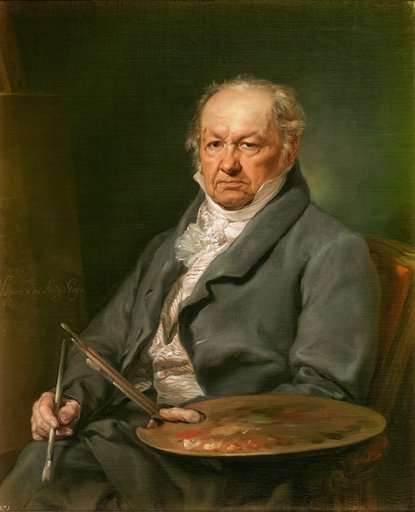
Francisco José de Goya y Lucientes was a Spanish romantic painter and printmaker.

- The Pretty Woman and the Masked Men (The Road of Andalusia)
 Card Players
 Un mulo caído con su carga y unos arrieros levantándolo
 Dance of the Majos at the Banks of Manzanares
 Hombre y mujer con un niño en brazos
 Picnic on the banks of the Manzanares
 fisherman with his rod
 The Guard Room
 Dos pescadores uno con caña y otro sentado
 Un hombre a caballo junto a tienda de campaña
 Majo with a Guitar
 The Quail Shoot