Artwork
The Holy Family
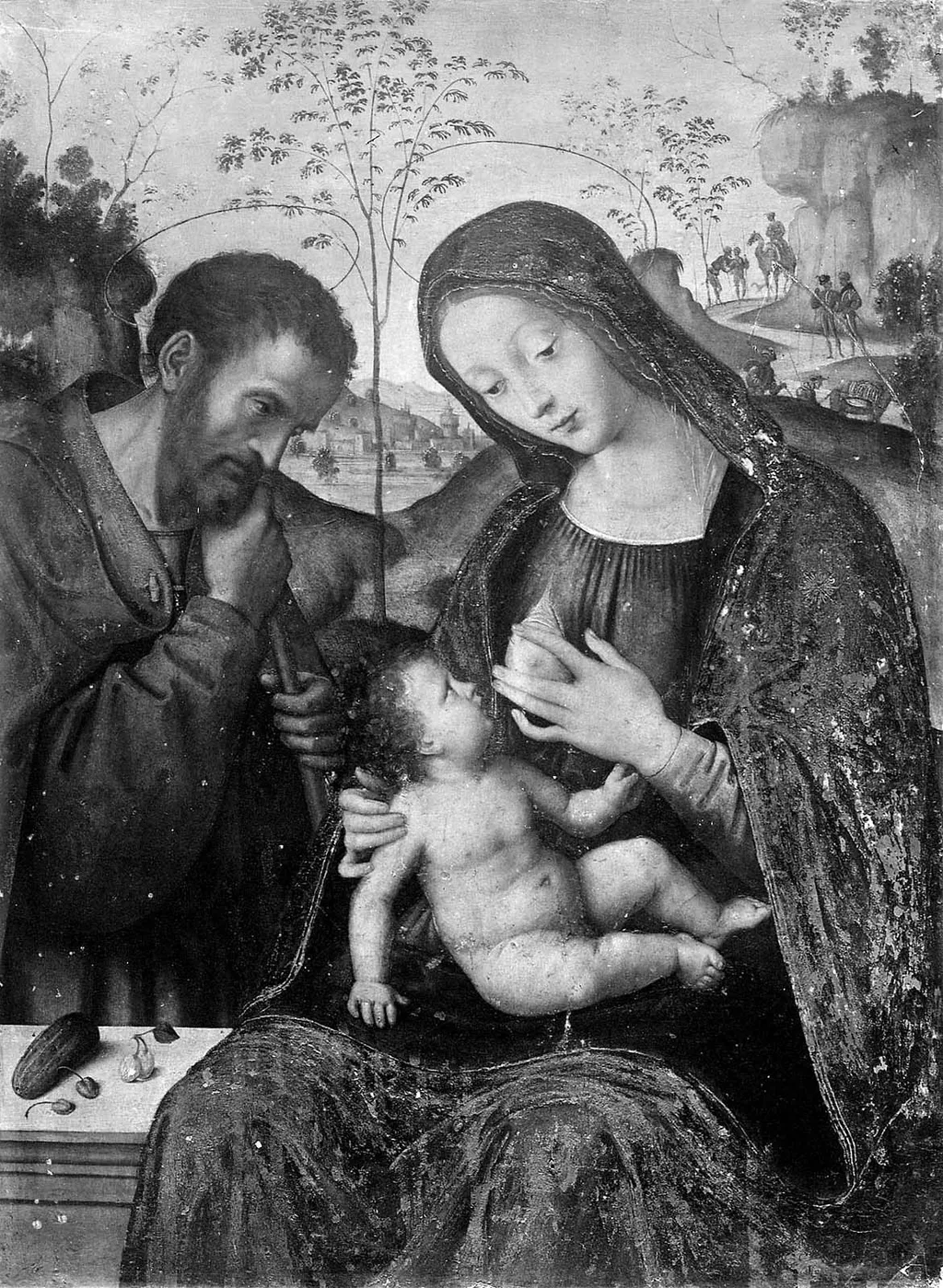
The Holy Family is an unspecified painting by Giovanni Battista Bertucci. It dates from 1493 and is held in the collection of the Museum of Fine Arts Boston.
About this work
Subject & Meaning
The painting depicts the Holy Family, Jesus Christ, Mary, and Joseph, together in a single composition. As a religious work, it presents the Christian ideal of familial unity and divine humility, showing the infant Jesus with his mother Mary and his earthly father Joseph. The subject emphasizes the sacred nature of this domestic group, serving as a visual model of piety and devotion for viewers.
History & Provenance
The work titled The Holy Family is attributed to Giovanni Battista Bertucci and is classified as a religious painting.
The work titled The Holy Family is attributed to Giovanni Battista Bertucci and is classified as a religious painting. It measures 64.1 cm in height and 47.6 cm in width. The composition depicts Jesus Christ, Mary, and Joseph, representing the Holy Family.
The artwork is part of the collection at the Museum of Fine Arts Boston. No further details regarding commission, dating, or creation history are available in the provided sources.
Overview
This devotional panel, painted around 1493 by Giovanni Battista Bertucci, presents a quiet domestic scene of the Holy Family. Bertucci worked primarily in Faenza, a city in Italy's Romagna region, during the early decades of the sixteenth century. The painting now belongs to the collection of the Museum of Fine Arts Boston, where it represents the refined, gentle aesthetic that characterized much central Italian religious art of this period.
Technique & Style
Bertucci deployed chiaroscuro to model the figures with soft shadows, lifting them from a comparatively flat background of distant architecture and trees. The gentle transitions between light and dark reveal the influence of Umbrian painters, particularly Perugino and Pinturicchio, whose graceful, rounded forms and atmospheric landscapes shaped Bertucci's approach. A small ledge at the lower edge, bearing a book or box, anchors the sacred group in a believable, if spare, domestic space.
Artist & collection
Artist
Giovanni Battista da Faenza, called Bertucci, who painted in the style of Perugino and Pinturicchio, flourished in the early part of the 16th century at Faenza.

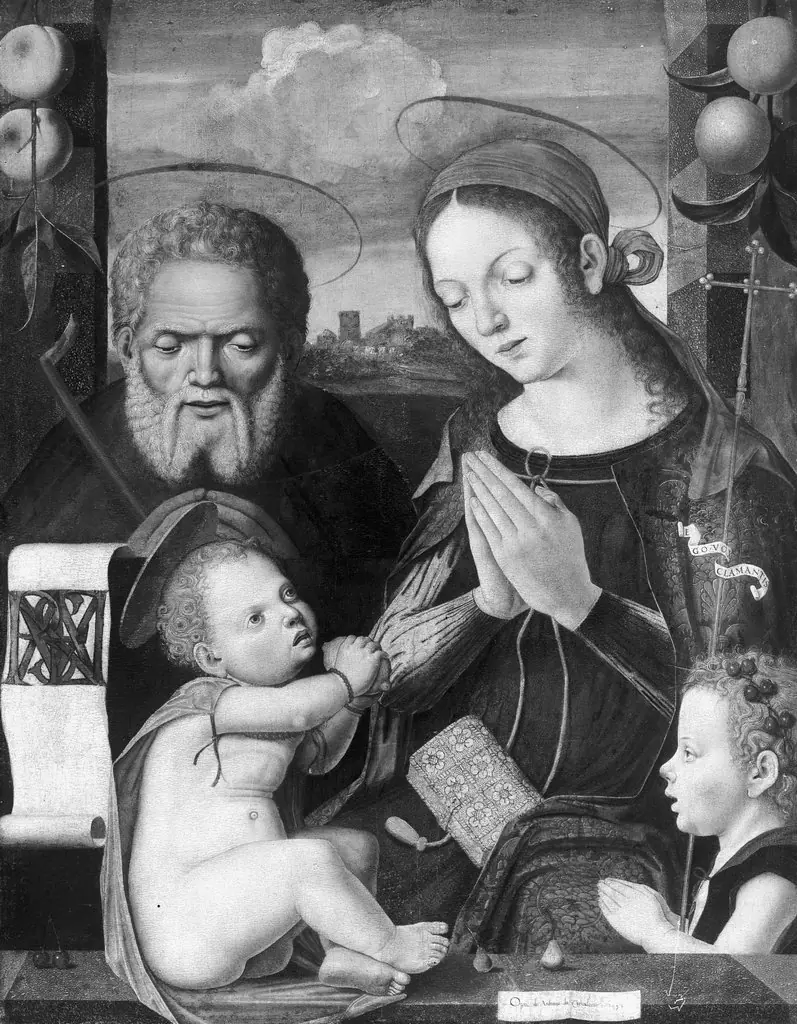
- The Holy Family with little John
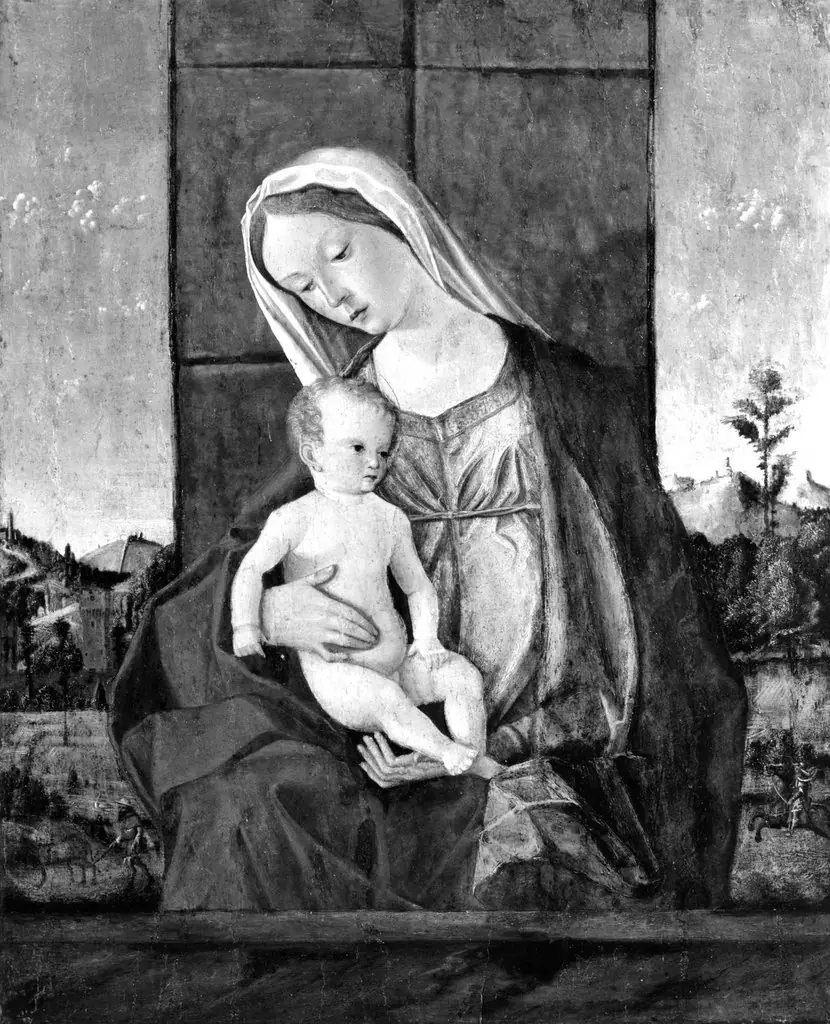 Madonna and Child
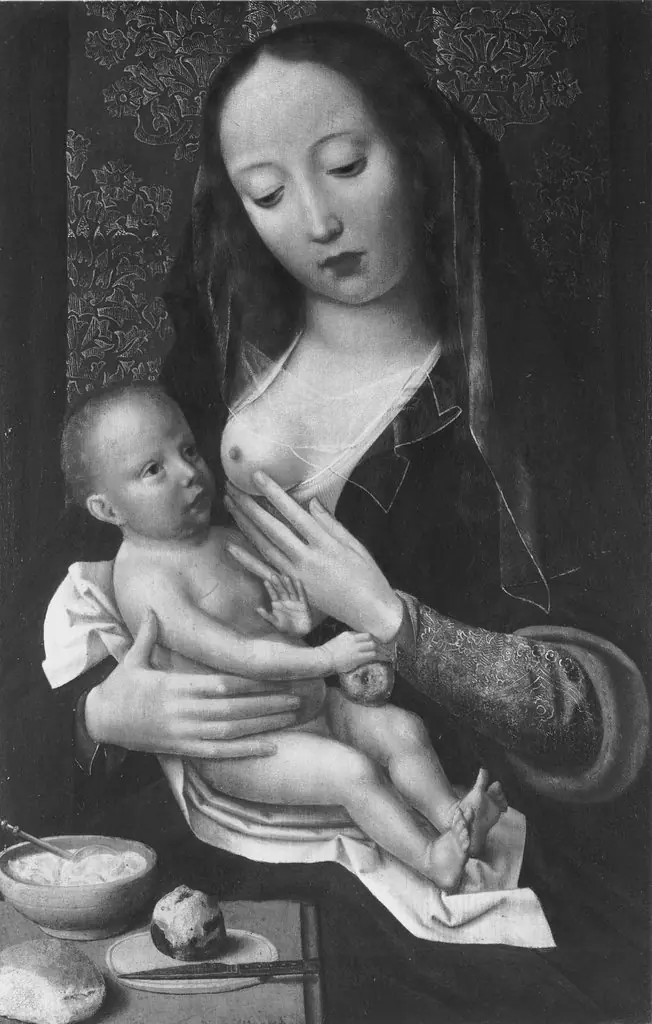 Virgin and Child
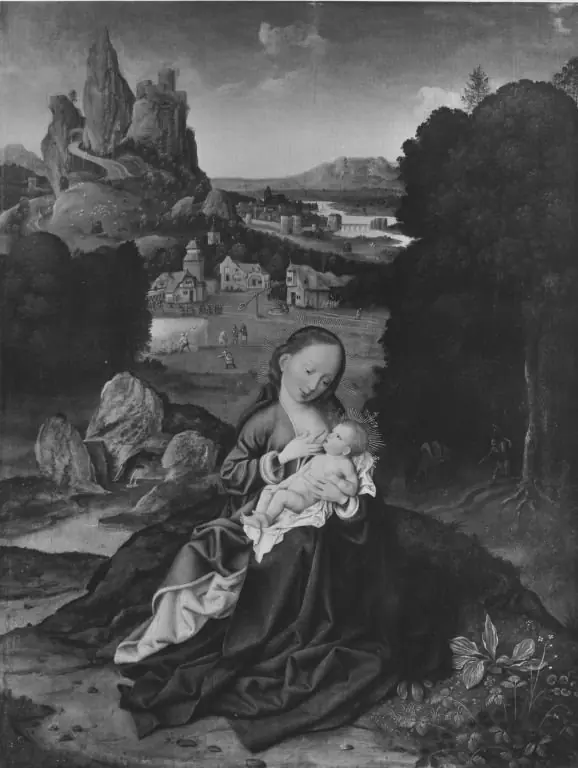 Rest in flight
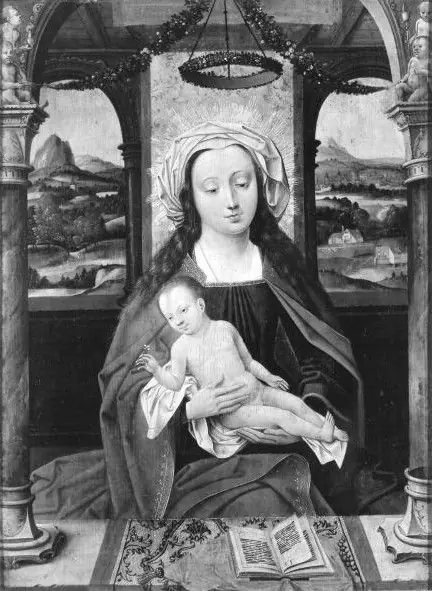 Mary enthroned with the Christ child
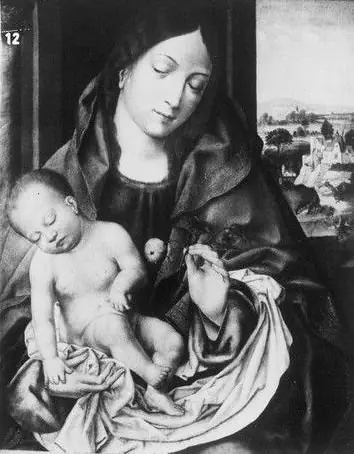 Maria met slapend kind op de arm
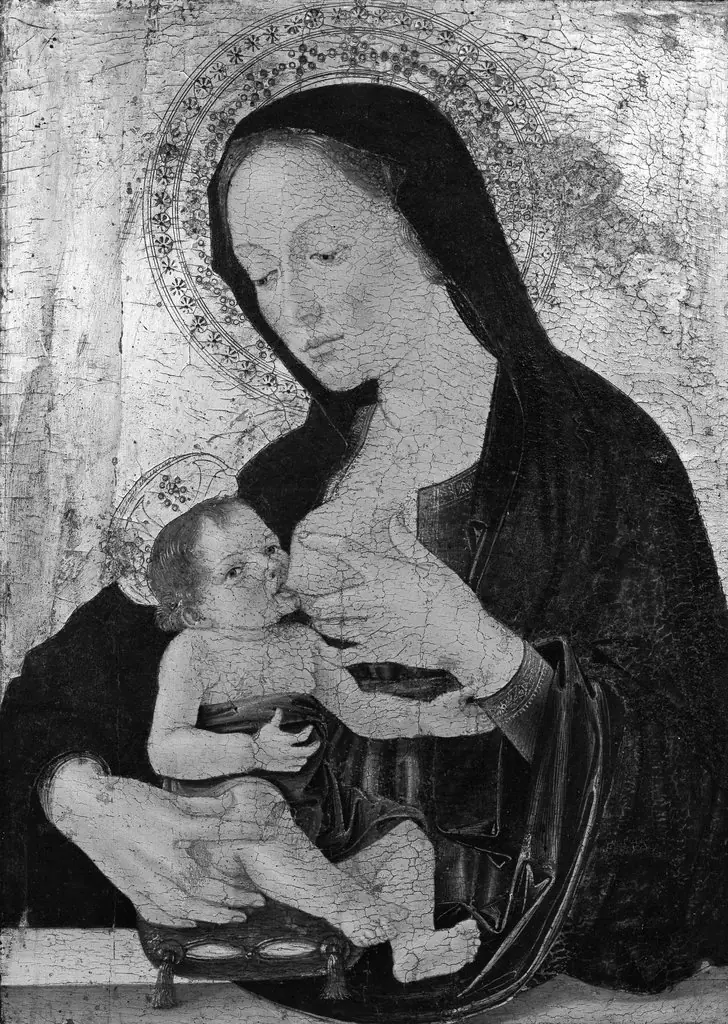 Madonna and Child
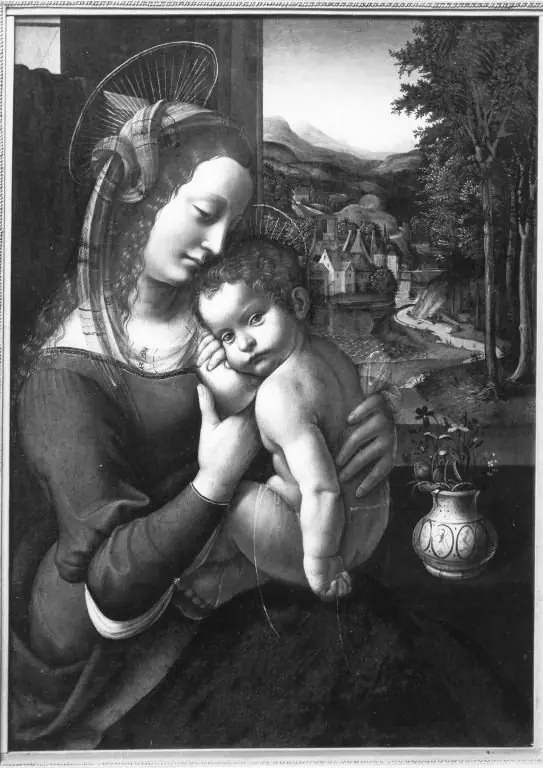 Maria mit Kind
 Mary with the child, Saint Catherine, Saint Barbara and angels
 The Holy Family with Saint Elisabeth and the young St. John the Baptist
 The Virgin and Child
 Madonna and Child with Saint John the Baptist