Artwork
Maria mit Kind
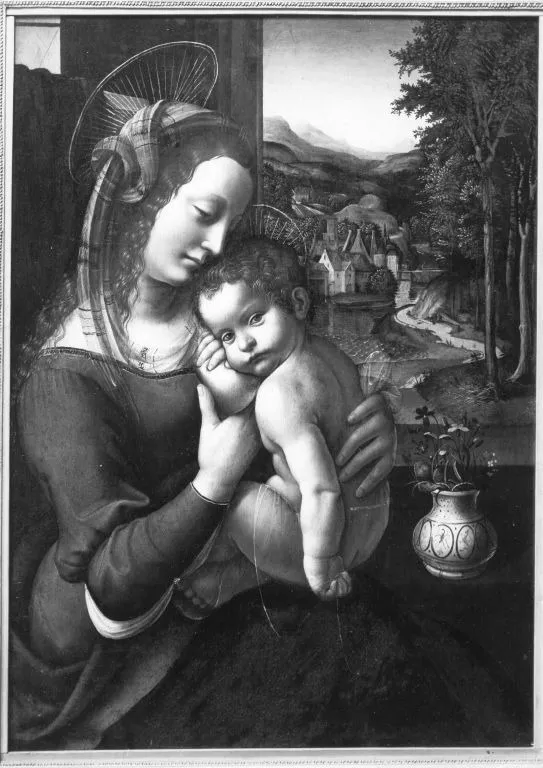
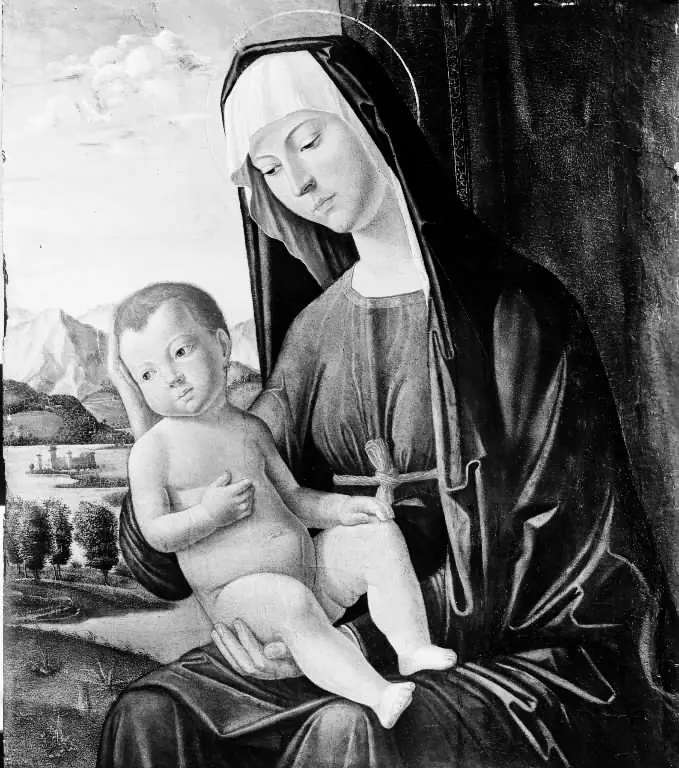
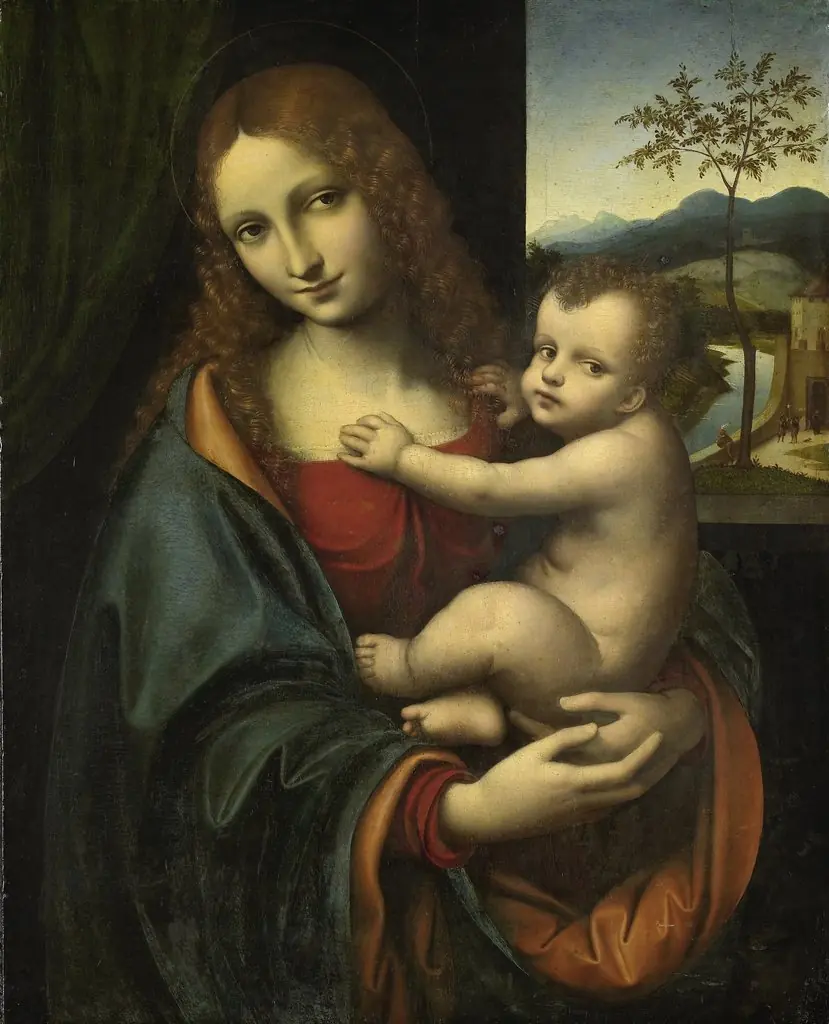
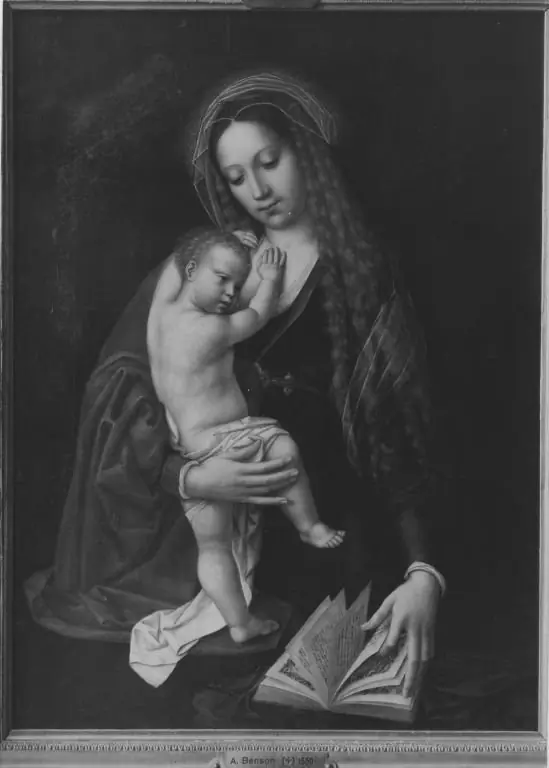
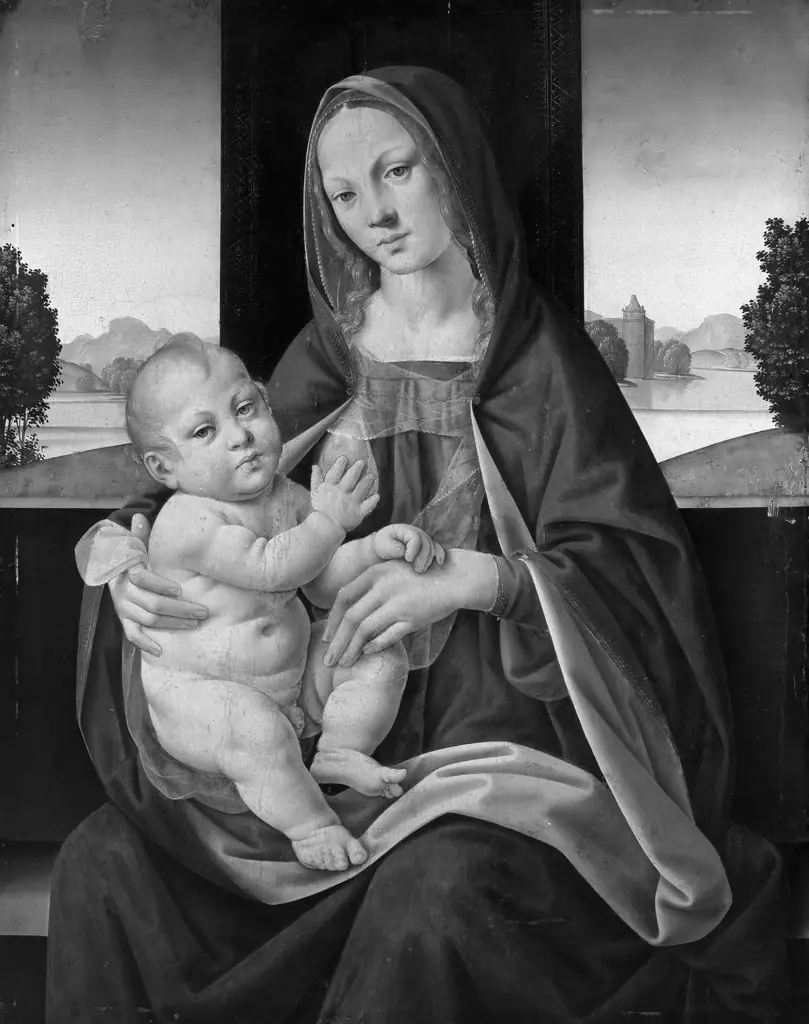
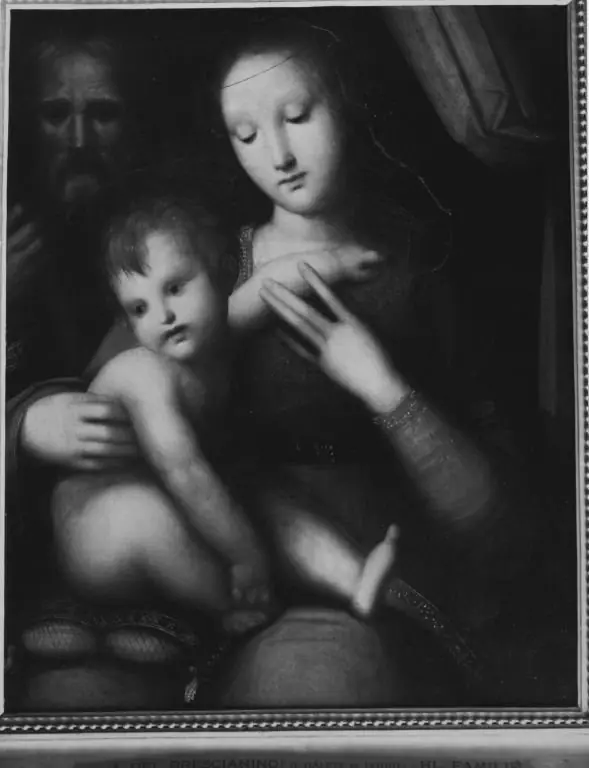
Maria mit Kind is an unspecified painting. It dates from 1520 and is held in the collection of the Bavarian State Painting Collections. The work presents a serene domestic tableau in which a woman, haloed above her head, cradles a newborn infant.
About this work
Subject & Meaning
As a work of religious art, the image serves as a visual depiction of these holy figures, intended for veneration or contemplation within a spiritual context.
Created in 1520 by an artist from Milan, this religious painting portrays the Madonna and Child. The composition focuses entirely on the Virgin Mary holding the Christ Child, a central motif in Christian iconography representing maternal devotion and the incarnation. As a work of religious art, the image serves as a visual depiction of these holy figures, intended for veneration or contemplation within a spiritual context.
The piece is currently held in the collection of the Bavarian State Painting Collections, housed at the Alte Pinakothek.
History & Provenance
The painting Maria mit Kind entered the Bavarian State Painting Collections as part of the Mailändisch collection and has been held by the Alte Pinakothek in Munich since that acquisition.
The work is dated to 1520, aligning with the early sixteenth-century Milanese context associated with its style and iconography.
Its dimensions are recorded as 71.5 cm in height and 50.7 cm in width.
Overview
The work presents a serene domestic tableau in which a woman, haloed above her head, cradles a newborn infant. She is dressed in a dark gown trimmed with a white collar, while the child lies naked against her right arm, his head supported by her left hand. A modest landscape of trees, a river and a distant village unfolds behind them, and a vase of flowers rests on a nearby table.
Technique & Style
Rendered in a balanced palette of muted darks and light accents, the painting employs soft modeling to convey flesh and fabric, while the background is treated with looser brushwork that suggests depth without distracting from the central figures. The careful rendering of the halo and the delicate flowers demonstrates a careful attention to symbolic detail.
Context
Such mother-and-child images were frequently used in religious contexts to represent the Virgin Mary and the infant Christ, serving both liturgical and private devotional purposes. The inclusion of a domestic interior and a landscape reflects a trend toward humanizing sacred narratives, making them relatable to contemporary viewers.
Legacy
While the painting’s specific influence is not recorded, works of this type contributed to the broader visual language that linked everyday maternal affection with theological concepts, a motif that persisted in European art and informed later representations of the Madonna and child.
Artist & collection