Artwork
St Agnes in Glory
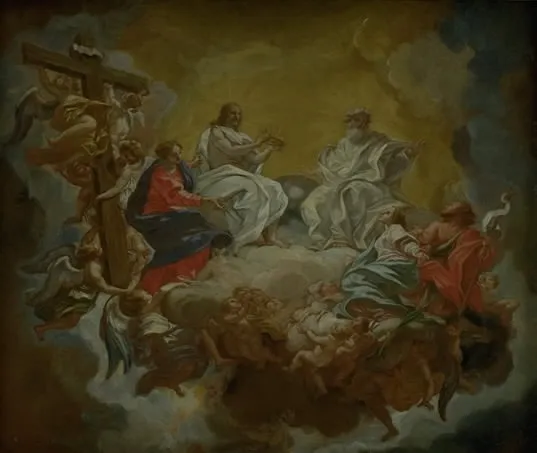
St Agnes in Glory is an oil painting by the High Baroque Italian artist Giovanni Battista Gaulli. It dates from 1696 and is held in the collection of the Statens Museum for Kunst.
About this work
Technique & Style
Its material composition follows the typical practice of the period, employing oil pigments bound in a linseed medium applied to a stretched canvas support.
St Agnes in Glory is an oil painting on canvas created in 1690 by Giovanni Battista Gaulli. The work, measuring roughly 468 cm in height and 553 cm in width, belongs to the religious genre and was produced for devotional use in a Baroque context. Its material composition follows the typical practice of the period, employing oil pigments bound in a linseed medium applied to a stretched canvas support.
The painting is housed in the Statens Museum for Kunst, where it is preserved as part of the museum’s collection. No detailed condition report is provided in the available documentation.
History & Provenance
The work now in the Statens Museum for Kunst is dated to 1690 on the basis of its internal documentation, aligning with the single-year range recorded in the museum’s catalogue entry.
It entered public collection through national acquisition by the Statens Museum for Kunst, Copenhagen, where it remains in inventory as an oil on canvas measuring 468 cm by 553 cm.
St Agnes in Glory by Giovanni Battista Gaulli, an oil-on-canvas work dated 1690, is held by the Statens Museum for Kunst. The painting, which measures 468.0 × 553.0 cm, is part of the museum's collection and depicts Agnes of Rome in a heavenly setting with God and Jesus Christ.
No specific accession number or detailed exhibition history is documented in the available sources for this work.
Overview
Giovanni Battista Gaulli, known as Baciccio, completed St Agnes in Glory in 1696. This oil painting exemplifies the High Baroque Italian style, presenting the Christian martyr Agnes of Rome in a celestial ascent. She is depicted alongside divine figures, including God and Jesus Christ, within a radiant heavenly setting. The artwork is currently part of the collection at the Statens Museum for Kunst.
Subject & Meaning
The painting portrays Saint Agnes of Rome, a revered Christian martyr, as she rises into a divine realm. Clad in distinctive red and blue robes and holding a cross, she is positioned centrally amidst a host of celestial beings. God and Jesus Christ accompany her ascent, with surrounding figures often gazing towards her or upwards, emphasizing her spiritual triumph and glorification in heaven.
Context
Giovanni Battista Gaulli, known as Baciccio, was a prominent Genoese painter active during the late 17th and early 18th centuries. His artistic development was significantly shaped by the dramatic sensibilities of Gian Lorenzo Bernini, a leading figure of the Roman Baroque. Gaulli became particularly renowned for his extensive illusionistic fresco cycles, most notably those adorning the vault of the Church of the Gesù in Rome, which showcased his mastery of celestial visions.

Artist & collection
Artist
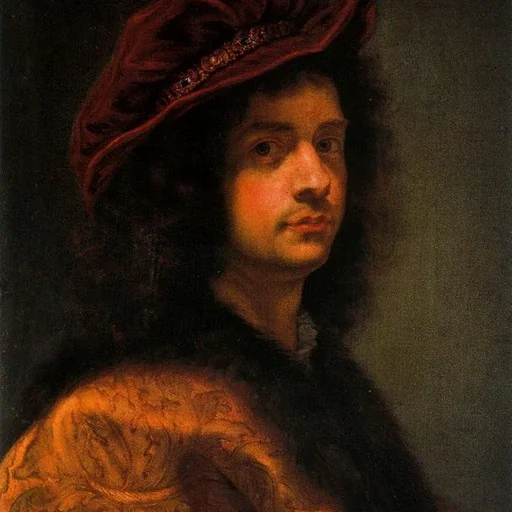
Giovanni Battista Gaulli (8 May 1639 – 2 April 1709), also known as Baciccio or Baciccia (Genoese nicknames for Giovanni Battista), was an Italian Baroque painter working in the High Baroque and early Rococo periods.

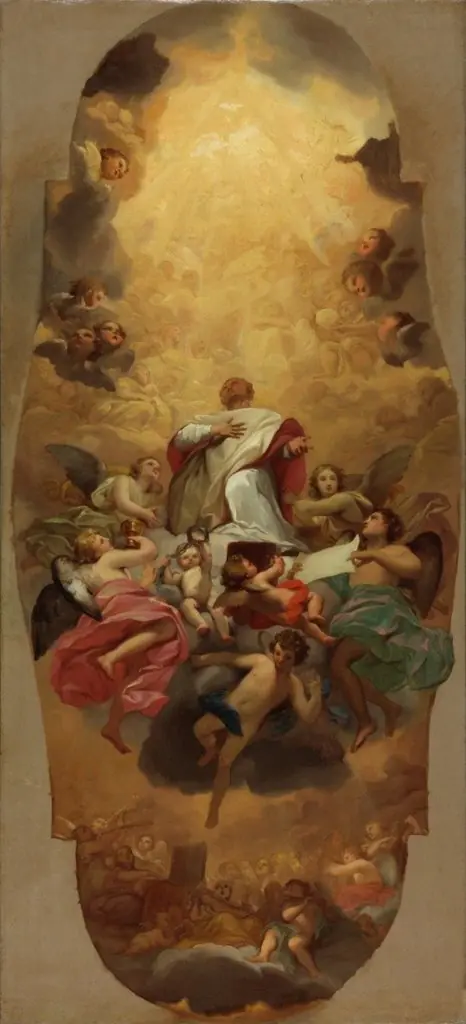 The Glory of St. Eusebius of Rome
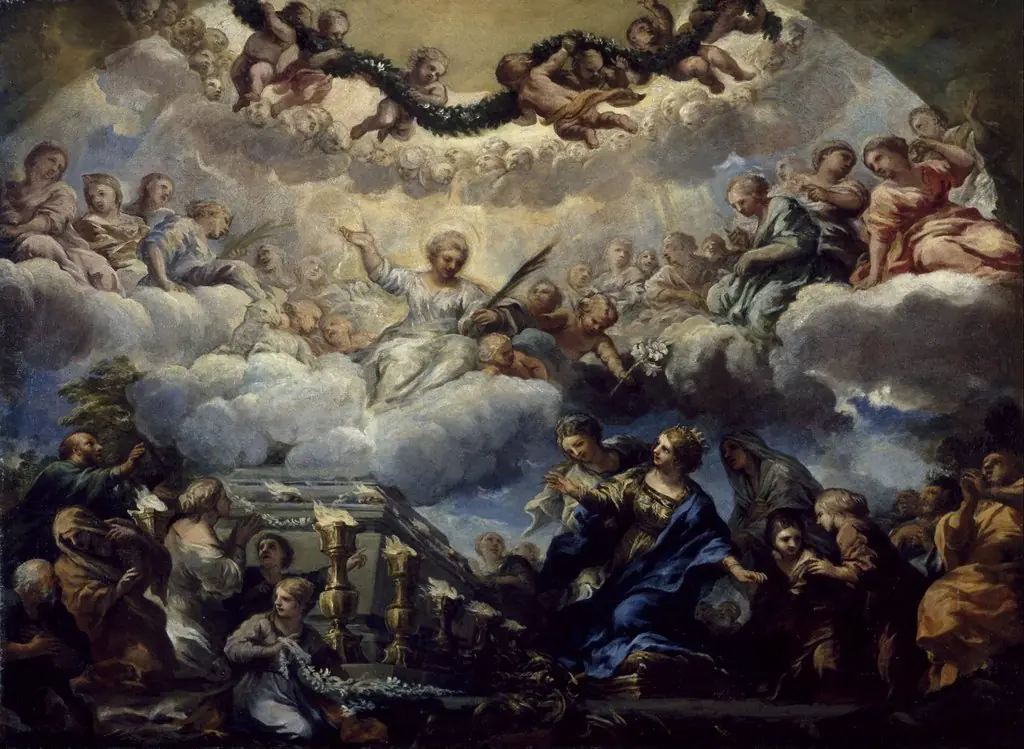 Saint Constantia's Vision before the Tomb of Saints Agnes and Emerentiana
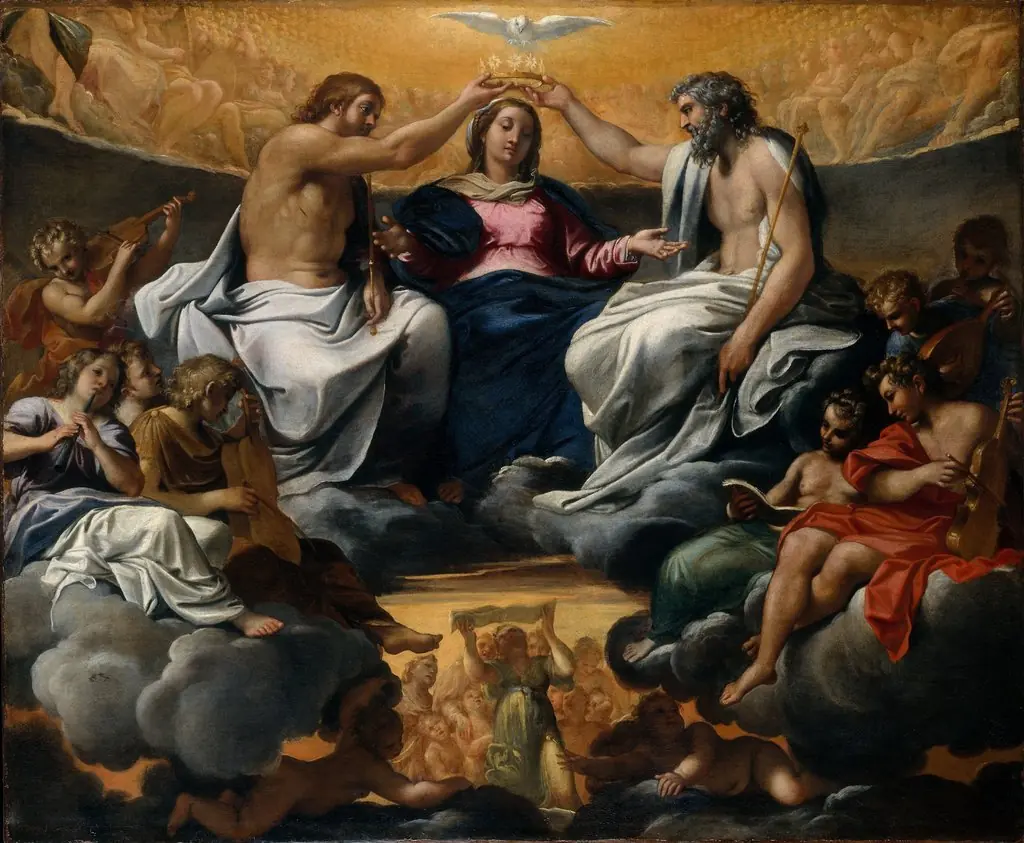 The Coronation of the Virgin
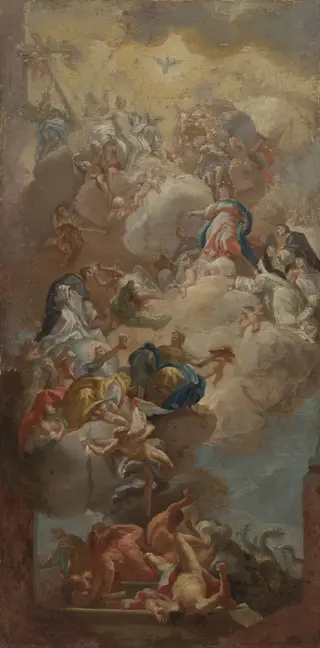 The Glorification of Saint Dominic
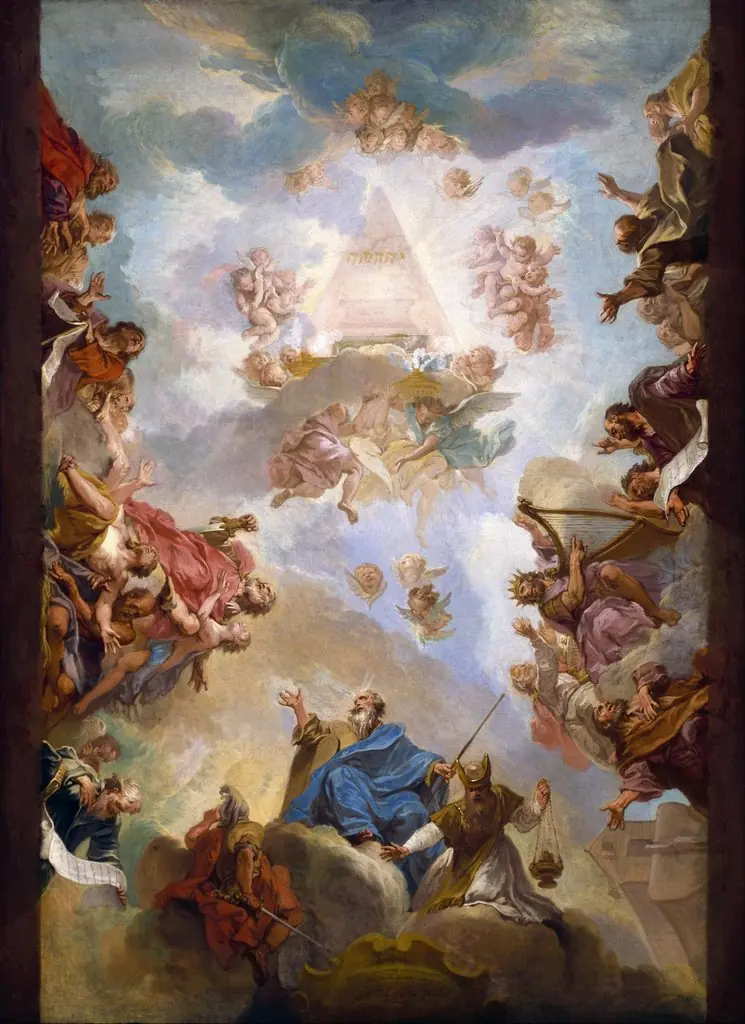 Prophets and Kings of the Old Testament Adoring the Name of Jehovah
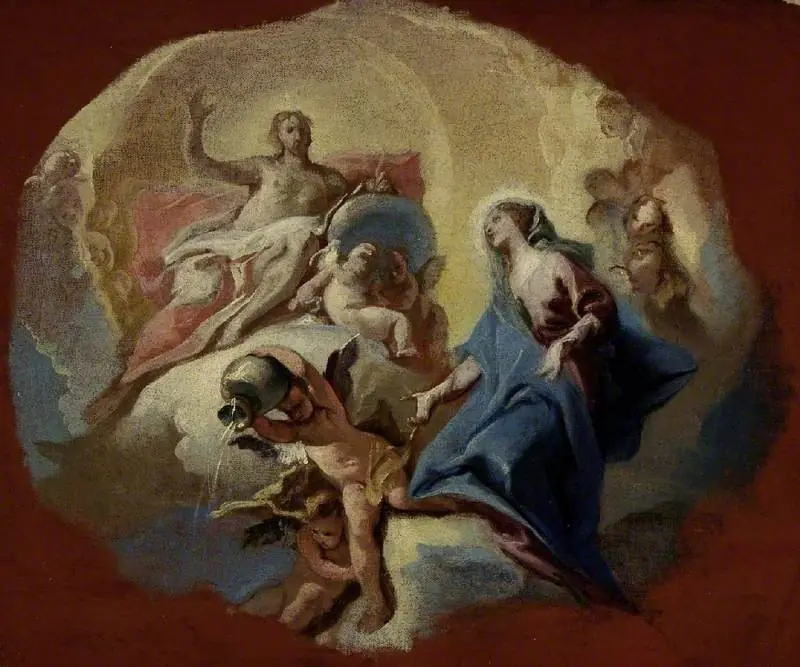 The Triumph of the Virgin
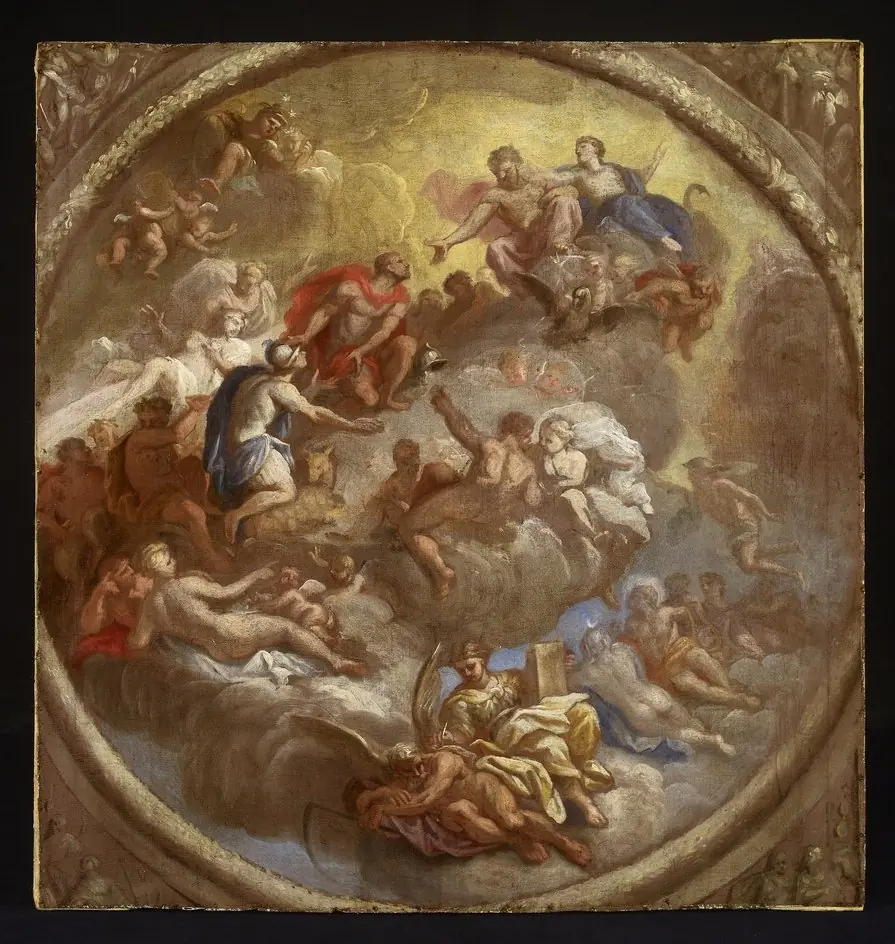 Sketch for a Ceiling Design
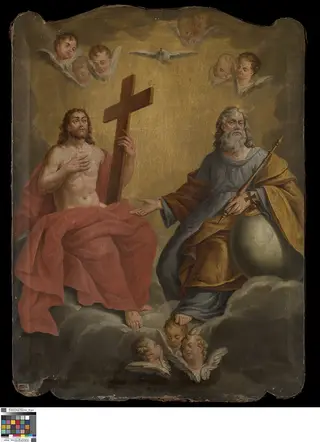 Heilige Drievuldigheid
 Moses Shown the Promised Land