Artwork
Christ and the Adulteress
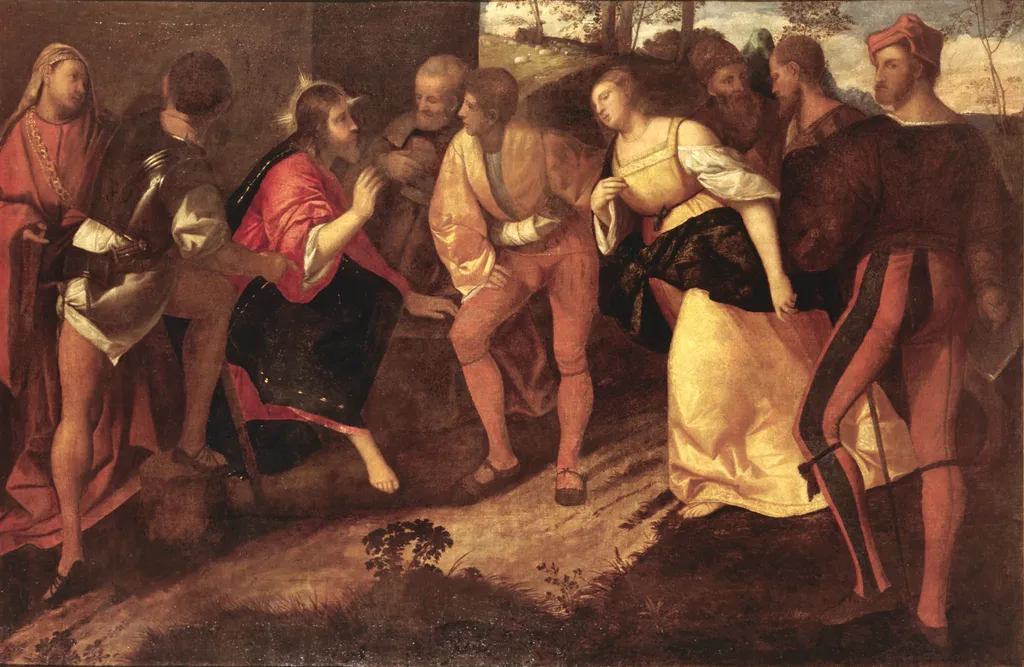
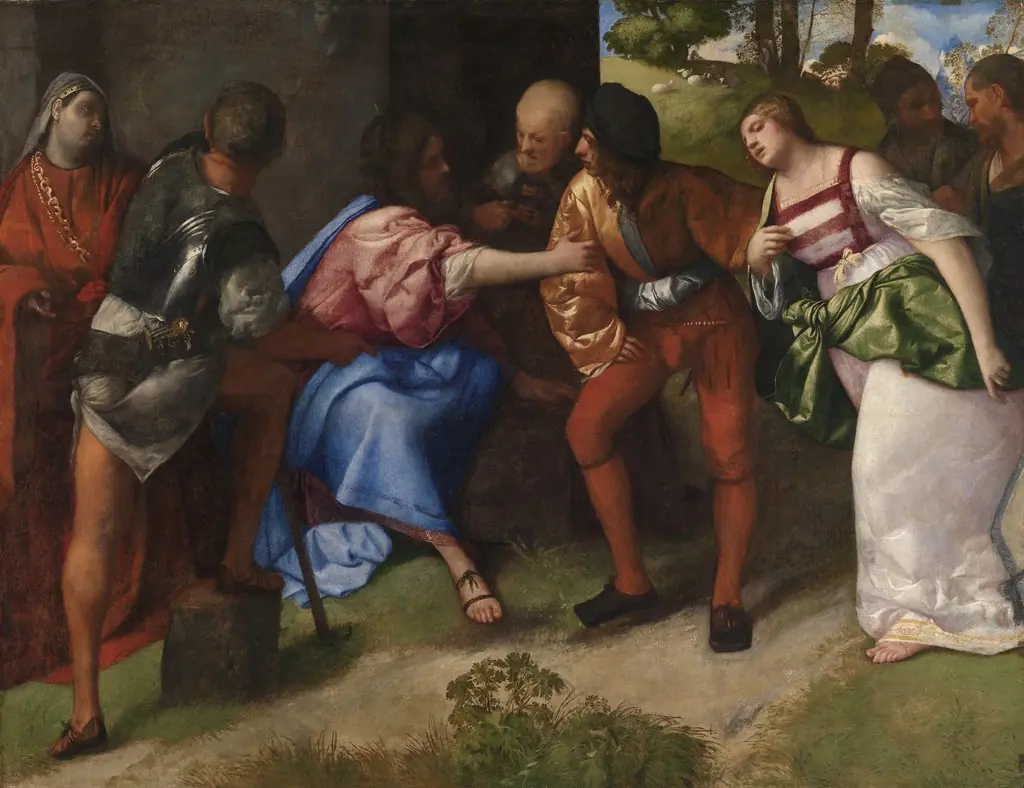
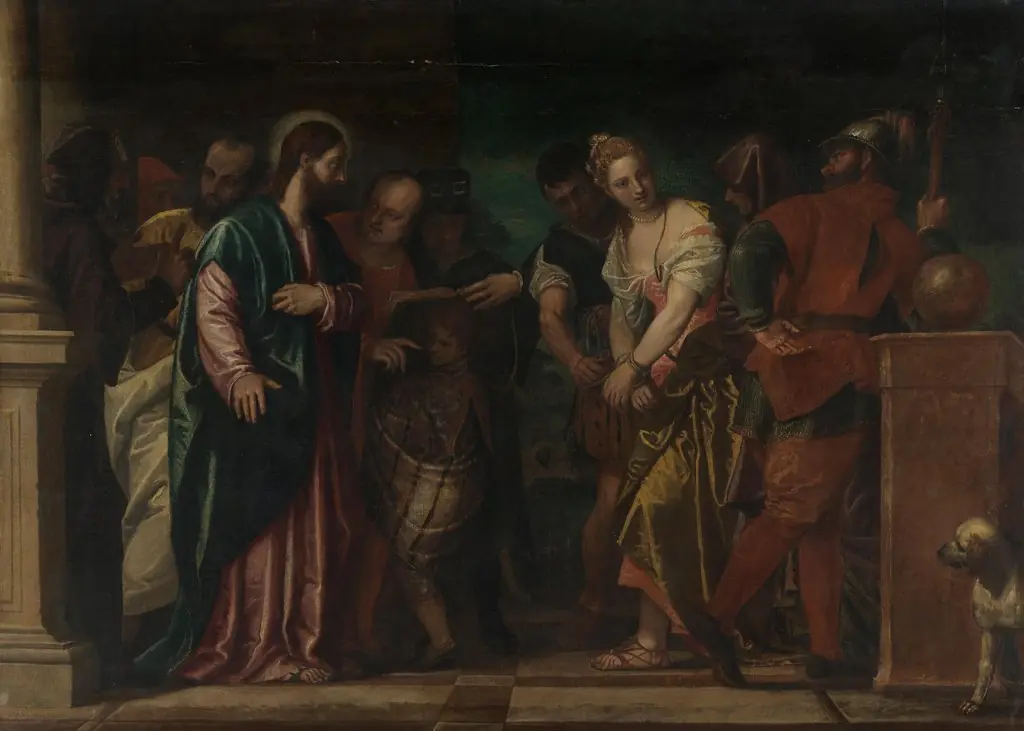
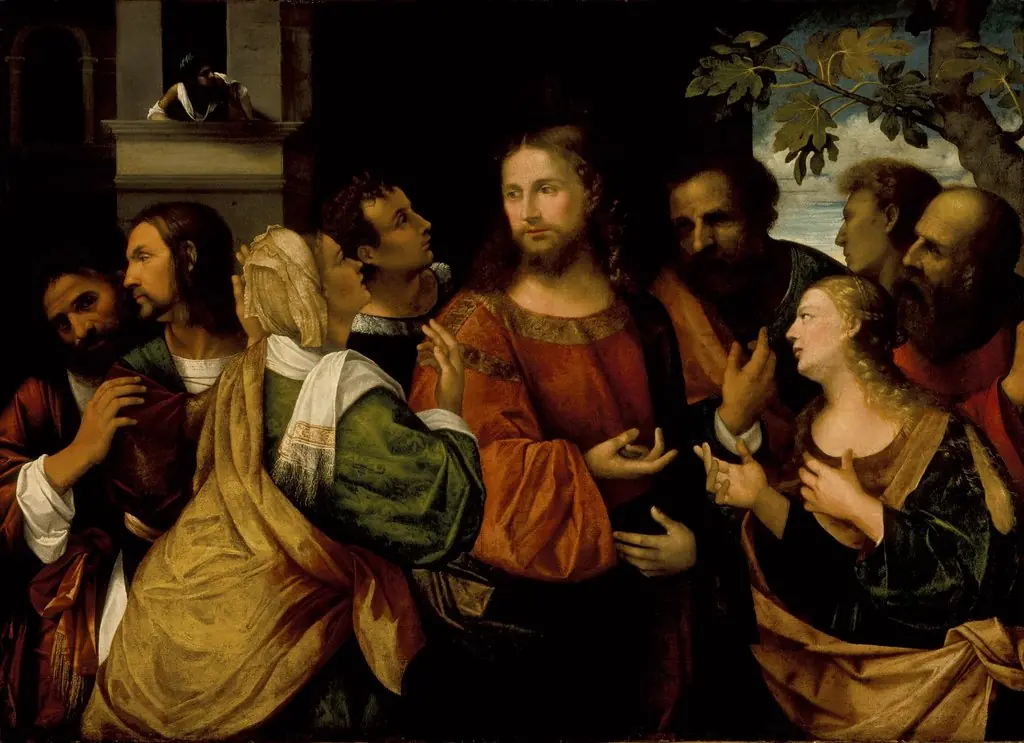
Christ and the Adulteress is an oil painting by the High Renaissance artist Giovanni Cariani. It dates from 1520 and is held in the collection of the Accademia Carrara.
About this work
Overview
Cariani, active in Venice and Bergamo during the early 16th century, rendered the scene with careful attention to spatial depth and naturalistic detail.
Painted in 1520 by Giovanni Cariani, this oil-on-panel work portrays the biblical episode of Christ and the woman taken in adultery. Cariani, active in Venice and Bergamo during the early 16th century, rendered the scene with careful attention to spatial depth and naturalistic detail. The painting resides in the Accademia Carrara in Bergamo, where it remains one of the artist’s most recognized religious compositions.
Subject & Meaning
The scene captures Christ, identified by his halo and red robe, confronting a group of accusers gathered around a woman dressed in yellow beneath a dark cloak. Rather than condemning her, Christ’s gesture suggests mercy and moral reflection. The moment, drawn from the Gospel of John, emphasizes judgment, forgiveness, and the hypocrisy of the crowd, rendered with quiet gravity rather than dramatic intensity.
Technique & Style
Cariani employed oil paint to achieve subtle transitions between light and shadow, using chiaroscuro to model forms and anchor figures in a believable landscape. The figures are arranged with spatial awareness, their poses and gazes guiding the viewer’s eye toward the central interaction. The background, with its soft hills and sky, grounds the sacred moment in a tangible, rural setting, reflecting Venetian tendencies toward atmospheric realism.
History & Provenance
The painting entered the Accademia Carrara’s collection in the 19th century, having likely been in private hands in northern Italy since its creation. Cariani’s reputation as a painter of religious and portrait subjects ensured the work’s preservation, though little documentation survives about its early ownership. Its survival in relatively intact condition reflects its continued value to collectors and institutions in the Lombardy-Venetia region.
Context
Created during the High Renaissance, the painting reflects the influence of Venetian colorism and the humanist interest in moral narrative. While Cariani was not a major figure like Titian, his work shows engagement with contemporary trends in composition and emotional restraint. The rural setting and subdued palette distinguish it from more theatrical treatments of the same subject elsewhere in Italy.
Legacy
Though not widely reproduced or studied today, the painting remains a quiet example of regional Renaissance piety. It illustrates how smaller workshops in northern Italy interpreted biblical themes with local sensibilities, blending devotional clarity with naturalistic detail. Its presence in the Accademia Carrara ensures continued access for scholars interested in lesser-known Venetian painters of the period.
Own this work as a print
Artist & collection
Artist
Giovanni Cariani (c. 1490–1547), also known as Giovanni Busi or Il Cariani, was an Italian painter of the high-Renaissance, active in Venice and the Venetian mainland, including Bergamo, thought to be his native city.